Jacob Lingered at the Tent While Esau Came
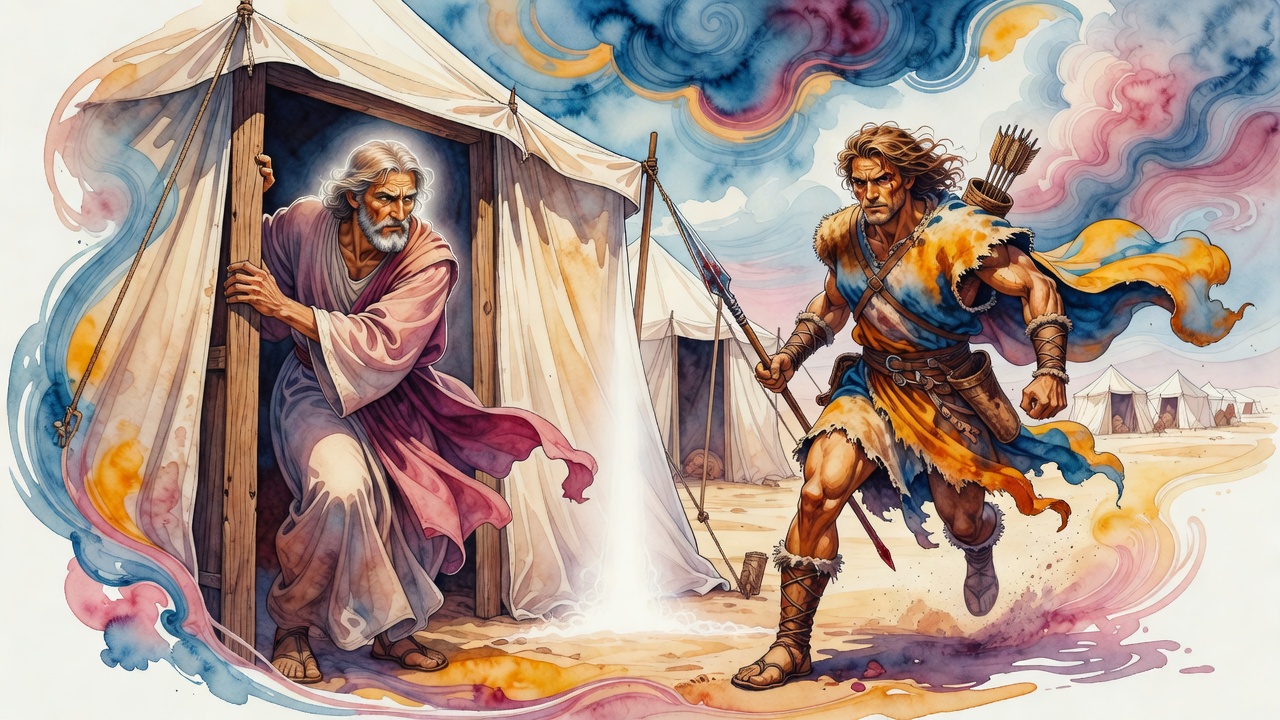
Jacob only seemed to leave Isaac's tent. He clung to the hinged door as Esau returned from a hunt the midrash hears as a hunt for his brother's life.
Table of Contents
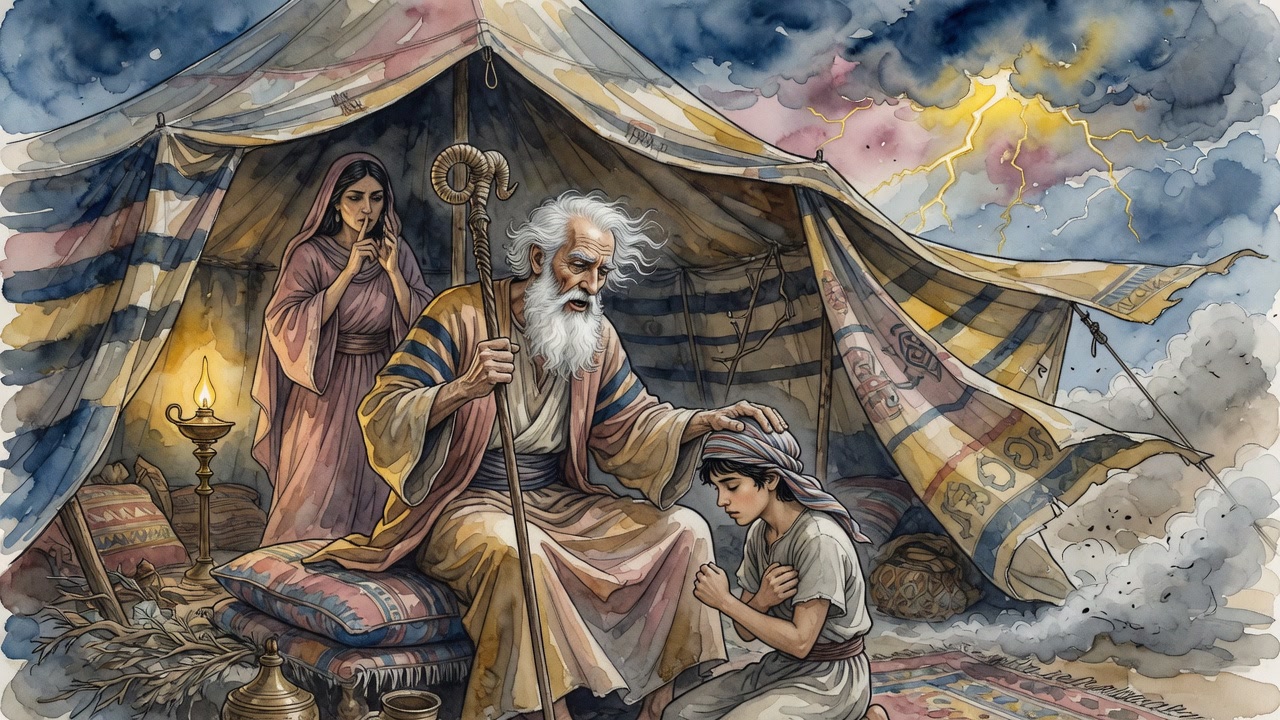
Jacob had the goat skins still warm on his arms when he stepped toward the light of the tent flap.
 Click for full size
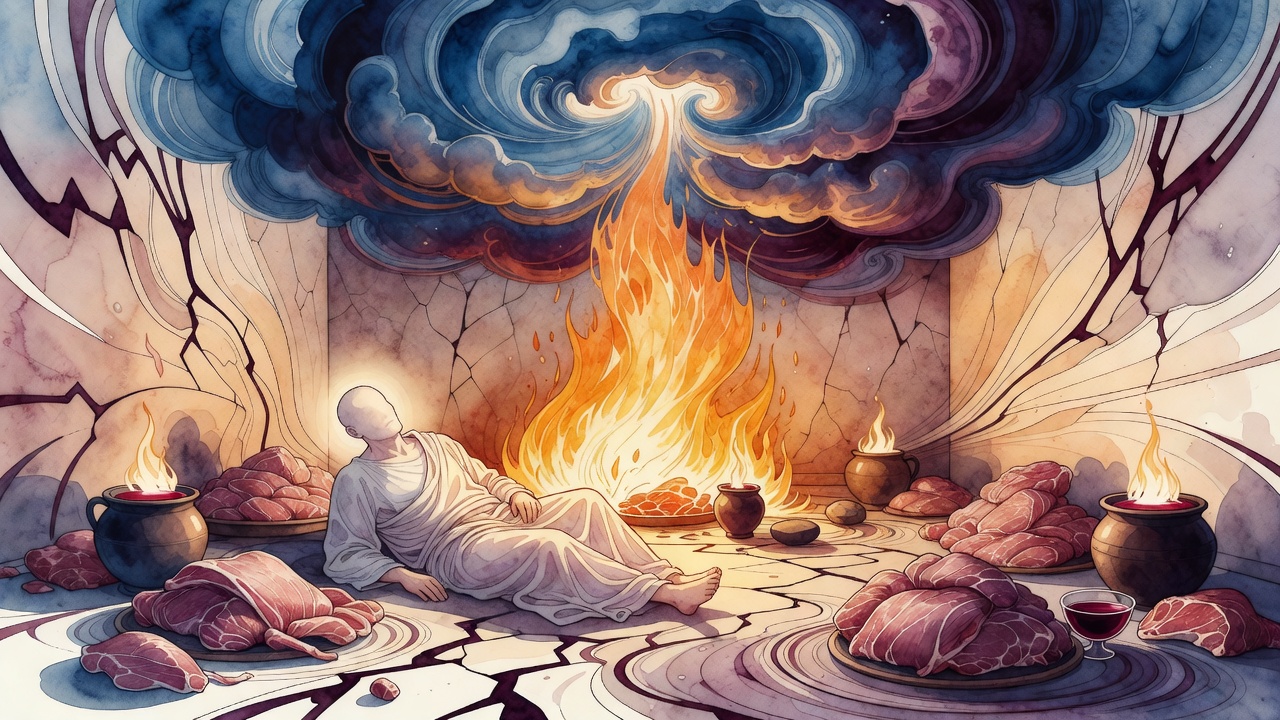
Behind him, Isaac sat blind and full of the meal that had not been Esau's. The blessing had already left the old man's mouth. The air still held the smell of meat and wine. Outside, somewhere on the path from the field, a hunter's steps were coming home.
The verse says Jacob had just departed, departed again, the doubled leaving that the teachers refused to treat as accident (Genesis 27:30). He appeared to go out and did not fully go out. He hung at the threshold like a man who cannot choose between the safety of distance and the need to hear what happens next.
Doors That Folded Backward
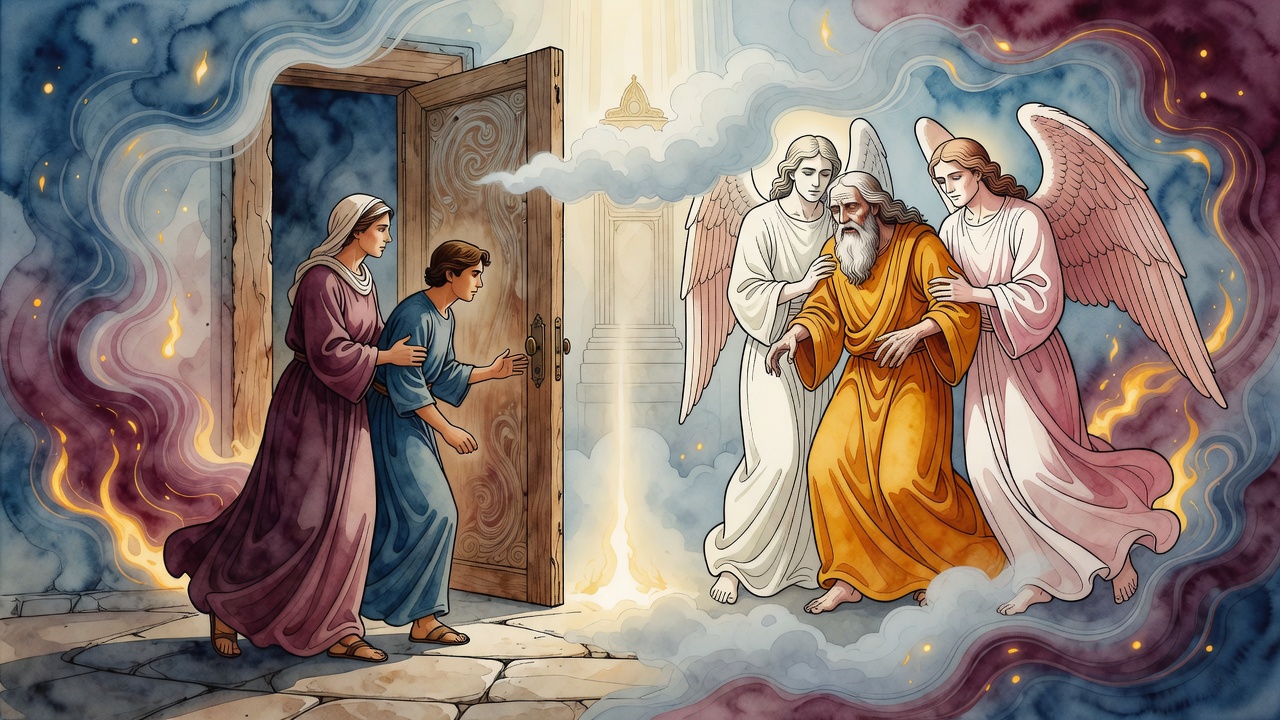
Some pictured Isaac's tent open on every side, hospitality made into architecture the way Abraham had once stood over guests until even the great angels felt the weight of a host's care. Others pictured hinged doors that folded back, a structure that let a body slip into a fold of leather and wood and still catch every word from within.
Jacob used that fold. He did not stride into open country the way a clean escape demands. He lingered where a brother returning from the hunt would pass within a breath. The blessing sat in his gut like a stolen coal. He needed to know whether Isaac would call the words back. He needed to know the exact second Esau's voice hit the tent.
Fear and greed share a posture at a door. Both lean in. Jacob's shoulder pressed the hide until it creaked. Sweat ran under the goat hair where Rebecca had tied the disguise. He did not pull the skins off. There was no time.
From His Hunt
Esau came from his hunt, mitzeido, and the midrash will not leave the word as simple game. It pulls the root toward the language of ambush, then flips it. Esau, they say, came armed to hunt for a life, not only for venison. The brother who had sold a birthright for stew now returned expecting a father's hands on his head. Instead he would find the smell of another man's meal and a blessing already spent.
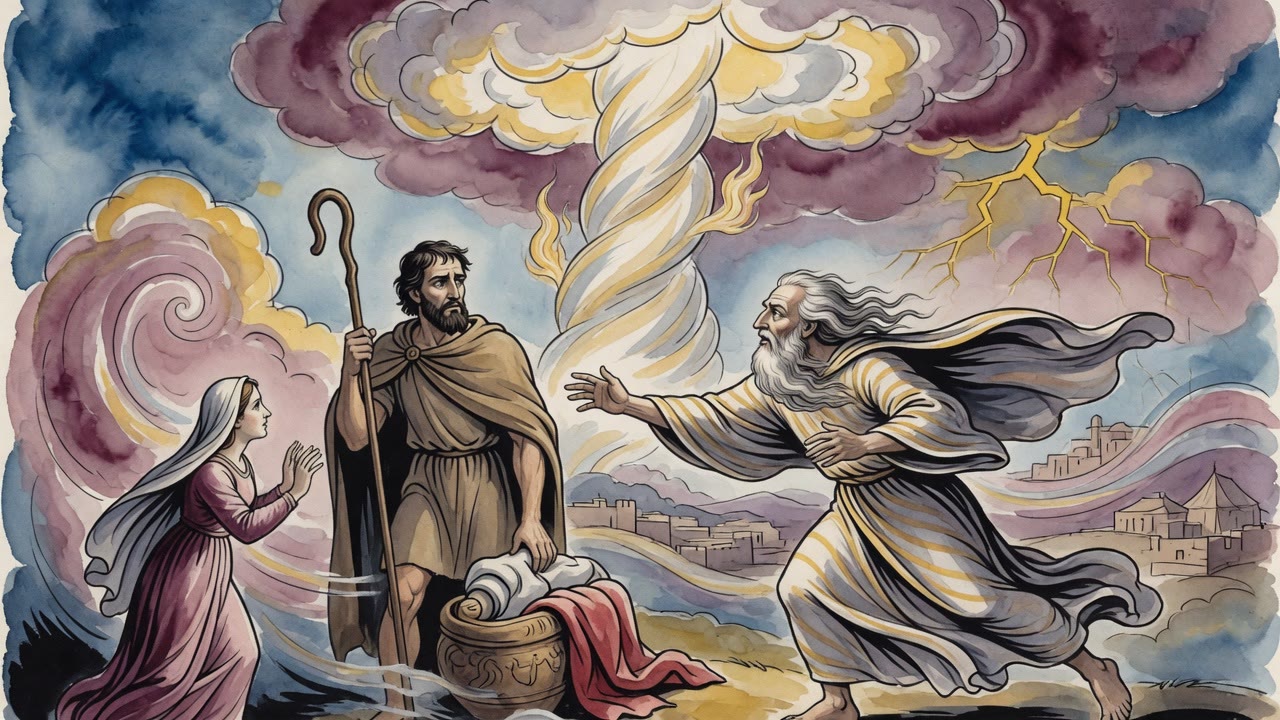
Jacob, still half inside the tent's shadow, heard the approach. Sandals. Breath. The soft knock of gear. The moment it turned was not the blessing itself. It was the heartbeat when two brothers occupied the same threshold from opposite directions, one leaving with heaven's words, one arriving with a bow and a future scream.
Jacob moved. Not far. Just enough that Esau could enter without their shoulders colliding. The doubled departure finished itself in a half-step of panic and calculation. A strap on Esau's gear brushed the flap so close that Jacob felt the air shift on his cheek.
The Cry That Filled the Tent
Isaac trembled when the true hunter spoke. Who then was the one who hunted game and brought it to me before you came. Esau's cry was great and bitter (Genesis 27:33-34). Jacob, if he was still near enough, would have felt that sound in his teeth. The midrash does not require him to watch the whole collapse. It requires him to have been close enough that "just departed" means the danger was inches, not miles.
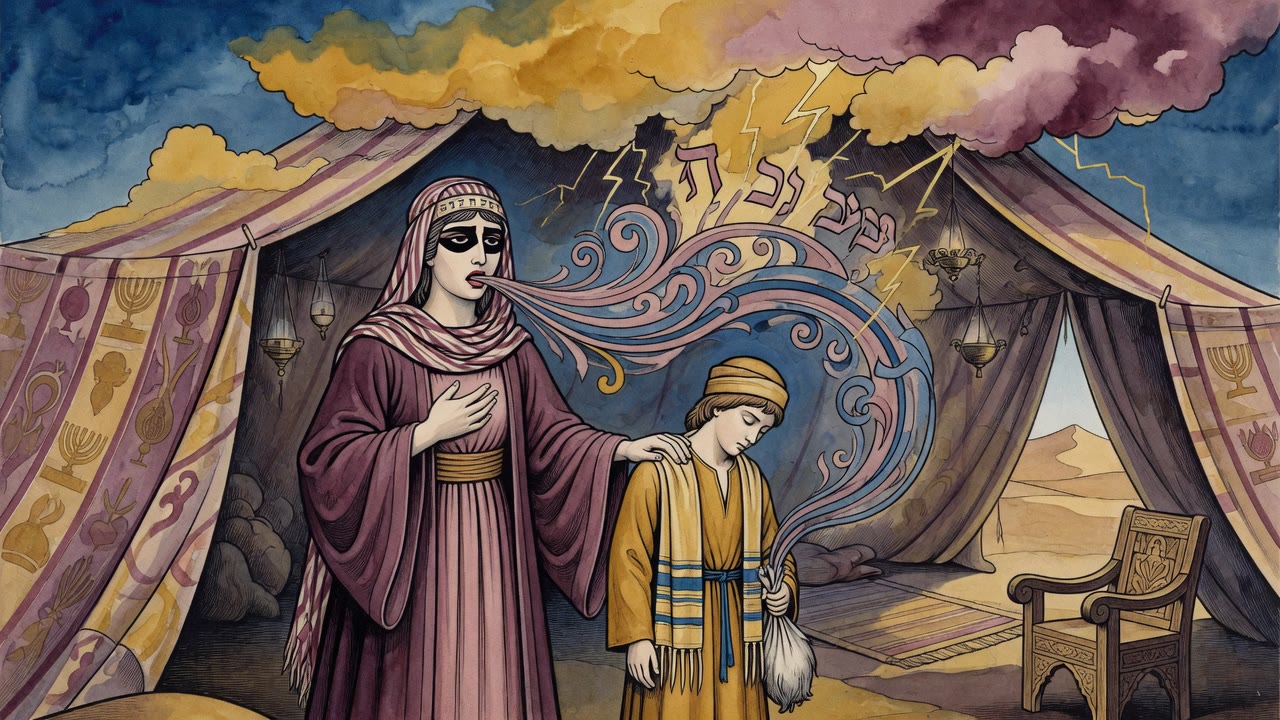
Rebecca had dressed him. Isaac had blessed him. Now the house itself seemed to turn against the quiet son. A tent that had been a place of open sides and welcome became a box of voices he could not answer without dying. Esau's next words would be a vow of murder after the days of mourning. Jacob did not need the full speech to know the shape of the future. He had heard the first crack of it in that cry. His feet finally chose the road over the fold of the door.
Hospitality's Other Face
Abraham once stood over three guests until the standing itself flipped. First the visitors stood over him as duty. After he fed them butter of the finest fraction of the milk, he stood over them, and even Michael and Gabriel, if the teachers name the trembling ones, shook with awe at a human host's ferocity of care. That household had taught the family what a tent can mean: safety, food, rank rearranged by kindness.
Isaac's tent on this day taught the opposite lesson. Same architecture of welcome. Same family line. A meal used as disguise. A threshold used as hiding place. The butter of deception was goat and skins, not cream. Jacob had learned his grandfather's craft of standing near and inverted it into standing near in order not to be seen. The angels who once trembled at Abraham's table would not have recognized this later hour. Same bloodline. A different use of the doorway.
The Road That Started at the Flap
When he finally broke from the door for good, the blessing was irreversible. Esau's tears could not pull the words back into Isaac's mouth. Jacob ran toward exile with his mother's voice still ordering the path. The hunt for his life would not end at the tent. It would follow him into night roads and ladder dreams and a later day when he would send flocks ahead to soften a face he still feared like judgment.
The sharpest image is smaller than exile. A grown man pressed into the fold of a hinged door, blessing hot on his tongue, listening to the brother he has just undone come home with weapons and hunger. The departure that the Torah doubles is the pause where courage and cowardice look identical: neither fully in nor fully out, holding a stolen future in a body that will not yet run.
Esau's cry rose. The door flap moved. Jacob was already air and dust on the far side of the camp, goat skins flapping against his arms, the second roll of the departure finished at last in a sprint that left no room for looking back.
← All myths