5 min read

Rebecca Walks Jacob to the Door of the Blessing

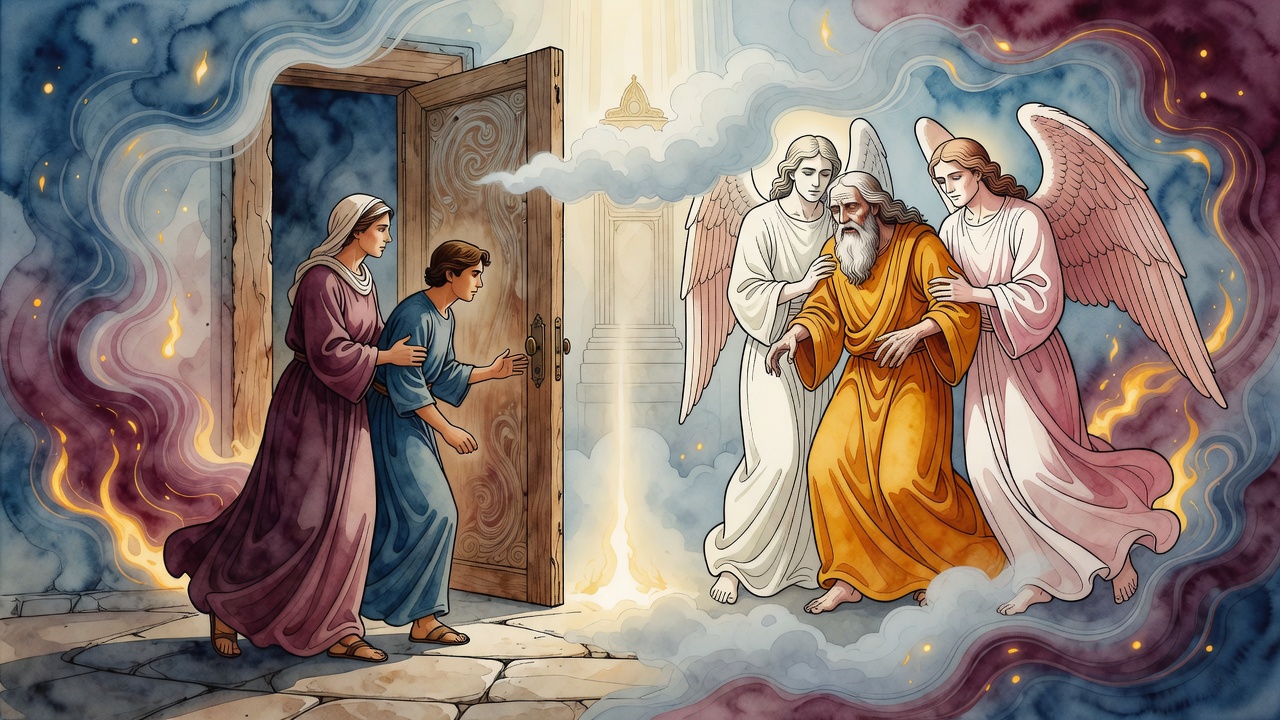
Rebecca leads Jacob to the threshold, then lets go. Blind Isaac hears God's name in the wrong mouth, trembles, and two angels hold him while the blessing holds.

Curated by Arthur · Told by Maggid ·
Table of Contents
  1. Until Here I Helped You
  2. Hands That Reach and a Voice That Travels
  3. Angels at the Elbows
  4. The Voice That Must Be Inside the Prayer
  5. The Savory Dish and the Name
Rebecca Walks Jacob to the Door of the Blessing Click for full size

Until Here I Helped You

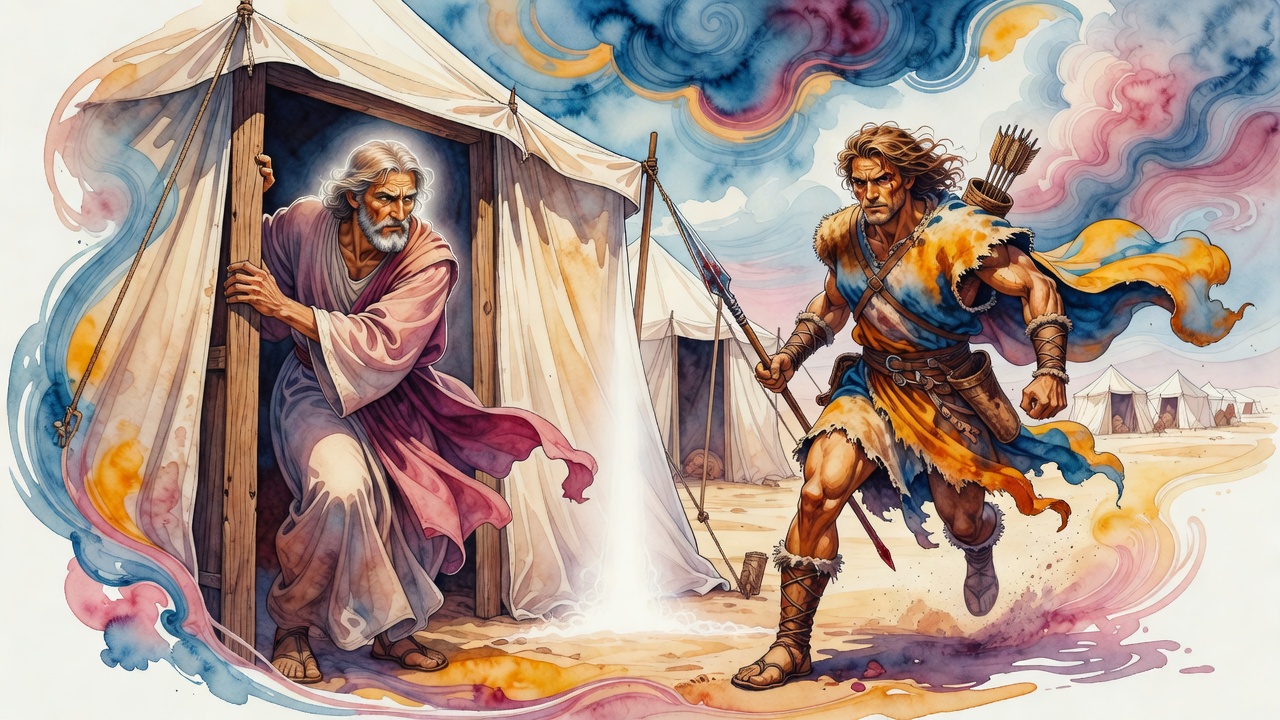
Rebecca did not send Jacob across the threshold alone. She walked him to the door, set the savory food in his hands, and released him with a mother's last practical sentence. Until here I owed you my help. From here on let your Creator stand beside you. Every mother reaches some version of that line. Few speak it while goat skins still warm a son's arms.

Inside, blind Isaac waited. The hands that touched him felt like Esau's. The words did not. When the son said the meal came quickly because the Lord your God brought it before me (Genesis 27:20), Isaac froze. He knew his sons. Esau did not put God's name in his mouth like that, not as ordinary speech over a plate.

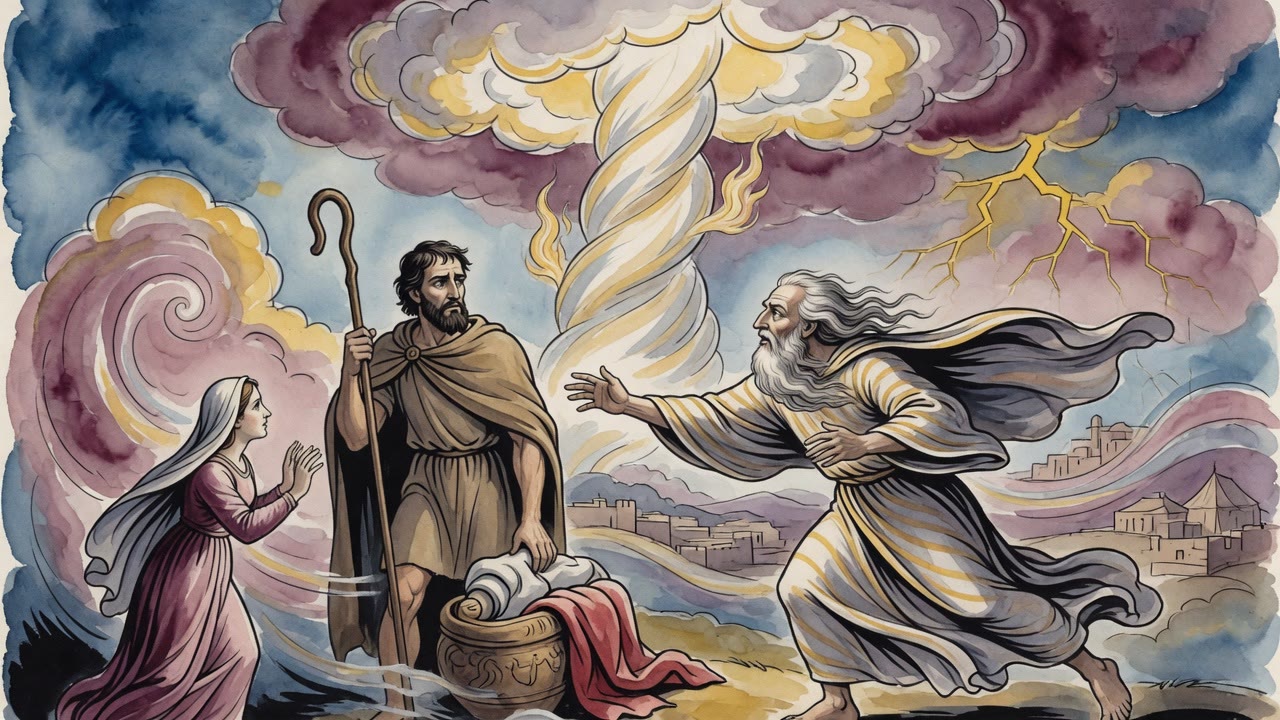
The voice is the voice of Jacob, but the hands are the hands of Esau (Genesis 27:22). One line split two kinds of power forever. Rebecca's walk to the door had done all a human mother could. The rest belonged to the voice and to the One who listens for it.

Hands That Reach and a Voice That Travels

Esau rules with the hand. A hand grips only what it can reach. Catch a man and he is yours. Let him slip past the edge of your fingers and you hold nothing but air and anger.

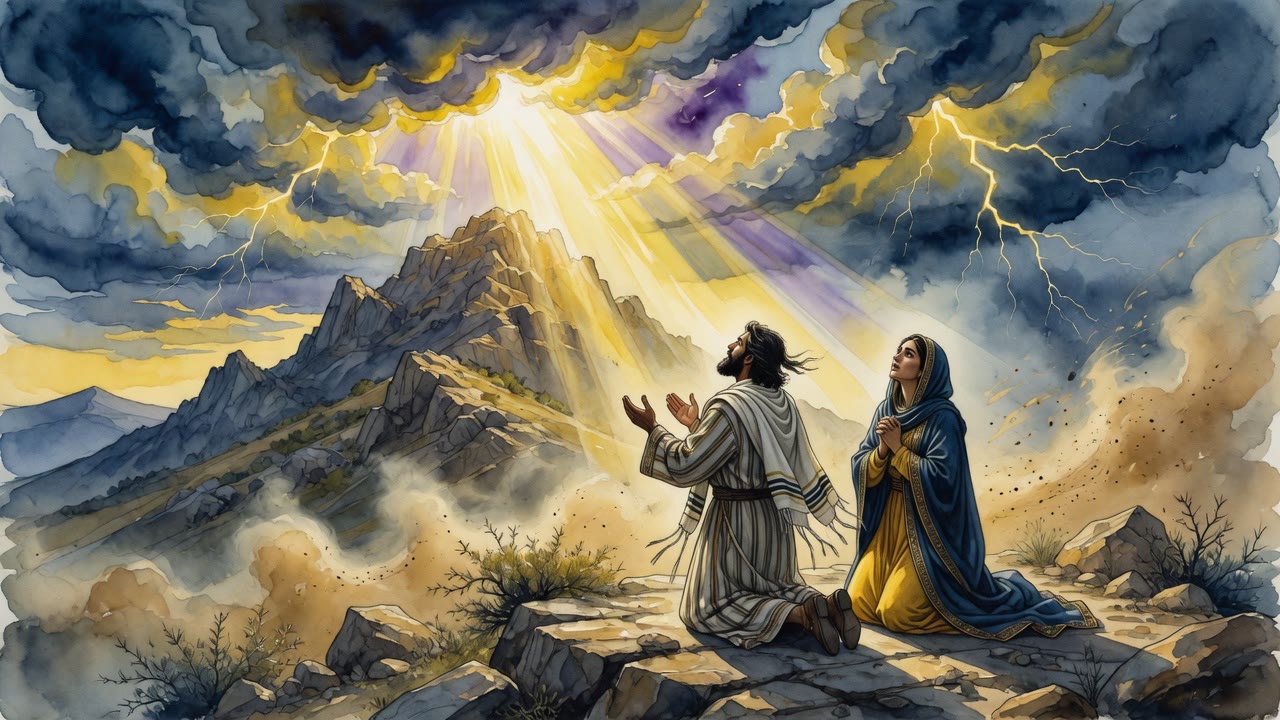
Jacob rules with the voice. A man may flee to the far end of the world, and the cry he raises in prayer still arrives. No distance defeats it. Force that depends on proximity is brittle because the world is wide and people run. A voice released toward heaven needs no chase. It was never trying to pin anyone. It rises and lands.

Later a philosopher named Avnimos told the nations to listen at the doors of the schoolhouses. If children are reciting inside, you will fail. If the rooms are silent, go to war. An army can be outrun. A prayer cannot be escaped by distance, because distance was never its problem. The children's recitation frightened him more than any wall of shields.

Angels at the Elbows

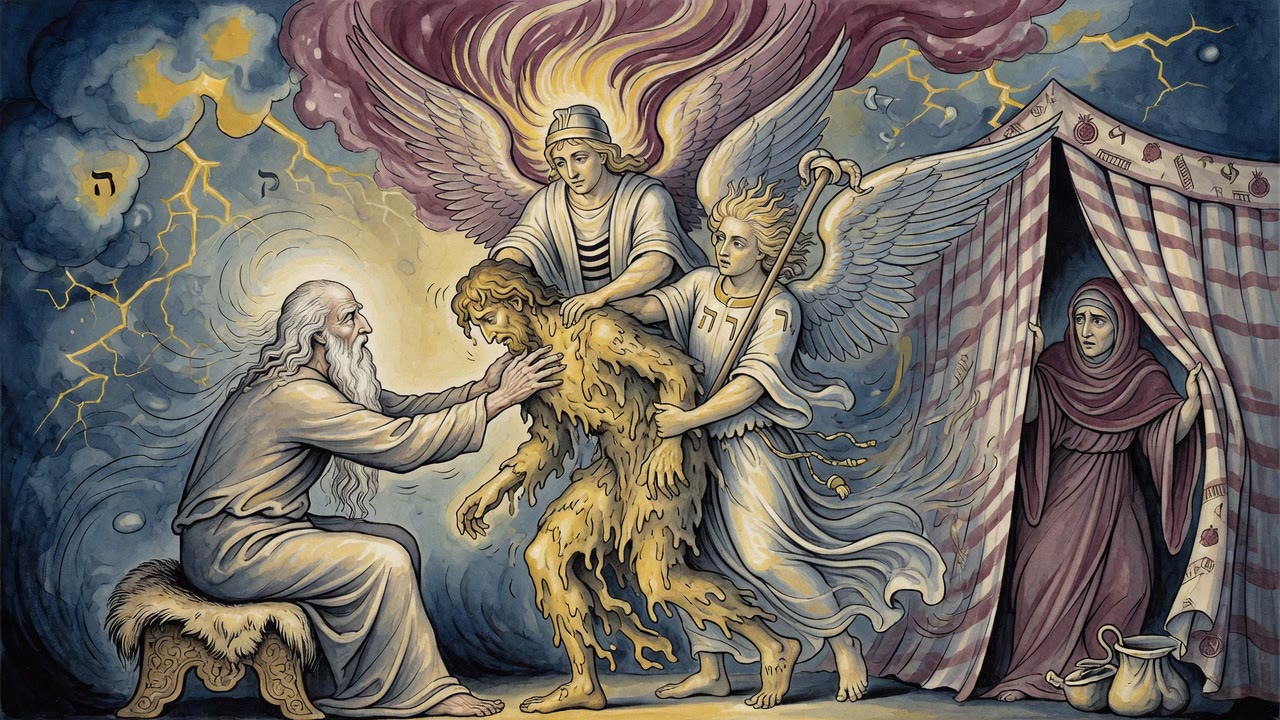
Isaac trembled when he understood he had been led (Genesis 27:33). Heaven did not leave the old man to fall. Two angels took him by the elbows and held him upright so the body would not collapse under the shock. The blessing, once given, held. Deception had reached the bed, but the word that left his mouth did not bounce back empty.

He had cursed the cursers first and blessed the blessers last, the order of a righteous life that opens in hardship and closes in peace, not the wicked pattern that opens in ease and ends in curse. Jacob had scarcely gone out one door when Esau came in the other, a portico open on both sides, a hair's breadth between the brothers. Esau entered armed with his own savory food and a claim already too late, hands full of what the voice had already outrun.

The Voice That Must Be Inside the Prayer

The voice of Jacob became more than the sound in that tent. No prayer is heard, the teaching runs, unless some of Jacob's seed is within it. The inherited voice is how prayer rises. Descendants carry it forward, and heard prayer sits in that lineage the way a family trait sits in a jawline.

Rebecca's last help was a walk to the door and a sentence that handed her son to his Creator. After that, the Name in Jacob's mouth, the angels at Isaac's elbows, and the voice that outruns hands did the rest. Esau's grasp closed on empty air. Jacob's blessing stayed where the voice had placed it.

Years later, when nations asked whether Israel could be conquered, the answer still began at a schoolhouse door. Listen. If the voice is alive, the hands will fail.

The Savory Dish and the Name

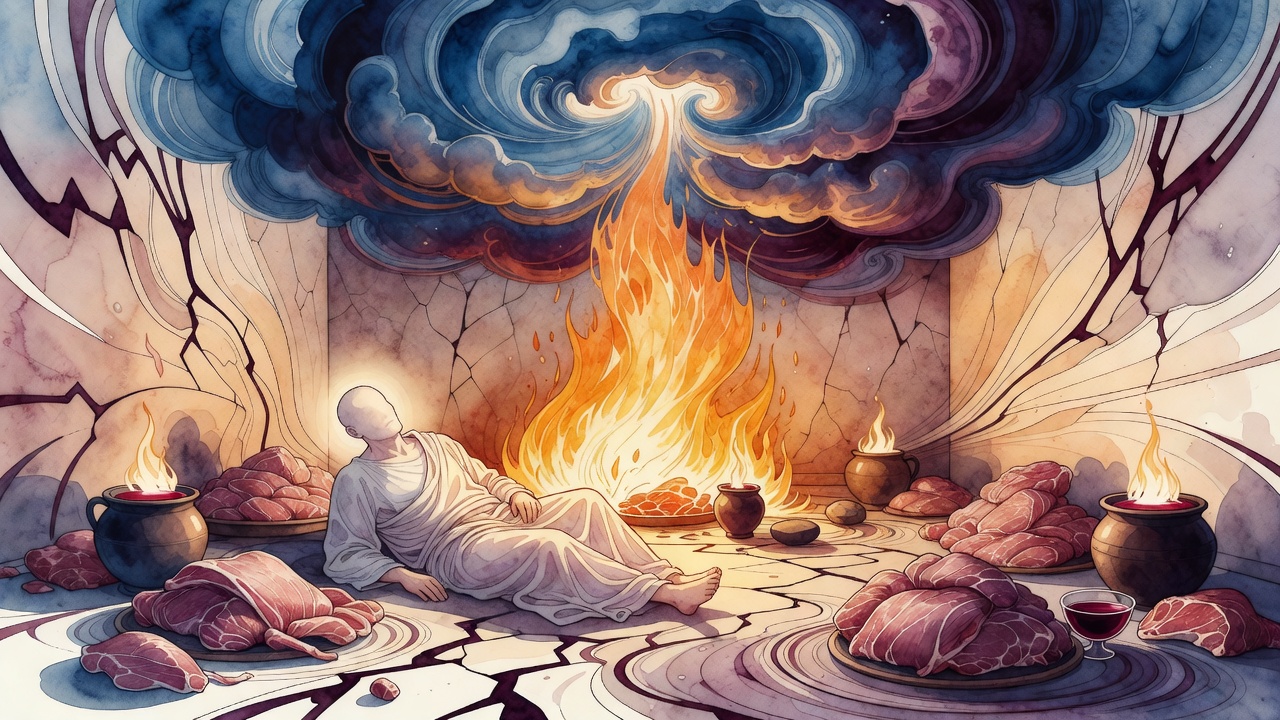
The food was Rebecca's craft, timed against Esau's hunt. The skins were her craft too. None of that craft could put the divine Name into a mouth that did not know how to carry it. When Jacob spoke of the Lord his God bringing the meal quickly, he told a truth about speed that was also a tell. Isaac's ear caught what his hands could not.

Esau returned with his own dish and his own expectation, the firstborn script still running in his muscles. The cry that followed would dress loss as lawsuit. In the moment before that cry, there was only the old man upright between two angels, a blessing already spoken, and a voice still vibrating in the room like a string that had been plucked too hard to silence at once.

Rebecca, outside the range of the bed, had already finished her part at the door. The Creator she had named stood inside the scene without needing her hands on the plate any longer.


← All myths
From the tradition

Sources

4 sources

The texts behind this telling. Some cards carry a translation of the source; others are our own retelling of it, and each card says which. Every card links out to the original.

Yalkut Shimoni on Torah 115:4Yalkut Shimoni on Torah

Translation of the source text.Torat Emet (Yalkut Shimoni) · CC-BY-NC

"And she gave the savory food" (Genesis 27:17). She accompanied him to the door and said: Until here I was obligated to you; from here onward let your Creator stand by you.

"And Jacob said... I am Esau your firstborn" (Genesis 27:19). Rabbi Levi said: "I am [the one] whose children are destined to receive the Ten Commandments [I am the one for whom the word 'I am the LORD' will be spoken at Sinai], but Esau is your firstborn." "Arise, I pray, and sit" - the Holy One, blessed be He, said to Jacob: You said "Arise, I pray, and sit" as a request; by your life, in that same language I will repay you, "Arise, O LORD, and let Your enemies be scattered." "There is one swept away without judgment" (cf. Proverbs) - this is Esau. The Holy One, blessed be He, said to Esau: You said "let my father arise"; I too will repay you in that language, "Let God arise, let His enemies be scattered" (Psalms 68:2).

"And Isaac said to his son: How is it that you found it so quickly, my son? And he said: Because the LORD your God brought it before me" (Genesis 27:20). "How is it that you found the blessing so quickly, my son? Your father was blessed at seventy-five and you are sixty-three." "And he said: Because the LORD your God brought it before me" - Rabbi Yochanan and Rabbi Shimon ben Lakish: one of them said, If for your offering He provided you a ram, as it is written "and behold a ram" (Genesis 22:13), how much more so for your food. The other said, If for your mate He provided you, as it is written "send me good speed" and "he lifted his eyes and saw, and behold camels coming" (Genesis 24), how much more so for your food. "Because the LORD your God brought it before me" - a parable to a raven that brought fire to its nest [an unnatural thing]. When he said "Because the LORD your God," Isaac said: I know that Esau does not mention the name of the Holy One, blessed be He; this is not Esau but Jacob. Immediately he said to him: "Come near, I pray, that I may feel you, my son" (Genesis 27:21). Water poured over his knees and his heart grew soft as wax, and the Holy One, blessed be He, prepared for him two angels, one at his right and one at his left, who held him by his elbows so that he would not fall. This is what is written, "Be not dismayed, for I am your God" (Isaiah 41:10) - do not melt, let not your heart be as wax.

"And he said: The voice is the voice of Jacob" (Genesis 27:22). Behold, the voice that is the voice of the wise and hands that send forth death [a play: a voice of wisdom subdues the deadly hands]. Jacob rules only with his voice, as it is said "the voice is the voice of Jacob," and Esau rules only with the hands, as it is said "and the hands are the hands of Esau." When Jacob chirps with his voice, the hands of Esau have no power. No philosophers arose among the nations of the world like Balaam son of Beor and like Avnimos the Gardi. All the nations of the world gathered before Avnimos the Gardi and said to him: Do you say that we are able to make war upon this nation? He said to them: Go and circle around their synagogues and study houses. If you find there children chirping with their voices, you cannot prevail against them; and if not, you can prevail against them. For thus their father promised them and said, "The voice is the voice of Jacob" - when the voice of Jacob is found in the synagogues and study houses, the hands are not the hands of Esau. "The voice is the voice of Jacob" - even in the matter of the concubine at Gibeah, "Cursed is he who gives a wife to Benjamin" [the voice of Israel deciding even harsh matters].

Full source
Yalkut Shimoni on Torah 115:6Yalkut Shimoni on Torah

Translation of the source text.Torat Emet (Yalkut Shimoni) · CC-BY-NC

"The voice is the voice of Jacob" (Genesis 27:22). Your strength is harder [greater] than that of Esau. Esau, if he seizes a man, behold he is in his hand; but if the man flees, he can do nothing to him. But you - even if a man flees to the end of the world, the voice you raise in the synagogue, behold it comes of itself [it reaches and is heard].

Full source
Yalkut Shimoni on Torah 115:9Yalkut Shimoni on Torah

Translation of the source text.Torat Emet (Yalkut Shimoni) · CC-BY-NC

Another interpretation: "The voice is the voice of Jacob" (Genesis 27:22) - you have no prayer that is heard [accepted] which does not have in it some of the seed of Jacob.

Full source
Yalkut Shimoni on Torah 115:18Yalkut Shimoni on Torah

Translation of the source text.Torat Emet (Yalkut Shimoni) · CC-BY-NC

Another interpretation: the wicked, because their beginning is tranquility and their end is suffering, open with blessing and close with cursing; the righteous, because their beginning is suffering and their end is tranquility, open with cursing and close with blessing - "cursed be those who curse you, and blessed be those who bless you" (Genesis 27:29). "And it came to pass, as soon as Isaac had finished blessing Jacob, and Jacob had scarcely gone out" (Genesis 27:30). The portico of our father Isaac was open on both sides. And the rabbis say it was like an arena, the doors folding back behind them, and Jacob stood behind the door and went out, as it is written "scarcely gone out [yatzo yatza]" - he appeared to be going out and not going out. "And Esau his brother came in" - he came in armed. "And he also made savory food" (Genesis 27:31). This is what is written, "The spider [or lizard] you may grasp with the hands, yet it is in kings' palaces" (Proverbs 30:28). By what merit is the spider grasped with the hands? By the merit of those hands - "and he also made savory food." "Let my father arise" - the Holy One, blessed be He, said to Jacob, You said, and so on, as above.

Full source