Jonadab Spoke Comfort Before He Knew the Truth
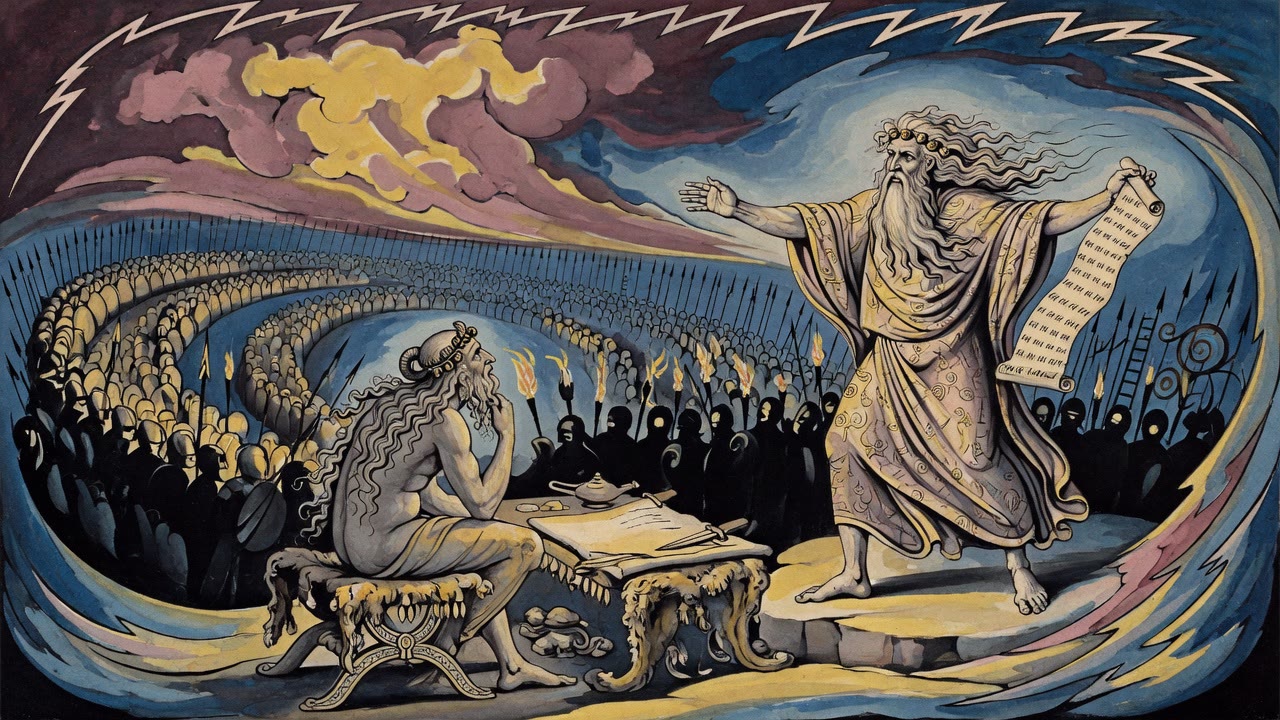
Messengers told David that all his sons were dead. He tore his clothes and fell to the floor. Jonadab said only Amnon, before any rider confirmed it.
Table of Contents
David's hall filled with rumor like smoke from a fire no one could find. Messengers said all the king's sons were dead. The king rose, tore his clothes, and fell to the floor while the court wailed around him as if the whole future of the house had been cut in one hour of blood.
 Click for full size
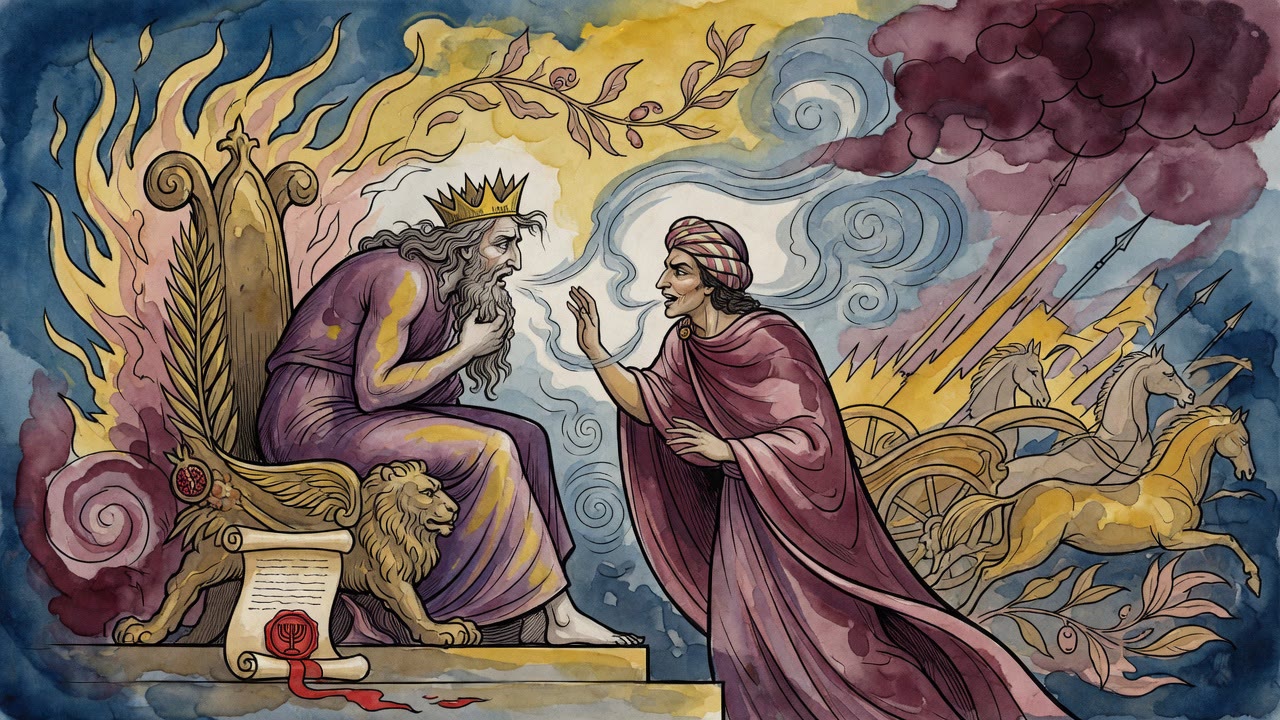
Jonadab son of Shimeah stepped into that noise with a calm sentence he had not yet fully earned by sight.
The Word Written and Not Read
"Let not my lord the king take the thing to his heart, to think that all the king's sons are dead; for Amnon only is dead" (II Samuel 13:33). The midrash on words written but not read in Otzar Midrashim lingers on the little word "rather" that sits near Amnon in the verse. It is written because Jonadab was already leaning toward the truth in his heart. It is not read in the ordinary way because the full certainty was not yet his, and because the death itself was stained with shame that language almost refuses to dress cleanly.
He spoke comfort before the facts finished arriving on tired horses. He guessed well. Guessing well is still guessing. A court that breathes on guesses can calm a king and still teach a dangerous habit, the habit of sealing a story while the road still carries dust from riders who have not yet spoken their piece in the gate.
The midrash's care with a written-but-unread word is a brake on the tongue. Some syllables belong on the page as warning more than as easy liturgy for panic.
Why the Tongue Runs Ahead
Jonadab had history with Amnon. He had once advised the prince toward the desire that ruined Tamar and cracked the house from within. Now he advised the father toward peace of mind after Absalom's revenge. The same clever mouth worked both rooms. Cleverness without patience is a tool that cuts the holder as easily as the wood he meant to shape.
When Absalom fled and the court still shook, a man who speaks early becomes useful. Usefulness is not the same as wisdom. The king needed a true report. He also needed a counselor who would rather wait ten breaths than be first with a soothing error.
Other written-but-unread words in the same midrash tradition mark speech that is incomplete, strained, or compromised, from Ittai's fierce loyalty to Naaman's awkward plea. Language itself carries scars when the speaker runs ahead of righteousness or ahead of knowledge.
Jacob's Hasty Complaint
Aggadat Bereshit turns the same problem toward Jacob. "My way is hid from the LORD" (Isaiah 40:27, as the midrash hears Jacob's tone), and the rabbis called the speech hasty. The exile was real. The fear was real. The forgetting felt real in the bones. Still, Job had already warned that a man who insists on trying God may not answer one charge in a thousand (Job 9:3).
In the midrash's dialogue the Holy One asks Jacob whether he has ever prayed and been turned away empty, whether he has asked and not received in the long record of the covenant. The questions are not mockery. They are an audit of memory. The patriarch who saw angels on a ladder, who wrestled and limped and was renamed Israel, was rushing to the worst reading of a hard season.
Feeling abandoned is one thing. Declaring the way hidden before checking the record of answered prayer is another. "Seest thou a man that is hasty in his words? there is more hope of a fool than of him" (Proverbs 29:20). Hope thins when the tongue finishes the verdict before the evidence sits down and removes its sandals.
What Silence Could Have Held
David needed comfort. Jonadab supplied it with a sentence that turned out close to true. The kingdom needed truth that could wait half an hour for the next rider. Jacob needed honesty about pain. Heaven asked him to hold the complaint until memory of answered prayer stood beside it like a second witness.
Neither story bans speech. Both ban the sprint. Write the hard word if you must, the way Scripture sometimes writes what is not fully read. Do not always speak it aloud as if the case is closed and the court may go home. A king on the floor and a patriarch in exile both deserve language that has checked its own speed against the last known fact.
When the next crisis hits a house, someone will again be tempted to calm the room with a sentence that is almost true. Almost true is a soft bed with a snake under the blanket. Wait for the rider. Check the record. Then speak in a voice that can survive daylight.
← All myths