5 min read

Jonah Pays His Fare Early and Flees to Tarshish

Jonah prepaid his fare to Tarshish in the joy of escape, while Habakkuk stood watch on the rampart demanding God explain how long mercy would wait.

Curated by Arthur · Told by Maggid ·
Table of Contents
  1. The Custom He Broke on Purpose
  2. What He Thought He Was Buying
  3. Another Prophet on a Rampart
  4. Two Ways to Handle a Hard Word
  5. The Coin and the Watch

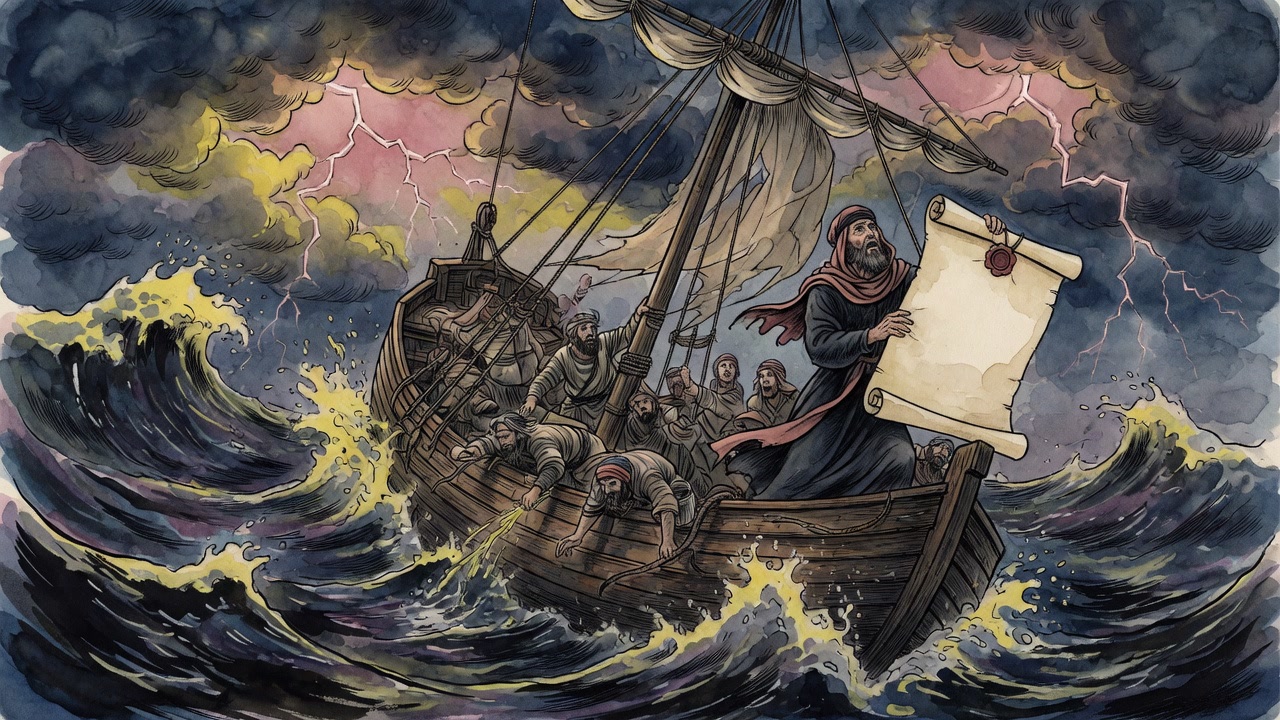
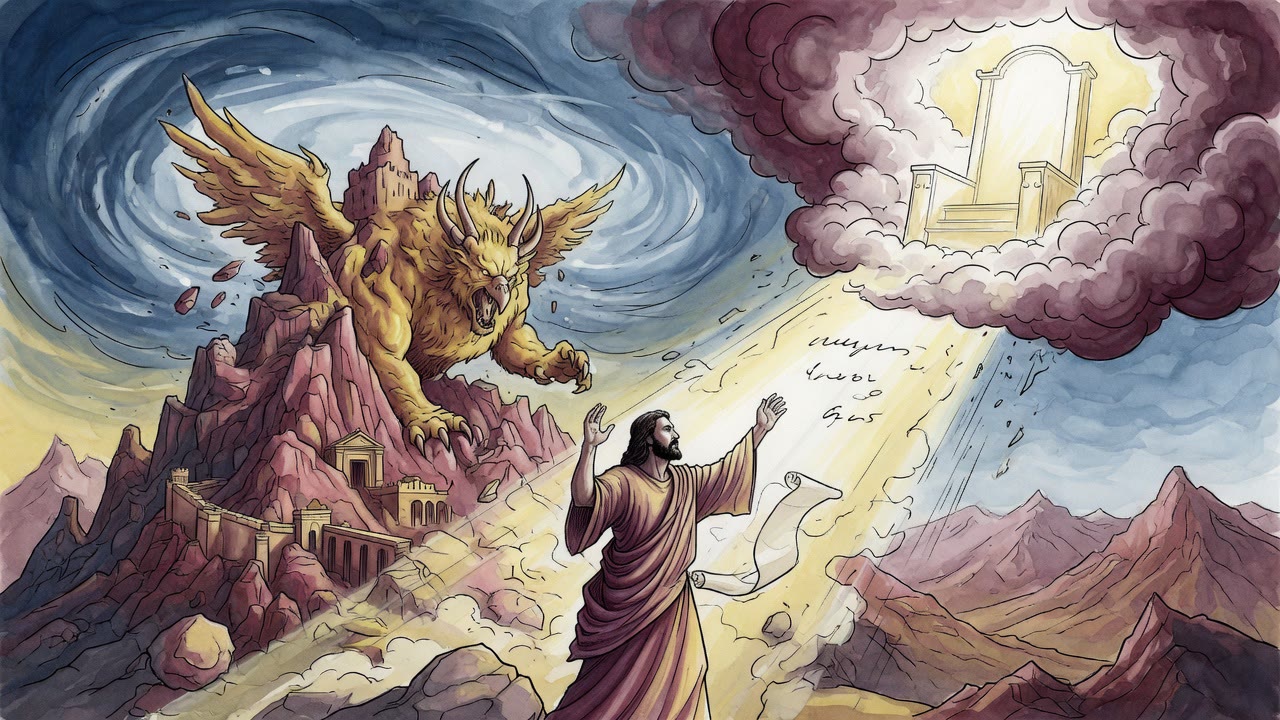
Jonah found the ship at Joppa and felt his shoulders drop for the first time since the word "Nineveh" had entered his ears. The sailors said they were bound for the islands of the sea, for Tarshish, which was the opposite of the city he had been ordered to warn. Jonah said he would go with them. Then he did something no ordinary passenger does.
Jonah Pays His Fare Early and Flees to Tarshish Click for full size

He paid the fare in advance, in the joy of his heart, before the ropes were even free of the dock.

The Custom He Broke on Purpose

On all ships, the custom ran, a man pays when he disembarks. Jonah could not wait for the far shore. Prepayment was a lock on his own flight. If the money was already in the captain's hand, there would be no quiet moment mid-voyage when conscience might ask for a refund and a turn toward Assyria. He went down into the ship the way a man goes down a well: deliberate, heavy, choosing depth over air.

"Jonah rose up to flee unto Tarshish from the presence of the Lord" (Jonah 1:3). The verse stacks descents. Down to Joppa. Down into the ship. Later, down into sleep, down into the sea, down into a fish. The prepaid coin was the first weight he tied to his own ankle.

What He Thought He Was Buying

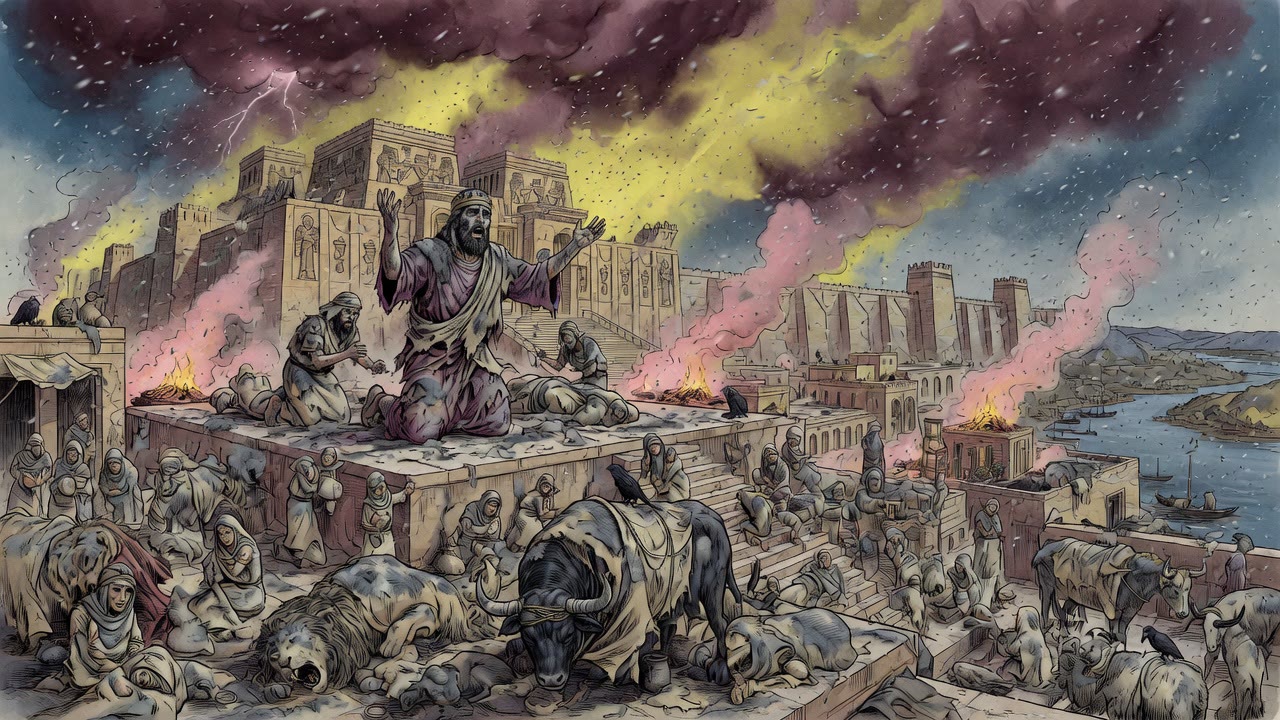
He thought he was buying distance from a mission that smelled like failure. Nineveh repenting would make him look like a prophet of doom who brought no doom. Nineveh refusing would make him watch a city burn after he had walked its streets. Tarshish offered the third option: absence. The joy in his heart was real. It was the joy of a man who believes geography can cancel appointment.

The sailors did not know they had taken on a passenger at war with the One who makes weather. They only knew a man who paid early and wanted a bunk.

Another Prophet on a Rampart

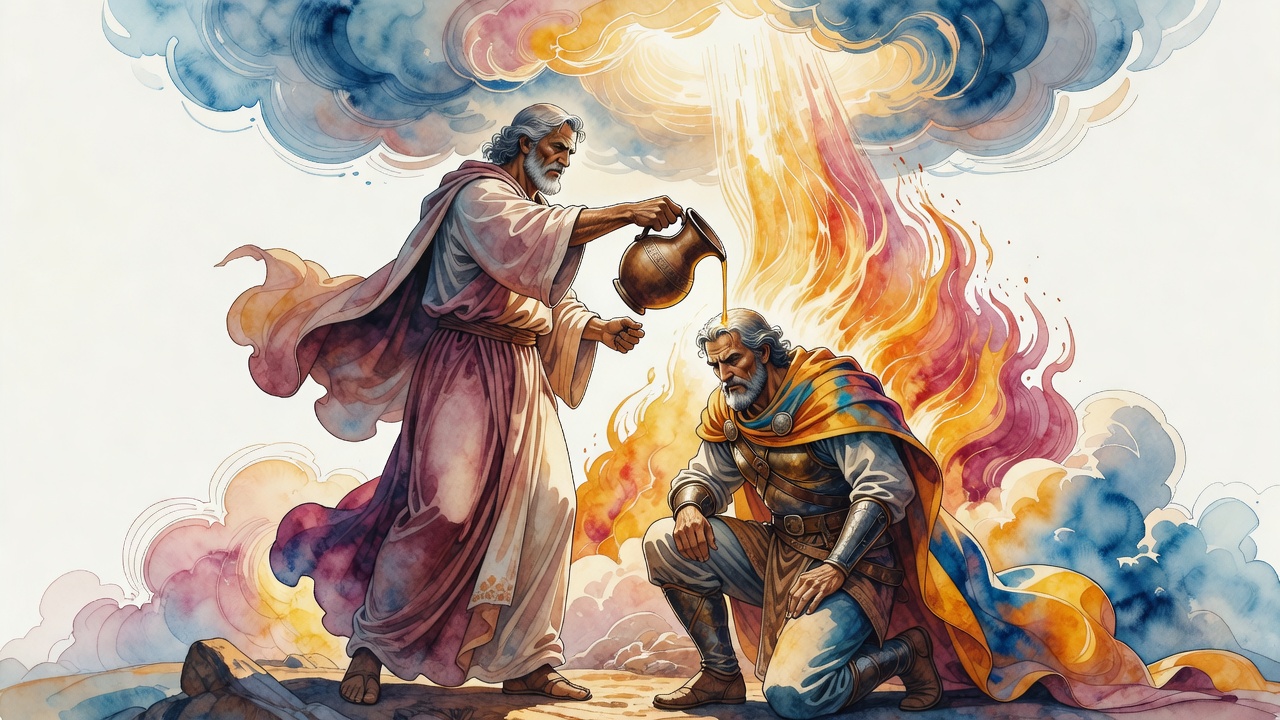
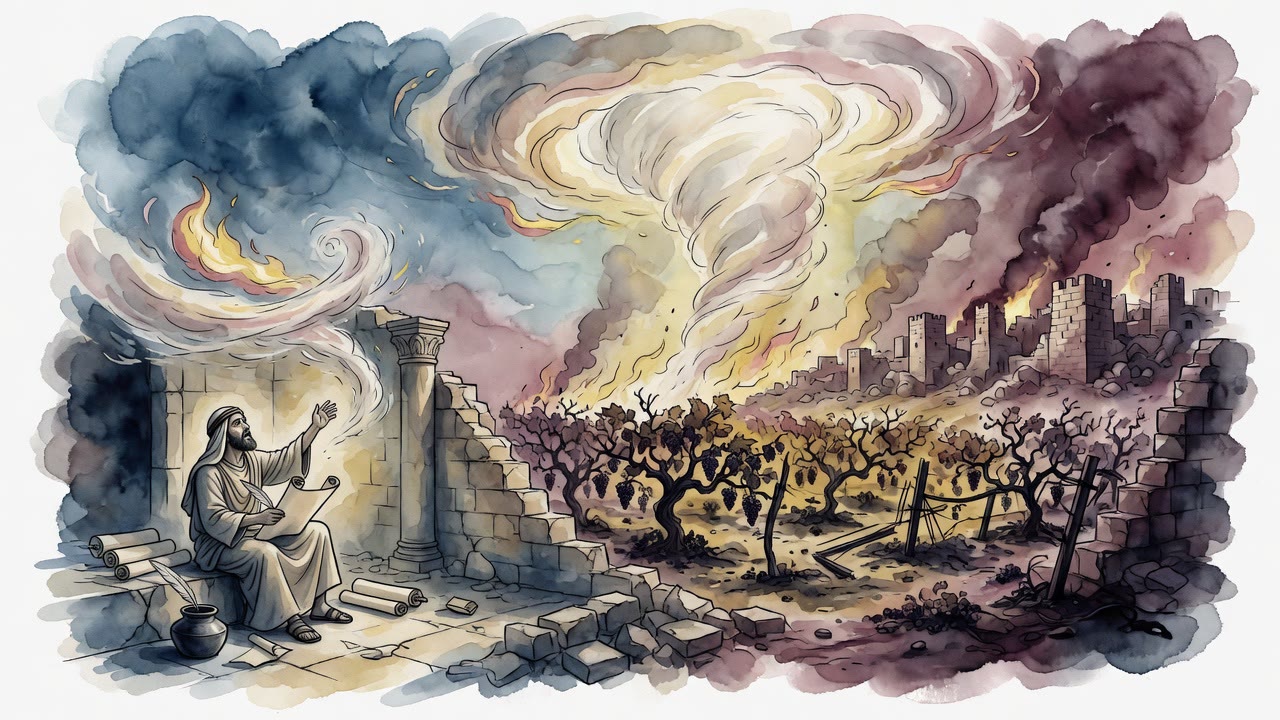
Elsewhere in the prophetic stubbornness of Israel, Habakkuk did not buy a ticket. He built a watch. "I will stand at my watch and station myself on the ramparts" (Habakkuk 2:1). The midrash hears him fashioning even a figure of bread as part of the vigil, a prophet who will not leave his post until Heaven explains why the wicked prosper and the timetable of justice runs slow.

God answered Habakkuk with study and tablets: write the vision, make it plain, the end is set even when it feels endless. "You are a son of Torah and not a son of the earth," the Holy One pressed him. Learn first. Then demand the ending. Habakkuk's watch was flight in reverse: staying put until the answer came, refusing the prepaid exit.

Two Ways to Handle a Hard Word

Jonah ran from a hard word about mercy to enemies. Habakkuk planted his feet on a hard word about history's pace. One paid to leave God's presence. One stood on a wall until God's presence spoke. Both are kept in the tradition because Israel knows both impulses: the joy of the early fare, and the clenched jaw of the all-night watch.

The sea would soon teach Jonah what Tarshish could not buy. Habakkuk would learn that even exile has a written end. Different storms. Same God who refuses to be outrun or out-waited into silence forever.

The Coin and the Watch

Picture the two objects on one table: Jonah's fare, still warm from his hand, and Habakkuk's rampart, cut against the sky. One says, I will not go to Nineveh. The other says, I will not leave this wall until You answer. Between them lies every prophet's night. The ship left Joppa with a man already half-swallowed by his own plan. The watch stayed manned with a man who would rather argue than vanish.

The captain pocketed Jonah's coin and shouted orders. Sails tightened. Joppa's smell of fish and tar fell behind. Jonah lay down in the hold as if sleep could be a second Tarshish inside the first. He had done what he could with money and direction. The rest, he believed, was the ocean's business.

Habakkuk's watch, by contrast, had no motion to hide in. Standing still is harder when the question is how long. The midrash will not let either man off as simply brave or simply cowardly. One flees a mercy mission. One demands a justice timetable. Both discover that the Lawgiver answers on His own clock, whether the prophet is sprinting toward islands or planted on a wall with bread and stubbornness.

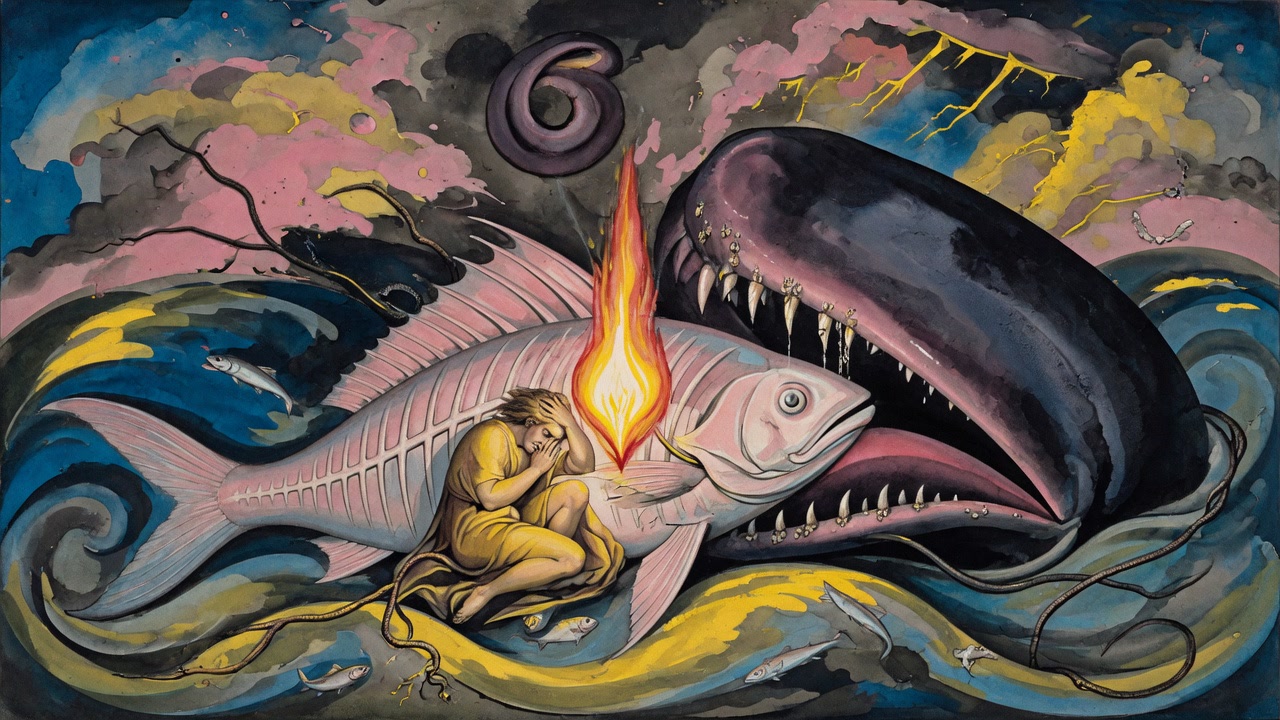
Jonah's prepaid joy would not last past the first real wind. That is another story, wet and dark and full of a fish's ribs. This one ends at the dock and the rampart, where two bodies chose opposite motions under the same heavy sky, and Heaven prepared to answer both the runner and the one who refused to run.


← All myths
From the tradition

Sources

2 sources

The texts behind this telling. Some cards carry a translation of the source; others are our own retelling of it, and each card says which. Every card links out to the original.

Pirkei DeRabbi Eliezer 10:2Pirkei DeRabbi Eliezer

Retold in our words. Read the original at the link below.Pirke de Rabbi Eliezer, trans. Rabbi Gerald Friedlander, London (1916) · CC-BY

Trying to run from… God.

That’s precisely the pickle Jonah found himself in.

The familiar story centers on Jonah and the whale. But let's rewind a bit, because the beginning is just as telling. The Book of Jonah tells us that God commanded Jonah to go to Nineveh, a great city, and preach repentance. But Jonah, for reasons we can only speculate on – maybe fear, maybe stubbornness, maybe even a misguided sense of nationalism – decided, “Nope.”

He’s going in the opposite direction.

The text from Pirkei DeRabbi Eliezer, a fascinating early medieval Jewish text, elaborates on Jonah's escape. It pictures him approaching a group of sailors. "We will embark with you," he says, ready to hop aboard their ship.

"Behold, we are going to the islands of the sea, to Tarshish," they reply. Tarshish, in this context, represents a far-off, almost mythical location, the absolute opposite direction from Nineveh.

Undeterred, Jonah repeats, "We will go with you."

Now, here's where it gets interesting. Pirkei DeRabbi Eliezer points out a peculiar detail: "Now (this) is the custom on all ships that when a man disembarks therefrom he pays his fare; but Jonah, in the joy of his heart, paid his fare in advance."

Why is this detail so important? It highlights Jonah's eagerness to escape. He wasn't just going to pay; he was going to pay ahead of time. He was so desperate to get away from God's command that he threw caution – and perhaps common sense – to the wind.

The verse from Jonah itself (Jonah 1:3) emphasizes this: "But Jonah rose up to flee unto Tarshish from the presence of the Lord; and he went down to Joppa and found a ship going to Tarshish; so he paid the fare thereof, and went down into it, to go with them." He “went down” – a phrase that carries a double meaning, suggesting both a physical descent into the ship and a spiritual descent. What lengths have you gone to avoid something unpleasant?

Jonah's story is a powerful reminder that we can run, but we can't hide. Sooner or later, we have to face what we're running from. And maybe, just maybe, embracing our responsibilities – even the ones we dread – is the only way to truly find ourselves.

Full source
Midrash Tehillim 7:19Midrash Tehillim

Retold in our words. Read the original at the link below.Rabbi Mike Feuer, Jerusalem Anthology · CC-BY

Midrash Tehillim, a collection of rabbinic teachings on the Book of Psalms, dives deep into this very issue.

It starts with a reminder from King Solomon: "He who guards his mouth and his tongue guards his soul from troubles" (Proverbs 21:23). And similarly, (Ecclesiastes 5:4) warns us: "Do not be hasty with your mouth." Words have power, a power to protect or to destroy. But sometimes, even with the best intentions, questions arise…

The prophets, according to the Midrash (rabbinic interpretive commentary), challenged God Himself! They asked, "Why do You do good to the heathen nations in this world?" A bold question. God's response, citing (Deuteronomy 7:10), was simply, "Because I wrote, 'And repays those who hate Him.'" It seems God is bound by his own promises, even when they seem unfair.

The questioning didn't stop there. (Isaiah 45:9) states, "Woe to him who argues with his Maker, as a potsherd among the potsherds of the earth!" And then comes Habakkuk.

Now, Habakkuk took a rather… unique approach. According to this passage in Midrash Tehillim, he fashioned a figurine of bread! Yes, bread! He then declared, "I will stand at my watch and station myself on the ramparts" (Habakkuk 2:1). What rampart? The Midrash explains that God Himself is looking, searching for those who break their pledge to come to Him.

Habakkuk, frustrated, cries out (Psalms 13:2), "How long, O Lord, will You forget me forever?" God's answer is fascinating. He reminds Habakkuk that he is "a son of Torah and not a son of the earth," implying a deeper understanding is required. God says "Study and understand." It’s written in one tablet, Aleph Bet (the Hebrew alphabet), and then you shall say, "Inform me of the end." In other words, learn the foundations, then seek the ultimate answers.

God continues, referencing (Habakkuk 2:2): "And the Lord answered me, 'Write the vision down, inscribe it clearly on the tablets.'" God assures him that even the prophecy of the Babylonian exile, seemingly endless at the time, had a set end. "Even now, when the end comes, I will redeem you." This promise is echoed in (Isaiah 34:8): "For it is a day of vengeance for the Lord and a year of recompense for the vindication of Zion."

Overwhelmed, Habakkuk falls on his face, pleading, "Master of the Universe, do not judge me willfully but rather ignorantly," (Habakkuk 3:1) a prayer "upon his shigionoth," perhaps meaning errors or unintentional sins. He acknowledges his own limitations in understanding God's ways.

The Midrash then draws a parallel to David, specifically (Psalm 57:1): "Meditation for David. When he was being pursued by Saul." We’re reminded of the story in Samuel where Abishai urges David to strike down Saul, but David refuses. The people warn him, "You shall not go out, for if you go out, it will be a snare for you" (Samuel II 18:3).

What’s the common thread? Even the greatest figures – prophets, kings – struggle with understanding God's plan. They question, they plead, they even make bread figurines! But ultimately, they recognize the importance of faith, of trusting in a wisdom beyond their own. The key seems to be humility, acknowledging our limited perspective, and continuing to learn and grow, even when the answers are elusive.

So, the next time you find yourself questioning the fairness of the world, remember Habakkuk's bread figurine and David's flight from Saul. Remember that even the most righteous among us confront doubt. And perhaps, the most important thing we can do is to keep asking, keep learning, and keep trusting, even when we don’t understand.

Full source