5 min read

Joseph Stood Alone in Egypt and God Ran After Him

A crowd once mobbed a bear hung with jewels. One man in the street watched her teeth instead. Joseph did the same thing, and it cost him his coat.

Curated by Arthur · Told by Maggid ·
Table of Contents
  1. The Driver Who Left Eleven on the Road
  2. The Bear Wearing Jewels in the Street
  3. The Garment Left in Her Hand
  4. The Leap Nobody Watched
  5. Rabbi Meir Took an Ancestor Away

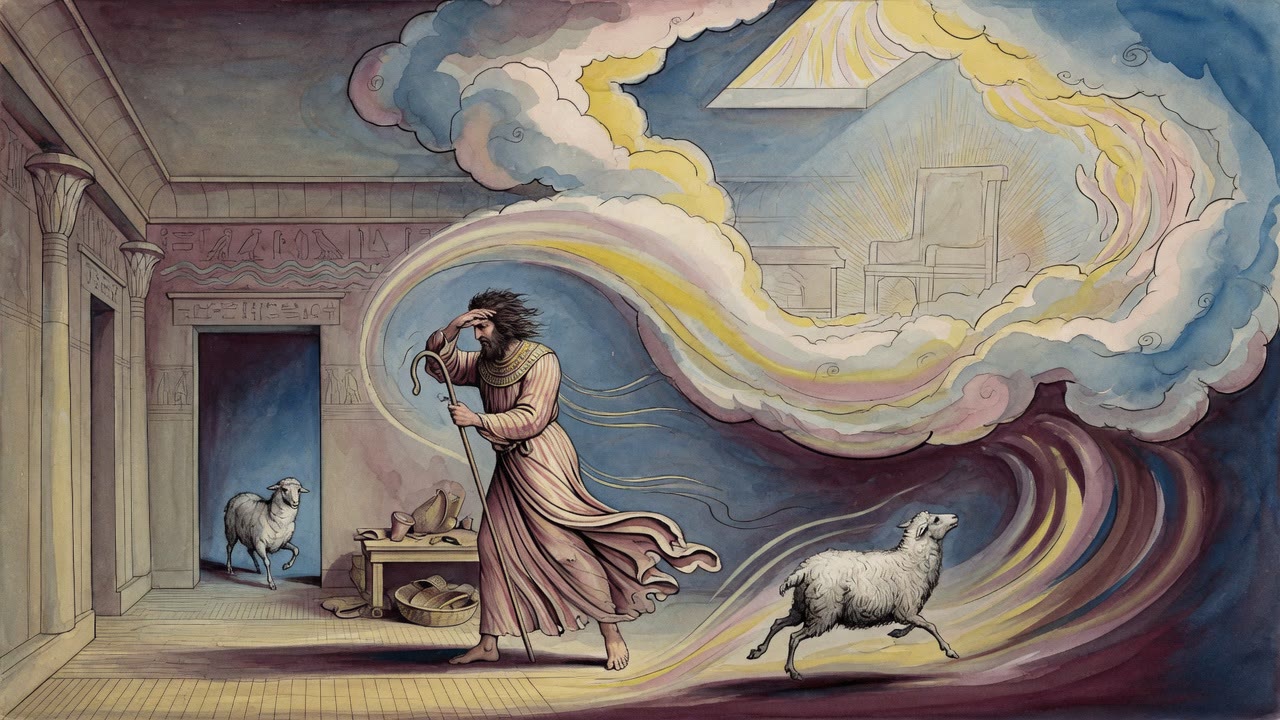
Joseph came off the caravan road at an Egyptian door with a trader's hand still on his shoulder. Potiphar, an officer of Pharaoh's, paid what was asked. The door shut behind the boy.

Joseph Stood Alone in Egypt and God Ran After Him Click for full size

Eleven brothers ate that night under their father's roof in Canaan. Joseph stood alone in a house in Egypt where the gods were carved stone and nobody inside it had known his name a month earlier.

The Driver Who Left Eleven on the Road

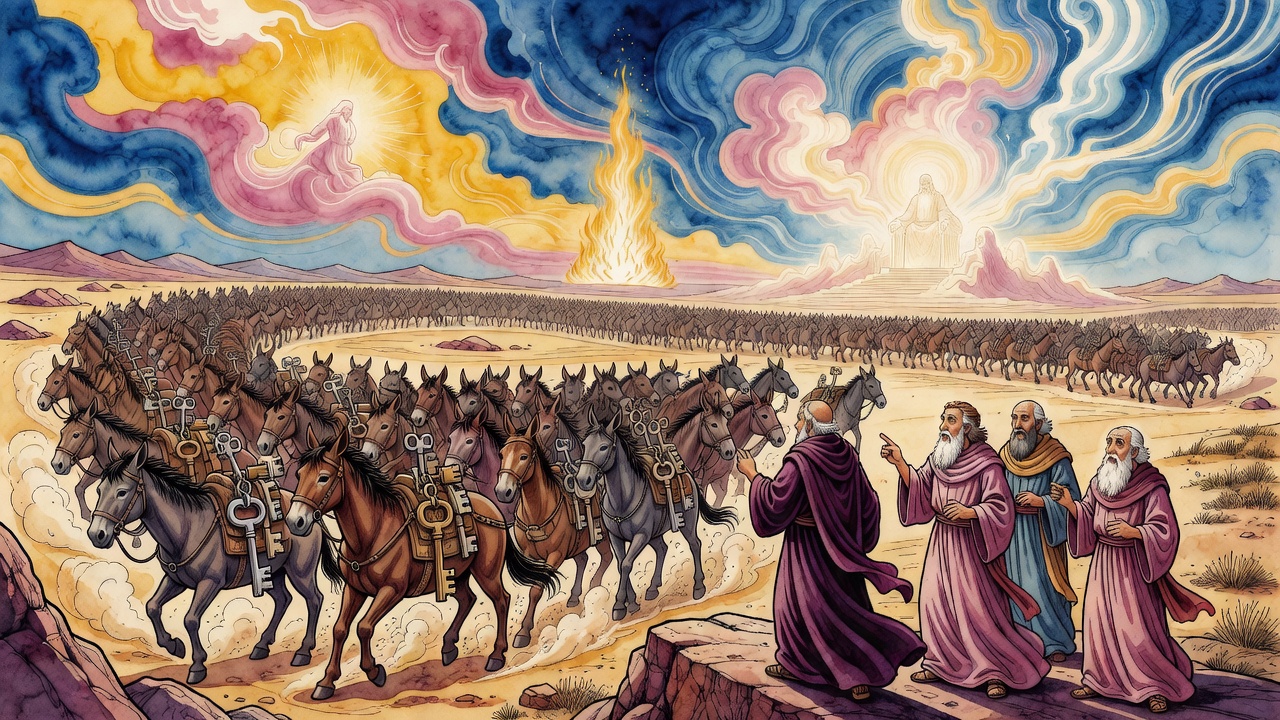
A driver once walked twelve animals down a road, every one of them loaded with jars of wine. One of the twelve turned off through the open door of an idolater's shop. The driver left the other eleven standing in the road and ran.

Men on the road shouted after him. "You leave eleven and chase one?"

"The eleven are standing in the open," he called back. "Nobody will touch them. That one is behind a stranger's door." A single hand tipping one of those jars toward a stone god would forbid every drop in it, and the driver would arrive to find his cargo already ruined.

Rabbi Yudan set that road beside Jacob's sons. The eleven were grown men in their father's house. The twelfth was young and behind a stranger's door. So God went in after him and stayed there.

The Bear Wearing Jewels in the Street

There was a she-bear standing in a street once, out in the open, hung with gems and precious stones. A crowd built around her fast. Word went down the street that whoever jumped on her could keep whatever he stripped off her back.

One man in that crowd did not move.

"You are all looking at what is on her," he said. "I am looking at her teeth."

Rabbi Berekhya gave that man Joseph's face, and gave the bear to the woman who ran Potiphar's household.

The Garment Left in Her Hand

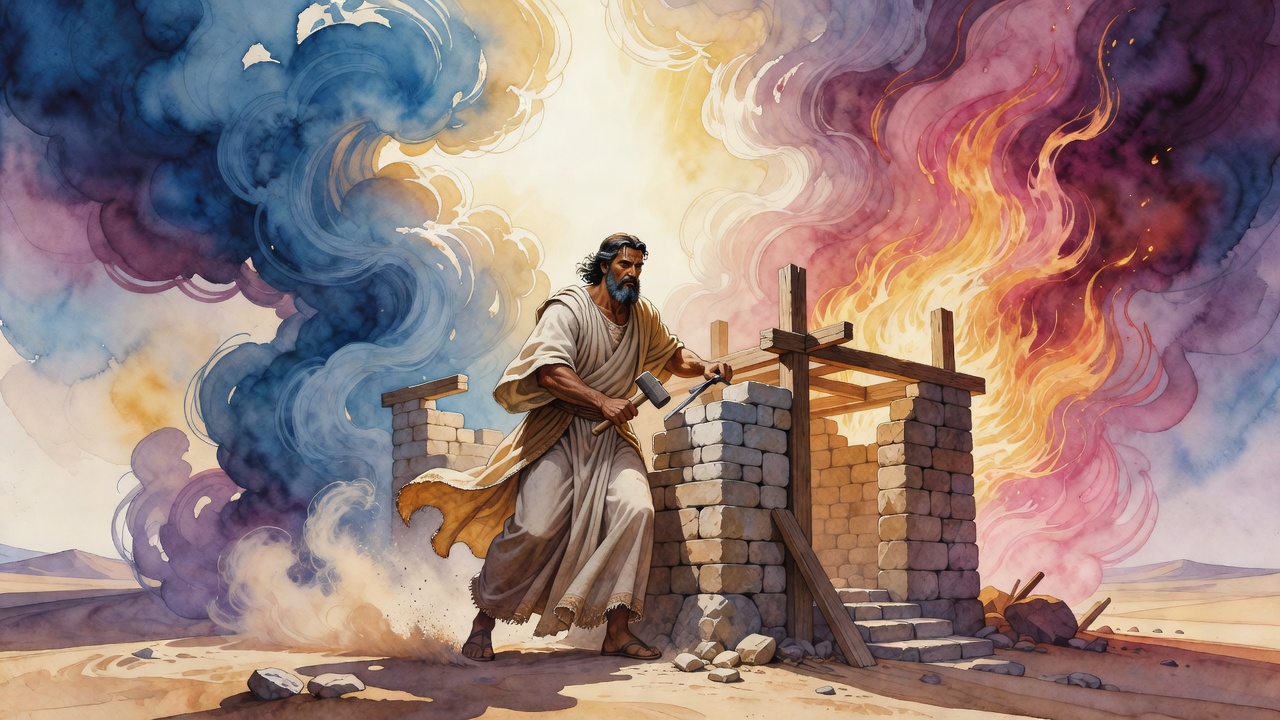
Potiphar had watched everything the boy touched go well, and he handed over the house. The accounts. The stores. The men in the fields. Potiphar kept nothing back for himself except the bread he ate.

Then his wife looked up from across a room and said, "Lie with me."

She said it the next day. She said it the day after that. Joseph kept answering the same way. "My master has held back nothing from me except you. I will not do this thing and sin against God." The jewels were real. Office, standing, a soft place in a hard house. He kept his eyes on the teeth.

One day the house emptied of men. She got a fist into his robe and pulled. He came out of the robe, left it hanging in her hand, and went out through the door into the yard.

She screamed. She held the cloth up to the servants who came running and told them what the Hebrew had tried. She kept it beside her until her husband came home and told him the same thing, with the garment in her lap for proof.

The Leap Nobody Watched

Potiphar put him in the round house where the king's prisoners were kept. No trial is recorded. A slave's word against the mistress of the house was not a case.

Inside, the keeper of the prison stopped counting what Joseph handled, the way Potiphar had stopped counting, because whatever passed through those hands came out right. The stray was still in the shop. The driver had not left.

Rabbi Berekhya heard a jump in the word Scripture uses for what Joseph was. It is the word for men fording the Jordan ahead of their king, wading in and coming up the far bank wet and still walking. "All the strength of that bear is in her jump," Berekhya said, "and you jump higher."

Rabbi Meir Took an Ancestor Away

Centuries later a Samaritan told Rabbi Meir that his people came down from Joseph, through Ephraim and Manasseh, and said it the way a man says the name of a family that owns land.

Meir took it apart in a sentence. "You are not from Joseph. You come from Issachar," he said, and named the son of Issachar whose name sounded like the mountain the Samaritans were named for.

Word of the exchange reached the Epitropos, the overseer who spoke for the Samaritans. He did not argue the genealogy. He answered with one line, and the line has outlasted the argument.

"He removed us from Joseph, and he did not bring us to Issachar."

A boy had once swept an Egyptian floor with nobody in the world standing behind him. Long after, a whole people wanted his blood in their veins badly enough to claim it in public, and a rabbi could take it away from them in half a breath and leave them holding nothing at all.


← All myths
From the tradition

Sources

2 sources

The texts behind this telling. Some cards carry a translation of the source; others are our own retelling of it, and each card says which. Every card links out to the original.

Bereshit Rabbah 86:4Bereshit Rabbah

Retold in our words. Read the original at the link below.The Sefaria Midrash Rabbah, 2022 · CC-BY

(Genesis 39:2) tells us, “The Lord was with Joseph, and he was a successful man, and he was in the house of his master, the Egyptian.” But Bereshit Rabbah, a collection of rabbinic homilies on the Book of Genesis, asks a pointed question: Was God only with Joseph? What about his brothers?

Rabbi Yudan uses a vivid analogy to explain. One of these animals wanders into an idolater’s shop. Naturally, the driver would focus all his attention on retrieving that one stray, wouldn't he? He’d leave the other eleven momentarily. Why? Because the wine carried by the others was safe in the public domain. He wasn't worried it would become yayin nesekh (יין נסך), wine used as a libation to an idol, and therefore forbidden. the eleven were safe, mature, and together. But the one? It was vulnerable. Similarly, Joseph's brothers were adults, under their father's protection. Joseph, however, was young, alone, and in a foreign land. That’s why, the Rabbis explain, “the Lord was with Joseph.” It wasn't that God abandoned the others; it’s that Joseph, in his vulnerable state, required special attention.

Then the verse goes on: “He was a successful [matzliaḥ] man.” Rabbi Berekhya interprets matzliaḥ not just as successful, but as "a leaping man." Someone capable of overcoming obstacles. He connects it to the verse in II (Samuel 19:18), "They crossed [vetzalḥu] the Jordan before the king." Joseph was able to leap over challenges, to persevere where others might stumble.

Rabbi Berekhya doesn't stop there. He offers another striking analogy. Picture a she-bear, adorned with jewels and precious stones, standing in the street. People are clamoring to jump on it, hoping to seize the treasure. But a clever man holds back. "You are looking at what is on it," he says, "I am looking at its teeth."

What’s the message? Joseph, like that clever man, recognized the danger lurking beneath the surface. He understood the perilous situation with Potiphar's wife and sought to distance himself. He saw beyond the immediate temptation, the glittering surface, to the potential consequences.

Rabbi Berekhya concludes with a powerful statement: "All the power of that she-bear is in that it is able to jump, and you are greater than it." Even though Potiphar’s wife expended great effort to entice Joseph, he withstood her advances. He was able to leap higher, further, and with greater strength of character.

The story of Joseph isn't just a historical narrative; it's a timeless lesson. It challenges us to look beyond immediate gratification and to cultivate the ability to "leap" over obstacles with integrity and wisdom. And it reassures us that even when we feel alone, we are not forgotten. We, too, can find the strength to overcome.

Full source
Gaster, Exempla of the Rabbis, No. 180The Exempla of the Rabbis (1924)

Retold in our words. Read the original at the link below.The Exempla of the Rabbis, Moses Gaster (1924) · PD-US-pre-1929

The Samaritans of late antiquity insisted they were descendants of Joseph through the northern tribes of Ephraim and Manasseh. It was a matter of pride. Rabbi Meir disagreed.

Meir confronted a particular Samaritan with a genealogical puzzle. "You are not from Joseph," he said. "You are descended from Issachar, whose father named one of his sons Shomron." The town of Shomron, which gave the Samaritans their name, was on Issachar's territory, not Joseph's. Meir's argument was a wedge: pull the Samaritans away from their glorious ancestor Joseph and down to a smaller tribal origin.

The Samaritan Epitropos, their official overseer, heard of the exchange and returned a wry reply, preserved in Gaster's Exempla #180.

"He removed us from Joseph," the Epitropos said, "and did not bring us to Issachar."

The sentence lands like a closing door. Meir's demolition had stripped the Samaritans of their claim without giving them anywhere to go. It was a critique without a replacement. The Samaritan conceded nothing and only named the emptiness.

Genealogy among Second Temple sects could be warfare by other means. Meir removed them from Joseph. The Samaritan left with a shrug that was also a rebuke: Who, then, are we now?

Full source