Parshat Vayeshev6 min read

Joseph Went Down First So Israel Wore Love Not Chains

Jacob would not leave Canaan. He knew the old promise: his seed would be strangers in a land not theirs. Then word came that his son ran Egypt's grain.

Curated by Arthur · Told by Maggid ·
Table of Contents
  1. The Coat That Opens a Road
  2. Cords of a Man, Not Iron
  3. Twins Before the Descent
  4. Moses and Aaron Already Named
  5. When Joseph Dies, Egypt Begins Again
Joseph Went Down First So Israel Wore Love Not Chains Click for full size

The Coat That Opens a Road

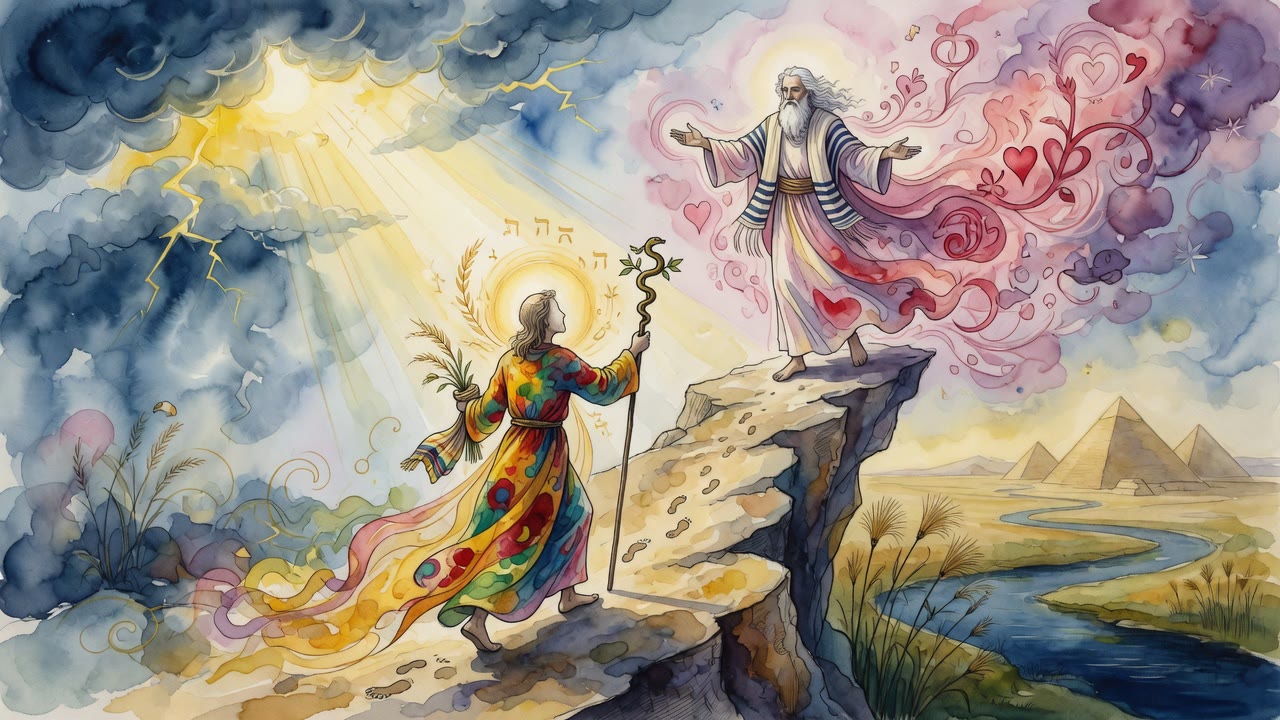
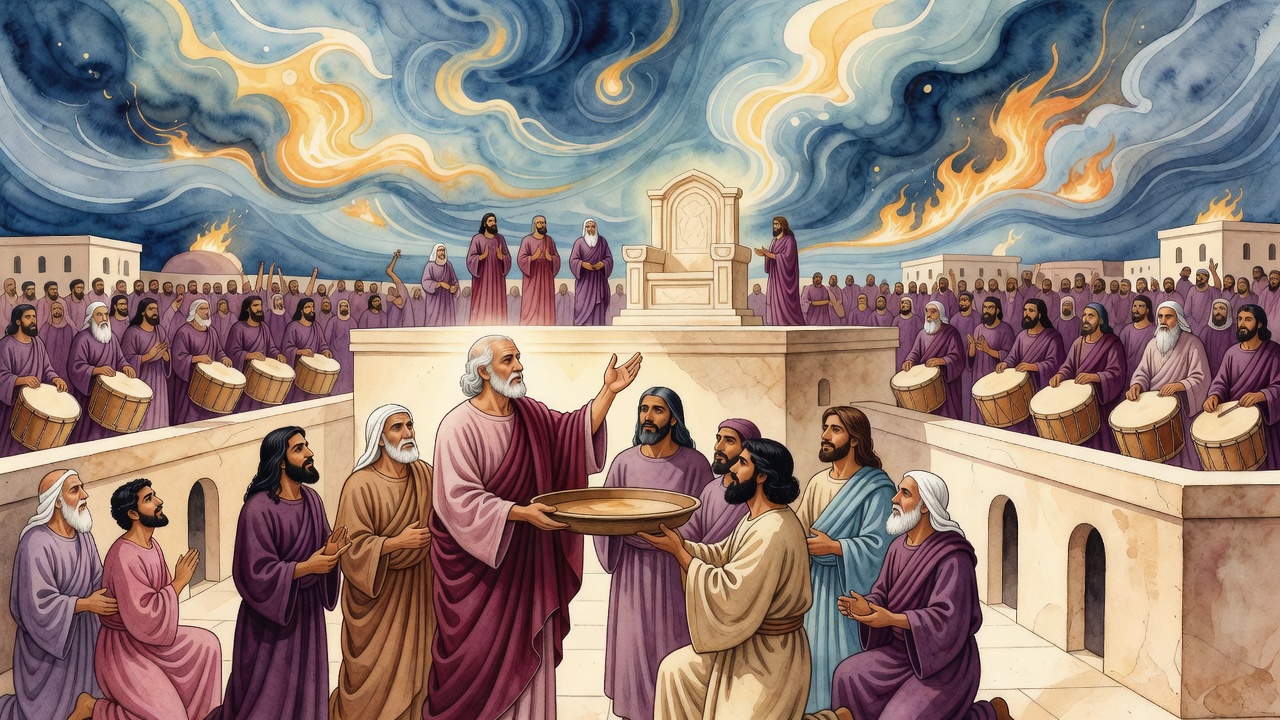
Joseph does not walk into Egypt under a banner. He is sold, lowered, and led. The verse says it plainly: "And Joseph was brought down to Egypt" (Genesis 39:1). The road that will later carry a people begins as a single body on a caravan rope.

Jacob still clings to Canaan. He remembers the old bond spoken to Abraham: seed will be a stranger in a land not theirs (Genesis 15:13). Every night that memory sits like a debt on the table. Jacob will not go down willingly to pay it. He waits, and the house waits with him, until news arrives that the firstling ox is alive and set in power, majesty still on him even in a foreign court.

"It is enough," Jacob says when the report lands. "Joseph my son is still alive." The tribes pack. The bond of Abraham begins to be paid. But the payment will not look like Babylon later looked. No neck-irons. No public dragging. The first step was already taken by a son in a pit.

Cords of a Man, Not Iron

The prophet Hosea had already named the secret of this exile: "With cords of a man I drew them, with bands of love" (Hosea 11:4). Israel deserved chains. The books of the later kings would show what iron exile feels like when mercy is thinner. Egypt could have opened the same way.

It did not. Because Joseph went first, the shackles turned soft. What pulled the house of Jacob south was not a whip at the border. It was a man already inside the palace, a brother who had learned the language of grain and famine, a viceroy whose face the brothers would not yet recognize.

Everything that befell Joseph would befall Zion. Of Joseph Scripture said fair of form and fair of appearance. Of Zion the psalmist sang perfection of beauty. The pattern is merciless and tender at once: the beautiful one is taken down so the beautiful people may later be led without the full weight of the sentence falling all at once.

Twins Before the Descent

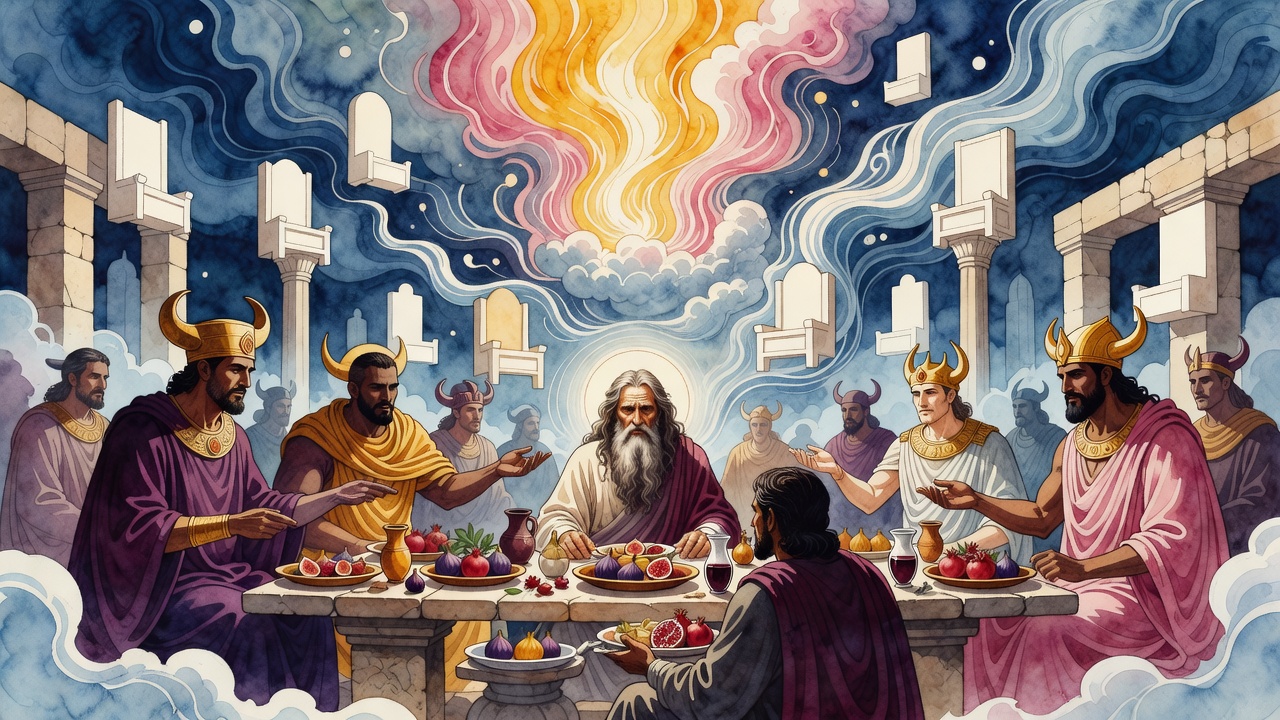
Before the verse carries Joseph into Egypt, Scripture pauses at a birth in Judah's house. Tamar labors. A hand comes out. A midwife ties a crimson thread and names the claim of firstborn. Then the hand draws back, and another child breaks through. Perez breaches. Zerah follows with the scarlet still on his brother's claim (Genesis 38:27-30).

The sages hear more than midwifery. Perez is kingship. From him the royal line will run. Zerah is priesthood's shadow beside the breach. Only after those two names stand in the record does the Torah say Joseph was brought down. The order is the promise. Wherever Israel will walk, crown and service will walk ahead of the road of exile.

In the spelling of twins the rabbis of Bereshit Rabbah catch another light. For Tamar the word is written full, teomim with its alef, both children holding potential for righteousness. Elsewhere, when Rebecca bears Jacob and Esau, the spelling thins. One pair is incomplete in holiness. This pair is not. Kingship and priesthood are not half-born when the exile road opens.

Moses and Aaron Already Named

The good tidings do not stop at Judah's twins. In Egypt the Lord will speak to Moses and Aaron together, leader and priest. In the going out the psalmist will sing that God led the people like a flock by the hand of Moses and Aaron. The pattern that began at Perez and Zerah keeps repeating: no place without a head, no place without a server of the holy.

Joseph's descent is therefore not only a family tragedy written large. It is the first move in a choreography heaven already knew. A son goes down under cords of a man. Kingship and priesthood have already stepped onto the page. When the tribes finally cross the border, they cross under a softer sentence than they earned.

When Joseph Dies, Egypt Begins Again

Years later the people are already living in Goshen, and Scripture still speaks as if they are arriving. "Who came to Egypt" sounds present, as if the foot is still on the threshold. The sages ask the obvious: had they not been there many years?

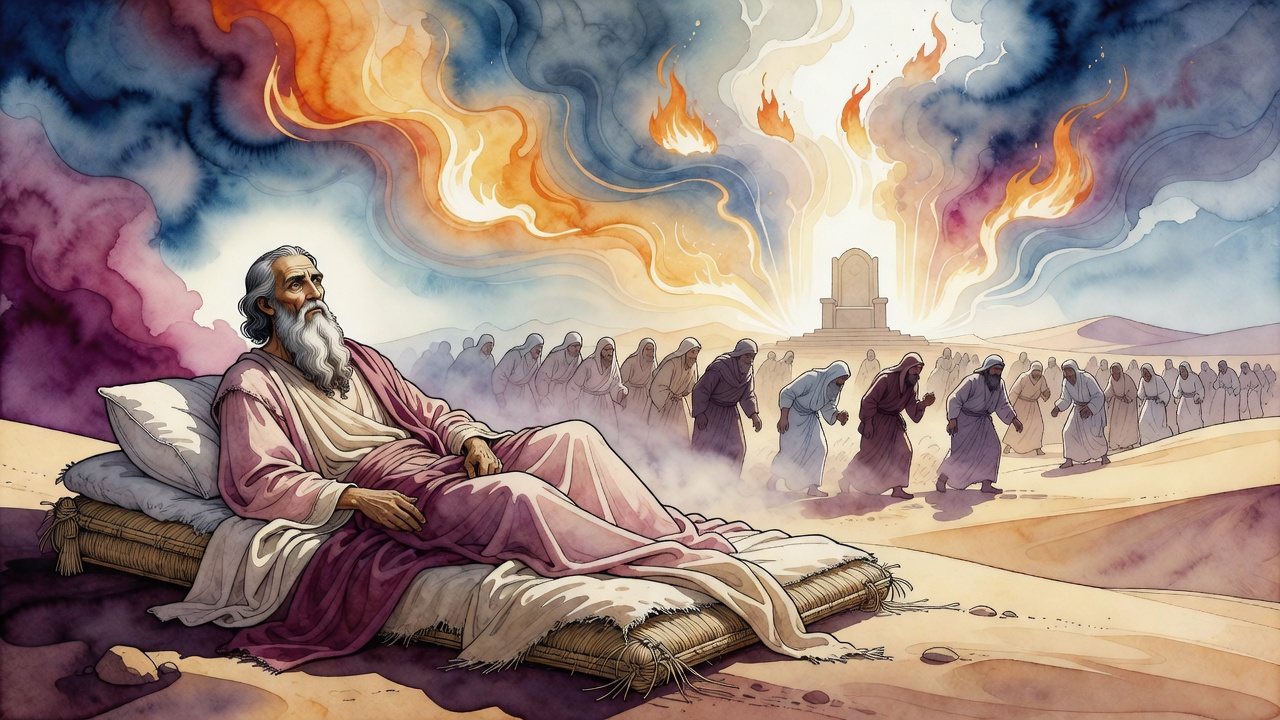
As long as Joseph lived, the load stayed light. Protection sat over them like a roof. When Joseph died, the roof vanished. The same land that had been a brother's court became a stranger's furnace. The verse's present tense is not geography. It is the moment comfort ends and slavery starts to feel like a new country.

They had come under Jacob's patronage, under the man who became Israel, under the twelve that the first descent made possible without chains. The first exile was merciful because one body went ahead. The second pressure of Egypt, after Joseph's death, teaches what the land is without him. Love's bands do not cancel the decree. They only change how the first step is taken.

Joseph's road remains the model. Someone goes first. Someone softens iron into cord. Someone makes sure that when a people must pay an old bond, they do not begin the payment already broken.

The crimson thread on Zerah's hand still hangs in the midrash as a claim that did not win the birth. Kingship went to the breach. Priesthood walked beside it. Joseph's road south did not cancel either gift. It tested whether a people could carry crown and service into a land that laughed at Hebrew staffs and still keep the softer sentence of love's cords. They could, until the protector died and Egypt began again under a new tense of the verb "came."


← All myths
From the tradition

Sources

4 sources

The texts behind this telling. Some cards carry a translation of the source; others are our own retelling of it, and each card says which. Every card links out to the original.

Midrash Tanchuma Buber, Vayeshev 18:1Midrash Tanchuma Buber, Vayeshev

Translation of the source text.Midrash Tanchuma (Buber), Public Domain, on Sefaria · CC-BY-SA

Another interpretation (of Gen. 39:1): "And Joseph was brought down to Egypt." This is what Scripture says (Hos. 11:4): "With cords of a man I drew them, with bands of love." Israel deserved to go down to Egypt in chains and in neck-irons, just as they went down to Babylon, had not Joseph gone first. Everything that befell Joseph befell Zion; that which is written of Joseph is written of Zion. Of Joseph it is written (Gen. 39:6): "fair of form and fair of appearance," and of Zion it is written (Lam. 2:15): "the perfection of beauty." Therefore Jacob was afraid to go down to Egypt, because it had been decreed concerning Abraham (Gen. 15:13): "Know surely that your seed shall be a stranger in a land that is not theirs," and so he settled in the land of Canaan. They came and said to him: Joseph was sold, who was likened to an ox, as it is said (Deut. 33:17): "His firstling ox, majesty is his," and behold, he is set in Egypt. When Jacob heard this, he said: Behold, I am going down to Egypt, even though I am paying off the bonds of Abraham. Immediately (Gen. 45:28): "And Israel said: It is enough; Joseph my son is still alive." Immediately all the tribes went down with him. Who caused them to go down to Egypt? Joseph. (Hos. 11:4): "With cords of a man I drew them", this is Joseph. (Gen. 39:1): "And Joseph was brought down to Egypt."

Full source
Midrash Tanchuma Buber, Vayeshev 21:1Midrash Tanchuma Buber, Vayeshev

Translation of the source text.Midrash Tanchuma (Buber), Public Domain, on Sefaria · CC-BY-SA

Another interpretation of (Genesis 39:1) "And Joseph was brought down to Egypt, etc." What is written above on this matter? (Genesis 38:29) "And it came to pass, as he drew back his hand, [and his name was called Perez]", this is kingship, (Ruth 4:18) "And these are the generations of Perez." And afterward (Genesis 38:30) "his brother came out", this is priesthood. And afterward, "And Joseph was brought down to Egypt." But the Holy One, blessed be He, brought them good tidings that in every place where they go they make use of a king and a priest. How so? In Egypt, by a king and a priest, as it is said (Exodus 7:8), "And the LORD said to Moses and to Aaron, etc." And at their going out, (Psalms 77:21) "You led Your people like a flock by the hand of Moses and Aaron."

Full source
Bereshit Rabbah 85:13Bereshit Rabbah

Retold in our words. Read the original at the link below.The Sefaria Midrash Rabbah, 2022 · CC-BY

It's amazing what you can find when you start digging! Take the story of Tamar giving birth to twins, Perez and Zerah (Genesis 38:27-30). Did you know that even the way the word "twins" is written offers a glimpse into their destiny?

"It was at the time of her giving birth, and, behold, there were twins in her womb" (Genesis 38:27). Notice how the verse emphasizes "it was at the time of her giving birth." The Rabbis in Bereshit Rabbah noticed something profound here. In this case, they were "incomplete" at first. But elsewhere, regarding Rebecca’s birth of Jacob and Esau, it is written: “Her days to give birth were complete” (Genesis 25:24). What does it mean?: the Torah is incredibly precise. Even a single letter can carry immense weight. And when Tamar gives birth, the word for "twins" – teomim (תאומים) – is spelled in its full form, complete with an alef (א). Bereshit Rabbah 85 points out that this completeness reflects the fact that, at this moment, both Perez and Zerah held the potential for righteousness.

Go back to Rebecca. The text uses a slightly different spelling, tomim (תומים), missing that crucial alef. Why? Because, as the verse says, one would be righteous (Jacob), and one would be wicked (Esau). The incompleteness in the spelling mirrors the incomplete righteousness of the pair. It's a subtle difference, but a significant one! So, according to this reading, the spelling reflects the children’s potential and destiny. Fascinating. Now, let's Ever thought about how much trust we place in them? The Torah acknowledges this. "It was as she was giving birth, one extended a hand; the midwife took and bound upon his hand a crimson thread, saying: This one emerged first" (Genesis 38:28).

Rava bar Rav Hisda makes a powerful statement: "There are three who are believed immediately." Who are they? The midwife, the caravan, and a woman who attests to the purity of another woman.

The midwife, as we see here with the crimson thread, is trusted to declare who was born first. Her word is taken as truth. Why? Because she's right there, witnessing the event firsthand. She has no agenda, only the truth of the moment.

And what about the caravan? Rabbi Simon, brother of Rabbi Yehuda bar Zavdi, tells us in the name of Rav that if a lost child is found, the parents from a caravan are believed if they claim the child as theirs. This is because they are presumed to be travelers who simply lost their child along the way. However, once the child is taken in and cared for, then testimony is required.

Finally, a woman who attests to the purity of another woman is believed. This refers to a specific situation regarding ritual impurity. Initially, all are considered impure. But if one woman examines herself and finds the blood came from her, then only she is impure. As Rava clarifies, this applies if it's within twenty-four hours.

Why are these three believed? Because in these specific circumstances, their testimony carries a unique weight. It speaks to the immediate, the observed, and the intimate knowledge they possess.

So, what does all this tell us? Perhaps it's a reminder to pay attention to the details – even the seemingly small ones. Whether it's the spelling of a word or the testimony of a trusted witness, truth often resides in the nuances. And sometimes, the most profound insights are found not in grand pronouncements, but in the quiet observations of those who are present in the moment.

Full source
Shemot Rabbah 1:4Shemot Rabbah

Retold in our words. Read the original at the link below.The Sefaria Midrash Rabbah, 2022 · CC-BY

It's like, bam, out of nowhere, you're bearing a load you didn't even see coming. Well, the ancient Israelites knew that feeling all too well when they found themselves in Egypt.

We read in Shemot Rabbah, a collection of rabbinic interpretations on the Book of Exodus, about the verse "Who came to Egypt.." Now, hold on a minute. "Came"? In Hebrew, the verse could even be read as "who were coming to Egypt." But hadn't they already been there for quite some time? What's with the present tense?

That's where the brilliance of midrash (rabbinic interpretive commentary) comes in. It’s like a secret code, inviting us to dig deeper into the text. Shemot Rabbah asks, “Was it today that they came? Hadn’t many years passed since they came to Egypt?” The text isn't being dense; it's pointing us toward a profound shift in their experience.

The answer? As long as Joseph was alive, things were different. They were under his protection, enjoying a certain level of comfort and respect. Joseph, the son of Jacob who rose to power, shielded them from the harsh realities of Egyptian life. But when Joseph died, everything changed. The protective umbrella vanished. Suddenly, the burden of Egypt, the oppression and slavery, crashed down upon them.

That's why it says "who came," as if they were entering Egypt anew, on that very day. It wasn’t a geographical arrival; it was a shift in their experience, their reality.

And then the verse continues, "With Jacob.." Shemot Rabbah reminds us that they were all under Jacob's patronage. Jacob, whose Hebrew name, Yaakov (יַעֲקֹב), means "heel" or "supplanter," but who became Israel, the father of the nation. He was the one who amassed mitzvot (מִצְוֹת), good deeds, and earned the privilege of fathering the twelve tribes. His merit protected them.

"Each came with his household." Some commentaries, as noted in Tanchuma (another important collection of Midrash), even suggest that each family was fully prepared before descending to Egypt. Rabbi Huna says that each father arranged wives for even his youngest sons before going to Egypt, as is written "each came with his household." They were building for the future, even as they entered a land of potential hardship.

So, what does this all mean for us? What once felt safe and secure can suddenly become oppressive. But it's also evidence of the enduring power of family, tradition, and the merit of our ancestors. Just like the Israelites, who, even as they "came" to Egypt, were already planting the seeds of their future redemption.

Full source