Jacob Saw Every Exile From His Bed in Egypt
Grain filled Joseph's storehouses. On the bed in Goshen, Jacob watched roads of exile his grandsons would never walk. He did not tell them.
Table of Contents
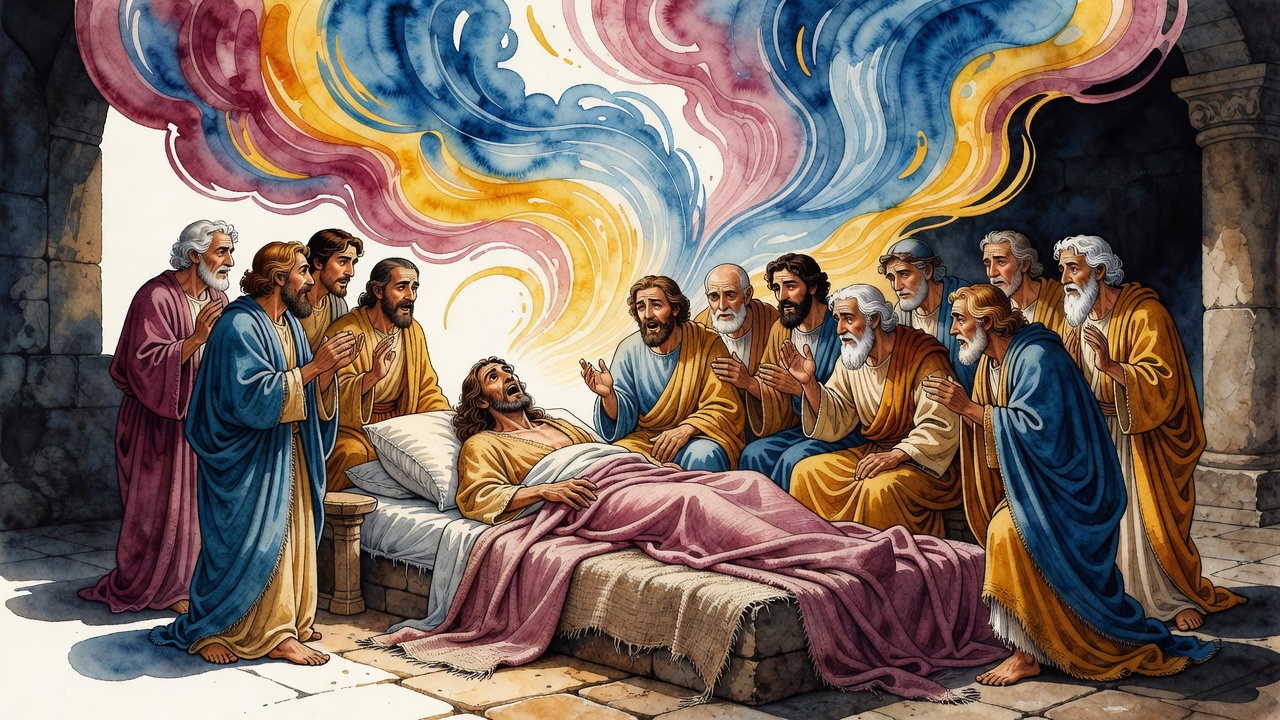
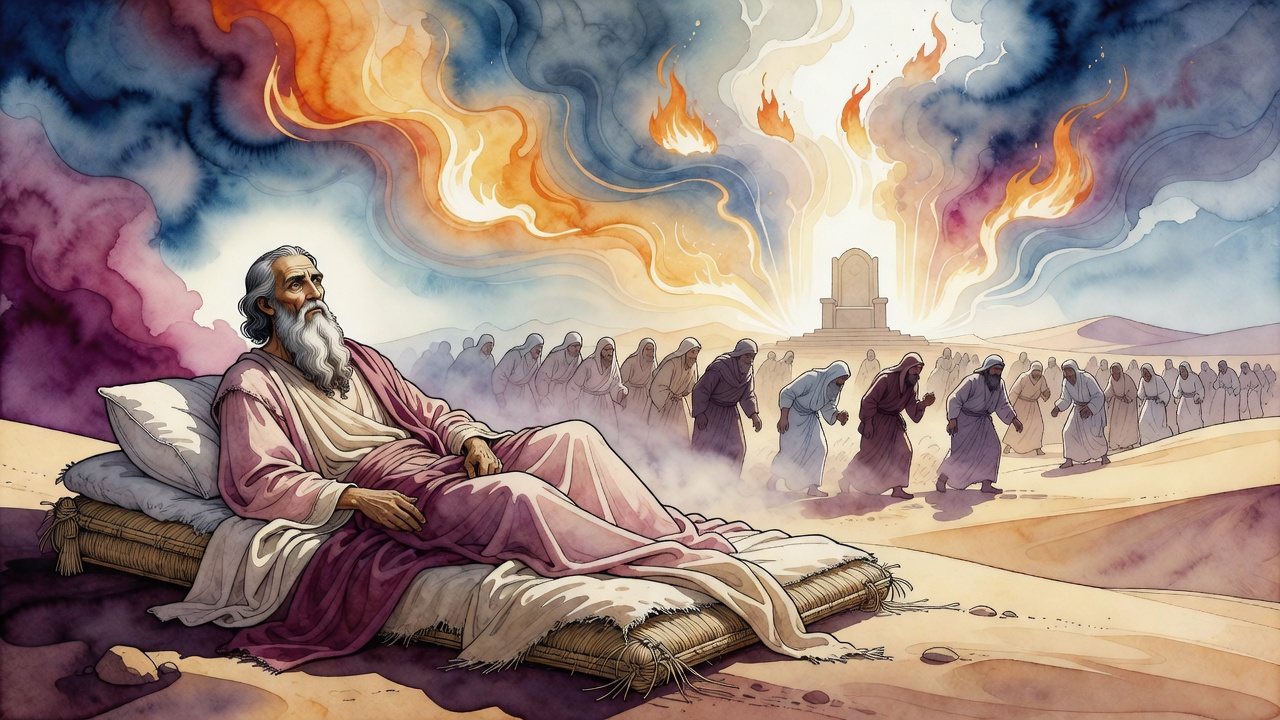
The servants thought Jacob was sleeping. His mouth hung open. His hands lay loose on the cover. In Goshen the grain was near and the bed was soft, and under the lids his eyes kept moving.
 Click for full size
He had lived in Egypt seventeen years (Genesis 47:28). Joseph ran the storehouses. The grandsons climbed the bed, pulled his beard, and asked for stories from Canaan. Jacob held their wrists, blessed them, and kept the longer map inside his chest.
A servant came with a basin. Jacob sat up long enough to wash, then lay back. The room smelled of oil and bread. He did not tell the boys what the dark behind his eyes was doing.
Egypt Was Only the First Room
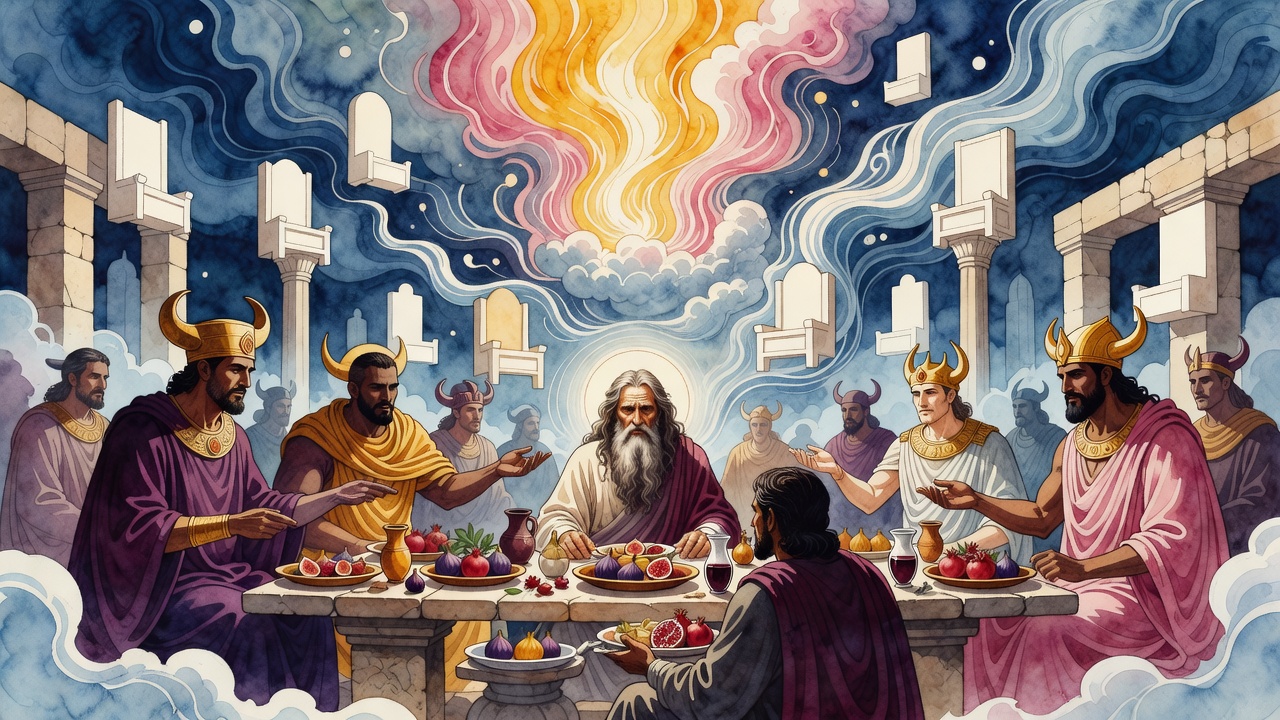
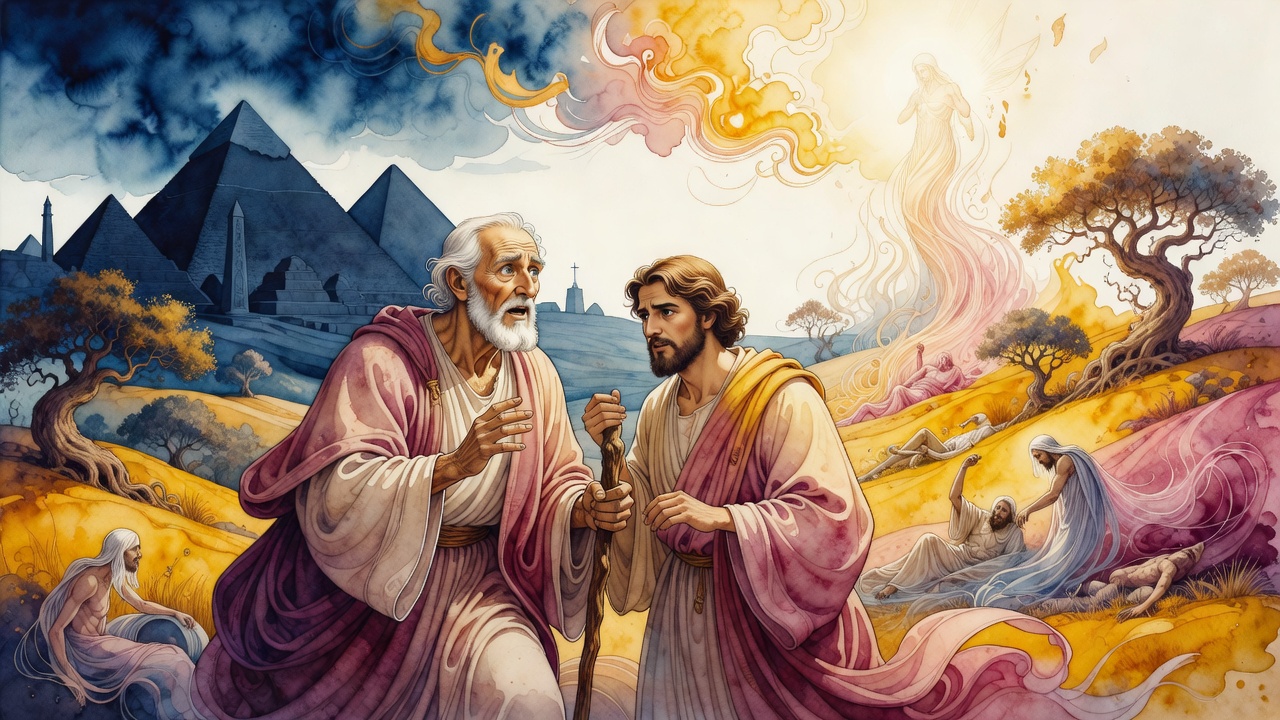
Egypt smelled of river mud and clerks with lists. Jacob had come to see Joseph before he died. He found a son who ruled, and he also found a people about to become slaves by slow degrees. Love sat at the table. The future sat beside it and ate without speaking.
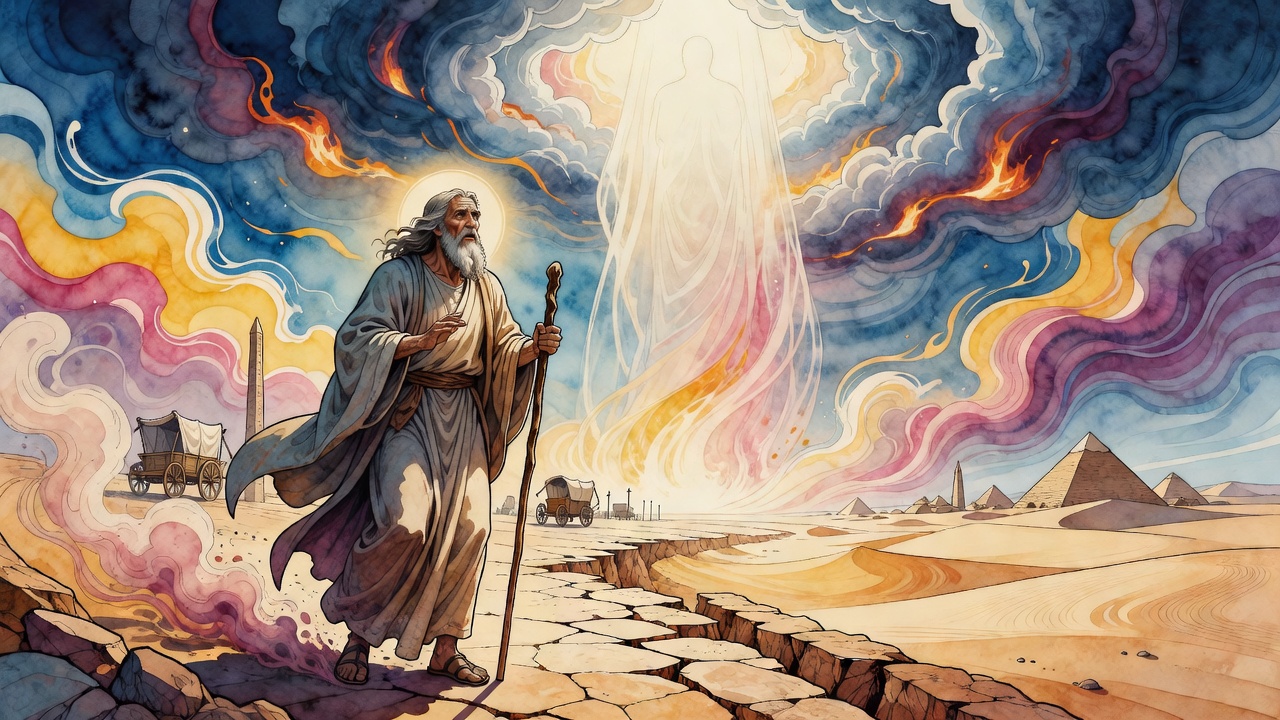
When he shut his eyes the Nile went out. Tents tore. Carts groaned. Borders stayed shut. A people spilled the way grain spills when a sack splits on a road. Markets rose where Hebrew was a private tongue. Nights came when no one remembered the old wells.
He named the end of the road too, a light he could not enter, only point at, the way a man points at a mountain through heat. Egypt was not an accident. It was the first room of a house with many rooms. Jacob refused to call the house a mistake. He also refused to call the dark rooms bright.
Joseph entered with news of harvests. Jacob nodded and sent him back to the grain. The son managed famine. The father carried a ledger the clerks would never copy.
The Land Folded Under Him
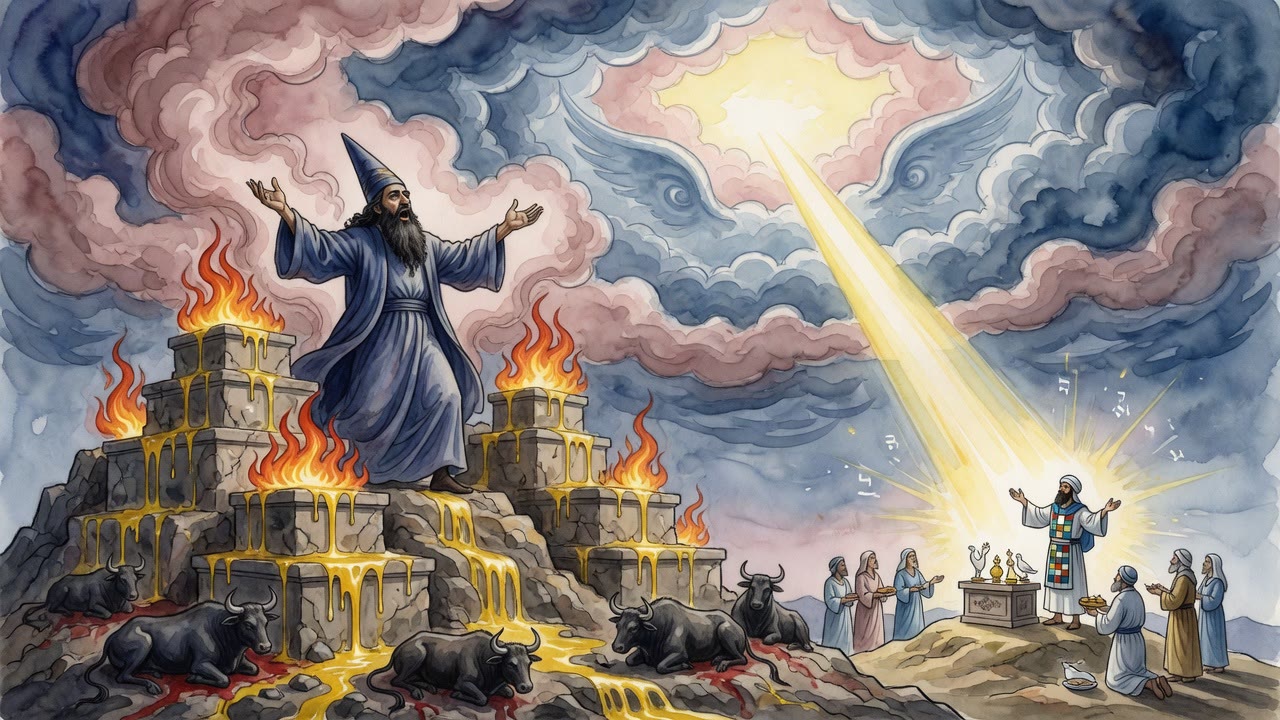
Years before, at Bethel, the Holy One had folded the whole Land under his sleeping body. One stone pillow. One ladder. A country pressed to his spine. The promise in (Genesis 28:13) still held. The holding hurt.
Then the work of his soul had been gathered under him. He had not needed to run from town to town to lift what belonged to him. The ground under his ribs had been wide enough. Now he lay in a foreign bed, and the work of his children was flung across empires.
He pressed his palm to the mattress and remembered stone. That memory was a rebuke and a comfort in the same breath. Holiness can gather under one body. Exile can fling the same holiness across seas. Jacob did not curse the scattering. He measured it. A father who has carried a nation under his ribs can carry a longer grief without dropping the blessing he still owes his sons.
He rose at night and walked the length of the room. Joseph's house was large. It was still not the Land. He sat again. He lay down. Roads kept running past the foot of the bed.
A Heart Awake in Goshen
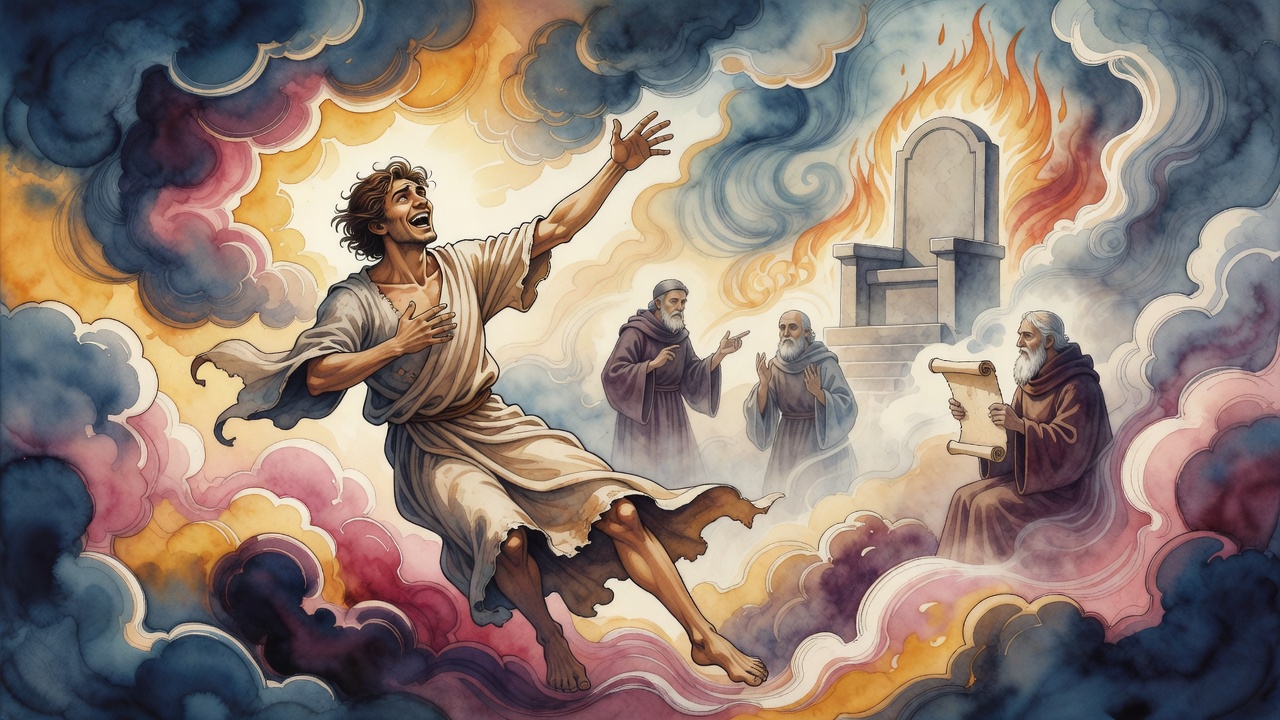
Later the Community of Israel, Knesset Yisrael (כנסת ישראל), would say, "I was asleep, but my heart was awake" (Song of Songs 5:2). Jacob lived that sentence early. His body rested in Goshen. His heart stayed on watch.
Sleep for a patriarch is never only sleep. The longer road climbed the bed and would not leave until it was seen. In the days of Moses the Community would need a beloved knocking at the door, rebuking, calling, opening gates. Jacob already caught that knock from the far side of time. He could not open those doors. He faced east before dawn and waited for a sun he had not yet felt on his skin.
Joseph brought politics with the morning bread. Jacob took the bread, blessed it, and ate. He answered from a deeper place. Famine was one chapter. The book was still being written in blood and mercy.
"Sleep, Father," Joseph said once, standing in the doorway with a lamp.
"I am," Jacob said. He was not.
Hands on the Grandsons
When he gathered his strength to bless, he left more than names. He called Ephraim and Manasseh close. He crossed his hands and set them on the boys' heads. His mind was already walking roads those boys would never walk. The room smelled of Egyptian oil. His words smelled of a future not yet paved.
Jacob died with Egypt under him and redemption still ahead of him. The Torah says he lived those years. He did. The grandsons felt only the blessing. Heaven felt the whole map. Between them the bed held an old man whose hands had already shaped themselves around wrists that had not yet been bound.
The servants closed his eyes. They thought the watch had ended. Under the cover his fingers were still bent, as if a road were still running through them.
← All myths