Judah bar Ilai Left Torah to Dance the Bride
Drums pulled the air sideways outside the study hall. Rabbi Judah closed his book. The bride would not wait for a finished line of Torah.
Table of Contents
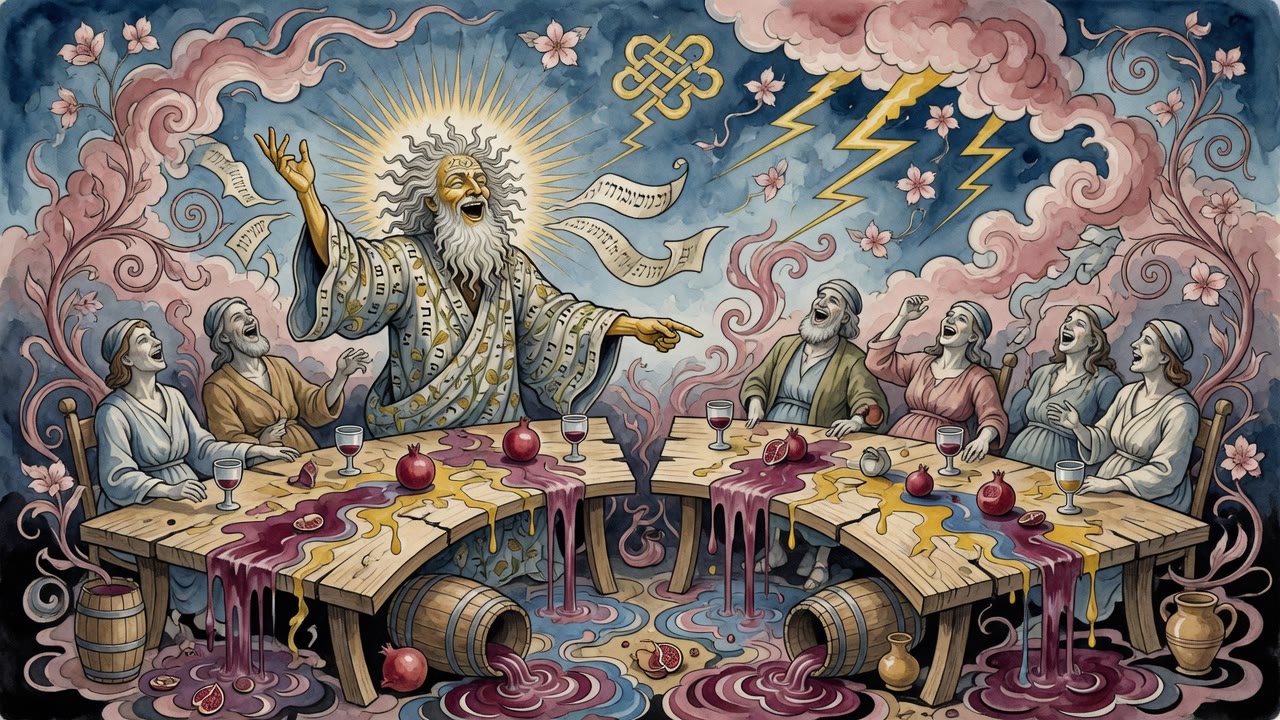
Rabbi Judah bar Ilai was in the middle of a line of Torah when the street outside changed pitch. Drums. Voices. A bridal procession pulling the air sideways past the study hall. He closed the book, stood up, and went out into the noise.
 Click for full size
His students stared. A man of his rank, sweating among strangers for a couple he might never meet again. The page was still open on the table. The bride was already moving. He joined the dancing and stayed until his clothes stuck to him.
When he came back he taught them why. At the first wedding in history there were only two human guests, Adam and Eve. The matchmaker was the Holy One Himself.
God Dressed Eve and Led Her
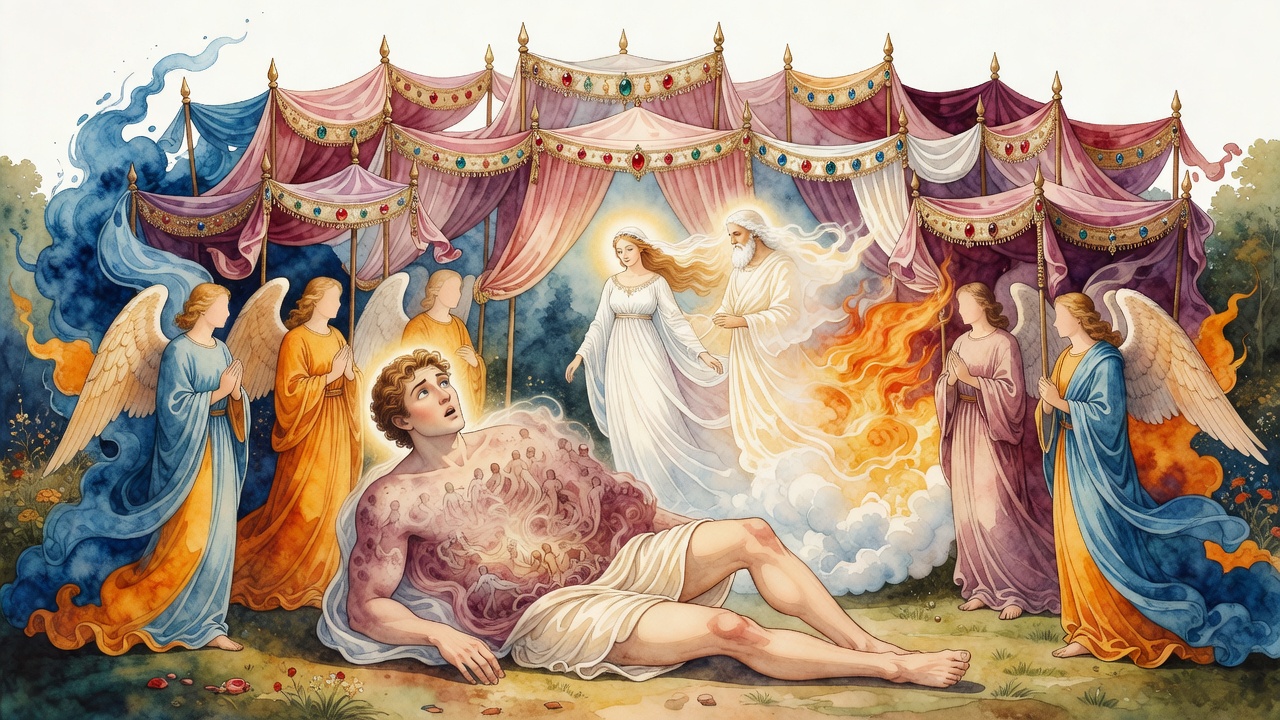
God built Eve from Adam's side. He braided her hair. He dressed her in bridal ornaments. He led her to the man who had named the animals and still had no partner. From that day, Judah said, every Jew who escorts a bride and cheers a groom is walking in a track God cut in the first week. To dance until you sweat is not a break from holiness. It is one of the few mitzvot in which a person follows God's own example from the week of creation.
The page would still be there after the procession. The bride would not. A face turned toward joy for a few hundred steps is a face that has learned the shape of the first kindness done to a lonely man in a garden. The students who only saw a sage wasting time had missed the braid in Eve's hair. They had missed the ornaments. They had missed the Holy One walking a woman toward a man who was still waiting.
When Judah danced, he was catching up to that procession.
Three Stacks of Gold
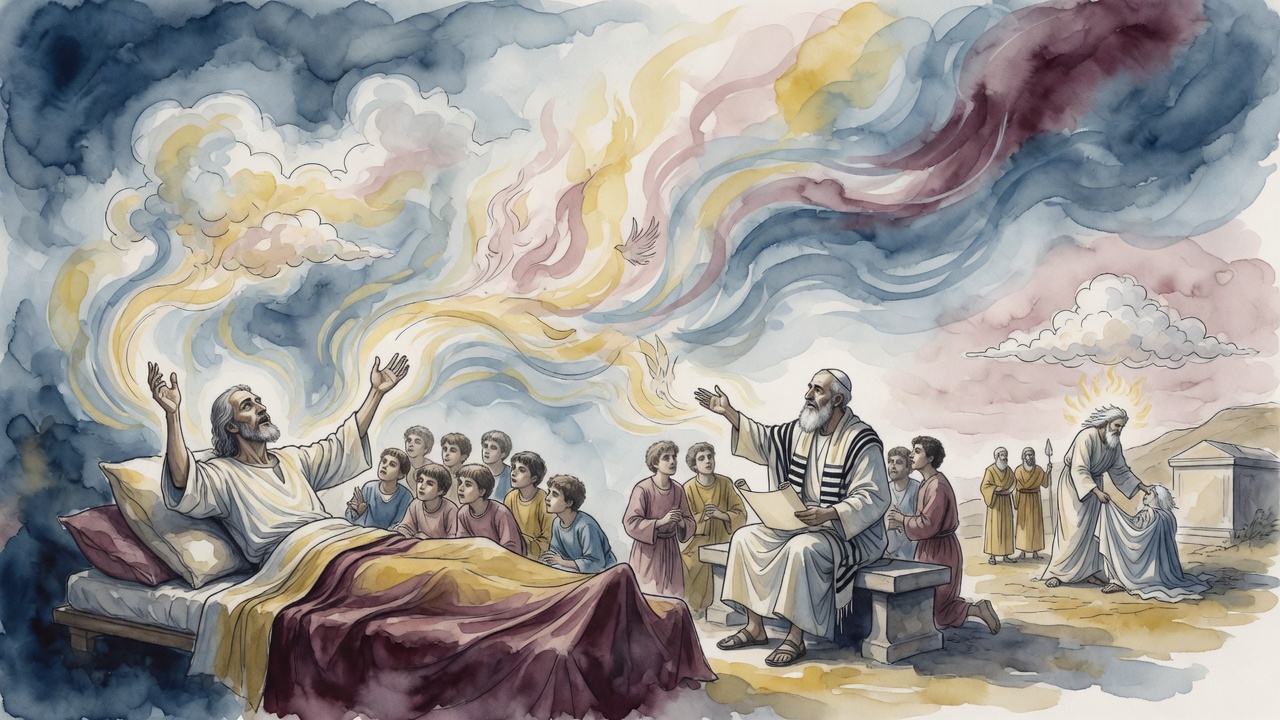
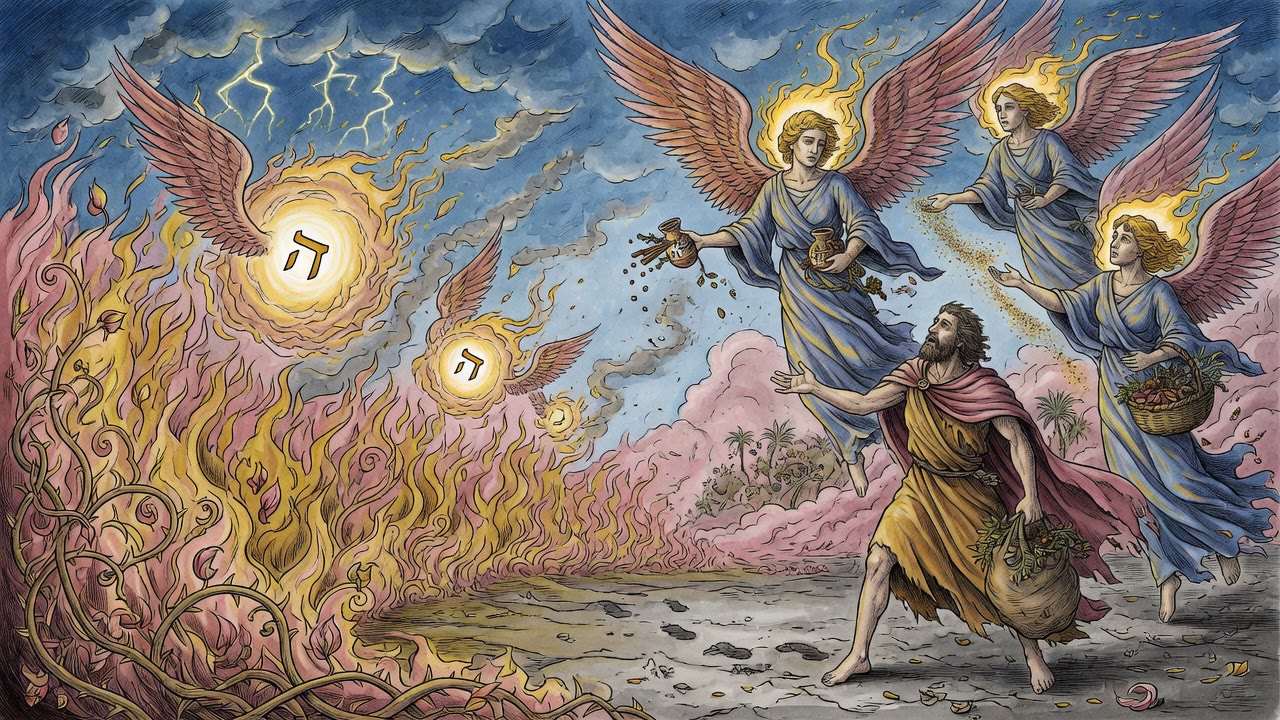
A dying father called his only son to the bed and left two commands: occupy yourself with Torah, and give tzedakah with a full hand. The inheritance was three thousand gold pieces. The son divided them into three stacks and spent them until the house was empty.
The first thousand went to poor couples who could not marry. He paid dowries families could not pay, so a canopy could stand over people who had love and no table. The second thousand buried a great rabbi whose household could not cover the funeral. He bought the grave, the shroud, the honor a neglected dead man is owed. The third thousand went to officials, to tear up a decree that Jews may not circumcise their sons or hold Jewish marriages. The calendar of the body was being closed by a government. He bought it open again.
When the coins were gone he sat in a room with no reserve. Torah and tzedakah had been his father's last words. He had kept both, and the keeping had left him with walls and nothing in them.
Elijah Handed Him Ten Coins
Elijah stood at the door and put ten gold pieces in his hand. "Start again." With those coins the young man rebuilt a life and grew wealthy. Before the end Elijah returned and showed him, in a vision, the account waiting in Gan Eden. The three thousand had not vanished. They had been moved to a place rust and thieves cannot reach. His father's advice had been investment counsel in a currency that does not sit in a chest.
Poor couples need more than a dance. They need a table, a ring, a roof for the first nights. The son who gave a thousand gold pieces to bring brides under a canopy made Judah's street possible for people who could not afford joy. The decree against circumcision and marriage had tried to end Jewish time itself. Paying to kill that decree was not cynicism. It was keeping the body able to mark a covenant. Elijah's ten coins were a receipt. The ledger continues upstairs.
Silver, Barley, and a Bride
Judah, still catching his breath from the street, gave the students one more price. Hosea buys back his wife for fifteen pieces of silver and a homer of barley (Hosea 3:2). On the surface it is a transaction. Judah heard a betrothal. God does not only command Israel to marry. God buys back, betroths, and pays.
Fifteen pieces, a homer of barley, a lethech of barley. Some counted sixty commandments in that price, the dowry placed on the beloved. Some counted seventy. Another reading says the fifteen pieces are the fifteenth of Nisan, the night of Passover itself, when the month of redemption opens. Judah put the verse back on the street. Covenant is a wedding that keeps happening. When the drums start, heaven is not looking away from the study hall. Heaven is remembering how the world began with a lead toward a canopy.
The book on the table was still open to the unfinished line. Judah did not hurry back to it as if the dance had been an interruption. He had shut it because a bride was passing, and because God had once shut whatever else He was doing to braid Eve's hair and walk her down. The students picked up their pens. Somewhere outside, the procession turned a corner, and the drums thinned, and the work of joy moved on without them.
← All myths