The King Felled Cedars and Left the Thorns Standing
A king cuts great cedars to fence his vineyard and leaves thorns that catch the clothes, while Israel learns why tests remain in the land.
Table of Contents
 Click for full size
Axes in a Field of Giants
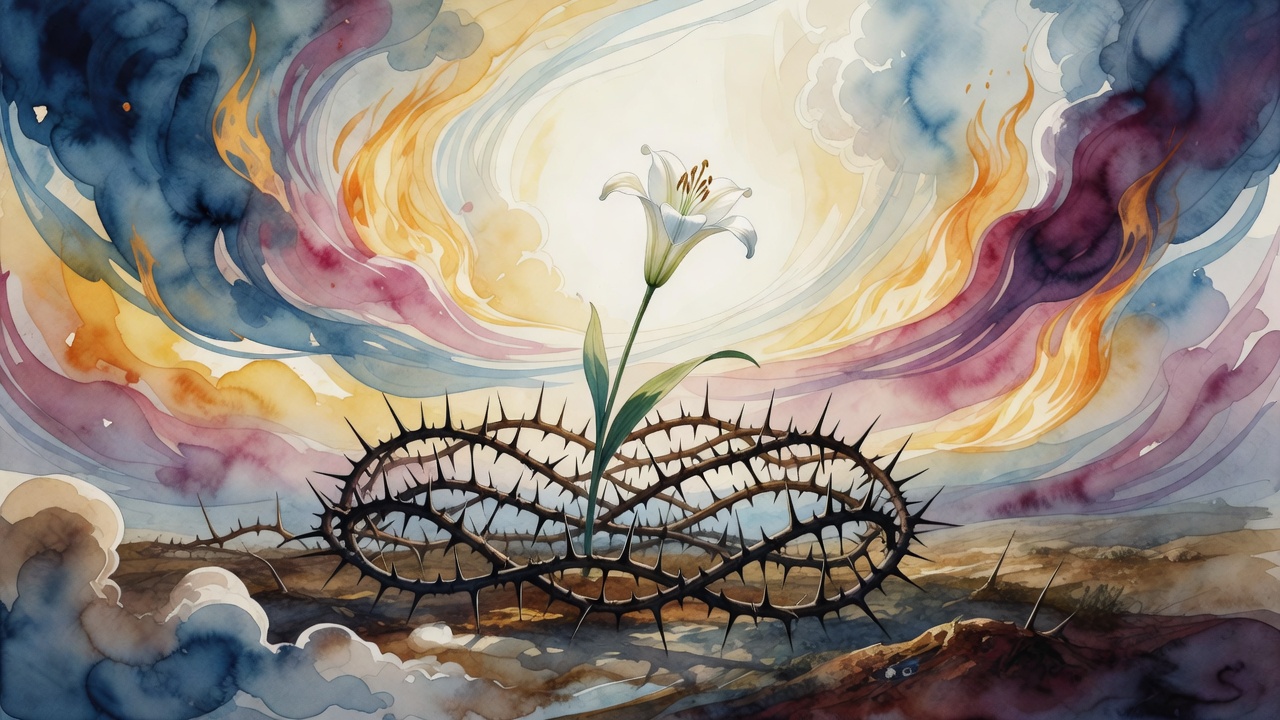
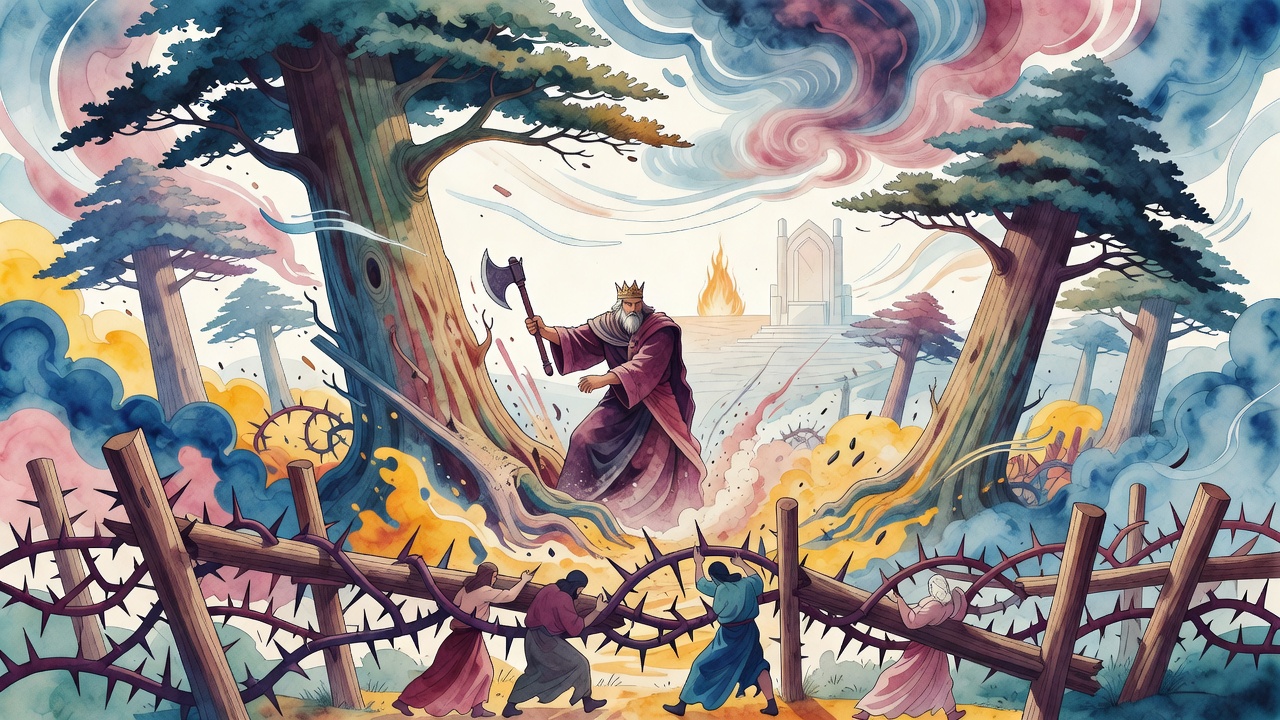
The king's men set axes to the cedars first. The trees had stood like towers inside the field where he meant to plant a vineyard. Their trunks took the light. Their roots stole water. When the last cedar fell, the field looked wounded and open, ready for vines. Then the servants saw what he had not touched: thornbushes thick as walls, hooks waiting for cloth and skin.
Our lord king, they said, the thorns which catch our clothes you have left standing, but you have cut down the cedars. He wiped resin from his hands. If I had left the cedars and cut the thorns, how should I have fenced in my vineyard? The tall ones were the threat to the plan. The thorns would become the fence until the vines were strong enough to need a different border.
They did not like the answer. Thorns still tear. The king already walked toward the next row of work.
Israel as the Vineyard
So also Israel is the vineyard of the Holy One, blessed be He, as Isaiah says: "For the vineyard of the LORD of hosts is the house of Israel" (Isaiah 5:7). He brought Israel into the land and cut down the cedars that were in it. Amos remembers the Amorites whose stature was like the cedars in height. The tall powers fell. The smaller nations and their children's children remained, left as a test, as Judges records: nations the LORD left to try Israel, whether they would keep the commandments.
The servants' complaint becomes Israel's complaint in every generation that wants a clean field with no snag. Why leave anything that can catch the clothes of the righteous? The answer is not cruelty for its own sake. The vineyard must learn to grow under discipline. When the vineyard stands in its place in the service of the Torah, the peoples become burnings of lime, thorns cut down that are burned in the fire. Until then the hooks remain, and every snag asks a question about the fence.
Pharaoh's Host Reduced to One Horse
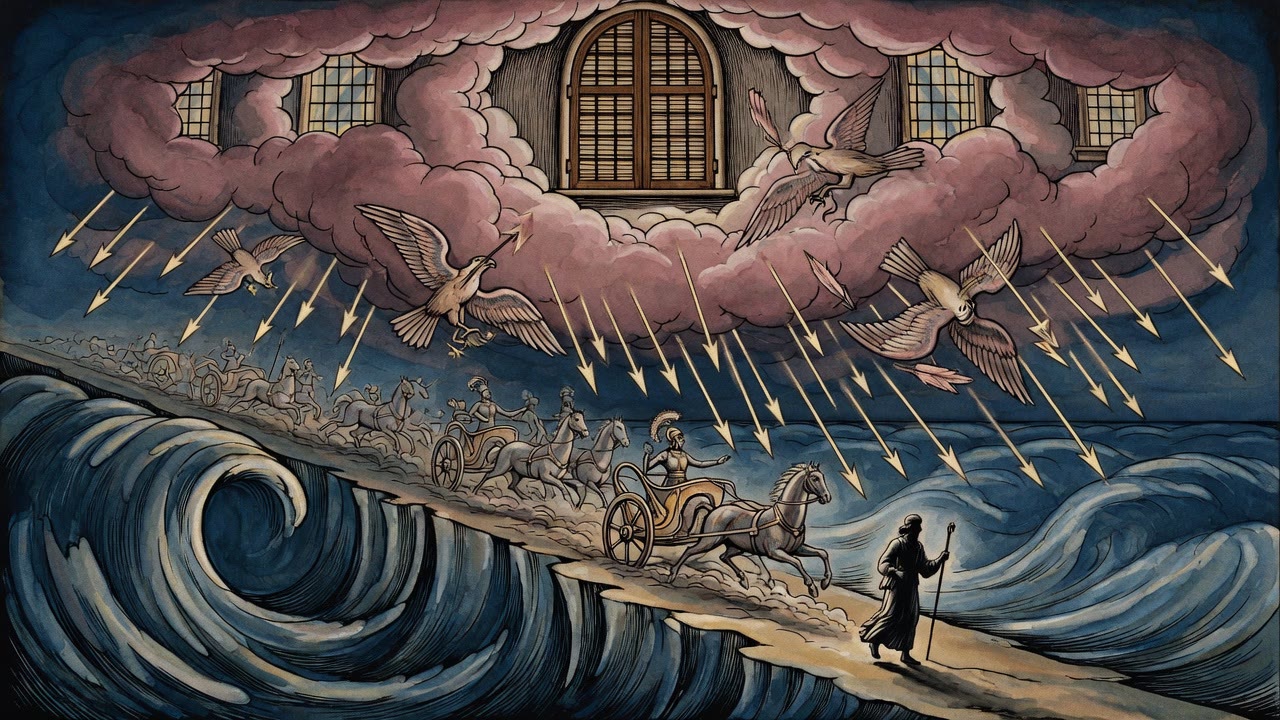
When Israel left Egypt, Pharaoh took six hundred choice chariots, and the midrash multiplies the terror: thirty men against each of Israel in the telling of dread. The camp looked at the sea and the army and asked who could stand. The angel of God traveled. The Holy One answered that all these were as unimportant before Him as a single man or a single chariot. Scripture later says "the horse of Pharaoh" in the singular. They all died in a single breath when He blew with His wind and the sea covered them.
Cedars fall. Hosts shrink to one horse in the mouth of the Song. The pattern is the same economy of power: what looks unmoveable is measured by heaven as kindling. Israel on the shore still had to learn not to measure danger only by height and count.
Hold Your Peace and Open Your Mouth
"The LORD will fight for you, and you shall hold your peace" (Exodus 14:14). The sages refuse to lock that promise to one morning only. It runs for every generation cornered with no road. Rabbi Meir presses the strange command to be silent: if God fights for Israel when they merely keep quiet, how much more when they fill that silence with praise. Rabbi Judah the Prince hears it as miracles while you stand and watch. Human effort is not the point; bearing witness is.
Israel turns to Moses and asks what they are supposed to do. Moses answers that their task is to glorify, to exalt, to praise. The next chapter proves him: when the danger passed, Israel opened their mouths and sang, "I will sing to the LORD, for He has triumphed gloriously" (Exodus 15:1). The silence of trust ripened into the Song. Thorns still waited in the land ahead. The Song still had to be carried into them.
A Kingdom of Priests, Not a Smaller Dream
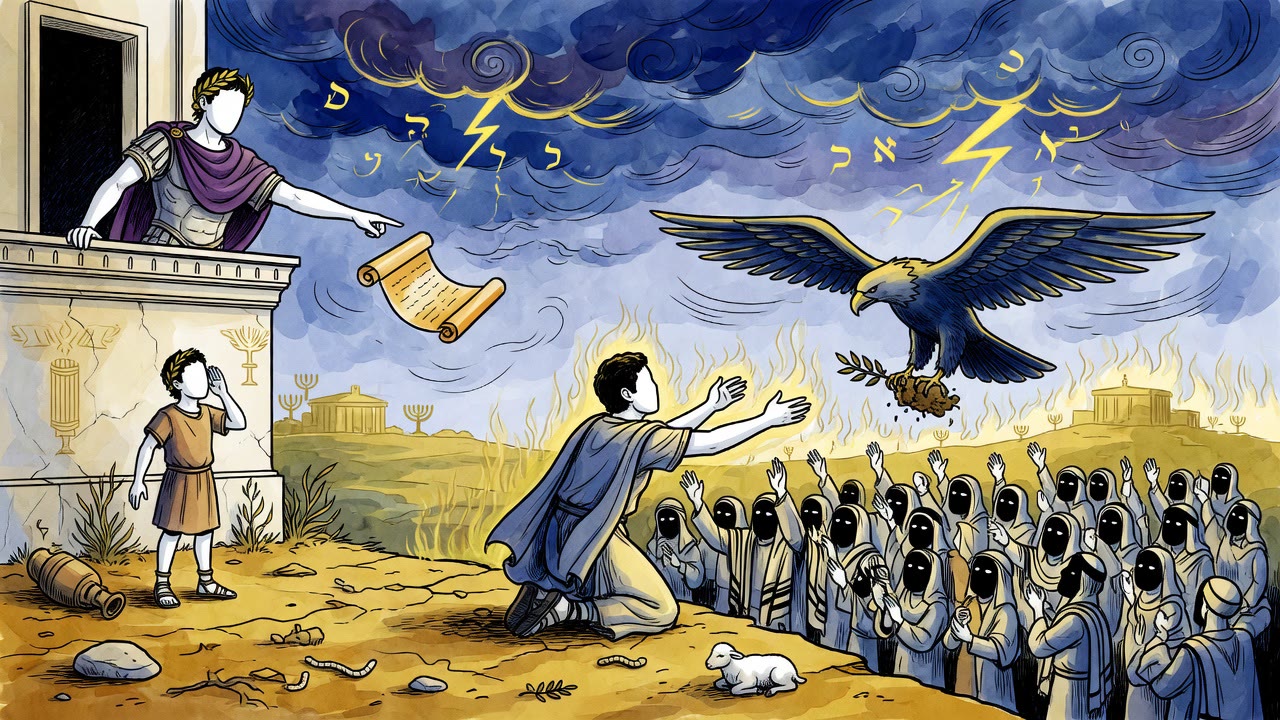
When the Holy One declared Israel a kingdom of priests, He promised that no foreign crown would rightfully sit above them. He alone would be their King, the One who never slumbers over the people He keeps. Rabbi Eliezer ben Yose the Galilean reads each word as a guardrail against a smaller dream: children, but not bent and wretched ones; princes, but not mere traders; a kingdom, but not the kind that lives by conquest; priests, free at last to serve.
Before the golden calf, ordinary Israelites could eat of the holy offerings. After the calf, that privilege passed to the priests alone. Even in loss the sages find tenderness: Israel is one sheep, and a wound to one limb is felt through the whole body. When one suffers, all grieve, and the shared ache is itself a mark of holiness. Moses reports the people's answer back to God though God already knows their hearts, teaching that a messenger still owes a faithful account.
The vineyard stands. The cedars are down. The thorns still catch cloth. The people who sang at the sea must now keep the commandments that turn a fenced field into a holy abode, not only a temporary camp between miracles.
← All myths