5 min read

Laban Returned as Cushan and Othniel Outlasted Him

Legend names Cushan as Laban reborn in cruelty. Othniel restored forgotten Torah, suffered eight years of oppression, and walked into Paradise alive.

Curated by Arthur · Told by Maggid ·
Table of Contents
  1. The Sun That Rose Before Joshua's Set
  2. Eight Years Under a Familiar Enemy
  3. The Man Who Skipped Death
  4. A Century Later, the Aristocrats Fled
  5. From Restored Traditions to Empty Tables
Laban Returned as Cushan and Othniel Outlasted Him Click for full size

The Sun That Rose Before Joshua's Set

They said of Othniel that before the sun of Joshua went down, the sun of his successor already stood on the horizon. The line was not flattery for a young officer. It was a claim that Israel never lacked a mind able to hold the law when the conqueror of Canaan left the stage.

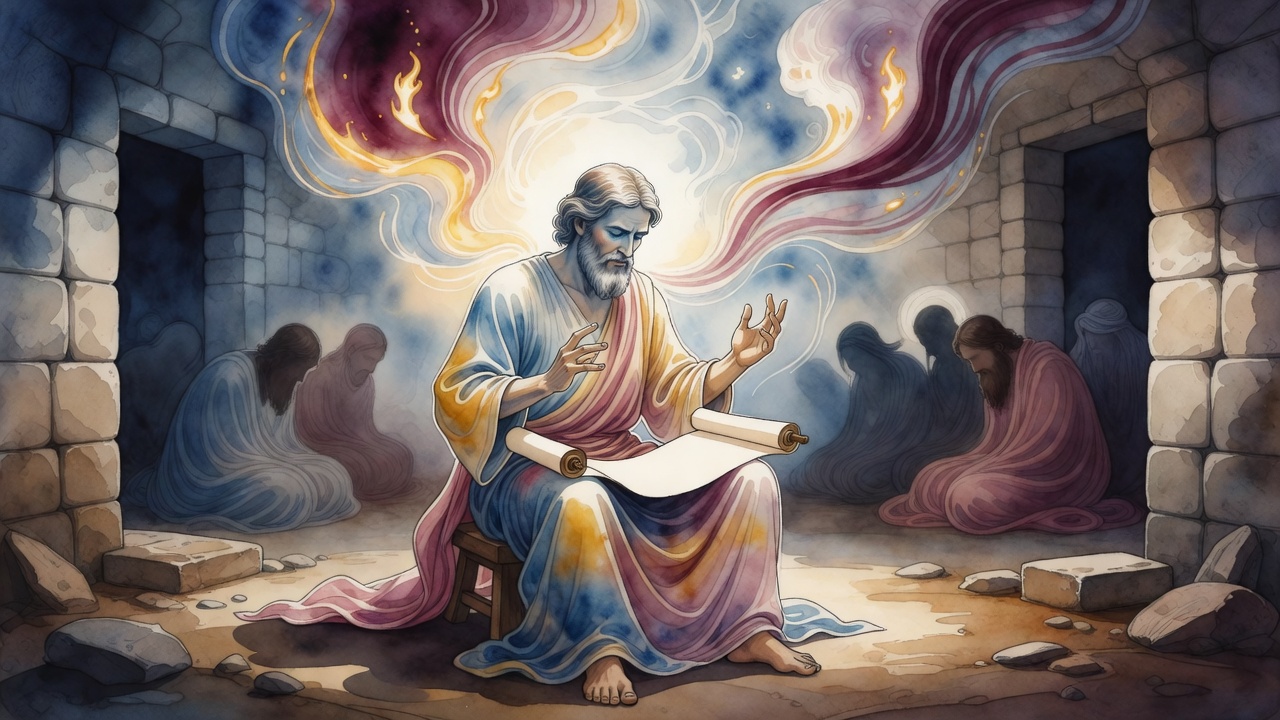
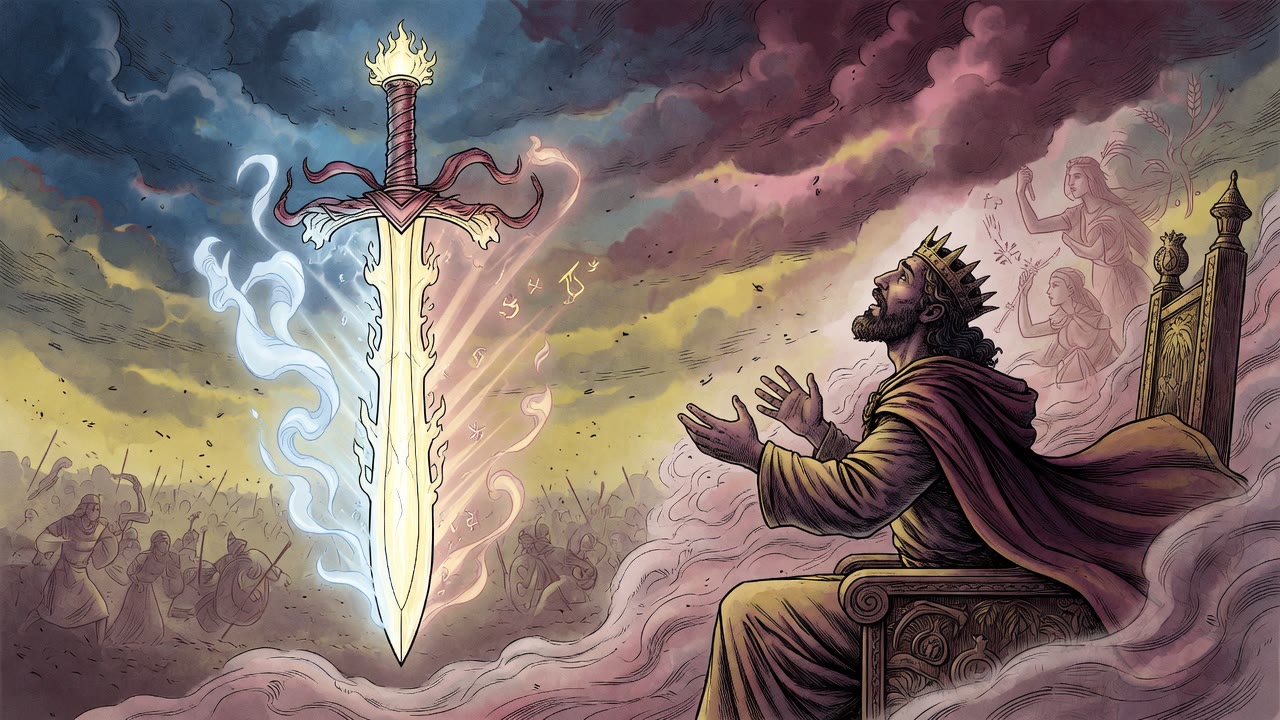
His true name, the legends say, was Judah. Othniel and Jabez were epithets hung on the same man like spare cloaks. Under those names he did work no sword alone could do. Seventeen hundred traditions that Moses had taught were forgotten in the mourning after Moses died. Othniel restored them by dialectical force, pulling lost chains of teaching back into speech until the camp could study again.

Descendants of Jethro left their district in Jericho and traveled to Arad to sit at his feet. Warriors' grandsons became students because the judge was first a scholar. The road from Jericho to Arad is not short. They took it because forgotten Torah is a louder emergency than distance.

Eight Years Under a Familiar Enemy

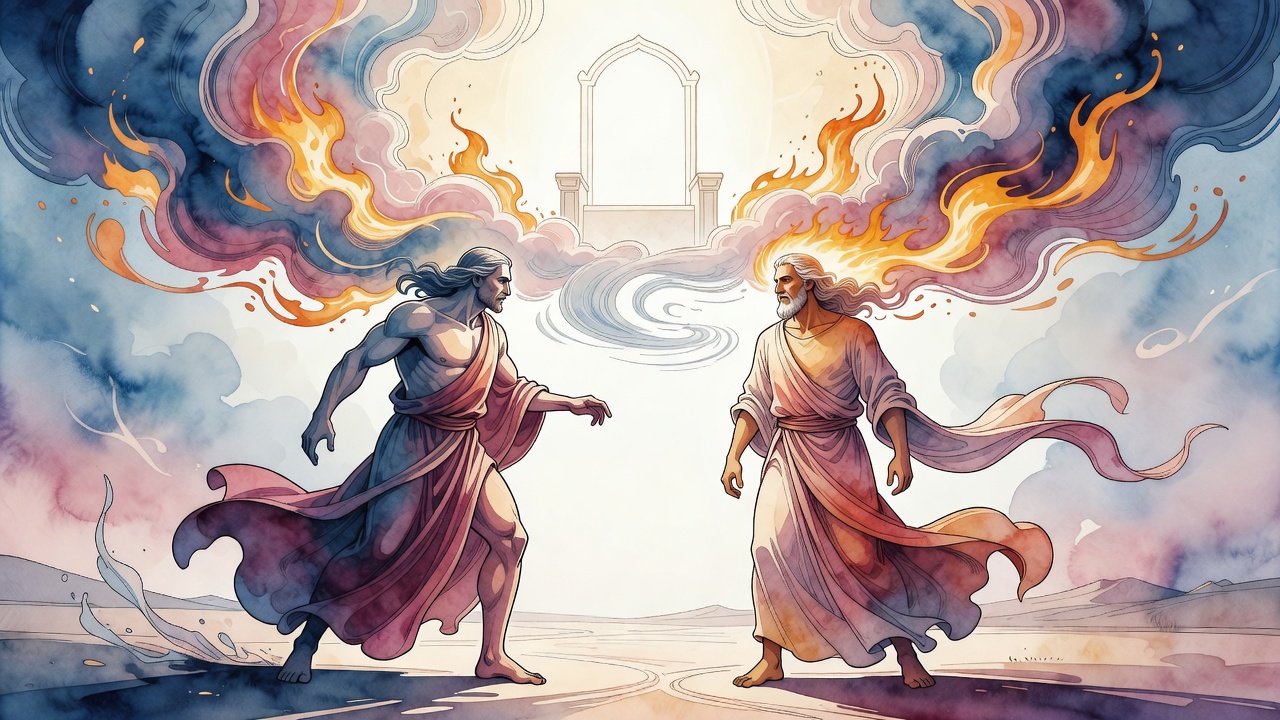
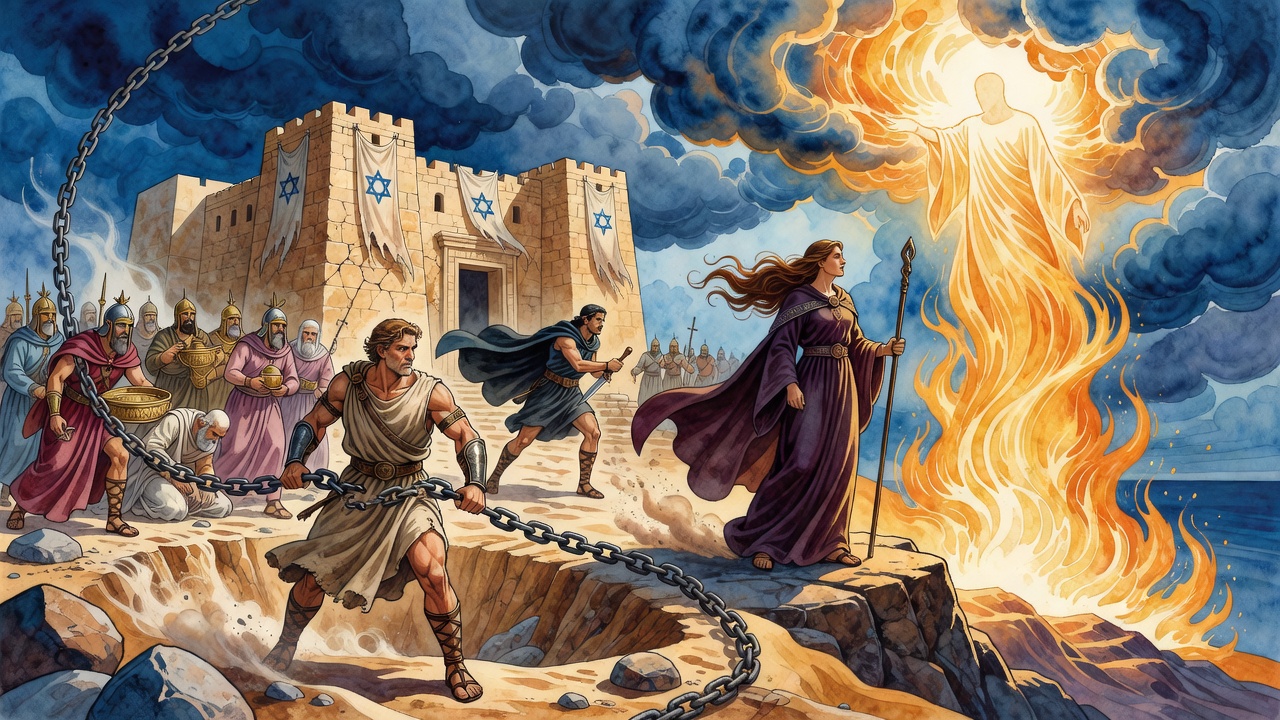
Power did not cancel trouble. For eight years Israel lived under the thumb of Cushan. The legends refuse to leave that tyrant as a new face. They identify him with Laban, the old deceiver of Jacob, returned in another generation to press the same family under a new title. The cheat of Haran put on the armor of a Mesopotamian oppressor and came back for the grandchildren.

History, in this telling, does not only repeat. It reuses villains the way a thrifty house reuses knives. Laban who swapped brides becomes Cushan who swaps freedom for tribute. The household that once fled with speckled flocks now groans under a king who remembers how to squeeze a covenant people.

Othniel presided through that pressure. The midrash will not pin the people's suffering on his private sin. The oppression was the nation's account. The judge held his office inside the storm without being named its cause. Eight years is long enough for children to grow up thinking Laban's second face is simply the weather of the world.

The Man Who Skipped Death

Then the legend makes a claim almost too sharp to hold. God granted Othniel eternal life. He entered Paradise without the ordinary gate of death, counted among the few who never paid that toll. The scholar-judge who rebuilt Torah after Moses' mourning was not required to lie down in the dust like other heroes.

The gift sits beside the eight years of Cushan like a riddle. The people suffered. The leader was spared the grave. Divine judgment, here, does not flatten every head under the same measure. Some offices are so bound to the restoration of teaching that heaven refuses to let the teacher rot.

Israel kept the memory of a man who outlasted Laban's second face and then outlasted death itself. The body that had argued seventeen hundred traditions back into life did not need a tomb to finish its argument.

A Century Later, the Aristocrats Fled

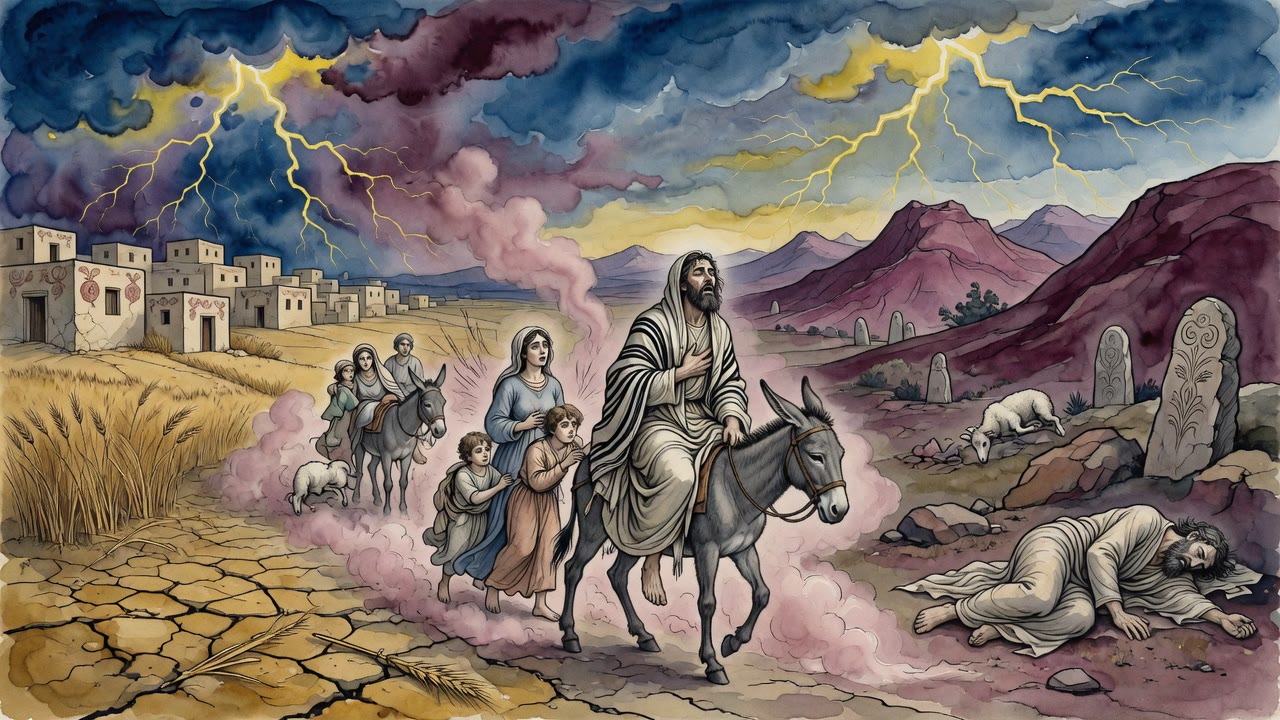
A hundred years after Othniel, the Book of Ruth opens on a land still sick. Hypocrisy ruled the courts. If a judge said, "Remove the mote from thine eye," the accused answered, "Remove the beam from thine own." God sent one of the ten famines ordained from creation as discipline until the days of the Messiah. The correction arrived as empty granaries and thinner faces at the gate.

Elimelech and his house were aristocracy. They had means enough to steady neighbors. They packed for Moab instead. Wealth and lineage bought them officer posts in a foreign army. Their sons married Moabite women. The upper crust chose exit over repair.

The famine that began as moral medicine became a story of who stays and who runs. Othniel had stayed under Cushan and restored Torah. Elimelech's line left when the tables emptied. The contrast is the midrash's quiet accusation, sharper than any sermon about charity.

From Restored Traditions to Empty Tables

Put the scenes on one table. Othniel rebuilds seventeen hundred forgotten teachings and endures Laban reborn as Cushan. He walks into Paradise without dying. A century later, judges trade insults about motes and beams while famine disciplines the land, and the rich walk to Moab rather than feed the poor under their own roofs.

The age of the judges is not a single mood. It is a swing between a scholar who can out-argue oblivion and a generation that cannot stand a lean year without betrayal. Laban's return proves old enemies recycle their shapes. Othniel's eternal life proves heaven sometimes crowns the restorer of Torah beyond the ordinary grave. Ruth's century proves that when leadership turns to hypocrisy, even bread becomes a test of class.

The sun that rose before Joshua's set still throws light on the families who later chose Moab over mercy. Between those lights stands every generation that must decide whether forgotten law or empty barns will be the emergency it answers first.

Othniel answered the law. Elimelech answered his own stomach. The Book of Ruth will spend the rest of its scroll cleaning up the second choice.


← All myths

From the tradition

Sources

3 sources

The texts behind this telling. Some cards carry a translation of the source; others are our own retelling of it, and each card says which. Every card links out to the original.

Legends of the Jews 2:27Legends of the Jews

Retold in our words. Read the original at the link below.The Legends of the Jews by Louis Ginzberg (1909) · Public Domain

Take Othniel, for example, a figure from the Book of Judges. You'd think a guy like that would be riding high. Well, yes and no.

In Legends of the Jews, not everything went smoothly during Othniel’s time in power (Ginzberg). For eight long years, the Israelites were under the thumb of Cushan. Now, Cushan wasn't just any run-of-the-mill oppressor. This guy, according to the legend, was a real piece of work, a recurring villain in our people's story. In fact, he's identified with Laban! Yes, that Laban, Jacob's tricky father-in-law! for a second. Laban, the deceiver from way back in the book of Genesis, resurfacing centuries later as Cushan, still trying to mess with the descendants of Jacob. The Midrash often emphasizes this idea of recurring figures and themes across generations. It's like history doesn't just repeat itself, it rhymes. This idea suggests that certain archetypes and challenges keep popping up in different guises.

So, Othniel presided during this difficult time. Yet, Despite the hardship the Israelites faced under Cushan’s oppression, Othniel himself… he gets a free pass.

the verse says, Othniel wasn't really blamed for the people's suffering. In fact, God granted him eternal life! He gets to go straight to Paradise without even having to, you know, deal with death! The Legends of the Jews says he is one of the select few to achieve this rare honor (Ginzberg).

Talk about a plot twist!

Why Othniel? What made him so special that he bypassed the usual rules? Was it his inherent righteousness? His leadership qualities? Or perhaps the tradition suggests he was simply in the right place at the right time?

The story leaves us pondering the mysteries of reward and punishment, and the unexpected ways that God can choose to show favor.

Full source
Legends of the Jews 2:29Legends of the Jews

Retold in our words. Read the original at the link below.The Legends of the Jews by Louis Ginzberg (1909) · Public Domain

Pull up a chair, because the Book of Ruth, that beautiful story of loyalty and redemption, actually unfolds against a backdrop eerily similar to our own.

In rabbinic tradition, the story of Ruth took place a century after the time of Othniel, one of the early Judges of Israel. And, let me tell you, things weren't exactly sunshine and roses in the land of Israel then. Picture this: a society so caught up in its own problems that hypocrisy reigned supreme. The Talmud (Bava Batra 15b) paints a bleak picture. It was said that if a judge dared to point out a flaw in someone – "Remove the mote from thine eye," – the person would retort, "Do thou remove the beam from thine own."

As we find in Midrash Rabbah, God, in his infinite wisdom (and, let's be honest, sometimes tough love), decided it was time for a little…correction. He sent one of ten famines, a disciplinary measure ordained from the very beginning of creation, meant to nudge humanity back on course until the coming of the Messiah.

Enter Elimelech and his family. They were, as the verse says, the aristocracy, the upper crust of society. They had the means, the influence, maybe even the moral obligation to step up and make a difference. But what did they do? Did they try to ease the suffering around them? Did they attempt to inspire their fellow Israelites to mend their ways? Nope.

Instead, they packed their bags and headed for Moab. They turned their backs on their community and sought refuge (and presumably, better prospects) in a foreign land.

In Moab, Elimelech and his sons, Mahlon and Chilion, initially found success. Their wealth and lineage earned them positions of power – even officer roles in the army, according to some accounts. Later, the sons even married Moabite women, Orpah and, of course, Ruth. But this, tradition tells us, only happened after Elimelech's death, as he opposed intermarriage with the "heathen." This detail, found in texts like Ruth Rabbah, is important because it highlights the family's gradual assimilation and departure from Jewish law.

But here's the thing: wealth and status, as grand as they might seem, don't always guarantee happiness or divine favor. The story takes a dark turn. First, the family’s fortunes dwindled. They lost their wealth, their standing…everything. And then, tragically, both Mahlon and Chilion died. All that glittered in Moab ultimately turned to dust.

Why? The text suggests it was because they continued "in their sinful ways." What exactly those sins were, aside from the initial abandonment of their community and the controversial intermarriage, isn’t explicitly stated here. But the message is clear: running from your problems, ignoring the needs of others, and turning your back on your heritage ultimately leads to a dead end.

So, what are we left with? A pretty sobering tale. It’s easy to judge Elimelech and his sons. But maybe, just maybe, their story is a mirror reflecting our own choices. Are we stepping up to help when we can? Are we contributing to the well-being of our communities? Or are we, like Elimelech, tempted to seek easier pastures, leaving others to fend for themselves?

Full source
Legends of the Jews 2:24Legends of the Jews

Retold in our words. Read the original at the link below.The Legends of the Jews by Louis Ginzberg (1909) · Public Domain

Zebul's story is brief but important. We learn that he reigned for twenty-five years. What's really interesting is how he chose to end his time as judge. Before he passed, he didn't Instead, he gave a solemn warning, urging everyone to fear God and observe the law. It’s a reminder that leadership isn't just about power; it’s about moral responsibility. (Legends of the Jews)

Then there’s Othniel. Now, he’s a different kind of leader altogether. His contemporaries said something pretty incredible: “Before the sun of Joshua went down, the sun of Othniel, his successor in the leadership of the people, appeared on the horizon.” (Legends of the Jews) That’s high praise. Did you know that Othniel wasn’t even his real name? According to the legends, his actual name was Judah. Othniel was more like a nickname, an epithet, just like Jabez was another one he went by. (Legends of the Jews

Othniel stands out as the scholar among the judges. Legends of the Jews tell us his wisdom was so profound that he could restore the seventeen hundred traditions that Moses taught the people. Can you imagine the scope of that knowledge? Apparently, these traditions had been forgotten during the mourning period after Moses' death. Othniel, through his deep understanding and dialectical reasoning, brought them back.

It wasn't just about knowing the Torah; it was about sharing it. We hear about the descendants of Jethro, Moses' father-in-law, leaving their assigned district in Jericho and traveling all the way to Arad just to sit at Othniel’s feet and learn from him. That’s dedication! This shows us how much people valued his wisdom and his commitment to teaching.

However, not everyone in Othniel’s life was thrilled with his devotion to Torah study. His wife, who was also the daughter of his half-brother Caleb, apparently had some complaints. She told her father that her husband's house was bare of earthly goods. His only possession, she said, was his knowledge of the Torah. (Legends of the Jews The tension between material wealth and spiritual riches.

This detail adds a very human touch to the story of a great leader. What does it truly mean to live a life of purpose, even if it means sacrificing material comfort? Othniel's story, with all its layers, invites us to ponder this question.

Full source