Elimelech Fled the Famine and Died in Moab
Bethlehem's prince crossed into Moab to keep his grain. Heaven took the herds first. Then five words finished him, and the house he had saved was gone.
Table of Contents
The bread ran out in Bethlehem, and the whole town knew whose storehouses were still standing.
 Click for full size
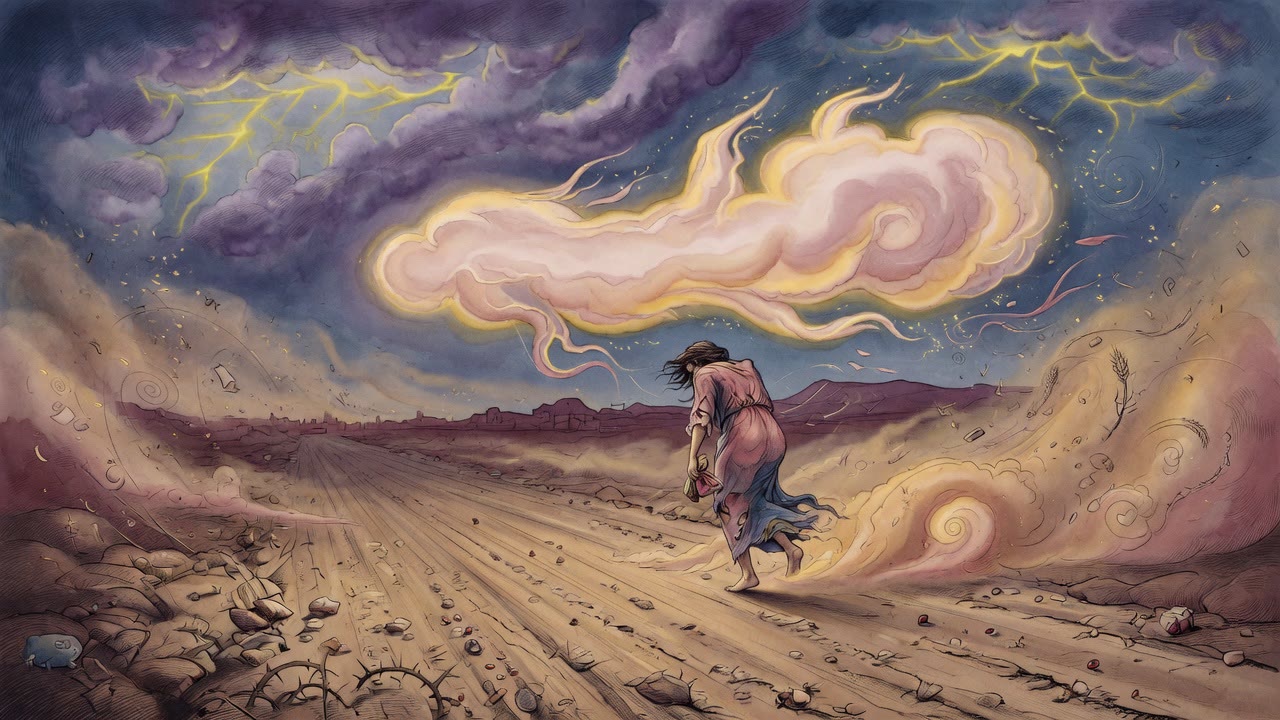
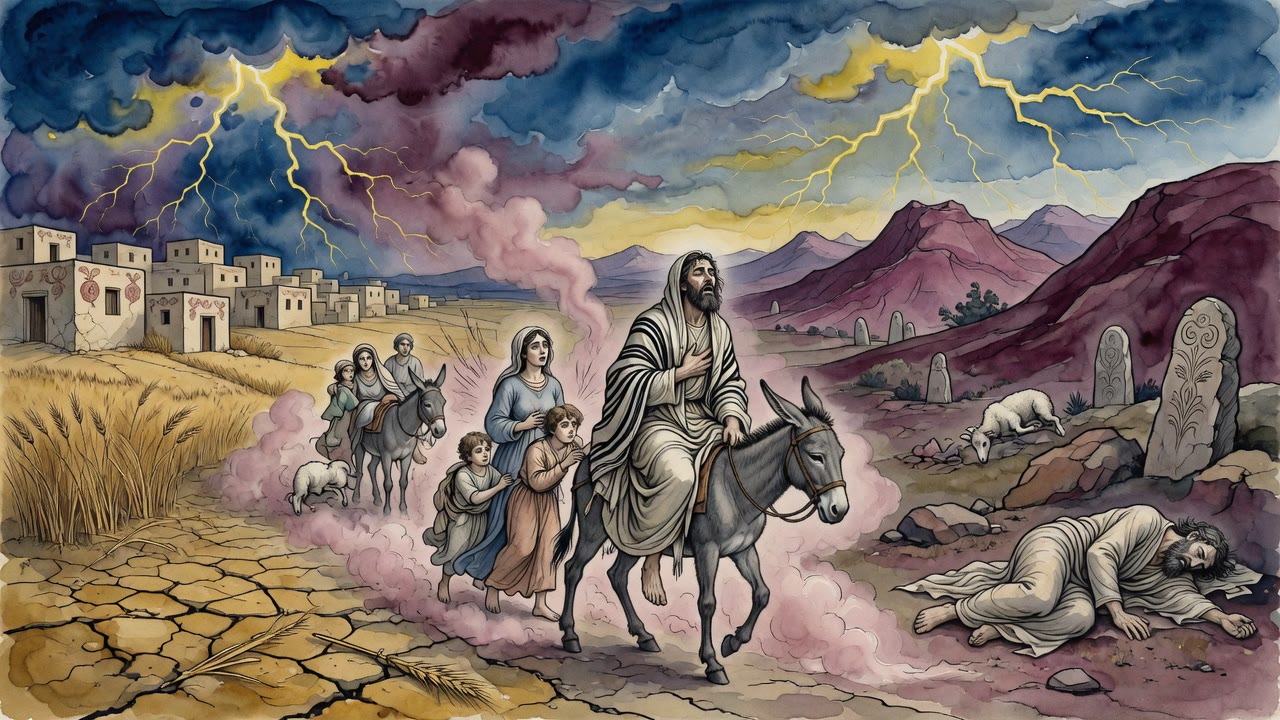
Elimelech was head of his generation, the prince of it, the man everybody looks at when the grain runs low. He looked at the harvest, counted what a long hunger would cost him, and took his wife and his two boys across the border into Moab, where the fields had not failed.
The Holy One took it badly. If My children all did what he has done, they would leave the land of Israel a wasteland.
Heaven Reached for the Herds First
It is a hard thing before the Holy One to put out His hand against a human being. He would rather not. So when a man sins, the first thing He reaches for is not the man. It is what the man owns.
Trouble arrives, and most people repent on the spot, and are saved, and it happens again, and they are saved again. Many times He delivered them.
Elimelech was not most people. The camels went. The cattle went. Losses a stubborn man can still file under bad weather and bad markets, and he filed them, and he stayed in Moab. He walked his remaining animals in the foreign fields and told himself the famine at home was still worse.
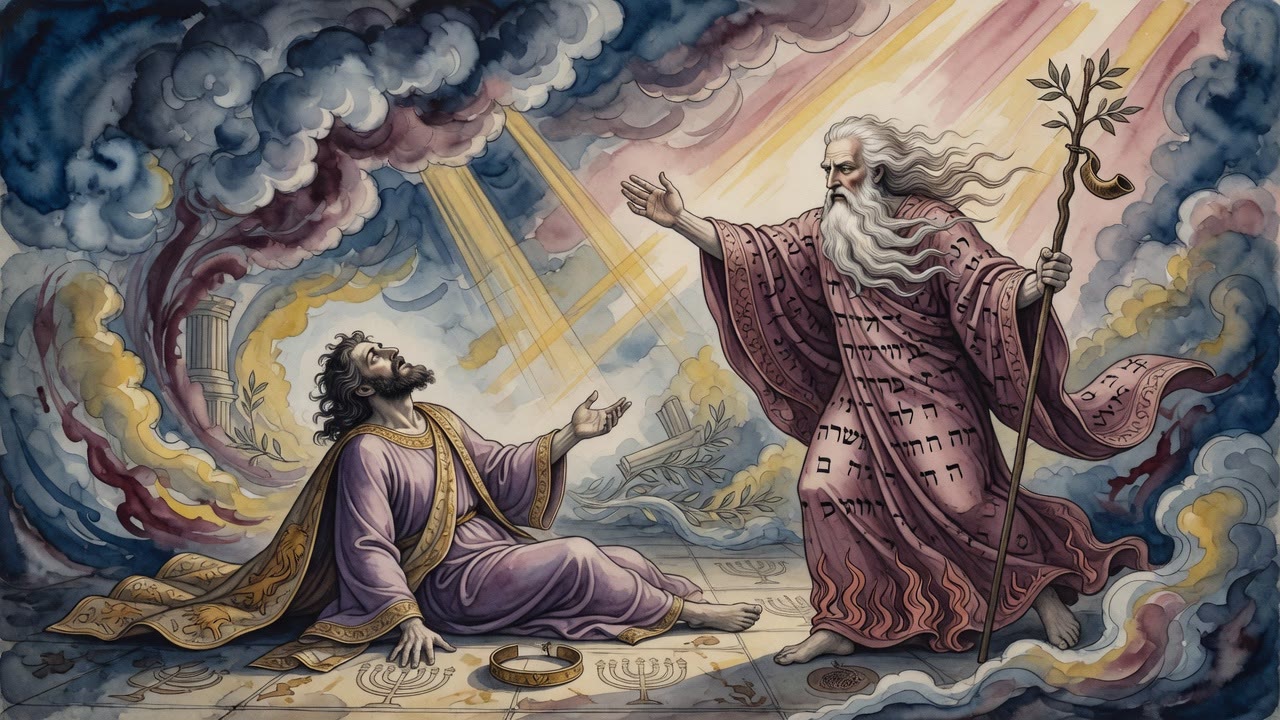
Then five words arrived with nothing around them. And Elimelech, Naomi's husband, died.
The body went into Moabite ground. The storehouses he had crossed a border to protect did not follow him down.
Ten Years and Two Graves
Mahlon and Chilion had a fresh grave in foreign soil to read, and it said go home. They did not read it that way. They married Moabite women without immersing them and without bringing them into the covenant, Orpah and Ruth, and settled in for what turned into ten years.
The Holy One spent all ten of those years warning them. When the warnings did nothing He went back to the herds, took the camels, took the cattle, and waited.
They still did not go home. They buried more animals and kept the wives and the foreign fields.
Then both sons died in the same breath of the verse, and Naomi was standing in a Moabite field with two daughters-in-law, no husband, no boys, and no property left to lose. The house that crossed the border to keep its wealth had lost the wealth and the house.
Four Miles and Four Tears
Naomi got up to go back to Bethlehem. She did not want the young women with her.
She loved them. They had loved her sons well enough that neither would remarry after the burials. She could see what waits for a Moabite woman walking into Judah, the looks and the muttering and the doors, and she told them both to go back to their mothers' houses.
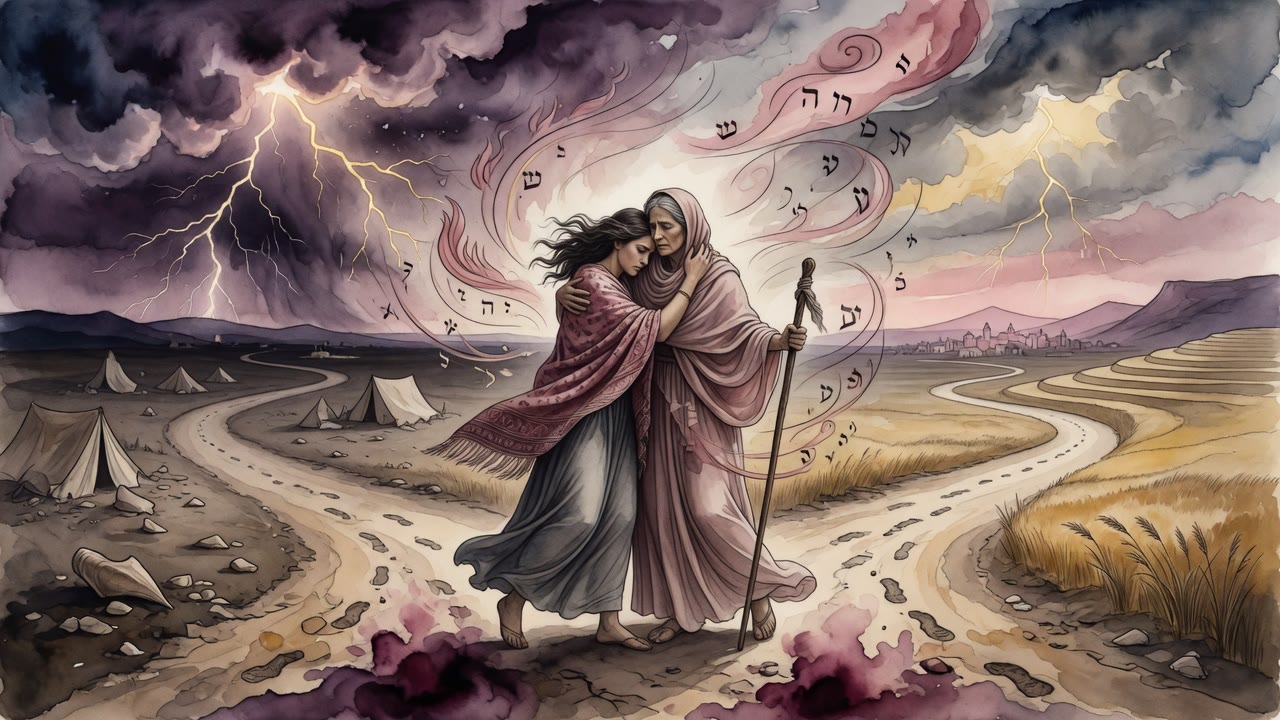
Orpah did not need much persuading. She walked. The road ran along the border like a last argument. At the fourth mile she stopped.
Dust on her ankles. Bethlehem still a rumor ahead. Moab behind her, with a mother's house she knew. She kissed Naomi. She cried four tears. She turned around.
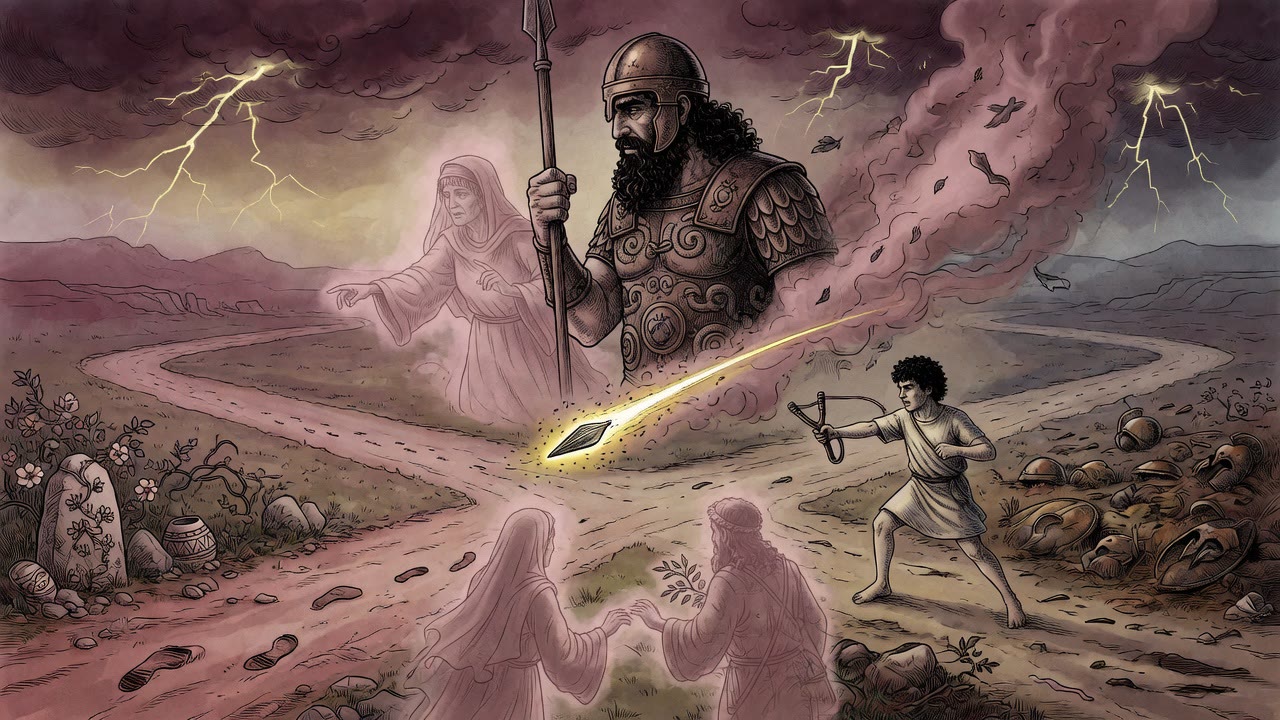
That was all of it. Four miles. Four tears. What she did afterward with her life showed the road she had chosen. Nothing goes unpaid. Four miles walked beside a widow, and the wages came back as four giants out of her body, Goliath and his three brothers.
The Town Was Already in the Street
Ruth would not turn. She had decided to become a daughter of Israel, and Naomi, following the law that says you must tell a convert what she is walking into, tried to talk her out of it with the plain facts.
Sabbaths to keep. Festivals to keep. The daughters of Israel do not go to the theatres and the circuses. Every pleasure of a Moabite girlhood, listed out loud on a road at the border.
Ruth said she was ready for all of it.
"We have one Torah," Naomi said. "One law. One command. The Eternal our God is one, and there is none beside Him."
"Your people shall be my people, and your God my God."
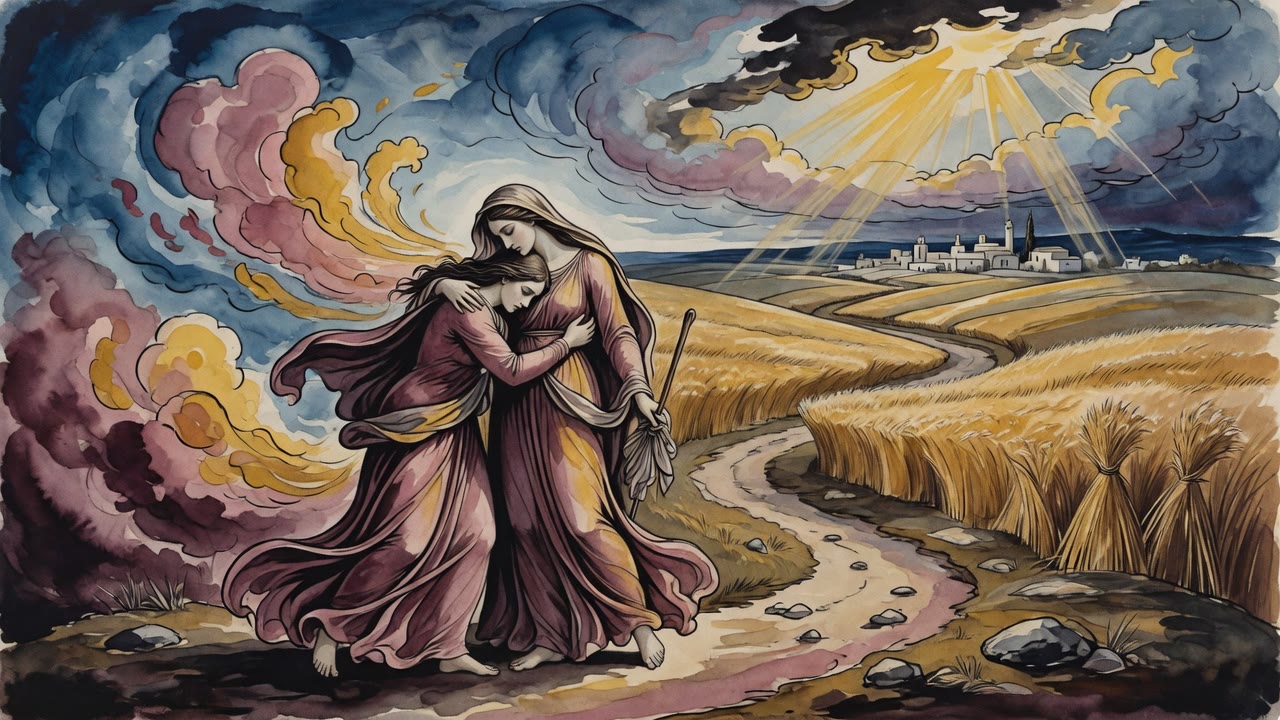
They walked into Bethlehem on the worst day and the best day. The wife of Boaz was being buried that morning, and the entire town was already out in the street for the funeral. There was no quiet way back in. The whole crowd turned and watched Naomi come home with nothing, a Moabite widow at her side, and no sons at all.
Boaz Buried the Men Who Left
The kindness Boaz showed did not stop at the two living women. He took on the burial of the dead as well. He paid to have Elimelech and both sons laid in the ground properly, in a town their father had walked out on. The prince who would not stay for the famine came home as bones bought by another man's purse.
Later, when Naomi sent Ruth to the threshing floor washed and anointed and dressed well, Ruth carried the good clothes instead of wearing them. She did not put them on until she arrived. A woman alone on a road at night does not need to be looked at.
Elimelech never came back to see the barley. He had crossed a border to keep his household alive and lost every man in it. What came home instead was a Moabite widow with nothing, walking into a funeral crowd. He left in order to keep his family. Another man paid to bury it.
← All myths