5 min read

Othniel Restored Seventeen Hundred Lost Laws

While Israel mourned Moses, seventeen hundred traditions fell from memory. Othniel restored them by sharp reasoning and taught Torah in a bare house.

Curated by Arthur · Told by Maggid ·
Table of Contents
  1. After Joshua, Another Sun
  2. Dialect That Recovered the Lost
  3. A House Bare of Everything but Torah
  4. Samson Already Hidden in Moses' Nazirite Law
  5. Memory as Judgment
Othniel Restored Seventeen Hundred Lost Laws Click for full size

After Joshua, Another Sun

Before the sun of Joshua went down, the sun of Othniel was already said to stand on the horizon. His reign of judgment followed different weather than Zebul's twenty-five years of admonition. Othniel's true name, in one telling, was Judah; Othniel and Jabez were epithets. Among the judges he stands for the scholars. Leadership here is not only a sword arm. It is a mind that can rebuild a broken library.

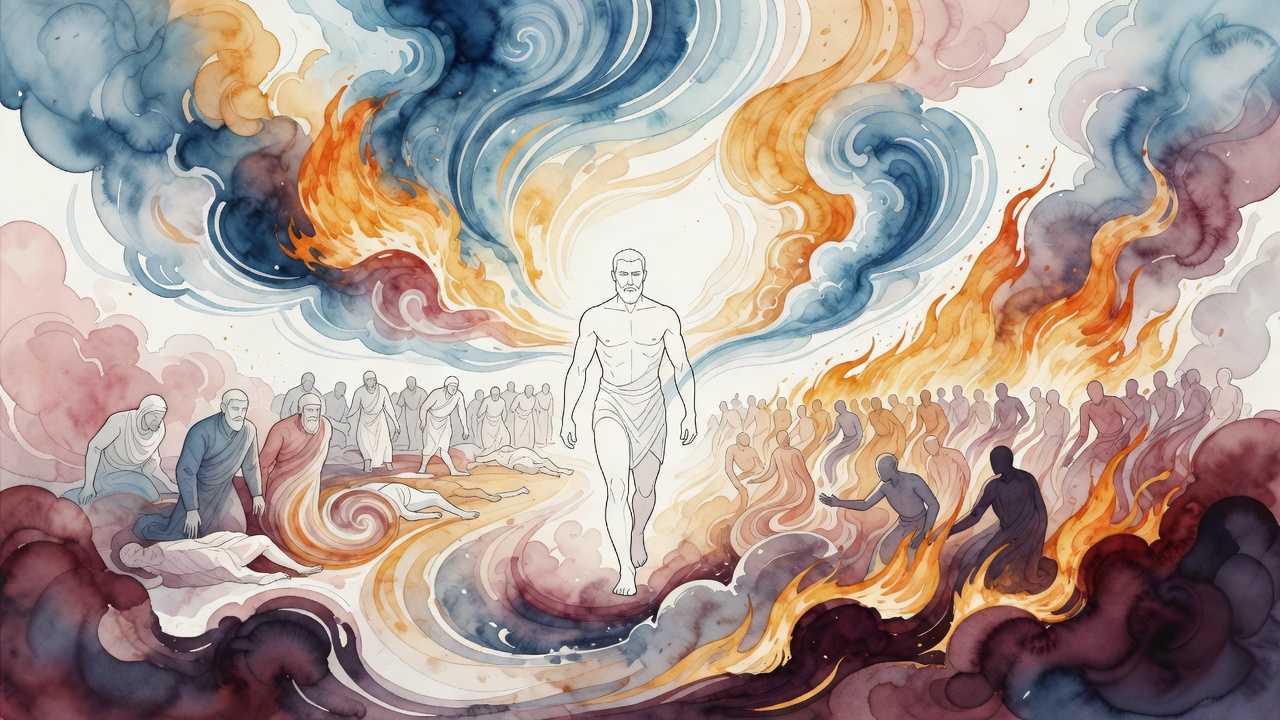
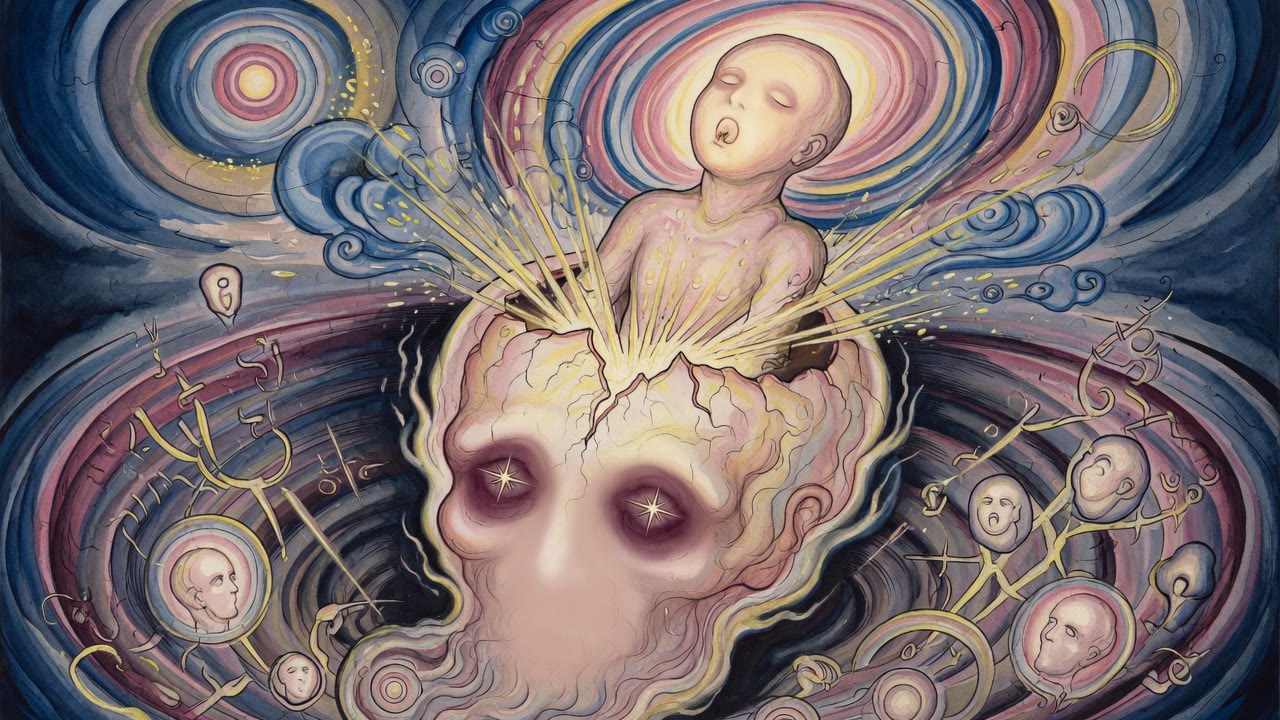
Israel had lost more than a prophet when Moses died. In the days of mourning, seventeen hundred traditions Moses had taught fell out of memory. Grief scattered what law had gathered. The people could fight and still forget. Forgetting is a second death for a nation built on heard words.

Dialect That Recovered the Lost

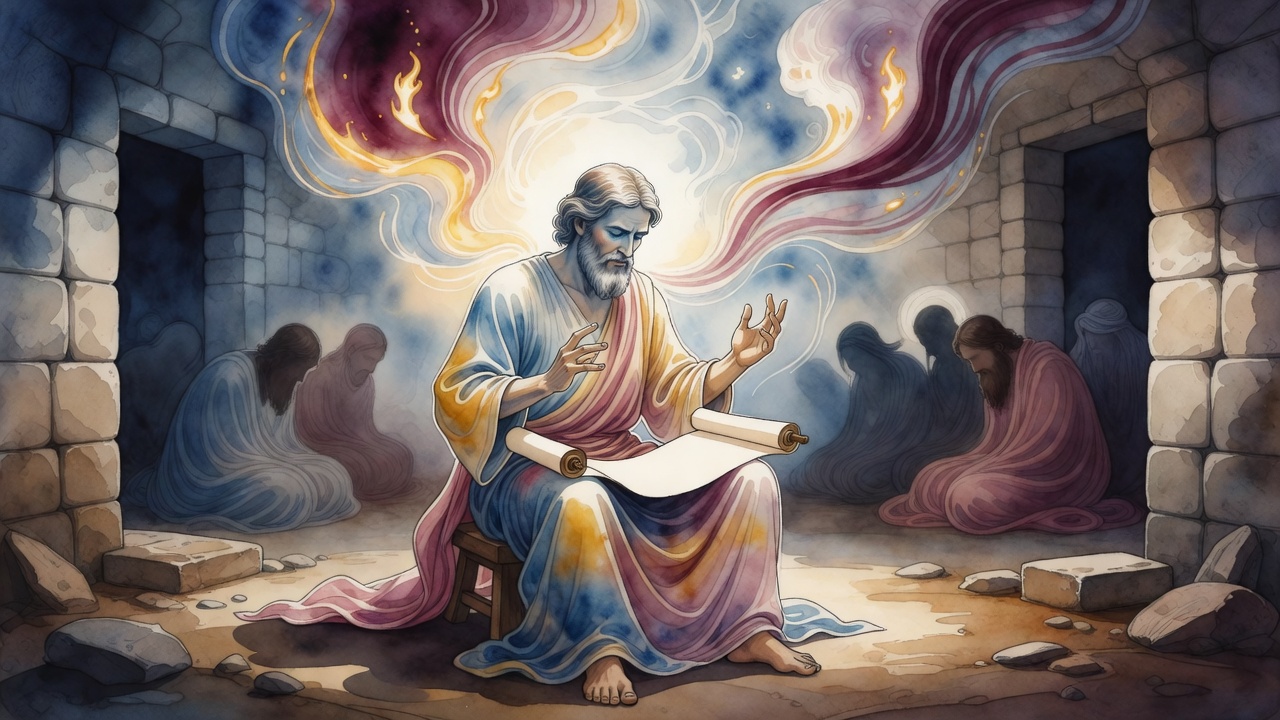
Othniel's acumen was so sharp that by dint of dialectical reasoning he restored those seventeen hundred forgotten teachings. He did not claim a new Sinai. He claimed a mind trained hard enough to recover what mourning had dropped. The scroll still held seeds. The judge-scholar watered them until the old yield stood again.

That feat redefines power in the age of the judges. Other leaders break enemies. Othniel breaks amnesia. A people that remembers how to argue toward the lost word can survive a generation that only knows how to swing iron.

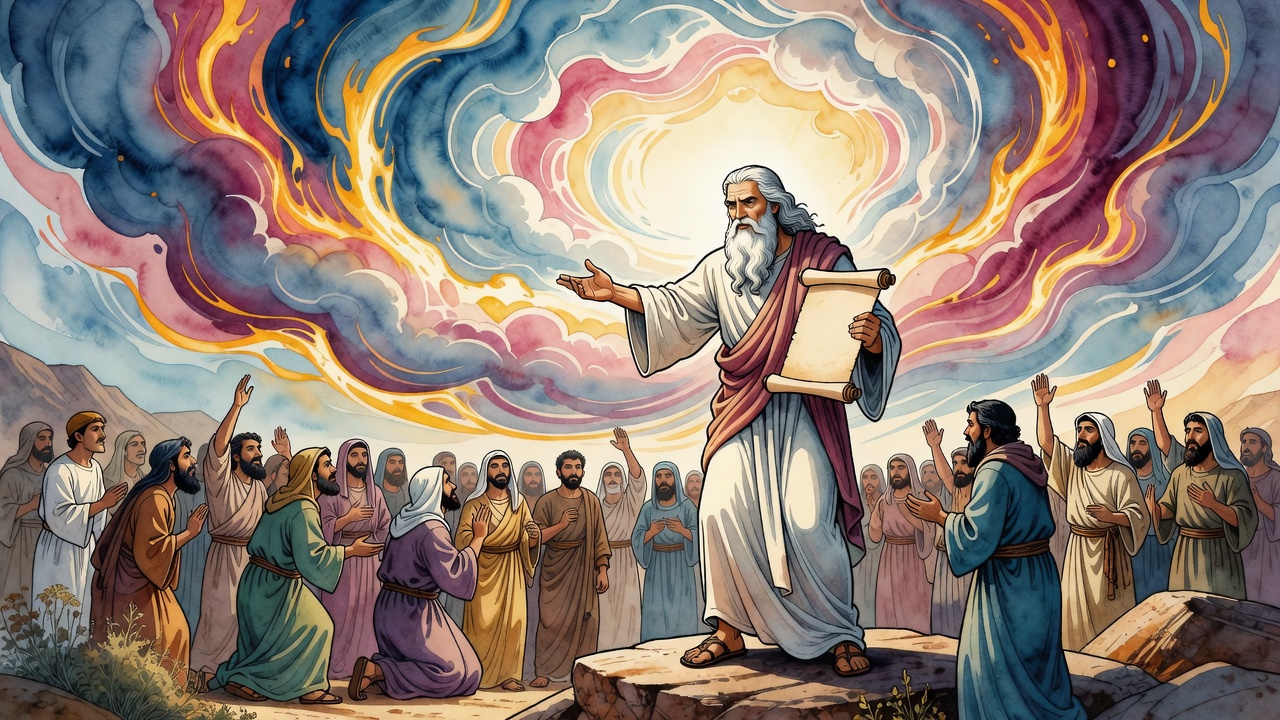
Descendants of Jethro left Jericho and journeyed to Arad only to sit at Othniel's feet. Converts' children recognized where the fire had moved. They voted with their travel. Study was worth a change of address.

A House Bare of Everything but Torah

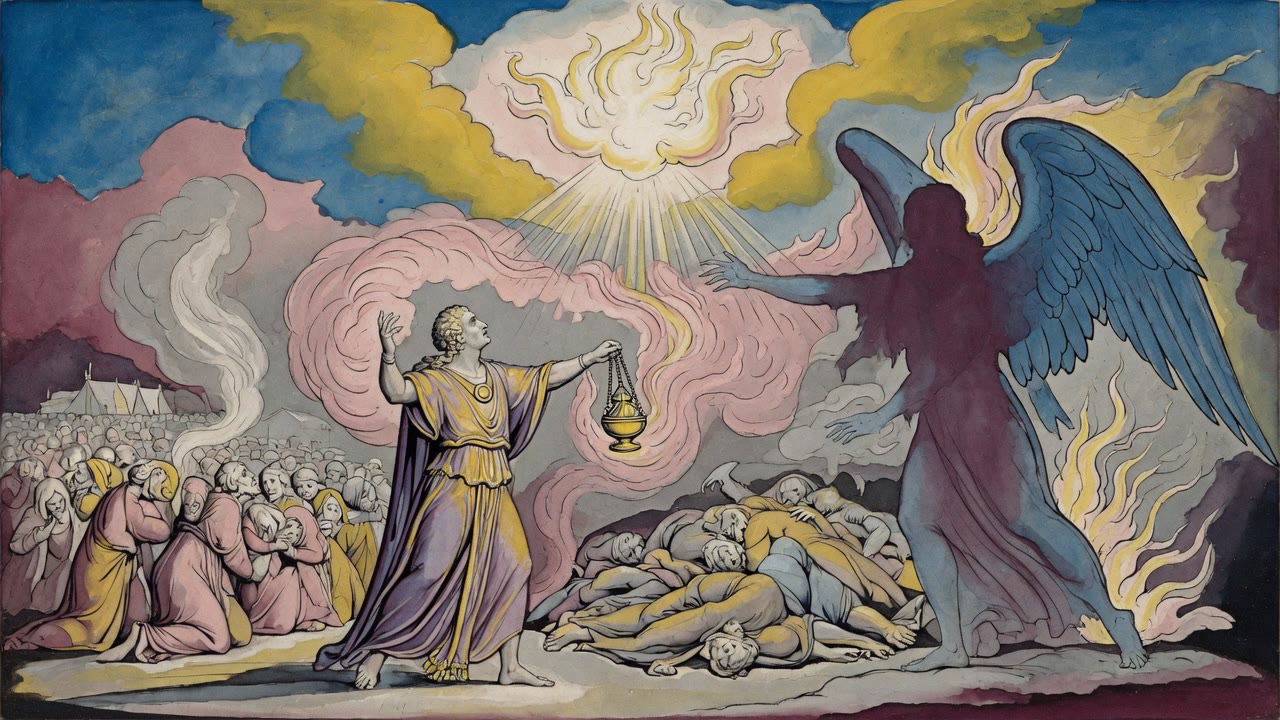
His wife, daughter of his half-brother Caleb, was less charmed. She complained to her father that the house was bare of earthly goods, that her husband's only possession was knowledge of the Torah. The domestic scene is almost comic until you feel its edge. Scholarship can look like poverty to the person sharing the empty shelves. Caleb hears a daughter's hunger. Othniel offers a nation's restored memory as the household treasure.

The legend does not resolve the quarrel with a sudden chest of gold. It leaves the tension standing. Torah as sole furniture is glory in the beit midrash and a hard marriage in the kitchen. Both reports are allowed to remain true in the same biography.

Samson Already Hidden in Moses' Nazirite Law

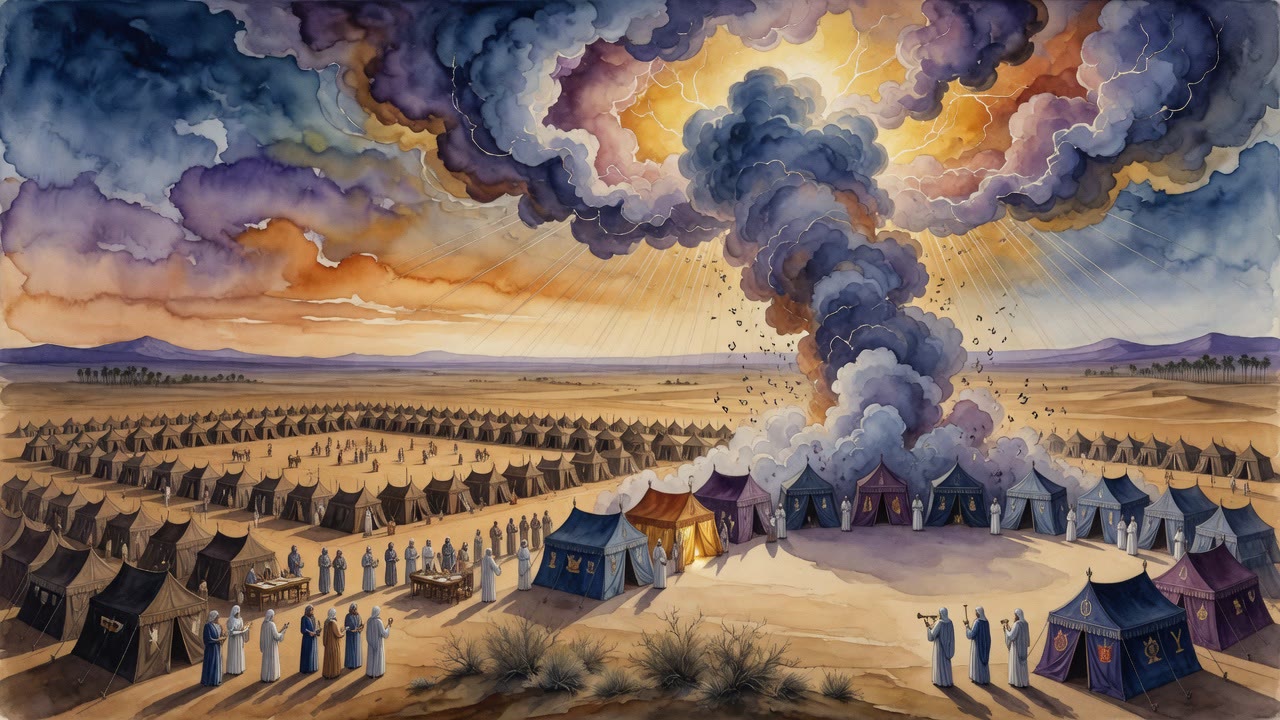
Bamidbar Rabbah pushes the same faith in the Torah's fullness from another angle. Moses alluded, the sages say, to the naziriteship of Samson in the portion of the nazir, to teach that nothing in the Prophets and Writings lacks a hint in the Torah. "A man" in the vow verse is the angel who came to Manoah's wife, called "man" until he corrected the error. "Or a woman" fits the first appearance to her alone. "Yafli" echoes the angel's name Peli. "Nazirite to the Lord" matches "the lad shall be a nazirite of God."

Future strength is already folded into present law. Samson the later marvel is not an orphan of history. He is a bud on a stem Moses planted in the wilderness code. The angel who said "I am" the way Jacob once said "I am" to Isaac teaches that identity-speech can hide and reveal at once.

Othniel restoring lost traditions and Moses seeding Samson's vow are one conviction: the Torah is deeper than any single generation's recall, and sharp study can recover what time and grief mislay.

Memory as Judgment

So the judge who follows Joshua is a restorer of words, a teacher poor in furniture, rich in recovered law, magnetic enough that Jethro's line relocates for a seat in his class. Beside him the midrash sets a Moses who already whispered Samson into the nazir verses. Past and future meet in study.

When seventeen hundred teachings fall, the crisis is not only academic. A forgetful Israel cannot remain Israel. Othniel's dialect is emergency medicine. When Samson later shakes pillars, the emergency was already anticipated in a wilderness paragraph about vows, hair, and separation.

The bare house and the full scroll argue with each other in the same life. Caleb's daughter wants bread and vessels. The nation needs the seventeen hundred. Jethro's grandchildren choose the full scroll. Moses, long dead, still funds the future by how he wrote the past. Between them the age of the judges is not only blood and cycles of sin. It is also a scholar with empty shelves and a mind on fire, proving that some conquests happen on the page after the sword has already gone quiet.

Seventeen hundred is a number large enough to feel like a library wing collapsing. Othniel does not rebuild it with nostalgia. He rebuilds it with argument, the slow heat of cases and distinctions, until what Moses taught stands again on its feet. That is judgment as scholarship, and scholarship as national defense.

Samson's later vow, already latent in the nazir portion, proves the same library was never thin. Even when memory fails, the text still holds more future than any one mourner can see. Othniel recovers the forgotten. Moses had already hidden the not-yet. Between them Torah is both archive and seedbed, and a bare house can still be the richest address in Israel if the words live there.


← All myths

From the tradition

Sources

2 sources

The texts behind this telling. Some cards carry a translation of the source; others are our own retelling of it, and each card says which. Every card links out to the original.

Legends of the Jews 2:24Legends of the Jews

Retold in our words. Read the original at the link below.The Legends of the Jews by Louis Ginzberg (1909) · Public Domain

Zebul's story is brief but important. We learn that he reigned for twenty-five years. What's really interesting is how he chose to end his time as judge. Before he passed, he didn't Instead, he gave a solemn warning, urging everyone to fear God and observe the law. It’s a reminder that leadership isn't just about power; it’s about moral responsibility. (Legends of the Jews)

Then there’s Othniel. Now, he’s a different kind of leader altogether. His contemporaries said something pretty incredible: “Before the sun of Joshua went down, the sun of Othniel, his successor in the leadership of the people, appeared on the horizon.” (Legends of the Jews) That’s high praise. Did you know that Othniel wasn’t even his real name? According to the legends, his actual name was Judah. Othniel was more like a nickname, an epithet, just like Jabez was another one he went by. (Legends of the Jews

Othniel stands out as the scholar among the judges. Legends of the Jews tell us his wisdom was so profound that he could restore the seventeen hundred traditions that Moses taught the people. Can you imagine the scope of that knowledge? Apparently, these traditions had been forgotten during the mourning period after Moses' death. Othniel, through his deep understanding and dialectical reasoning, brought them back.

It wasn't just about knowing the Torah; it was about sharing it. We hear about the descendants of Jethro, Moses' father-in-law, leaving their assigned district in Jericho and traveling all the way to Arad just to sit at Othniel’s feet and learn from him. That’s dedication! This shows us how much people valued his wisdom and his commitment to teaching.

However, not everyone in Othniel’s life was thrilled with his devotion to Torah study. His wife, who was also the daughter of his half-brother Caleb, apparently had some complaints. She told her father that her husband's house was bare of earthly goods. His only possession, she said, was his knowledge of the Torah. (Legends of the Jews The tension between material wealth and spiritual riches.

This detail adds a very human touch to the story of a great leader. What does it truly mean to live a life of purpose, even if it means sacrificing material comfort? Othniel's story, with all its layers, invites us to ponder this question.

Full source
Bamidbar Rabbah 10:6Bamidbar Rabbah

Retold in our words. Read the original at the link below.The Sefaria Midrash Rabbah, 2022 · CC-BY

Yet, the rabbis of old saw a deep, underlying unity. A web of connections. Consider the fascinating link they found between the laws of the nazir, the one who takes a vow of separation, and the story of Samson.

It’s a mind-bender. How could Moses, writing the Torah, possibly allude to events that wouldn’t happen until the time of the Judges? But that’s precisely what Bamidbar Rabbah 10 suggests. It says that Moses alluded to Samson’s naziriteship in this very portion about the nazir. The point? To teach us that every single thing written in the Prophets and the Writings has an echo, a hint, somewhere within the Torah.

So, where do we find this echo? The source explores the text.

The verse in (Numbers 6:2) begins, "A man or a woman when they make a special vow.." Bamidbar Rabbah interprets this "man" as referring to the angel who appears to Manoah’s wife, Samson’s mother, to announce her son’s impending birth and destined naziriteship. This angel, according to the Midrash (rabbinic interpretive commentary), is called a “man.”: When Manoah asks, "Are you the man who spoke to the woman?" (Judges 13:11), the angel replies, "I am."

But here’s the twist! The Midrash subtly suggests that the angel isn’t being entirely straightforward. "You think of me that I am a man," the Midrash implies the angel is saying, "but I am not a man; rather, I am an angel." It's a play on words, a subtle shift in understanding. Similarly, the Midrash draws a parallel to Jacob deceiving his father Isaac, when Jacob claims "I am" Esau. The phrase “I am” doesn’t always mean a complete and accurate representation of oneself.

The text continues, linking the "or a woman" in (Numbers 6:2) to the fact that the angel first appeared to the woman, Samson’s mother. Then, the phrase "when…will articulate [yafli]" in (Numbers 6:2) is connected to Samson’s name, peli, which shares a root and hints at the miraculous nature of his birth and destiny. And finally, the phrase "to take the vow of a nazirite to abstain for the Lord" (Numbers 6:2) is directly linked to the angel's prophecy: "for the lad will be a nazirite of God" (Judges 13:5).

It’s The rabbis saw these subtle connections, these echoes across seemingly disparate texts, revealing a deeper, more interconnected reality. They saw the Torah as a seed, containing within it the potential for all that would follow.

Perhaps it's an invitation to look more closely at the texts we study, to seek out the hidden connections, the subtle allusions that can unlock new layers of meaning. And it teaches us that the Torah isn't just a historical document; it's a living, breathing text that speaks to us across generations, inviting us to delve deeper into its mysteries.

Full source