Parshat Vayishlach6 min read

Seven Men in White and the Road That Made Levi a Priest

On the road near Bethlehem, seven men robed in white stop a shepherd and dress him in garments of a priesthood he never asked to carry.

Curated by Arthur · Told by Maggid ·
Table of Contents
  1. The Road That Would Not Let Him Pass
  2. Seven Garments, Seven Hands
  3. A Promise Stretched to the End of Days
  4. The Mountain Behind the Road
  5. The Confirmation at His Grandfather's House

Levi had been in Bethlehem seventy days when the feeling returned. He knew it the way a man knows a fever climbing back into his blood. He had felt it once before, on a mountain, with the heavens splitting open above him. Now it came again on an ordinary road, the dust of the day still on his feet.
This time it did not lift him to the sky. It stopped him where he stood.

The Road That Would Not Let Him Pass

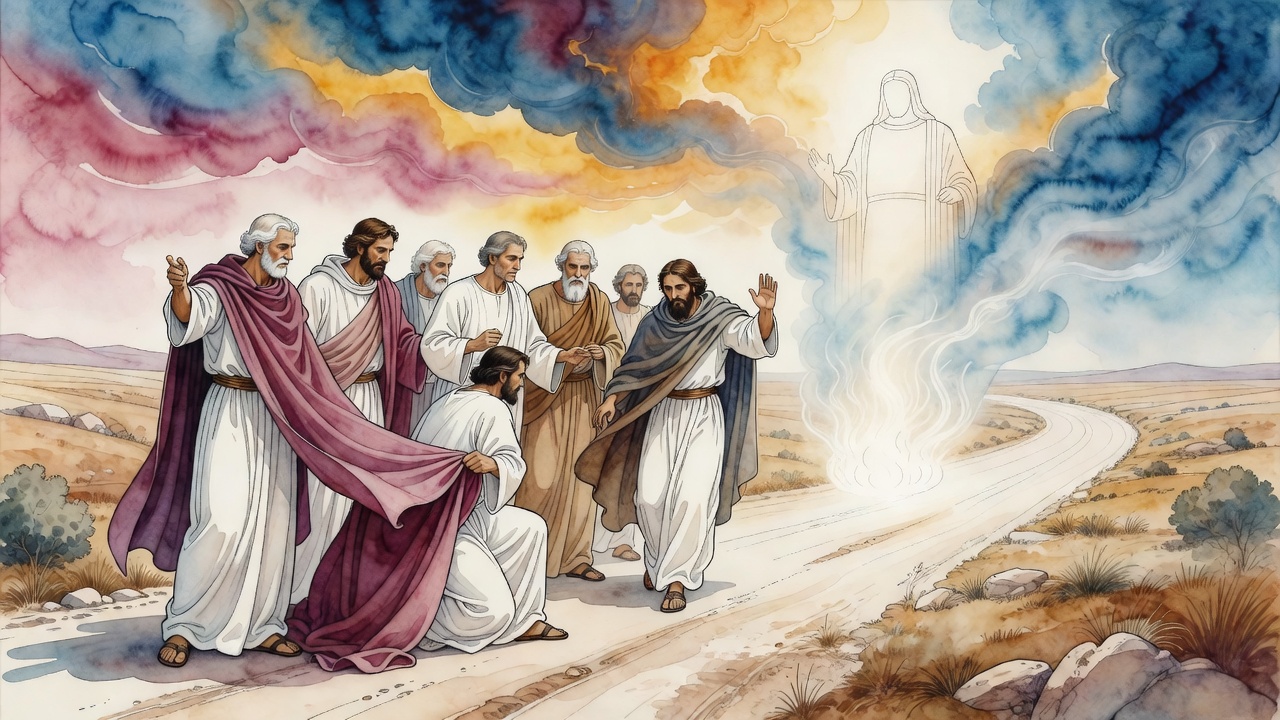
Seven men stood in the road ahead, and every one was robed in white. Not the white of bleached wool. The white of something that had never touched the ground. The road simply ended where they were, and Levi could go no farther.

He was young still, barely past the years when he and Simeon had taken up swords for their sister Dinah and emptied Shechem of its men. His hands remembered that work. They were not the hands he would have chosen to put on holy things. The seven did not seem to care what his hands had done.

"Rise up," they said, "and array thyself in the priestly garments."

The words landed like a sentence handed down, not an invitation offered. There was only a future arriving whether he reached for it or not.

Seven Garments, Seven Hands

Then they came to him one at a time, and each carried something to put upon him.

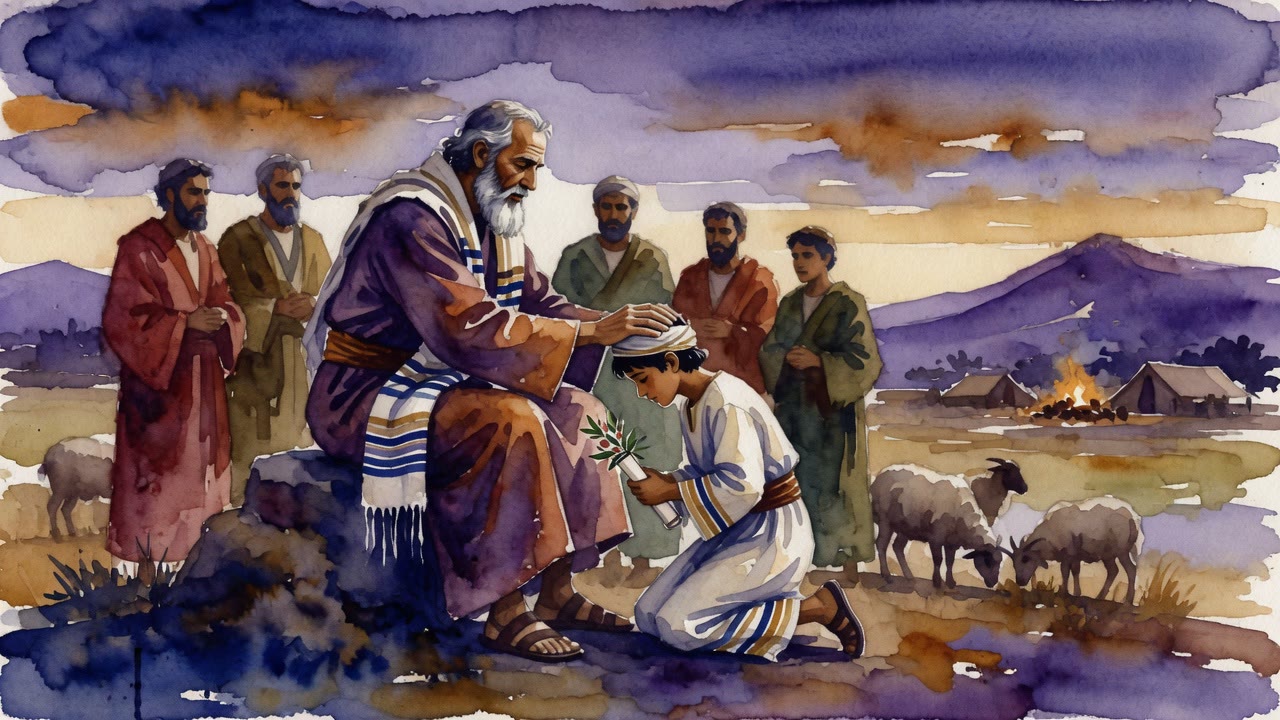
The first set the crown of righteousness on his head, and its weight pressed down like a verdict. The second brought the ephod of understanding and fixed it to his shoulders. The third draped him in the robe of truth, so that to lie afterward would be to tear his own clothing. A fourth fastened the mitre-plate of faith against his brow, a fifth set the mitre of dignity over it, and the last laid upon him the shoulderpieces of prophecy, the garment of a man who would be made to speak things he had not thought of himself.

With each piece the world grew heavier and more real. A shepherd had stood in the road. A priest was standing in his place, and the change came on without his consent, the way dawn comes on without asking the night.

When the last garment was set, the seven spoke as one. "Henceforth be the priest of the Lord, thou and thy seed unto eternity."

A Promise Stretched to the End of Days

They did not stop at his own life. They reached past him into generations he would never meet. His children's children would eat all that was lovely to look upon, the table of the Lord would belong to them, and out of his line would rise high priests and judges and scholars without end. By their mouths, the seven said, all that was holy would be guarded.

It was too much for one man on a road outside Bethlehem. He had gone out that morning a son of Jacob, third of twelve, with blood on his record and a temper his father feared. He would carry home a lineage that ran to the edge of time. The vision did not explain itself. It robed him, named him, promised him a thousand descendants, and let him go.

The Mountain Behind the Road

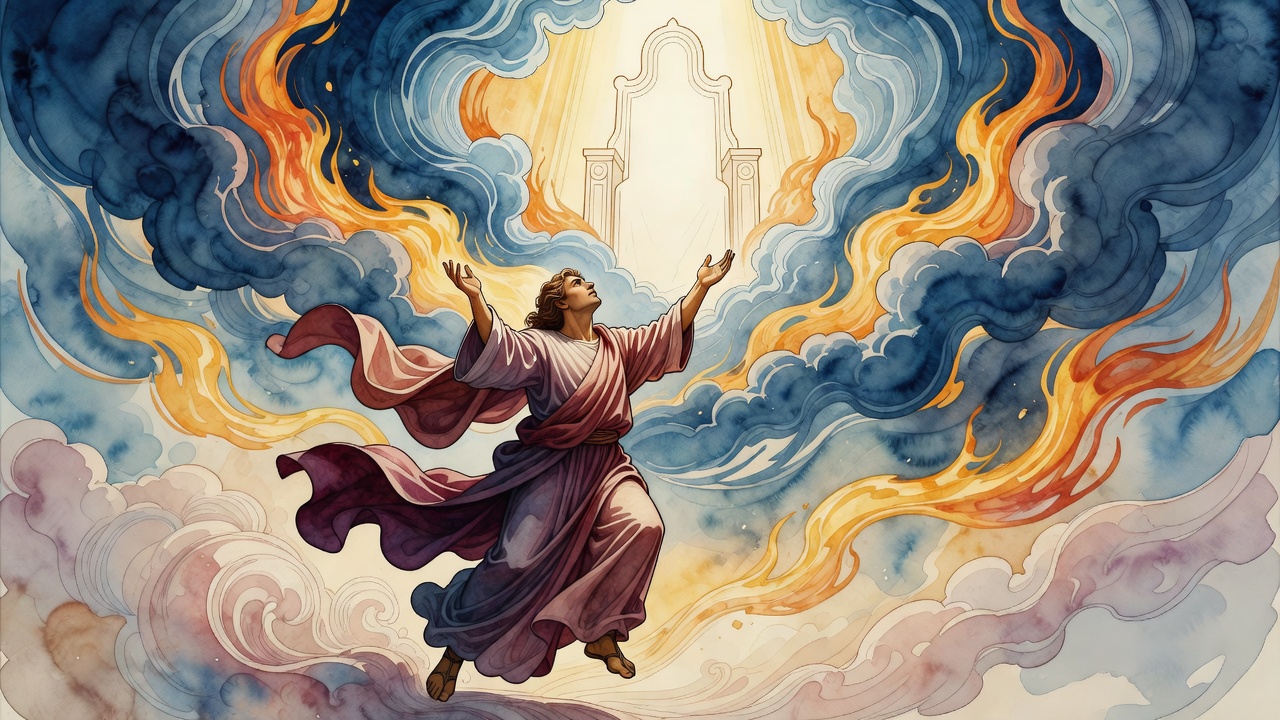
He understood it because of the first vision, the one on the high mountain. There the spirit of understanding had fallen on him while he tended the flocks, and grief for the corruption of the world had driven him to his knees. Sleep had taken him, and an angel had called him up through one bright heaven into a brighter one, until he stood near the Throne of Glory itself.

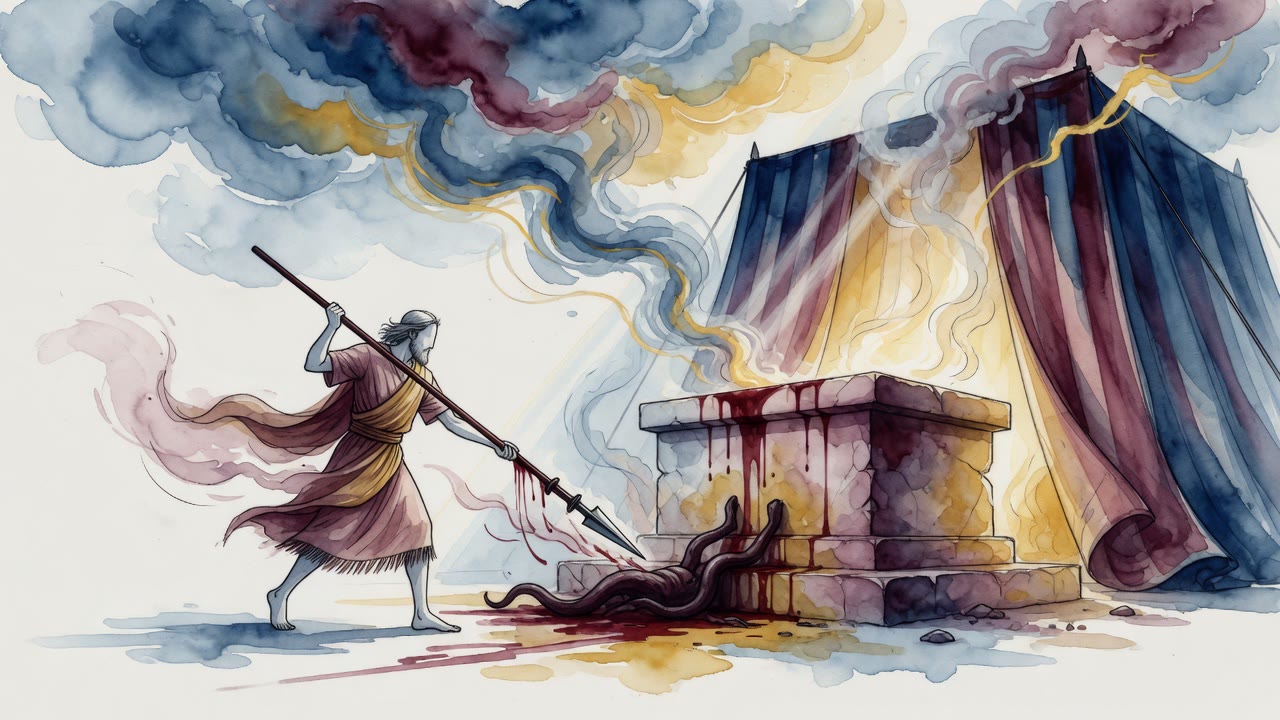
There God had spoken without any softening. "Levi, upon thee have I bestowed the blessing of the priesthood, until I come and dwell in the midst of Israel." The angel had sent him back with a shield and a sword, and when Levi asked the angel his name, the answer came back larger than the question. "I am the angel that intercedes for the people of Israel, that it may not be destroyed utterly." He had woken to find a shield of brass beside him, the exact shield he had carried in the heavens. After that, he could not pretend any of it was only sleep.

The Confirmation at His Grandfather's House

Two days after the seven men robed him, Levi went with his brother Judah to their grandfather Isaac. The old man, whose eyes had long gone dark, looked up as if he could see, and blessed Levi exactly as the vision had promised. Jacob too was shown that his son had been chosen, and set apart a tenth of everything he owned into Levi's keeping.

In Hebron, Isaac taught him the law his garments demanded. Which wood was fit for the altar. How much salt belonged on an offering. In what order the acts of sacrifice must fall. And one warning above the rest, repeated until it stuck: keep the line clean, guard against unchastity, because the same blood being lifted up could one day be the thing that defiled the holy place.

Levi listened, a shepherd learning to be a priest, fitted with garments he had not gone looking for. Years later, gathering his own sons to his deathbed, he set the same choice before them that the road had set before him. "Choose, now, light or darkness, the law of the Lord or the works of Beliar." He had not chosen the priesthood. It had stopped him on a road and dressed him in it. The choice he passed down was real, and his sons swore, before God and the angels, to walk in the law.


← All myths
From the tradition

Sources

3 sources

The texts this telling draws on, in full. Open a card to read inline, or expand it for a wider, quieter read.

Legends of the Jews 2:25Legends of the Jews

The feeling is as old as time, and it certainly echoes through the ancient stories of our ancestors. Let me tell you about a vision, a calling, described in Ginzberg's Legends of the Jews, that speaks to just that.

You're on a journey, settled in Beth-lehem (Bethlehem) for seventy days. Suddenly, a familiar feeling washes over you – another vision, just like one you've had before.

This time, it's different.

Before you stand seven men, all robed in dazzling white. They speak, and their words are a command, a destiny unfolding. "Rise up," they say, "and array thyself in the priestly garments."

Think about the weight of those words. The kohanim, the priests, held a sacred role, connecting the people to the Divine. And now, this individual is being called to join their ranks.

The men instruct him to adorn himself with powerful symbols. First, the "crown of righteousness" – a reminder of the moral weight of the position. Then, the "ephod of understanding," a garment linked to divine guidance. Next, the "robe of truth," because honesty and integrity are paramount. And finally, the "mitre-plate of faith" and the "mitre of dignity," head coverings that symbolize devotion and respect. And lastly, the "shoulderpieces of prophecy," which suggest a divinely inspired role.

Each of the seven men presents him with a garment, investing him with the very essence of priesthood. With each piece of clothing, the reality of the moment would deepen.

And then comes the pronouncement, the declaration of a sacred lineage: "Henceforth be the priest of the Lord, thou and thy seed unto eternity." A promise of an eternal connection, a legacy passed down through generations.

The vision doesn't stop there. The men continue, promising sustenance and privilege: "And ye shall eat all that is lovely to look upon, and the table of the Lord thy descendants will appropriate for themselves..." This isn't just about material comfort. It speaks to the idea that those dedicated to serving God will be provided for.

The vision culminates in a powerful statement about the future. "…and from them will come high priests, judges, and scholars, for all that is holy will be guarded by their mouth." The individual’s descendants will not only maintain the temple rituals, they will become leaders, wise thinkers, and protectors of all that is sacred.

What a charge, what a responsibility!

This vision, recounted in Legends of the Jews, isn't just about one person's destiny. It speaks to the enduring power of calling, of lineage, and of the vital role of those who dedicate themselves to the sacred. It makes you wonder, doesn't it? What are we each called to do? What legacy will we leave behind? And how can we, in our own way, guard all that is holy?

Full source
Testament of LeviTestaments of the Twelve Patriarchs

Levi, third son of Jacob and Leah, called his sons together when he knew his death was near. It had been revealed to him that he would die. When they gathered, he told them everything.

"I was born in Haran," Levi began, "and I came with my father to Shechem. I was young, about twenty years of age, when with Simeon I wrought vengeance on Hamor for our sister Dinah" (Genesis 34:25-29).

Then came the vision.

While feeding the flocks in Abel-Maul, the spirit of understanding fell upon Levi. He saw all humanity corrupting its way, unrighteousness building walls, lawlessness enthroned on towers. Grief-stricken for the human race, Levi prayed for deliverance. Sleep fell upon him. He found himself on a high mountain. The heavens opened.

An angel of God spoke: "Levi, enter."

He entered the first heaven and saw a great sea hanging in the void. He passed into a second heaven, far brighter, filled with boundless light. The angel told him: "Marvel not, for you shall see another heaven more brilliant and incomparable." When Levi ascended to the highest place, he would stand near the Lord, become His minister, and declare His mysteries to humanity.

The angel explained the structure of the heavens. The lowest heaven is gloomy because it beholds all the unrighteous deeds of men. It contains fire, snow, and ice prepared for the day of judgment. In the second heaven are the hosts of heavenly armies, ordained to execute vengeance on the spirits of deceit and Beliar. Above them dwell the holy ones. In the highest of all dwells the Great Glory, far above all holiness. Below that are the archangels, who minister and make propitiation to the Lord for the sins of the righteous, offering a sweet-smelling, bloodless offering. Further down are thrones and dominions, forever offering praise to God.

"When the Lord looks upon us," Levi said, "all of us are shaken. The heavens, the earth, and the abysses tremble at the presence of His majesty."

Then the angel opened the gates of heaven, and Levi saw the holy Temple. Upon a throne of glory sat the Most High, who said: "Levi, I have given you the blessings of the priesthood until I come and sojourn in the midst of Israel." The angel brought Levi back to earth, gave him a shield and a sword, and said: "Execute vengeance on Shechem because of Dinah your sister, for the Lord has sent me." Levi destroyed the sons of Hamor. When he asked the angel's name, the angel replied: "I am the angel who intercedes for the nation of Israel, that they may not be utterly smitten."

A second vision followed. At Bethel, after seventy days, Levi saw seven men in white garments. They said: "Arise, put on the robe of the priesthood, the crown of righteousness, the breastplate of understanding, the garment of truth, the plate of faith, the turban of the head, and the ephod of prophecy." One by one, seven angels vested him. The first anointed him with holy oil and gave him the staff of judgment. The second washed him with pure water and fed him bread and wine. The third clothed him in a linen vestment. The fourth girded him with a sash of purple. The fifth gave him a branch of rich olive. The sixth placed a crown on his head. The seventh set upon him a diadem of priesthood and filled his hands with incense.

"Levi, your seed shall be divided into three offices," they declared, "for a sign of the glory of the Lord who is to come." His descendants would include high priests, judges, and scribes. By their mouths the holy place would be guarded.

Isaac, grandfather of Levi, confirmed it all. He taught Levi the law of the priesthood: sacrifices, burnt-offerings, first-fruits, peace-offerings. He warned him especially against the spirit of lust, which would through Levi's descendants pollute the holy place. "Take a wife without blemish while you are young," Isaac counseled. "Before entering the holy place, bathe. When you offer sacrifice, wash. When you finish, wash again."

Levi foresaw a dark future: seventy weeks of priestly corruption, profaning sacrifices, making void the law, persecuting righteous men. The Temple would be laid waste. Israel would be scattered among the nations as captives.

But after the punishment, the priesthood would be renewed. "The Lord shall raise up a new priest," Levi prophesied. "His star shall arise in heaven as of a king, lighting up the light of knowledge as the sun lights the day. He shall shine forth upon the earth, and shall remove all darkness from under heaven. The heavens shall exult in his days, and the earth shall be glad. He shall open the gates of paradise and remove the threatening sword against Adam. He shall give the righteous ones to eat from the Tree of Life. Beliar shall be bound by him, and he shall give power to his children to tread upon evil spirits."

"Choose for yourselves," Levi told his sons, "either the light or the darkness, either the law of the Lord or the works of Beliar." His sons answered before the Lord: "We will walk according to His law."

Levi stretched out his feet on the bed and was gathered to his fathers at a hundred and thirty-seven years. They buried him in Hebron, with Abraham, Isaac, and Jacob.

Full source
Legends of the Jews, II. The Sons Of Jacob, The Ascension Of LeviLegends of the Jews

The story, as told in Legends of the Jews, paints a vivid picture of divine encounters and a sacred calling.

In Ginzberg's retelling, when Levi knew his time was near, he gathered his children. It wasn't just to reminisce, but to pass on a legacy, a prophecy stretching all the way to the end of days. He began by recounting a pivotal moment from his youth, a moment when "the spirit of understanding of the Lord came upon" him while tending flocks in Abel-Meholah. He saw the corruption of humanity, injustice and impiety ruling the world. Distressed, he prayed for salvation.

Then, a vision. He saw a towering mountain, the heavens opening, and an angel beckoning him to enter. Levi ascended through multiple heavens, each brighter than the last. He questioned the angel about their significance and was told he would soon see an even more brilliant heaven, a place where he would stand near God, minister to Him, and reveal divine mysteries to humankind. "Of the Lord's portion shall be thy life," the angel proclaimed, "and He shall be thy field and vineyard and fruits and gold and silver."

The angel then revealed the purpose of each heaven and prophesied about the Day of Judgment. In the third heaven, Levi beheld the holy Temple and God seated upon the Throne of Glory. God Himself declared, "Levi, upon thee have I bestowed the blessing of the priesthood, until I come and dwell in the midst of Israel." The angel returned Levi to earth, gifting him a shield and sword, instructing him to avenge Dinah's honor in Shechem. “Execute vengeance upon Shechem for Dinah," the angel said, "and I will be with thee, for the Lord hath sent me." When Levi asked the angel's name, he received a powerful answer: “I am the angel that intercedes for the people of Israel, that it may not be destroyed utterly, for every evil spirit attacks it.”

Upon awakening, Levi found a brass shield identical to the one in his dream. Remember the story of Dinah and Shechem? Levi, fueled by what he considered divine mandate, urged his father Jacob and brother Reuben to convince the sons of Hamor to undergo circumcision (brit milah) – a deeply significant act of covenant in Jewish tradition. Levi, consumed by righteous anger over the "abominable deed," personally slew Shechem, while Simon killed Hamor. The other brothers joined in, destroying the city. Jacob, however, was displeased. Despite their father's disapproval, Levi saw their actions as divine judgment upon Shechem for their sins, declaring that God would use this to ultimately drive out the Canaanites and give the land to Jacob's descendants. "Henceforth Shechem will be called the city of imbeciles," Levi declared, "for as a fool is mocked at, so have we made a mockery of them."

Later, while in Beth-lehem, Levi had another vision. This time, seven men clothed in white appeared, instructing him to don priestly garments: the crown of righteousness, the ephod (a priestly garment) of understanding, the robe of truth, the mitre (a type of head covering) of faith and dignity, and the shoulder pieces of prophecy. Each man brought a garment, investing him with it. They proclaimed, "Henceforth be the priest of the Lord, thou and thy seed unto eternity." They foretold that his descendants would partake of the offerings, that they would become high priests, judges, and scholars, guarding all that is holy.

Two days later, Judah and Levi visited their grandfather Isaac, who blessed Levi in accordance with the vision. Jacob also had a vision confirming Levi's appointment as God's priest, and through him, Jacob dedicated a tenth of his possessions to God. In Hebron, Isaac taught Levi the laws of the priesthood, emphasizing the importance of abstaining from unchastity.

Levi then shares details about his family. At 28, he married Milcah and had Gershom, realizing he wouldn't be among the greatest. At 35, Kohath was born at sunrise, seen in a vision among the proud. At 40, Merari was born after a difficult labor. And in Egypt, at 63, Jochebed was born and later married by Amram, who was born on the same day.

Finally, Levi gave his children a choice: "Choose, now, light or darkness, the law of the Lord or the works of Beliar." His sons vowed to follow God's law, a promise witnessed by God, the angels, and Levi himself.

Levi's final act was to admonish his children to walk in the ways of God, sharing wisdom gleaned from the writings of Enoch about future transgressions and divine punishments. He also spoke of a new priest who would arise, one to whom all the words of the Lord would be revealed. (Levi’s words here are especially interesting, often associated with the messianic hope within Jewish tradition.

Levi then stretched out his feet and died at the remarkable age of 137, outliving all his brothers.

So what do we take away from this story? It's more than just an origin story for the Levites. It's a narrative about divine calling, responsibility, and the enduring power of choice. Levi's vision and his commitment set the stage for a lineage dedicated to serving God, a legacy that continues to resonate within Jewish tradition. What choices will you make in your own life, and what legacy will you leave behind?

Full source