The Lion of Ilai Roared and Rome Lost Its Teeth
Caesar leaned on his throne and asked to see the lion God is compared to. Rabbi Joshua prayed. The forest of Ilai began to walk.
Caesar leaned forward on his throne and smiled the smile of a man who has never met a force he could not hire or hunt. "Your scriptures compare your God to a lion," he said to Rabbi Joshua ben Hananiah. "But a hunter can kill a lion, so what is so special?"
 Click for full size
The verse hung in the air between them: "The lion has roared, who will not fear?" (Amos 3:8). Rabbi Joshua tasted iron, because this was not a lesson about animals. It was a dare aimed at the Name, and the Jews of Rome were sitting in the dare's shadow. "You would not want to see this lion," the sage said. Caesar's pride heard only refusal and turned it into a threat, so the demand hardened: show me the lion, or watch your people pay.
The Prayer That Woke Ilai
Rabbi Joshua told him the comparison was not to the lions men cage. It was to the lion of the forest Ilai. Ilai was not a roadside thicket. It was a primordial lair, a place the sages treated as a reservoir of untamed power, the kind of forest that exists more in heaven's map than on a Roman road survey. Caesar shrugged. He had maps. He wanted a spectacle.
"I cannot show it to you," Rabbi Joshua said, "because you cannot look at it."
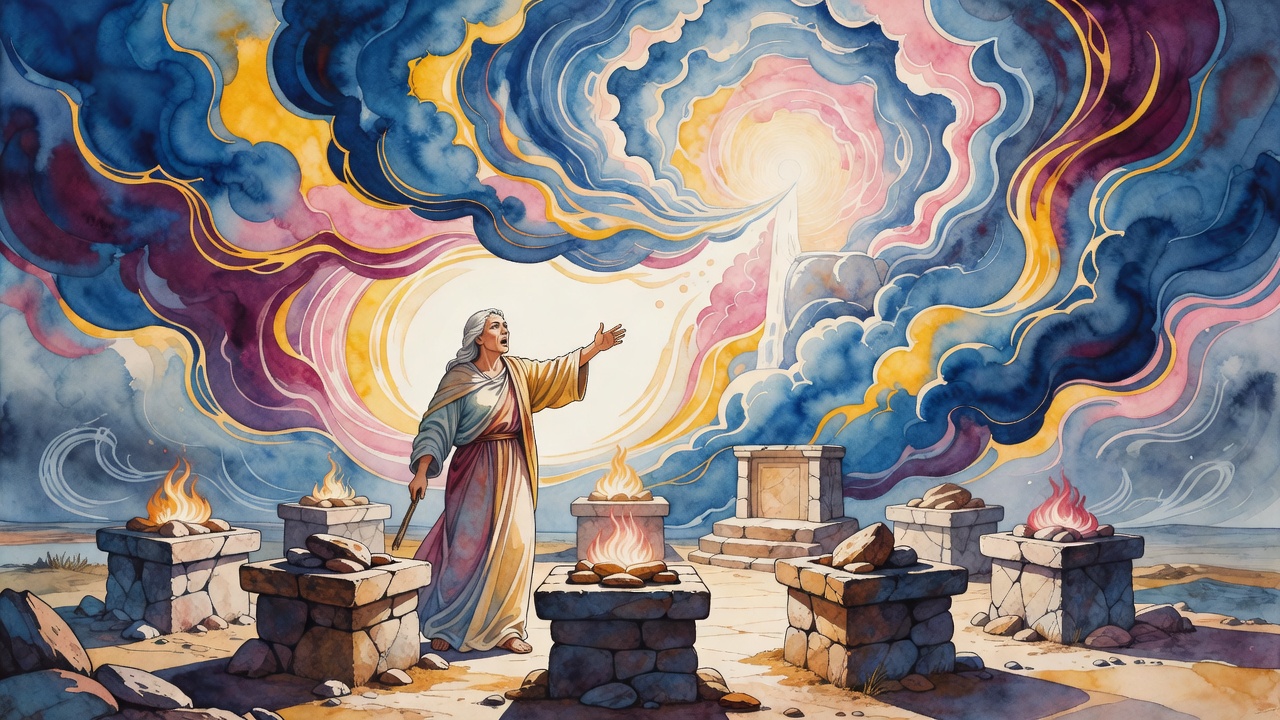
"I will look at it," Caesar said, and the room tightened, because an emperor who has been refused once will not be refused twice in public. Rabbi Joshua prayed that the lion of Ilai might stir. The prayer was answered the way a door answers a key. Far away, something vast stood, stretched, and began to walk toward the empire that thought itself the world's spine. Rabbi Joshua did not boast, but waited with the quiet of a man who has called a storm and must now endure its arrival.
Four Hundred Parasangs
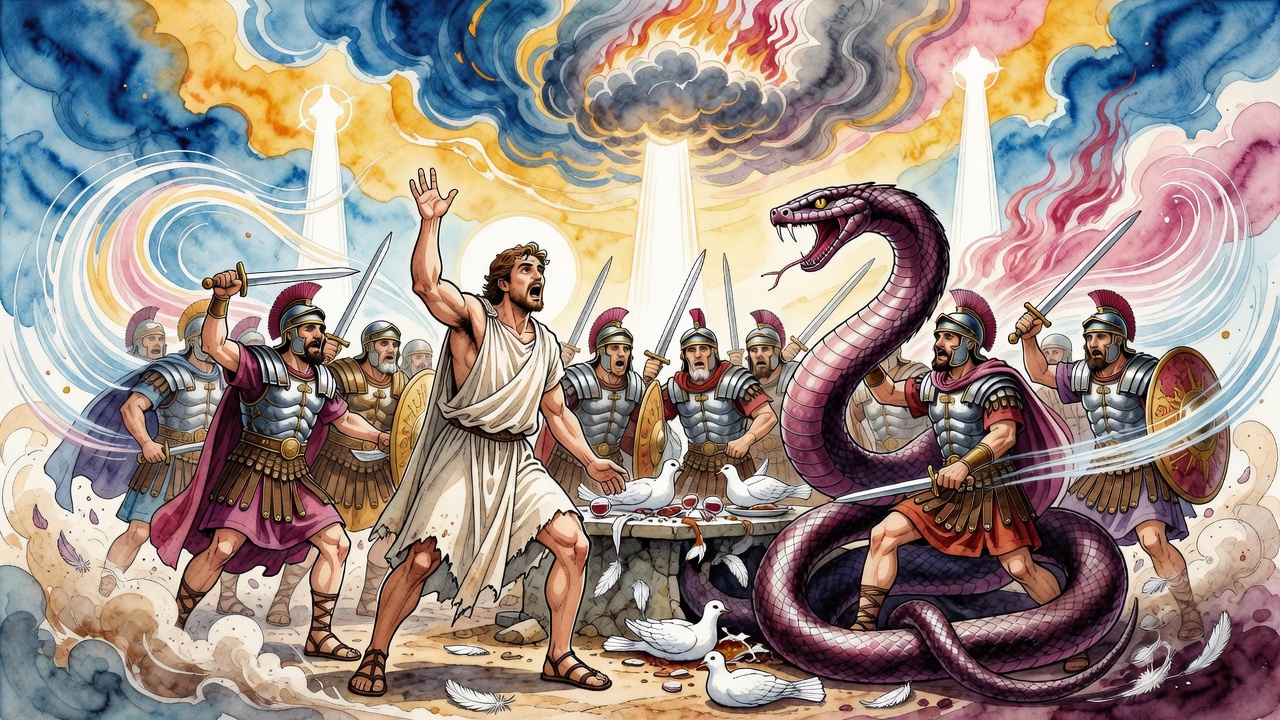
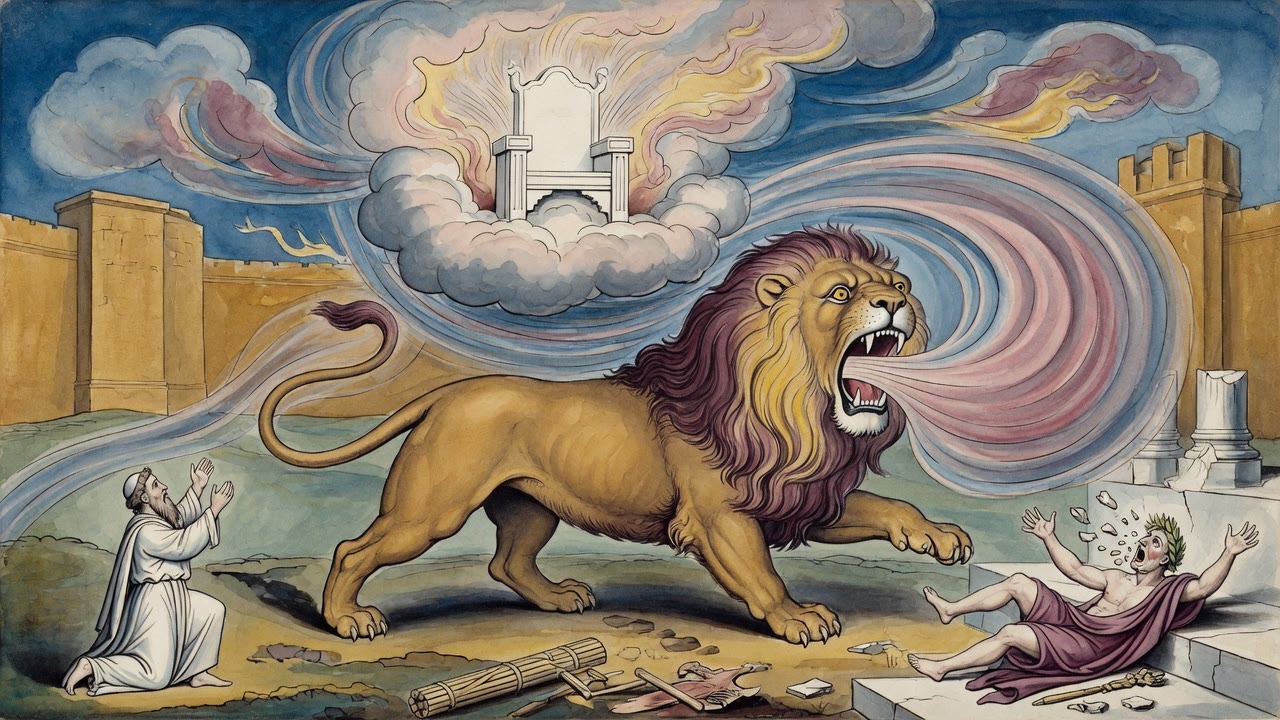
While the lion was still four hundred parasangs from Rome, it roared once, and the wall of Rome fell. Women who were carrying children lost them where they stood, because a sound that large does not ask who is ready. Stone that had carried legions became rubble in a single throat's work. No Jewish army had marched, and no arrow had been fired, but a roar carrying the fear of Amos had rearranged the furniture of power.
At three hundred parasangs the second roar arrived. Molars and front teeth loosened in the mouths of the people and fell, so Caesar himself pitched from his throne to the floor, imperial dignity scattered like coins. He put his hands to his mouth and found gaps, and there was blood on the marble, because the hunter's confidence was gone.
He had wanted a lion he could measure against a spear, but he had been given a distance, and the distance was eating his city before the animal even arrived.
Enough
"Enough," Caesar begged. "Pray that it go back." The man who had shrugged at lions now understood that some comparisons are not metaphors you can cage. Rabbi Joshua prayed again, so the lion of Ilai turned and the pressure on the air eased until teeth stopped falling. Somewhere far off, a primordial forest received its own again.
Rome still stood, poorer in wall and pride. The Jews of the city breathed. The sage did not smile much. Power that large is not a toy even when it answers your side. In the streets, people touched their empty gums and told three versions of the same hour. Some said a Jewish magician had cursed the city. Some said the gods of Rome were quarreling. Rabbi Joshua walked home under a sky that still seemed to vibrate, and he did not correct the gossip, because correction would have required explaining Ilai, and Ilai is not a subject for taverns.
What remained in Caesar's mouth was the price of the dare. Comparing the Holy One to a lion is not an invitation to book a hunt. It is a warning about scale. The forest that answered prayer can also unmake a wall you trusted with your armies.
The Palm Kept Its Thorns
On the way back, in a market that had not yet swept the dust of the roar, a date-seller's palm stood in a clay pot, sweet fruit high, thorns bristling at the reach. A student who had followed Rabbi Joshua from the palace asked whether the lion would ever return uninvited. The sage stopped at the pot.
"The righteous flourish like the palm," he said. "Dates for the hand that knows how, and thorns for the hand that grabs." Reach for the fruit with a greedy fist and the thorns rise first (Psalms 92:13). So with the righteous, and so with the power that stands behind them. Approach rightly and there is sweetness. Trifle, mock, demand spectacle for empire's ego, and the sting answers. The words of the wise bite like a fox, sting like a scorpion, hiss like a serpent, and burn like coals, so warm yourself, but do not grab.
Caesar had grabbed, so the lion was the thorn. Back in the study house the students wanted a promise that Ilai would stay asleep, but Rabbi Joshua answered with the caution of a man who has already seen a wall fall. Do not summon what you cannot host. Do not dare heaven to perform for empire. Somewhere in Ilai the lion slept again, if sleep is the right word for a power that is mostly warning. Rome rebuilt a few stones, though teeth do not rebuild, and the empire learned a story it would not put on its coins.
← All myths