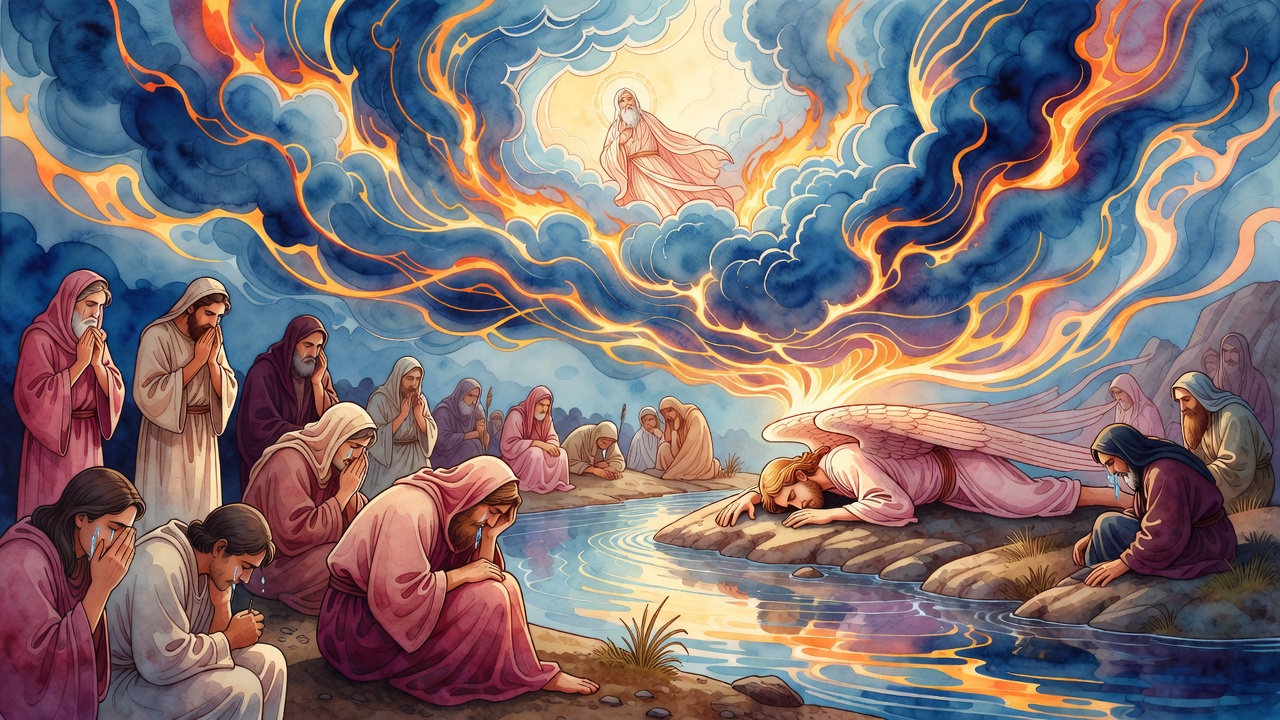
Manasseh Sets Four Faces Against the Presence
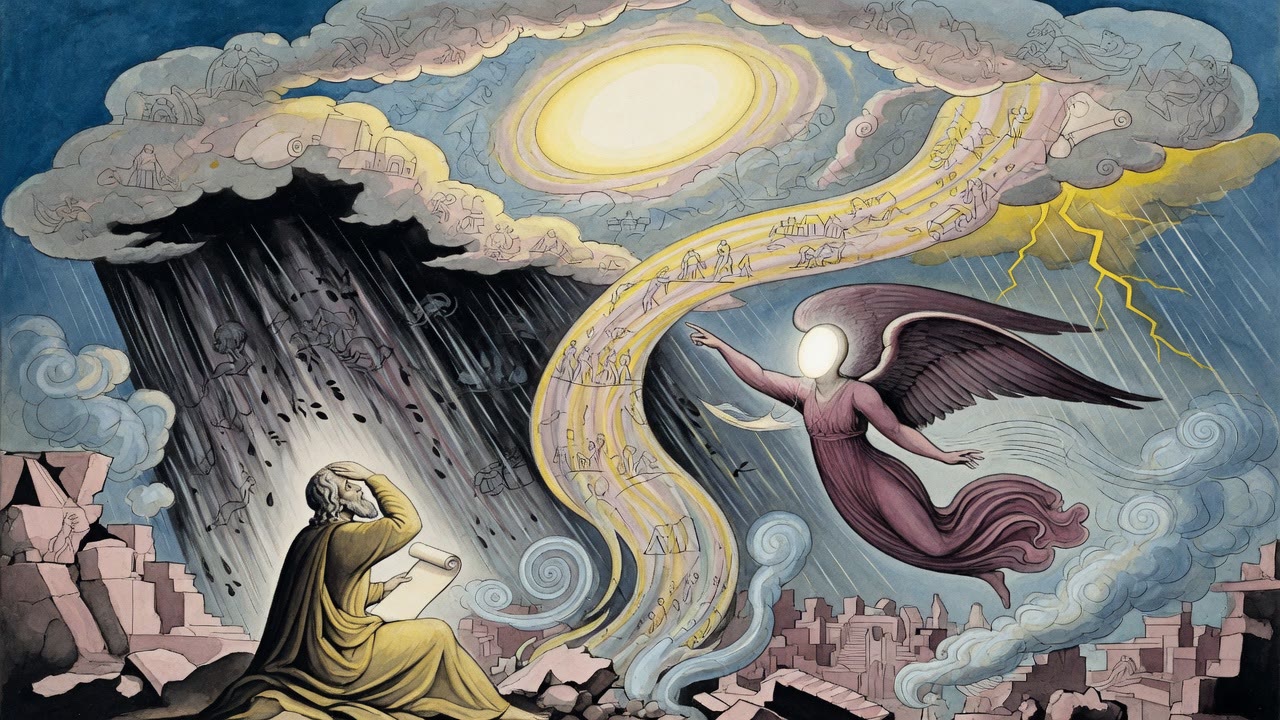
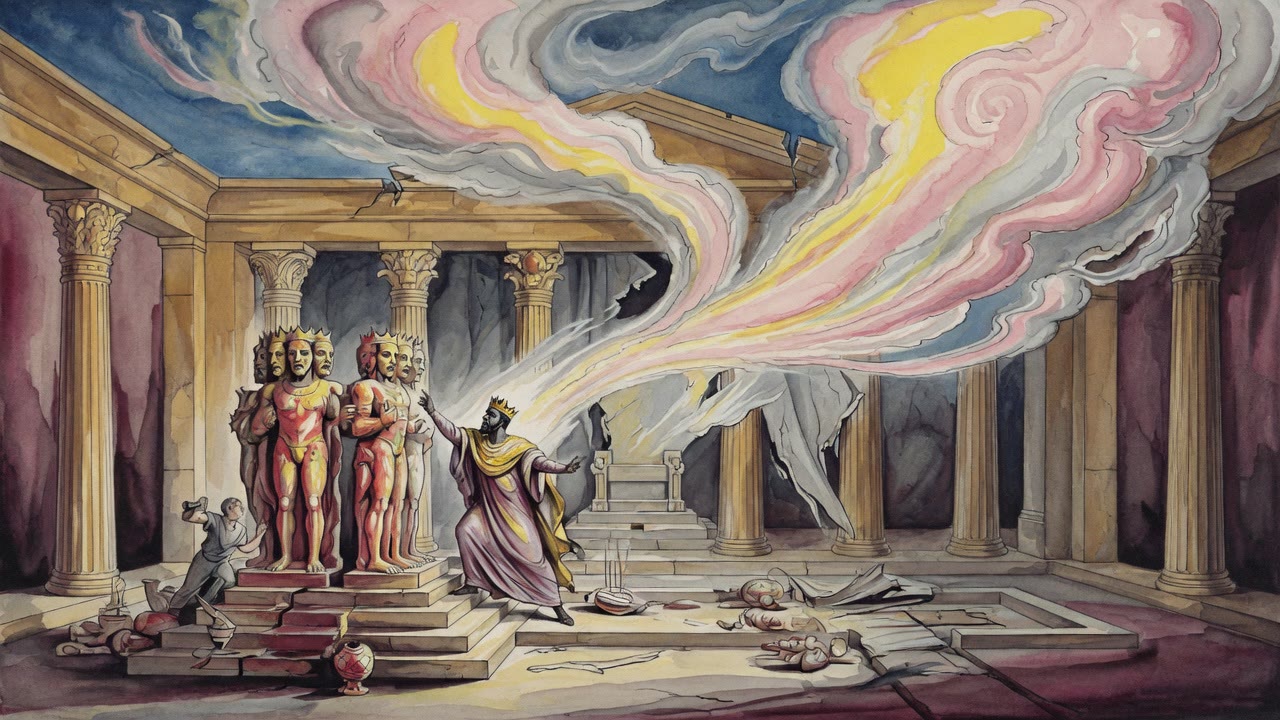
Manasseh dragged a four-faced idol into the innermost room. Wherever the Presence turned, stone stared back. God asked what He was doing there.
Table of Contents
Manasseh dragged the carved thing across the last threshold. Priests flattened themselves against the stone. The Holy of Holies had been a room for one Guest. He set the idol down where the ark had stood in better years, and he did not set it with one face.
 Click for full size
He carved four. East, west, north, south. Wherever the Shekhinah (שכינה), God's Presence dwelling among people, turned, stone stared back. No corner of the room was left unwatched.
God spoke through Jeremiah. Even a jackal uncovers her breast so her young will nurse. "My children, seeing Me dwell among them, brought in an image to drive Me out."
"What am I doing here?" God said. "I will go. I will return to My place."
A Home Offered from the First Day
The insult landed on a long search. Adam had stood in a world still wet with first light when the Holy One offered him a home shared below. "If you prove worthy, as I reign over the heavens I will make you king over the earth, and I will dwell beside you." Adam sinned. The Shekhinah withdrew.
God tried again. He brought Israel out of Egypt on a condition written in wood and gold. "Make Me a sanctuary, that I may dwell among you" (Exodus 25:8). He warned Solomon as the Temple rose. Walk in My statutes and I will never forsake you. Turn away, and I will cast this house from My presence.
Solomon multiplied wives and horses. His heart turned. The kingdom tore. The house still stood, but the terms of dwelling had already been spoken. From garden to palace the search for a room downstairs never stopped. Only the human answer kept changing shape, until Manasseh answered with four patient faces.
The Guest Chose the Door
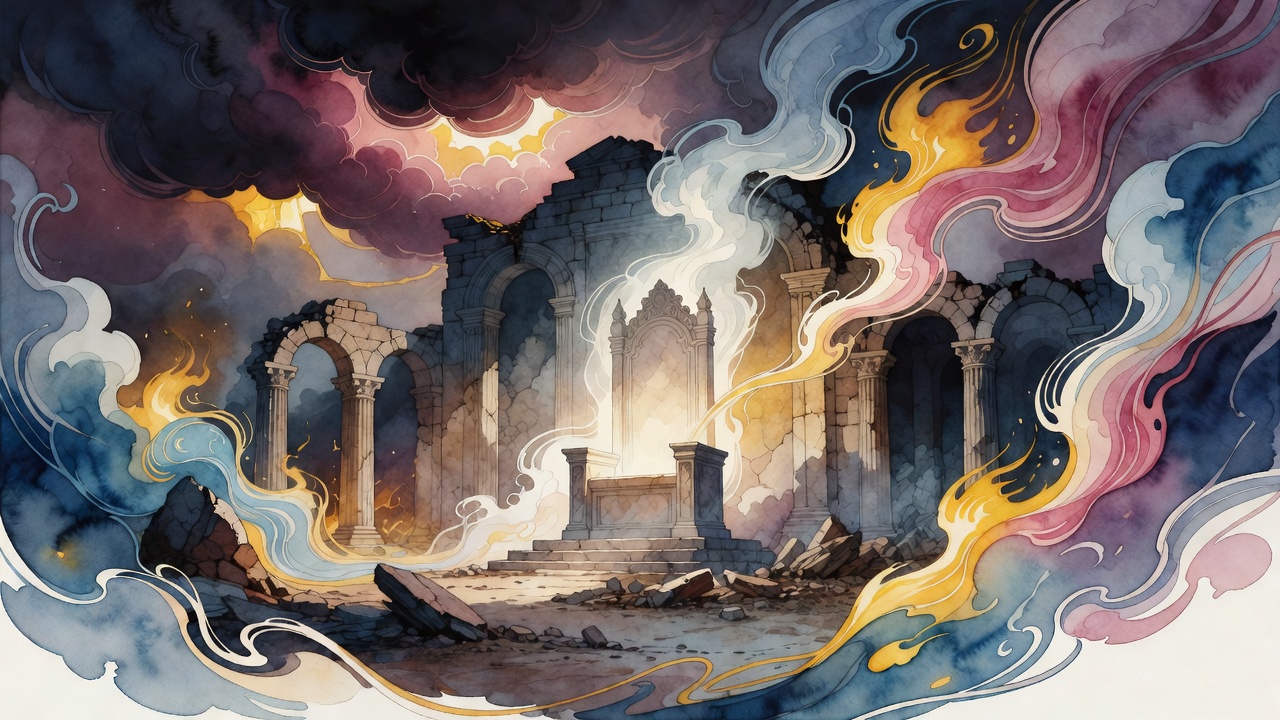
The Presence does not lose a fight of arms. The Presence leaves a room that has been made insulting on purpose. Four faces mean no angle of mercy remains unwatched by stone. The Holy of Holies became a chamber of forced confrontation until the Guest chose the door.
He did not smash the idol. He walked out. The innermost room kept its polish and lost its Guest. Manasseh had not conquered heaven. He had redecorated until heaven would not sit down.
Later the people cried, "We will come no more to You. The Temple stands given, and You have withdrawn. What more do You want of us?"
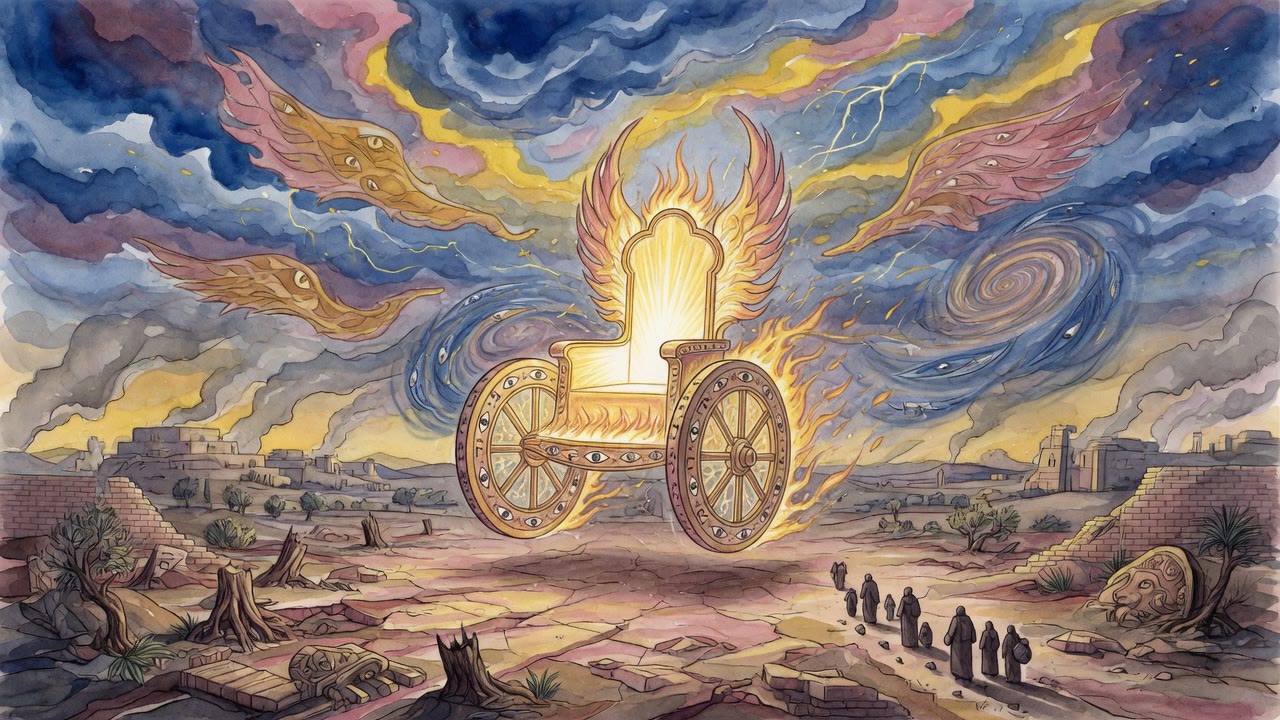
The Holy One did not thunder. He sighed the words of Jeremiah. "Would that I had in the wilderness a lodging place for wayfarers" (Jeremiah 9:1). In the bare and broken places He had been praised when cities fled.
The Prince and the Ruined City
A prince entered a great province. The people saw him coming and fled. He entered a second city. Again they scattered. At last he came upon a city in ruins, and there the people lifted their faces and praised him.
"This city," said the prince, "is better than all the rest. Here I will build my lodging. Here I will dwell."
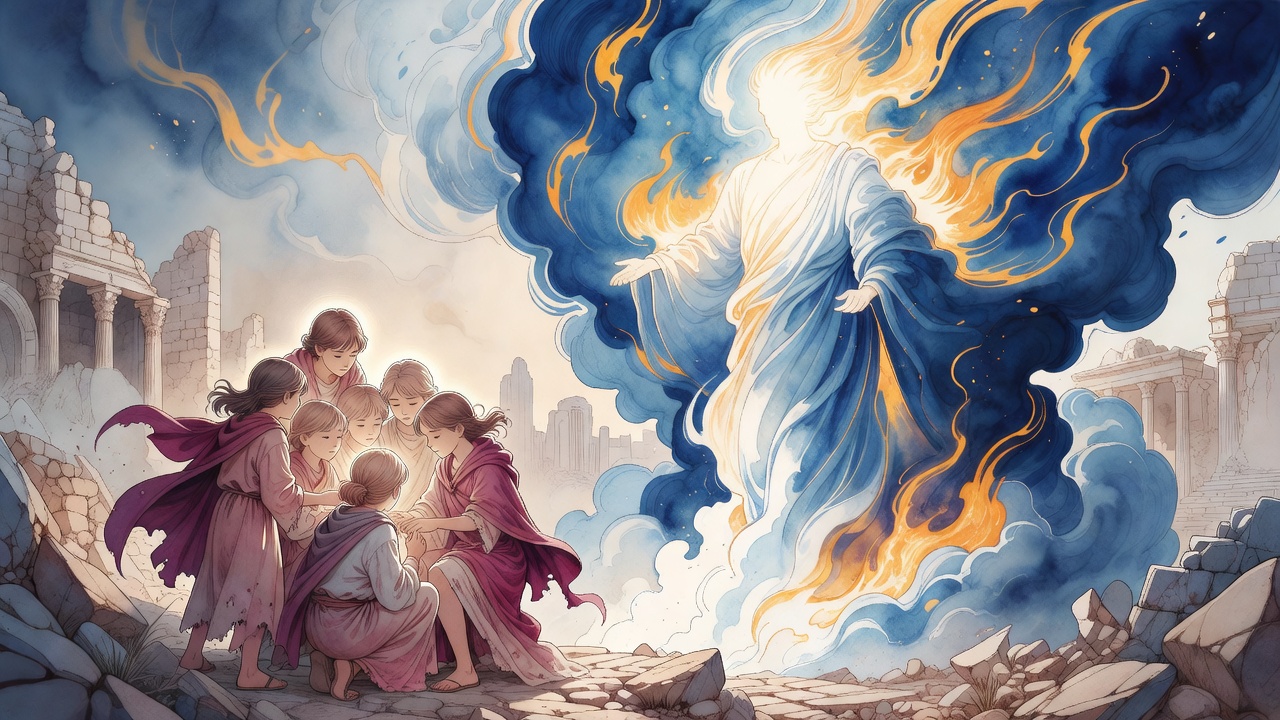
So it was with the Holy One. He came to the sea, and the sea saw and fled (Psalms 114:3). He came to the wilderness, the place in ruins, and the wilderness lifted up its voice in praise. "This place is good," He said. "Here I will make My dwelling."
He went down into its midst. The desert began to rejoice. The dry land learned it could blossom when God chose the broken over the proud. Manasseh's polished Holy of Holies failed the test the wilderness passed without walls.
After the Room Emptied
In a courtyard of a later generation, after the house had been emptied more than once, Rabbi Eliezer and Rabbi Yehoshua argued over how a people so insulting could ever be gathered back. Rabbi Eliezer said only repentance redeems. Rabbi Yehoshua said when the end comes, redemption comes whether they have turned or not. Rabbi Elazar said God raises a tyrant like Haman to crush them until they turn back, and then a redeemer shall come to Zion.
They did not settle it. The jackal still nurses. The four faces still stare in the memory of that room. The desert still knows how to lift its face.
Adam lost the garden dwelling. Solomon lost the heart that kept the house terms. Manasseh installed the stare. Each step was a smaller room with a louder insult. The Shekhinah's path was not a straight exile. It was a series of doors closed from the inside by the people who had begged for a Guest.
In the wilderness the ruined city still knew how to lift its face. That is why God could sigh for a lodging among wayfarers instead of only raging at the Temple's emptied room. Praise from rubble outweighed polish from a Holy of Holies that had learned to host an idol with four patient faces.
← All myths