Michael and the Accuser Fight Over the Body of Moses
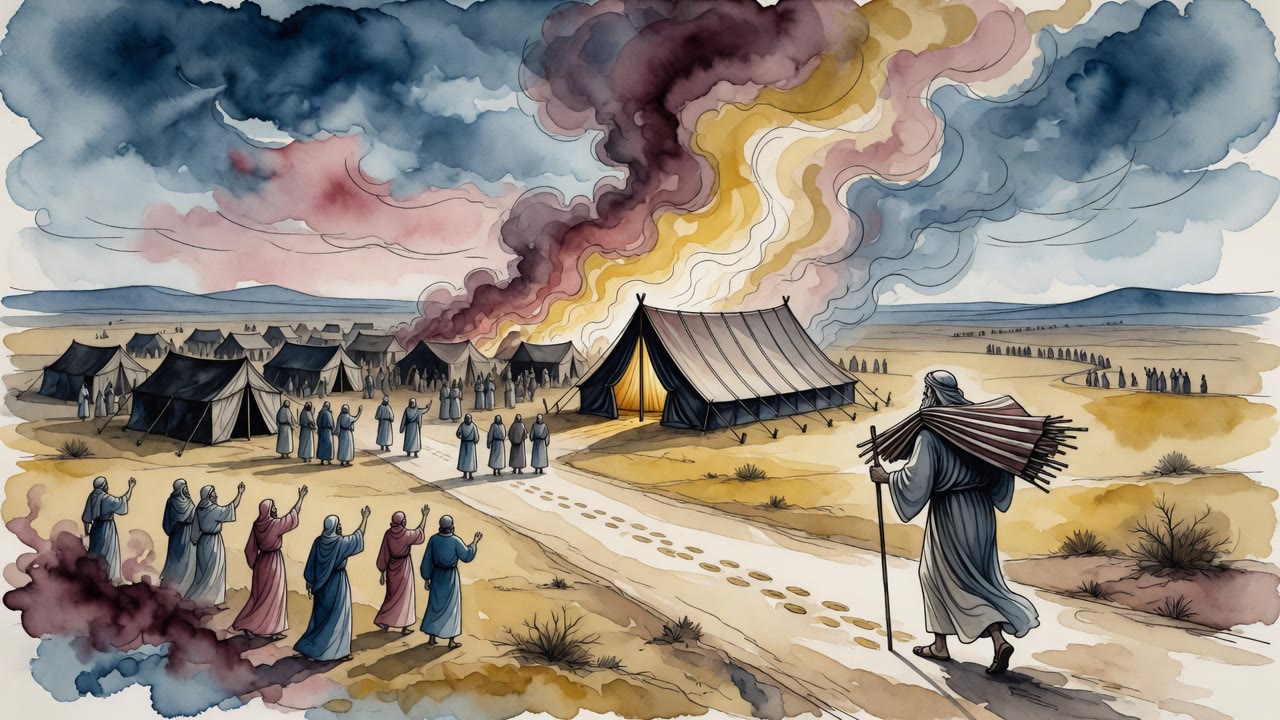
Joshua tore his clothes and asked what grave could hold him. On Nebo the Accuser claimed the dust. Michael would not curse. He rebuked.
Table of Contents
Joshua tore his clothes and threw himself at the prophet's feet. Moses bent down, comforted him, and wept with him. Then Joshua poured out a question no hillside could answer. What grave on earth could hold such a man? What stone, what marker, could ever name the place where Moses lay?
 Click for full size
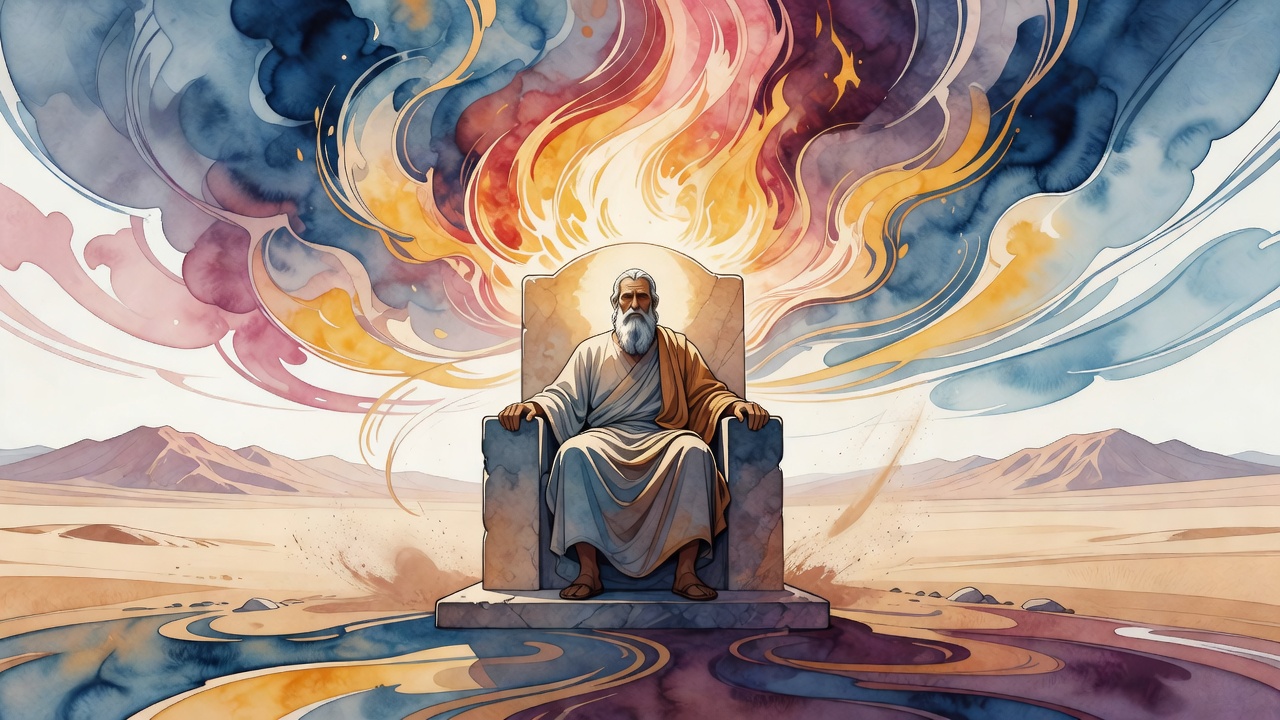
Ordinary people, he said, each get a tomb sized to their years, a fixed plot in the ground. Moses was not ordinary. His resting place stretched from the rising sun to the setting sun, from the south to the far edges of the north. All the world was his sepulchre. No single hill was grand enough to claim him, and no one would dare carry his body from place to place like common remains.
What Grave Could Hold Him
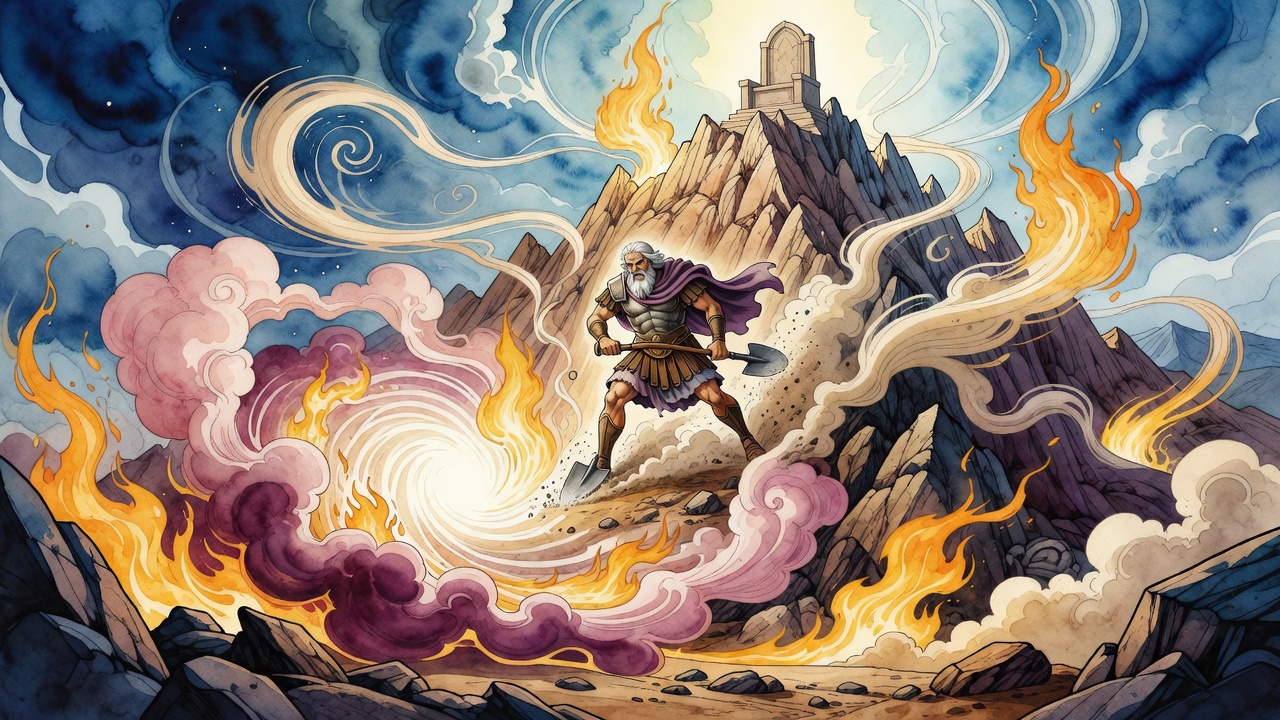
Moses climbed Nebo alone. He looked once across a land he would never enter, and lay down in the dust. No mourner stood at his side. No spade was lifted. The greatest prophet who ever lived died where only heaven could see him, and heaven sent a single angel down to do what no human hand was permitted to do.
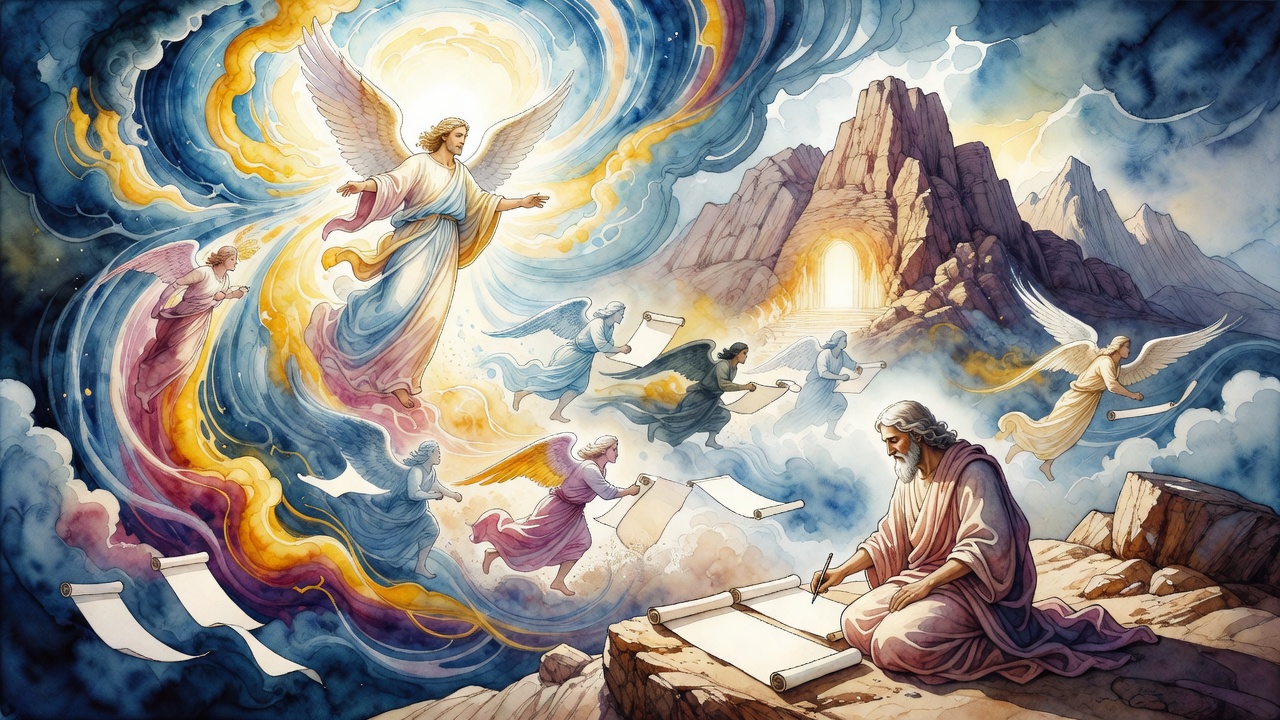
Michael, the prince of Israel, came down to bury him. He bent to the work the way a son bends to his father. The body was still. The dust was warm.
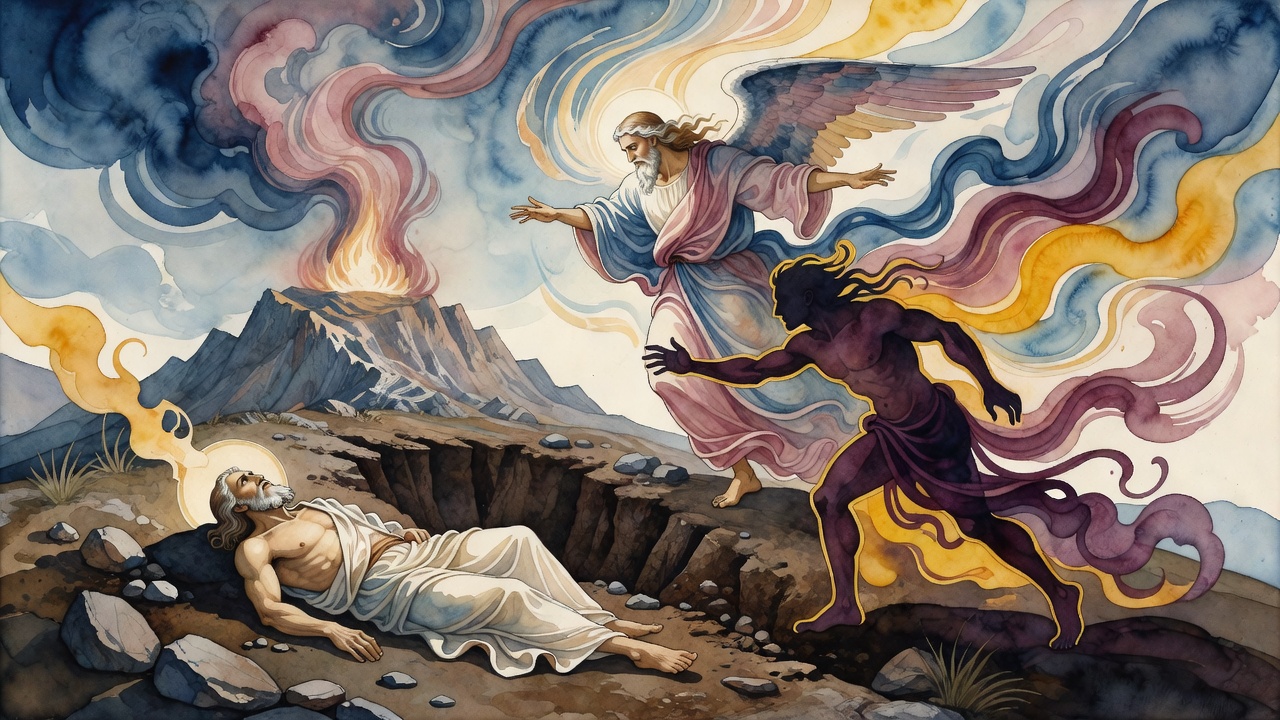
Then a shadow fell across the open ground, and the Accuser was standing over the grave with the patience of someone who had been waiting a long time for exactly this.
The Accuser Claimed the Dust
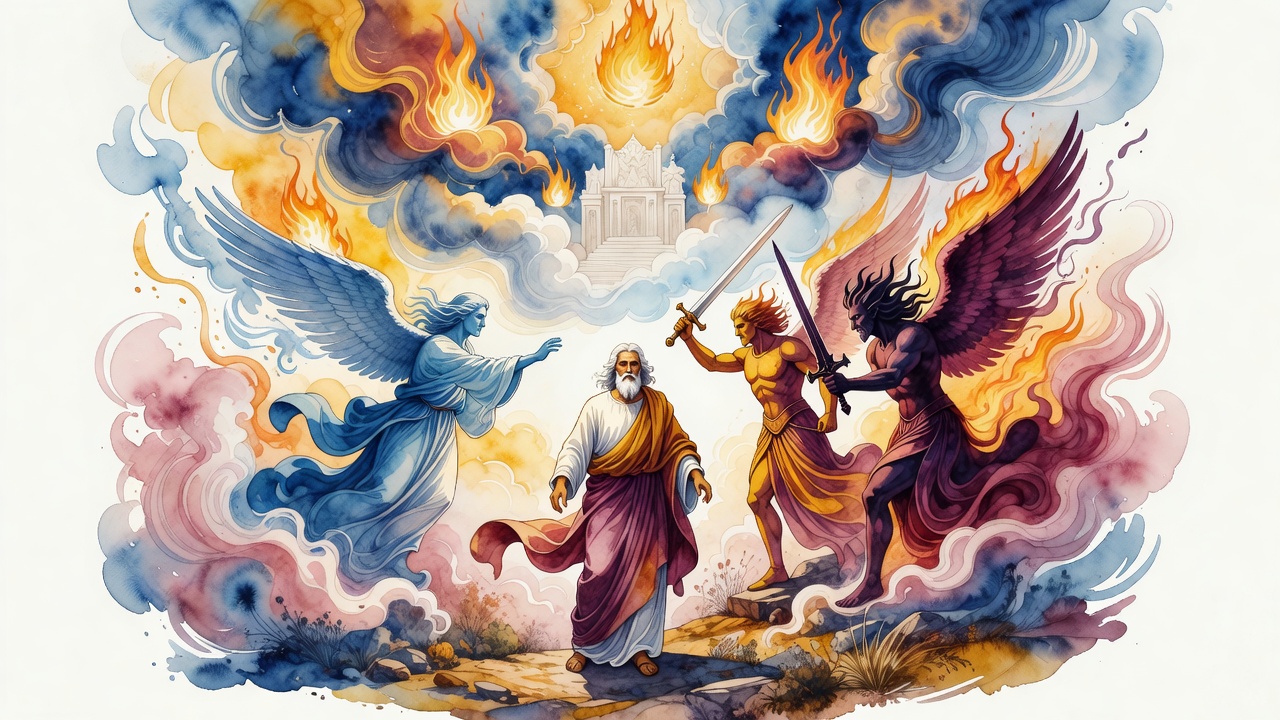
The angel of Israel and the angel of accusation faced each other over a corpse no one else would ever see. Ha-Satan did not raise a weapon. He raised a claim. He had come, he said, to take possession. The body of Moses belonged to him.
He began from the bottom, from the ground itself. All physical matter was his domain, he argued. Flesh is matter. Bone is matter. Whatever rots and returns to earth answers to the lord of earthly things, and Moses, for all his glory, was now meat and marrow like any other man. Surrender the body. It was forfeit by the simple law of decay.
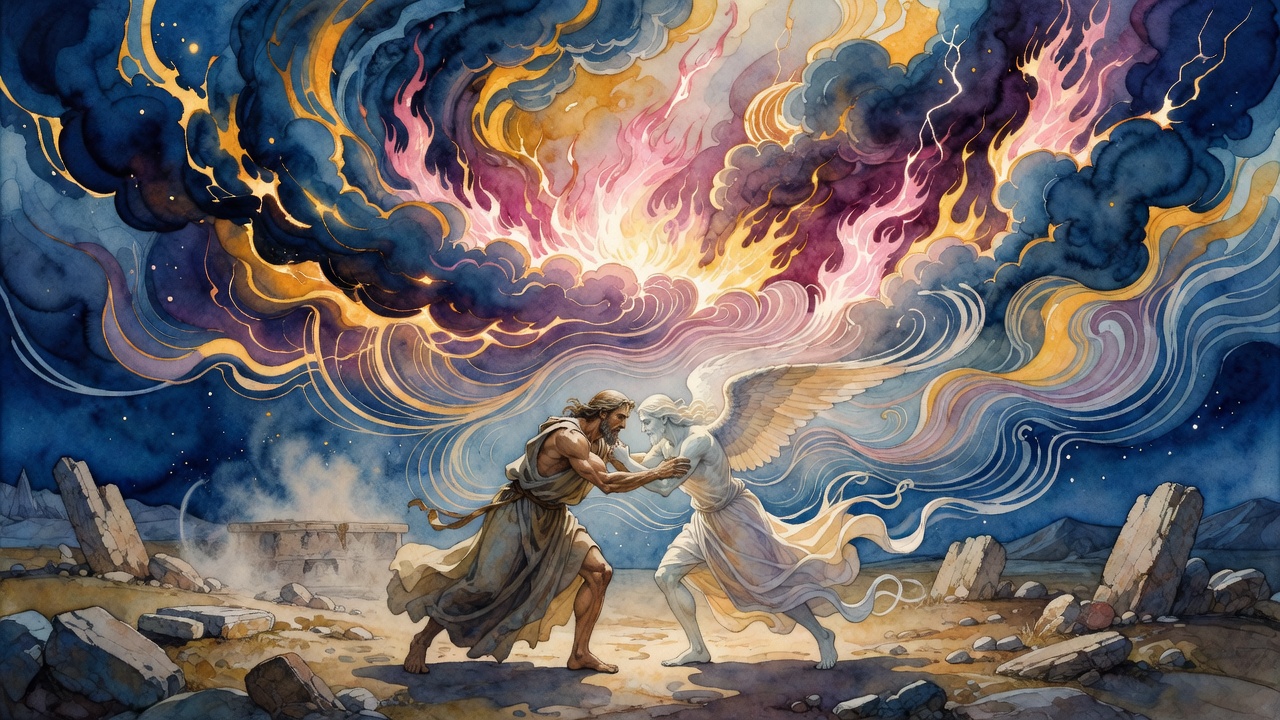
Michael refused to trade insults with him. He would not curse the Accuser. He would not wrestle him in the dirt. He would not match cruelty with cruelty over the body of the meekest man on earth. He answered with one line, flat and final.
The Lord Rebuke You
"The Lord rebuke you," Michael said, "for it was the Spirit of God that created the world and all mankind."
The whole argument turned on those words. If God's own breath made the matter, then the matter was never the Accuser's to claim. Dust does not belong to the one who watches it crumble. It belongs to the One who first breathed it into shape. The Accuser was lord of nothing he had not been handed, and the body of Moses had not been handed to him.
Ha-Satan works as prosecutor, tester, keeper of ledgers. He had brought a case. The case had just lost its first count. He changed his ground.
The Killing Buried in the Sand
If he could not own the body by law, he would disqualify it by sin. He had kept the ledger. Decades ago, in Egypt, before the burning bush, before the plagues, before the sea split open, Moses had seen an Egyptian beating a Hebrew slave. He had looked left and right, seen no one watching, and struck the Egyptian dead. He had buried the body in the sand (Exodus 2:12).
A murderer, the Accuser said. That is what this prophet was beneath the radiance. A man who killed and hid the corpse like a thief. Such a one had no right to an honorable burial. The grave was poisoned. Hand him over.
Michael did not deny the killing. He turned instead and looked at the one making the charge, and his answer was not a defense of Moses at all. It was an accusation of his own.
You speak of one death in Egypt, Michael said. Speak then of the first death of all. It was you who slid into the serpent in the garden. You who whispered Eve toward the tree. You who taught Adam's children how to die in the first place. The murder you charge to Moses began as your own craft. Every grave that has ever been dug, every body that has ever cooled, traces back to the lie you spoke beneath the branches (Genesis 3).
From Sunrise to Sunset
The Accuser had come to weigh one man's old sin against his right to the ground. He had not expected the scale to swing the other way, to lift Moses up and drop the weight of all mortality onto the accuser's own head. Every charge he raised was answered. Every angle he tried collapsed under him. He had no third argument. He had only the ground he stood on, and the ground was no longer his.
The opposition broke. He gave way. Moses was taken up. The two who watched from below were Joshua and Caleb, the only living eyes permitted near the end, and even they could not say afterward where the body had gone. There was no marker. No cairn. No stone with a name.
When Joshua had wept and asked what tomb on earth could ever be wide enough, the answer had already been given without words. No hillside was worthy to be called the grave of Moses. His resting place stretched from the rising sun to the setting sun, hidden on purpose, guarded by the very dispute that had nearly stolen it.
The Accuser went back up empty-handed. The angel of Israel finished his work in silence. Somewhere on a mountain east of the Jordan, under no monument that any pilgrim would ever find, the meekest man on earth lay buried by heaven, his grave argued over by two princes and known to neither.
← All myths