Parshat Vayishlach5 min read

Michael Carried the Cast-Out Child of Shechem Down to Egypt

An infant condemned by her uncles, an amulet of the Holy Name at her throat, and an archangel who carried her to the priest of On in Egypt.

Curated by Arthur · Told by Maggid ·
Table of Contents
  1. The Music Was the Bait
  2. The Sons Stood Over the Cradle
  3. An Amulet of Gold at the Throat
  4. Michael Lifted Her From the Thorns
  5. The Priest's Daughter Was No Stranger

Outside Dinah's tent the air filled with tambourines. A troupe of girls had come up from the city, ribbons in their hair, drums against their hips, and they danced in the dust where the daughter of Jacob could see them. She was a girl herself. She went out to watch, the way any girl would, and the music was the bait.
Shechem son of Hamor had arranged all of it. The prince of the land had seen Dinah among the women and wanted her, and when she stepped past the last tent rope to follow the dancers, his men closed around her. He took her by force and carried her into his house. Then he kept her there, and would not give her back, and sent Jacob's twelve servants away from his gate.

The Music Was the Bait

What came of that violence was not vengeance only. Months later, in the prince's house, a child was born. A daughter. Osenath, the granddaughter Jacob had never wanted, flesh of his flesh by way of the worst day his house had known.

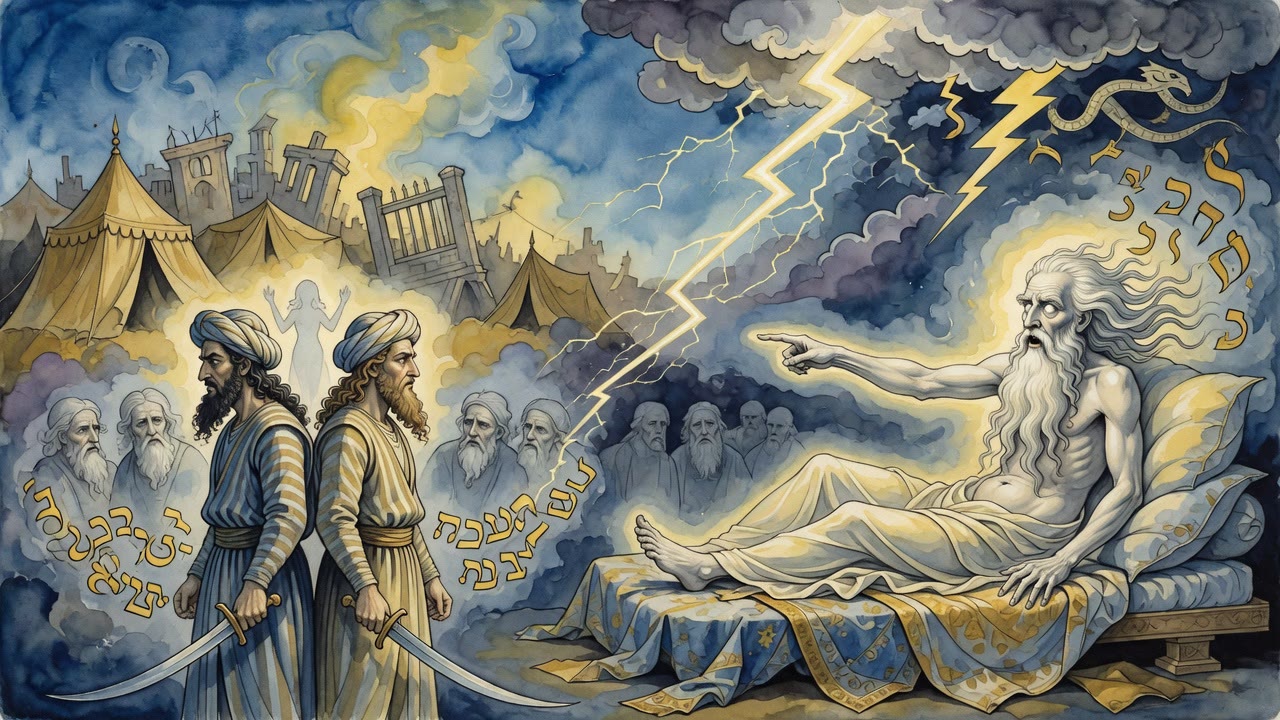
Simeon and Levi had already answered Shechem with swords. The city lay quiet. But the baby was a living scandal, and Jacob's sons looked at her and saw only what the men of the land would say. "Now there will be talk in the land," they argued, "that there is a house of harlotry in the tents of Jacob." They wanted her dead. A girl no bigger than a loaf, and grown men stood over her cradle deciding whether she would see a second day.

The Sons Stood Over the Cradle

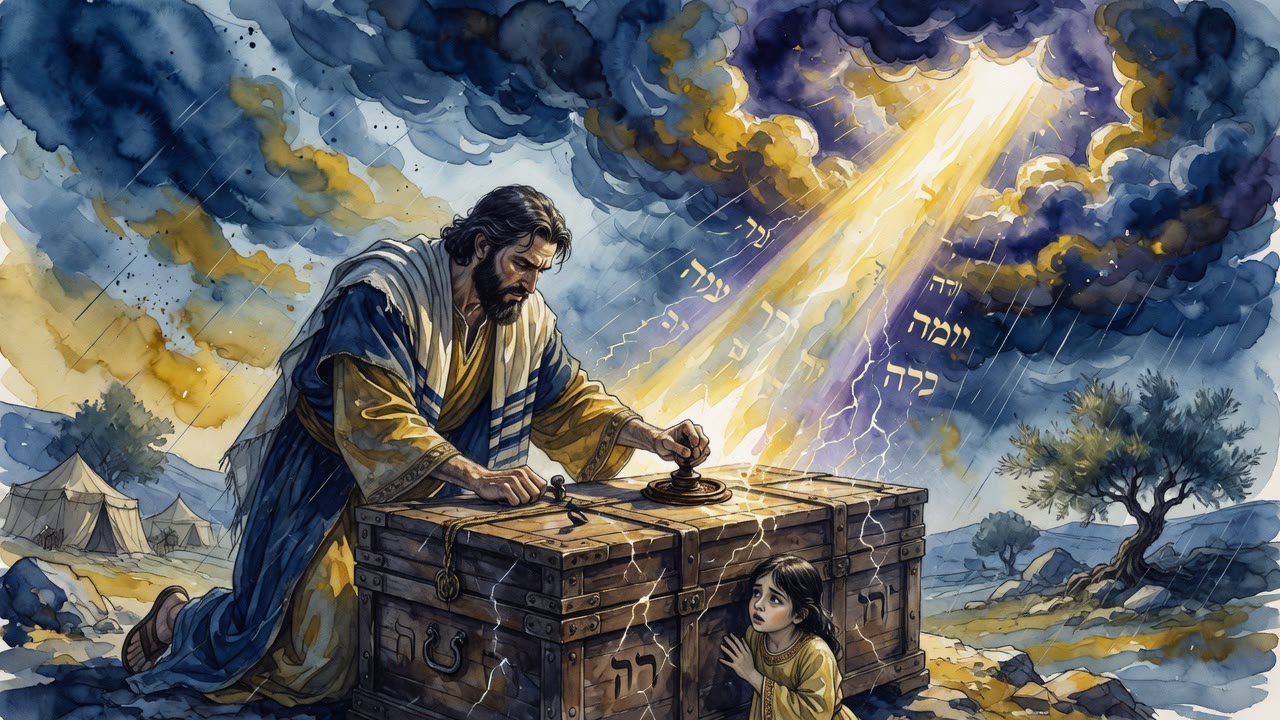
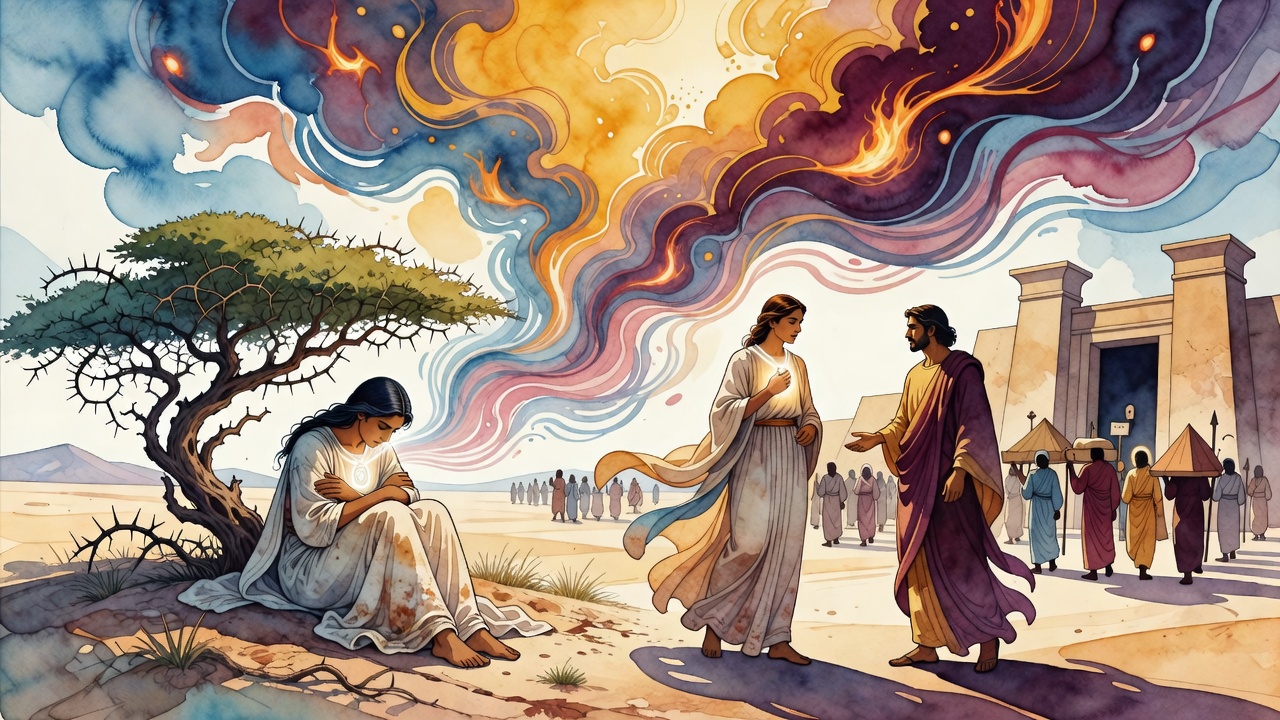
Jacob would not give them the blood. He had buried enough of Shechem's dead. He took a thin plate of gold and with his own hand engraved on it the Holy Name, the Name that splits seas and stops mouths, and he hung it on a cord around the infant's neck. Then he carried her out past the booths he had built at Succoth, past the edge of the camp, and set her down under a thornbush in the open country where no son of his would find her.

He did not abandon her to nothing. He abandoned her to the Name at her throat. Then he turned and walked back to his tents, and the wilderness kept the child.

An Amulet of Gold at the Throat

Heaven had been watching the cradle too. The Holy One, blessed be He, looked down at the thornbush and the gold flashing in the sun and the girl who had done nothing, and He sent Michael.

The archangel came down. He did not announce himself to the camp or argue Jacob's case or strike the brothers who had wanted her gone. He simply lifted the child out of the thorns. Down the long roads south he carried her, the gold plate riding against her chest, the Holy Name traveling with her into a country that worshipped a hundred gods and had never heard of hers. Michael did not stop until he reached the city of On, and the house of Potiphera, its priest.

Michael Lifted Her From the Thorns

The priest of On had no daughter. Michael set the foundling in his house, and Potiphera and his wife raised her as their own and called her by the name that came with her, Osenath. She grew up among Egyptian altars, a Hebrew child wearing her grandfather's secret in beaten gold, and no one in that house knew whose blood she carried or why an angel had bothered to bring her so far.

The reason waited in a prison and then in a palace. A Hebrew named Joseph, sold by his brothers, climbed out of the pit and out of the dungeon until Pharaoh set his ring on Joseph's hand and made him master of all Egypt. And when Pharaoh looked for a wife worthy of the man who had saved the kingdom from famine, he reached for the priest of On and gave Joseph the priest's daughter.

The Priest's Daughter Was No Stranger

So Joseph married Osenath. The court saw an Egyptian bride, the daughter of On's priest, a foreigner joined to the foreign vizier. They were wrong about all of it. The woman under the wedding canopy was Dinah's own daughter, Jacob's granddaughter, the infant the brothers had sentenced to die in the thorns. The girl cast out of Israel had been carried in a circle by an archangel and set down inside the one house that would carry her back.

From her came Manasseh and Ephraim, two sons, two tribes. The child no one wanted became the mother of a quarter of the future. The Name that hung at her throat in the wilderness had done exactly what Jacob hoped when he tied it there, and Michael had been the cord that carried it.


← All myths
From the tradition

Sources

2 sources

The texts this telling draws on, in full. Open a card to read inline, or expand it for a wider, quieter read.

Pirkei de-Rabbi Eliezer 38Hebraic Literature (1901)

Shechem son of Hamor once assembled a troupe of girls with tambourines to play outside the tent of Dinah, and when she "went out to see them" (Genesis 34:1), he carried her off. From that violence was born a daughter named Osenath. The sons of Jacob wanted to kill the child, afraid that the people of the land would spread scandal about their father's house.

Jacob chose mercy instead of blood. He engraved the Holy Name on a metal plate, hung it as an amulet around the baby's neck, and sent her away into the wilderness. The midrash says the Holy One, blessed be He, saw the scene and sent the archangel Michael down to guide the child to safety.

Michael led Osenath all the way to Egypt, into the household of Potiphera, priest of On. Why there? Because Osenath was destined to become the wife of Joseph (Genesis 41:45). When Pharaoh later gave Joseph the priest's daughter in marriage, she was not a stranger to Israel but Dinah's own granddaughter, the one Jacob's sons had wanted to kill.

The midrash from Pirkei de-Rabbi Eliezer chapter 38 teaches that rejected children are sometimes the threads God uses to bind the generations together. The baby Jacob refused to destroy became the mother of Manasseh and Ephraim, the two tribes of Joseph who shaped Israel's future.

Full source
Jasher 33Book of Jasher

Jacob, after leaving his previous location, arrives in the land of Shalem, near the city of Shechem – a place in Canaan. He buys a piece of land for five shekels (a type of ancient currency), builds a house, sets up his tent, and makes booths for his livestock. He even names the place Succoth (סֻכּוֹת), meaning "booths" in Hebrew. Jacob and his family settle in for a year and a half.

One day, the women of the land head to Shechem to celebrate with the local girls. Rachel and Leah, Jacob's wives, and their families decide to join them. Their daughter, Dinah, goes along, too. She ends up catching the eye of Shechem, the son of Hamor, the prince of the land.

That Shechem sees Dinah sitting with her mother among the daughters of the city, and he's immediately smitten. He asks his friends who she is, and they tell him she's the daughter of Jacob the Hebrew. in the story, Shechem is so captivated by Dinah that he sends for her, takes her by force, and, well, "humbles her." The text is pretty direct. Afterward, though, he falls deeply in love with her and keeps her in his house.

Can you imagine how Jacob must have felt when he heard about this? The text says he sends twelve servants to retrieve Dinah from Shechem's house, but Shechem and his men drive them away. The servants return to Jacob with the news. Jacob, knowing what has happened, remains silent, waiting for his sons to return from tending the cattle.

Before the sons arrive, Jacob sends two maidservants to care for Dinah in Shechem’s house. Meanwhile, Shechem sends three friends to his father, Hamor, to ask him to get Dinah for him as a wife. Hamor questions his son's desire for a Hebrew woman, but Shechem insists, saying, "Her only must thou get for me, for she is delightful in my sight." Hamor, being a devoted father, agrees to help.

Hamor goes to Jacob to discuss the matter, but before he can reach him, Jacob’s sons arrive, furious about what Shechem has done to their sister. They see it as a grave violation, reminding their father that the Lord God commanded Noah and his children against robbery and adultery. They argue that Shechem deserves death for his actions.

Just then, Hamor arrives and proposes a deal: give Dinah to Shechem in marriage, and they'll intermarry, becoming one people living together in the land. He says, "Our land is very extensive, so dwell ye and trade therein and get possessions in it, and do therein as you desire, and no one shall prevent you by saying a word to you." Shechem himself then appears, pleading for Dinah and offering any dowry or gift they desire.

Simeon and Levi, Dinah's brothers, respond deceptively. They say they need to consult their father, Isaac, before agreeing to anything, as they can’t act without his consent, as he knows the ways of their father, Abraham. This is all a ruse, of course, as they’re already plotting revenge.

After Shechem and Hamor leave, Jacob's sons discuss their options. They believe death is due to Shechem and his city because they violated God's commandments and defiled their sister. Simeon suggests a cunning plan: they will tell Shechem and Hamor that they can only marry Dinah if every male in their city gets circumcised. If they refuse, the brothers will simply take Dinah back. But if they agree, then while they're recovering from the procedure, Simeon and Levi will attack the city and kill every male.

It's a brutal plan, isn't it? But that's the world they lived in, or at least as the Book of Jasher portrays it.

The next morning, Shechem and Hamor return to hear Jacob's sons' answer. The brothers deceitfully tell them that Isaac agreed to the marriage, but only on the condition that every male in the city be circumcised, as Abraham commanded. The brothers emphasize that they can’t give their sister to an uncircumcised man, as it would be a disgrace. If they agree, they can intermarry and become one people. If not, they will take Dinah and leave.

Shechem and Hamor, blinded by Shechem's love for Dinah, agree to the condition. They rush back to the city and convince all the men to undergo circumcision, promising them that they will become one people with Jacob's family and that their land will prosper.

The next day, Shechem and Hamor gather all the men of the city, and Jacob's sons circumcise every male, including Shechem and Hamor themselves, and Shechem's five brothers. The deed is done. The text then concludes by saying that "this thing was from the Lord against the city of Shechem, and from the Lord was Simeon's counsel in this matter, in order that the Lord might deliver the city of Shechem into the hands of Jacob's two sons."

Wow.

What do we make of a story like this? It's a complex narrative filled with love, lust, deception, and violence. It raises questions about honor, revenge, and the lengths people will go to for family and love. It's a reminder that the stories we inherit are rarely simple, and often challenge us to confront difficult moral questions. And perhaps, it’s a reminder that human nature, in all its complexity, hasn't changed all that much over the millennia.

Full source