5 min read

The Midwives Who Outsmarted Pharaoh's Decree

Shiphrah and Puah faced Pharaoh in the birth room, fed the children he wanted dead, and were repaid with priests, prophets, kings, and builders.

Curated by Arthur · Told by Maggid ·
Table of Contents
  1. The Order Entered the Birth Room
  2. Pharaoh Measured the Newborns
  3. They Fed the Children Instead
  4. The Lie That Saved the Children
  5. Houses Rose From Their Hands
  6. The Sea Carried the King's Answer

Pharaoh tried to move his decree into the birth room.
\n\n

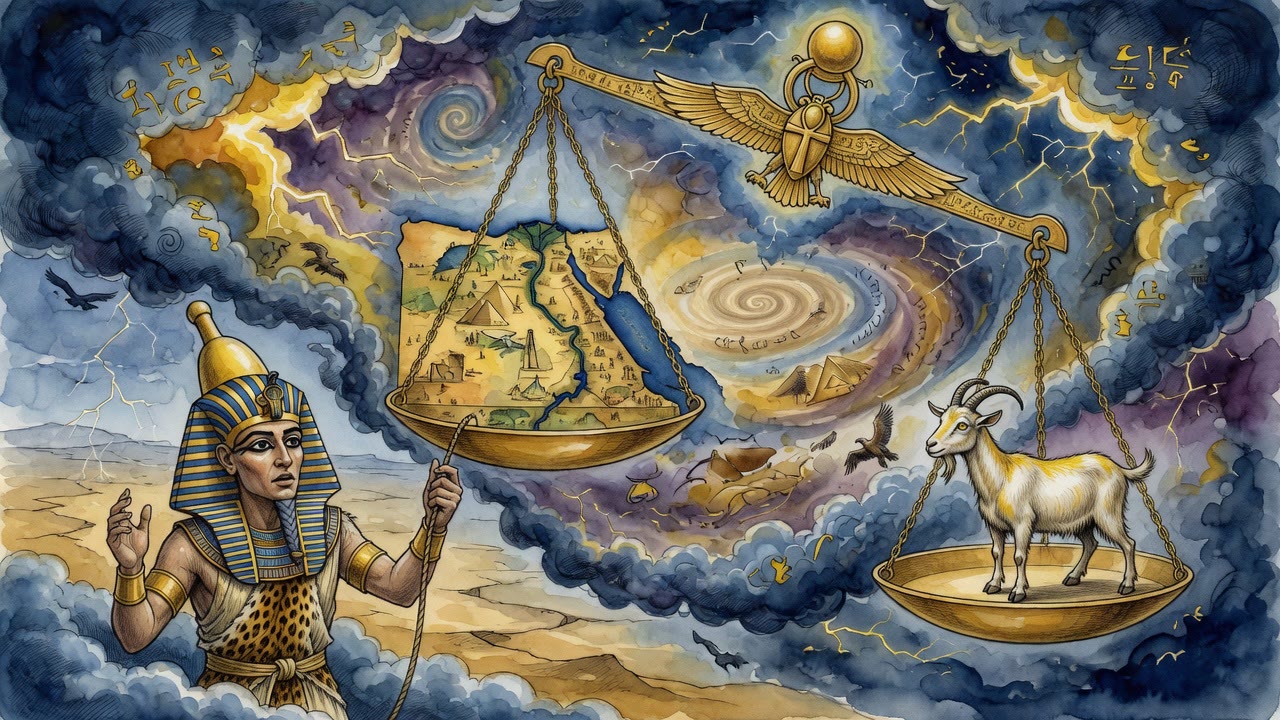
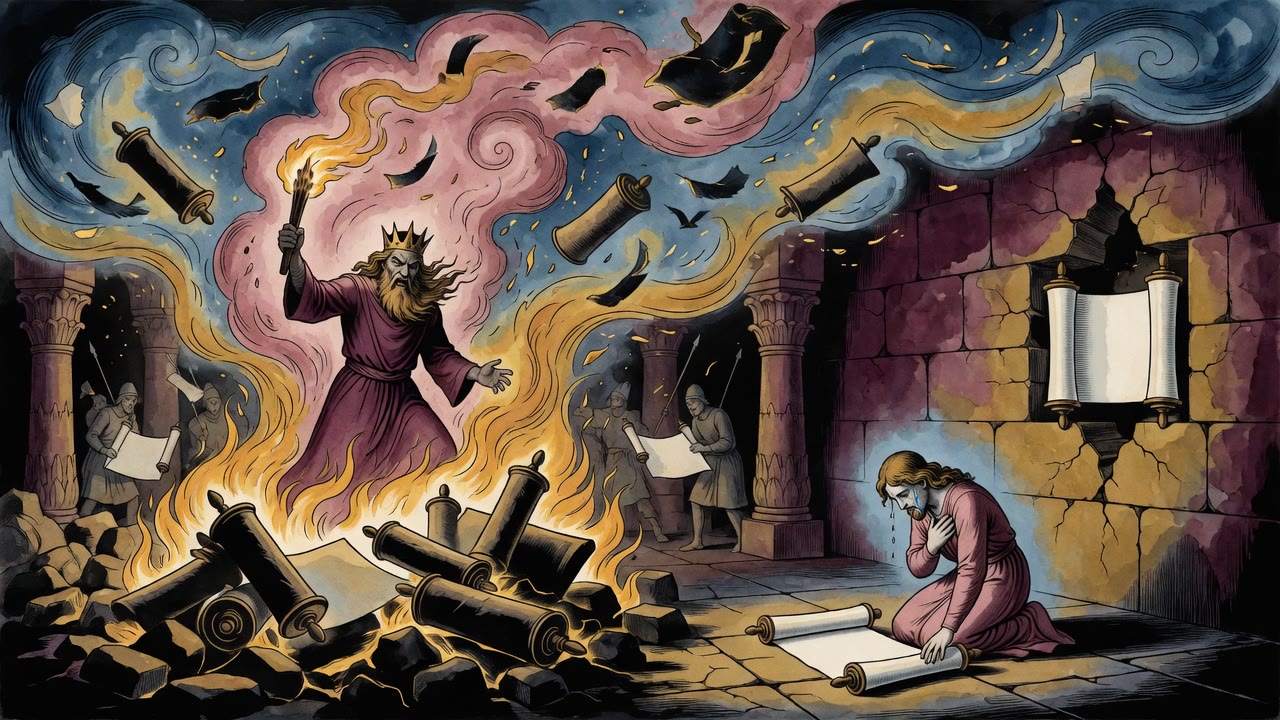
The Hebrew families had multiplied through hard labor until Egypt looked at them like thick underbrush spreading over the land. More bricks had not stopped them. More toil had not thinned them. The king wanted the boys gone before they could cry loudly enough to become a people.

\n\n

The Order Entered the Birth Room

\n\n

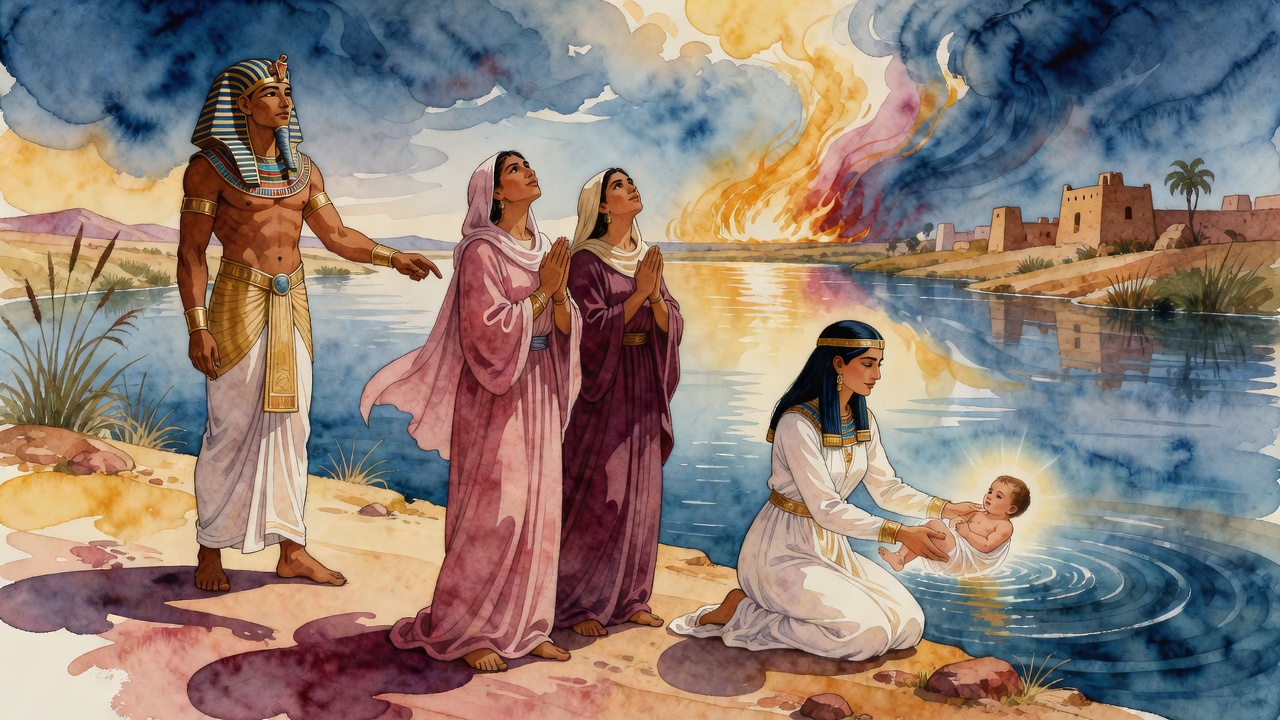
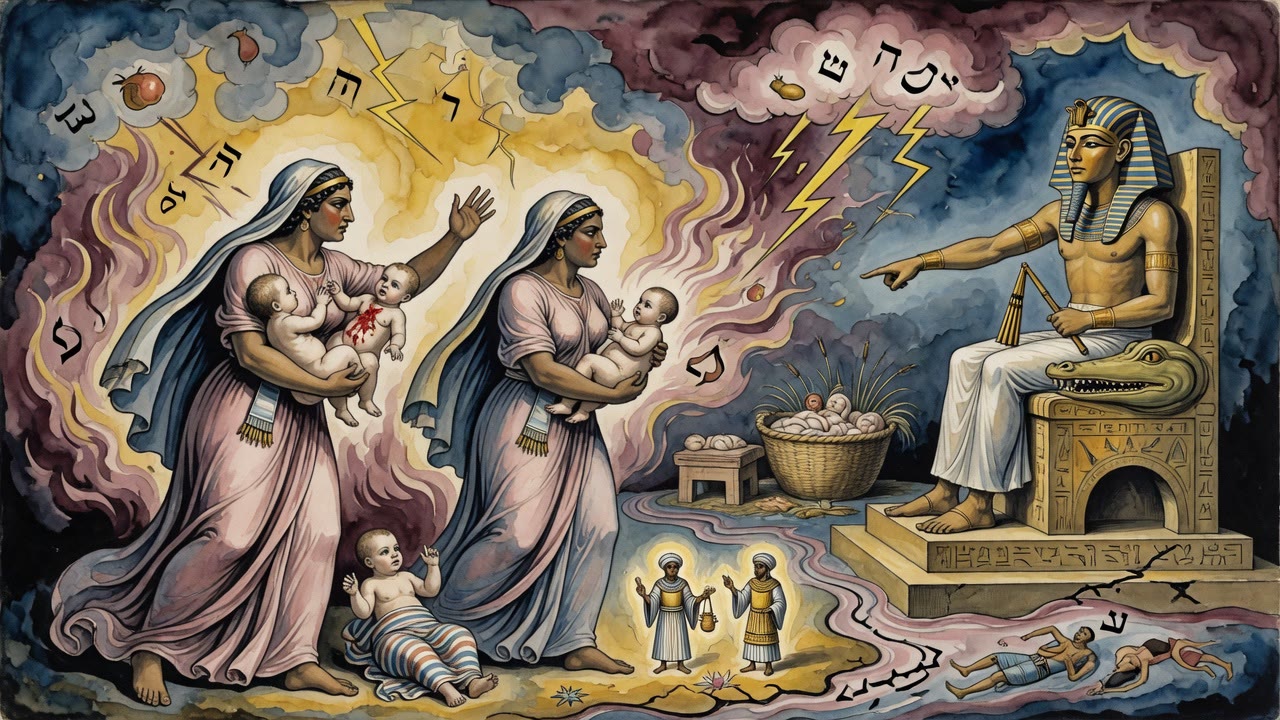
He summoned two Hebrew midwives, Shiphrah and Puah, known in the deeper telling as Jochebed and Miriam. One was the mother who would bear Moses. One was the little sister who would later stand by the Nile and watch a basket breathe. Pharaoh ordered them to kill the male children as they emerged and let the daughters live.

\n\n

The command had the cold neatness of policy. Kill quickly. Spare selectively. Leave no blood on Egyptian hands if Hebrew hands could be forced to do the work.

\n\n

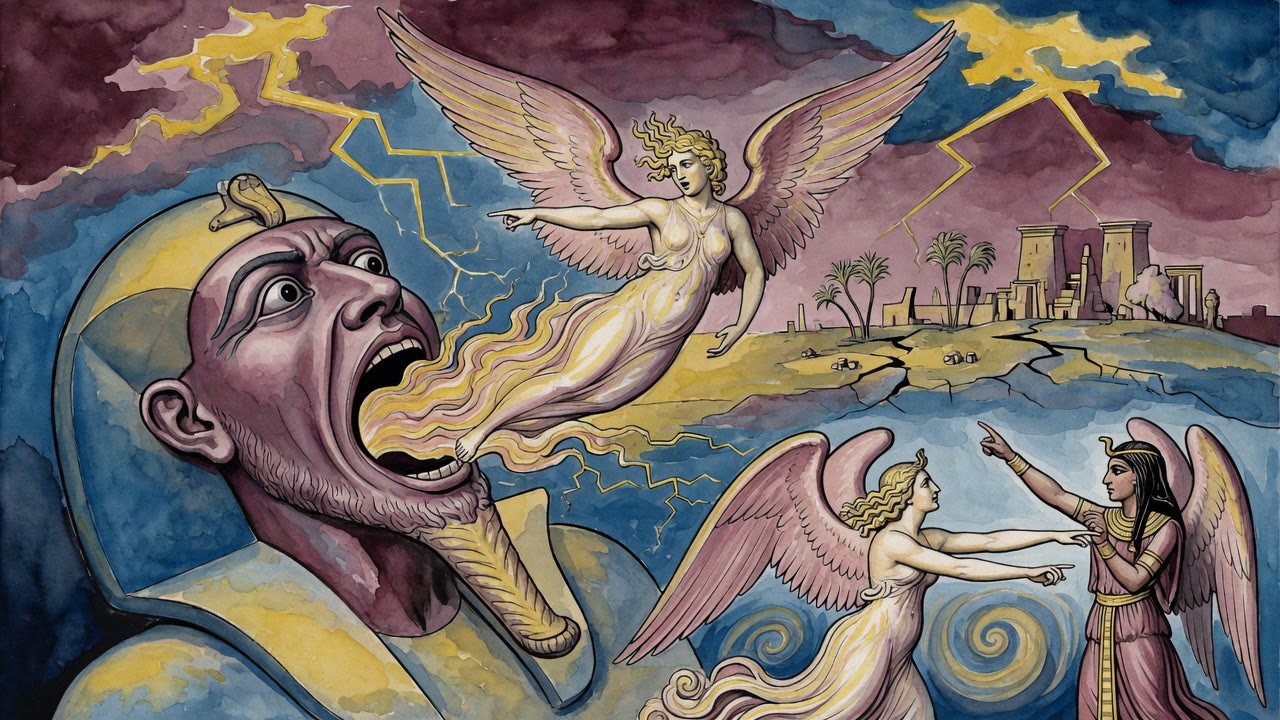
Miriam did not bow her head. Though she was only five, she let the royal room hear her voice. \"Woe to this man,\" she said, \"when God visits him for his evil deeds.\" Pharaoh's anger flashed. Jochebed stepped between the child and the king's wrath. \"She is only a child,\" she said. \"She does not know what she is saying.\"

\n\n

Pharaoh Measured the Newborns

\n\n

The king tried to make murder technical. The midwives asked how they could know whether a child was male or female before the birth was complete. Pharaoh answered with a sign: if the face came first, the child looked toward the earth from which man was taken. A boy. If the feet came first, the child looked toward the rib from which woman was made. A girl.

\n\n

He tried charm. They refused him. He tried terror and threatened them with death by fire. They held their ground. In their minds stood Abraham's open tent, where strangers ate bread and drank water under the eye of heaven. If their father Abraham fed wanderers who were not his people, how could his daughters neglect Israel's newborns? How could they kill them?

\n\n

They Fed the Children Instead

\n\n

They went back to the women and did the opposite of Pharaoh's command. They washed the infants. They bathed them. Miriam placed food before the newborns while Jochebed tended the mothers. When a house had no bread, the midwives went to women with means and collected what the hungry child needed.

\n\n

They prayed over the births too. Not only that the children should live, but that they should arrive whole. No lame foot. No blind eye. No mark that could make an Egyptian whisper that the midwives had tried to obey Pharaoh and botched the killing. Their defiance had to be clean.

\n\n

The children came safely. Pharaoh's order lay on the floor of the birth room, useless.

\n\n

The Lie That Saved the Children

\n\n

He called them back.

\n\n

Why, he demanded, had the boys lived? The midwives answered without trembling. \"The Hebrew women were not like Egyptian women,\" they said. \"The Hebrews were like the animals of the field. By the time a midwife arrived, the birth was finished and the child was already alive beyond the king's reach.\"

\n\n

It was an insult wrapped as ethnography, a palace lie made of barnyard truth. The animals do not wait for permission to give birth. They do not consult decrees. Life comes in the dark, in straw, in blood, and by morning the young are standing.

\n\n

Pharaoh could not make the answer useful. He could not prove what happened inside every Hebrew house. He did them no harm.

\n\n

Houses Rose From Their Hands

\n\n

God paid the women in houses, not walls of mud brick, but lineages that would outlast Pharaoh's name. Jochebed became the mother of Aaron and Moses: priesthood and deliverance under one roof. Miriam, joined to Caleb, became root for kings and princes, the house of David rising from the woman Pharaoh could not silence.

\n\n

Her reward did not stop there. Illness once brought Miriam close to death, and those who saw her expected the grave. God restored her youth and gave her beauty again, returning joy to Caleb. From her line came Bezalel, the builder of the Tabernacle, filled with wisdom for sacred work.

\n\n

Pharaoh wanted a generation with no sons. The midwives became mothers of priest, prophet, king, and craftsman. The decree entered the birth room and came out beaten.

\n\n

The Sea Carried the King's Answer

\n\n

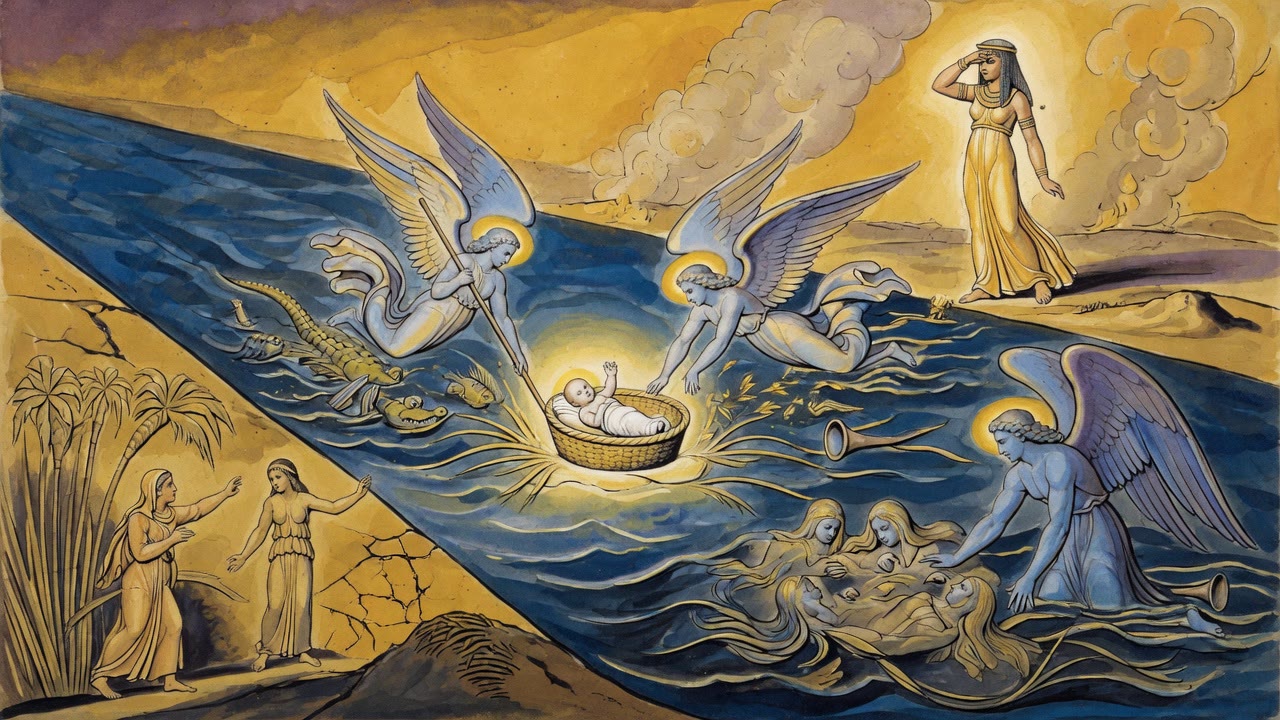
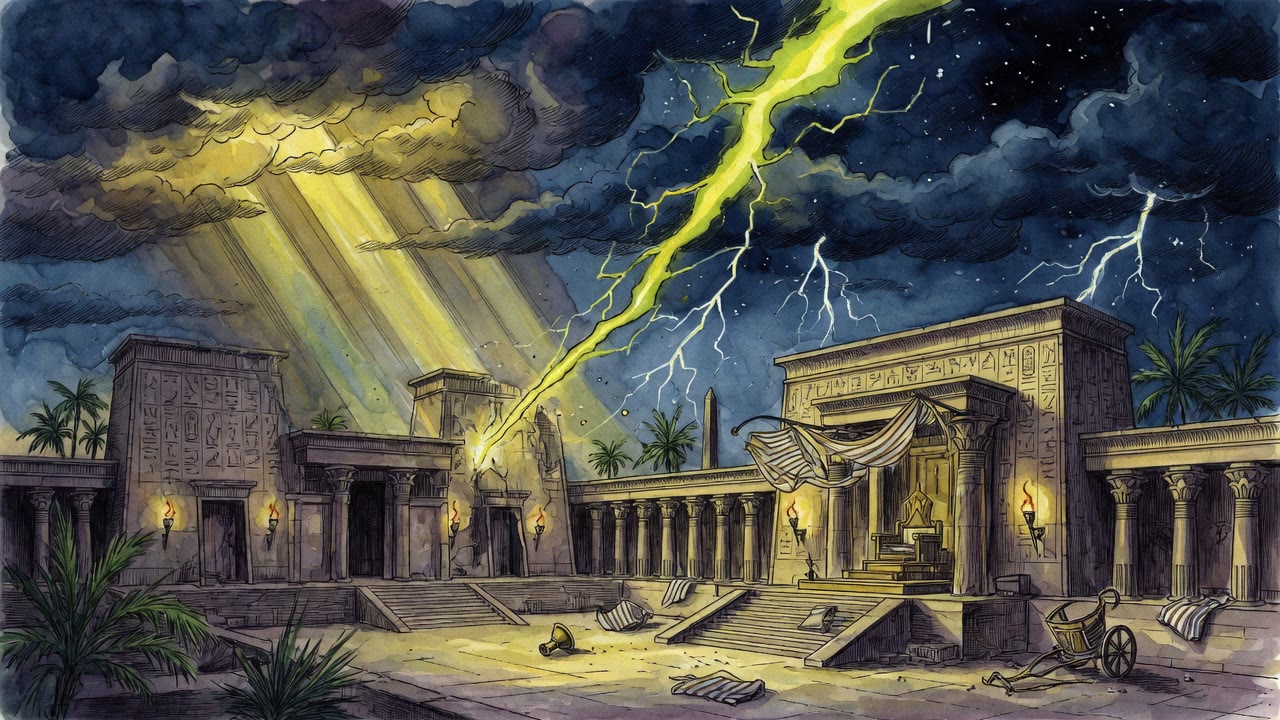
Later, when the Egyptian army tried to flee back toward its own land, nature itself turned against them. The chariots had been drawn by she-mules, but the order reversed. The chariots dragged men and beasts into the water, even after fire from heaven had consumed their wheels.

\n\n

Those chariots were loaded with silver, gold, and costly things. Treasure flowed from the river Pishon into the Gihon and from there into the Red Sea, until the waves tossed riches into the Egyptian wagons. Then the sea hurled the wreckage onto the opposite shore at Israel's feet.

\n\n

The king had tried to make water swallow Hebrew boys. At the end, water swallowed his army and carried payment to the people he tried to erase.

\n\n

← All myths

From the tradition

Sources

9 sources

The texts this telling draws on, in full. Open a card to read inline, or expand it for a wider, quieter read.

Legends of the Jews 4:22Legends of the Jews

Pharaoh, you'll remember, had ordered the Hebrew midwives to kill all newborn baby boys. But these women – Shifra and Puah are their names in (Exodus 1:15) – defied him. They feared God more than they feared the king. Pharaoh, understandably, wasn't thrilled.

When he summoned them for a second time, demanding an explanation for their disobedience, they gave him a rather… interesting answer. As Ginzberg recounts, drawing from various Midrashic (rabbinic interpretive commentary) sources, they said, "This nation is compared unto one animal and another, and, in sooth, the Hebrews are like the animals. As little as the animals do they need the offices of midwives." Basically, they claimed the Hebrew women were so fertile and strong, they gave birth without needing assistance! It’s quite a line, isn't it? Bold and clever.

What happened to these brave women? Well, according to tradition, their defiance didn't go unnoticed by the Almighty. They were richly rewarded for their piety. Pharaoh, remarkably, did them no harm. But the blessings didn’t stop there. They became the ancestors of greatness.

Yochebed, identified by some traditions as Shifra, became the mother of Aaron the priest and Moses the Levite. Moses, the liberator, the lawgiver, descended from a woman who stood up to tyranny.

And Miriam, often identified as Puah, also had a remarkable destiny. From her union with Caleb sprang the royal house of David! Can you see the threads connecting these acts of defiance to the very lineage of kingship in Israel?

But the blessings didn't end with ancestry. The hand of God was visible in Miriam’s own life. She suffered a terrible illness, one that seemed certain to claim her. Yet, she recovered. And not only did she recover, but God restored her youth and beauty. It’s said that her husband experienced renewed happiness, a reward for his own piety and faith during her long illness.

There's more! Miriam was also privileged to bring forth Bezalel, the artisan who built the Mishkan (Tabernacle), that portable sanctuary that accompanied the Israelites through the wilderness. He wasn't just any craftsman; he was endowed with chochmah, celestial wisdom, enabling him to create a sacred space for the Divine Presence to dwell. As (Exodus 31:3) says, God filled him with the spirit of God, in wisdom, in understanding, and in knowledge, and in all manner of workmanship.

What's the takeaway here? Perhaps it’s this: even seemingly small acts of courage and faith can have monumental consequences. These midwives, by choosing righteousness over obedience to a cruel decree, became the wellspring of leadership, priesthood, kingship, and artistry. Their story, woven into the fabric of Jewish legend, reminds us that our choices matter, that even in the face of overwhelming power, we have the ability to shape the future. It makes you wonder what kind of legacy we're building with our own choices, doesn’t it?

Full source
Legends of the Jews 1:49Legends of the Jews

The story of the Exodus, the Israelite's escape from Egypt, is one of the most powerful narratives in Jewish tradition. The familiar version gives us the broad strokes: slavery, Pharaoh, plagues, the parting of the Red Sea. But what happened after the Israelites crossed to safety? What became of the Egyptian army that pursued them?

Well, according to the Legends of the Jews, compiled by Louis Ginzberg, the fate of the Egyptians and their treasures is quite a tale.

We picture the scene: the Egyptians, terrified, desperately trying to escape back to their homeland in their chariots. Ginzberg paints a vivid picture. They had treated the Israelites cruelly, in a way that defied nature. And now, the Lord would repay them in kind.

Here's where it gets interesting. It wasn't the she-mules pulling the chariots, but the other way around! Can you imagine the chaos? The wheels, consumed by heavenly fire, the chariots dragging men and beasts into the churning water.

But the story doesn’t end with just the destruction of the Egyptian army. The chariots, we're told, were laden with silver, gold, and all sorts of costly things. Where did all this treasure come from?

The answer, according to this legend, is extraordinary. The river Pishon, one of the four rivers that flow from Paradise itself, carries these treasures down into the Gihon, another river. From there, the riches flow into the Red Sea. It's a fantastical image, isn’t it? Paradise itself contributing to this moment of divine retribution!

And then, a final act of divine justice: these treasures, tossed by the Red Sea's waters, landed right back in the chariots of the Egyptians. Why? Because it was the wish of the Israelites.

And for this reason, He caused the chariots to roll down into the sea, and the sea in turn to cast them out upon the opposite shore, at the feet of the Israelites. Imagine that scene! The Israelites, standing on the shore, witnessing the wreckage of their oppressors, and finding themselves suddenly wealthy beyond their wildest dreams.

This isn't just about riches, though, is it? It’s about justice, about the reversal of fortune, and about God providing for his people. It's a powerful reminder that even in the midst of chaos and destruction, there can be unexpected blessings. What do you think it says about the relationship between divine justice and material wealth?

Full source
Legends of the Jews 4:21Legends of the Jews

I'm talking about the midwives who, at great personal risk, chose compassion over compliance.

Pharaoh, in his paranoia, sought to control the burgeoning Israelite population by ordering these midwives to kill newborn male babies. He tried everything to sway them. According to Legends of the Jews, by Louis Ginzberg, he even tried amorous advances, which they rebuffed. Then came the threats, death by fire.

These women, Shiphrah and Puah (names some traditions also associate with Jochebed and Miriam), were made of sterner stuff. They thought to themselves, "Our father Abraham opened an inn to feed even heathen wayfarers. Should we then neglect these children, even kill them? No, we will keep them alive!"

So they did.

They actively disobeyed Pharaoh's orders, choosing instead to nurture and care for these vulnerable infants. They didn’t just passively avoid killing them; they provided for their needs. When a new mother lacked food or drink, these midwives took it upon themselves to collect provisions from wealthier women, ensuring the baby wouldn't suffer.

But their dedication went even further. They understood the danger they were in, how easily they could be accused of harming the children they were supposed to be killing. So, they turned to God in prayer. They pleaded, "You know that we are not fulfilling Pharaoh's words, but we aim to fulfill Your words. May it be Your will, our Lord, to let the child come into the world safe and sound, lest we be suspected of trying to slay it and maiming it in the attempt."

And here's where the story takes on a miraculous hue. God heard their prayers. As Ginzberg tells us, no child born under the care of these midwives came into the world lame, blind, or with any other blemish. This detail emphasizes the divine protection afforded to those who choose righteousness, even in the face of immense pressure.

What does this tell us? Perhaps it is a reminder that even in the darkest of times, acts of courage and compassion – however small they may seem – can have profound consequences. Shiphrah and Puah could have easily justified following Pharaoh's orders. They could have protected themselves. But they chose a different path, a path guided by empathy and a deep-seated belief in the sanctity of life. Their defiance wasn't just an act of rebellion; it was an act of faith, an affirmation of their commitment to a higher moral code. Their story echoes through the ages, reminding us that even ordinary people can become extraordinary heroes when they choose to stand up for what is right.

Full source
Yalkut Shimoni on Torah 412:1Yalkut Shimoni on Torah

And all this praise - from where did it come? From the tribe of Judah. This is what Scripture says "And He said to man: Behold, the fear of the LORD is wisdom" (Job 28:28). And it is written (Exodus 1:17) "And the midwives feared God." And how did the Holy One, blessed be He, repay them? (Exodus 1:21) "And He made them houses" - houses of priesthood and kingship. Jochebed took priesthood and kingship as her reward: Moses and Aaron. And what reward did Miriam take? Wisdom, as it is said "Behold, the fear of the LORD is wisdom." From her He raised up Bezalel, who was wise, as it is said (Exodus 31:3) "And I have filled him with the spirit of God."

Full source
Yalkut Shimoni on Torah 164:9Yalkut Shimoni on Torah

"And He made them houses" (Exodus 1:21). As for these "houses," I do not know what they are. But when Scripture says, "At the end of twenty years, in which Solomon had built the two houses, the house of the LORD" (1 Kings 9:10), this refers to the priesthood; and "the house of the king," this refers to the kingship. Thus Yocheved merited the priesthood, and Miriam merited the kingship. As it is said, "And Koz begot Anub and Zobebah, and the families of Aharhel" (1 Chronicles 4:8) - this "Aharhel" alludes to Miriam, as it is said, "And all the women went out after her [aharei-ha]" (Exodus 15:20). "The son of Harum" (1 Chronicles 4:8) - this alludes to Yocheved, as it is said, "Every devoted thing [herem] in Israel shall be yours" (Numbers 18:14). And Miriam was married to Caleb, as it is said, "And Azubah died, and Caleb took to himself Ephrath, and she bore him Hur" (1 Chronicles 2:19), and Scripture says, "And David was the son of that Ephrathite" (1 Samuel 17:12). You see, then, that whoever draws himself near, Heaven draws him near.

Full source
Yalkut Shimoni on Torah 164:8Yalkut Shimoni on Torah

"And they kept the children alive" (Exodus 1:17). It was not enough for them that they did not put them to death, but they even supplied them with water and food. (Exodus 1:19) "And the midwives said to Pharaoh: Because the Hebrew women are not like the Egyptian women, for they are lively [chayot]." What is "chayot"? If you say literally midwives [chayot], is it so that a midwife does not herself need another midwife to deliver her? Rather, thus they said to him: This nation is compared to a wild animal [chayah]. "Judah is a lion's whelp" (Genesis 49:9); "Dan shall be a lion's whelp" (Deuteronomy 33:22); "Naphtali is a hind let loose" (Genesis 49:21); "Issachar is a strong-boned donkey" (Genesis 49:14); "Joseph is a firstling bull, majesty is his" (Deuteronomy 33:17); "Benjamin is a wolf that tears" (Genesis 49:27). For the one of whom it is written, it is written; and for the one of whom it is not written, it is written, "What was your mother? A lioness; among lions she crouched" (Ezekiel 19:2). (Exodus 1:21) "And it was, because the midwives feared God, that He made them houses." Rav and Levi: one said, houses of priesthood and Levitical service, Aaron and Moses; and one said, houses of royalty. David too came from Miriam.

Full source
Shemot Rabbah 1:13Shemot Rabbah

Our story begins in ancient Egypt, where the Israelites are flourishing, a little too flourishing for the liking of the Pharaoh. He sees their growing numbers as a threat, and so, he makes a terrible decree.

As we read in (Exodus 1:15), "The king of Egypt said to the Hebrew midwives, of whom the name of one was Shifra and the name of the other was Pu’a." The Pharaoh, noticing the Israelites are procreating, issues a second decree, this one aimed directly at the newborn males. But who were these midwives?

The Talmudic sages offer different perspectives. Rav says they were a daughter-in-law and her mother-in-law: Yokheved and Elisheva, daughter of Aminadav. Rabbi Shmuel bar Naḥman, however, suggests it was a woman and her daughter: Yokheved and Miriam. And get this, according to this account, Miriam was only about five years old! How could a child play such a pivotal role?

Well, Midrash Rabbah explains that even at a young age, Miriam assisted her mother, Yokheved, and she was remarkably quick and capable. "While the child is still young, his [character] is recognizable," as King Solomon wisely said in (Proverbs 20:11). Even a lad is recognized through his deeds.

But what about their names, Shifra and Pu'a? What do they signify? The Rabbis offer a beautiful pattern of interpretations. Shifra, we are told, comes from the word meshaperet, meaning "to attend to." She would care for the baby, cleaning them after birth. Pu'a, on the other hand, derives from nofa’at, meaning "to express," as she would give the newborns wine after her mother had cared for them.

Another interpretation suggests that Shifra earned her name because Israel sheparu veravu – procreated abundantly – in her day. Pu'a was called so because she would mapia – revive – babies thought to be dead.

Still another interpretation, Shifra, is said to have made her actions pleasing (shipera) before God, while Pu'a caused Israel to appear (hofia) before God.

And then there's this: Pu'a, according to another understanding, was impudent (hofia panim) towards Pharaoh himself! Can you imagine? She stood before him, nose in the air, and dared to say, "Woe unto that man when God will come and punish him!" Pharaoh, understandably, was furious and wanted to kill her. But Shifra, in this telling, smoothed things over, easing (meshaperet) the situation, and placating the Pharaoh by convincing him Pu'a was just a child who knew nothing.

Rabbi Ḥanina bar Rav Yitzḥak adds another layer: Shifra preserved Israel for God, and it was for their sake that the heavens were created, regarding which it is written: “By his wind the heavens are calm [shifra]” (Job 26:13).

But the most striking story is the one about Pu'a's impudence (hofia panim) towards her own father, Amram. Amram, who was the head of the Sanhedrin (the Jewish high court) at the time, witnessed Pharaoh's terrible decree to cast all newborn male children into the Nile. In despair, he declared, "Isn’t Israel begetting children for naught?"

He then separated from his wife, Yokheved, abstaining from marital relations. In fact, he divorced her when she was three months pregnant! And tragically, all of Israel followed suit, divorcing their wives.

But Pu'a, his own daughter, challenged him. She said, "Your decree is harsher than Pharaoh’s! Pharaoh decreed only against the males, but you, against the males and the females. Pharaoh is wicked, and it is uncertain whether his decree will be fulfilled or not. However, you are righteous, and your decree will be fulfilled!"

Her words cut through the despair. Amram realized the truth in her words. He arose and remarried Yokheved. And in turn, all of Israel followed suit, remarrying their wives. This, we are told, is the ultimate act of defiance that defines Pu'a – her courage to stand up to her own father for the sake of the Jewish people.

So, what do we take away from this intricate Midrash (rabbinic interpretive commentary)? It's more than just a story about midwives. It's a evidence of the power of courage, even in the face of overwhelming oppression. It's a reminder that even the smallest among us, like young Miriam, can play a monumental role in shaping history. And it's a powerful lesson about the importance of challenging even our leaders when we believe they are wrong. Shifra and Pu'a – their names, their actions, their defiance – continue to resonate with us today, inspiring us to stand up for what is right, even when it seems impossible.

Full source
Yalkut Shimoni on Torah 164:3Yalkut Shimoni on Torah

(Exodus 1:15) "And the king of Egypt said to the Hebrew midwives, the name of one being Shiphrah and the name of the second Puah." Rav and Shmuel: one said, a woman and her daughter, Jochebed and Miriam; and one said, a daughter-in-law and her mother-in-law, Jochebed and Elisheba. It was taught in accordance with the one who said a woman and her daughter. Shiphrah, this is Jochebed; and why was her name called Shiphrah? Because she would beautify [meshaperet] the newborn.

Full source
Targum Pseudo-Jonathan on Exodus 1:21Targum Pseudo-Jonathan on Exodus

The Torah says God made the midwives "houses." The Targum Pseudo-Jonathan on Exodus (1:21) tells us exactly what those houses were.

"And forasmuch as the midwives feared before the Lord, they obtained for themselves a good name unto the ages; and the Memra of the Lord up-builded for them a royal house, even the house of the high priesthood."

Think about what is happening. Shifra (Jokheved) becomes the mother of Aaron, the first high priest. Puvah (Miriam) is the prophetess whose descendants will serve in the Temple. The two women who risked their lives to save babies in Mizraim are not simply rewarded. They are made into the root of Israel's two holiest institutions: the kehunah (priesthood) and the malkhut (royalty, through later Levitical lines).

This is Jewish theology at its most precise. When you save a life, you don't just save a life. You shift the architecture of the future. Every priest who would ever light the menorah, every high priest who would ever enter the Holy of Holies on Yom Kippur, his lineage runs through two exhausted midwives who told a tyrant "no."

The Targum's phrase is worth savoring: "a good name unto the ages." Not wealth. Not power. A name. The midwives acted under threat of execution; they did not act for glory. And precisely because they did not seek it, glory adopted them permanently.

Beloved, the quiet courage of a single "no" can become the foundation of a Temple.

Full source