5 min read

Mordecai Taught the Omer While Haman Came to Kill

Sure he was about to die, Mordecai put on his prayer shawl and taught the laws of the barley offering. Haman had to admit barley had beaten silver before.

Curated by Arthur · Told by Maggid ·
Table of Contents
  1. A Classroom Before the Rope
  2. Barley That Topples Camps
  3. Rachel's House Against Amalek
  4. Toil Above the Sun
  5. Neck as Stirrup
Mordecai Taught the Omer While Haman Came to Kill Click for full size

A Classroom Before the Rope

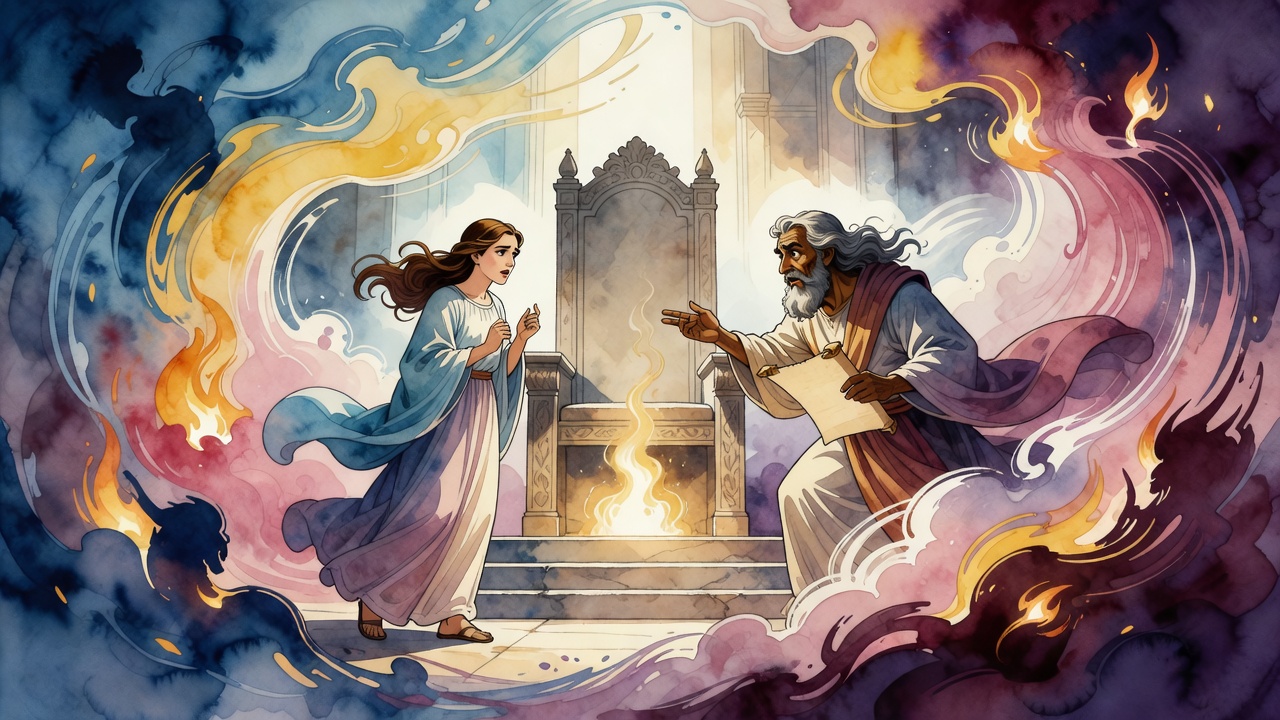
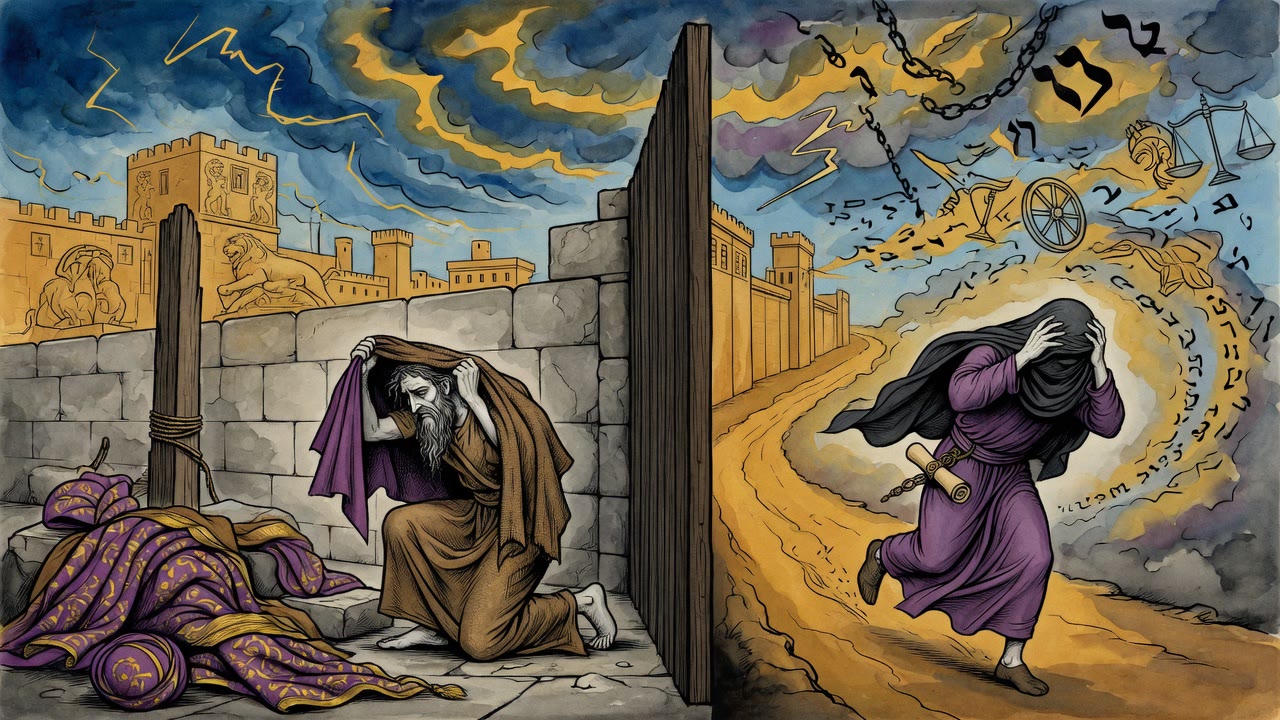
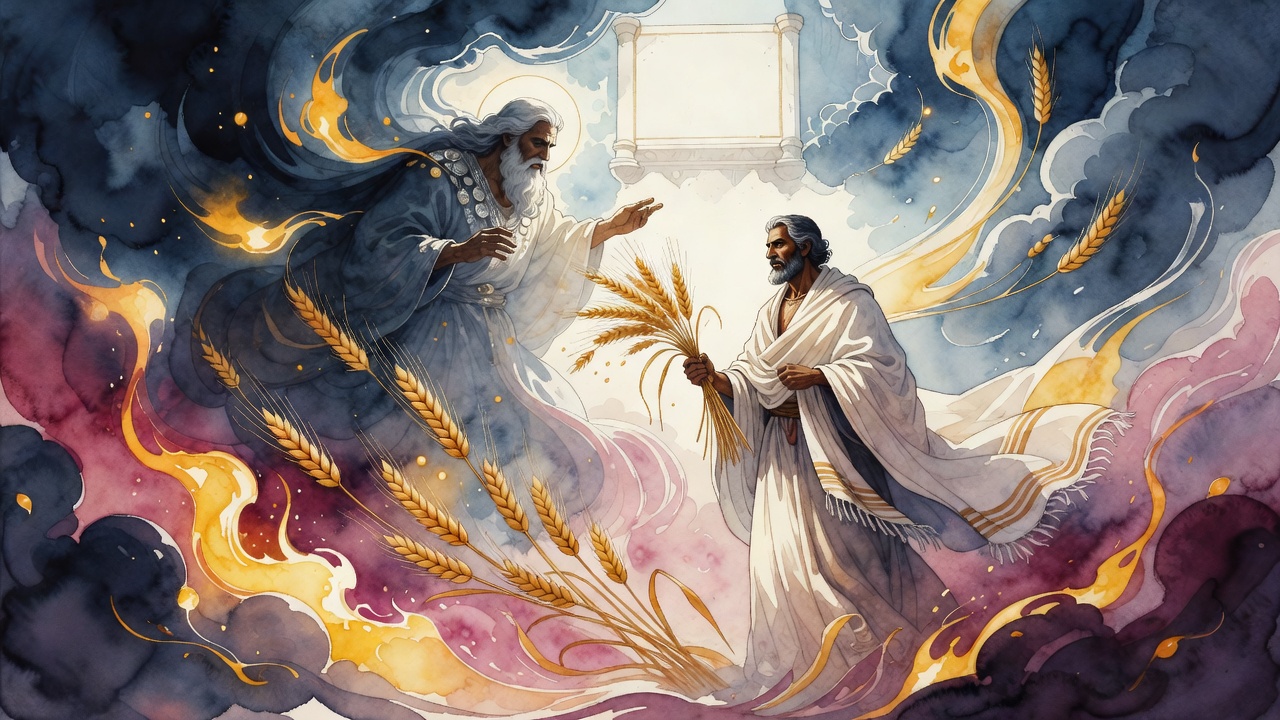
Mordecai was certain Haman was coming to kill him. He wrapped himself in his prayer shawl anyway and sat with his students over the laws of the barley Omer (the first sheaf offering brought at Passover). Ten humble measures. The offering of the poor grain. While empire polished a gallows, a teacher refused to let the last hour be empty of Torah.

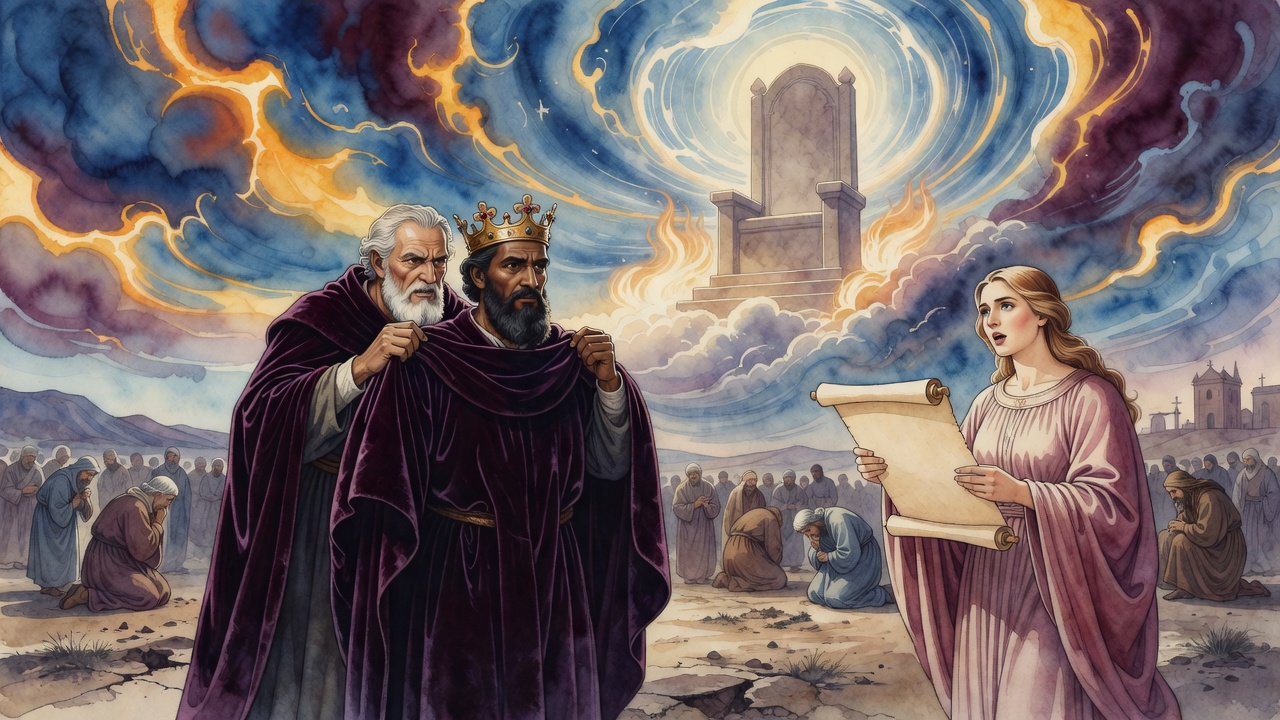
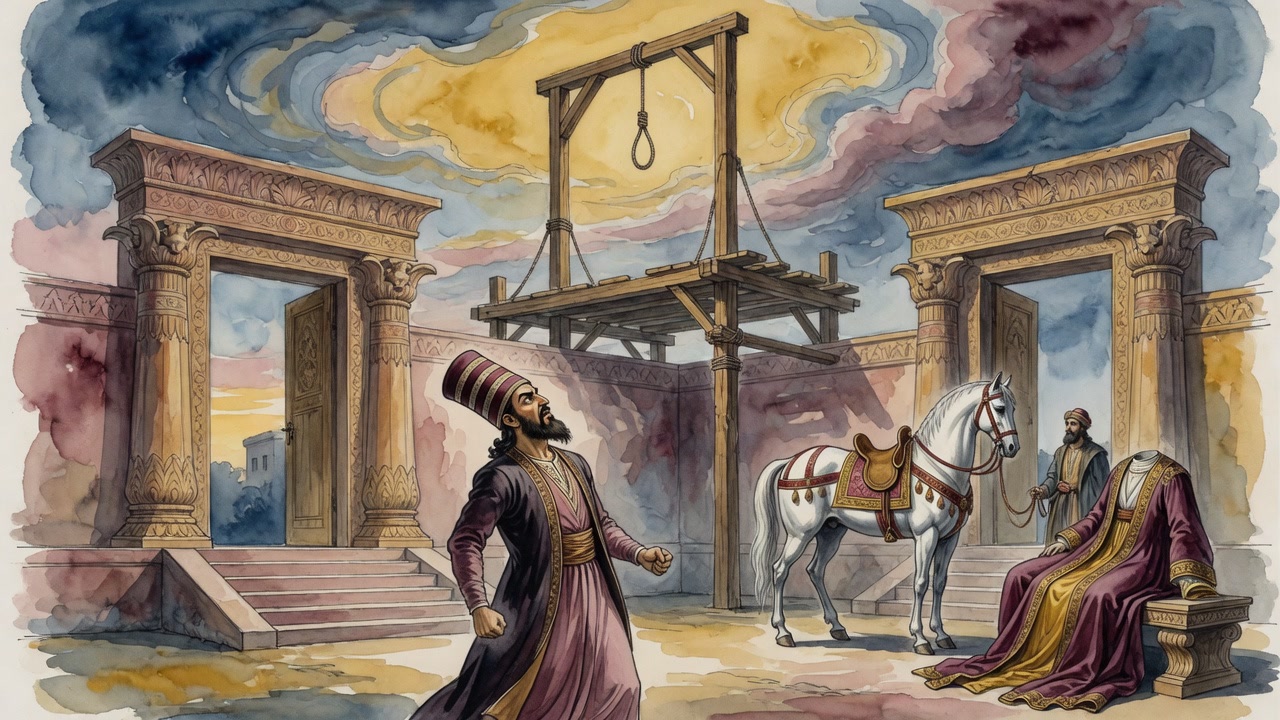
Haman arrived and heard the lesson. He learned that those ten measures once outweighed kingdoms, that the merit of the Omer had toppled hosts and steadied prophets. He had to concede, against every coin of his ten thousand talents of silver, that barley had beaten bullion before. Forced to honor the man he meant to hang, Haman bathed him, groomed him, and bent his own neck as a step so Mordecai could mount the royal horse.

Barley That Topples Camps

Do not think the barley Omer a small thing, the rabbis warn. By its merit Abraham was promised the land on condition that he keep God's covenant. By its merit Heaven restores peace between husband and wife, since the suspected wife's offering is barley meal. Barley, food of the humble, carries surprising power.

Gideon overheard an enemy dreaming of a barley cake that tumbled through the Midianite camp, and the sages hear in it the Omer's merit toppling a host. The same thread runs through dark seasons until it reaches Shushan. When a noblewoman once scoffed at how a prophet troubled himself over coarse bread, Rabbi Yose answered that the righteous suffer alongside Israel in every distress. Mordecai's classroom was that suffering turned into curriculum.

Rachel's House Against Amalek

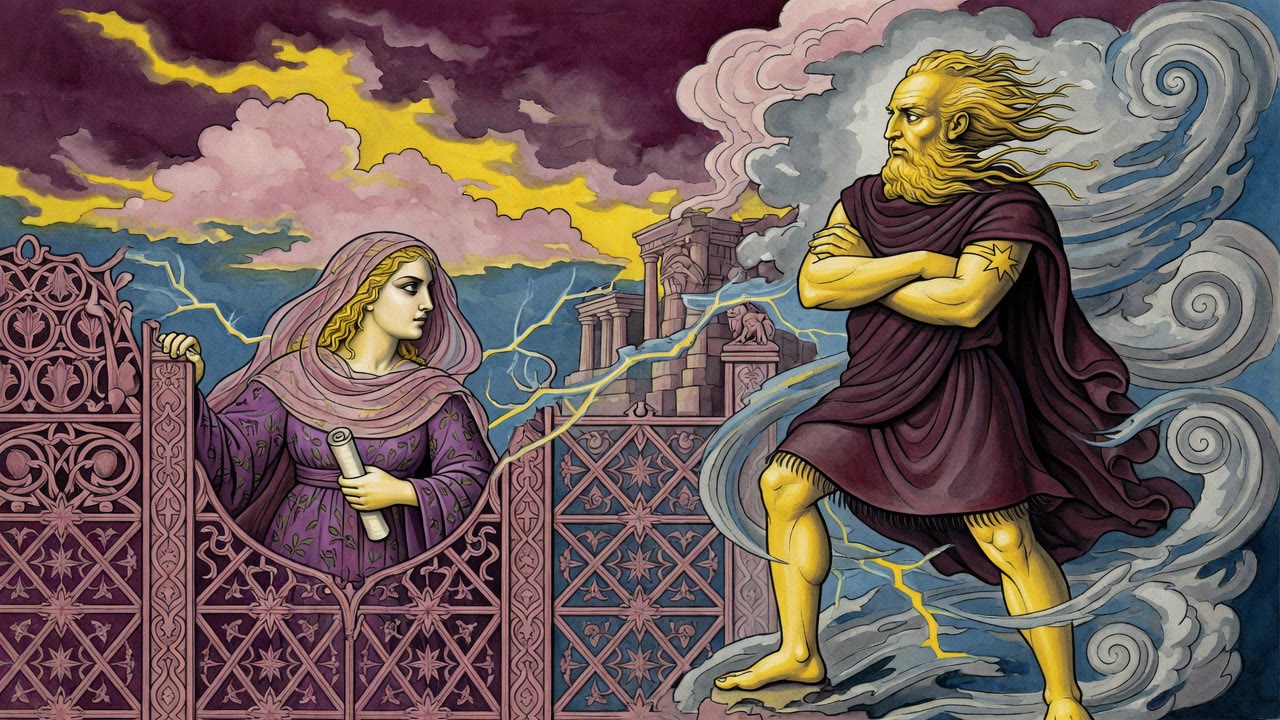
Deborah's song already named the family set for an old war. Out of Ephraim came those whose root is against Amalek; after you, Benjamin. First Joshua, from Ephraim, weakens Amalek in the wilderness. Later Mordecai, from Benjamin, stands against Haman the Agagite in Persia. The enemy changes costume. The house appointed to answer him remains Rachel's.

Why her children? Because Joseph is the opposite of Esau. Joseph's brothers hated him, and he repaid them with food and tears. Esau received Jacob's care and turned it into hatred. Joseph guarded his mother's honor. Esau threatened to leave her bereft. Amalek is uprooted by sons who answer violence without becoming it. "After you, Benjamin" means Rephidim was not the last chapter. Shushan was scheduled in the same sentence.

Toil Above the Sun

The sages once nearly buried Ecclesiastes for sounding like all toil is empty wind under the sun. They read more carefully. A person's private striving may come to nothing, yet the toil of Torah and the labor bound to the Omer reach above the sun. Mordecai's study session was that upper toil under a death threat. He was not distracting himself. He was placing his last hours inside a merit older than Persia.

As the procession moved, voices rose from Psalm 30. Mordecai sang of being lifted from the pit. His students answered with joy that comes in the morning. Haman walked before them like a man carrying his own defeat. The barley lesson had not been academic. It had been a weapon that did not look like a weapon until the neck of the enemy became a stirrup.

In every later Purim, the scroll can be read as court intrigue alone. The midrash refuses that thinness. It puts a tallit on Mordecai and a handful of barley laws in his mouth while the rope is still being measured. The rescue begins as study. The study is Rachel's war continuing under a Persian sun.

Neck as Stirrup

Haman's neck under Mordecai's foot was not only humiliation. It was the Omer's argument made flesh. Humble grain had outweighed silver. A classroom had outweighed a gallows. Rachel's house had reached from Rephidim to Shushan without changing the assignment: uproot Amalek, even when Amalek wears a signet ring and writes in the king's name.

Students who survived that day would never again call barley laws small. They had watched a teacher choose Torah while death walked toward the door. They had watched an enemy forced to serve as furniture for the man he hated. Joy came in the morning because the night had been spent studying, not only fearing.

Purim's noise can drown this scene. The midrash puts it back: tallit, Omer, ten measures, a concession torn from Haman's mouth. The war Deborah mapped did not end in the wilderness. It sat down in a study circle and waited for the Agagite to arrive, then made him admit that empire silver is lighter than a handful of barley offered in its season.

Somewhere in the palace, decrees still inked for Jewish death waited on sealed clay. In the study circle, barley measures outweighed them for one impossible hour, long enough for a procession to form and a neck to bend.


← All myths

From the tradition

Sources

3 sources

The texts behind this telling. Some cards carry a translation of the source; others are our own retelling of it, and each card says which. Every card links out to the original.

Pesikta DeRav Kahana 8:4Pesikta de-Rav Kahana

Translation of the source text.Pesikta de Rav Kahana according to an Oxford manuscript, Dov Mandelbaum ed., N.Y. 1987 · CC-BY

Rabbi Jacob bar Abbai in the name of Rabbi Judah bar Simon; Rabbi Yohanan and Rabbi Simeon ben Lakish. Rabbi Yohanan said: Never let the commandment of the Omer be light in your eyes, for through the commandment of the Omer our father Abraham merited to inherit the land of Canaan, as it is written, "and I will give to you and to your seed after you the land of your sojournings" (Genesis 17:8), on condition: "and you shall keep My covenant" (Genesis 17:9). Rabbi Simeon ben Lakish said: Never let the commandment of the Omer be light in your eyes, for through the commandment of the Omer the Holy One, blessed be He, makes peace between a man and his wife, as it is written, "and the man shall bring his wife to the priest, and shall bring her offering" (Numbers 5:15), a tenth-measure of barley meal.

Rabbi Abbahu said it, Rabbi Simon said it, Rabbi Joshua ben Levi said it: This is what stood by them in the days of Gideon, "and Gideon came, and behold, a man was telling his fellow a dream and said, behold, I dreamed a dream, and behold, a cake of barley bread" (Judges 7:13). What is "a cake [tzelil]"? The Rabbis said: because that generation was emptied [tzalal] of the righteous. And by what merit were they saved? By the merit of the cake of barley bread. And which is this? This is the commandment of the Omer. Rabbi Samuel bar Nahman said: This is what stood by them in the days of Hezekiah, "and every passage of the appointed staff" (Isaiah 30:32). And were there waving-wars in that generation? Rather you must say this is the commandment of the Omer. And the Rabbis said: This is what stood by them in the days of Ezekiel, "and you, take for yourself wheat and barley and beans and lentils and millet and spelt, and put them in one vessel, and make them into bread for yourself" (Ezekiel 4:9), and Rabbi Hama son of Rabbi Hanina said: he put in much barley. Rabbi Samuel bar Nahman said: things that loosened the bowels. Samuel said: there they say, they make of it a cake for the dog, and it does not taste it.

A noblewoman asked Rabbi Yose ben Halafta, saying to him: How much that righteous man troubled himself! How many servants and maidservants he had, and they squander it on food and drink. He said to her: This is to teach you that wherever Israel is in distress, the righteous who are alive are with them in their distress.

Rabbi Levi said: This is what stood by them in the days of Haman. You find that when Mordecai saw Haman coming toward him with the horse in hand, he said: It seems to me that this wicked man comes to kill me. He said to his students: Flee for yourselves, lest you be scorched by my coal. They said to him: Whether in life or in death, we are with you. What did he do? He wrapped himself in his prayer shawl and stood to pray. That wicked one came and sat down beside them. He said to them: With what are you occupied? They said to him: With the commandment of the Omer that Israel used to offer in the Temple. He said to them: And this Omer, of what was it, of silver, of gold, of wheat, of barley? They said to him: Of barley. He said to them: And what was its price, ten centenaria? They said to him: Far more, ten maneh would suffice. He said to them: Arise, for your ten maneh have overcome my ten thousand centenaria of silver! When he had finished praying, Haman said to him: Take this garment and put it on. He said: Will you so despise the kingdom? Is there a man who puts on the king's garment without bathing? Haman went seeking a bath-keeper and found none. What did he do? He girded his loins, went and bathed him. When he came out, Haman said: Take this crown and put it on. He said: Will you so despise the kingdom? Is there a man who puts on the king's crown without being groomed? Haman went seeking a barber and found none. What did he do? He went to his house and brought his own barber's tools and sat grooming him. He began to sigh. Mordecai said to him: Why do you sigh? He said: Woe to that man's father, who used to make his son a high official, and now he is made a bath-keeper and a barber! Mordecai said to him: And were you not the barber of the village of Karyanos? Then Haman said to him: Get up and mount this horse. Mordecai said: I have no strength, for I am an old man. Haman said: Are you not the very one who brought this upon yourself? He said: Get up, for I will bend my neck and you will tread upon it and mount, to fulfill what Scripture says, "and you shall tread upon their high places" (Deuteronomy 33:29).

And when he had mounted the horse, Mordecai began to praise the Holy One, blessed be He, and said, "I will extol You, O LORD, for You have lifted me up and have not let my enemies rejoice over me; O LORD my God, I cried to You and You healed me; O LORD, You brought up my soul from Sheol, You kept me alive from going down to the pit" (Psalms 30:2-4). His students, what did they say? "Sing praise to the LORD, O you His faithful ones, and give thanks at the remembrance of His holiness; for His anger lasts but a moment, His favor is for a lifetime; weeping may tarry for the night, but joy comes in the morning" (Psalms 30:5-6). That wicked one, what did he say? "And in my prosperity I said, I shall never be moved; O LORD, by Your favor You made my mountain stand strong; You hid Your face, I was dismayed" (Psalms 30:7-8). What did Esther say? "To You, O LORD, I called, and to the LORD I made supplication; what profit is there in my blood, when I go down to the pit? Shall the dust praise You? Shall it declare Your truth?" (Psalms 30:9-10). What did Israel say? "Hear, O LORD, and be gracious to me; O LORD, be my helper; You have turned my mourning into dancing for me, You have loosed my sackcloth and girded me with gladness" (Psalms 30:11-12). Rabbi Phineas said: He was occupied with the recitation of the Shema and did not interrupt, "so that my glory may sing praise to You and not be silent" (Psalms 30:13). It is finished.

Full source
Pesikta Rabbati 13:1Pesikta Rabbati

Translation of the source text.Pesikta Rabbati, ed. Meir Friedmann (Ish-Shalom), Vienna 1880 · Public Domain

From Ephraim, who wrote in Amalek after you, Benjamin (Judges 5:14).

May our Rabbis teach us what a person should say when he reads the Book of Esther. The Talmud teaches us that our Sages should say when he comes to read the Book of Esther, saying in the Book of Esther, "The Great God is our Lord and the Avenger of our vengeance, the Redeemer and the Savior from the hand of tyrants, in the Book of God, the Savior." And why not remember the salvation that the Blessed One performed in the days of Haman through Mordecai and Esther when Haman sought to destroy Israel, as it is said, "To destroy, to kill, and to destroy," etc. (Esther 3:13)? And not for himself did he intermarry with Israel, but also with Amalek, our ancestor, who provoked Israel when they came out of Egypt, as it is said, "And Amalek came" (Exodus 17:8)? And what would Amalek do to them? The wicked Rabbi Yehoshua of Sikhnan, in the name of Rabbi Levi, would cut off their memorials and throw them up and say, "This is what you desire, for it is given to you. Where did it come from?" It is written, "Return to our neighbors seven times to their lap" (Psalms 99:12). This is the word that is given in the lap of their disgrace, which the Lord has disgraced you (ibid.). And so he says, "And he will strike you with his tail" (Deuteronomy 25:18). He did not strike the tail except because the Holy One, blessed be He, commands Israel and says, "Remember" (ibid., 17). They said to him, "Remember, O Lord, as it is written, "Remember the Lord for the children of Edom the day of Jerusalem" (Psalms 137:7). The Holy One, blessed be He, said to them, "Do your own thing.

You will blot out the memory of Amalek" (Deuteronomy 139:19). And I will do mine, for I will blot out the memory of Amalek" (Exodus 17:14). He did not do it except because King Saul said, "The Holy One, blessed be He, will not let the seed of Amalek fall except in the hand of Rachel's son." Thus you find in the Rephidim. It fell into the hands of Joshua, as it is said, And Joshua defeated Amalek (Isa. 13), the Blessed One said to the world, "This tribe is ready to be redeemed from Amalek, from what He completed in the prophet, from Ephraim, who recorded Amalek after you, Benjamin: From Ephraim, thus began Rabbi Tanchuma in my Rabbi, and he descended from Jacob and destroyed a remnant from the city (Numbers 24:19). What is it, and he descended, the Holy One, blessed be He, said when the ruler who will arise from Jacob at that time and destroy a remnant from the city: [Another thing] What is it, and he descended, this is the king of the Messiah, as it is said, and he descended from water to sea (Psalms 22:8), as it is said that he descended on all sides of the river (1 Kings 5:4). Alas, the rule is not given to a wicked nation except until the Messiah comes and descends from Jacob: 21. And he descended, the Blessed One said, not from the great sons of Jacob, but from the lowly sons of Jacob. Who was the lowest of all the tribes, and the lowest of all, this is Joseph? And Benjamin said, The Holy One, blessed be He, in the hand of the lowly and in the hand of the little ones of Jacob, I deliver the wicked kingdom. And why is it so? But the Blessed One said, I know what I do.

I have counseled this counsel, as it is said, Who has counseled this against Tyre? (Isaiah 23:8) I am the one who has counseled them, the Lord of hosts has counseled them. (Isa. 9:1) From Ephraim. What is from Ephraim? Our rabbis say, The Holy One, blessed be He, said, [From me] [From me] This was from the days of Moses, as it is said, And Moses said to Joshua, Choose [and] (Exodus 17:9) And if he knew it himself, he said to him, No, but from the mouth of the word, Joshua could have blotted out the seed of Amalek from that time from Ephraim, which he recorded in Amalek: Isa. From Ephraim. Why did the sons of Joseph rebel against Esau? But Joseph was hated by his brothers, as it is said, And they hated him (his brothers) (Genesis 37:4) And he turned the hatred into love, and Esau turned the love of Jacob into hatred, saying, The Blessed One will come and redeem him. After Joseph's words, his brothers sinned against him and cursed him, and his brothers believed that they were cursed just as they had done to him, if Joseph had cursed them (ibid. v. 15). He did not do so to them, but rather returned good to them in exchange for evil. But they did it when they cursed Jacob, and Esau cursed Jacob (ibid. 27:41). Jacob did not do so to him, but said to him [about] that blessing, you who curse me, it is given to you. Take my blessing that was brought to you (ibid. 33:11). Nevertheless, he did not uproot the hatred from his heart, said the Holy One, blessed be He.

Joseph came and uprooted the hatred from his heart and redeemed Esau, who had hidden the enmity in his heart (from Ephraim, who recorded it): Why did Joseph have all those evils that his brothers did to him, since When he saw them in trouble, he could not restrain his pity for them, but his eyes flowed with tears for them, and Joseph could not help himself, for his pity for his brother was aroused, and he sought to weep, and he went into the chamber and wept there (Genesis 43:30). But Esau did not arouse his pity for his brother, as it is said about his pursuing his brother with the sword (Amos 1:11): [Another thing] From Ephraim (DA) What is from Ephraim except that from the days of Jacob this tribe was prepared to be torn away from Esau forever, except when Jacob came from Paddan Aram, Esau began to go ahead of him and his sons to kill them, and when Jacob saw this, he began to be distressed, and Jacob was greatly afraid, and he was distressed (Genesis 32:8). At that time, the Blessed One appeared to him and said to him, "Are Rachel's sons with you, and you fear for your life? They are destined to be torn away from him every time he stands over your sons." When Jacob saw this, he stood and guarded Rachel and her sons. And from what he did, you know that this is so. He said to him, the Holy One, blessed be He, who makes them camps of camps, that if Esau comes to the camp [one], the camp that remains will be a refuge (Ibid. 9:11). And He makes them four camps and gives Rachel first of all, as it is said, "And He put the handmaids and their children first" (Ibid. 33:2).

You see that the handmaids were first, and then their sons, and then Leah and her children last (Ibid.). And after that, and Rachel and Joseph (Ibid.) Jacob said, "If all his sons are killed, and Rachel's son remains, that I am saved by Rachel's son, and the camp that remains will be a refuge." And why is this, except that Rachel's sons were counted to be redeemed from this evil seed from Ephraim, which was recorded in Amalek: 1. From Ephraim [and] "Who is after you, Benjamin?" God, blessed be He, said, "Forever after you, Benjamin, to claim from the seed of Amalek, and you shall know that there was a man from the seed of Amalek who stood and intermarried with Israel, and none stood against him except from the seed of Benjamin. And who was this wicked Haman? As it is said, King Ahasuerus honored Haman the son of Hammedatha the Haggai (Esther 3:1). The Holy One, blessed be He, said to him, "Your life [is] ready for you to come and cut off your roots." And who is this? This was Mordecai. As it is said, "There was a Jew in Shushan the capital, whose name was Mordecai the son of Yair, the son of Shimei, the son of Kish, a man of the right hand" (ibid. 2:5): "From Ephraim, thus began Rabbi Tanhuma, in my name Rabbi, "A stone and a stone, where and where is an abomination to the Lord, both of them?" (Proverbs 20:10). "False scales are an abomination to the Lord." (ibid. 11:1). What is written after it? Malice came and disgrace came. (ibid. 2:2).

At a time when Israel is weighed (in scales) [in scales] of justice and with stones of justice and with scales of truth, there is no nation or kingdom that rules over them. And at a time when they are weighed in the balances by the hands of their enemies, deceitful scales, an abomination to the Lord, come upon them." And what is written after it? Malice came and disgrace came: [From Ephraim and the rest], and my ribs rejoiced and were gathered (Psalms 35:15) When Israel came to the hand of the Lord, they rejoiced and were gathered to kill them. In my ribs they rejoiced and were gathered. What is it? The cripples were gathered to me, and I did not know (there). At the Ascent of the House of Netza in Lod, they said, "When I am a cripple, they rejoice and are gathered to provoke, because they are cripples and lame. There is one who executes judgment on the lame, and my ribs [and the rest] were torn and did not bleed (there). Tear after tear. Israel said to him, "Master of the world, cripples execute judgment on the lame, sitting and waiting for the father to come to my rib [to come] [to come] upon me." [Another thing] And my ribs rejoiced and were gathered in Aaron. And all the congregation saw that Aaron was angry (in Numbers 20:29). What was written after him? And the Canaanite king of Arad heard (there 28:1) Even at the time (when we came out) [when we came out] of Egypt, what was written about the quarrel of the children of Israel? [and the rest] is the Lord among us. (Exodus 17:7)

Rabbi Yehuda says: Thus they said: If He is Lord over all nations, as He is Lord over us, we will serve among us; and if not, we will not serve. And Rabbi Nehemiah says: What is the meaning of the Lord among us? They said: If we have enough food, we will serve; and if not, we will not serve. I.e. Is the Lord among us? Rabbi Abbahu: If we are among us, we will serve. And if we are among us, we will serve. And if not, we will not serve. As the saying goes: And the breast and the thighs shall be washed with water (Leviticus 1:13). See the foolishness that was in their hands. The Divine Presence would have borne them, carried on clouds of glory and surrounded by them, and the pillar of cloud went before them, and in the wilderness which you saw that the Lord your God carried you (Deuteronomy 1:31). And they say: Is the Lord among us? The Lord is among us, Rabbi Barachiah the priest, in the book of Rebbe, a man who was walking on the road with his son on his shoulder, and he was leading him in the market. The son saw something he wanted and said to his father, "Take it for me," and he took it for him once, the first, the second, and the third, and his son on his shoulder. Finally, he saw one and said to him, "You saw my father immediately take it and throw it to the ground." He said to him, "This is the way. I would carry you on my shoulders. Now you said, "You saw my father thus." Israel was carried on clouds of glory.

And in the wilderness, where you saw that the Lord your God carried you as a man carries his son (there), they said, "Is the Lord among us immediately?" And Amalek came. And because of the transgression of their sins, Amalek came. He said to them, "Remember what Amalek did to you." He did not have to say so, but "Remember what you did to Rephidim." And why did he say to them, "Remember [and]"? Rather, Rabbi Acha spoke of a man who went in at night to steal grapes from the vineyard. And the watchman loved him because he was watching him. The watchman saw that he loved him. What did he do that the dog that was standing there chewed on him? He stood and opened his mouth. From that day, when the watchman wanted to remind his lover who had come to steal grapes, he would say to him, "Remember, you, how I have scattered the dog." This is how it should have been said, "Remember what you did in the Rephidim." What is "remember"? Hearing them from the side, the Blessed One said, "Even though you angered (him) [me], and the wicked one came to provoke (you) [with you], but I will uproot his seed from the world, from Ephraim, which he wrote about Amalek: "And they ate of the fruit of their way" (Proverbs 1:31). Why did the Holy One, blessed be He, see to it that he dealt with Amalek with such cruelty that he would wipe out the memory of Amalek (Deuteronomy 25:19) and that death would come from man to woman, from child to suckling (1 Samuel 15:3).

But the Blessed One said (in advance) to him, "From what he is about to do, it is clear and foreseeable before him, that he is about to cut off from youth to old age, children and women in one day" (Esther 1:15). 3:13) Therefore, the death of man and woman (Samuel there) will wipe out the memory of Amalek (Deuteronomy there) Why did they eat the fruit of their way? It is written that Haman the son of Hammedatha the Agagite, the troubler of all the Jews, cast the lot, and it was the lot to smite and destroy them. And when he came before the king (Esther 9:24-25) before the Holy One, blessed be He, he said with the book, “Return [and see]” (ibid.) What book is written is this, a remembrance in the book [and see]? For I will wipe out the memory of Amalek (Exodus 17:14) Why did they eat the fruit of their way and their counsels, they will be satisfied (Proverbs there) with what they advised and thought about us? David said to him, “They did to us what was possible, they condemned the circumcision, which you chose, and burned your house and your Torah, and you wrote in the Torah, and you said, “Remember what Amalek did to you, O Lord, remember that there is no forgetfulness before you.” And if you do not seek to remember what they did to us, remember what they did to Jerusalem on the day they entered it. Remember the Lord to the children of Edom on the day Jerusalem (Psalms 137:7) The Blessed One said, "I will not forget before me, but I will remember what you have done, you who are flesh and blood, and you are common.

O remember what Amalek has done to you, that his name may be blotted out from the world. Remember what Amalek has done to you. [And] blot out the memory of Amalek. The Lord said to him, "Blot out the memory of Amalek." The Lord said to him, "For us, to blot out his name." He said to them, "It is not known and foreseeable before me when I will deliver Amalek into the hand of Saul your king, who is about to leave a remnant of his seed, that he will spare him and will have mercy on Agag." (1 Samuel 15:9) Therefore I command you to blot out. And although Saul spared Agag, Samuel came and killed him with a strange death. And Samuel cut off Agag (I Samuel 33) Agag said to him, "In this death the prophets kill." Samuel said to him, "As your sword devoured women (I Samuel)," what is it? As it devoured? He said to him, "As Amalek did to your elders, and you destroyed their memory, and made their wives widows and widows, as it devoured." [And] "So shall your mother be wiser than women," said the Holy One, blessed be He, in the 7th chapter. "I told them to blot out the name of Amalek, but in the future the tribe that I have prepared for him will depart from him and root out his offspring from the world, from Ephraim."

Full source
Pesikta DeRav Kahana 8:1Pesikta de-Rav Kahana

Translation of the source text.Pesikta de Rav Kahana according to an Oxford manuscript, Dov Mandelbaum ed., N.Y. 1987 · CC-BY

The commandment of the Omer. "What profit has a person in all his toil at which he toils under the sun?" (Ecclesiastes 1:3). Rabbi Benjamin bar Levi said: The Sages sought to hide away the book of Ecclesiastes, because they found in it words that incline toward heresy. They said, was it fitting for Solomon to say, "What profit has a person in all his toil at which he toils under the sun?" One might suppose that even the toil of Torah is included. They reconsidered and said: had he said "in all toil" and fallen silent, we would say even the toil of Torah is included; but since he says "in all his toil," it is in his own toil that there is no profit, while in the toil of Torah there is profit. Rabbi Samuel bar Isaac said: The Sages sought to hide away the book of Ecclesiastes, because they found in it words that incline toward heresy. They said, was it fitting for Solomon to say, "Rejoice, young man, in your youth, and let your heart cheer you in the days of your youth, and walk in the ways of your heart and in the sight of your eyes" (Ecclesiastes 11:9)? Moses said, "You shall not go astray after your own heart and your own eyes" (Numbers 15:39), yet Solomon said, "walk in the ways of your heart and in the sight of your eyes." The strap has been loosed [restraint is gone]; there is no judgment and no Judge! But once he said, "yet know that for all these things God will bring you into judgment" (Ecclesiastes 11:9), they said: Solomon spoke well.

Another interpretation: "What profit has a person in all his toil?" Rabbi Yudan said: under the sun he has none, but above the sun he has profit. Rabbi Huna and Rabbi Aha in the name of Rabbi Halafu said: the toil is under the sun, but the treasure is above the sun. Rabbi Levi said: whenever people increase commandments and good deeds in this world, it is enough that the Holy One, blessed be He, makes the sun shine for them, as it says, "the sun also rises, and the sun goes down" (Ecclesiastes 1:5). The Rabbis said: whenever the righteous increase commandments and good deeds in this world, it is enough that the Holy One, blessed be He, renews their faces like the disc of the sun, as it says, "and those who love Him are like the going forth of the sun in its might" (Judges 5:31).

Rabbi Yannai said: In the way of the world, a person buys himself a pound of meat from the market; how he labors over it, how much trouble he takes with it before he cooks it! Yet while people sleep on their beds, the Holy One, blessed be He, sends the winds, raises the clouds, brings down the rains, sprouts the dew, grows the plants, and fattens the fruit, and you will not even give Him the Omer. Rabbi Phineas said: In the way of the world, a person washes his garment in the rainy season; how he labors over it, how much trouble he takes with it before it dries! Yet while people sleep on their beds, the Holy One, blessed be He, sends the winds, raises the clouds, brings down the rains, sprouts the dew, grows the plants, and fattens the fruit, and you will not give Him the Omer.

Rabbi Abin said: Come and see how much Israel troubled themselves over the commandment of the Omer, as we have learned there: they reaped it and placed it in baskets, brought it to the Temple court, and singed it in fire so as to fulfill the commandment of parched grain in it (the words of Rabbi Meir); but the Sages say with reeds and stalks they beat it so that it would not be crushed. They put it into a perforated tube so that the fire would reach all of it, spread it out in the court while the wind blew on it, put it into the mill for groats, and brought forth from it a tenth-measure that was sifted through thirteen sieves. Rabbi Levi said: Behold, you have toiled and plowed and sown and weeded and pruned and hoed and reaped and bound and threshed and made it into a heap; if He does not bring out for you a little wind to winnow it, from where would that man live? Behold, you do not even give Him the reward for the wind, "what profit has he that he toils for the wind?" (Ecclesiastes 5:15).

Rabbi Levi said: It is written, "they do not say in their heart, let us now fear the LORD our God, who gives the rain, the early and the latter rain, in its season" (Jeremiah 5:24). "Who gives": He has given you everything; you no longer have need of Him. "He keeps for us the appointed weeks of harvest" (Jeremiah 5:24): He keeps for us against the scorching heat and against the harsh winds. And which are these? These are the seven weeks between Passover and Atzeret [Shavuot]. Rabbi Hiyya taught: "seven complete weeks they shall be" (Leviticus 23:15), when are they complete? When there is no Yeshua and Shekhanyah among them [no failure of the harvest]. Rabbi Joshua ben Levi said: Where is your guard? You do not give me my guard-fee. Rabbi Berekhiah said: If I am from your group, you do not let me taste of your dish so that I may know what they need. That is what David says, "a generous rain You poured down, O God; You confirmed Your inheritance when it languished" (Psalms 68:10): if it needs rain, "a generous rain"; if it needs dew, "You poured down, O God"; "Your inheritance, when it languished, You established."

Rabbi Banaiah said: The Holy One, blessed be He, said to Israel: My children, when I was giving you the Omer, I gave to each one of you an Omer, "an omer for each head" (Exodus 16:16); but now that you give Me the Omer, I have only a single Omer from all of you, and not only that, but it is not of wheat but of barley. Therefore Moses warns Israel and says to them, "you shall bring the Omer of the first of your harvest to the priest" (Leviticus 23:10).

Full source