Saul Spared Agag for One Night and Amalek Survived
Agag sat bound through the dark while fat sheep bleated in the pens. Samuel came at morning. The line that should have ended did not.
Table of Contents
 Click for full size
Almost Everywhere the Sword Was Told to Go
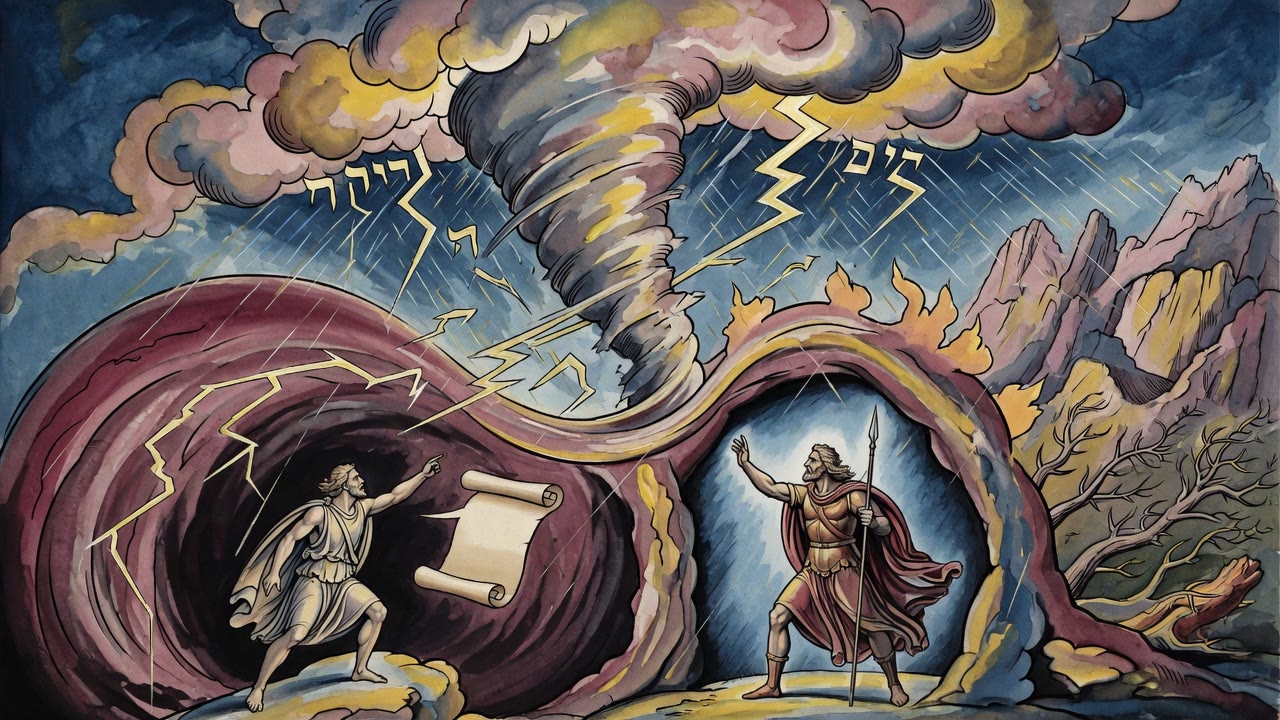
The dust had not yet settled over the field when the command came back to Saul from his own memory, sharp as the day he first heard it. Attack Amalek. Destroy them completely. Spare nothing that breathes (1 Samuel 15:3). He had ridden out with the whole army behind him to close an account that had been open since the wilderness, since the day Amalek struck Israel from behind and cut down the stragglers, the weak, the ones who could not keep the pace (Deuteronomy 25:17-19).
Children had died at the back of that column. The men who killed them had walked away. Now Saul had been sent to finish it.
And he had nearly done it. The Amalekites lay scattered across the ground. The swords had gone where they were told to go, almost everywhere they were told to go. Almost.
The King Saul Would Not Kill
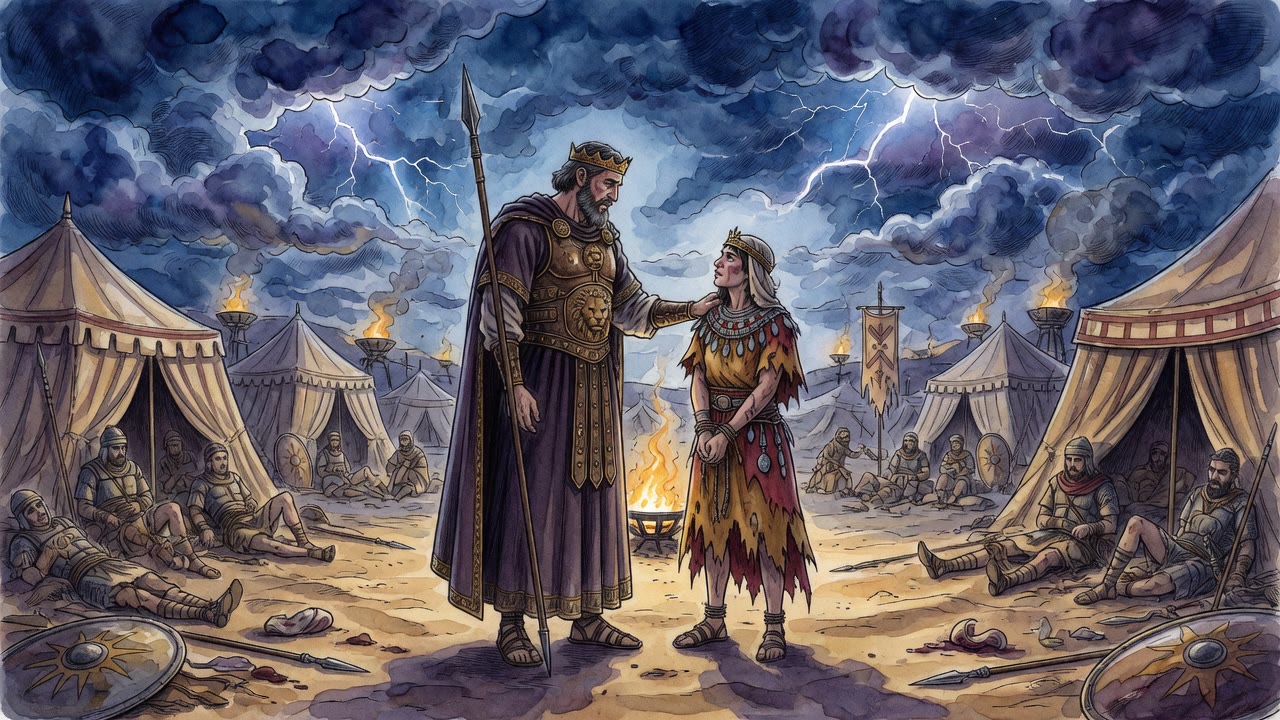
They brought Agag to him with his hands bound, and Saul looked at the king of Amalek and did not raise his blade. A king, after all. There was a kind of pride in keeping a king alive, in leading him home as proof of the victory rather than leaving him a corpse among corpses. Saul told himself it was something close to mercy. He let the best of the sheep and the cattle be driven off to one side, the fat ones, the strong ones, too fine to slaughter in the dust. Surely the best of what was conquered could be lifted up as an offering. Surely that would not be counted against him (1 Samuel 15:15).
So Agag lived. He lived through the afternoon, and he lived into the evening, and he lived through the night, bound and breathing while the army made its camp around him. One night. It seemed like nothing. It seemed like a delay, a formality, a thing that could be set right in the morning.
In that dark the bound king still had a body. The command had been to end a line. A living body is a line that has not ended. Saul slept as a victor. Agag did not sleep as a corpse. The hours between those two facts were the whole war, and Saul did not know it.
The Bleating That Gave Him Away
When Samuel came, he did not need a report. The animals announced the crime themselves. Sheep cried out across the camp, cattle lowed in the dark, and the prophet stood still and listened to the sound of the thing Saul had been ordered to wipe from the earth (1 Samuel 15:14). Saul came out to greet him with the word of God already on his lips, ready to swear he had obeyed, and the bleating spoke over him before he could finish.
Samuel asked one question and then he stopped asking. He looked at the king who had been given everything, the throne and the army and a single plain instruction, and he said the words that closed the reign. Because you have rejected the word of God, God has rejected you as king (1 Samuel 15:23). The crown was gone. It was gone over an old man with his hands tied and a pen of fat sheep, gone over a single night of waiting.
Saul reached for reasons. The people had wanted the animals. The animals were for sacrifice. The prophet was not listening to the reasons. He was listening to sheep that should not have been alive to make a sound.
Samuel Lifts the Blade Himself
Saul would not finish it, so the prophet did. Samuel called for Agag to be brought forward, and Agag came thinking the worst had passed, that the bitterness of death was behind him. It was not behind him.
"Surely the bitterness of death is past," Agag said.
Samuel answered him with the wilderness. Just as the sword of Amalek had consumed the young men of Israel who were outside the cloud, so that their women dwelt as childless women and widows, so by the prayer of the women all the sons of Amalek would be slain. Then Samuel killed the king of Amalek with his own hand, and he did it cruelly, not the clean stroke that law allows but something slower and harder, the death of a man being made to pay for everything his people had done at the back of a marching column.
The act was finished. The king was dead at last. And still it was not the same as if Saul had struck him down on the field at the height of the battle, in the hour when the command was alive and the work was clean. The killing had come too late. A night had passed. In a story about destroying a thing root and branch, a night is not nothing. A night is enough.
The Heir Who Walked Out of the Dark
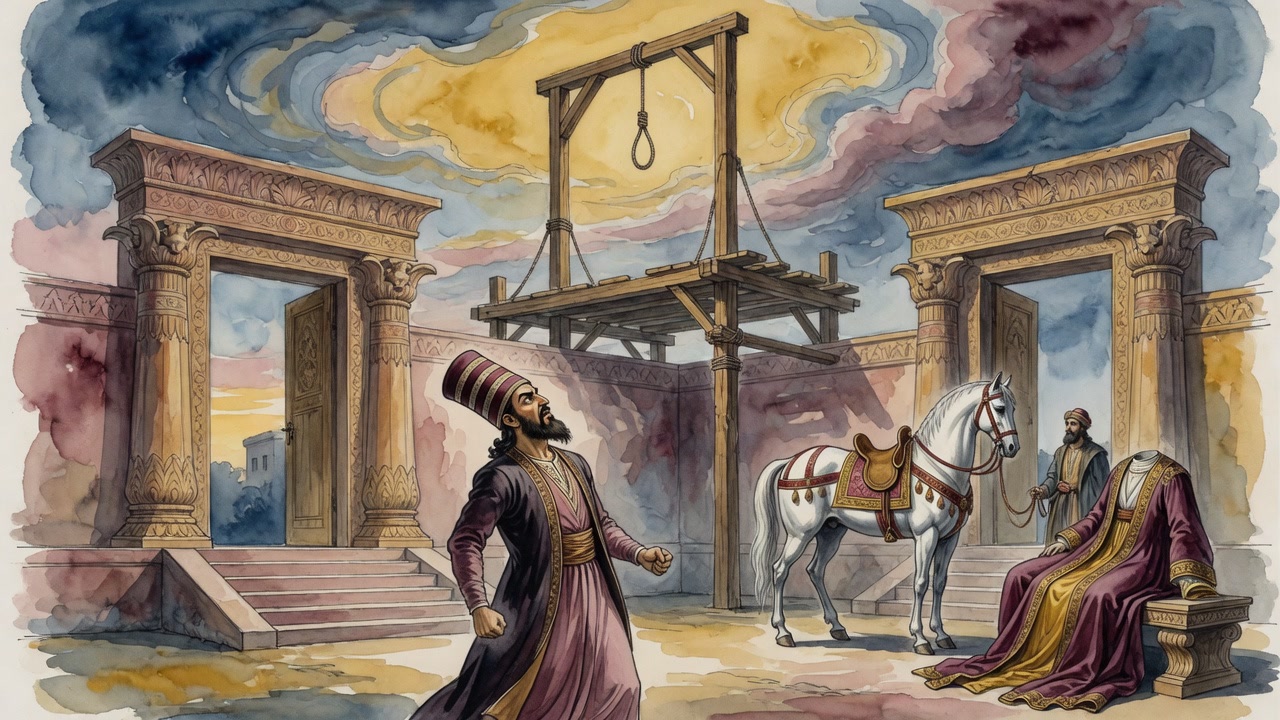
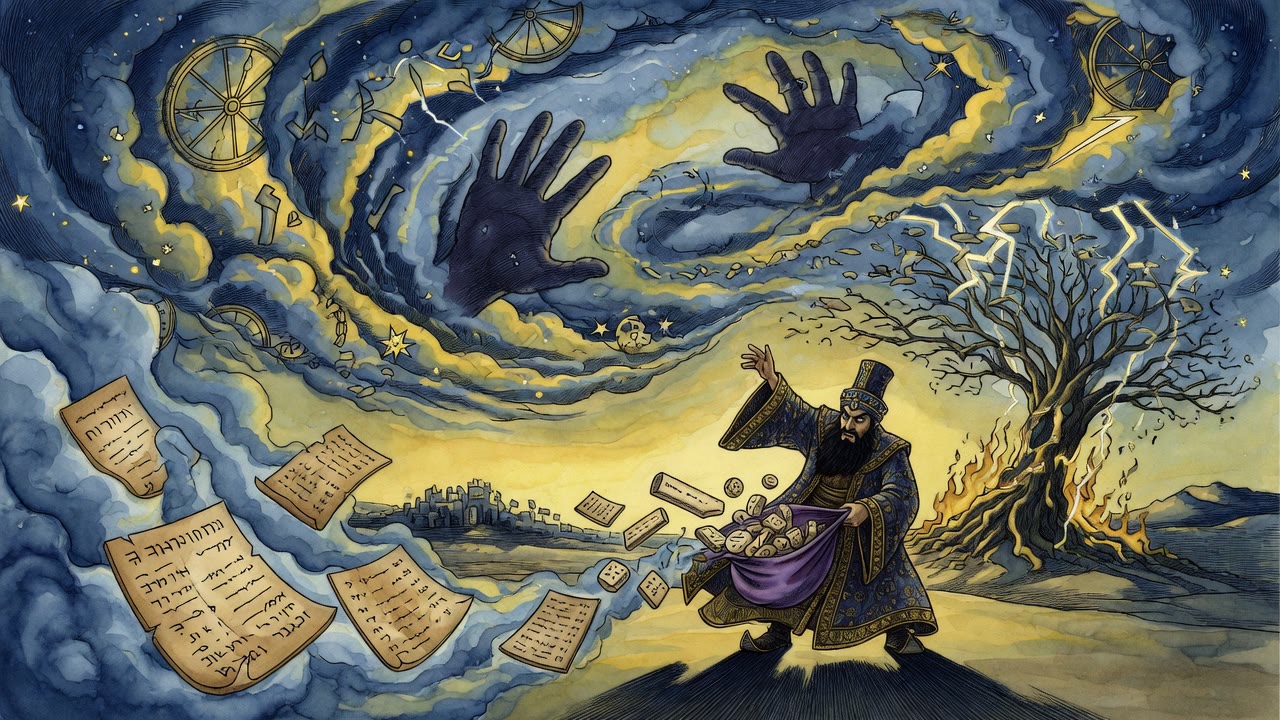
For in that span between Saul's failure and Samuel's arrival, while Agag sat alive in the camp and the morning had not yet come, the line of Amalek did not end. It continued. From the king who should have died in battle and did not, a descendant would come, and from that descendant another, until the day a man rose in the courts of Persia carrying the old hatred in his blood and set a single plan in motion: to kill every Jew in the kingdom, young and old, in a single day.
Samuel had stood before God and asked that an old iniquity be remembered down through the generations, the way the line of Esau carried its sins from father to son to grandson to the end of all the generations (Psalm 109:14). Now the same machinery turned the other way. The mercy of one night, the pride that kept one king breathing, ran forward through descendants Saul would never see. The people he had been sent to protect would one day stand in the shadow of a gallows because their first king could not finish what he was sent to do.
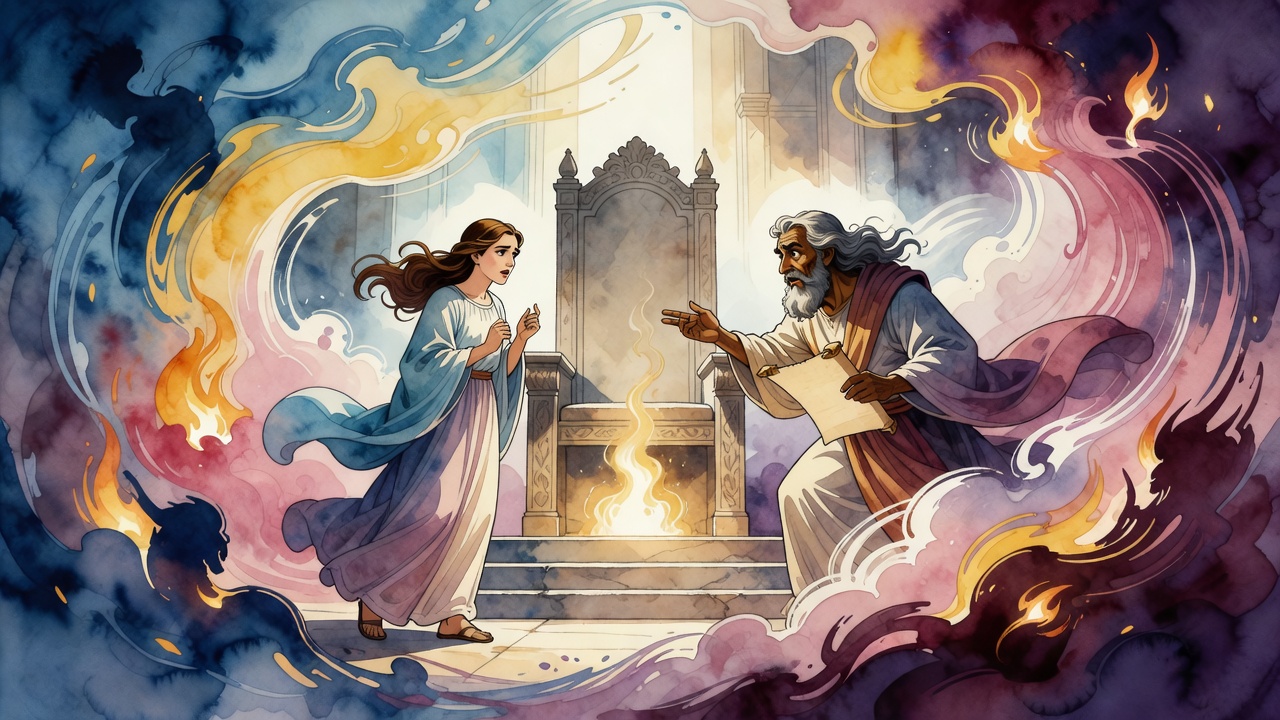
In Persia the prayer of Esther and her maidens would close what Saul had left open. The sons of Amalek would be slain, and their women would remain childless and widowed, as Samuel had spoken over Agag. That later prayer had to exist because a sword had paused over a bound king for a few hours of darkness.
Saul had won the battle and lost the war by the span of a night. He had been handed the chance to end a thing forever and had ended it almost, and the almost grew teeth. The king he spared out of something like kindness became the root of a hatred that would outlive him by centuries. The sword that paused over Agag did not spare one man. It spared a line.
← All myths