6 min read

Moses Hid Ten Failures Inside a String of Place Names

On the plains of Moab, Moses turns geography into rebuke, hiding ten failures of the wilderness years inside a string of place names.

Curated by Arthur · Told by Maggid ·
Table of Contents
  1. The Old Man on the East Bank
  2. Names That Were Never on Any Map
  3. The Calf in the Wilderness
  4. Thirst, the Sea, and the Idol That Crossed With Them
  5. The Spies of Paran and the Names Still Sealed
  6. What God Saw Before the Sea Ever Split

The Old Man on the East Bank

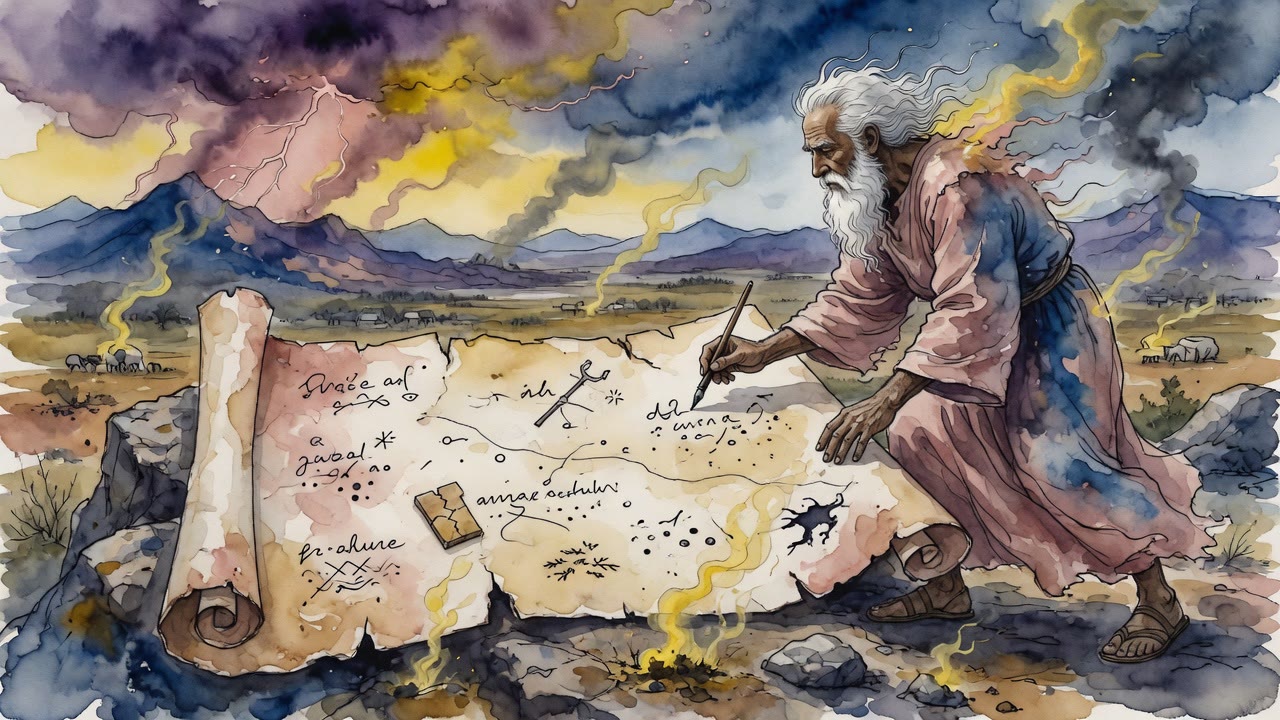
The Jordan ran low and brown below the plains of Moab, and on the east bank an old man stood facing a nation of the young. Moses was a hundred and twenty years old. The hands that had split a sea now trembled slightly at his sides, and he knew, with the certainty of a man who has heard it from God directly, that he would die on this side of the river. The people gathered before him were not the people he had led out of Egypt. Those were bones in the sand now, a whole generation buried along forty years of wandering. These were their children, born between the graves, and Moses had one speech left to give them.

He opened his mouth, and what came out sounded like an itinerary. In the wilderness, in the Arabah, over against Suph, between Paran and Tophel, and Laban, and Hazeroth, and Di-zahab (Deuteronomy 1:1). A list of places. A dusty travel log. The crowd could be forgiven for thinking the old man had begun with the least interesting words of his life.

Names That Were Never on Any Map

But try to walk that route and it falls apart. Suph lay far behind them, at the sea they had crossed four decades earlier. Paran sat deep in the southern desert. Di-zahab appeared on no trader's map at all. The names refused to line up into any road a caravan could follow, because they were never a road. They were a code.

Moses hid ten failures inside a string of place names. Every word in that opening verse was a sealed letter, and anyone who had lived through the wilderness years could break the seal. He would not stand before the children and shout the sins of their fathers into their faces. Therefore he wrapped each rebuke in geography, a tochachah, a reproof, delivered as a map. The shame stayed folded inside the syllables, visible only to those who already knew where to look.

The Calf in the Wilderness

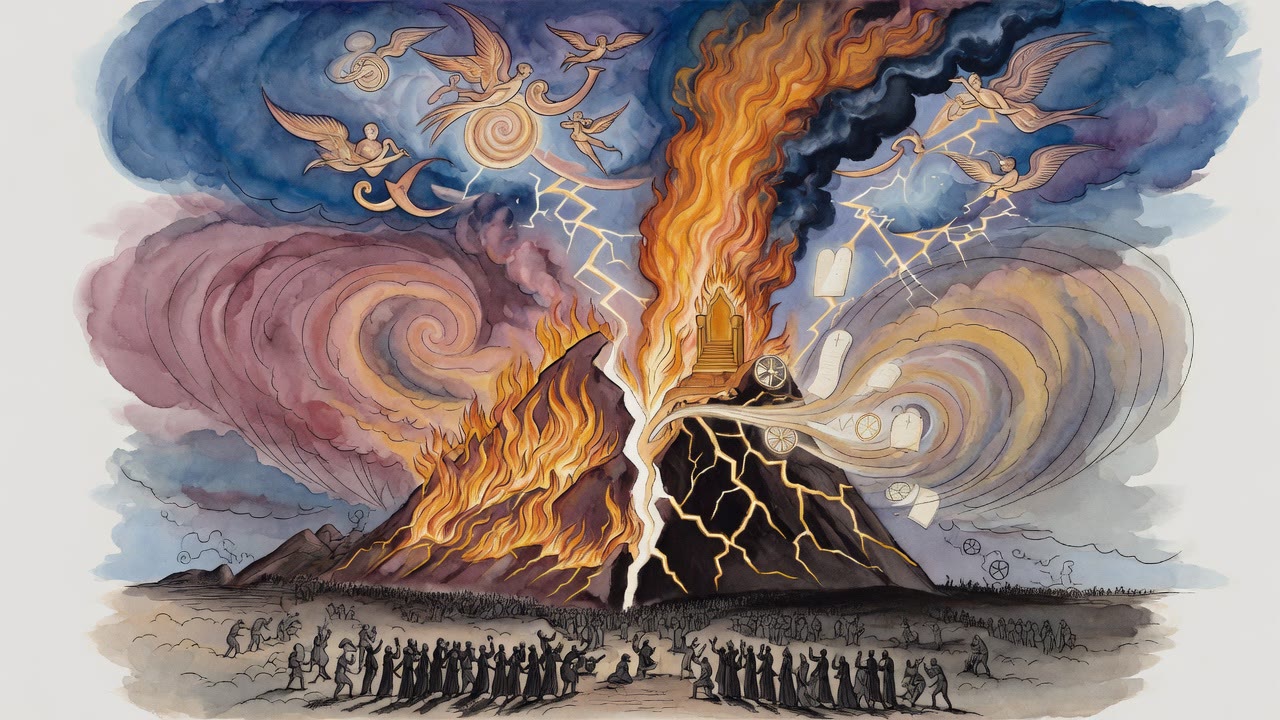
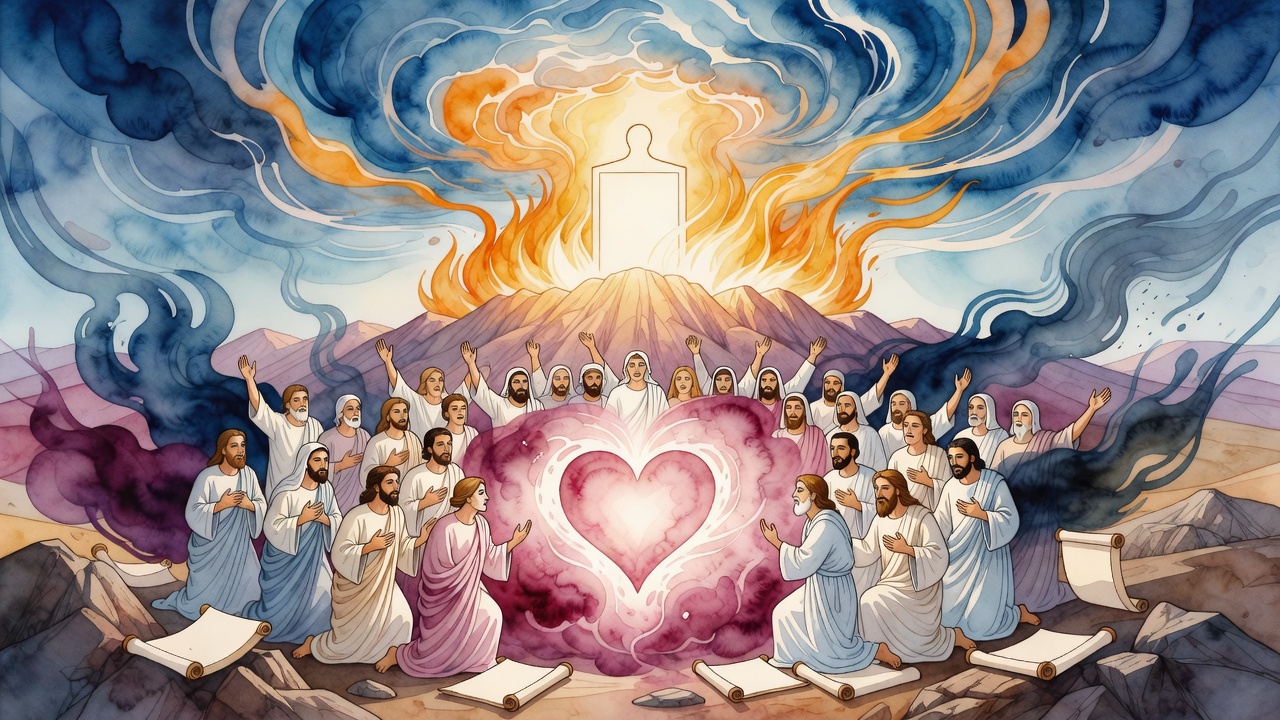
"In the wilderness." Two words, and behind them the worst morning of the journey. While Moses stood inside the cloud on the mountain, receiving the Torah from the mouth of God, the people below were tearing the gold from their ears and throwing it into fire. Out of the flames came a molten calf, and the same throats that had sung at the sea now sang to metal, crying that this was the god who had brought them up from Egypt (Exodus 32:8). The mountain still smoked above them while they danced. Moses did not retell any of it on the plains of Moab. He said "in the wilderness" and let the words burn in the ears of everyone old enough to remember.

Thirst, the Sea, and the Idol That Crossed With Them

"In the Arabah." The waterless flats where the people's tongues cracked and their tempers cracked faster, where they surrounded Moses and accused him of dragging them and their children out of Egypt to die of thirst in the dust (Exodus 17:3). Their rage at God in that dry place was the second letter in the code.

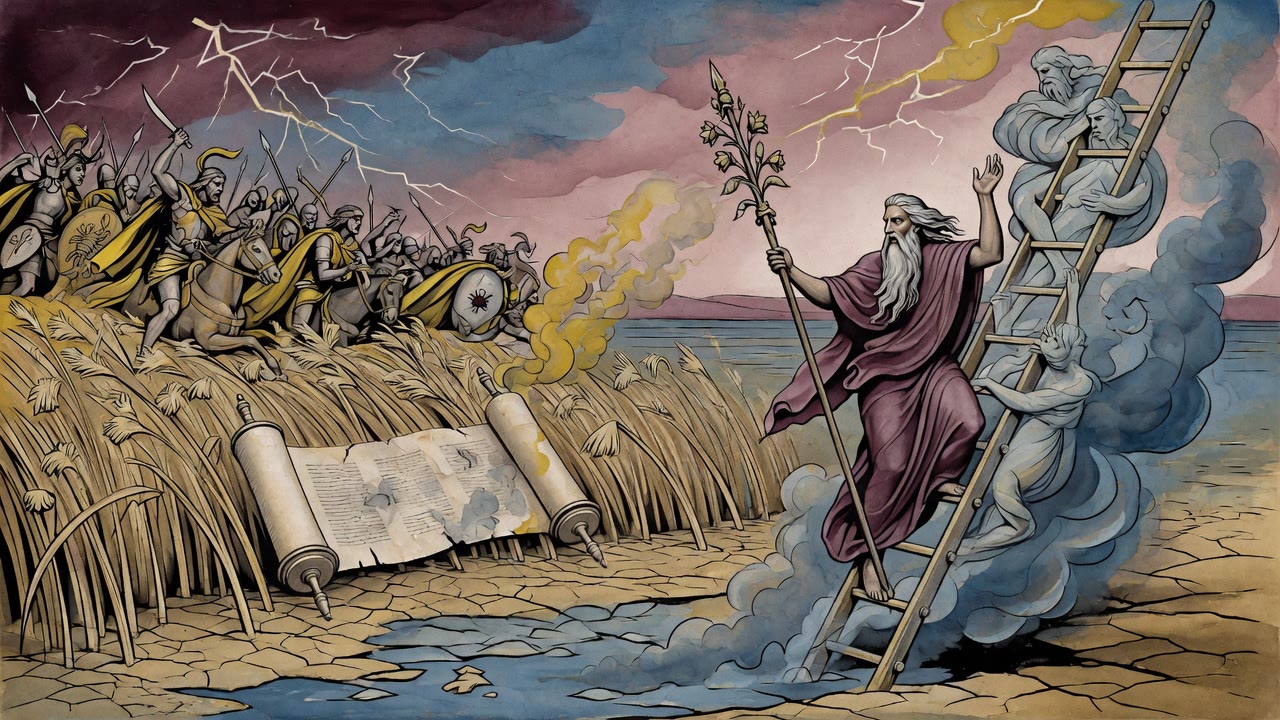
"Over against Suph." The sea itself, where Israel stood with Egypt's chariots thundering behind them and the water blank in front of them, and instead of trusting, they panicked and rebelled at the very edge of their rescue (Psalms 106:7). Some among the sages read the name even more darkly. They said it pointed to the idol of Micah, smuggled out of Egypt in the baggage of fleeing slaves and carried straight through the parted sea, a graven image riding dry-shod between the standing walls of water while God held the deep apart for its bearers. Rabbi Judah taught that they rebelled twice at Suph, once approaching the sea and once inside it, defiance walking on the floor of a miracle.

The Spies of Paran and the Names Still Sealed

"Between Paran." From the wilderness of Paran twelve men had gone up to scout the promised land (Numbers 13:3), and ten of them came back with a report so soaked in terror that the whole camp wept through the night and begged to return to slavery. That weeping condemned an entire generation to die before reaching the land. The graves that lined the route to Moab were dug by the words of those spies.

And still the verse went on. Tophel, Laban, Hazeroth, Di-zahab, name after name, each one another sealed charge in the indictment, until the count of coded failures reached ten. Ten rebellions, the full ledger of the wilderness, compressed into a single sentence that a stranger would mistake for directions.

What God Saw Before the Sea Ever Split

There was a second secret folded into the list, older than any of the sins it named. Long before the Exodus, when God first spoke with Moses about redeeming Israel, He laid the future bare. Moses could see only the glory ahead, the mountain, the Torah descending. God saw further. He saw the calf already, the steer the people would shape in gold even as He revealed Himself on Sinai, a figure they would claim to glimpse in His own chariot. He knew the betrayal in advance, down to the shape of the idol.

And He went down to Egypt anyway. He judges people by what they are doing now, He told Moses, not by what they will one day do, and He would honor the promise made to Jacob, "I will go down with you." Every failure coded into the opening of Deuteronomy was foreseen before the first plague fell, and the redemption came regardless. So when Moses stood on the east bank and chose to whisper the sins as place names rather than shout them as crimes, he was speaking the way he had learned to speak from the One who had read the whole list in advance and reached into Egypt anyway. The gentleness in the geography was borrowed from God.


← All myths
From the tradition

Sources

3 sources

The texts this telling draws on, in full. Open a card to read inline, or expand it for a wider, quieter read.

Avot DeRabbi Natan 34Avot DeRabbi Natan

The opening verse of Deuteronomy lists a string of place names, "in the wilderness, in the Arabah, over against Suph, between Paran and Tophel, and Laban, and Hazeroth, and Di-zahab" (Deuteronomy 1:1). The rabbis taught that these are not geography. They are a coded record of ten failures.

"In the wilderness", this is the golden calf, fashioned while Moses was still on the mountain (Exodus 32:8). "In the Arabah", the waterless desert where the people thirsted and raged against God (Exodus 17:3). "Over against Suph", the rebellion at the Red Sea, where Israel panicked before the waters parted. Some say it refers to the idol of Micah, smuggled out of Egypt and carried through the parted sea itself (Psalms 106:7). Rabbi Judah said they rebelled both approaching the sea and inside it.

"Between Paran", the sin of the spies, sent from the wilderness of Paran, who returned with a report so terrifying it condemned an entire generation to die before reaching the Promised Land (Numbers 13:3). "Tophel", from the word for "disparaging," this was Israel's contempt for the manna, the bread of heaven they called worthless. "Laban", the revolt of Korah, who challenged Moses's authority and was swallowed by the earth (Numbers 16:1). "Hazeroth", the gorging on quails that ended in a plague.

Seven trials from one verse. Three more come from another: "at Taberah, and at Massah, and at Kibroth-hattaavah" (Deuteronomy 9:22). Ten in all. And "Di-zahab", literally "enough gold", refers to Aaron, who fashioned the calf. Aaron would later say to God: "You gave them so much gold in Egypt that they had nothing to do with it but sin."

The sages buried this inventory of failures in the very first sentence of Moses's farewell speech, a reminder that even a people chosen by God stumbled ten times before learning to walk.

Full source
Legends of the Jews 4:198Legends of the Jews

Would you still offer that help?

That’s the dilemma, in a sense, that God faces in the lead-up to the Exodus. As we learn in Legends of the Jews, God, in speaking to Moses, lays bare this painful truth. Moses sees only the immediate future: the giving of the Torah, the sacred teachings, on Mount Sinai. But God sees further.

He sees the Golden Calf.

Even as God reveals Himself on Sinai, the Israelites will be crafting an idol, a "steer," as Ginzberg puts it in Legends, a figure they will see reflected in God's very chariot. This act of betrayal, this blatant idolatry, will ignite God's wrath.

So why, knowing all this, does God proceed with the redemption? Why not just say, "Forget it. They're not worth it"?

Here's where it gets really interesting. God explains to Moses that He judges people based on their present actions, not on what they might do in the future. Even knowing the Israelites will stumble, God honors the promise made to their ancestor, Jacob: "I will go down with thee into Egypt, and I will also surely bring thee up again" (Genesis 46:4).

It's a matter of integrity. God keeps His word. He will descend into Egypt to liberate Israel, fulfilling His promise to bring them to the land He swore to their forefathers.

There’s also the matter of timing. God reminds Moses that He had set a specific period of suffering for the Israelites, revealed to Abraham long ago. As long as that time of affliction hadn't passed, their cries went unanswered. But now, the appointed time has arrived.

So, God commands Moses to go to Pharaoh and demand the release of His people. And here's the kicker: "If thou dost not bring about the redemption, none other will, for there is none other that can do it." Israel's hope rests entirely on Moses’s shoulders. "The matter lieth in thine hands alone." Despite knowing the future heartbreak, despite the potential for disappointment, God trusts Moses. He empowers him to be the agent of redemption.

This passage from Legends of the Jews isn’t just a historical account; it's a profound meditation on divine patience, the weight of responsibility, and the enduring power of promises. Even when we know someone might let us down, do we still offer our hand? Do we still give them the chance to rise? And perhaps, more importantly, do we trust in the possibility of redemption, even in the face of inevitable challenges? Maybe that’s the most divine act of all.

Full source
Sifrei Devarim 1:10Sifrei Devarim

Sifrei Devarim turns to Moses Rebukes Israel with Geographic Code Words.

"Across the Jordan": this teaches us, the text says, that Moses is rebuking the people for their actions on the other side of the Jordan River. this is the very edge of the Promised Land. They're so close to fulfilling the covenant, and yet Moses chooses this moment to…call them out?

Why?

Then comes "in the desert." This one stings even more. The Sifrei Devarim reveals a particularly painful episode. It describes the people, filled with despair and resentment, grabbing their children – their own sons and daughters – and throwing them into Moses’ lap. “What provisions did you make for these?” they demanded. “What livelihood did you provide?”

Can you imagine the scene? The desperation, the anger, the sheer weight of responsibility dumped on Moses in such a brutal way?

Rabbi Yehudah offers a specific example of what "in the desert" refers to, pointing to a moment recorded in Exodus (Shemot) 16:3. Remember the story? The Israelites, fresh out of Egypt, are already complaining. They whine, “Would that we had died by the hand of the L-rd in the land of Egypt!” Egypt, the place of slavery, is now viewed through rose-colored glasses. Anything, it seems, is better than the uncertainty of freedom.

So, what’s the takeaway here? Why start the Book of Deuteronomy with these harsh reminders? Perhaps it’s about accountability. About not forgetting the past, even the parts we’d rather ignore. About understanding that entering the Promised Land – both literally and metaphorically – requires more than just physical relocation. It requires a reckoning with who we were, and a commitment to becoming who we need to be.

It’s a tough message, delivered with a raw honesty that still resonates thousands of years later. And it makes you wonder: What “deserts” are we still carrying with us? What old grievances need to be addressed before we can truly cross our own personal Jordans?

Full source