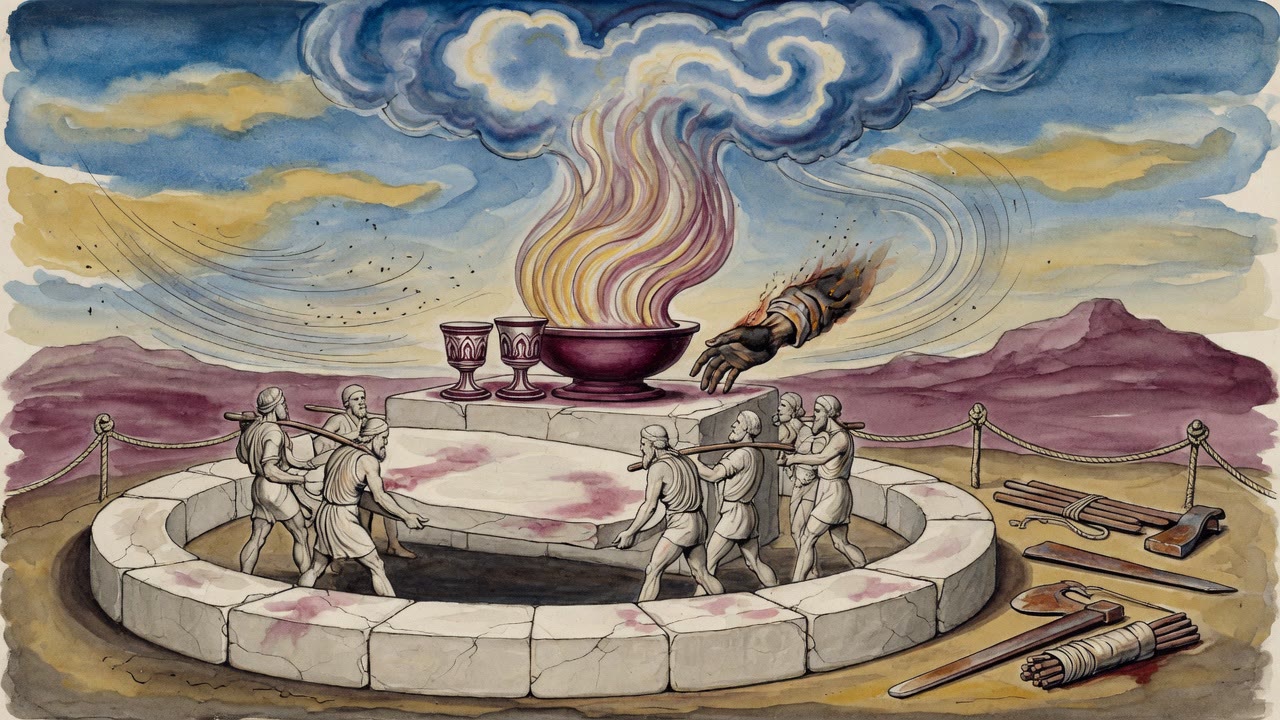
Moses Knew They Wept for Forbidden Beds Not Meat
When the quail decree fell, Moses did not cheer. He told God the people craved closed unions, not flocks, and still the meat came.
Table of Contents
The weeping started at the doors of the tents and went out through the camp family by family, until Moses could hear it from every direction at once. They wanted meat. They said so out loud, and they said it while the morning's manna was still lying on the ground where it had fallen.
 Click for full size
Then the word came down that they would get the meat, and that it would come out of their nostrils and turn loathsome to them. Moses did not thank heaven for the justice of it. He turned around and argued.
Six Hundred Thousand and One Argument
"Six hundred thousand on foot are the people among whom I stand," he said, because the sentence had been aimed only at the ones who walked out of Egypt, and he wanted the number said aloud before anybody was buried. Then he said the thing he had been reading in their faces for days.
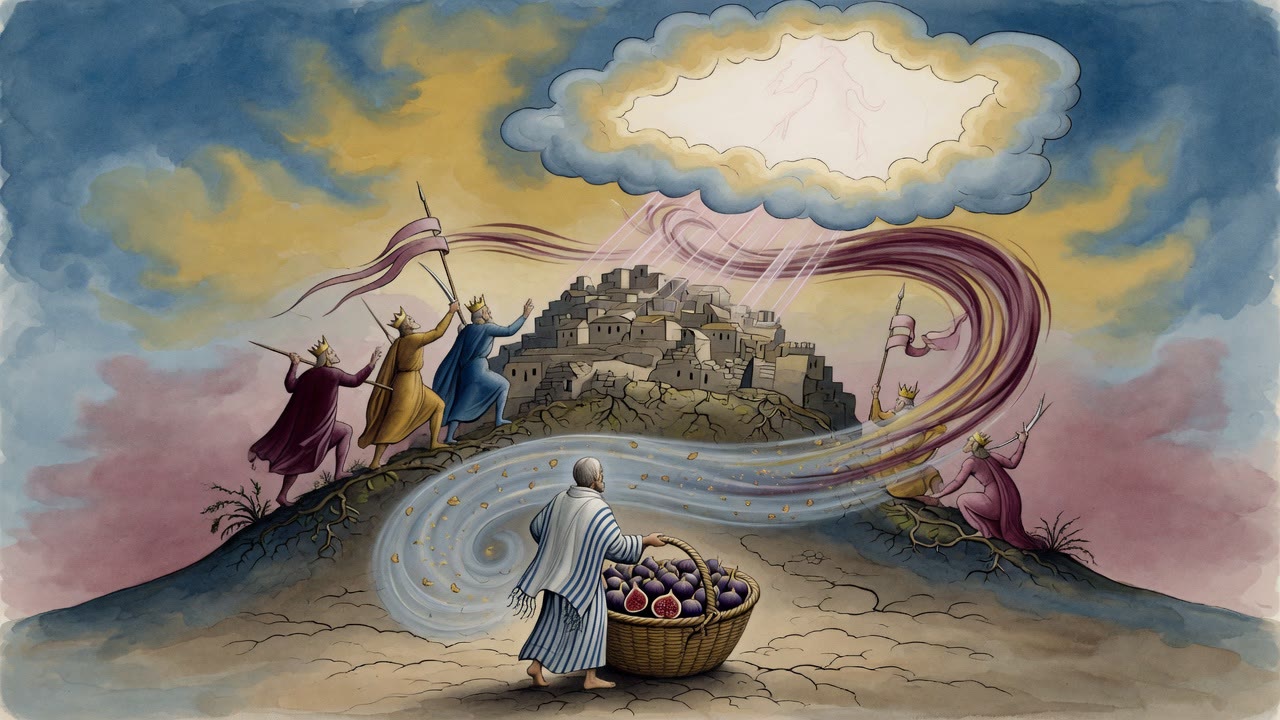
"Master of the world, You know what is gnawing at them, and it is not meat. Give them every flock under heaven and they will still not be filled. They are weeping for the unions You closed to them. So why listen to their voice and rain down flesh that will only kill them? If it pleases You, do not listen, and do not give it."
It was a strange request from an advocate. He was asking God to refuse his own people the one thing they had asked for out loud, because he had worked out that the request was a cover and the granting of it would be fatal.
Is the Hand of the Lord Short
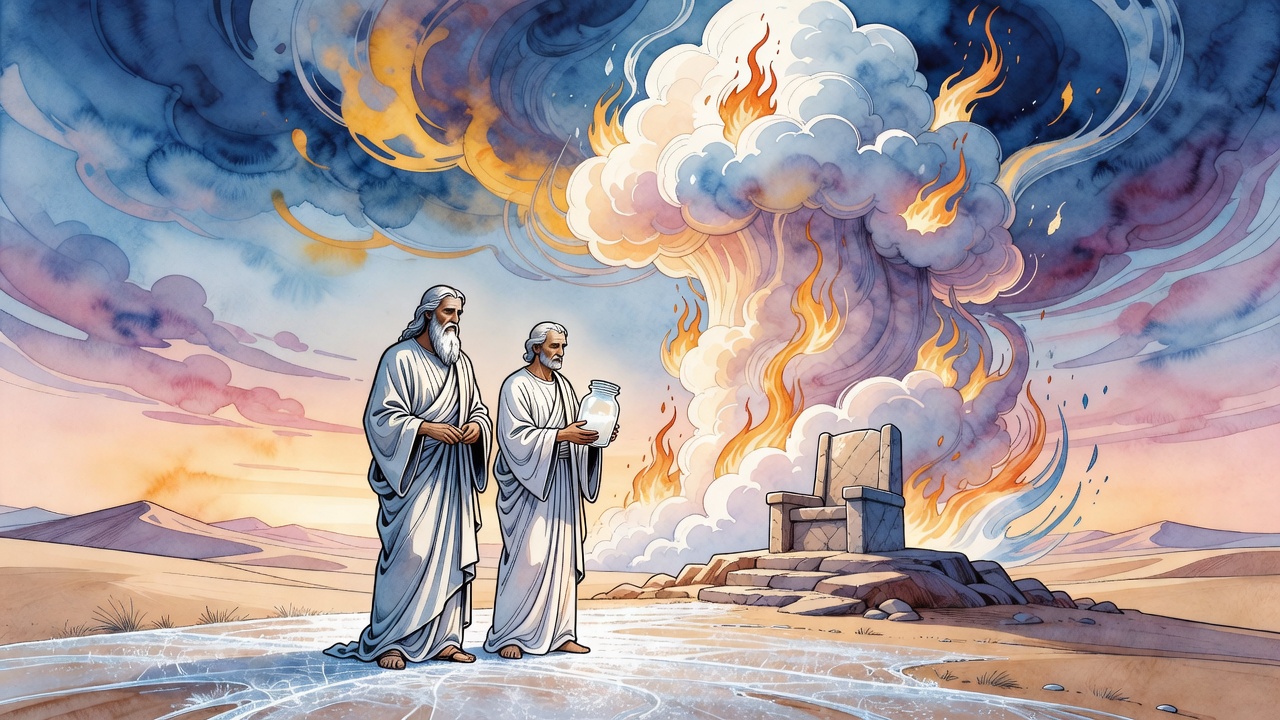
"Is the hand of the Lord short?" God answered.
Then He laid out what Moses had not weighed. "If I listen to you and hold the meat back, they will not say I spared them. They will say I could not produce it, that My hand has gone short and I had no strength for what they asked. Is that the opening you want to hand them?"
Moses had come up to save their lives, and he was being shown that mercy which looks like weakness gets spent at once on a worse sin than craving. He had nothing to say to it. So he tried the other door.
Let Me Go Down and Warn Them
"Then let me go and warn them off it," he said. "If the meat is coming, let me get them to stop asking before the birds do."
"Do not trouble yourself with the walk," God told him. "Say that to them and they will only say you have no strength to get them what they want, and they will go on buzzing like bees that I cannot provide. Go out and tell them, if you want to know. You will see whether My word comes to pass or not."
Moses stood there and understood what he had just been turned into. He had argued the case twice and lost it twice, so he was not being sent down to fix anything. He was being sent down to watch and check the result against the sentence.
What the Weeping Was For
He went down through the camp and heard the complaint being rehearsed in the tents, and it was all about food. The fish in Egypt had cost nothing. There had been cucumbers and melons, leeks and onions and garlic, and now there was this white stuff every morning and nothing else, forever.
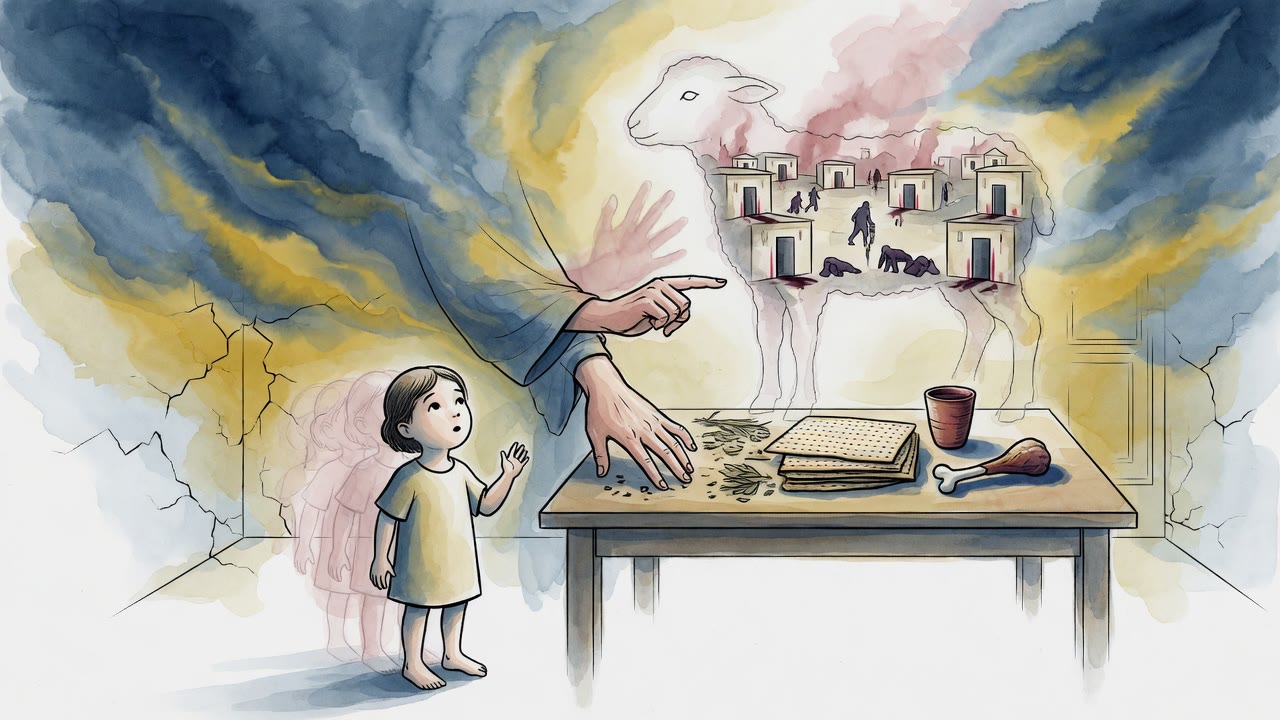
Not one of them said the other thing at a tent door. It had a name in the law and no name in the street, and a man could weep about a cucumber in front of his neighbors without having to explain himself. So the camp cried about groceries, and Moses walked through it with the true request in his pocket, unable to use it, because he had already been forbidden to say it out loud to them.
Long of Nostrils
Nothing had struck them yet, and that was not an oversight. Scripture does not say God is slow to a single anger. It says long of nostrils, two of them, and the sages heard the patience stretched twice over, once for the righteous and once for the wicked, so the door back stays open even for people who have not earned it. The camp had been weeping for days and no fire had come down on a single tent.
But the same verse goes on to say that He remembers iniquity, so the waiting was never forgetting. It was time. They spent the time remembering fish.
The Wind Brought the Birds
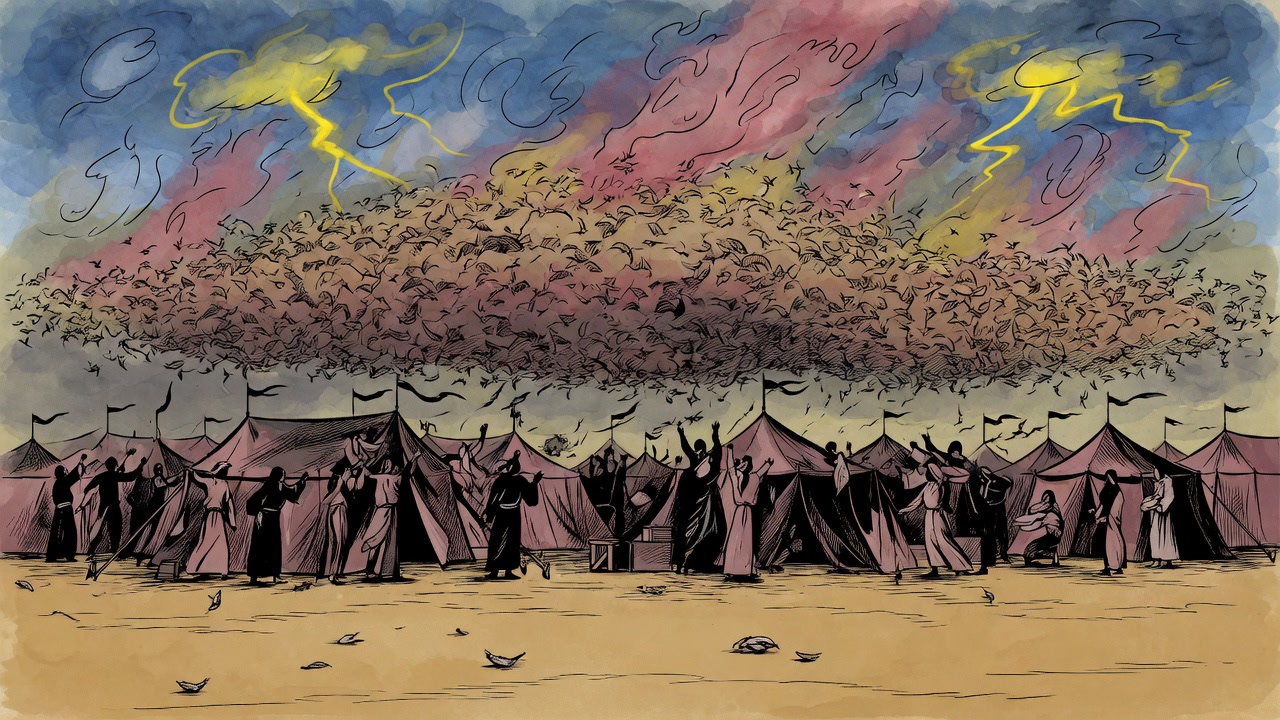
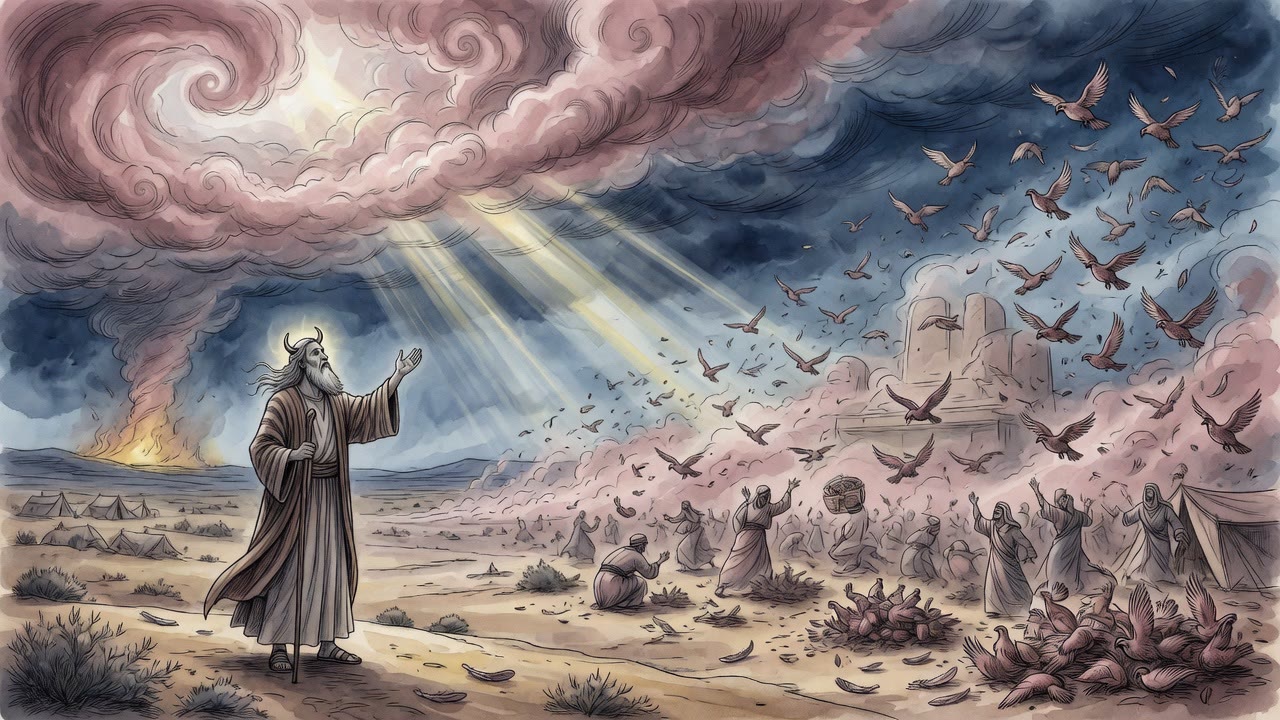
The wind came off the sea and the quail came in with it, low and heavy, until the ground around the camp was covered with them. Men ran out with anything that would hold. Fires were lit before the birds had finished landing, and fat dripped into the sand and hissed. For one evening the camp sounded like a market that had finally got what it ordered.
Moses walked the edge of it, because he had been told to come and see. Some ate standing up. Some were still chewing when the stroke came, and the meat was between their teeth.
They named the place for its graves and not for its feast.
In the morning there were feathers in the doorways and the smell of cooked fat over everything, and nobody in the camp said out loud what they had actually been crying for. Moses did not say it either. He had said it once, on the mountain, to the only listener who already knew.
← All myths