Moses Prayed Until Heaven Sealed Its Gates Against Him
A boy stole God's name and grew wings; Moses saw the future and begged God to stop; and heaven locked every gate so his final prayer could not pass through.
Table of Contents
 Click for full size
The Boy Who Hid the Name in His Foot
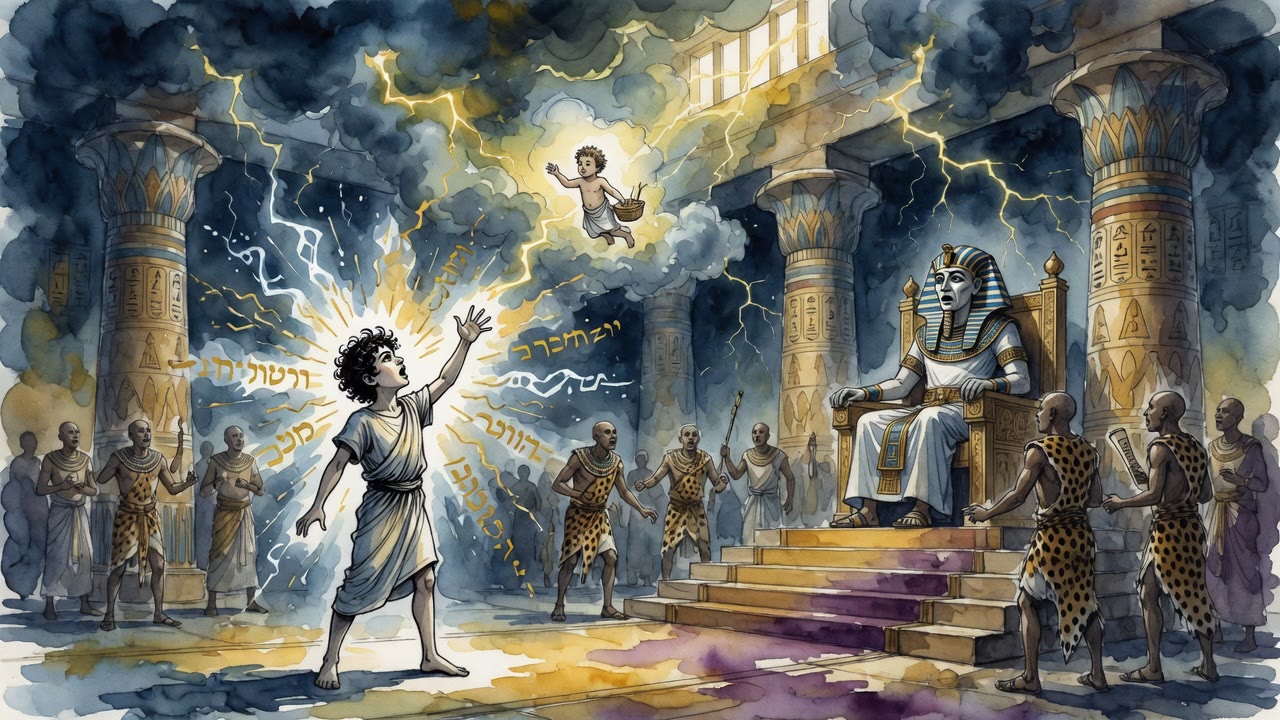
He entered the Temple when no one was watching and found his way to the stone in the Foundation on which God's four-letter Name was engraved. He cut the skin of his foot with a reed and pressed the Name against the cut and the letters entered his flesh. He wrapped his foot and walked out, and by the time he reached the Temple steps wings had begun to grow from his shoulders. He flew upward into the company of angels and the angels looked at him and could not send him back.
One angel poured water on his foot. The wound became impure. The Name lost its power. The wings fell away. The boy, Yozel Frandrik, fell back into the world a human being again, without the letters and without the flight. Sacred power is real, the tradition insisted, but it is never ownerless. You can steal it, carry it inside your body, rise on it into heaven itself, but you remain what you were before the theft. The Name chose Moses. It did not choose this boy. The difference was not ability but authority, and authority is what the water washed away.
Moses Saw Enough Future to Ask God to Stop
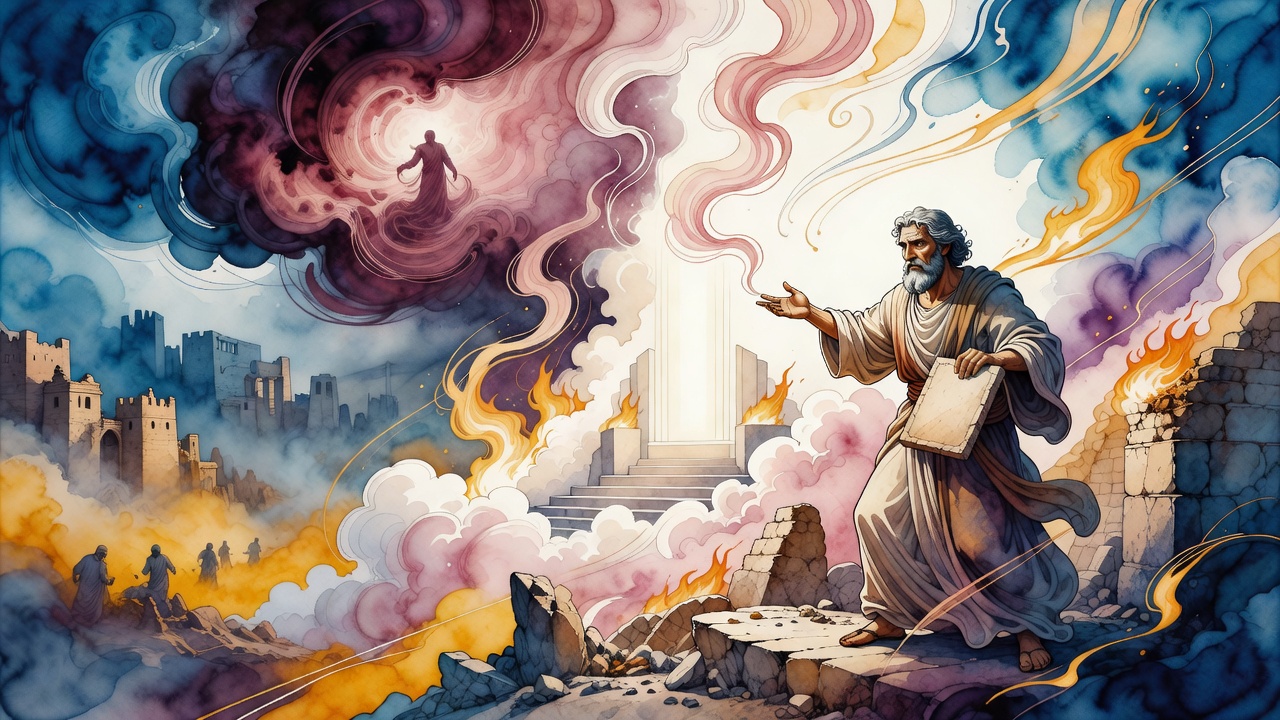
On Sinai, God showed Moses more than the Torah. He showed him the full span of time: every generation, every teacher, every disaster, every redemption that would follow the mountain. Moses watched the scholars of Israel across centuries, the academies and the arguments and the persecutions. Then he asked God to stop. Not because it was too much to comprehend but because what he saw ahead for Israel was too much to hold. He understood that a leader cannot carry every sorrow waiting in the future and still lead the present generation forward.
God told him: the future words were meant for you alone. No prophet was supposed to carry this full weight, which is why no prophet received it again. Moses stood on the mountain knowing what was coming for the people he loved, and the tradition honored him not for enduring the vision but for asking it to end. The strongest form of leadership, the rabbis suggested, was the kind that knew when to stop looking at what could not be changed.
Jannes Tried to Read the Heavenly Realms
Jannes and his brother were Egyptian sorcerers who had matched Moses and Aaron sign for sign in Pharaoh's court, turning their staffs to snakes, drawing blood from the river, covering Egypt with frogs. After the Exodus, the tradition said Jannes continued his attempt to penetrate the heavenly realms by forbidden means. He built his knowledge through channels that were not meant for human access, reading what was not meant to be read.
The rabbis placed him as a cautionary figure: the anti-Moses. Moses accessed heaven through God's invitation. Jannes tried to access it through technique. The difference was not in the height each man reached but in the authorization each man carried. Jannes could see things. He could not hold them. What he acquired without authority dissolved, as every unauthorized access to sacred power eventually dissolves.
Israel's Camp Mirrored the Heavenly Throne Room
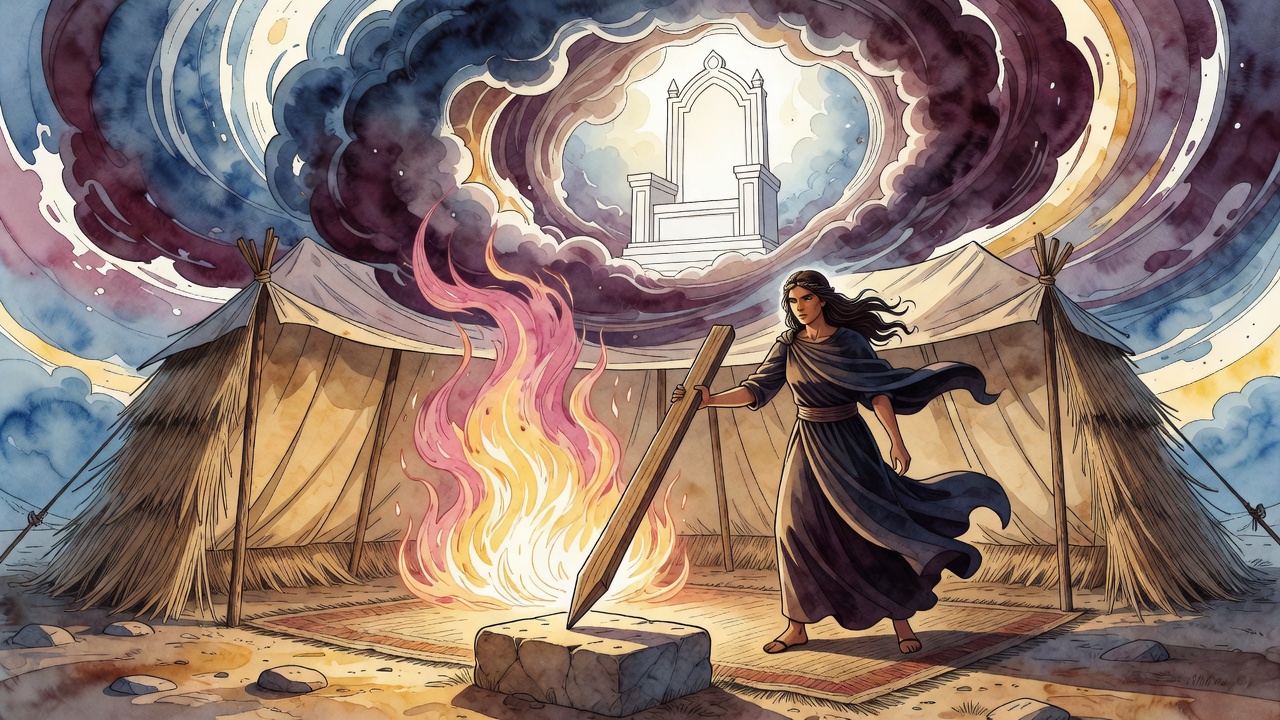
The arrangement of Israel in the wilderness was not merely military. The Tabernacle at the center, the Levites encircling it, the twelve tribes in their positions by banner and direction: the whole formation reproduced in earthly terms what the tradition described as the heavenly court around the divine throne. Michoel to the right, Gavriel to the left, Uriel at the front, Raphael at the rear. Israel was not simply an army in the desert. It was a walking reflection of the arrangement of heaven.
The rabbis understood this as the significance of the camp's order. Moses did not arrange the tribes arbitrarily. Each position had a heavenly counterpart, a precedent in the structure of the divine realm that had been established before the first day of creation. When Israel marched in the wilderness, heaven looked down and recognized its own image moving through the sand.
God Sealed Heaven So Moses Could Not Be Heard
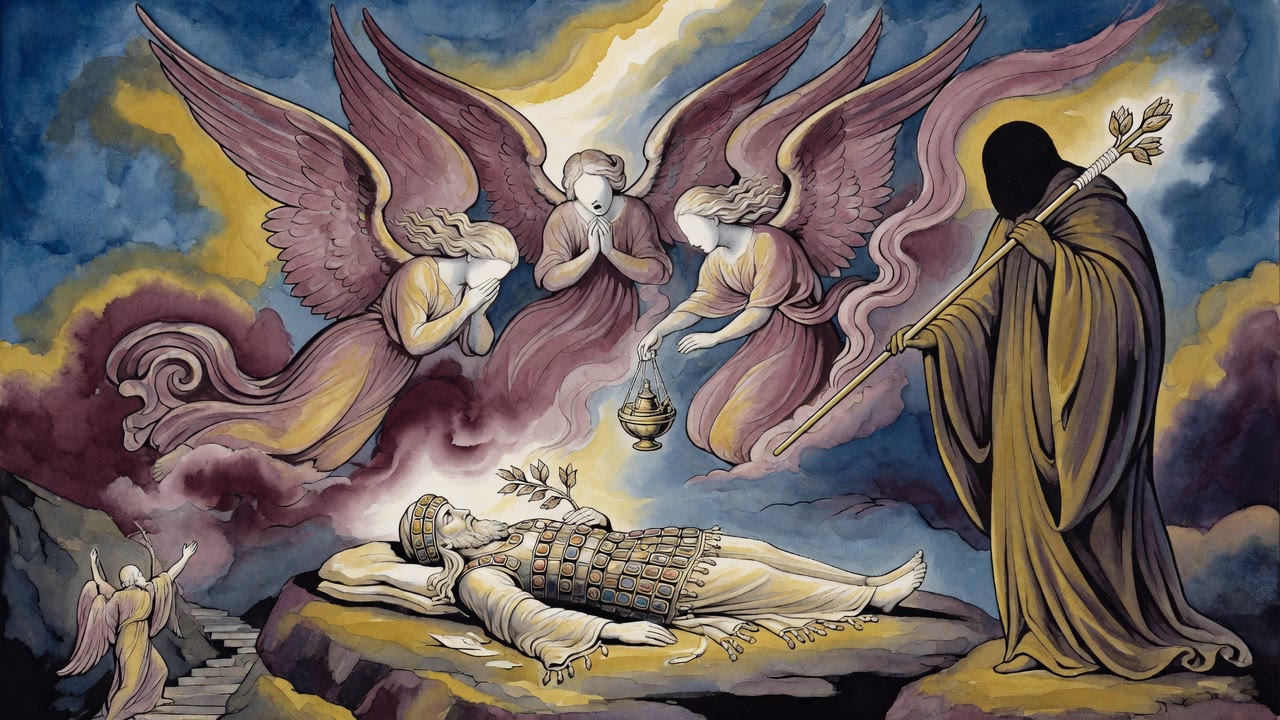
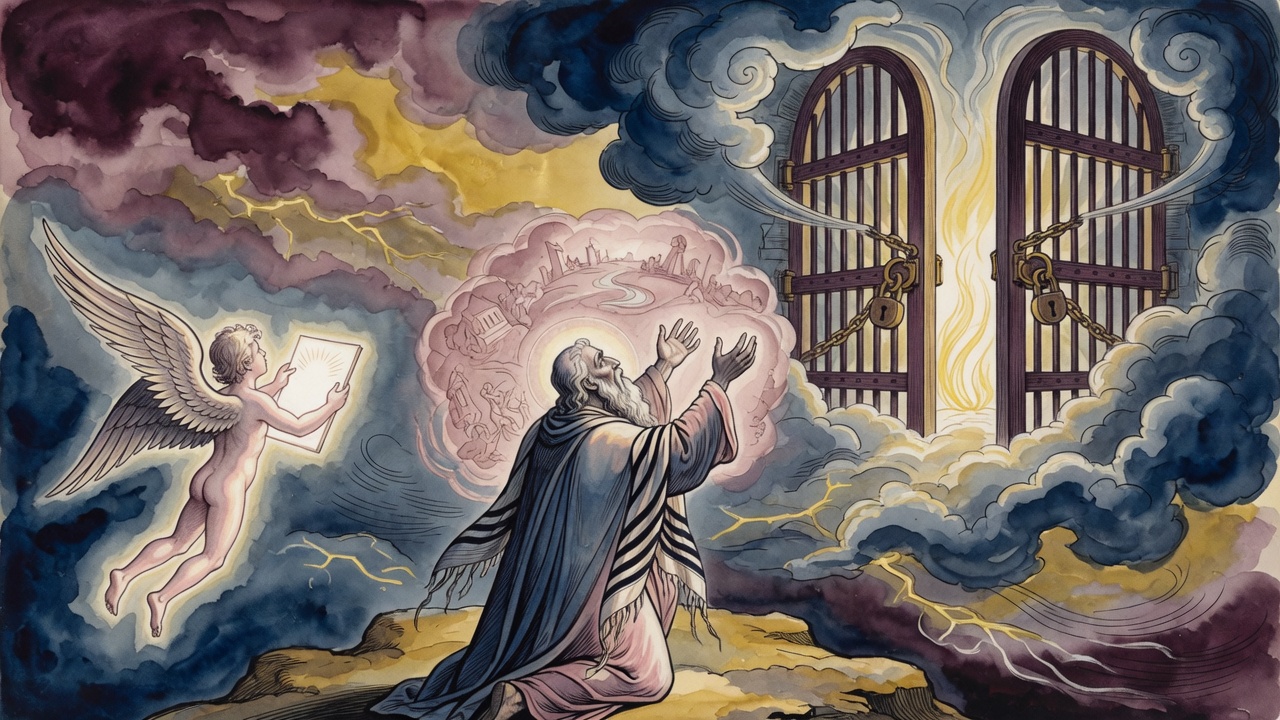
In the last weeks of his life, Moses prayed. He prayed five hundred and fifteen prayers. He stood at the border of the land he was not permitted to enter and sent his words upward with everything he had. The tradition counted those prayers. It named their number.
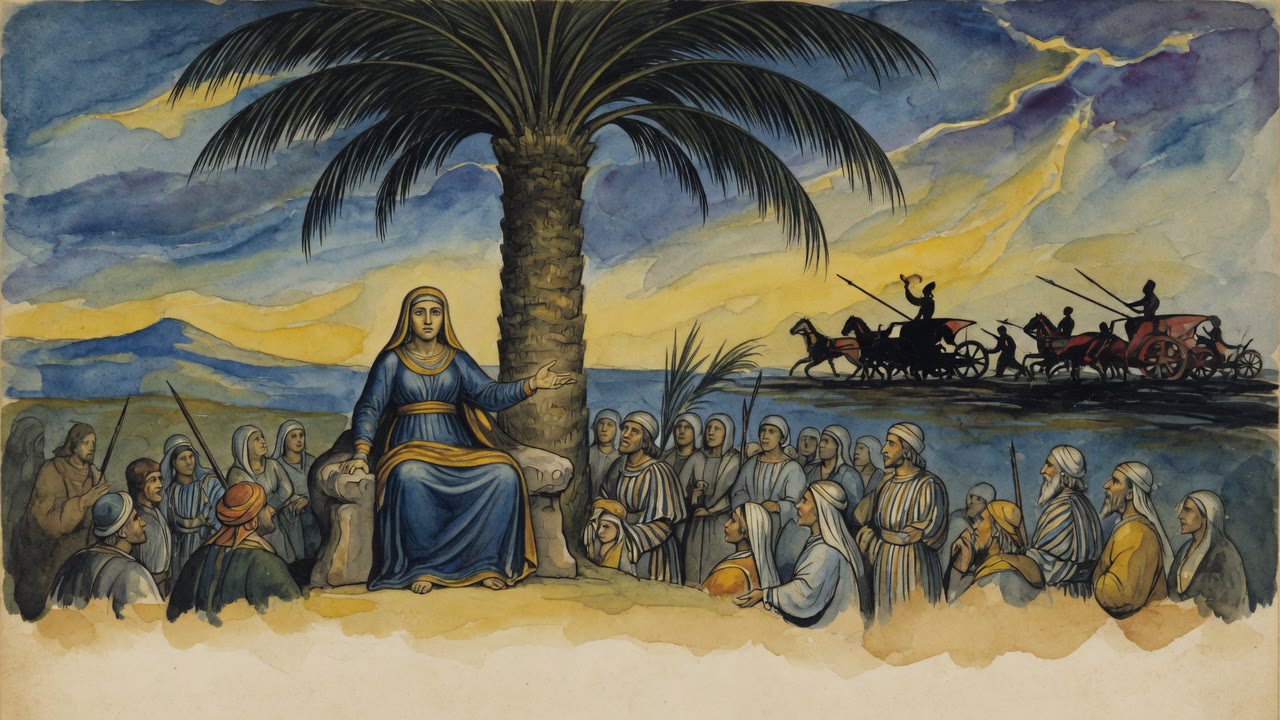
God told the angels to lock the heavenly gates. Not because Moses's prayers were unworthy but because they were too powerful to be allowed to succeed. If even one of those five hundred and fifteen prayers had passed through, the decree would have been reversed, and Moses would have crossed the Jordan. God sealed the channels to protect His own decision. Moses prayed against a closed door for the last season of his life, and the door held, and he died on the mountain having seen the land and not entered it. Deborah would fight her wars there. David would build his city there. Moses had seen it from the peak in the east, and that seeing was what heaven had decided to allow.
← All myths