5 min read

Nahshon Won the First Day by Walking Into the Sea

Tribal princes raced to dedicate the Mishkan, Nahshon of Judah went first because he had plunged into the Reed Sea up to his nostrils.

Curated by Arthur · Told by Maggid ·
Table of Contents
  1. Twelve Princes, One First Slot
  2. Water Up to the Nostrils
  3. Names That Carry Old Sins and Old Stones
  4. Judah First, Not by Accident
  5. The First Step Is the Offering
Nahshon Won the First Day by Walking Into the Sea Click for full size

Twelve Princes, One First Slot

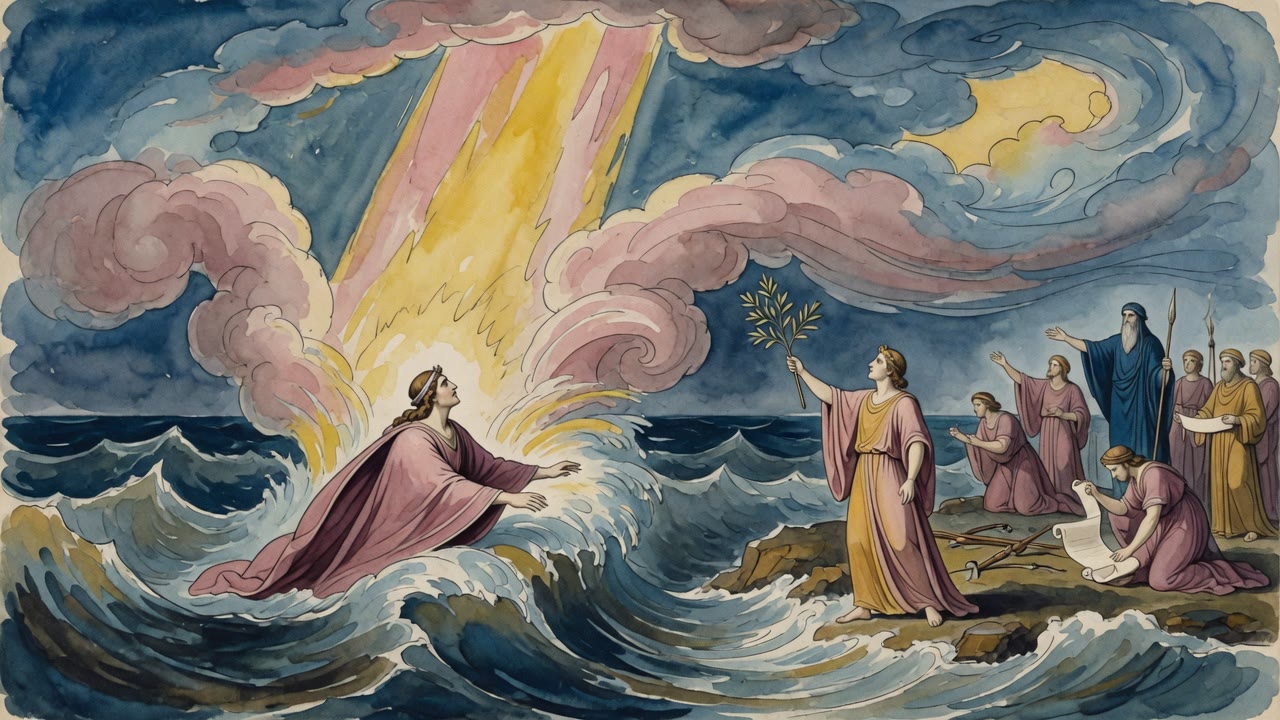
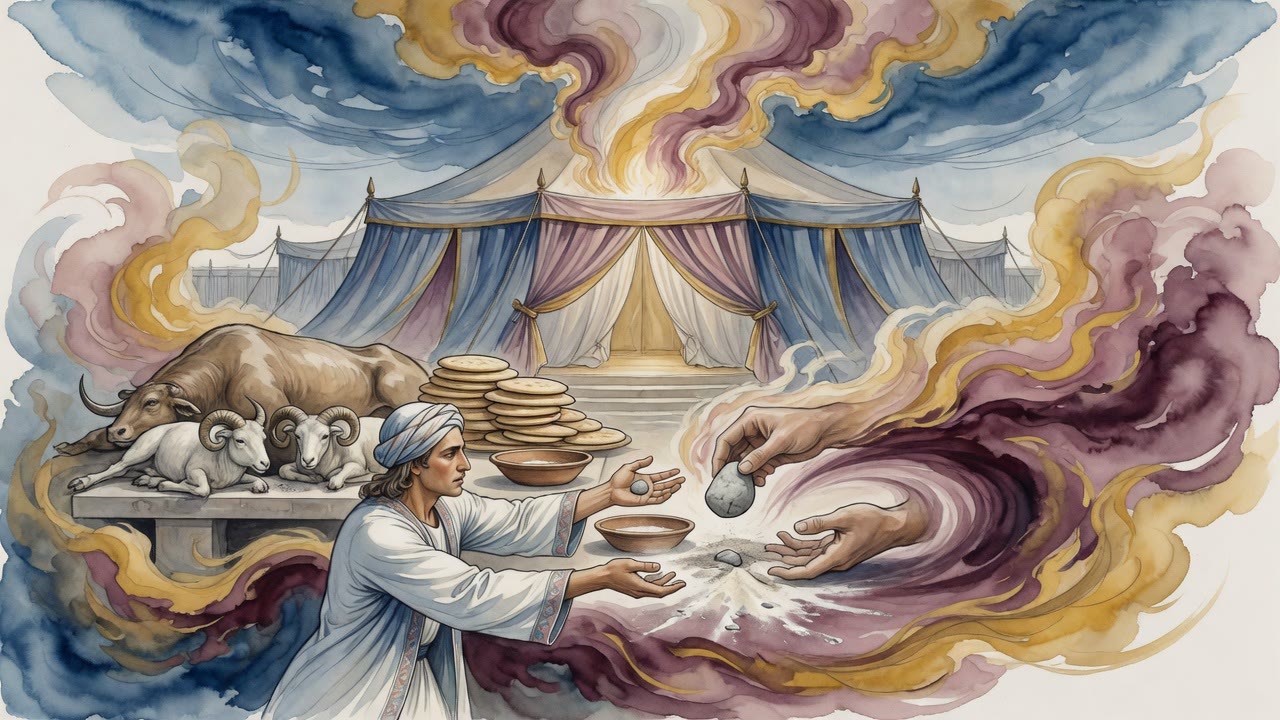
When the Mishkan (the portable sanctuary Israel carried through the wilderness) stood ready, the princes of the tribes were not content to supply wagons for transport. They wanted the first day of dedicatory offerings. The air was thick with rank and devotion. Silver and animals waited. Pride waited too. Moses hesitated. These gifts were unusual. Were they even permitted? He waited for a word. God told him to accept them.

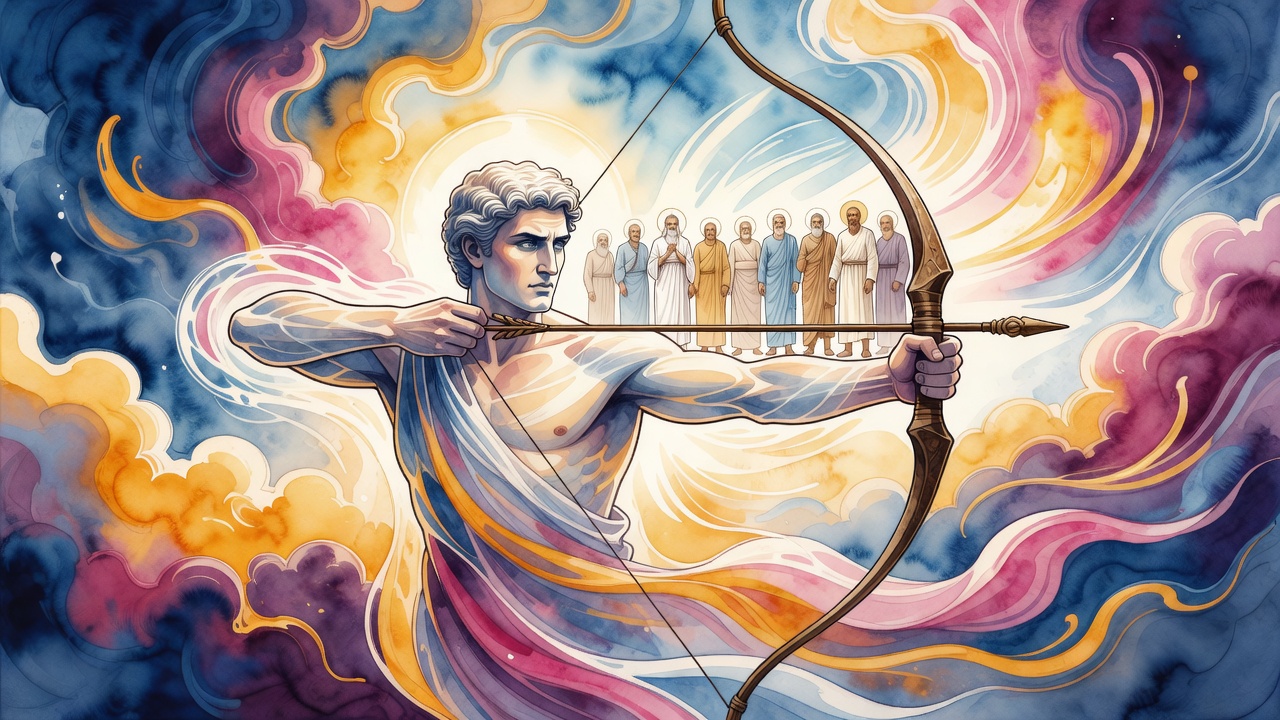
Even then the order was not plain. Should all twelve offer on one day, or each on his own day, and in what sequence? A wrong answer could turn worship into a quarrel of banners. Heaven answered. Each prince would have a day. The first day belonged to Nahshon, prince of Judah. The race for primacy ended not in a shout of wealth but in a memory older than the courtyard, a memory of water and lungs and a path that opened only after a body risked the close of the sea.

Water Up to the Nostrils

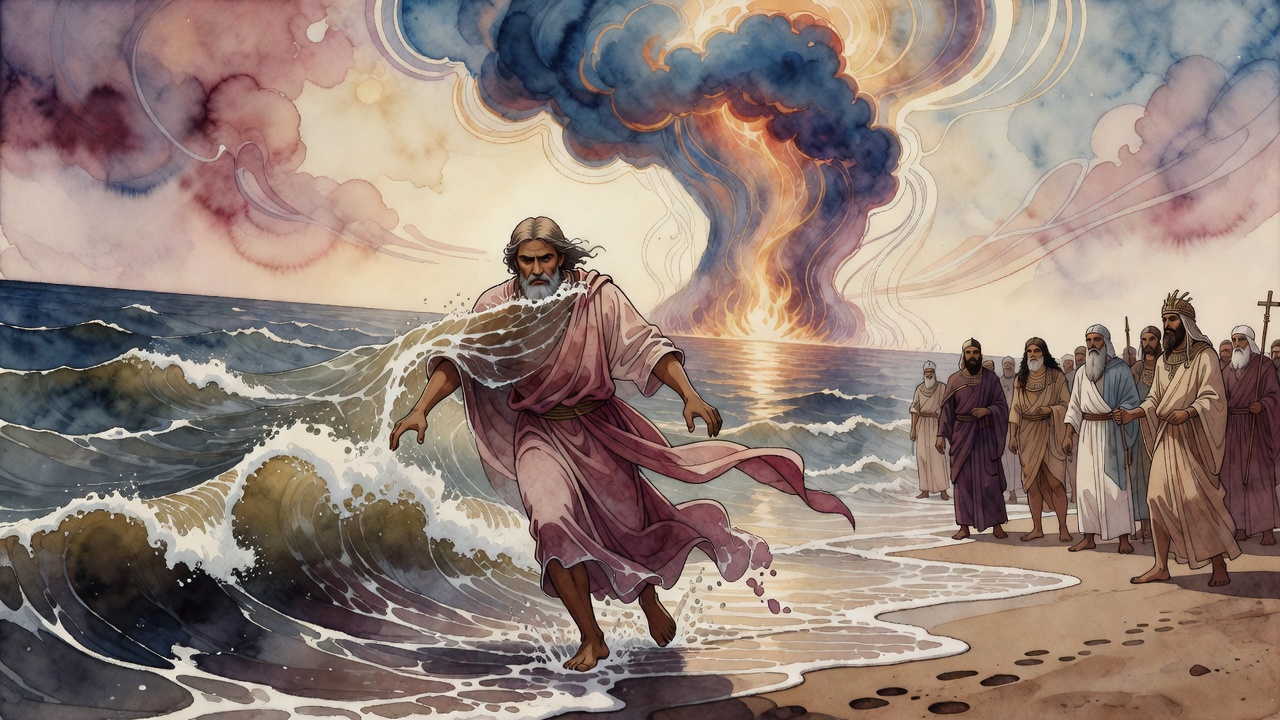
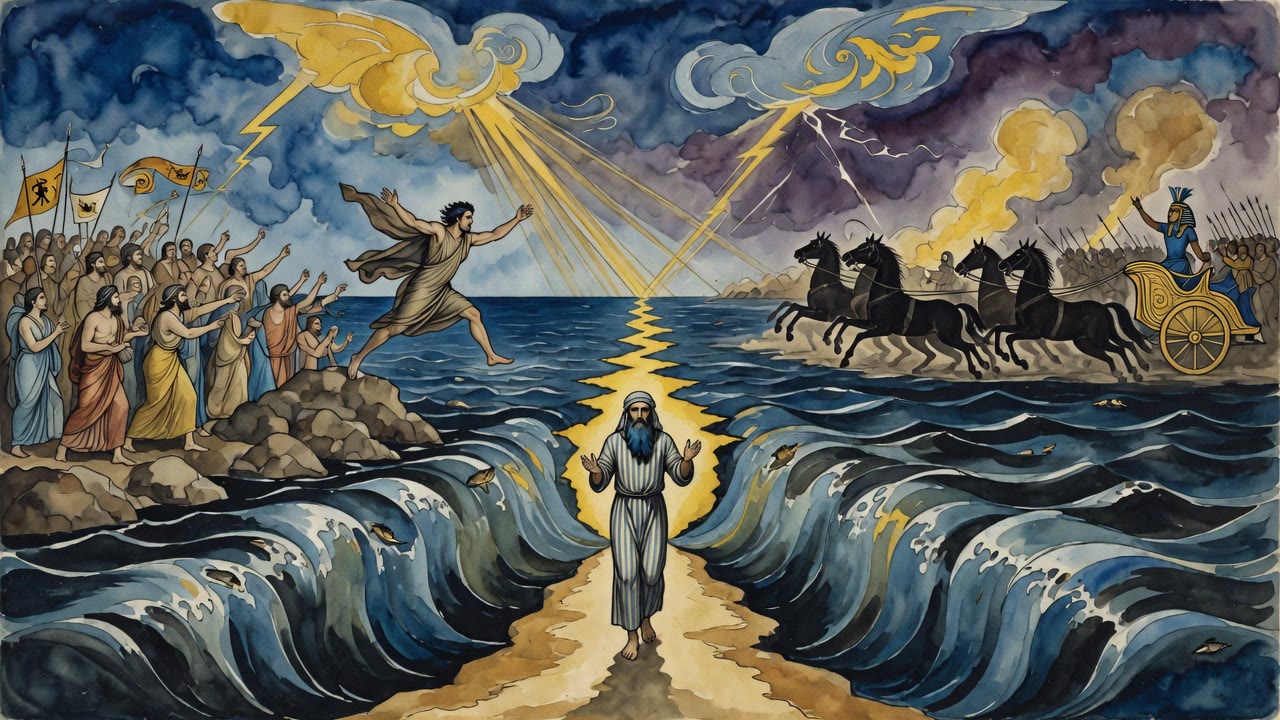
Why Nahshon? Because at the Reed Sea, when Egypt pressed and the water stood closed, the tribes argued about who should enter first. Fear made a committee. Men measured depth and death. Nahshon did not wait for the vote. He walked into the sea. Tradition says the water reached his nostrils before it split. Faith was not a speech. It was lungs almost full of salt and a step that continued anyway while other men still calculated angles of retreat and blamed one another for standing still.

That act earned him the first sacrifice at the Mishkan. The man who risked drowning so Israel could walk became the man who opened the dedication so Israel could worship. Leadership, in this telling, is the willingness to be first when first looks like death. The calendar of twelve days was sealed by a single body that refused to stay dry when dryness meant Egypt's chariots would finish the story.

Names That Carry Old Sins and Old Stones

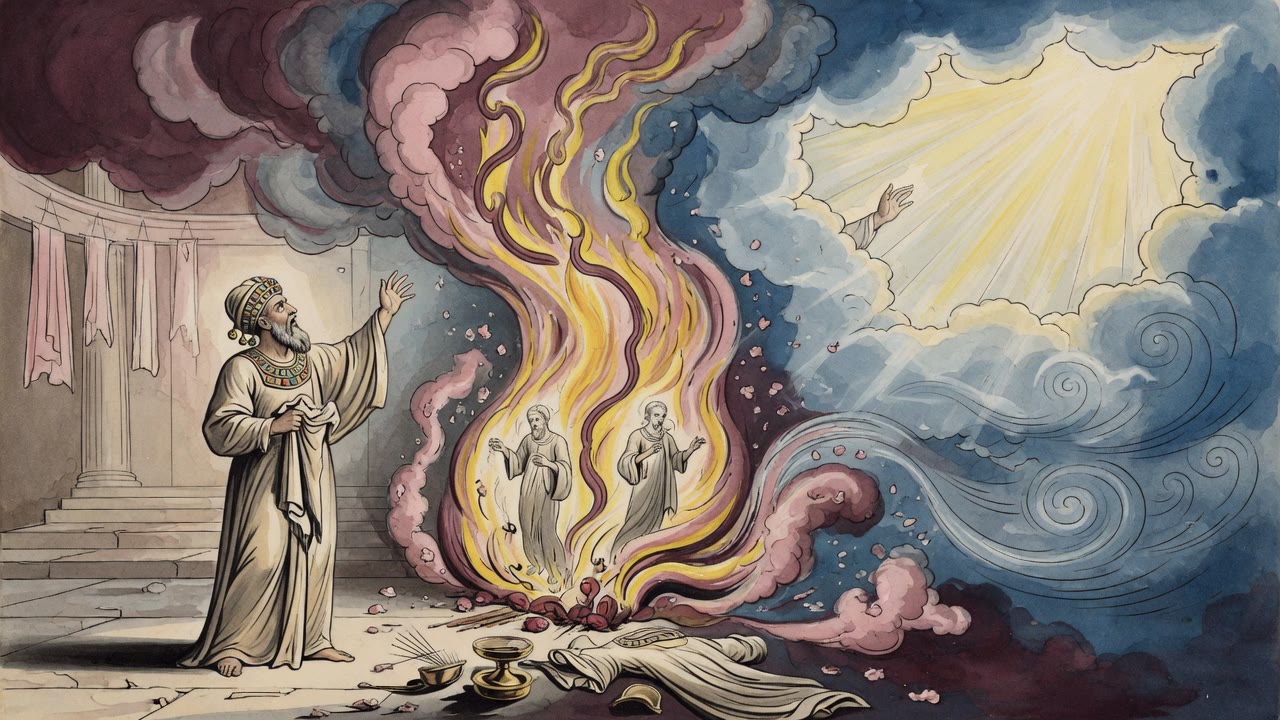
The princes' names themselves are packed history. Take Elizur of Reuben, "My God is a rock." The rock is the God who bore Reuben's sin after Reuben returned in repentance. Elizur's father Shedeur, "cast into the fire," recalls the trial around Tamar, when Judah confessed and kept her from the flames. Judah's honesty, the legends say, helped open the path for Reuben's teshuvah. Fire and rock, confession and forgiveness, sit inside the very names that later bring gifts to the altar.

So the dedication is not only new gold on new boards. It is ancestral repair walking forward under tribal titles. Nahshon's first day and Elizur's rock-name are two ways the past arrives in the courtyard: one as a remembered plunge, one as a name that will not forget who held the weight of sin and who spoke truth when a woman stood near the fire. The wagons and basins are surface. Under them walks Genesis unfinished and repaired.

Judah First, Not by Accident

Judah's prince goes first because Judah's courage at the sea and Judah's confession in Genesis already trained the tribe for public risk. Reuben's prince stands later in the sequence, but his name still announces a rock that forgives. The Mishkan dedication becomes a parade of character as much as a parade of silver basins and animals. Moses, who would not invent permission, becomes the servant of a schedule Heaven writes, not a master of ceremony inventing honors for friends.

The princes who wanted glory receive a glory measured by old deeds. Nahshon's nostrils full of water outrank any claim of wagon count or polished speech. Sequence is memory made into law. The first fire on the new altar belongs to the tribe that already proved it could step into chaos first, while other banners still argued on the shore.

The First Step Is the Offering

Before a bull burns on day one, a man has already offered himself to the sea. The Mishkan's opening sacrifice is a receipt for that earlier gift. The other princes follow on their days, each a banner of a different story, but the calendar is sealed by the one who walked when walking was drowning. Their gifts are accepted. Their order is not theirs to invent. Heaven keeps the ledger of who risked first.

The drama of the dedication is the drama of sequence. Who goes first is never only etiquette. It is memory made into schedule. Nahshon won the first day the moment the water closed over his mouth and he still believed the path would open. The altar only made the victory visible in smoke, and the twelve days that followed marched under that first wet courage, each prince's fire a footnote to a plunge no silver basin could buy.


← All myths
From the tradition

Sources

2 sources

The texts behind this telling. Some cards carry a translation of the source; others are our own retelling of it, and each card says which. Every card links out to the original.

Legends of the Jews 3:89Legends of the Jews

Retold in our words. Read the original at the link below.The Legends of the Jews by Louis Ginzberg (1909) · Public Domain

The princes of the tribes of Israel certainly felt that way when it came time to dedicate the Mishkan (Tabernacle).

In Ginzberg's retelling in, Legends of the Jews, these tribal leaders weren’t satisfied with simply providing the wagons needed to transport the sacred sanctuary. They yearned to be the first to present their offerings on the momentous day of dedication. Imagine the scene: the air thick with anticipation, the newly constructed Tabernacle gleaming in the desert sun, and these powerful men eager to demonstrate their devotion.

Moses, ever cautious and mindful of God’s will, hesitated. These offerings were, well, different. Not the usual fare. Were they even permissible? He wasn't sure. It’s evidence of Moses' humility that he constantly sought divine guidance, even when faced with seemingly straightforward situations. And God, as always, responded, instructing Moses to accept the princes' dedicatory offerings.

Even then, Moses still wrestled with the details. Should all twelve princes offer their sacrifices on the same day? Or should each have their own special day? And if so, what order should they follow? Imagine the logistical challenge! The Talmudic Sages grappled with such questions constantly.

God, in His infinite wisdom, resolved the dilemma. Each prince would indeed sacrifice on a special day, and the honor of going first would belong to Nahshon, the prince of Judah.

Why Nahshon? What made him so special?

His reward, we're told, stemmed from an act of incredible courage and unwavering faith during the harrowing crossing of the Red Sea. Remember that moment? The Israelites trapped between the pursuing Egyptian army and the unforgiving sea. Panic reigned. The tribes began to argue amongst themselves, each debating who should be the first to enter the water. Fear can do that, can't it? Paralyze us.

But then, Nahshon, without hesitation, plunged into the sea. He acted with firm conviction that God would be with Israel in their hour of need. According to the Talmud (Sotah 37a), as quoted by Rashi, the water reached his nostrils before the sea parted. That's some serious faith! A leader demonstrating absolute trust in the face of impossible odds.

Nahshon's act wasn't just bravery; it was a demonstration of profound emunah (faith) and a willingness to put his life on the line for the sake of his people and his belief in God's promise. That act, and that faith, earned him the privilege of leading the way in the Tabernacle dedication.

So, what does Nahshon's story tell us? Perhaps it's that true leadership isn’t about titles or positions, but about courage, faith, and a willingness to be the first to step into the unknown, trusting that even in the deepest waters, we are not alone. And maybe, just maybe, it suggests that sometimes, the greatest rewards come to those who dare to be first in acts of faith and courage.

Full source
Legends of the Jews 4:3Legends of the Jews

Retold in our words. Read the original at the link below.The Legends of the Jews by Louis Ginzberg (1909) · Public Domain

Consider the twelve princes of the tribes of Israel. Their names weren't just randomly chosen, oh no. They were, according to tradition, packed with meaning, little historical markers pointing back to the story of each tribe.

His name was Elizur. Elizur. Doesn't exactly scream "history," does it? Elizur means "My God is a rock." Interesting. But why a rock?

Well, it all goes back to Reuben himself, Jacob's eldest son. The ancestor of this entire tribe. Reuben, as we know, wasn't perfect. He. stumbled. He sinned. (Genesis 35:22)

Here's the beautiful part of the story: He repented. He turned back to God. And God, in turn, forgave him.

So, "My God is a rock. God, solid and unwavering, like a rock bearing the weight of a house. In this case, bearing the weight of Reuben's sin, after Reuben did teshuvah (repentance), repentance. It’s evidence of God's enduring forgiveness.

But the story doesn't end there. There's another layer. Elizur's father's name was Shedeur. Shedeur means "cast into the fire." Now where does fire enter the picture?

This takes us to another figure: Judah. Judah, another son of Jacob. Remember the story of Tamar, his daughter-in-law? She was wrongly accused and sentenced to be burned alive. (Genesis 38:24) But Judah, in a moment of profound honesty, confessed his own sin, preventing her fiery fate.

According to this tradition, Judah's act of confession and saving Tamar from being "cast into the fire" was the catalyst that inspired Reuben to do teshuvah. It was Judah's example of honesty and redemption that paved the way for Reuben's own atonement.

So, Shedeur, "cast into the fire," becomes a symbol of the trial and tribulation that ultimately led to Reuben's repentance. Elizur, son of Shedeur, "My God is a rock," then signifies the forgiveness that followed.

It's all interconnected, you see? The names, the stories, the sins, and the acts of repentance. They weave together to form a tradition of history and meaning. As Ginzberg retells this in Legends of the Jews, it becomes clear that every element, even a name, can hold a piece of the bigger picture.

What does it all mean? Perhaps it's a reminder that even in our stumbles, even when we fall, there's always the possibility of repentance, of forgiveness, of finding solid ground once more. And maybe, just maybe, our names, too, hold stories waiting to be discovered.

Full source