Ancestral Strength Bent the Bronze Bow in David's Hands
He loosed the arrow and the camp heard a king who could shoot. David heard a ledger of names standing behind the shot.
Table of Contents
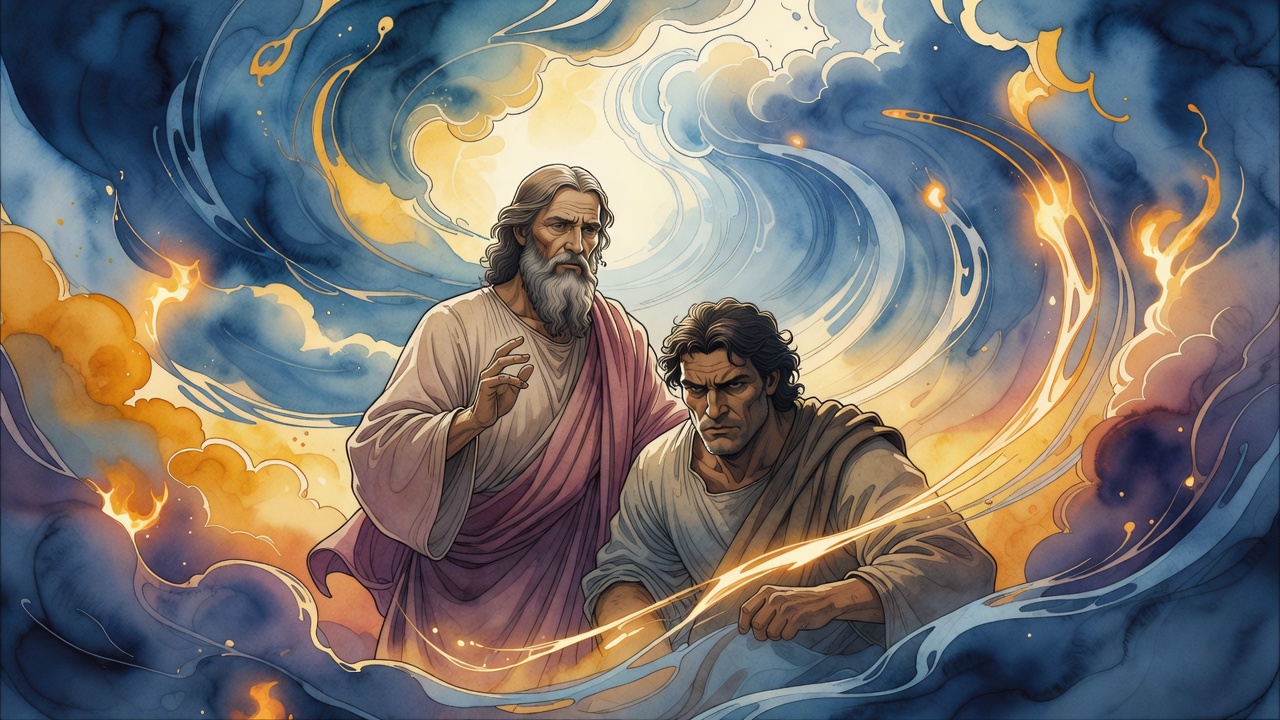
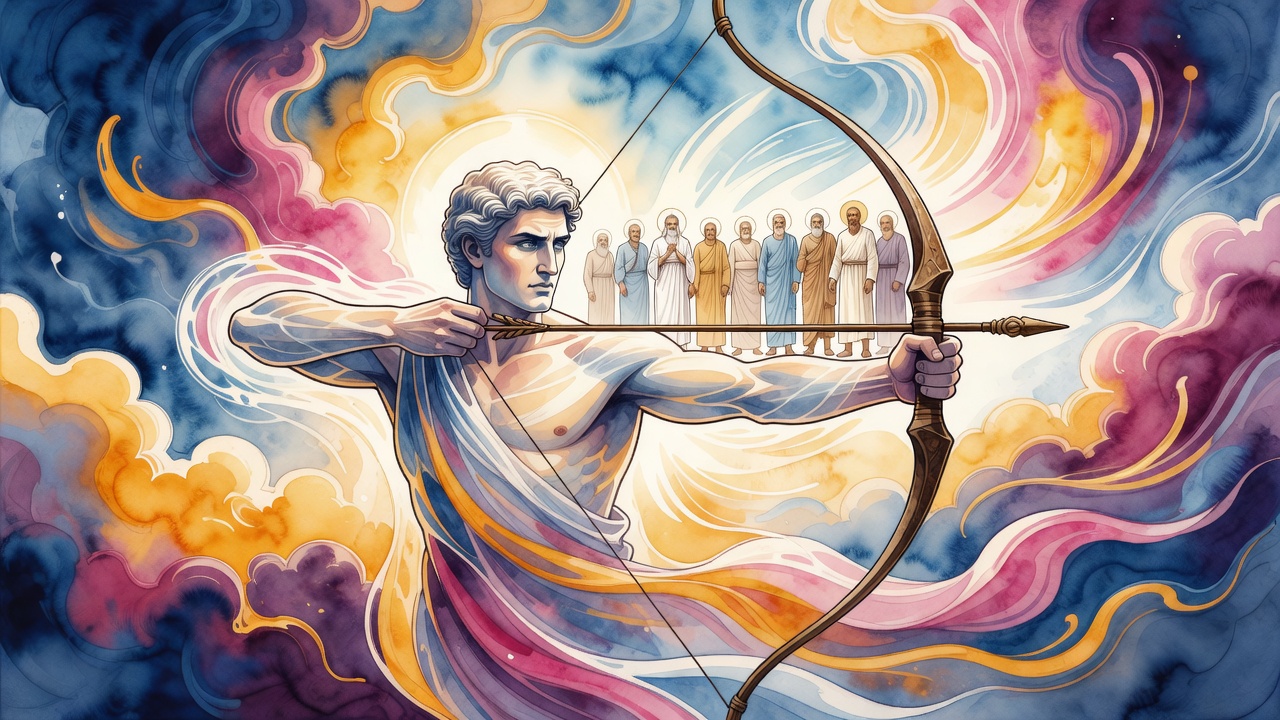
David set the bronze against his palm and pulled. The metal groaned like a stubborn animal. His shoulders burned. For a breath he thought the bow would win, that the king of Israel would stand in the field with a weapon he could not string.
 Click for full size
Then something older than his own training rose through his arms. Not a ghost. Not a vision. A pressure of people who had already stepped first into water and fire. The string came back. The bronze bent. He loosed, and the arrow found the mark as if the bow had always belonged to him.
He whispered the line he would later set into song. He teaches my hands to make war, so that a bow of bronze is bent by my arms (Psalm 18:35). The camp heard only a king who could shoot. David heard a ledger of names standing behind the shot.
The Harder Pull
That night he sat with the weapon across his knees and turned the verse over. One reading was plain. Practice. Muscle. Hours on the range until bronze felt like yew. A soldier's answer for a soldier's line.
Another reading cut deeper. It is easier to bend a bow of bronze than to bend a man's own arms against himself. The real war is the pull of impulse, the hand that wants the wrong cup, the wrong glance, the wrong throne. David knew both wars. He had killed giants and still lost private fights in palace corridors.
He pressed his thumb into the bow's curve until it hurt. Outer strength can be trained. Inner strength has to be inherited and chosen at once, day after day, when no one is watching.
Nahshon Inside the Draw
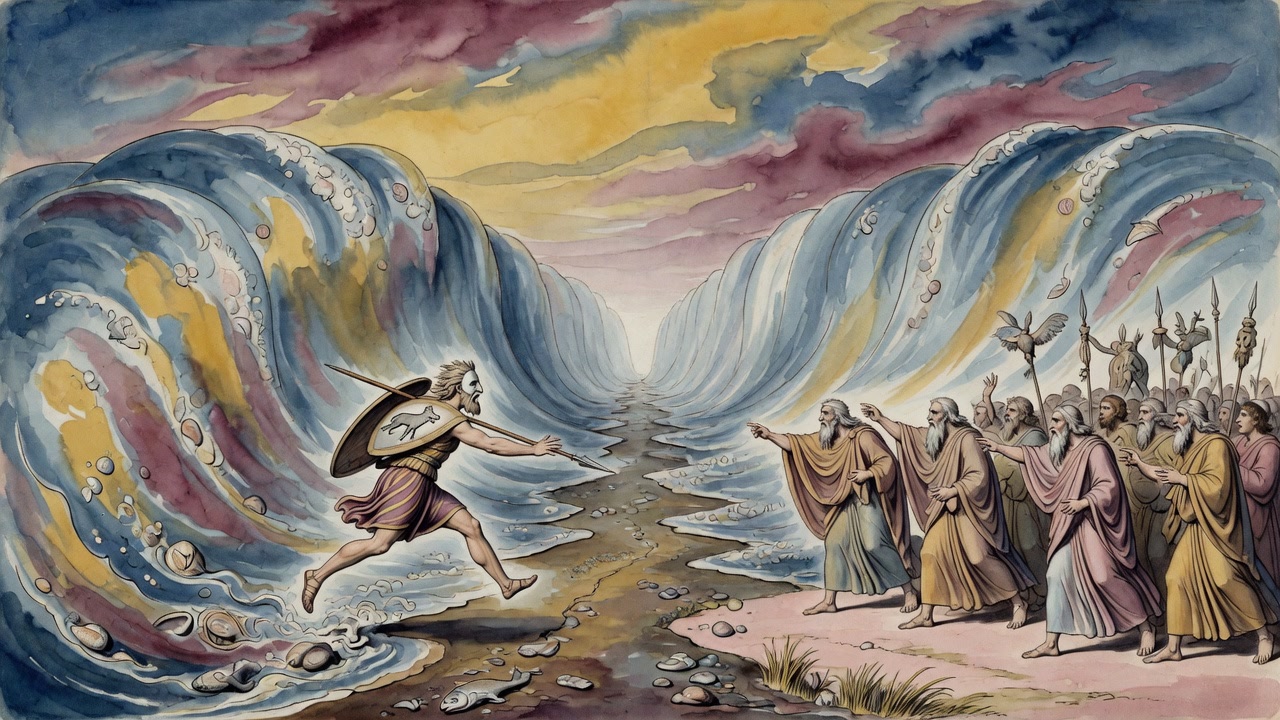
The bronze had a family in it. Nahshon of Judah had stepped into the sea before the water split. A prince of Judah walked into foam while others argued. The water held. The people followed. David came from that house. Nahshon was an ancestor in the draw. When David bent the bow, he bent a family habit of going first.
He thought of the Red Sea stories the women still sang. That courage does not die with the man. It travels in the blood and in the telling until a shepherd-king needs it against Philistines and against his own heart.
David set the bow aside. He was not only himself. He was a late branch on a tree that had already survived Egypt.
Names That Enter First
In the hill country of Ramathaim-Zophim, long before David's crown, Scripture opened a book with three quiet words. There was a certain man. The phrase sat as if thirty-one righteous stood behind it. The man's place held two heights, one for Samuel who would be born there, one for David who would rise from the same ridges.
Wicked men are often described first and named second. Nabal. Goliath. Sheba son of Bichri. The deed stains the page, then the name is hung on it. The righteous arrive the other way. His name was Elkanah. His name was Jesse. His name was Boaz. His name was Mordecai. The name walks in first, like a crown already fitted, and the deeds follow as proof.
David knew he lived inside that order. People said his name before they listed his wars. That order was a gift and a burden. A name spoken first demands a life that can carry it.
A Court of Mixed Births
The house of David was never a clean ledger. Tamar was born before her mother entered the covenant fully. Lineage in Israel runs through the mother. That fact rewrote how the tragedy with Amnon would be weighed, though it never softened the wound in the palace.
Four hundred young squires rode for David, sons of women taken in war, hair worn in foreign fashion, chariots flashing gold. The king who bent bronze also ruled a court of mixed births and hard stories. Strength from Nahshon did not mean a clean plot. It meant the line kept walking through shame and courage both.
On campaign the men joked that the king's arms were bronze themselves. David did not correct them. If they believed the strength was only muscle, they would forget the sea and the first man who walked into it. He made the young archers learn Nahshon's story before he let them touch the royal bows.
In quieter rooms he practiced a different bend. When anger rose after a slight in court, he forced his hands open on the table until the fingers stopped shaking. When desire pointed toward a rooftop he should not have seen, he failed, and later the failure taught him how much harder that bow was than any Philistine bronze.
Jesse's house had been small. Ramah's ridges remembered Samuel's horn. Boaz's field had held Ruth's gleaning. Each name-first story fed the draw. David, stringing the bow at dawn, was the latest sentence in a paragraph that began before him and would outlast his own wars. His hands still needed teaching.
← All myths