Nahshon Plunged Into the Sea Before It Split
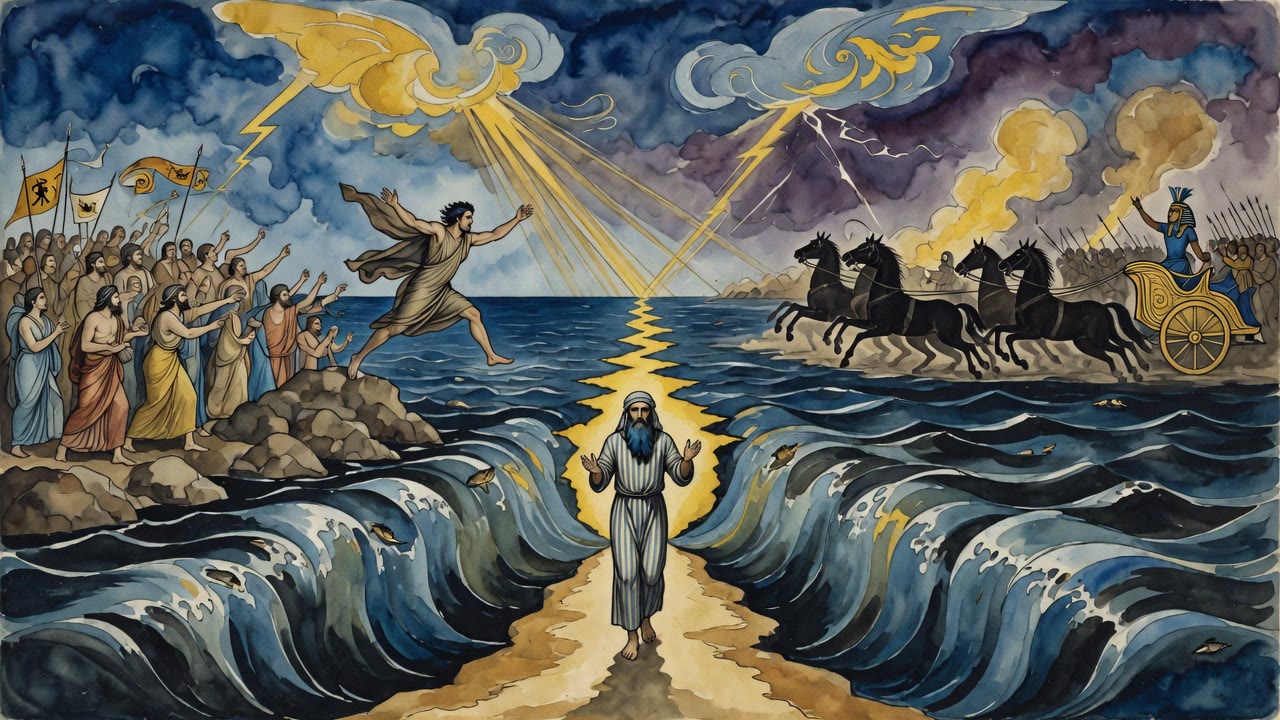
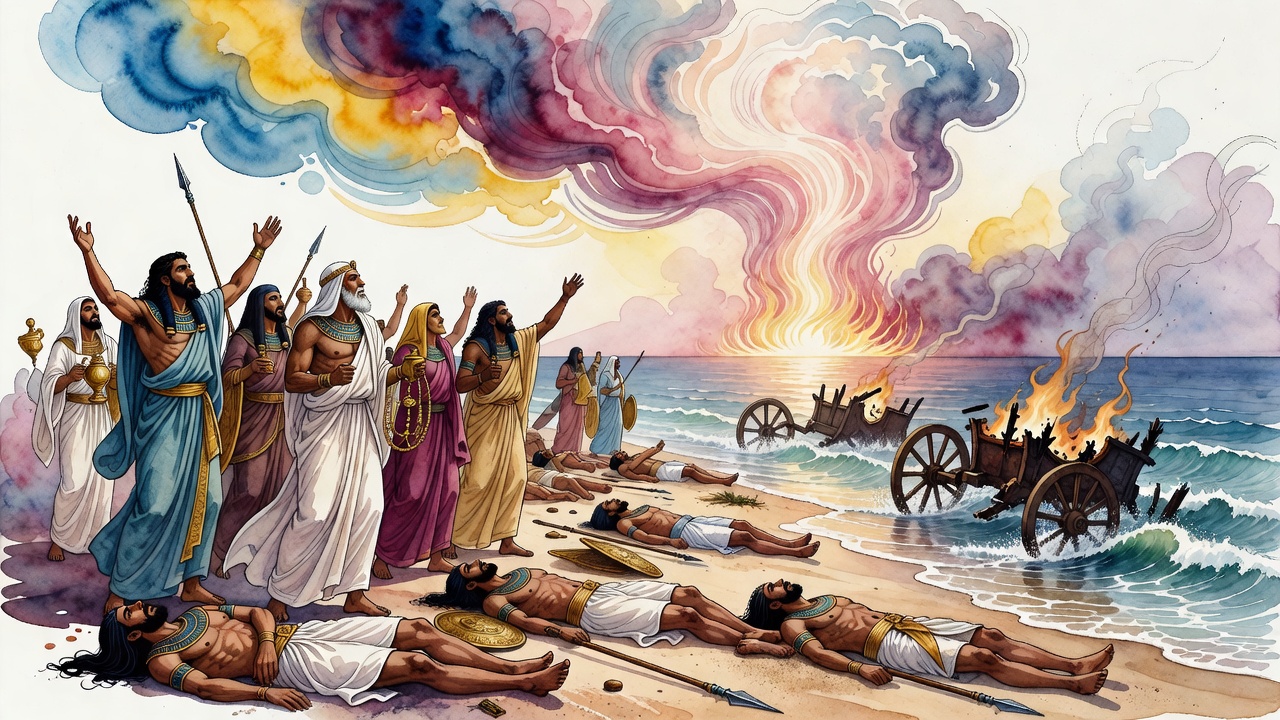
Chariots behind them, deep water in front, and nobody moving. Then Judah's prince walked in alone until the water came up over his mouth.
Table of Contents
 Click for full size
Water to His Nose
Egypt was behind them and the sea was in front of them and nobody was moving.
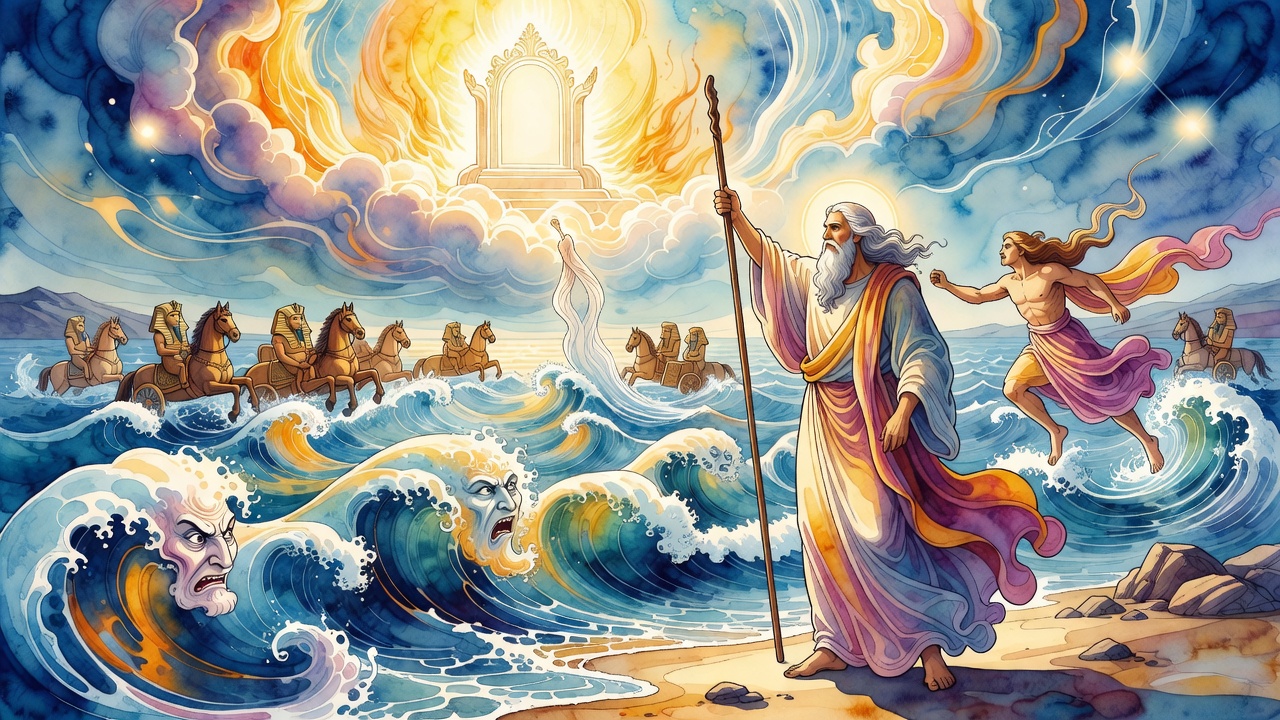
Chariots carry a long way across flat ground before anyone sees them. The camp at the water's edge had already done the arithmetic: six hundred chariots at their backs, deep water at their faces, and a promise that had not yet turned into anything a person could walk on. Men argued about whether it was better to drown than to be dragged back. Moses had his arm out over the water. The water did nothing.
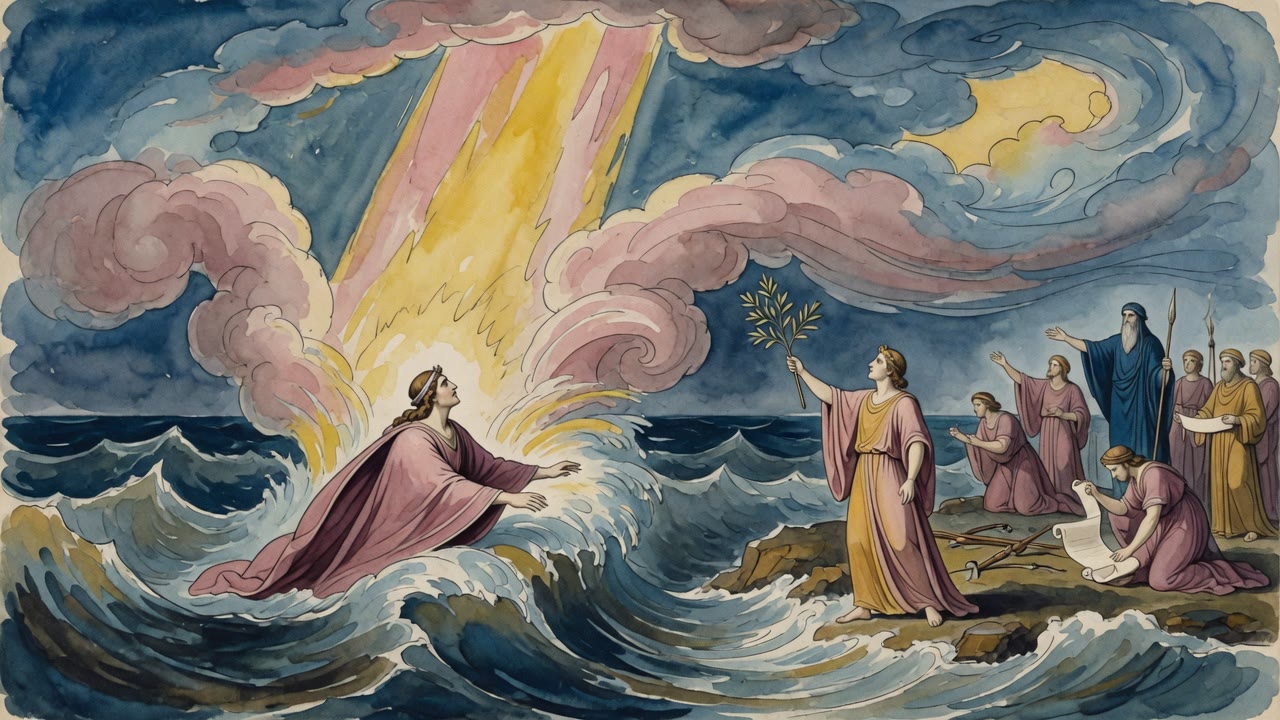
Nahshon of the tribe of Judah went in.
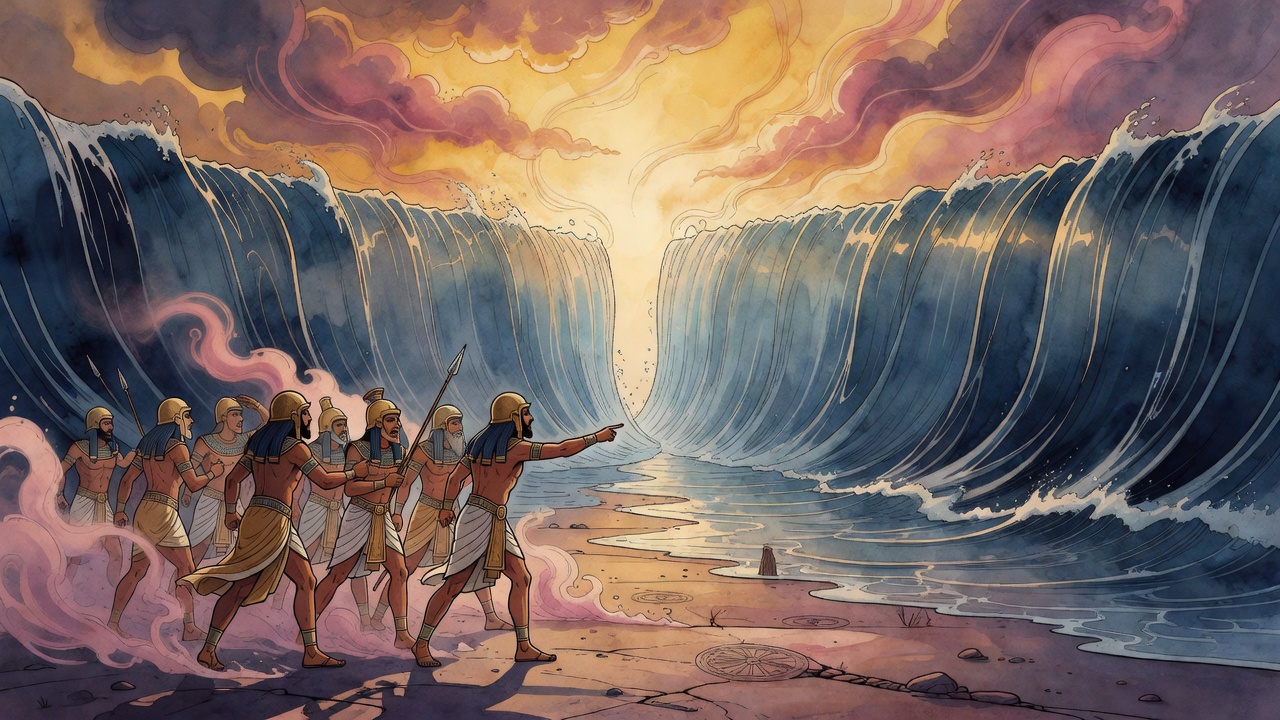
Not to test the depth. He walked in the way a man walks into a room, and he kept walking. The water took his knees. It took his waist. It took his chest, and the people on the shore were shouting at him by then, and he did not turn around. It came up over his mouth. He tilted his head back and kept going, and when it reached his nose the sea split.
He was the son of Amminadab, whose name means prince of My people, and Nahshon's own name means wave of the sea. He got the princedom of Judah for those thirty seconds in the water. Not for his lineage. For the walking.
The Spear at the Tent Door
Rank in that camp was never decoration. It was a history a man had to carry in public, and the tribe of Simeon got the worst of it.
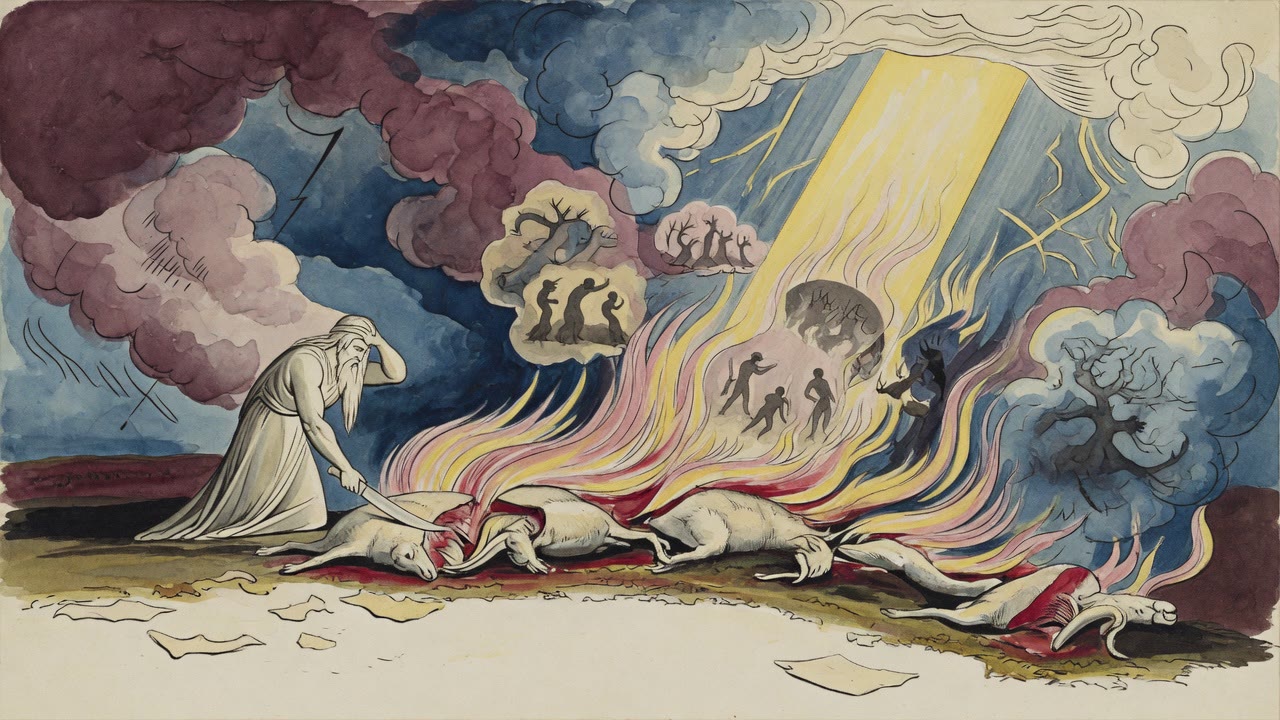
Israel was camped at Shittim when the trouble started, and the whole assembly was standing at the door of the Tent weeping about it when Zimri, a chief of a father's house in Simeon, walked past all of them with a Midianite woman and took her into his tent in front of the weeping and in front of Moses. Phinehas stood up out of the congregation, took a spear in his hand, followed them in, and ran them both through.
The plague stopped there. It had already killed twenty four thousand.
Every tribe knew that number. Simeon knew it best.
A Name Like a Quiet Grave Marker
So when the tribes were counted and each one sent forward the man who would stand for it, Simeon sent Shelumiel, and Shelumiel's name means my God is peace.
Read next to the count of the dead it sounds almost cruel. It is not. Peace was not a description of what Simeon had done. It was a statement of what had been done with Simeon afterward. Twenty four thousand graves, a tribe that everyone else could point at, and a prince walking into the muster carrying a name that says the matter was settled from the other side.
Beside him stood Nethanel for Issachar, whose name means God gave, because that tribe gave itself to the Torah. He is called the son of Zuar, which means burden, and the burden was literal: when the other tribes had a lawsuit they could not untangle, they brought it to Issachar and stood in line outside a tent while men who had spent their lives on the text argued it out.
One man remembered for going into water. One for a peace nobody thought he deserved. One for the weight of other people's quarrels.
The Count Moses Would Not Take Alone
Later there was a second census, this one of the Levites, and the princes had no business at it.
God had put the heads of the tribes at Moses' side for the count of all Israel, one man for each ancestral house, by name. For the sons of Kehat, who carried the ark and the table and the lampstand on their shoulders, no such instruction came. Moses could have counted them with Aaron and sent the princes back to their tents.
He brought them anyway. They were with me for the census of all Israel, he reasoned. I will not cause them anguish.
The proof is in what the verse does afterward. After the first census the text names Moses and Aaron and the princes of Israel as the ones who counted. After the Levites it names Moses and Aaron and stops. The princes were standing there the whole time, credited by nobody, because heaven had not asked for them and Moses had.
What the Camp Learned to Carry
These are not decorations on a roll call. A man who had gone into the sea up to his nostrils led the march. A man from the tribe with twenty four thousand fresh graves stood in the same line and answered to a name that said the quarrel was over. A man whose people spent their days judging other people's lawsuits stood next to both of them.
And the one who arranged them knew that a leader left off a list will remember it longer than he remembers the honor, so he took men he did not need to a count that did not require them.
The sea closed on Egypt behind Judah's prince and has not reopened. The graves at Shittim are still out there under the sand. And somewhere in the record of a Levite headcount there are twelve men standing in a row for no administrative reason at all.
← All myths