Benjamin and Nahshon Race Into the Unparted Sea
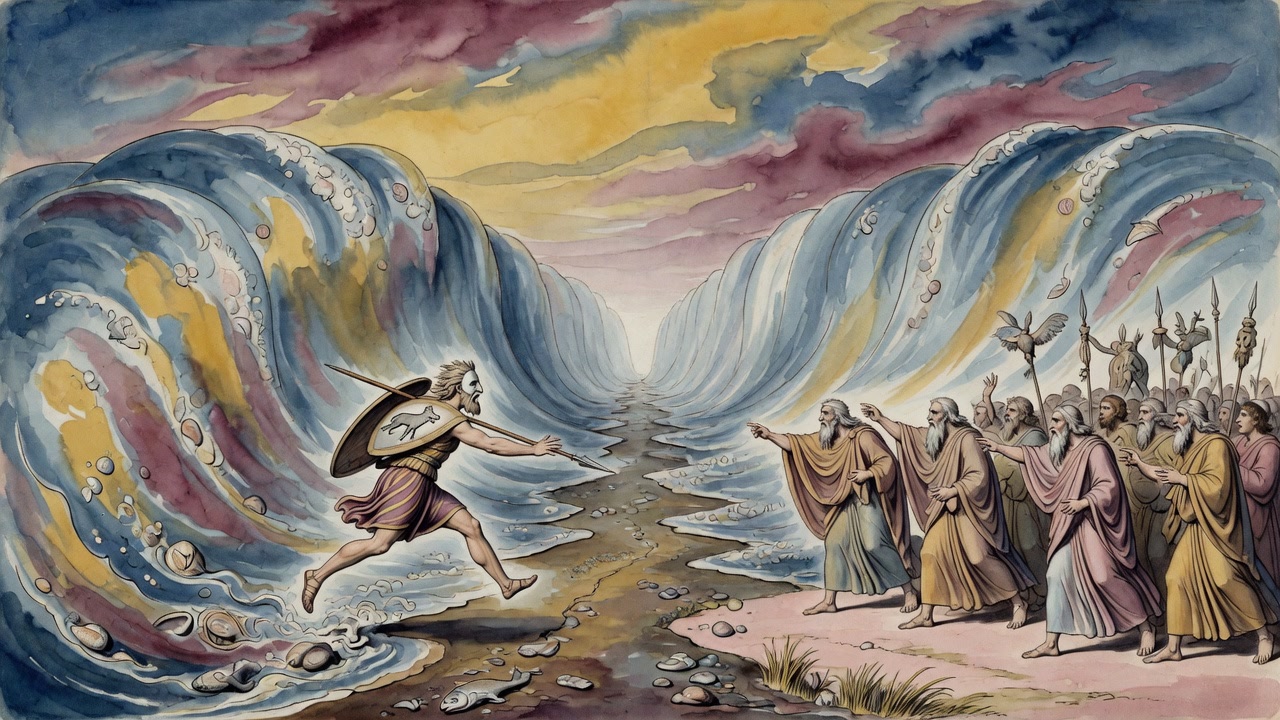
The sea still looked like a wall. Judah's princes had stones in their fists. One man from Judah walked until salt sat on his mouth.
Table of Contents
 Click for full size
The Sea Would Not Move
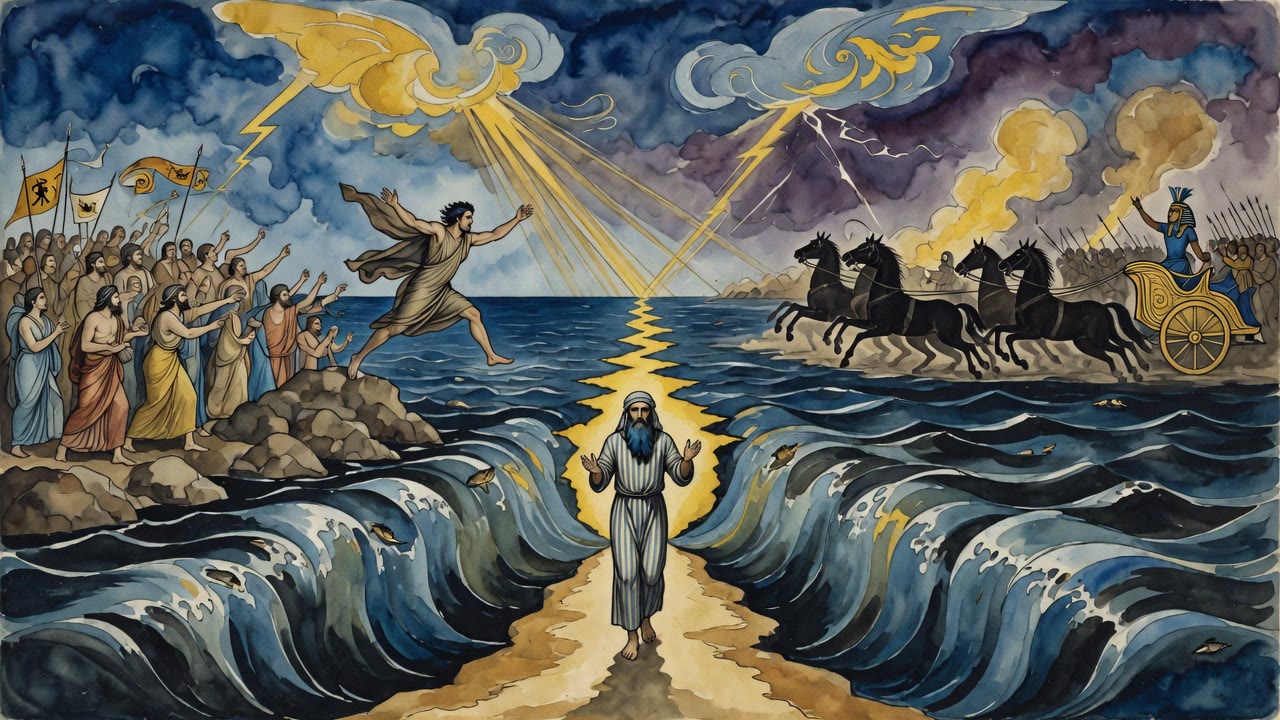
The water stood black and flat. Behind the camp the dust of Egypt rose like a wall, and chariot wheels cut the air into a scream. Moses raised his staff. The sea did not move.
Men shoved. Women clutched children against their ribs. The tribes began to shout each other down for the honor of going first into a place that still looked like death. Judah's princes pushed forward. Benjamin's men pushed harder. Someone raised a stone. Another answered with a stone of his own.
A child asked if the sea was a door. No one answered him. The only door they could see was the one Egypt was about to kick in from behind.
Benjamin Hit the Water First
Benjamin stopped arguing and jumped. The whole tribe raced into the unparted sea while it was still water. Salt slammed their mouths. Current tore at their legs. They went in as if the promise were already solid under their feet.
The princes of Judah, mad to claim the first step, pelted them with stones. A Benjaminite went under and came up choking, still moving forward. Another held a brother by the collar so the current would not peel him back to shore. They did not wait for walls of water to stand like cliffs.
Heaven watched the leap and the stones. The leap would one day put the Temple in Benjamin's portion, where the Shechinah (שכינה), God's presence, would rest between his shoulders. The stones would one day put a crown on Judah, because even their violence was a hunger to go first into danger for God's people. The sea still had not parted. The staff still had not finished its work.
Nahshon Walked Until Salt Filled His Mouth
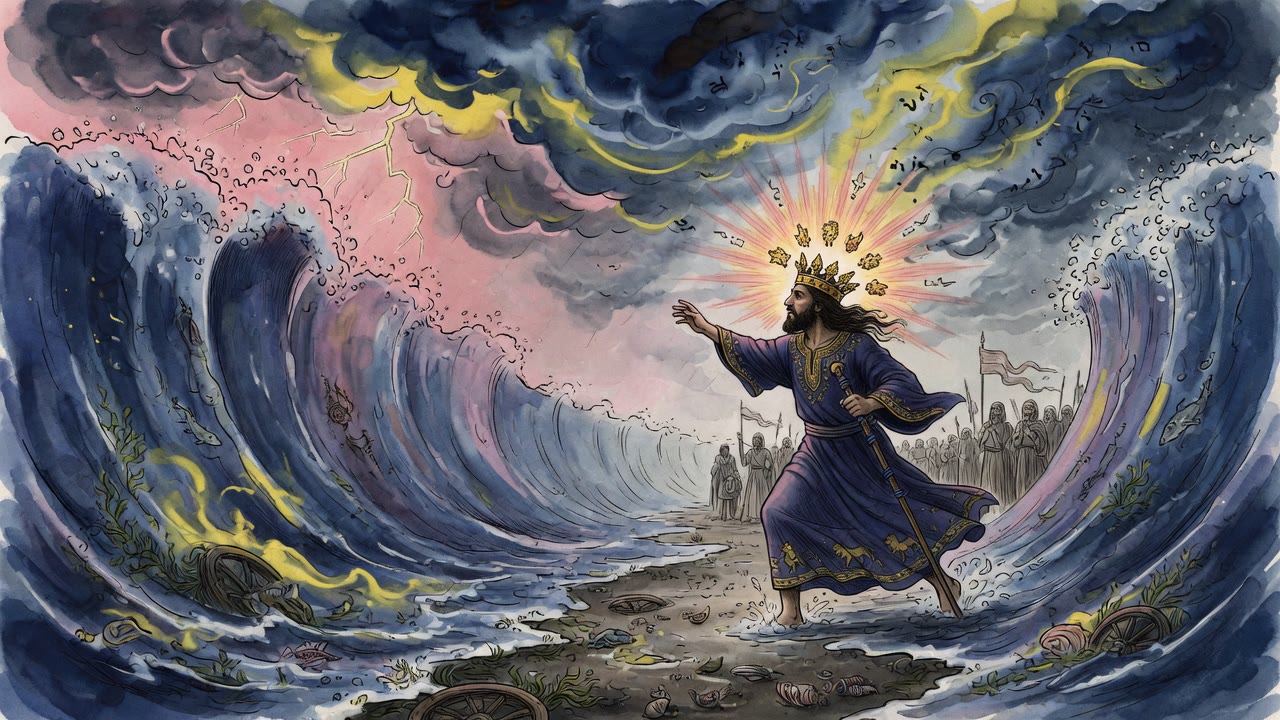
Nahshon son of Amminadab of Judah left the quarrel behind him. He did not throw a stone. He did not claim a speech. He walked into the water alone.
Ankle. Knee. Waist. Chest. The cold climbed him like a second army. Fish flashed past his calves. The bottom dropped. When the water reached his neck, the verse that later sounds like a psalm was already a prayer in his throat. "Save me, O God, for the waters have come up to my soul" (Psalm 69:2).
At that height of drowning, Heaven turned on Moses. "My beloved is going under, and you stand here making many prayers? Stretch out your hand. Split the sea."
The staff that had waited for a better moment moved because a body had already paid. Nahshon's mouth filled. Then the road opened under his feet.
Walls of water stood like frozen cliffs. Israel walked between deaths and lived. Children stared up at fish frozen mid-turn in the wall of the deep. The quarrel on the shore became a line of wet feet and silence.
Egypt Choked and Israel Drank
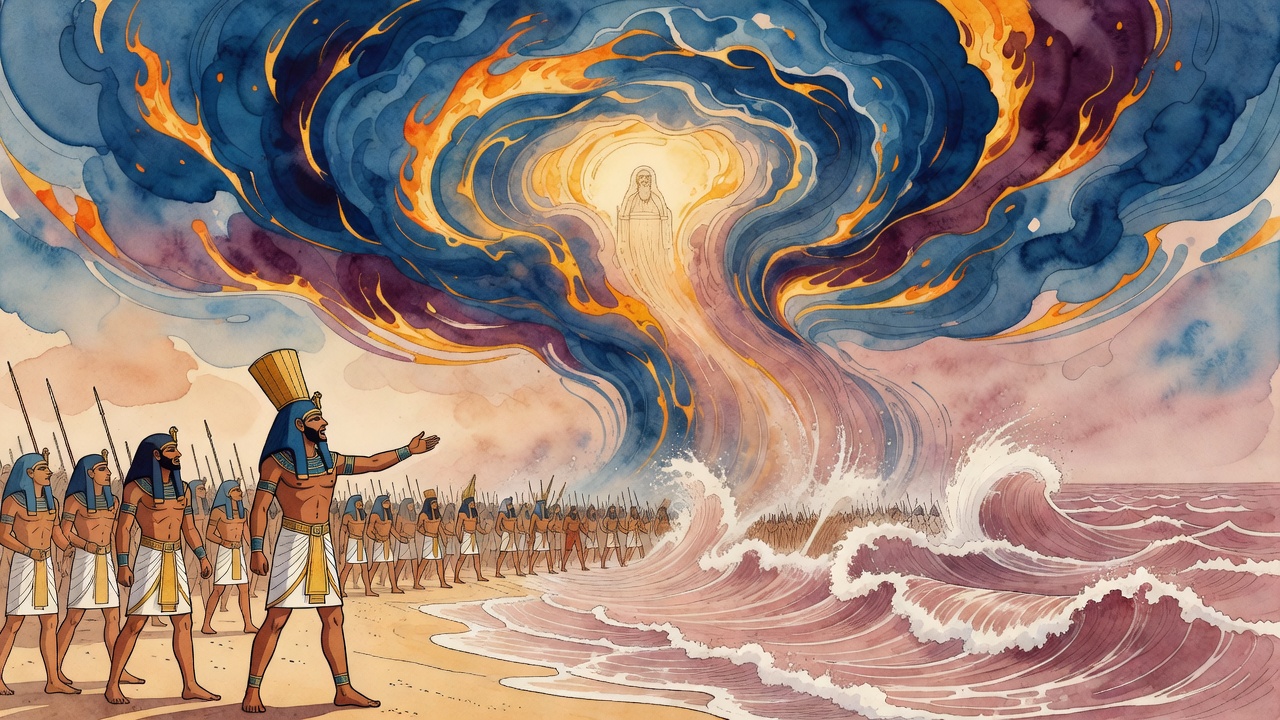
Egypt drove in after them. The same sea that had held still for Israel turned cunning against the army that once said, "Come, let us deal craftily" (Exodus 1:10). The craft they used on slaves became the craft of the deep against chariots.
To the Egyptians the water stank like a boiling pot. They choked on air that had turned against them. They fainted inside armor that could not float. They thrashed like wineskins sealed shut, neither breathing in nor breathing out. Wheels locked. Horses screamed and went under. Captains shouted orders that died in salt.
To Israel the same salt corridor smelled like every spice of the market. Inside the bitter sea they tasted sweet drinking water. They ate as they walked. A woman passed a cup to a child while, a spear's throw away through the wall of the deep, an Egyptian officer clawed at a chariot that would not rise.
The Far Shore Kept the Bruises
They feared the LORD. They believed in Him and in Moses His servant (Exodus 14:31). Before this hour their trust cracked every time water or meat ran short. On the far bank it hardened into something that could hold a nation, at least for the length of a night.
Benjamin's wet clothes dried on the sand. Nahshon's hair still dripped into his collar. Judah's princes lowered the stones they never needed. Behind them the sea closed over Egypt's boasts with a sound like a gate.
Night came to the far shore with a different kind of dark. No chariot dust. No shopkeeper's whip. Only the smell of salt and the memory of a neck-deep man who kept walking when walking looked like dying. Somewhere in the column a boy from Benjamin touched the bruise a Judahite stone had left on his shoulder and did not raise a hand in return. The Temple was still centuries away. The kingship was still a promise. The sea had already collected its fee in faith.
← All myths