5 min read

Pharaoh Boasted and Heaven Answered With a Breath

A tyrant lists what he will do to the king's son. God hears every word. At the sea a single breath of wind closes the water over his army and his boasts.

Curated by Arthur · Told by Maggid ·
Table of Contents
  1. The Bandit Behind the Palace
  2. You Blew, and the Water Covered Them
  3. Craft Returned as Water
  4. The Tense That Left a Gap
  5. Mighty Waters, Small Breath
Pharaoh Boasted and Heaven Answered With a Breath Click for full size

The Bandit Behind the Palace

Picture a desert bandit crouching behind a palace wall. He whispers the savage list of what he will do to the king's son if he ever catches him. Break him. Strip him. Make the court watch. The king hears every word through stone that is not as thick as the bandit hoped. Rage fills the throne room without a shout. The sentence comes out of the bandit's own mouth. Let it be done to you as you boasted.

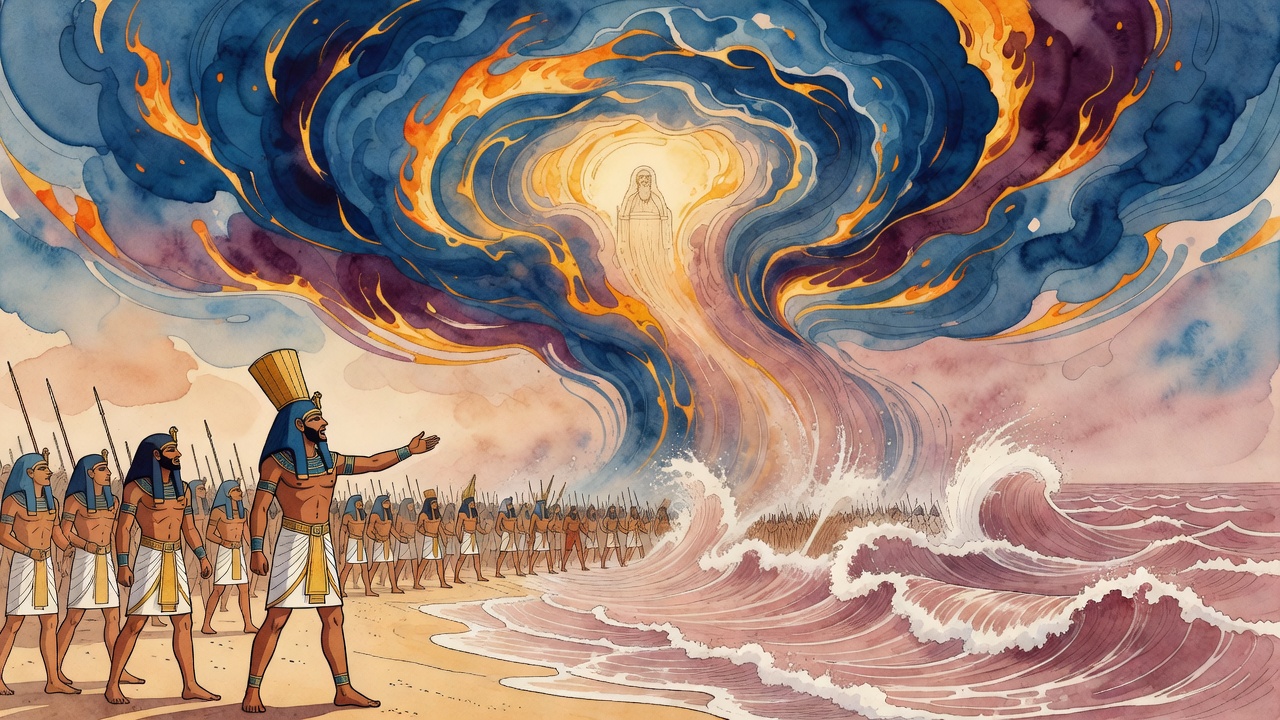
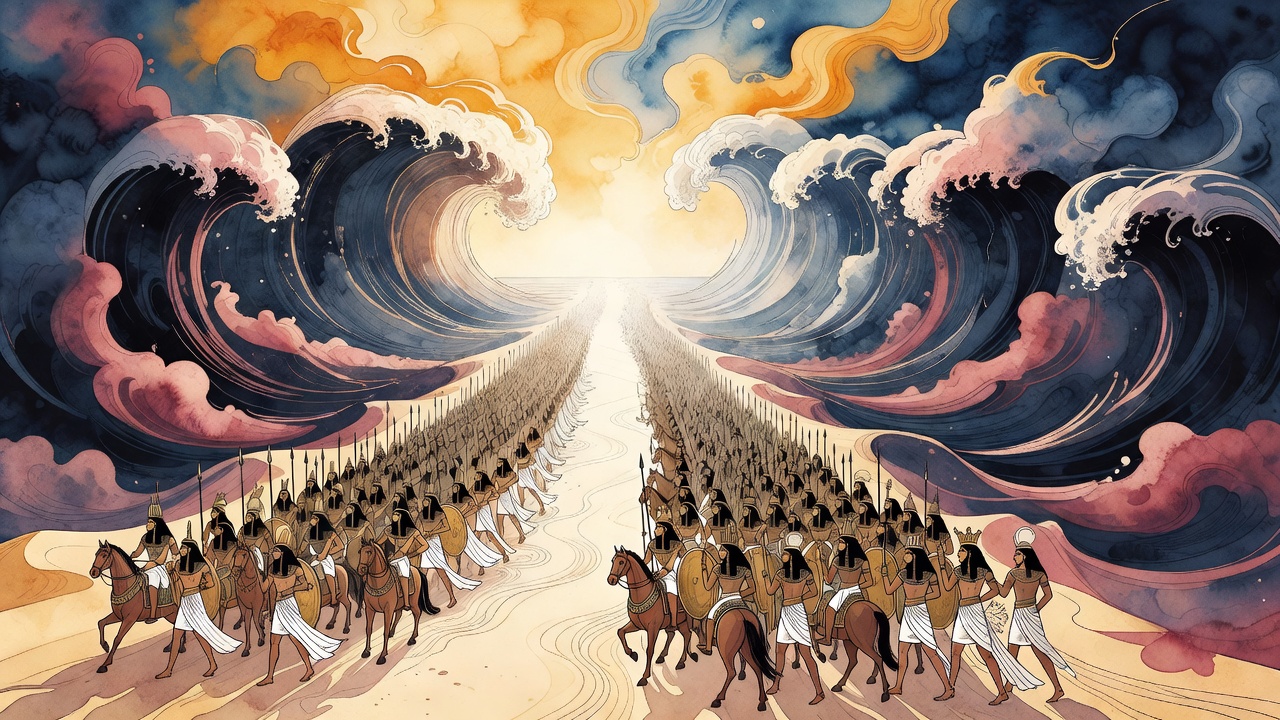
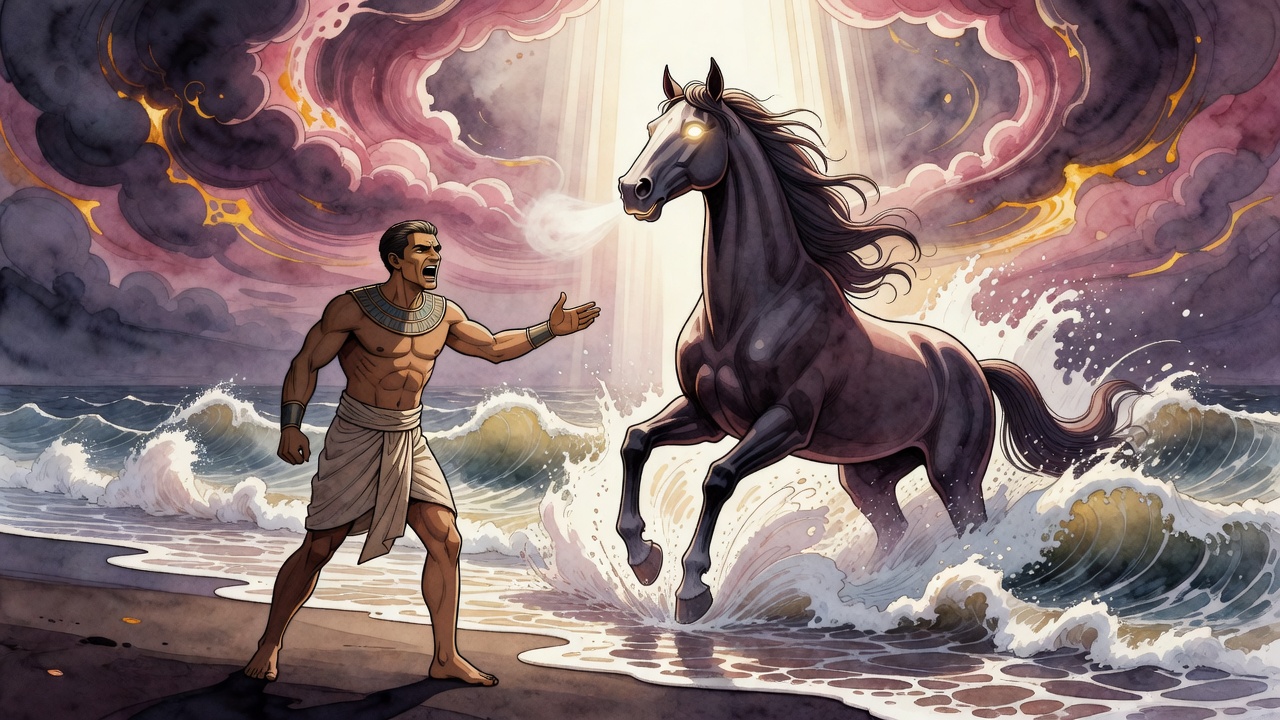
Pharaoh stood in Egypt and hurled the same kind of speech into the air as if the air were his servant. "I will pursue. I will overtake. I will divide the spoil. My hand will destroy them." He counted the treasure he had not yet taken. He named the graves he had not yet dug. Heaven did not answer with a longer speech. Heaven answered with a breath of wind and a closing sea.

You Blew, and the Water Covered Them

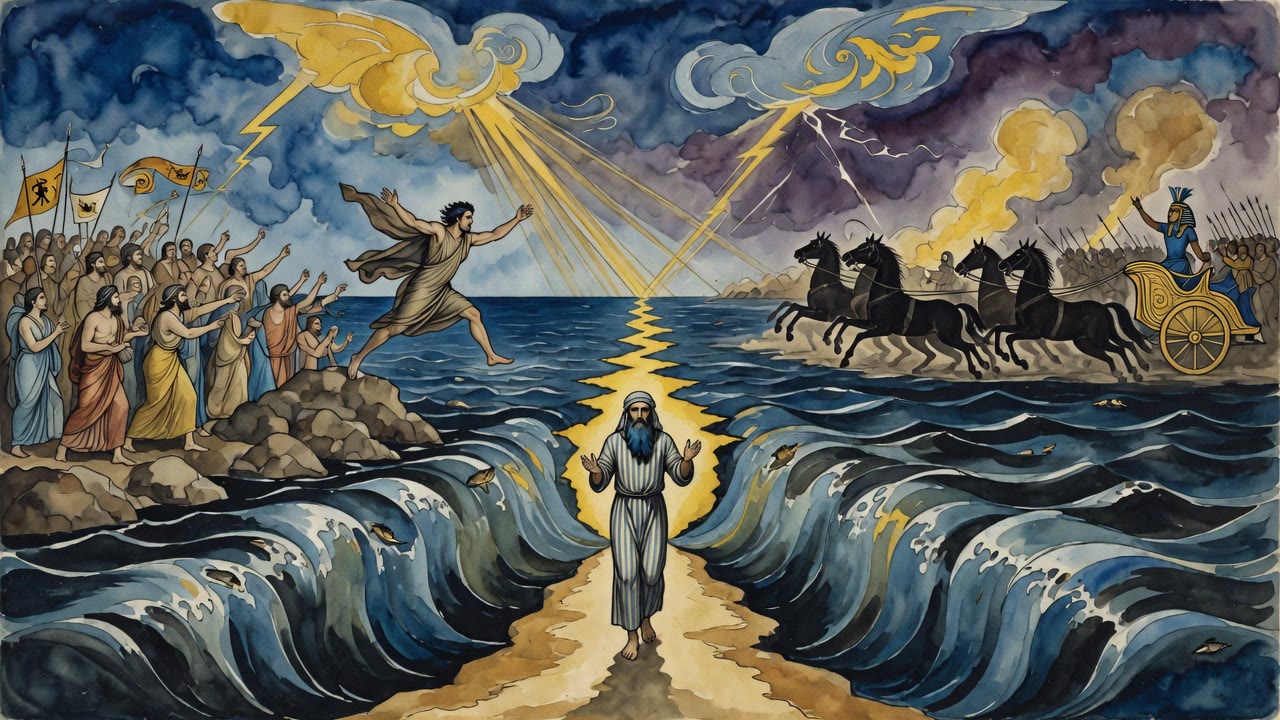
The Song of the Sea names it simply. "You blew with Your wind, the sea covered them." No duel of gods that flatters the tyrant by treating him as an equal opponent. No wrestling match of storms. A wind. Water. Lead-heavy sinking. The men who had called themselves mighty go under like metal that cannot float.

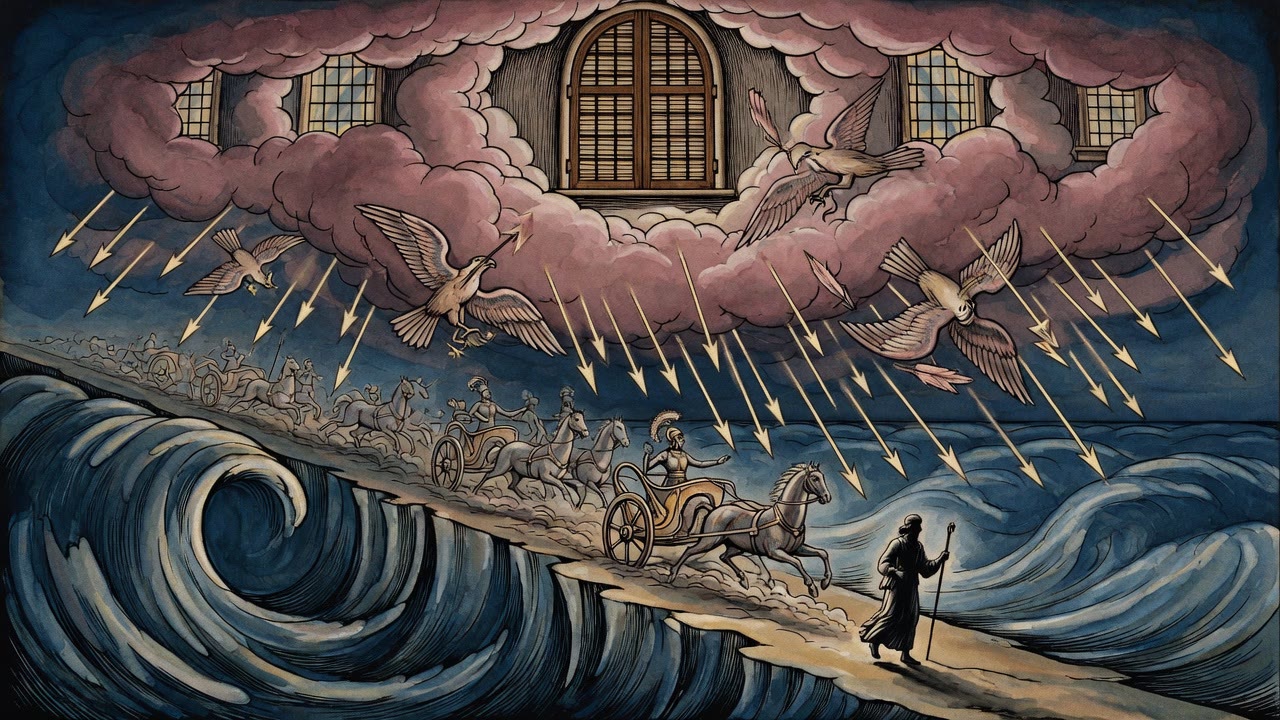
An officer who had laughed at Hebrew brick-makers opens his mouth for a last order and drinks the deep instead. A horse that had trampled fields in the delta finds no field under its hooves, only a road that has become a grave. The boast that began in a palace ends in a silence no court poet can polish.

The rabbis stretch the scene across history. The same God who laughs at Pharaoh laughs at the raging nations, at the boasters who rehearse their threats in public, at every host that marches against the land of Israel only to meet a shaking it did not budget for. Tyrants write their victory speeches early. The One enthroned above lets the wind do the editing.

Craft Returned as Water

Egypt had once said, "Come, let us deal craftily with him." At the sea the water itself becomes crafty. Measure for measure. The deep turns against the army that outsmarted slaves with decrees and store cities and the slow math of oppression. Craft meets craft, and the sea is better at it.

To Egypt the corridor of water stinks like a boiling pot. They faint inside their armor. They claw at each other for air that is not there. To Israel the same path smells of spice, and sweet water runs where salt should rule. A people walking free drinks while a people chasing power drowns a spear's length away through a wall of the deep.

The deeps freeze "in the heart of the sea," though a sea has no heart the way a man has a heart. The phrase still lands. Judgment finds the center. The place Egypt thought was empty of meaning becomes the place where meaning closes over chariots and the long list of "I will" verbs Pharaoh loved.

The Tense That Left a Gap

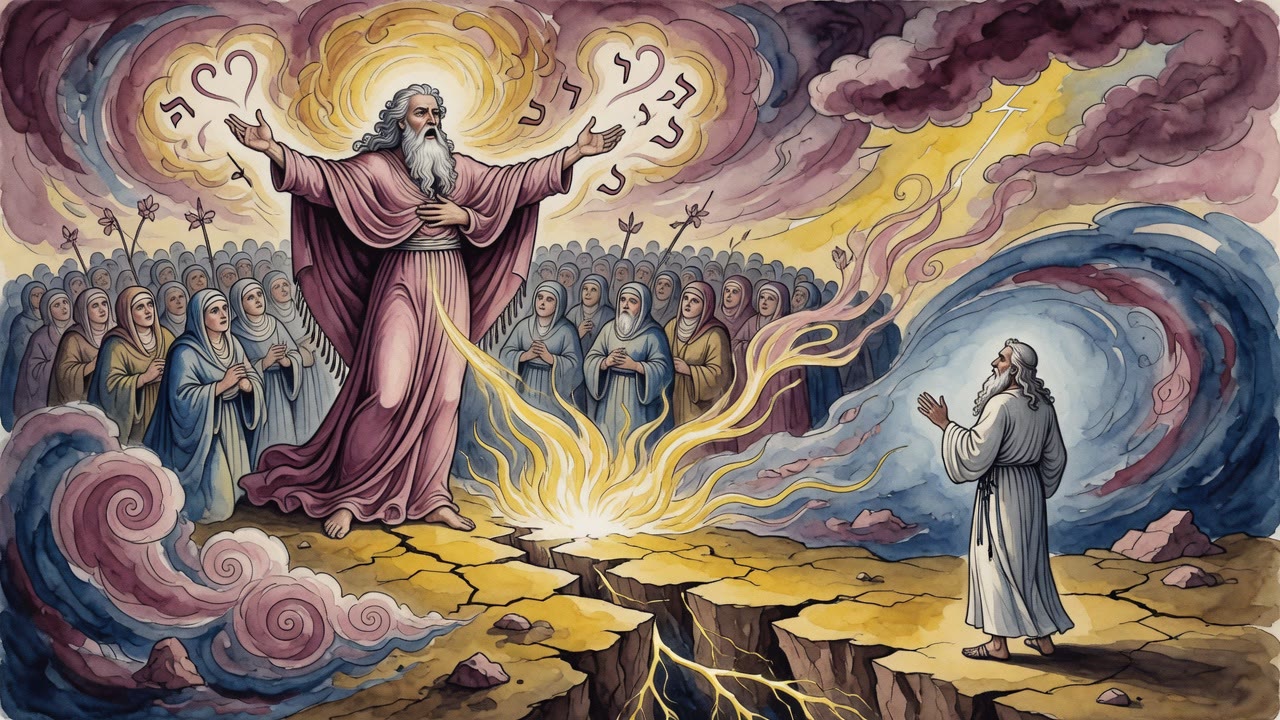
On the far shore Israel sings. "The LORD will reign forever and ever." The verb points forward. Kingship on the horizon. A reign still coming, still thin as dawn. Rabbi Yose hears the road not taken in that tense. Had they sung, in the present, "The LORD reigns forever and ever," claiming sovereignty as a fact already complete in that wet hour, no nation would ever have ruled over them.

Because they spoke of a reign still ahead rather than a reign already enthroned, they left a gap in time. Into that gap the kingdoms of the world stepped with boots and taxes and banners. Foreign empires pressed down. The full kingship of God was postponed to the days of redemption still awaited. A single verb became a hinge of history, and the hinge stayed half open while centuries walked through it.

The song is real. The gap is real. Both leave the shore together.

Mighty Waters, Small Breath

They sank like lead in the mighty waters. Four kinds of might the sages can count if they wish, but the story does not need the full list to land. What matters is the contrast. Pharaoh's mouth was full of futures he would force with whip and wheel. God's answer was a present wind that needed no announcement and no second draft.

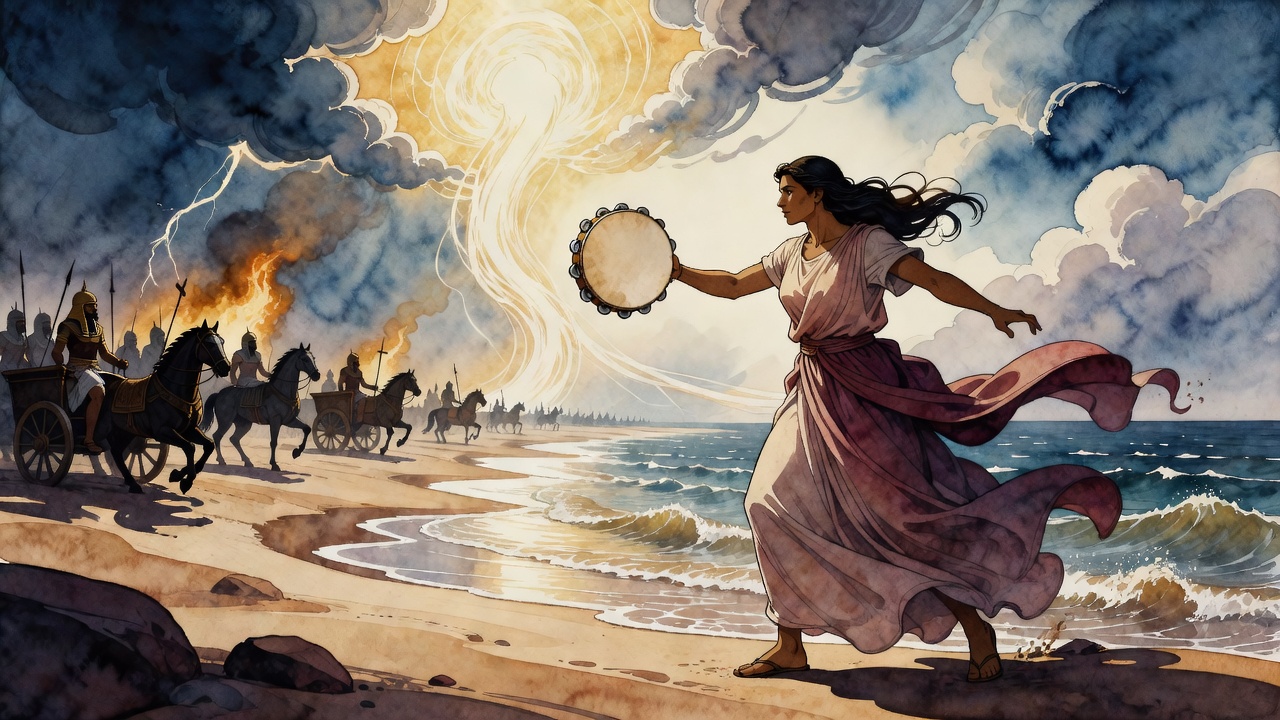
Israel stands on wet sand with song still hot in the throat. Behind them the water is flat again, as if nothing had happened, except that an empire's boast is gone under it and will not climb back out to revise the verse. Ahead of them the wilderness waits, and with it the long test of whether they will keep singing as if the reign is already real, or only as if it might arrive someday if the weather is kind.

A boy picks up a piece of Egyptian gear the sea has spit onto the sand. He turns it once and drops it. The bandit behind the palace is quiet. The king does not need to raise his voice. The sea has already spoken the sentence in water, and the only wind left is the one drying Israel hair by hair on the safe side of the grave.


← All myths
From the tradition

Sources

3 sources

The texts behind this telling. Some cards carry a translation of the source; others are our own retelling of it, and each card says which. Every card links out to the original.

Mekhilta DeRabbi Shimon Ben Yochai 15:10Mekhilta DeRabbi Shimon Ben Yochai

Translation of the source text.Mechilta de-Rabbi Simon b. Jochai, ed. D. Hoffmann, Frankfurt 1905 · Public Domain

"You blew with Your wind, the sea covered them" (Exodus 15:10). They told a parable: to what may this be likened? To a bandit Arab who stood behind the king's palace and said, "If I find the king's son, I will kill him, I will impale him, I will burn him, with cruel deaths I will put him to death." The king heard, and was filled with rage against him, and said to him, "Let it be paid back in your own mouth." So the wicked Pharaoh stood and blasphemed in Egypt: "I will pursue, I will overtake." And against him the Holy Spirit mocked: "You blew with Your wind, the sea covered them."

And likewise you find for the time to come: "Why do the nations rage, and the peoples mutter in vain? The kings of the earth set themselves, and the rulers take counsel together, against the LORD and against His anointed: Let us break their bands asunder, and cast away their cords from us" (Psalms 2:1-3). "He that sits in the heavens shall laugh, the LORD shall mock them" (Psalms 2:4). And it says, "Behold, they belch out with their mouth, swords are in their lips, for who, say they, doth hear?" and adjacent to it, "But You, O LORD, shall laugh at them; You shall hold all the nations in derision" (Psalms 59:8-9). And so it says, "Sheba and Dedan and the merchants of Tarshish and all its young lions shall say to you, Have you come to take spoil? Have you assembled your company to take prey?" (Ezekiel 38:13), and adjacent to it, "It shall come to pass in that day when Gog shall come against the land of Israel, that My fury shall come up in My face... Surely in that day there shall be a great shaking in the land of Israel" (Ezekiel 38:18-19).

"They sank like lead in the mighty waters" (Exodus 15:10). The Holy One, blessed be He, is called mighty: "The LORD on high is mighty" (Psalms 93:4). Israel are called mighty: "the mighty, in whom is all my delight" (Psalms 16:3). The Egyptians are called mighty: "they sank like lead in the mighty waters." The waters are called mighty: "than the noise of many waters, the mighty" (Psalms 93:4). Let the Holy One, blessed be He, who is called mighty, be revealed through Israel, who are called mighty, and exact punishment from the Egyptians, who are called mighty, in the waters, which are called mighty.

Full source
Mekhilta DeRabbi Shimon Ben Yochai 15:8Mekhilta DeRabbi Shimon Ben Yochai

Translation of the source text.Mechilta de-Rabbi Simon b. Jochai, ed. D. Hoffmann, Frankfurt 1905 · Public Domain

"And by the breath of Your nostrils the waters were heaped up" (Exodus 15:8). By the same measure with which they measured, You measured back to them. They said, "Come, let us deal craftily with him" (Exodus 1:10); You too placed craftiness in the waters, and "by the breath of Your nostrils the waters were heaped up."

"The floods stood upright like a heap [ned]" (Exodus 15:8). Just as a wineskin [nod] is bound up and stands, so the Egyptians were bound up and made to stand, and they fainted from the smell of the waters, as it is said, "He makes the deep boil like a pot" (Job 41:23). But for Israel the sea was made into all kinds of spices, as it is said, "He makes the sea like a pot of ointment" (Job 41:23).

Another interpretation: "They stood like a heap." Just as a wineskin is bound up and stands, so the soul of the Egyptians was bound up and standing, and they could neither take in nor let out breath; while Israel ate and drank and rejoiced, and there came forth for them the memory of sweet waters out of the salt waters, as it is said, "He brought streams out of the rock" (Psalms 78:16).

"The deeps congealed in the heart of the sea" (Exodus 15:8). Where is the heart of a person set? Upon its two parts. So the sea congealed upon them from its two parts upward, in order to destroy them.

"In the heart of the sea": the sea had no heart, yet a heart was given to it, as it is said, "the deeps congealed in the heart of the sea." The terebinth had no heart, yet a heart was given to it, as it is said, "in the heart [thickness] of the terebinth" (2 Samuel 18:14). The heavens had no heart, yet a heart was given to them, as it is said, "unto the heart of heaven" (Deuteronomy 4:11). Let the sea, which had no heart and to which a heart was given, come and exact punishment from the wicked who hardened their heart. Let the terebinth, which had no heart and to which a heart was given, come and exact punishment from the one [Absalom] who stole three hearts: the heart of his father, the heart of the court, and the heart of the men of Israel. Let the heavens, which had no heart and to which a heart was given, come and bring down [reward] upon Israel, who received the Torah that was given upon the heart, as it is said, "And these words which I command you this day shall be upon your heart" (Deuteronomy 6:6).

Full source
Mekhilta DeRabbi Shimon Ben Yochai 15:18Mekhilta DeRabbi Shimon Ben Yochai

Translation of the source text.Mechilta de-Rabbi Simon b. Jochai, ed. D. Hoffmann, Frankfurt 1905 · Public Domain

"The LORD will reign forever and ever" (Exodus 15:18). Rabbi Yose says: Had Israel said "The LORD reigns forever and ever" [in the present], no nation or kingdom would ever have ruled over them. But [they said] "The LORD will reign forever and ever" [in the future], referring to the time to come. For what reason...

Full source