Nebuchadnezzar's Cup of Bones and the Road of the Dying
For eighteen years a heavenly voice drives the king of Babylon to burn the Temple, and his bone cup and the exiles' empty skins call down judgment.
Table of Contents
 Click for full size
The Voice in the Palace for Eighteen Years
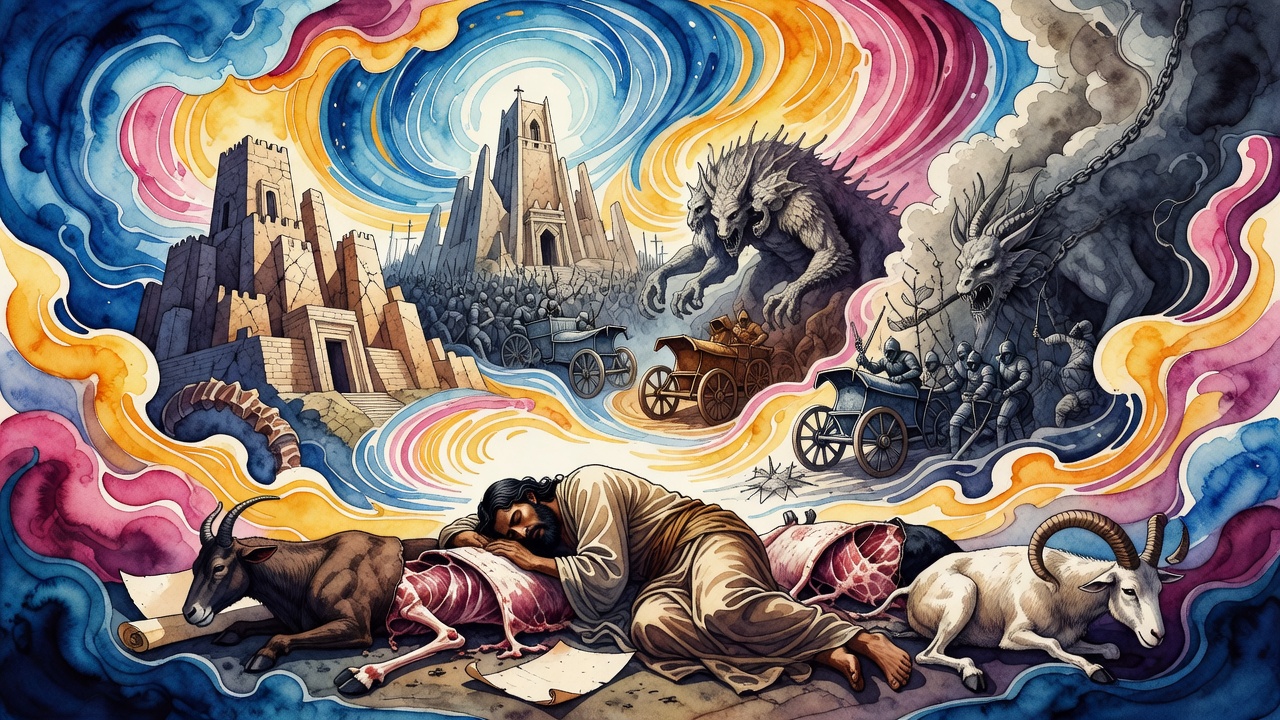
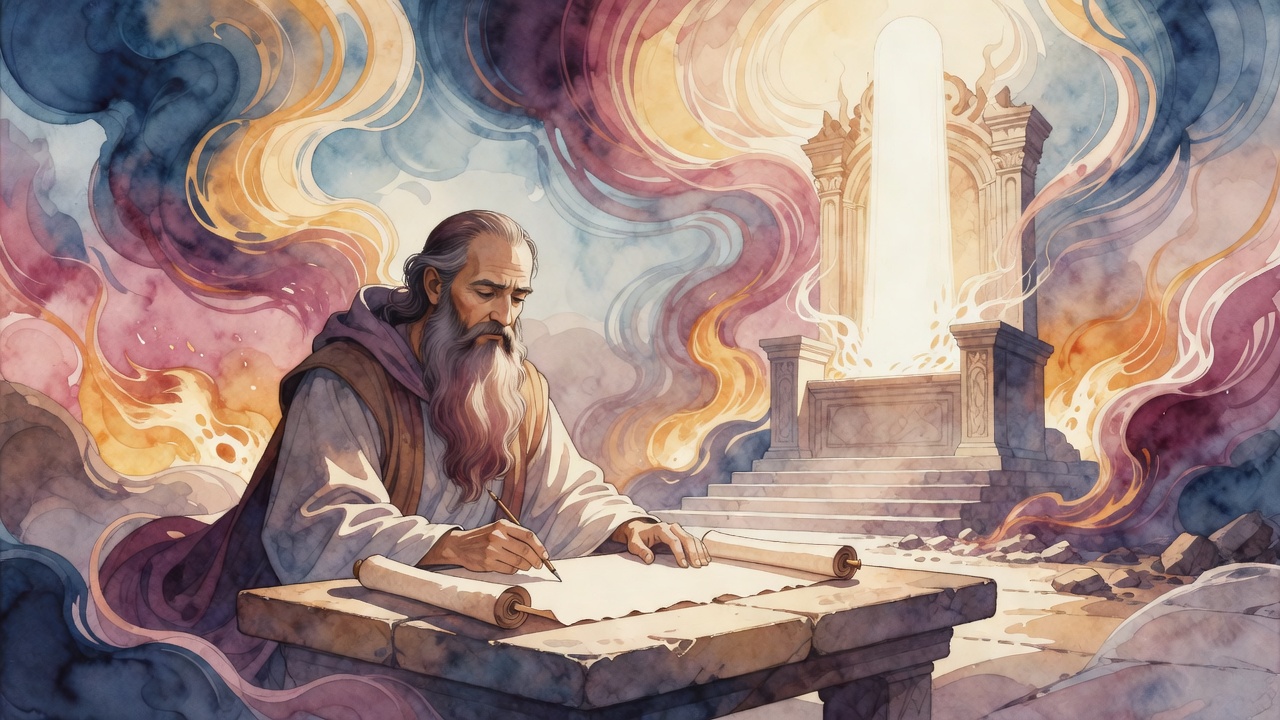
For eighteen years the same voice came down into the throne room of Nebuchadnezzar, and for eighteen years it said the same thing. Every day it broke over the king of Babylon like weather. "O wicked slave," it thundered, "go and destroy the house of your Lord, for his children no longer listen to him." A god was commissioning the ruin of his own house, and he had chosen a foreign king to swing the axe.
Nebuchadnezzar did not leap at the honor. He remembered Sennacherib, his own forebear, who had marched on Jerusalem and gone home a broken thing, his whole army wiped out in a single night. A voice from heaven was a fine thing to hear. It was a harder thing to trust. The king wanted proof that the God of the Jews truly meant to hand over the Temple, and would not turn on the hand that struck it.
The Signs That Chose Jerusalem
So the king went hunting for omens. He took arrows and shook them in the old Chaldean way, naming a city with each throw. Rome. Nothing. Alexandria. Nothing. Then he named Jerusalem, and one arrow leapt up on its own.
He was not satisfied. He planted seeds and marked each furrow with a city's name. The furrows for Rome and Alexandria lay dead in the dirt, and the furrow for Jerusalem sprouted green. He lit lamps and named them. The flames for the other cities guttered out, and the flame named for Jerusalem burned steady and bright. He set little boats on the Euphrates and let the current decide. The boats for Rome and Alexandria would not move. The boats for Jerusalem slid downstream as if a hand were pulling them. Heaven was not merely permitting the war. Heaven was pointing.
The Keys Handed Back to Heaven
Nebuchadnezzar marched, and the city fell, and he came swaggering home to Babylon to a hero's welcome, announcing that he had swallowed the whole land of Palestine in a single gulp. He pulled down Jehoiakim and set the man's son on the throne, Mattaniah, whom they now called Jehoiachin. The people were not fooled. "You cannot raise a decent pup from a bad dam," they muttered, "let alone a bad pup from a bad dam." The rot, they said, ran in the blood.
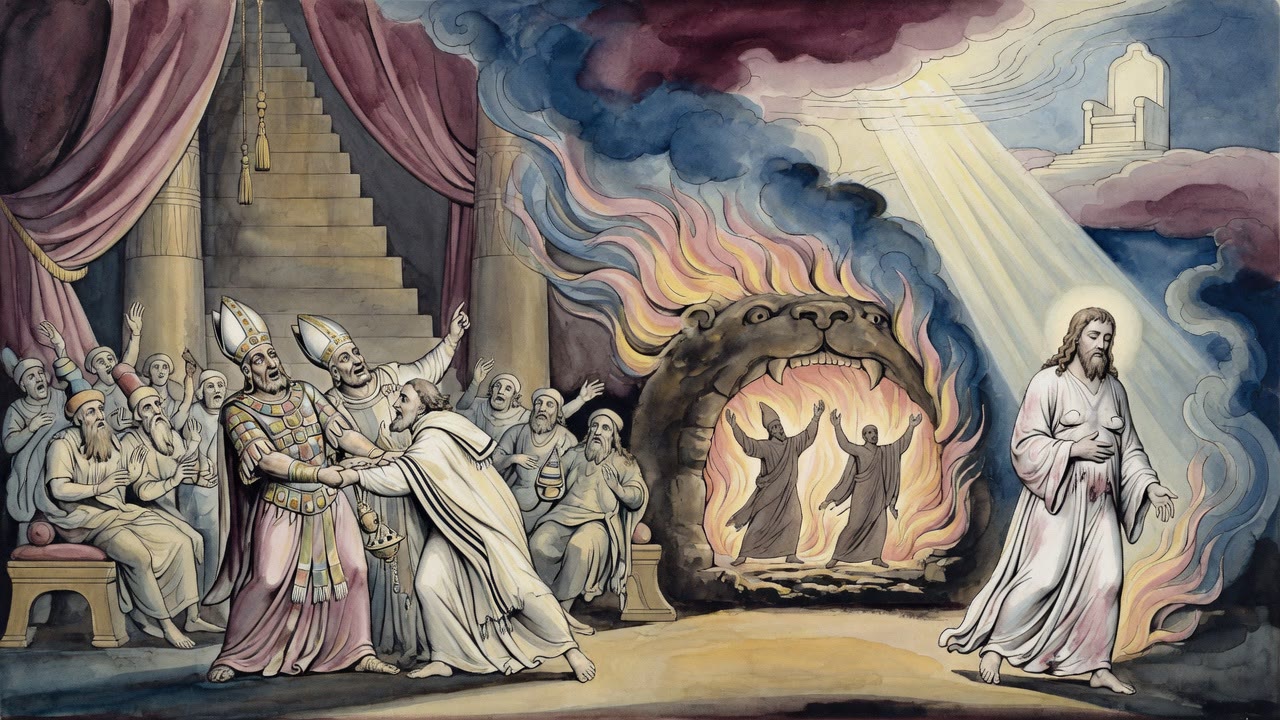
The king wanted the young king too. He came up to Daphne, near Antioch, and summoned the Sanhedrin, and the elders hurried north from Jerusalem to stand before him. Hand over Jehoiachin, he told them, or I level the Temple. Jehoiachin climbed to the roof of that Temple with every key to every chamber gathered in his fists. He lifted them toward the sky. "Until now," he said, "you counted us worthy to hold your house, and you put your keys in our hands. You no longer trust us with them. Here. Take them back." A hand came down out of heaven and took the keys, and it did not give them back.
The Cup of Bones Turns on Its Owner
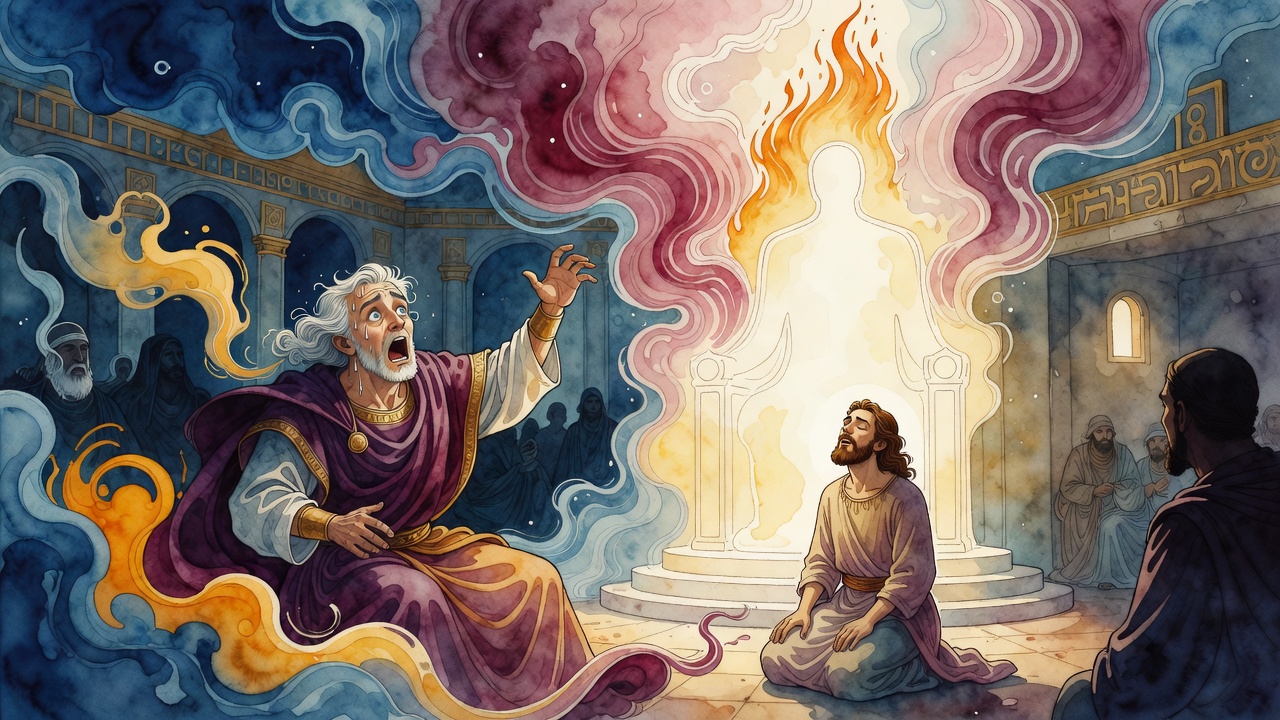
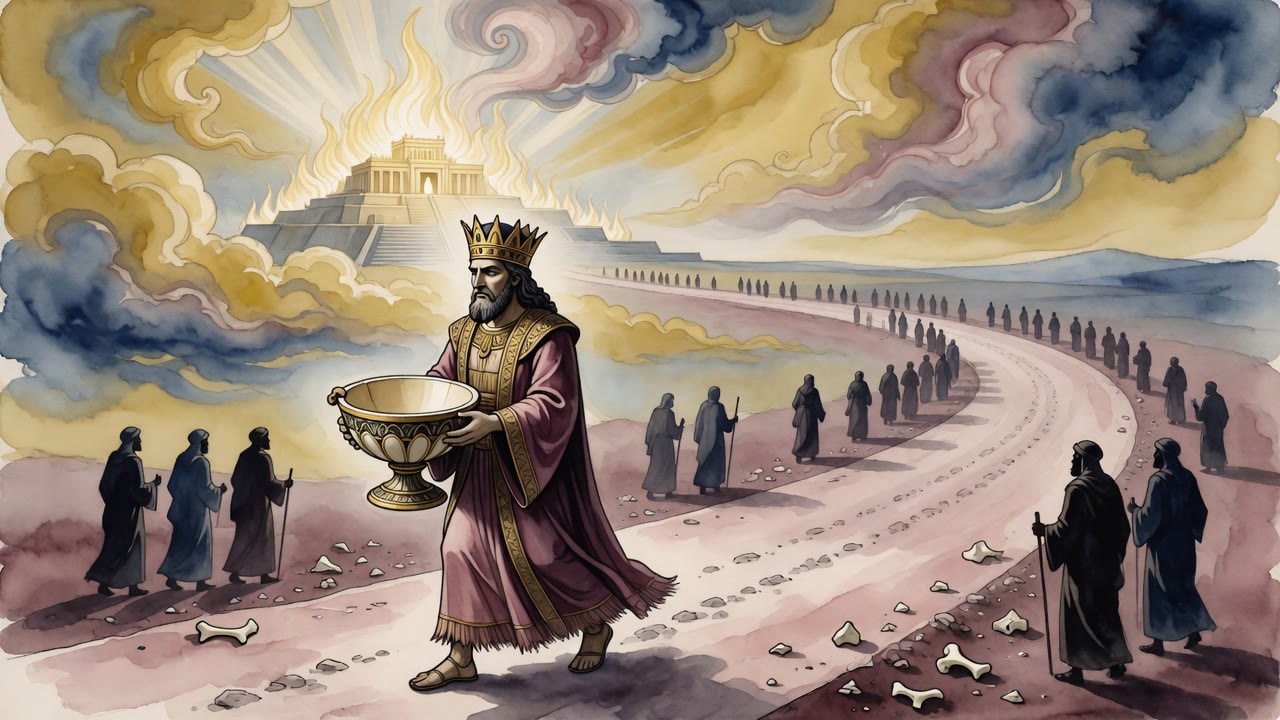
Nebuchadnezzar thought he was sitting pretty now. He had a drinking cup he was proud of, carved from the bones of a Jew his men had killed, and he liked to raise it at his own table. One night he lifted it to drink. The bones moved in his hand. Something ran through them like a pulse returning, and before he could pull back, the cup struck him hard across the face. A voice filled the hall. "A friend of this man is at this moment reviving the dead."
The king went white and began to praise the God of Israel, and the praise poured out of him so high and so pure that it started rising toward the songs of David himself, threatening to climb past them. An angel would not have it. Before Nebuchadnezzar could finish, the angel struck him across the mouth and shut him up. The sweet singer of Israel would keep his place. A butcher with a bone cup would not steal it.
Salt, Empty Skins, and the Road of the Dying
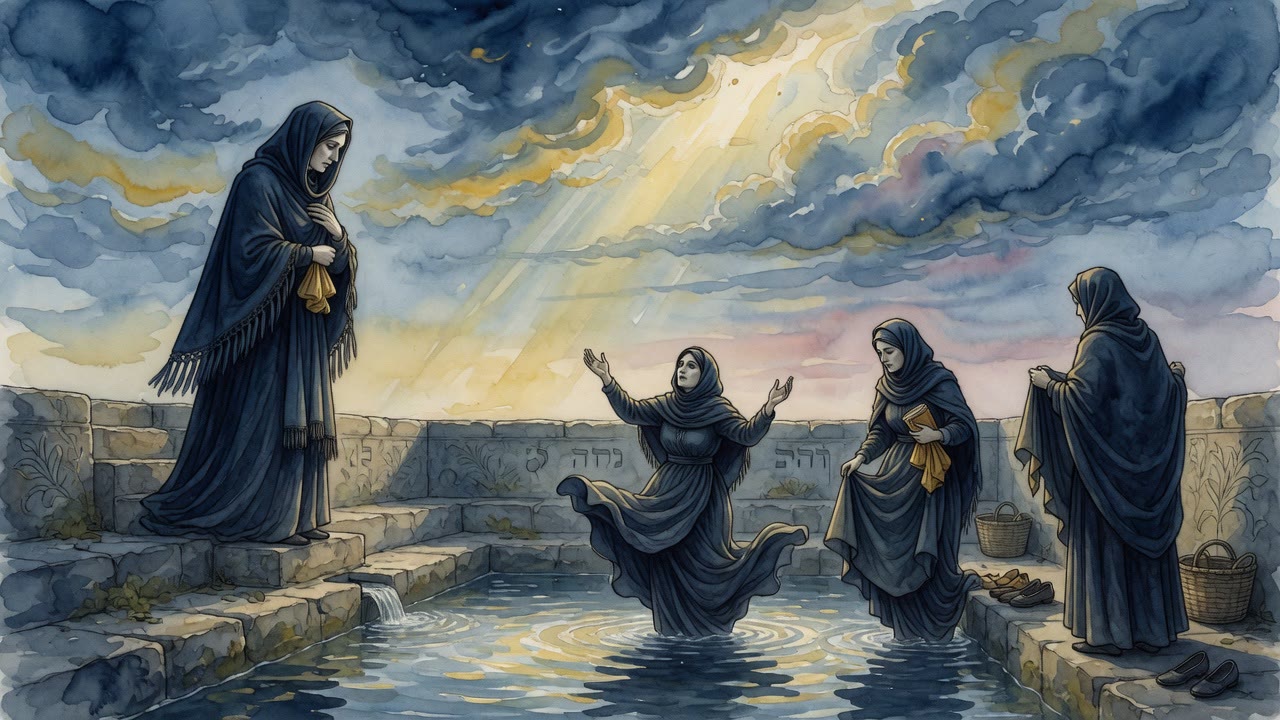
While the king boasted in his hall, the captives were already dying on the road. When the siege closed around Jerusalem, eighty thousand young priests broke through the Babylonian lines and ran for the desert, where they found the Ishmaelites and begged them, kin to kin, for water. Just water. Their throats were burning.
"First eat," the Ishmaelites said, "and then you may drink." They set out salted food, and the starving priests ate it, and the salt lit their thirst into a fire. Then the Ishmaelites brought skins, fat and swollen and heavy with promise, and the priests raised them to their lips. There was no water inside. There was only air. Nothing rushed out but breath, and the priests fell where they stood, all eighty thousand of them, dead in the sand, not from the sword and not from hunger but from a welcome that had been a trap all along.
Nebuchadnezzar drank on in Babylon and thought the account was closed. Above his palace the same heaven that had aimed every arrow at Jerusalem was already turning its aim toward him.
← All myths