Nebuchadnezzar Left the Temple Empty Fifty Years
Ash stuck to a priest's heel. The courts went quiet. Fifty winters later, an old man put his palm on fresh mortar and could not find the old shadow.
Table of Contents
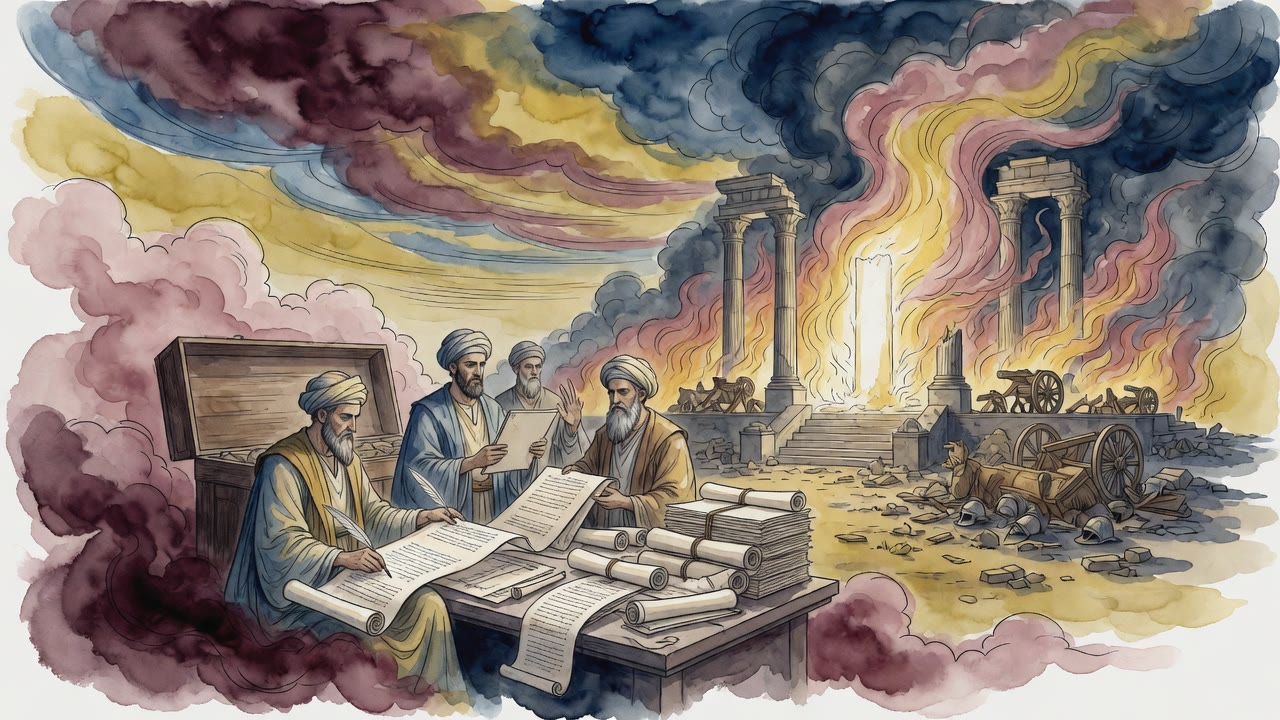
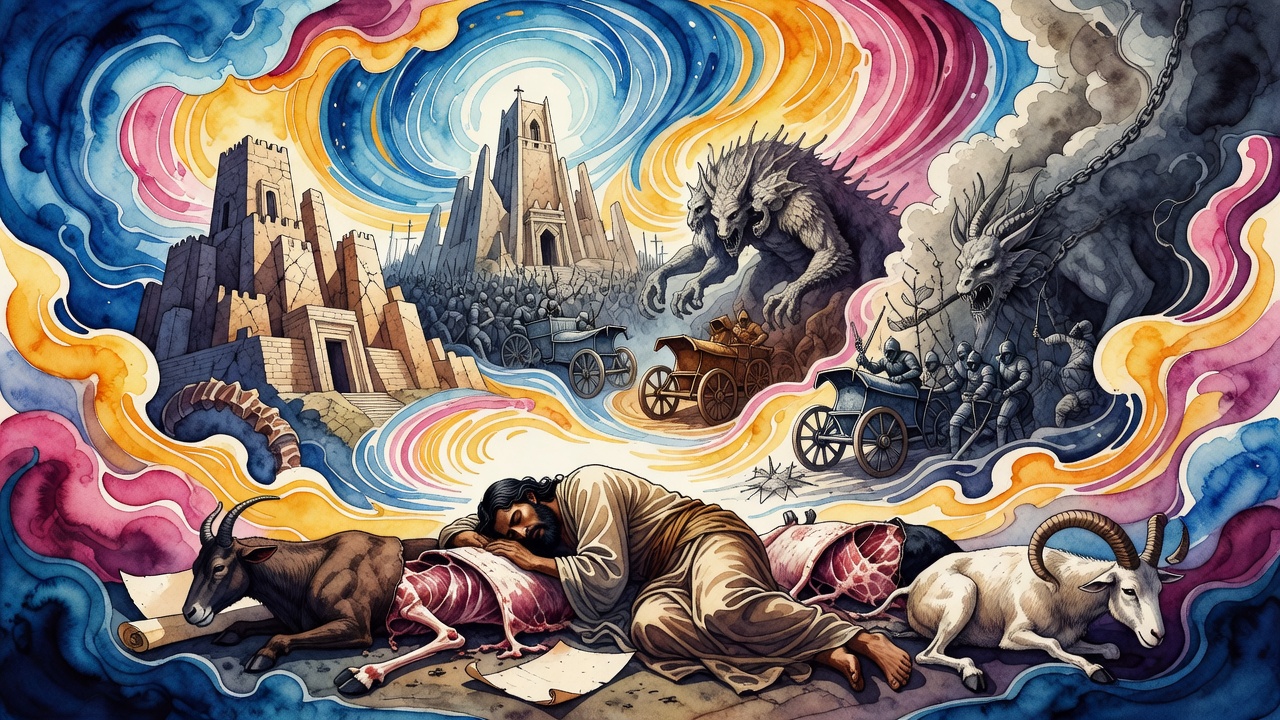
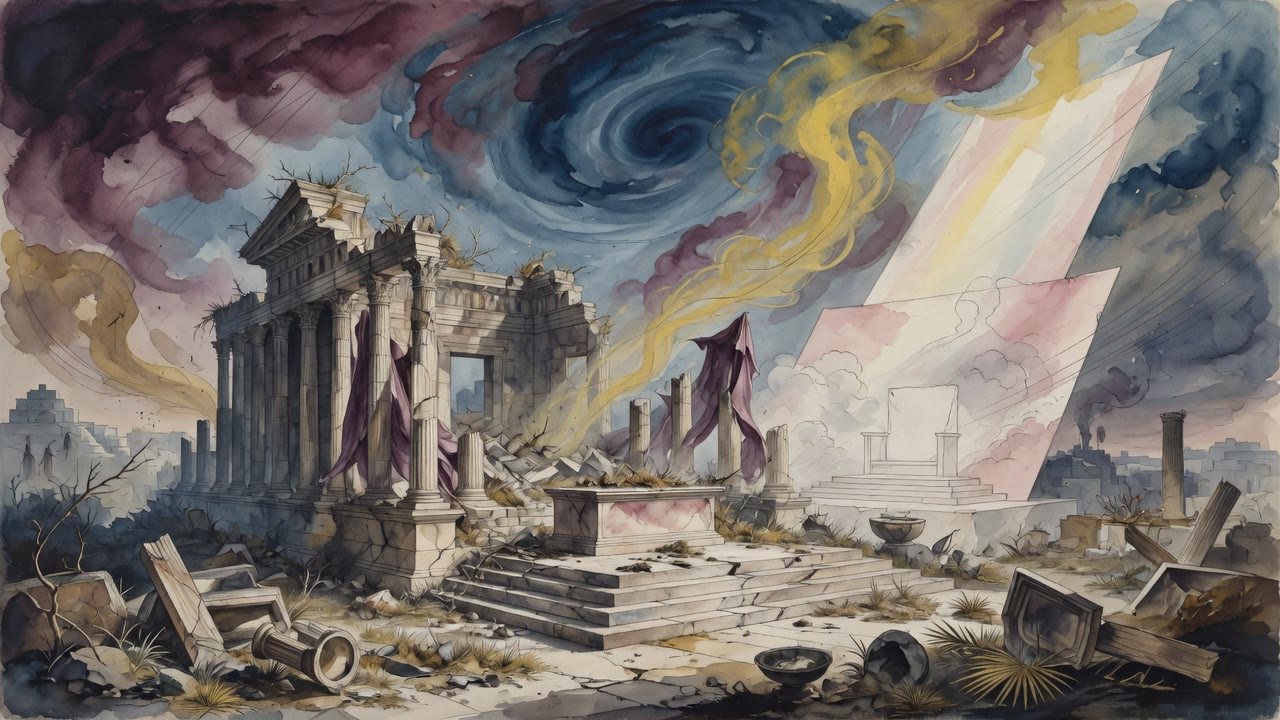
Smoke stood over Jerusalem in a column the wind could not politely ignore. Ash settled on the stones of the courts. The gold that had caught morning light along the Sanctuary walls ran and blackened. Nebuchadnezzar's men moved through the House with the efficiency of a harvest, and the harvest was timber, metal, and the end of a world that had believed the hill could not fall.
 Click for full size
Priests who still breathed tasted the air and knew the smell was not festival fat. It was beam and cedar and the last cloths of service. A gate that had opened for pilgrims now framed only sky and ruin.
The Eighteenth Year and the Fire
In the eighteenth year of his reign the Babylonian king laid the Temple desolate. Not a bruise. Desolate. Vessels left for the road to the rivers of the east. Walls that had held song now held only heat. The altar that had taken blood and fire in ordered hours took a fire no priest directed.
Men on the walls had watched the siege tighten for months. Rations shrank. Water grew precious. When the break came, it came as iron and shout and the particular silence that follows a holy place when the holy things are dragged into carts. Someone tried to lift a basin and dropped it. Bronze rang once on stone. Then the noise of the army swallowed the ring.
Jerusalem did not negotiate the calendar of heaven. The House went dark in a human year with a human king's number on it. A priest who escaped the first rush put his bare heel down in the court and felt ash stick. He would carry that grit in his skin for the rest of his life.
Fifty Years Without a Roof
The desolation did not last a season. It lasted fifty years. Children born after the fire grew into adults who had never seen sacrifice on that hill. Elders who had once smelled incense on the morning shift died in foreign streets with the memory still sharper than the present. Weeds took the courts. Foxes learned the shortcuts. Rain washed soot into cracks and left pale streaks on blackened stone.
Exiles by the rivers hung harps and refused easy songs. The city that had been the axis of their prayer sat empty of service, not empty of God, but empty of the work hands were trained to do there. A generation measured time by how long the altar had been cold.
Far from Judah, Babylon built and schemed and buried kings. The empty hill did not care which Babylonian murdered which. The fifty years kept their own count.
Babylon Ate Its Kings
Nebuchadnezzar raised walls, sickened, and died after forty-three years of rule. His son Evilmerodach took the throne in a short, ugly reign. He governed in a way his own court would not bear. Neriglissoor, his sister's husband, put a knife in him and held four years of his own.
A child king, Laborosoarchod, lasted nine months before men who hated his temper ended him. Nabonnedus rose from the conspiracy and faced walls of burnt brick and bitumen while the empire's outer edges began to hear a Persian name.
In Chaldea a priest-historian named Berosus sat with tablets and corrected Greek gossip. He denied that Queen Semiramis built what Babylonians knew their own kings built. He traced Nebuchadnezzar's wars through Syria and Phoenicia. While he wrote, Zion's Sanctuary still had no roof for the Name.
Tyre Kept Another Clock
Phoenician archives agreed the Babylonian took those coasts. Philostratus named the long siege of Tyre. Megasthenes, writing of India, set Nebuchadnezzar above old measures of conquest. The boast matters less than the narrower fact. Foreign pens recorded the same iron will that burned Judah's House.
Tyre's own king-list fixed another clock. Nebuchadnezzar besieged Tyre thirteen years in the days of Ithobal. Kings and judges followed in a stutter of short holds. Hirom reigned twenty years. In Hirom's fourteenth year, Cyrus took the kingdom of Persia.
From the seventh year of Nebuchadnezzar, when the Tyre siege began, to that fourteenth year of Hirom, the span runs fifty-four years and three months. Judah's empty hill, counted from the eighteenth year, sits inside that wider number like a bone inside a hand. No Phoenician scribe wrote for Judah's comfort. The agreement still stands. The man who crushed coastal cities is the man who left Zion without a roof.
Cyrus Opened What Fire Had Closed
In the second year of Cyrus the foundations of the House were set again. Stone returned to stone. Men who had only heard of the first Temple laid courses for the second. The work did not finish in a single season of hope. It ran on until the second year of Darius, when the building that fire had erased stood again in a lesser glory that was still glory enough to draw sacrifice and song.
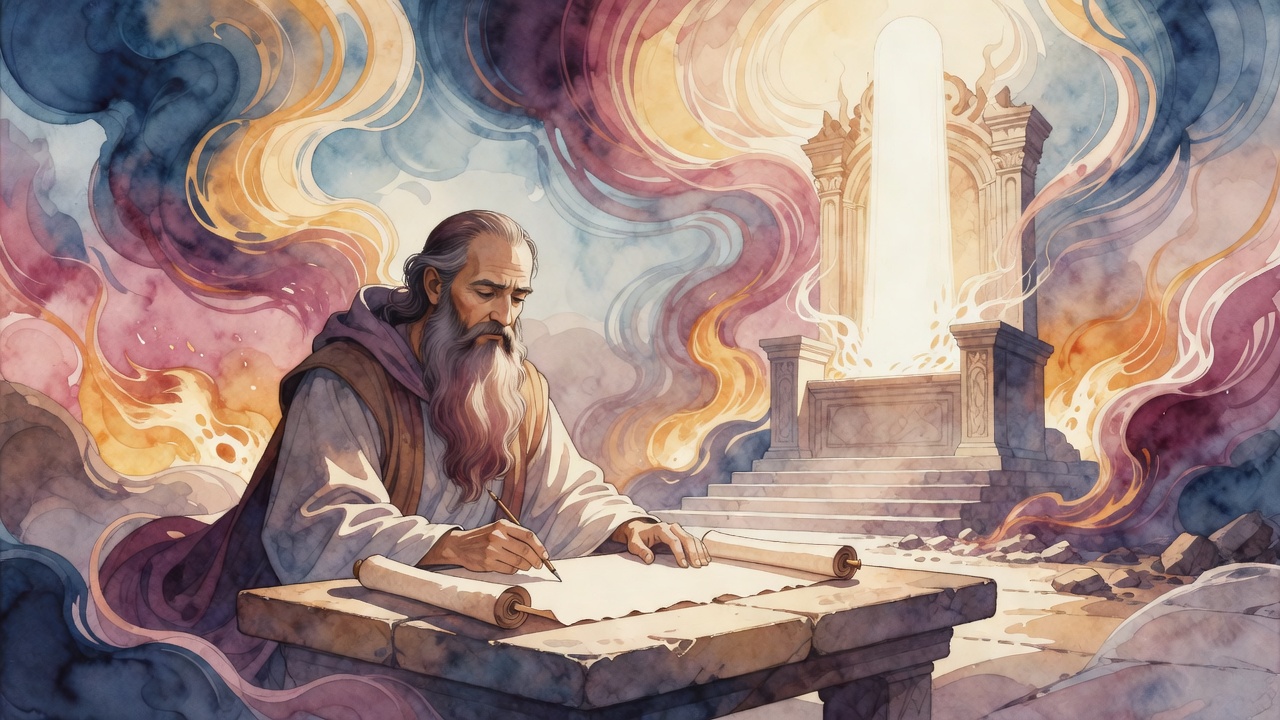
An old man who had left Jerusalem as a boy walked the new courts with a stick and failed to find the exact shadow of a column he remembered. He put his palm on fresh mortar and knew the fifty years had ended. The altar took fire under human direction again. Smoke rose that meant service, not loot.
Ash still lived in the deepest cracks under the plaster. The cold of fifty winters still lived in stories told at night. The House stood. That was the turning the fire had not been allowed to keep forever.
← All myths