The New Year When Trees Sit at the Table
On Tu Bishvat the table fills with fruit and praise. A man saved gleanings so he would not answer for what he never tasted.
Table of Contents
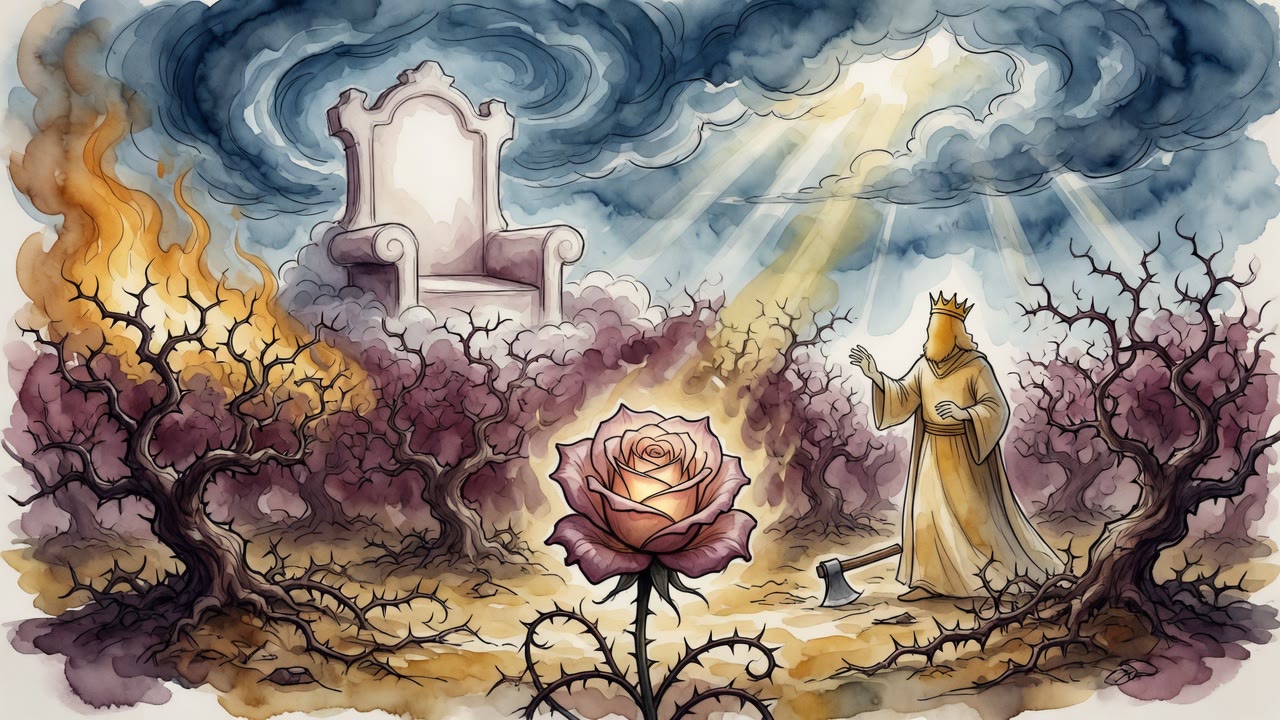
Rabbi Elazar walked the rows after harvest with a sack that should have been empty. Gleanings clung to the stems, fruit the poor had leave to take. He did not pocket them for sale. He set each piece aside and ate it in its season, because he had heard a hard teaching and did not want to stand accused for what his eyes had seen and his mouth had refused.
 Click for full size
The Day Trees Keep a New Year
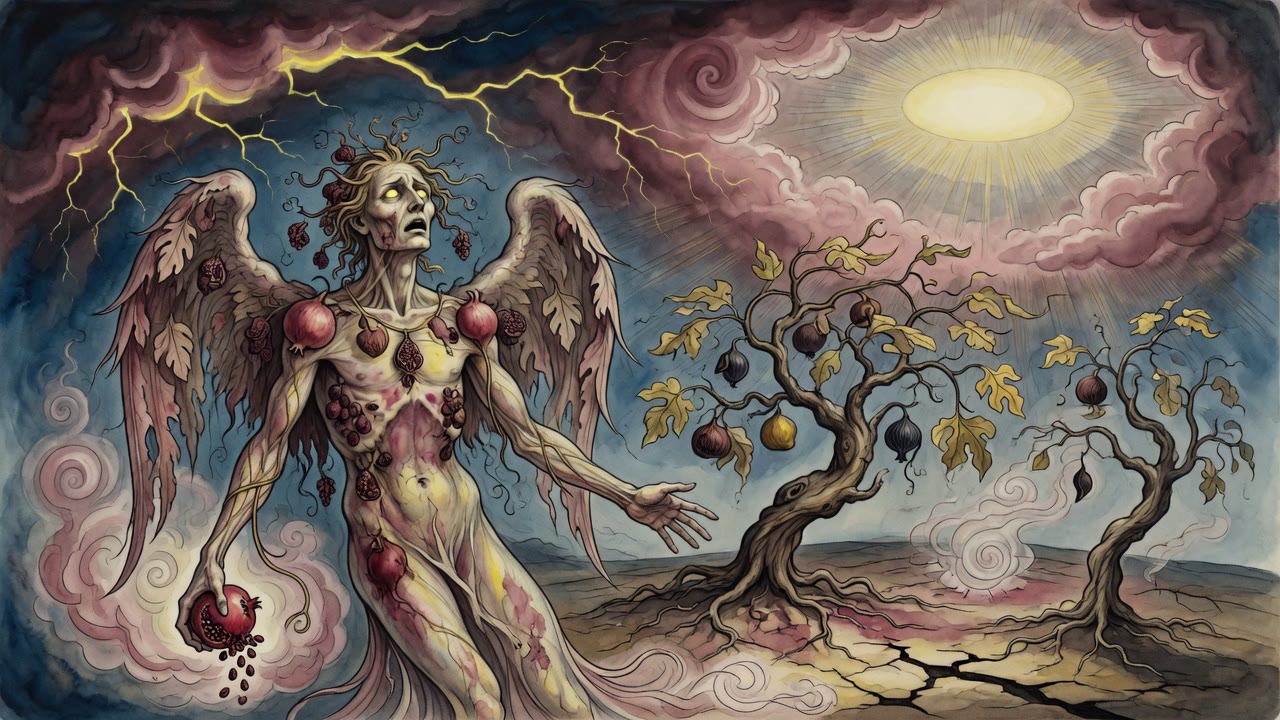
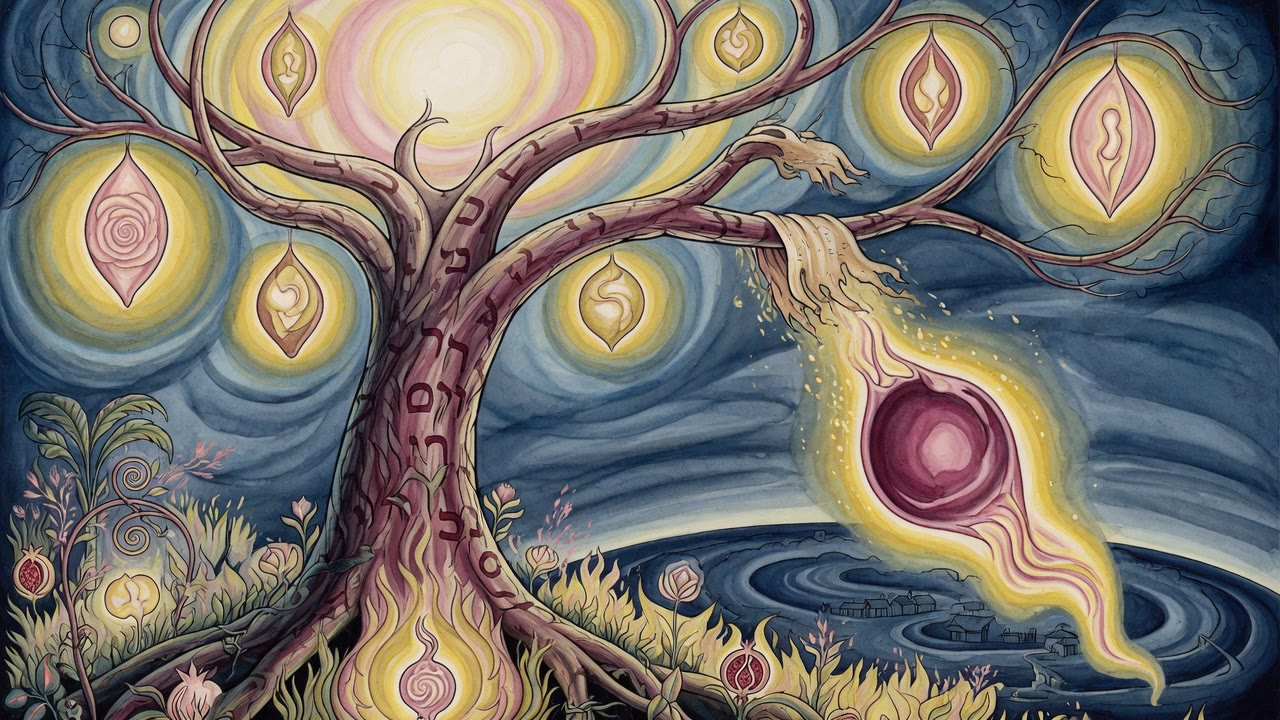
On the fifteenth of Shevat the faithful gather fruit the way others gather coins. They call the day Tu Bishvat, the New Year of the Trees, and they load the table until the wood groans. Dates, figs, pomegranates, olives. Grapes that still hold the dust of the vine. Words of praise go up with every bite, not as decoration but as work. In the language of the kabbalists this is a tikkun (תיקון), a repair. Eating and blessing do not only feed the body. They steady Yesod and Malkhut, the channels that release abundance into the world below.
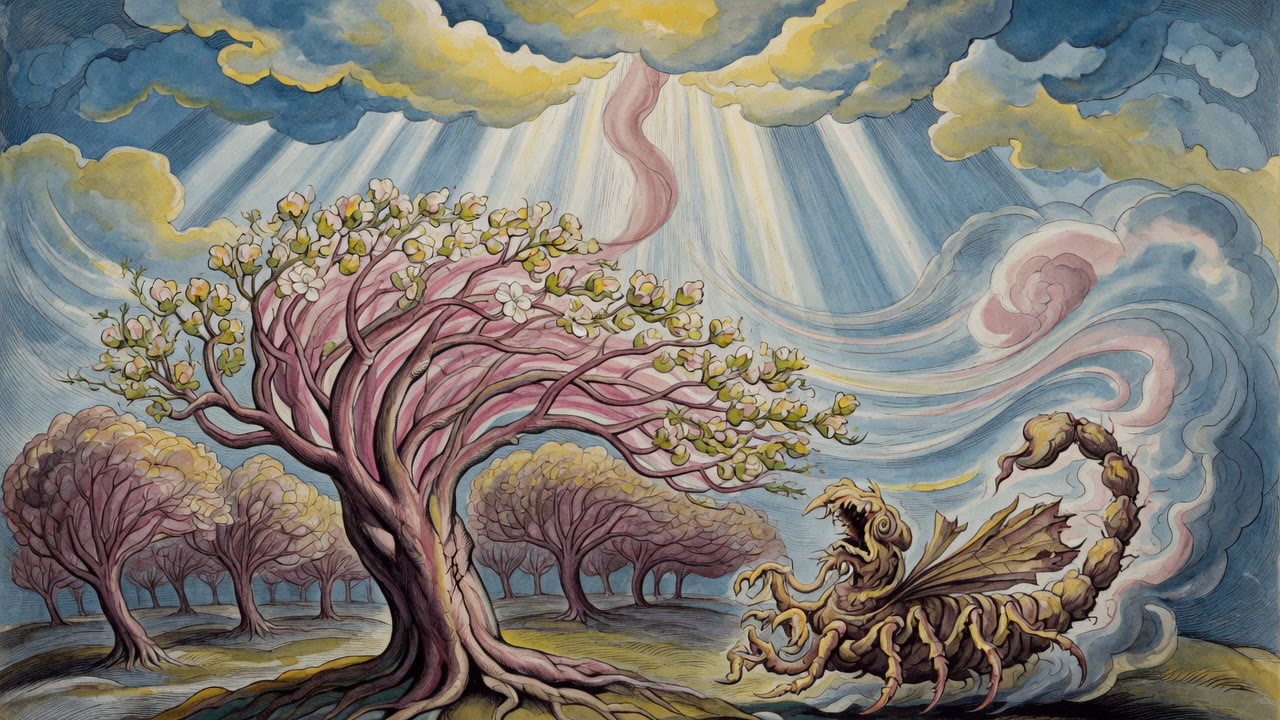
The etrog for Sukkot (the autumn festival of booths) waits months ahead, the peri etz hadar, fruit of the goodly tree. Men at the winter table already taste toward that harvest. What is praised now is meant to open the flow that will fatten the citrus later. A custom that looks like a feast wears the weight of cosmic plumbing, and no one at the table pretends otherwise. Winter branches look dead. The mouths at the table refuse the look of death.
What the Eyes Saw and Did Not Eat
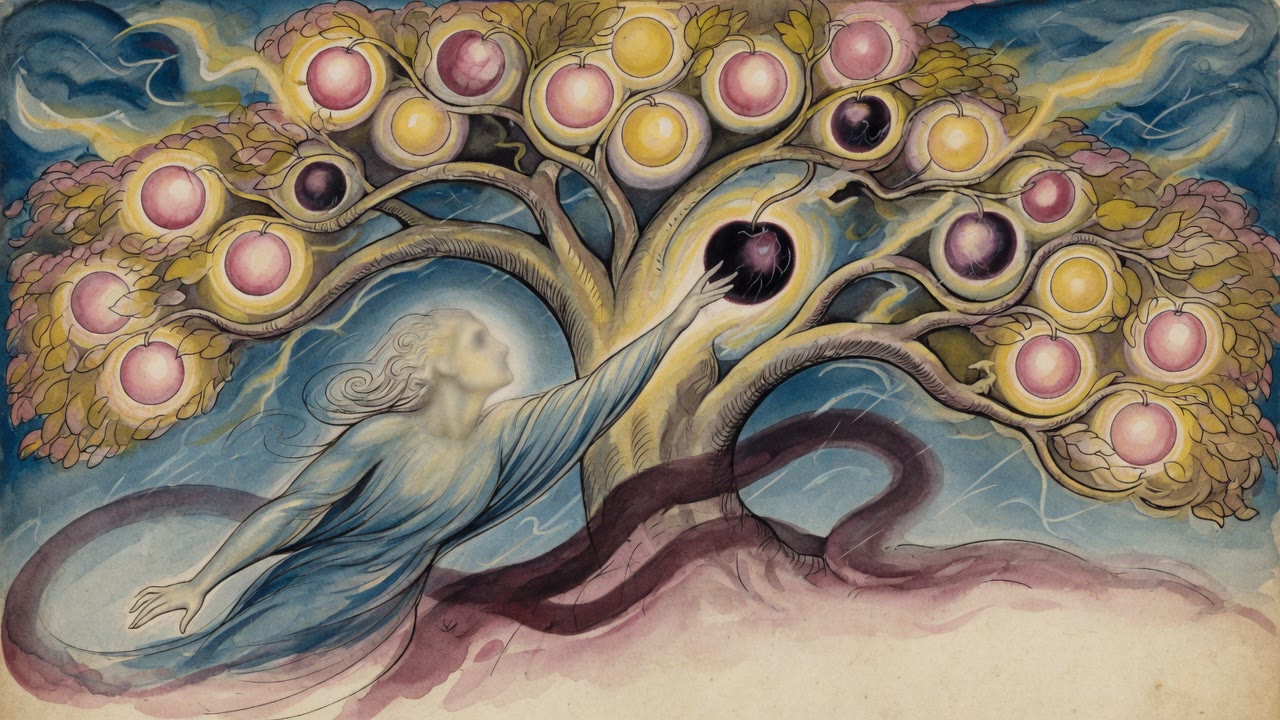
Rav taught in the name of Rabbi Hizkiyah that in the future a person will have to account for everything his eyes saw and he did not eat. The sentence is almost comic until it is not. A whole orchard can pass before a face that never reaches. Rabbi Elazar heard the threat inside the joke. He saved gleanings and timed them. Each fruit in its hour. He would not arrive empty-handed at a court that asked about the sweetness he walked past.
Hunger is not the only failure. Contempt for the world's gifts is another. The earth puts out its hand, and a closed mouth can be a kind of theft from oneself. "Listen, humble ones, and rejoice" (Psalms 34:3) is not only mood. It is instruction to take joy seriously enough to taste what was grown for tasting.
First Fruits Lifted Toward the House
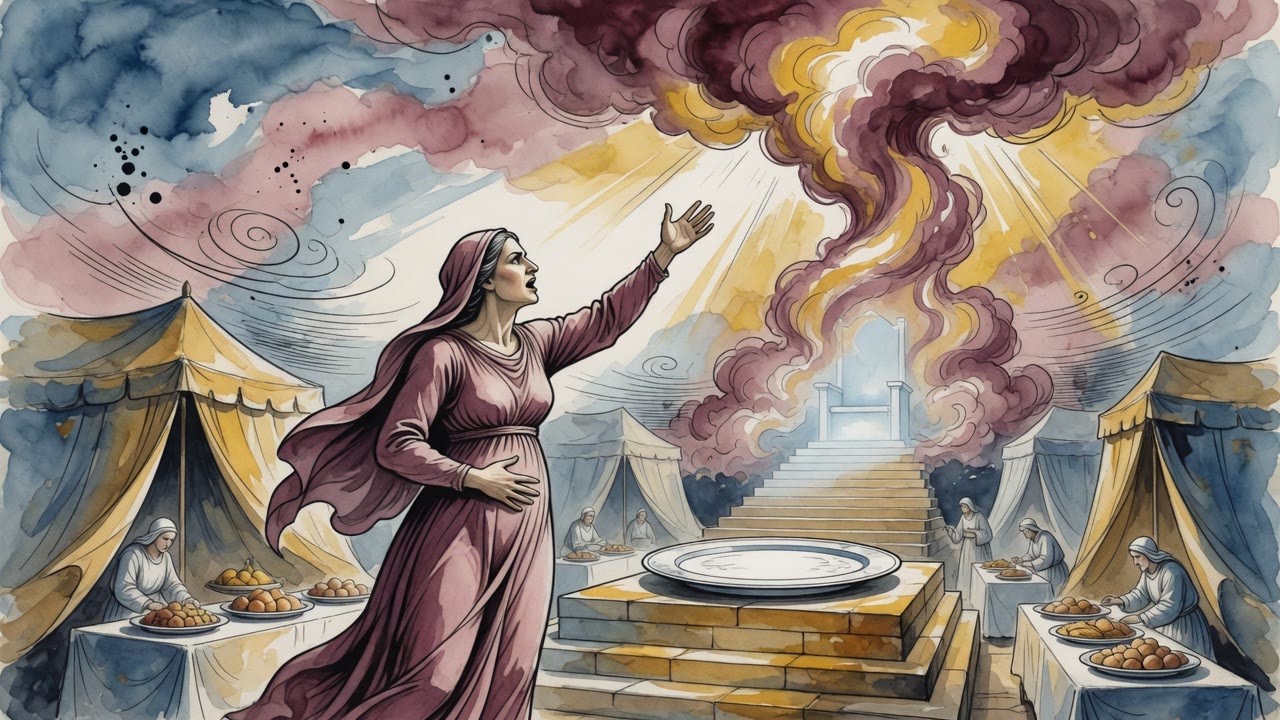
Long before winter tables, the Torah already demanded firstness. "The first of the first-fruits of your land you shall bring to the house of the Lord your God" (Exodus 23:19). Farmers knew the raw fruit counted. The sages pressed further. What of grapes already trod into wine, olives already pressed into oil? The broader language of bringing covered the liquids. Fresh or transformed, the first stream still belonged upstairs.
A man who had already crushed his harvest did not have to invent raw baskets to satisfy heaven. He brought what the fruit had become. Form changed. Claim did not. The house of God received both the solid and the pressed, because the gift was the firstness, not the texture. Deuteronomy speaks of first fruits of the earth. Exodus widens the doorway so nothing first is left outside for a technicality of crushing.
Rivers Sweet Until They Hit the Sea
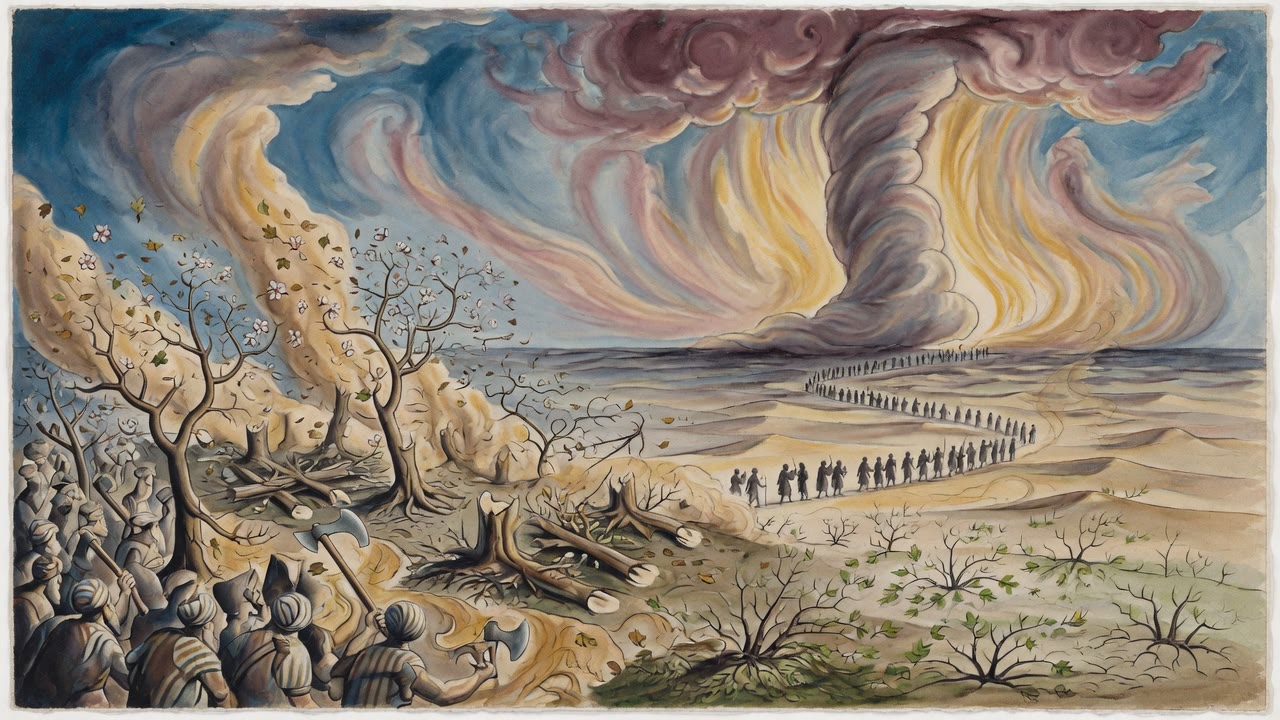
Elsewhere the sages watched rivers. On the land they run blessed, good, and sweet, and the world drinks from them. When they empty into the sea they turn bitter and useless. Israel, they said, runs the same course. When the people lean on their Creator and do His will, they are sweet water and the world stands for their sake. When they trust the statutes of the nations instead, they go bitter, and the benefit dries up.
Worse still, river water that feeds the sea becomes fuel for Gehinnom (the fiery place of punishment after death) in the image of the sinners who feed the fire. Even there the midrash leaves a thin mercy. Rain that falls into the sea becomes seed for the creatures below. Bitterness is not the only last word. Something still feeds in the deep. A people that stays near the Source keeps its sweetness. A people that drifts becomes salt.
A Table That Answers for the Orchard
Back at the Tu Bishvat table the fruit piles high for a reason that is not only joy. Praise is the payment for seeing. Firstness is the payment for harvest. Sweet water is the payment for staying near the Source. A man who once saved gleanings so he would not face a future accusation becomes a model for the night. Taste what is put before you. Bless it. Do not leave the world's sweetness unclaimed and then pretend you were pure.
The trees keep a new year in midwinter, when nothing looks ready. The table insists anyway. Children learn the names of fruits their grandparents carried through other winters. Oil and wine on other calendars taught the same grammar of firstness. Abundance answers the mouths that open. The orchard keeps score in a quieter way than any ledger, and the night of the trees is when the ledger is read aloud with juice on the fingers.
← All myths