4 min read

The Fruit Angel Starved When No Blessing Rose

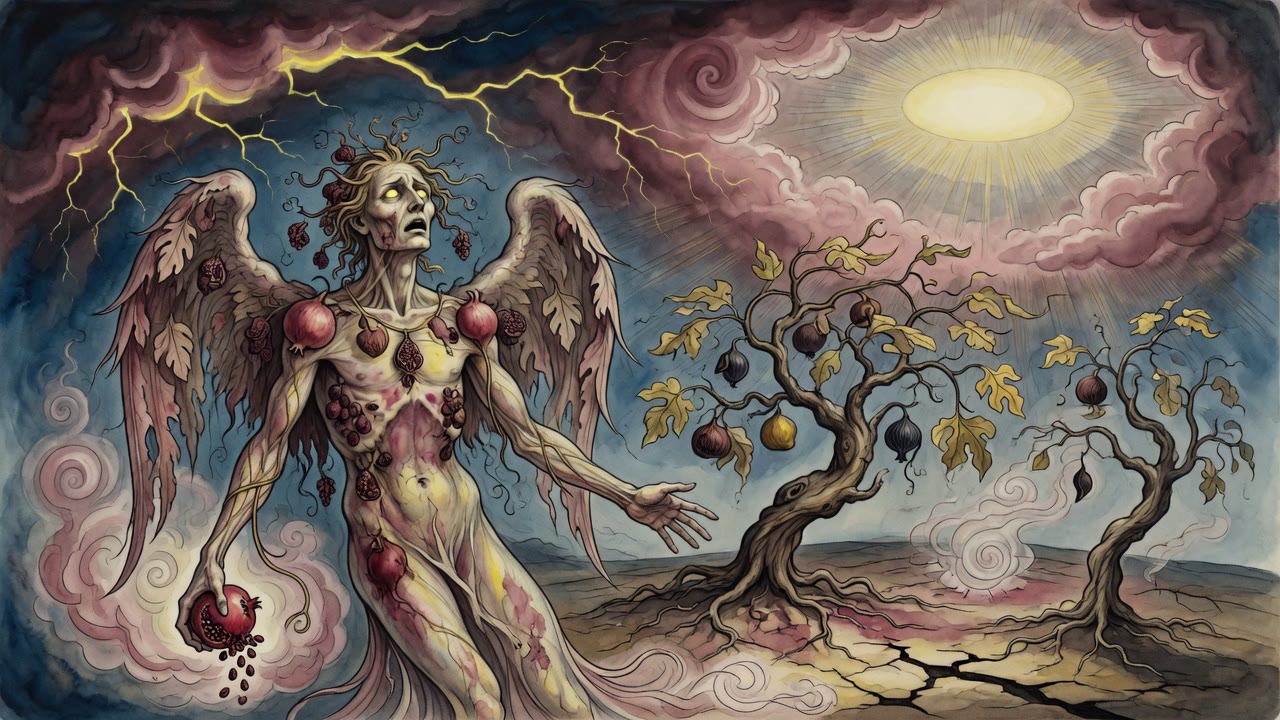
He bit the apple before any word left his mouth. Juice ran. Above the orchard an appointed angel went thin, robbed of the flow the blessing should have drawn.

Curated by Arthur · Told by Maggid ·
Table of Contents
  1. The First Bite Without a Name
  2. What the Angel Eats
  3. The Body That Only Knows How to Take
  4. New Year of the Trees
  5. A Second Season for the Orchard
The Fruit Angel Starved When No Blessing Rose Click for full size

The First Bite Without a Name

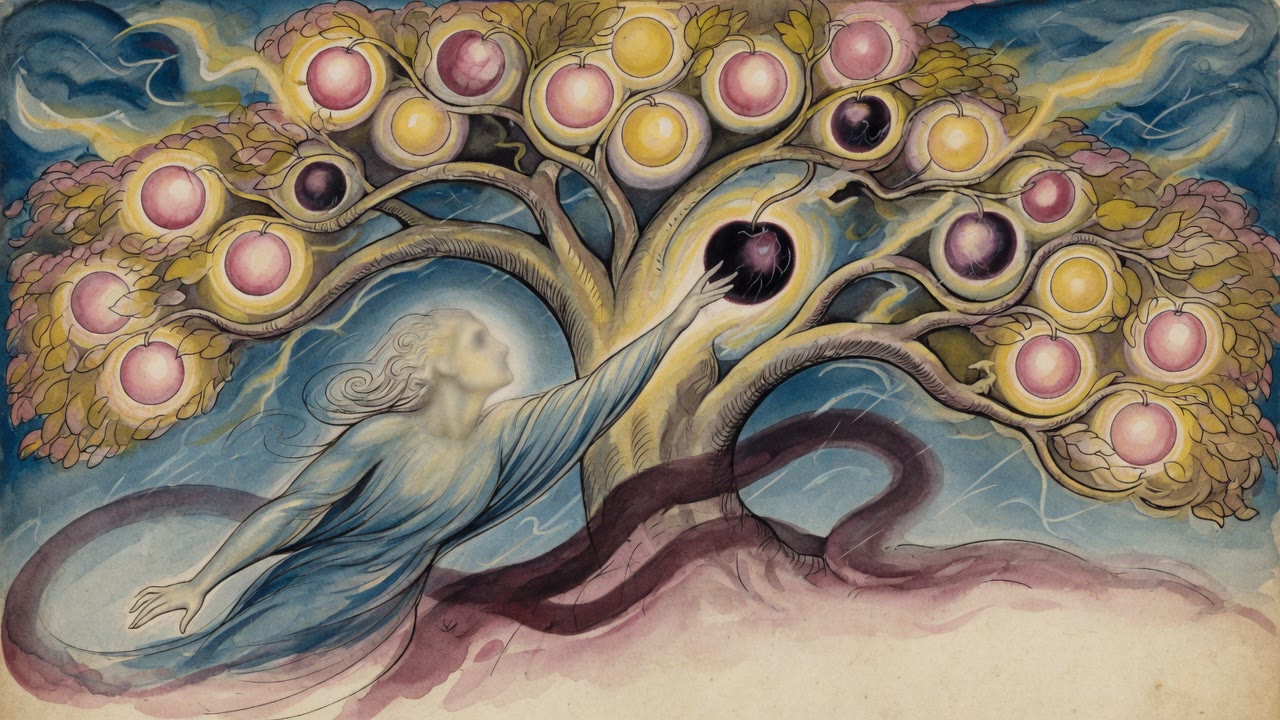
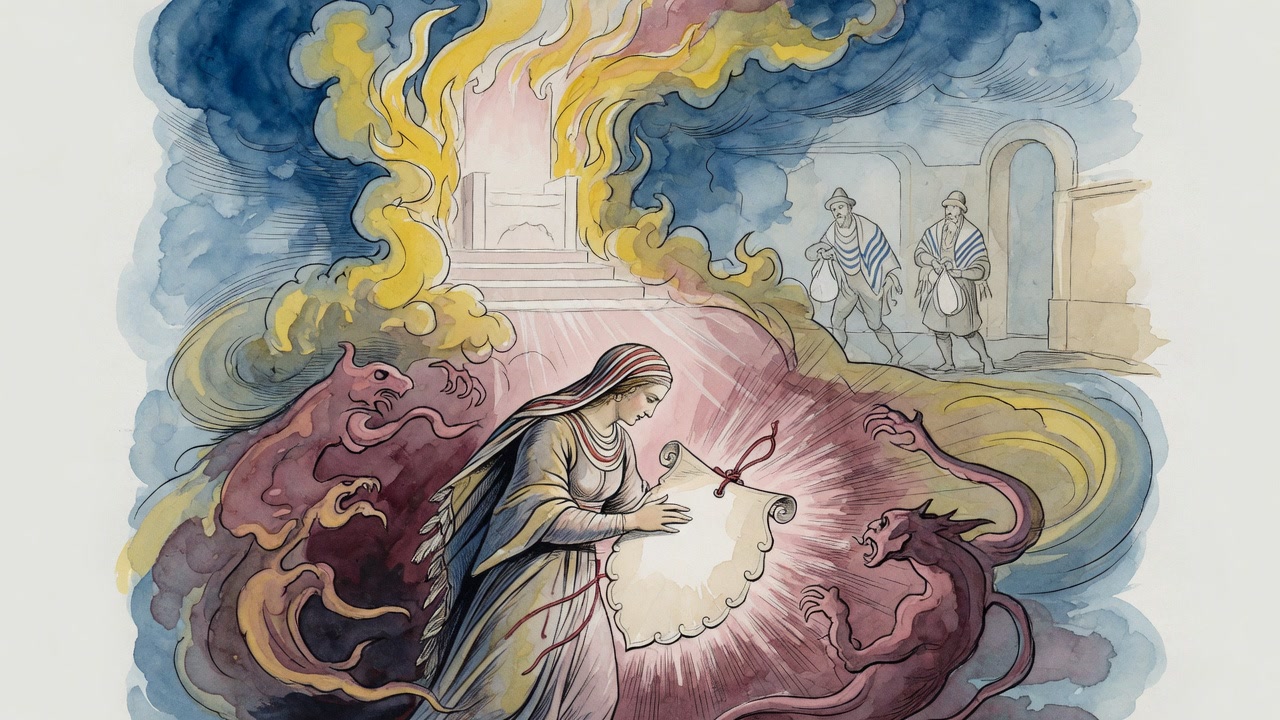
He took the apple in the market shade and bit before any blessing left his mouth. Sweetness hit the tongue. Juice ran along the wrist. It tasted like ownership.

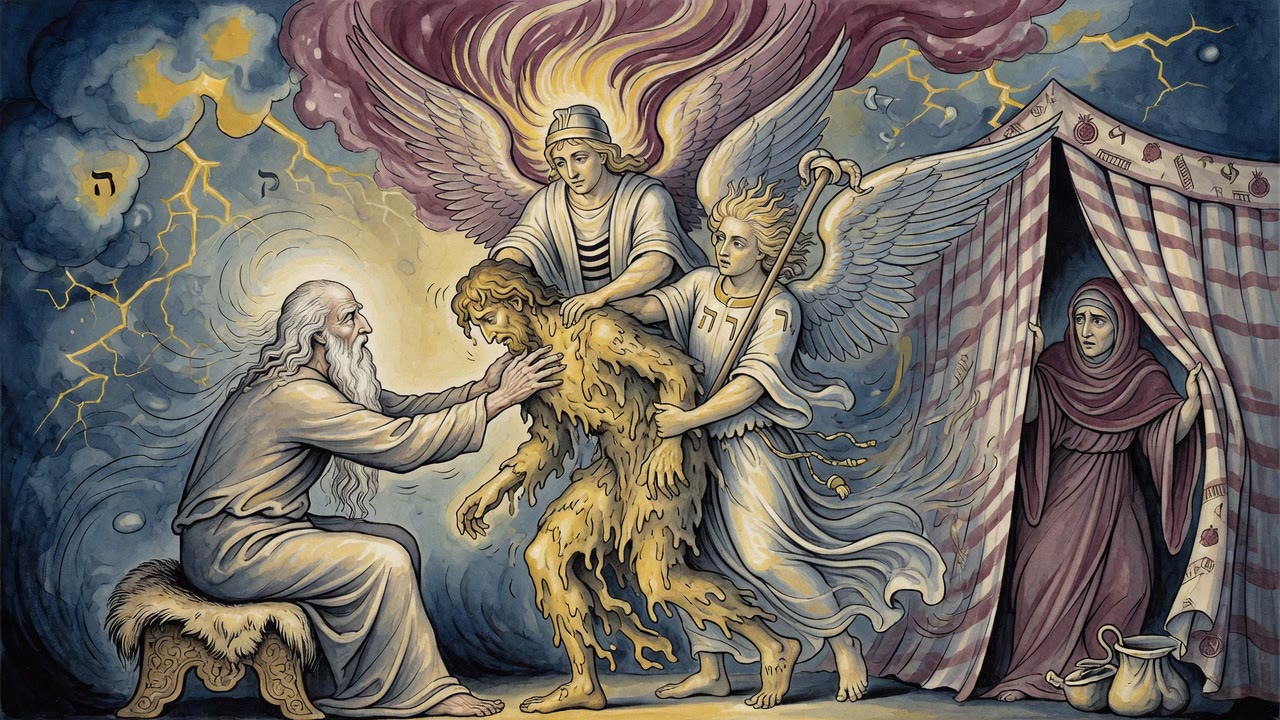
Above the stall, an angel appointed to that fruit waited for a word that did not come. Shefa (divine flow) should have moved when a human mouth acknowledged the Giver. The word is not manners alone. The word is a pump. Without it the channel stays dry.

The man chewed and called himself free. The teaching called him a robber.

A child nearby said a short blessing over a smaller fruit and ate slowly. The air between the two mouths was the whole difference between theft and receipt.

What the Angel Eats

In the older orchard logic, the angel set over a fruit is nourished by the shefa a blessing draws down. That nourishment lets the angel replenish the power that makes more fruit possible. Give thanks, and the circuit closes. Grab, and the circuit snaps.

A snapped circuit is theft from a system that keeps trees honest. The man steals the spiritual element inside the food. He also starves the servant who stands behind the peel.

He wiped his mouth and reached for a second apple. The angel went thinner. Merchants see coins. The orchard keeps other books.

Farther up the street a woman paused with a fig in her hand, named the Source, and only then broke the skin. Shefa moved like sap answering spring.

The Body That Only Knows How to Take

The guf (body), in a harder mystical reading, is not only flesh. It is the shape of ratzon l'kabel, the desire to receive for oneself alone. A leaky bucket. The bite without blessing is that desire in a single second: take, swallow, move on.

That desire was never meant to be the final form of a human life. It is temporary scaffolding toward a repaired end. The robber-at-the-fruit is every mouth that treats the world as free loot.

In the market, no one clapped him in irons. Theft of shefa triggers a quieter famine, the kind that shows up later as a life that cannot keep joy even when the table is full.

He bought wine next and again forgot the words. The bucket leaked faster.

New Year of the Trees

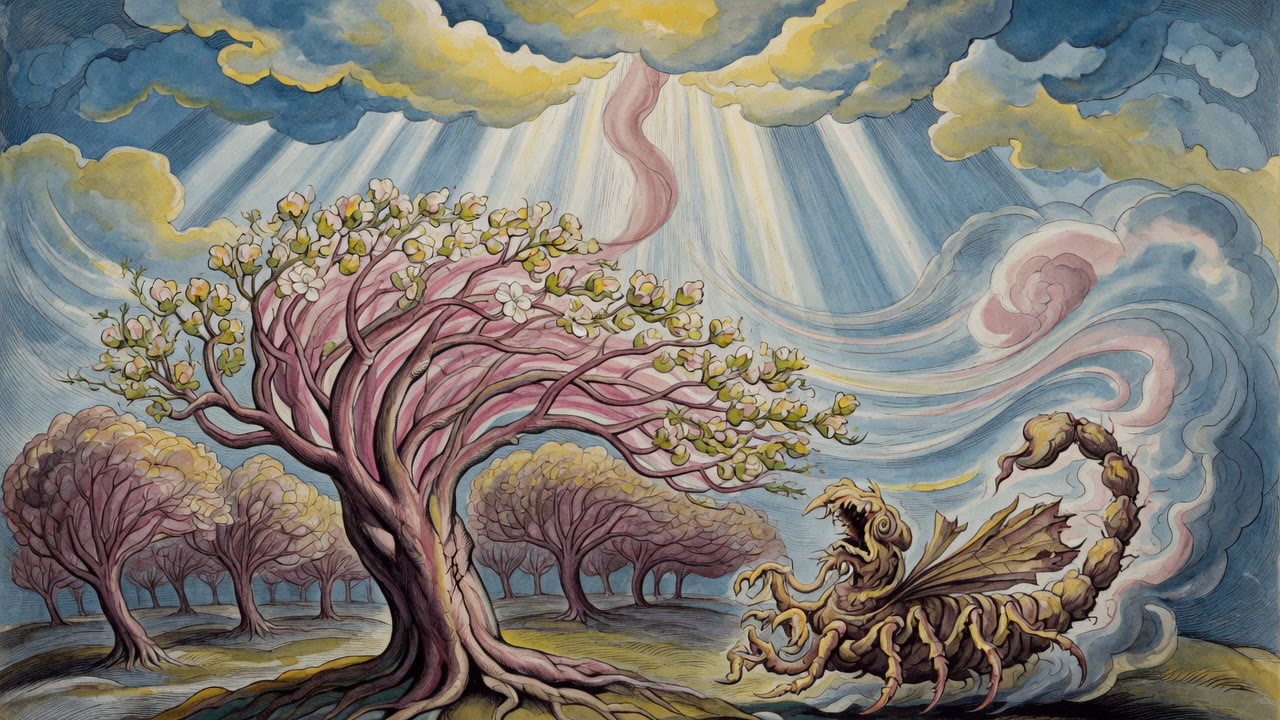
On Tu Bishvat, when the year of the trees turns, another pressure joins the table. Fruit is food and leaves are for healing, as Ezekiel saw along the banks (Ezekiel 47:12). Men and women take fruit in hand and try to eat with the roots in mind.

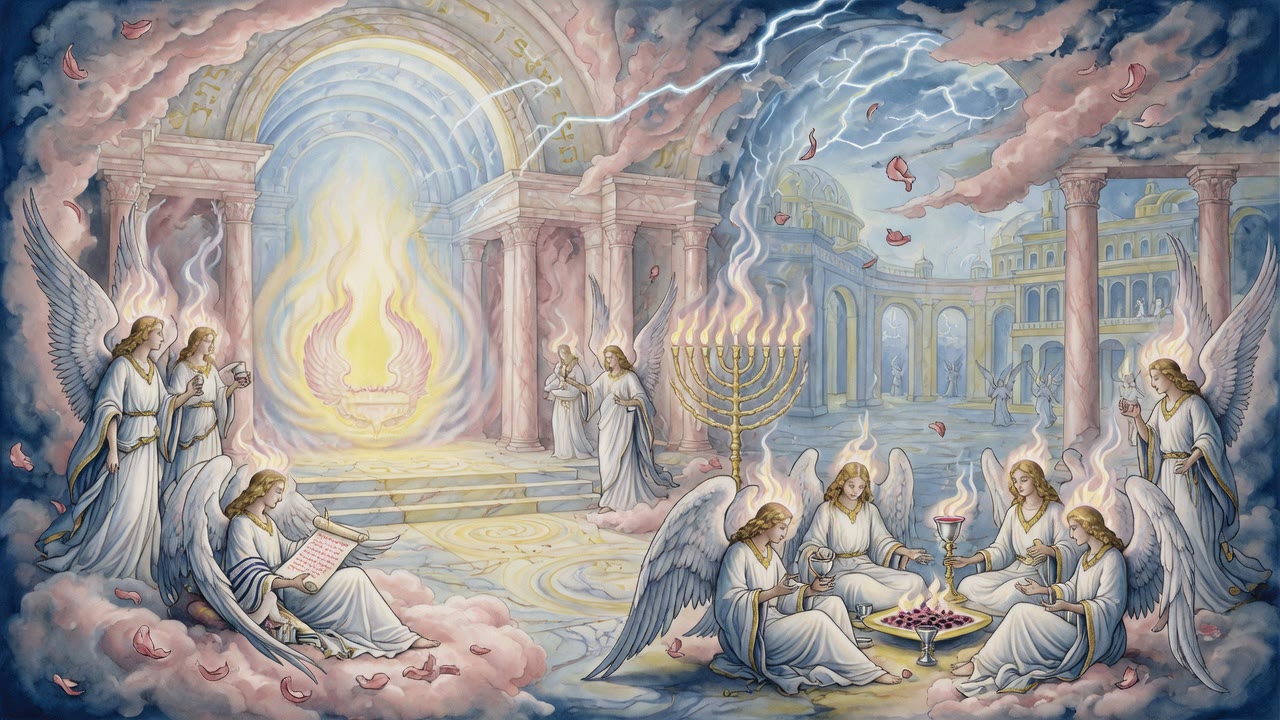
A prayer rises with the chew: through the sacred power of our eating and blessing, while we reflect on the secret of their supernal roots, let the supernal sap be aroused. In some mouths the Hebrew lets saraf mean sap and angel at once. Stir the sap. Stir the angel.

That table is the opposite of the market bite. Same fruit family. Different posture of the neck. Children learn the names of fruits as if learning the names of guests.

An old man held a raisin so long before eating that a boy laughed. The old man said he was waiting for the angel to sit down. The boy stopped laughing and waited too.

A Second Season for the Orchard

If the blessing is said, the angel fills. Favor and the power to grow a second time move through the appointed watchers of figs and olives and etrogim. If the blessing is withheld, the man has interrupted manifestation. He has treated creation as a corpse to strip rather than a living gift to answer.

Toward evening the robber felt only a slight emptiness after sweetness. He told himself he needed richer food. He did not tell himself he needed a sentence that begins with Blessed are You.

The apple core hit the dust. Above, the thin angel kept its post, hoping the next hand would be slower, and honest, and full of names.

Night wind moved the market awnings. Somewhere a late buyer whispered a blessing into the dark and bit. The flow, small as a thread, began again.

The next step was small and irreversible, the kind of step that makes a life turn without drama.


← All myths

From the tradition

Sources

3 sources

The texts behind this telling. Some cards carry a translation of the source; others are our own retelling of it, and each card says which. Every card links out to the original.

Peri Etz Hadar 1:4Peri Etz Hadar

Retold in our words. Read the original at the link below.Pri Etz Hadar, Aharon N. Varady transcription and Miles Krassen translation · CC-BY

Think about biting into a juicy piece of fruit. It's delicious. But according to some fascinating Kabbalistic teachings, there's a whole lot more going on than just satisfying your taste buds.

The Peri Etz Hadar, a collection of Kabbalistic teachings, tells us that enjoying the bounty of this world without saying a blessing is akin to being a… robber! Strong words, I know. But why?

The key is the concept of shefa (שֶׁפַע), often translated as divine abundance or flow. The blessing, it's said, draws down this shefa. It's not just about saying "thank you" – although that's certainly part of it. It's about actively participating in the cycle of creation, acknowledging that everything we have comes from a higher source.

An angel assigned to that very fruit you're about to eat. According to this teaching, that angel is nourished by the shefa that comes from the blessing. This nourishment allows the angel to, in a way, replenish the fruit, ensuring that there's always more where that came from. A cosmic system of give and take.

So, what happens if you just gobble down that apple without a second thought, without a blessing? Well, the Peri Etz Hadar suggests you've interrupted that flow of shefa. You've prevented that divine power from manifesting in the world. You've essentially starved the angel of its spiritual sustenance. And as a result, the angel's power is diminished because it no longer possesses the shefa needed to replenish the fruit.

That's why you're called a robber. You've taken something without giving back. You've consumed an aspect of creation without acknowledging its spiritual source, essentially eliminating the spiritual element it contained.

It's a concept we also see echoed in the Talmud (B. Berakhot 35b), which emphasizes the importance of blessings before meals.

Say a blessing. Connect to the shefa, and remember that you're part of something much bigger than yourself. Are we really just passive consumers, or active participants in the ongoing miracle of creation?

Full source
Peri Etz Hadar 3:6Peri Etz Hadar

Retold in our words. Read the original at the link below.Pri Etz Hadar, Aharon N. Varady transcription and Miles Krassen translation · CC-BY

Peri Etz Hadar, a profound work, explores the mystical significance of the natural world. It reminds us, drawing on (Ezekiel 47:12), that "Its fruit is food and its leaves a source of healing." On Tu Bishvat, the New Year for Trees, when we celebrate the budding and renewal of life, we remember that "a person will earn with its fruit.." as it says in (Song of Songs 8:11), "producing fruit after its kind," like (Genesis 1:11) tells us. It's a time when the days of budding are full for the fruit of the supernal tree, "the tree of life which is in the midst of the garden" (Genesis 2:9), making fruit above.

What does it all mean? It's about the interconnectedness of the physical and spiritual realms. The fruit we eat isn't just sustenance; it's a conduit to a higher plane.

There's a beautiful prayer that encapsulates this idea. It asks that "through the sacred power of our eating fruit, which we are now eating and blessing, while reflecting on the secret of their supernal roots upon which they depend, their supernal sap will be aroused.."

Here's where it gets really interesting. Some versions of this prayer, as noted by R’ David Seidenberg, include the words “יתעוררו שרפיהן” (yitoreru sarafeyhen). The word saraf can mean both "angel" and "sap," like syrup. Given the style of the author, it's likely intended to mean both! So, are we asking for the sap to be aroused? Or are we asking for the angels to be stirred? Perhaps both! How cool is that?

This prayer continues, asking that shefa – favor, blessing, and bounty – be bestowed upon them. May the angels appointed over them also be filled by the powerful shefa of their glory, may it return and cause them to grow a second time, from the beginning of the year and until its end, for bounty and blessing, for good life and peace.

It’s a powerful reminder that when we eat, especially when we eat consciously and with intention, we're not just nourishing our bodies. We're engaging with the divine, awakening the spiritual energies that sustain the world. We're participating in a cycle of growth, renewal, and blessing that extends from the roots of the trees to the highest heavens.

So, the next time you bite into a juicy piece of fruit, take a moment. Reflect on the supernal roots, the flow of shefa, and maybe even the angels dancing in the sap. You might just find that you're tasting something far more profound than just sweetness.

Full source
Baal HaSulam's Introduction to Zohar 24:1Baal HaSulam's Introduction to Zohar

Retold in our words. Read the original at the link below.Sefaria-hosted English translation · CC-BY

Jewish mysticism has a lot to say about that feeling.

Specifically, it explores the nature of the guf, the body. But not just the physical shell we inhabit. In the teachings of Baal HaSulam, particularly in his "Introduction to Zohar," the body represents something far more profound. He sees it as the very embodiment of our selfish desire to receive. Everything we crave, everything we acquire, is filtered through this lens of wanting. And according to Baal HaSulam, this desire, this ratzon l'kabel, is inherently flawed. It's like a leaky bucket – no matter how much you pour in, it never truly fills.

Why is that? Because, he suggests, this desire wasn't meant to last. It was created, initially, only to be eventually destroyed. To be eliminated. Harsh. But hold on..there's a purpose to this apparent demolition.

It's all part of a process, a journey toward a "perfect third stage," the Gmar Tikun, or end of the repair. That's where things get interesting. The idea is that by recognizing the limitations of our selfish desires, we can transcend them. We can move beyond the fleeting pleasures of the physical world and connect with something deeper, something more lasting.

And that's why, Baal HaSulam argues, the body – along with everything it amasses – is ultimately "lowly, mortal, and temporary, like a passing shadow." It's not meant to be our ultimate focus. It's a vehicle, a stepping stone.

So, the next time you find yourself caught in the cycle of wanting and acquiring, remember the teachings of Baal HaSulam. Remember the guf, the body, and its inherent limitations. Maybe, just maybe, recognizing that emptiness is the first step toward finding true fulfillment.

Full source