Wheat, Wine, and Carob Each Carried a Different Spelling of God's Name
A guest from another town reached to eat for hunger alone. A hand caught his wrist, gentle and firm. Hunger is invited, the host said. Haste is not.
Table of Contents
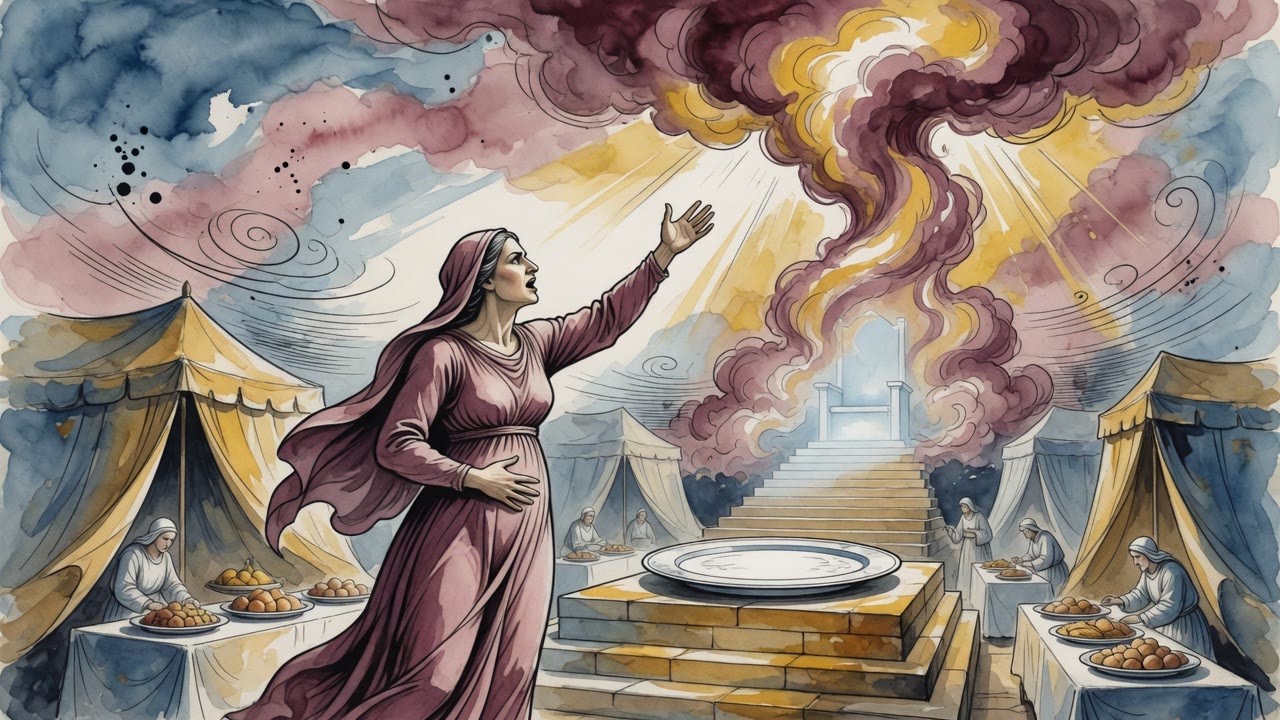
Wheat hit the bowl with a dry rattle before anyone spoke a blessing. The table was already crowded with olives, grapes, a rough citron, and a carob pod that looked like leather pretending to be food. No one reached. Hands waited for order.
 Click for full size
Bread of Many Kinds
The first move was not fruit. It was grain. Someone broke a piece that still smelled of the oven and held it until the room settled. The intention, drawn from older mystical teaching, was not "fuel for the night." It was minei mezonot, kinds of nourishment, spoken as if each kind could carry a different weight of holiness.
Only after that did oil from the olive rise on a tongue. Only after oil did the white wine catch light. The blessing borei peri ha-gafen landed on a cup held still enough that the surface did not shake. The kavvanah (directed intention) was not the color of the wine. It was a rearranged Name, letters of the Ineffable set in an order whose count reaches seventy-two in the old reckoning, a gate the Zohar keeps half closed and half open.
Pomegranate Seeds and the Citron's Weight
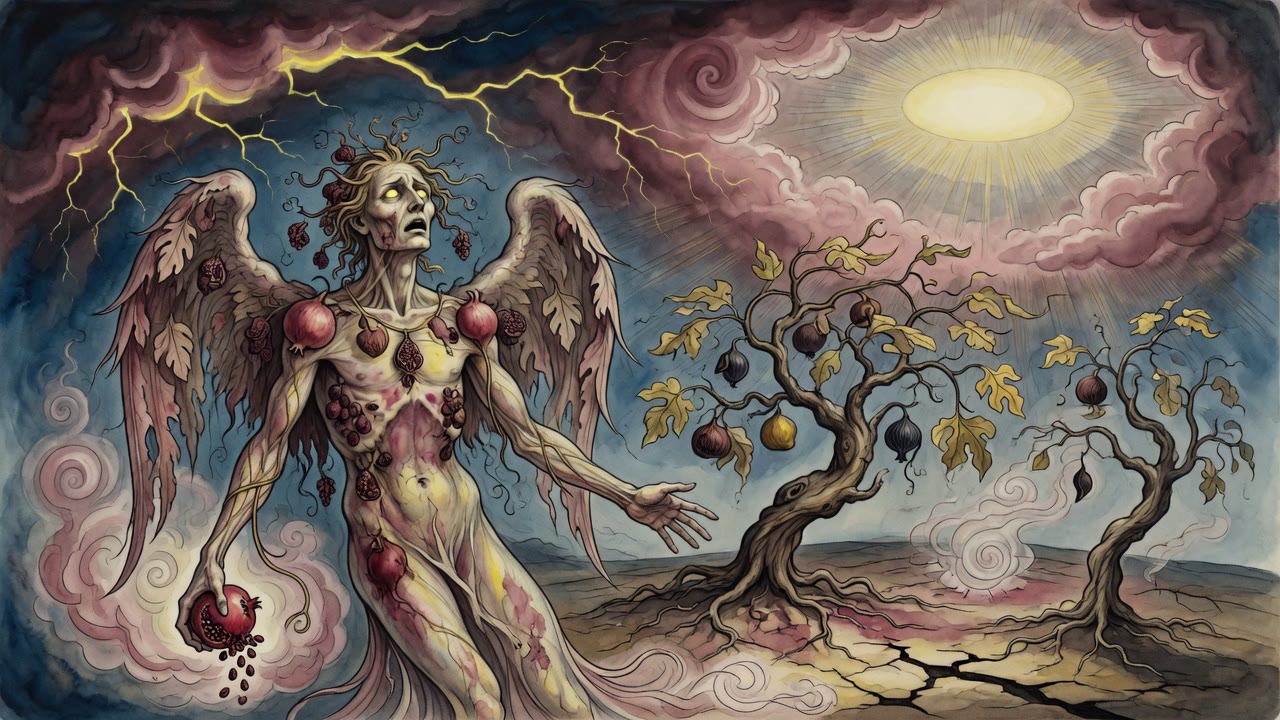
He split a pomegranate and the seeds scattered like a small army refusing ranks. Hundreds of closed rooms in one fruit. The intention named for that moment was a permutation of the four letters, a pattern the Tikkunei Zohar sets near abundance and the crowded potential inside a single skin.
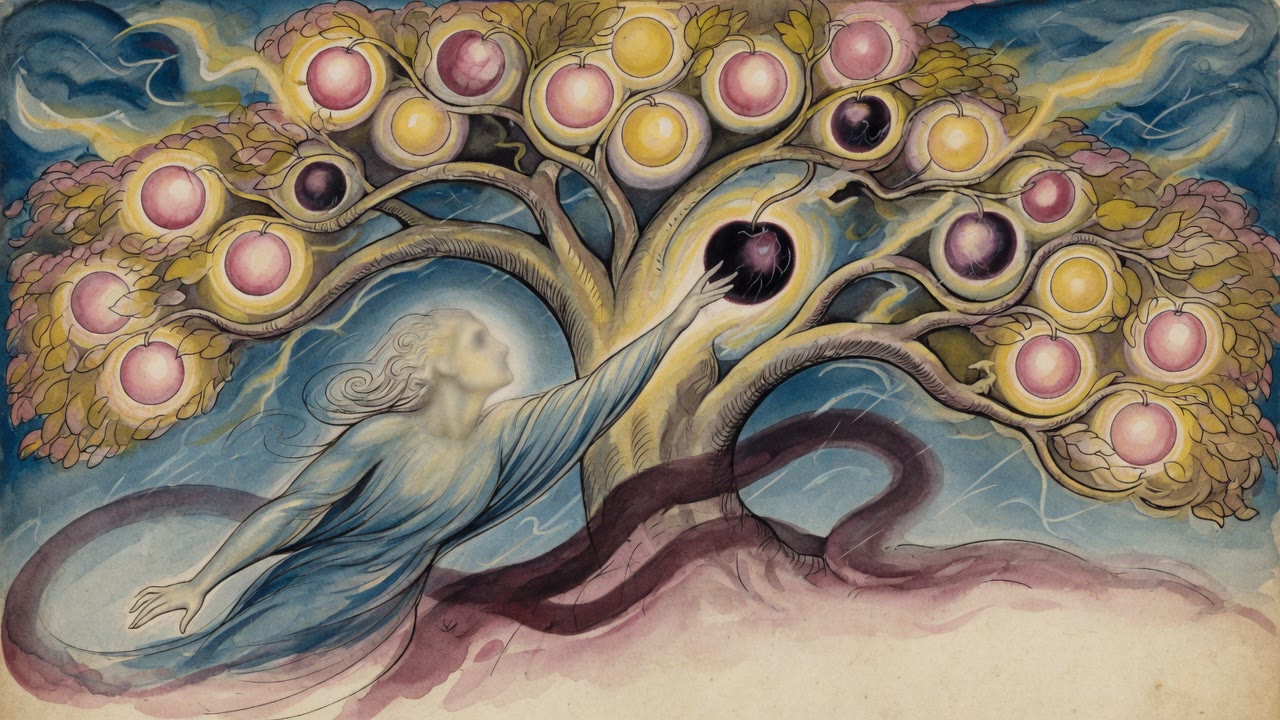
The etrog came next, heavy, ridged, fragrant enough to change the air above the cloth. It is the fruit of Sukkot (the autumn festival of booths), but on this night it is also a map. Another order of the same four letters. Another window. The apple after it, twice mentioned in the orchard manuals, did not try to compete with the citron's perfume. It only sat, ordinary and dangerous in its ordinariness, because ordinary fruit is where attention usually fails.
Each bite asked for a different focus. The mouth that chews without intention is a door left ajar. The mouth that chews with a Name is a lock that still opens, but only for the right key.
Carob and the Taste That Is Almost Chocolate
The carob snapped. Sweetness arrived late, dry, a little like earth remembering sugar. While it was still on the tongue, the Name shifted again: another four-letter order, the one the Zohar's Faithful Shepherd strand ties to this fruit specifically. He did not explain it to the table. He ate slower.
Pears waited beside it, almost shy. For them the mind turned not to a new fruit-name but to the opening of a mishnah in Berakhot, blessings as architecture. Even bread's closing letters can be counted until they equal the joined values of the Ineffable Name and Adonai, ninety-one, a marriage of what is spoken and what is never spoken. The table had become a study hall that still allowed crumbs.
Why the Seder Refuses a Single Flavor
Someone asked why so many fruits if one blessing could cover them. The answer was not ecology. It was pressure. A single flavor trains a single habit. Many flavors force the mind to change gear, fruit by fruit, Name by Name, so the night cannot collapse into snack and chatter.
Grapes returned near the end, ordinary market grapes, and still the blessing for the tree's fruit was said as if the first human orchard were listening. The white wine was finished second, darker wine for later stations. Nothing was wasted that could still carry intention.
When the cloth was folded, the room smelled of citrus oil and wine that had gone flat. The Names did not stay written in the air. They stayed, if at all, in the bodies that had refused to eat without aiming. Outside, Shevat's cold kept its own counsel. Inside, thirty small acts of attention had been stacked like coins on a scale, waiting to see which way the year would tip.
Oil lamps made every seed look larger than it was. Shadow of a fig on the wall could have been a continent. Someone joked that the wall-map was more accurate than the king's. The joke died into a blessing and no one mourned it.
A guest from another town tried to skip the intention and eat for hunger alone. A hand on his wrist stopped him, gentle, firm. "Hunger is invited," the host said. "Haste is not." The guest blushed and learned the pace of the night in one withheld bite.
Cups were refilled with less wine than pride would pour. Measure is part of the map. Excess floods intention the way floodwater ruins seed that needed a season, not a drowning.
← All myths