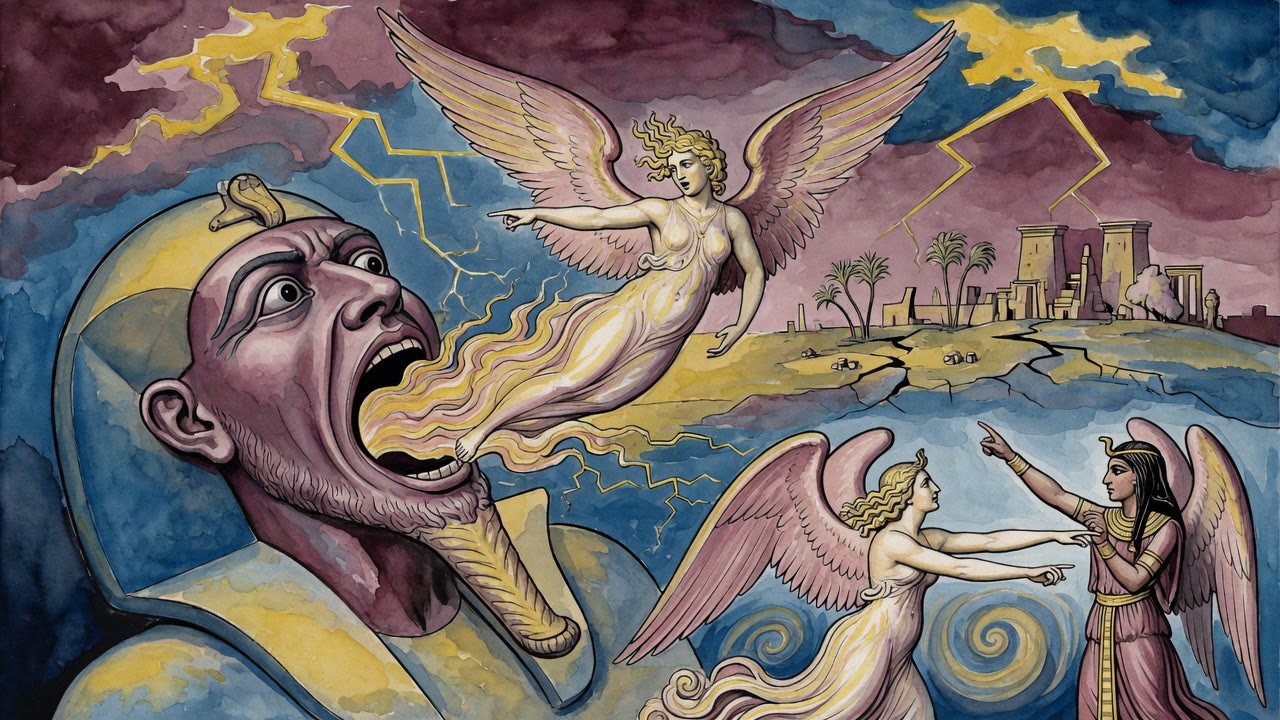
Pharaoh Used Babies as Spies Against Hebrew Mothers
Egyptian women carried their own infants into Hebrew houses. A hidden baby heard another child and cried back from the floor.
Table of Contents
 Click for full size
Egyptian Infants Called to the Hidden Boys
Pharaoh's bailiffs had already gone house to house, and still Hebrew boys were being born. He feared the numbers. Officials at the door could be lied to. A crying infant could not.
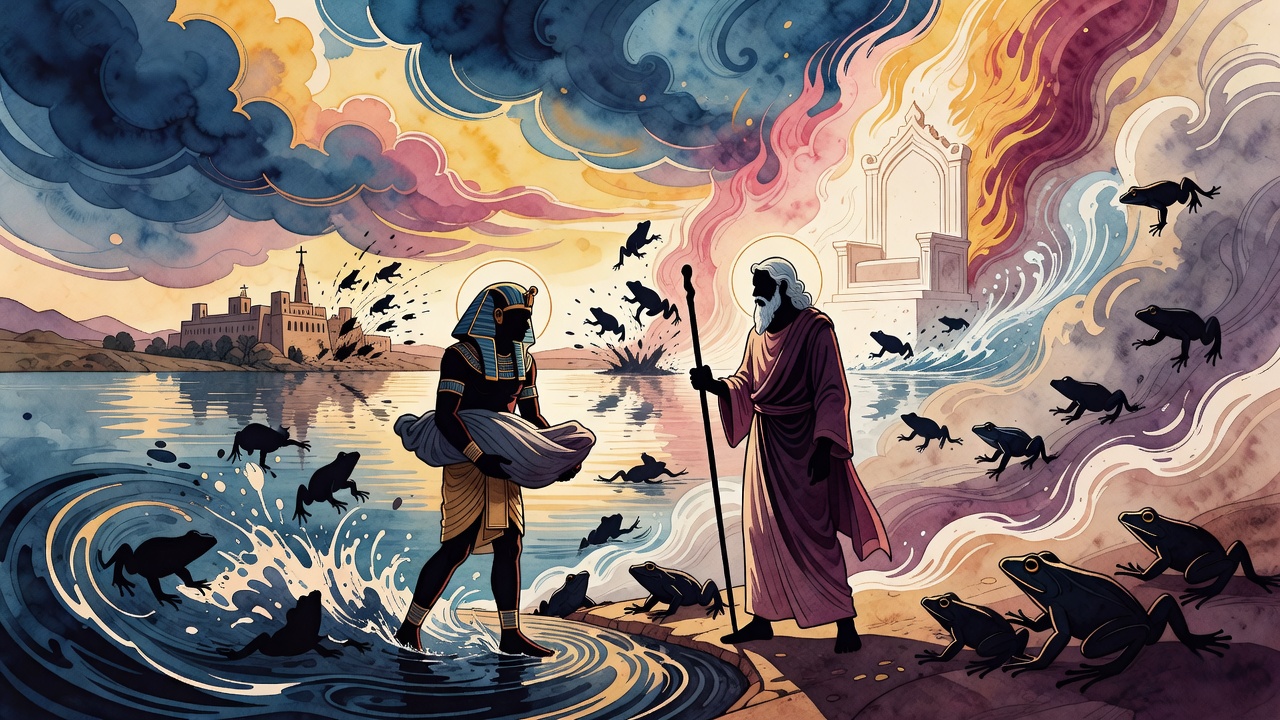
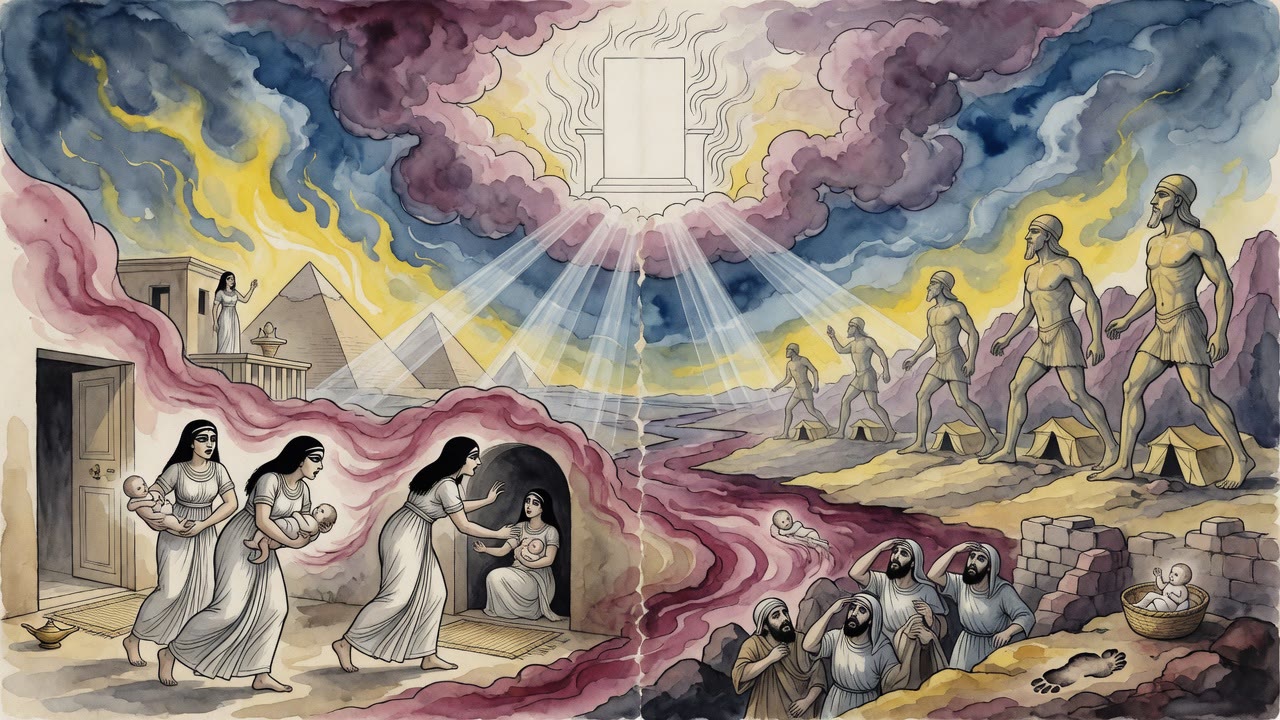
Egyptian women, each holding a nursing child of her own, came calling on Hebrew households with neighborly faces. They sat down. They talked. The visiting baby cooed, or cried, and any Hebrew infant hidden under a pile of cloth or beneath a floorboard heard another child and answered. A mother's hand clamped over a mouth could not always muffle the answer in time. Then the Egyptian women took the Hebrew child away.
Soldiers a household can hide from. A baby cannot be threatened into silence.
The Midwives Would Not Kill
Behind the visits was an older order. Pharaoh had ruled that Hebrew women employ none but Egyptian midwives, who were to learn the hour of delivery and let no male child escape alive. If parents evaded the command and kept a newborn boy in secret, they and all belonging to them were to be killed.
Shiphrah and Puah refused. They feared God more than they feared Pharaoh. When they stood before him they told him Hebrew women were not like Egyptian women. They gave birth before the midwife arrived. Before he could challenge them, they were gone.
Shiphrah beautified the infant, smoothing the newborn's skin. Puah murmured and cooed until the blue baby breathed. From outside the door it could look like incompetence. Inside the room it was a refusal.
The Field Took the Children and Fed Them
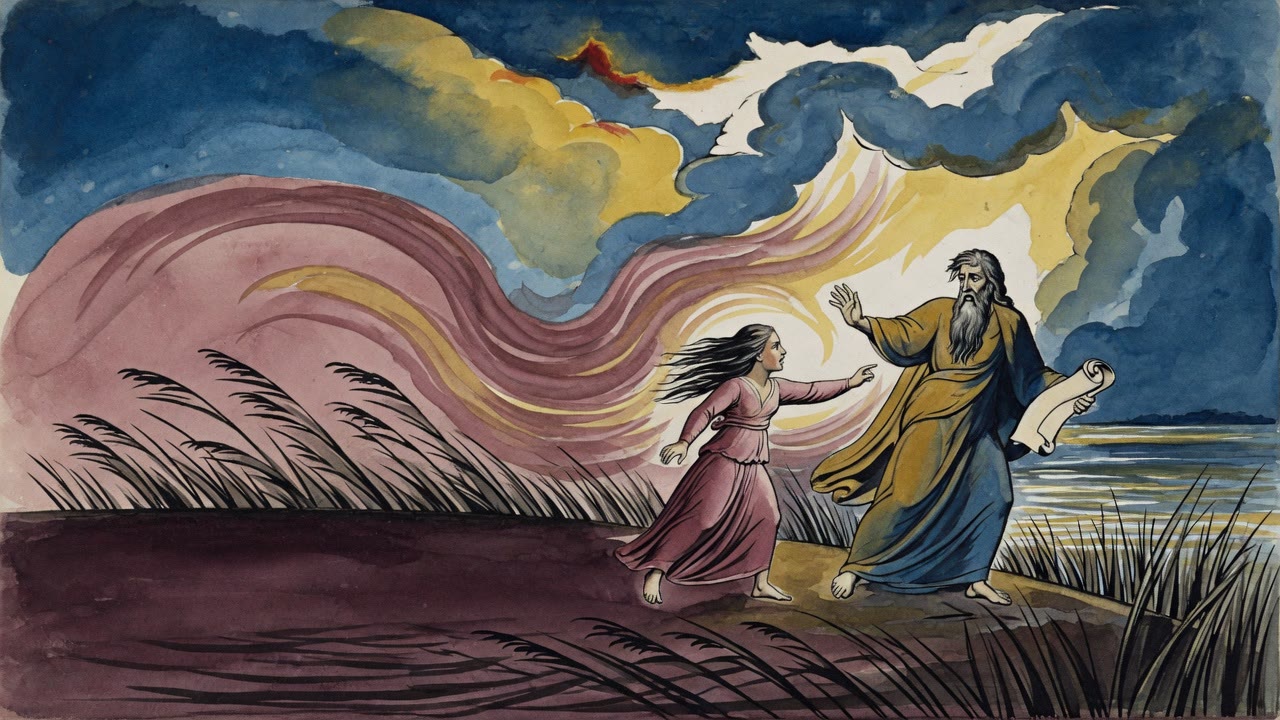
Some women still went out to the field when their time arrived, gave birth, left the child, and walked home. God, who had sworn to the ancestors to multiply them, sent an angel to wash the babes, anoint them, stretch their limbs, and wrap them. Then he gave them two smooth pebbles. From one they sucked milk. From the other, honey. God caused the hair of the infants to grow down to their knees and serve them as a garment, and then He ordered the earth to receive them.
The ground held them until they grew. Then it opened its mouth and vomited forth the children, and they sprouted up like the herb of the field. Each returned to his father's house.
Pharaoh watched the numbers and understood the scheme was not working. He escalated. Drown them in the river. Now the machinery was in the open.
The Spies Measured Themselves as Grasshoppers
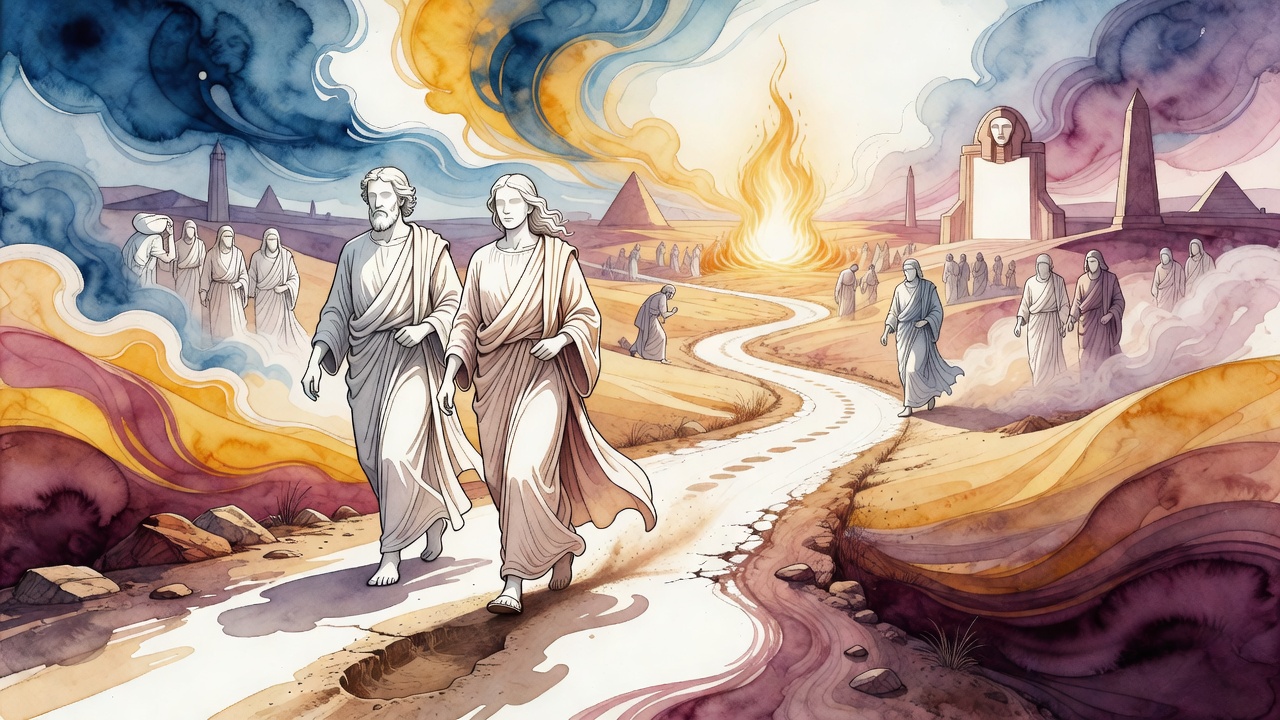
Generations later, twelve men stood at the edge of Canaan and looked at the people inside it. They had walked out of Egypt. They had watched the sea split. They had eaten bread from the sky. None of it was enough when they looked at the Anakim, the giant clans, and felt in their stomachs something old.
Caleb's voice did not turn them. The spies went further. "We be not able to go up against the people, for they are stronger than we, they are so strong that even God cannot get at them. The land eats its inhabitants through disease. All the people we saw in it are men of wicked traits."
"And here we saw men upon sight of whom we almost swooned in fright, the giants, the sons of Anak. We were in our own sight as grasshoppers, and so we were in their sight."
God Objected to the Second Half of the Sentence
God answered the last words. "I have no objection to your saying, We were in our own sight as grasshoppers. I take it amiss if you say, And so we were in their sight. How can you tell how I made you appear in their sight? How do you know if you did not appear to them to be angels?"
They had decided in advance what the giants saw. They had handed the enemy a verdict the enemy had not spoken. Pharaoh had once used a baby's cry to make hidden children betray themselves. The spies, standing at the border with forty years of miracles behind them, betrayed themselves with a sentence about their own size.
Fear of Hebrew babies had been Pharaoh's. Fear of giants was the spies'. The second fear chose a measurement God had not given. The grasshopper was not in the land. It was in the report.
← All myths