Jacob Blessed Pharaoh and the Nile Rose to Meet His Feet
A hundred and thirty years old, leaning on a staff, Jacob walked into Pharaoh's throne room and blessed the most powerful man in the world. The Nile answered.
Table of Contents
 Click for full size
The Giant in the Throne Room
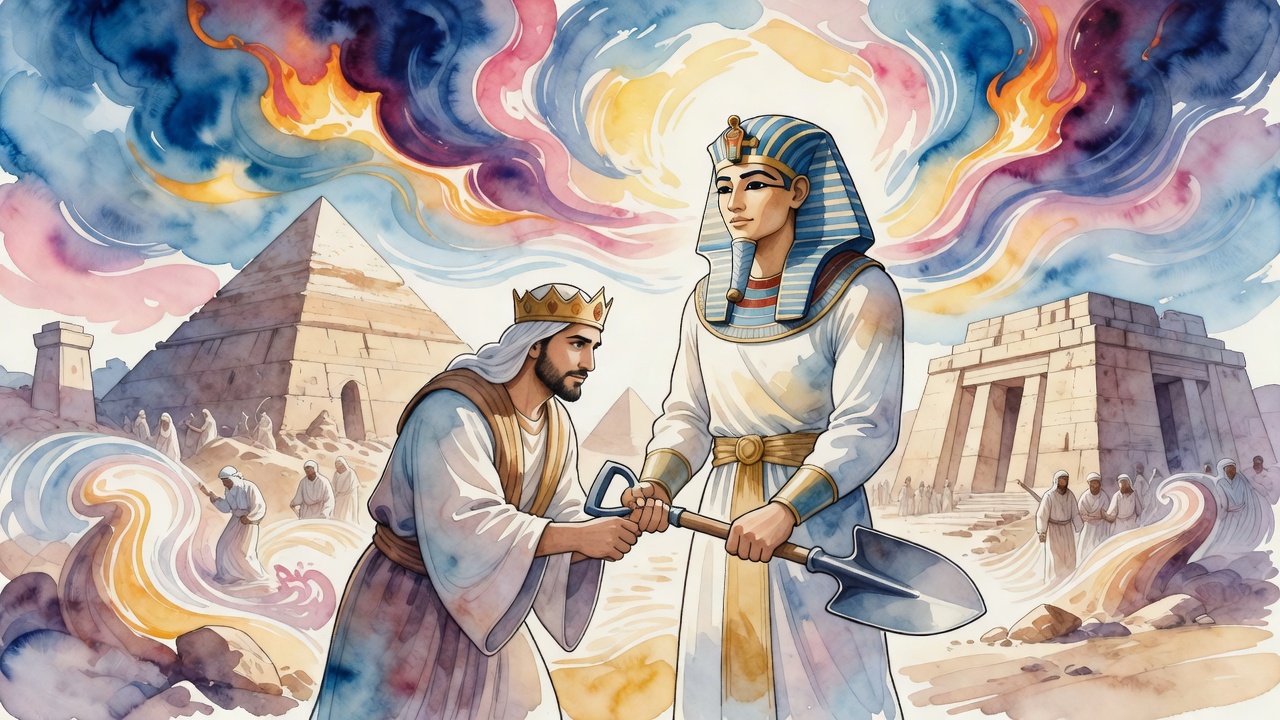
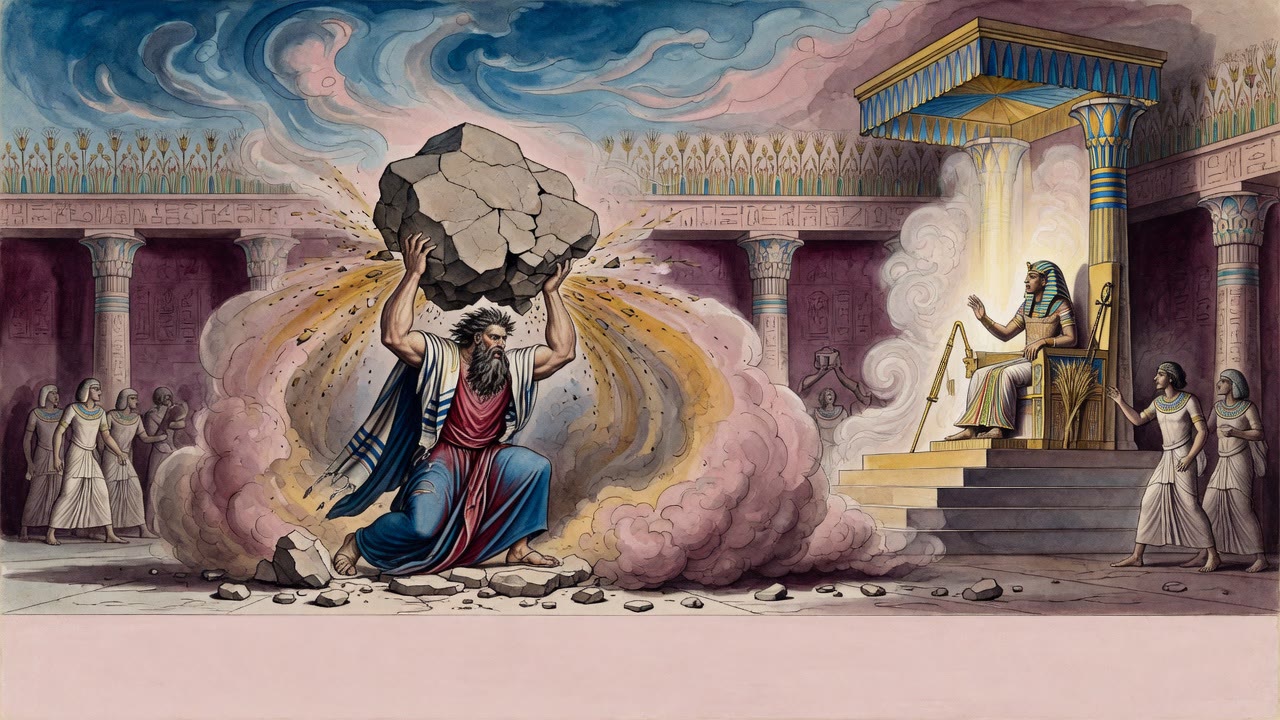
When Joseph led his father into the great hall of Pharaoh, there was a man standing beside the throne who recognized the old patriarch immediately. This was Og, the legendary giant-king of Bashan, the last man alive who had personally known Abraham. He had survived the Flood. He had outlasted every civilization in the ancient world. He was the living memory of a previous age, and when Jacob shuffled into the hall leaning on his staff, Og stared.
Pharaoh saw him staring and spoke. "You used to tell me Abraham was a sterile mule," he said. "You used to say his line would die with him. Look at his grandson. Look at the family behind him. Seventy people." The math was not favorable to Og's predictions.
Og, the tradition records, could not quite believe what he was seeing. He had known Abraham as a young man, and the face on the old man in front of him had the same arrangement of features, the same way of standing as though the ground belonged to him personally. He was convinced for a moment he was looking at Abraham himself, preserved across a century.
The First Thing Jacob Did Was Bless
Genesis 47:7 records the scene in a single clause: Jacob blessed Pharaoh. Then they had a conversation about how old Jacob was, which is not a normal conversation between a refugee and the ruler of the world's most powerful empire, and then Jacob blessed Pharaoh again, and the old man walked out.
The Torah does not say what the blessing was. The rabbis who stared at that verse for centuries built an answer across multiple sources. The blessing, they said, was specific. Practical. The kind of blessing that proves itself immediately rather than waiting for a future generation to confirm it.
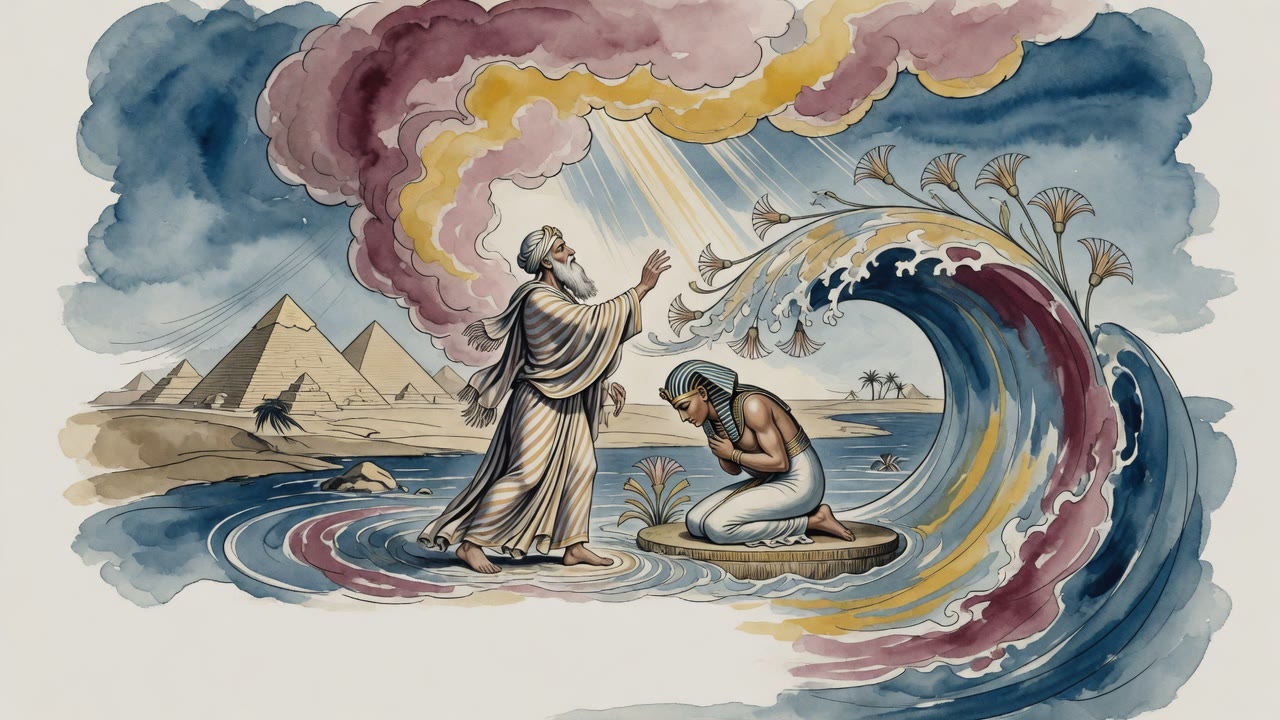
Bamidbar Rabbah, the medieval midrash on Numbers, quotes Rabbi Berekhya: Jacob blessed Pharaoh and said "may the Nile rise to your feet." A promise about the flood. In the ancient Egyptian understanding of the world, the Nile's annual inundation was the central event of the economy, the calendar, and the theology. Jacob was blessing the thing that made Egypt Egypt.
The River That Listened
And the Nile rose. Not in the future. Not as a long-term prediction. The tradition says it happened while Jacob was still in Egypt. Every year Jacob spent in Goshen, the Nile rose to meet his feet when he walked to the water, as though the river recognized the man the way Og had recognized his grandfather's face.
When Jacob died, the Nile went back to its normal behavior. Pharaoh noticed. The river that had been rising to honor the old patriarch's presence was no longer rising, and Pharaoh understood what that meant about the nature of the blessing he had received. It had not been a general good wish. It had been the specific attention of the divine presence on one man, and the man was gone.
The Grandfather Who Outshone the Law
Bamidbar Rabbah draws the comparison between Jacob's blessing and the divine protocol. When God told the Israelites at Sinai to build the Tabernacle, He implied that the divine presence would dwell among them and bless them. But Jacob, arriving laden with nothing but his age and his staff and the accumulated weight of everything that had happened to him, had already been distributing blessings beyond the contractual terms.
Rabbi Yehoshua ben Levi stated it plainly: Jacob outshone, in that moment in the throne room of Egypt, what God had promised for a later time. He did not outshine God. He demonstrated what a fully righteous man, standing in the right place at the right time, carrying the covenantal promise in his bones, could pour out on the world simply by opening his mouth.
Pharaoh, the tradition says, wept when Israel finally left Egypt. Not a conventional response from a man who had just had his economy and army destroyed. The rabbis connected it to the blessing. He had been living near the source of something enormous, and he had not entirely understood what it was until it was gone.
← All myths