Pharaoh's Judgment Arrived in Stages Instead of One Strike
The elders started for the palace with Moses. One by one they slipped off the road. At Sinai they were told to stop at the same mark.
Table of Contents
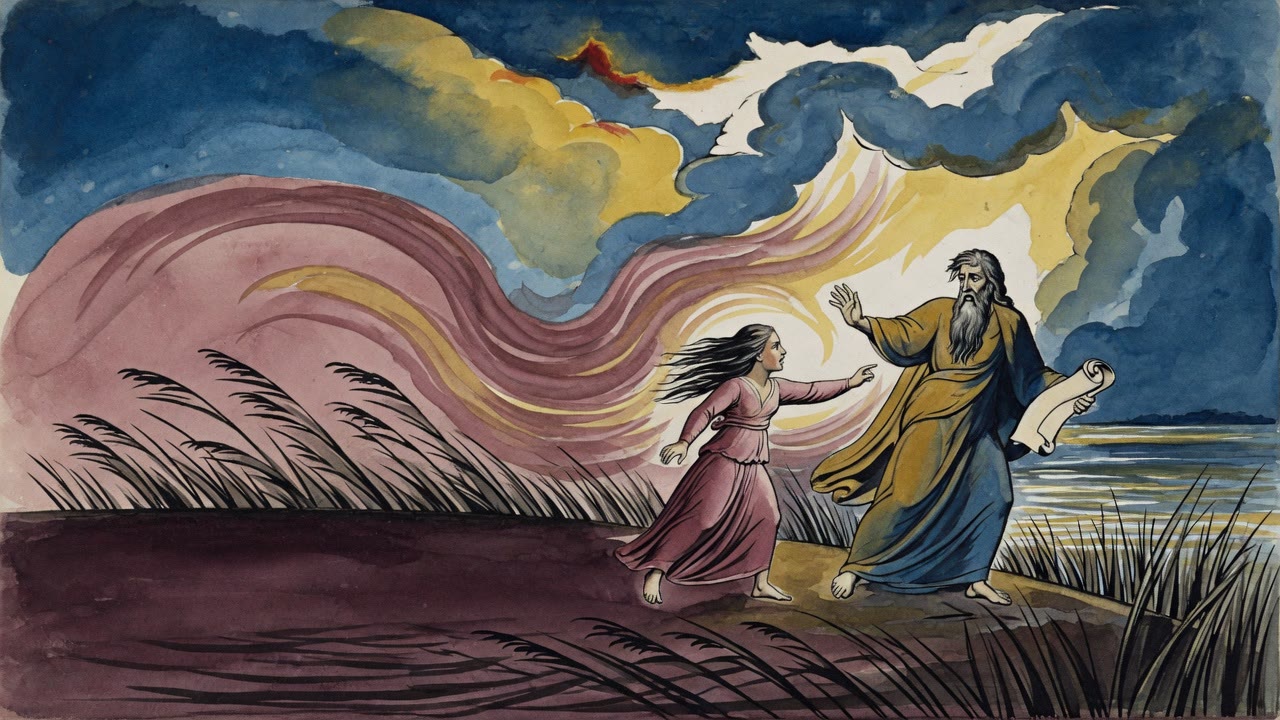
God told Moses to bring the elders of Israel with him when he walked into Pharaoh's court. They started out together. A procession that at least had the shape of authority. Men who had survived Egypt and grown old and been trusted with the community's grief. They walked down the road toward the palace with their staffs and their resolve.
 Click for full size
Then they started peeling off.
One at a time, in the Egyptian heat, they found reasons to stop. They slipped away, one here, one there, until the procession was down to Moses and Aaron alone at the palace gate. The most famous confrontation in Israel's memory had begun as a desertion. The men who were supposed to stand beside Moses at the moment of maximum danger had decided, each in his own private calculation, that something else was more important.
The Same Mark at Sinai
God noted this. When the time came at Sinai, He told the elders they could ascend the mountain only as far as they had walked with Moses toward Pharaoh. They had stopped short of the king. They would stop short of the summit. The gap between where they stopped and where they needed to be was the same gap in both scenes, measured in the same steps.
They waited on the slope until Moses came down again. The palace road had already drawn the line.
The Third Time Moses Refused
Aaron was there because Moses had already said no three times.
The last refusal had been the hardest. "See, the children of Israel will not hearken unto me. How, then, should Pharaoh hearken unto me?" Divine patience ran out. At first God had revealed Himself only to Moses, and the original intention had been that Moses alone would perform all the miracles. From that third refusal onward, the word of God was addressed to Aaron as well, and Aaron was given a share in doing the wonders.
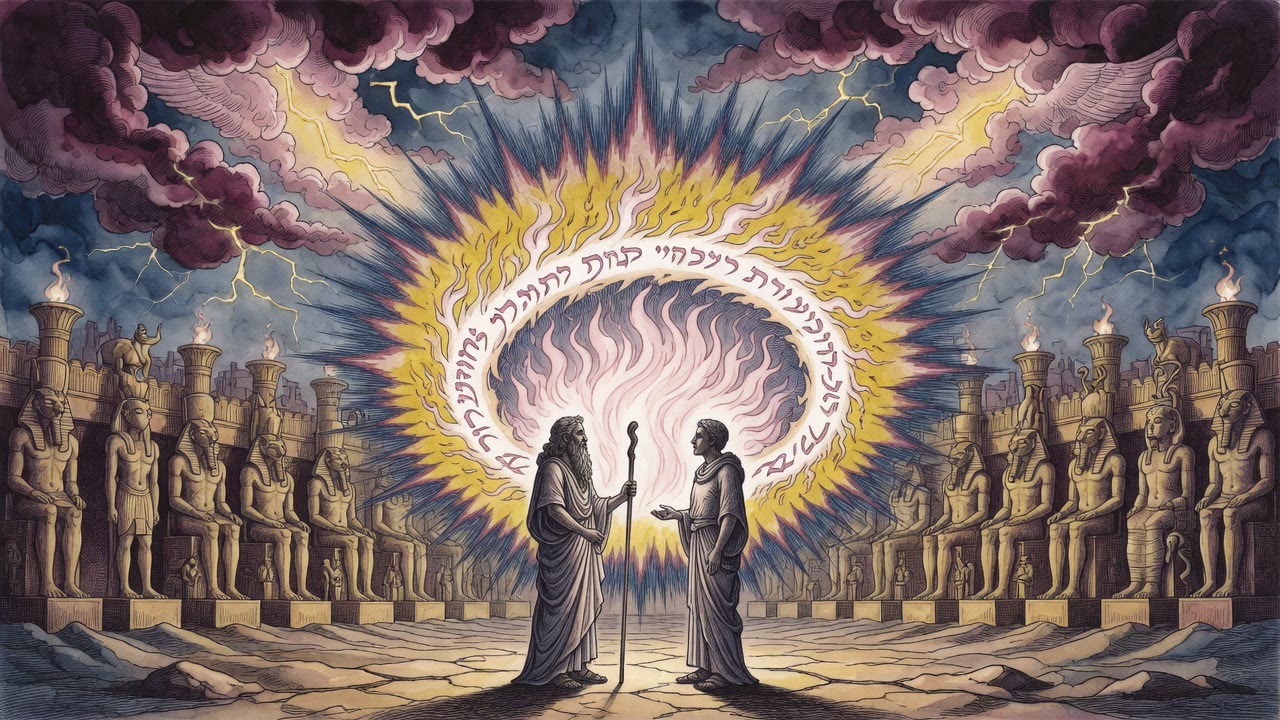
So the two brothers stood in the presence of the king, deserted by the elders, Moses already marked for having delayed, Aaron already appointed as the mouth. Pharaoh was not impressed. He had magicians who could replicate signs. He had a policy about Hebrew labor and no particular reason to revise it based on a shepherd's staff and a brother who could speak.
The Beasts Entered His House First
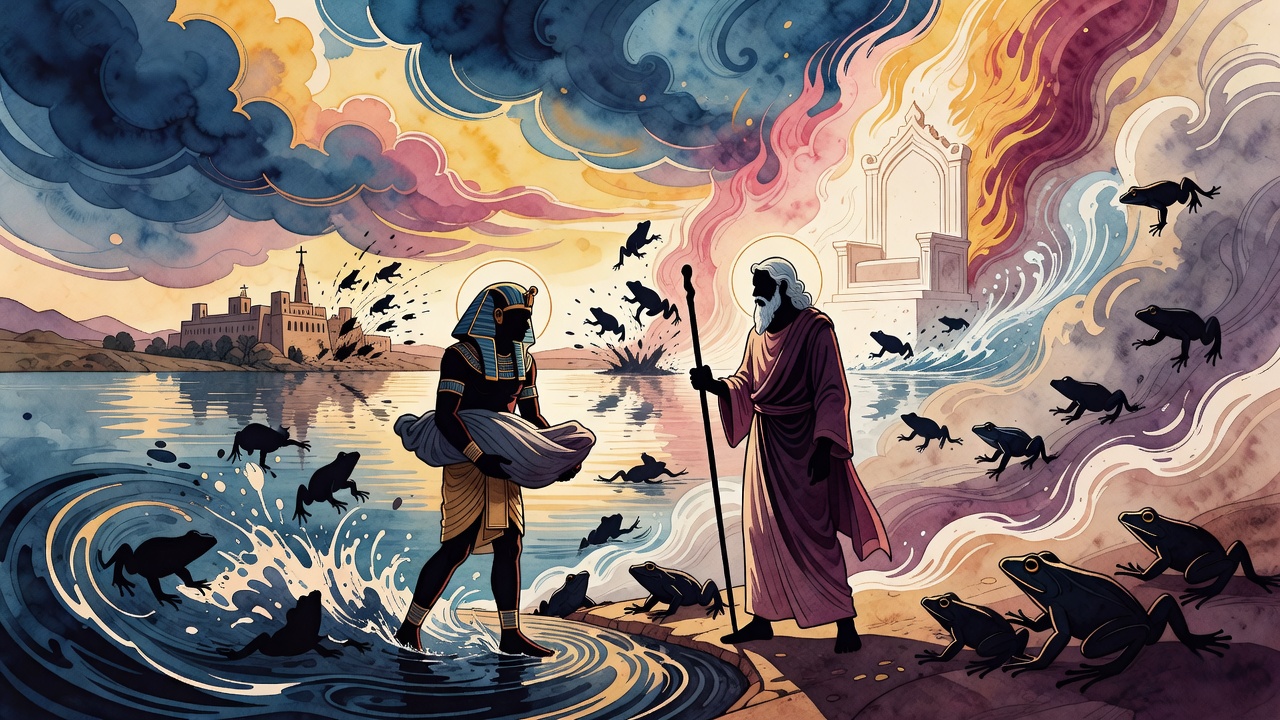
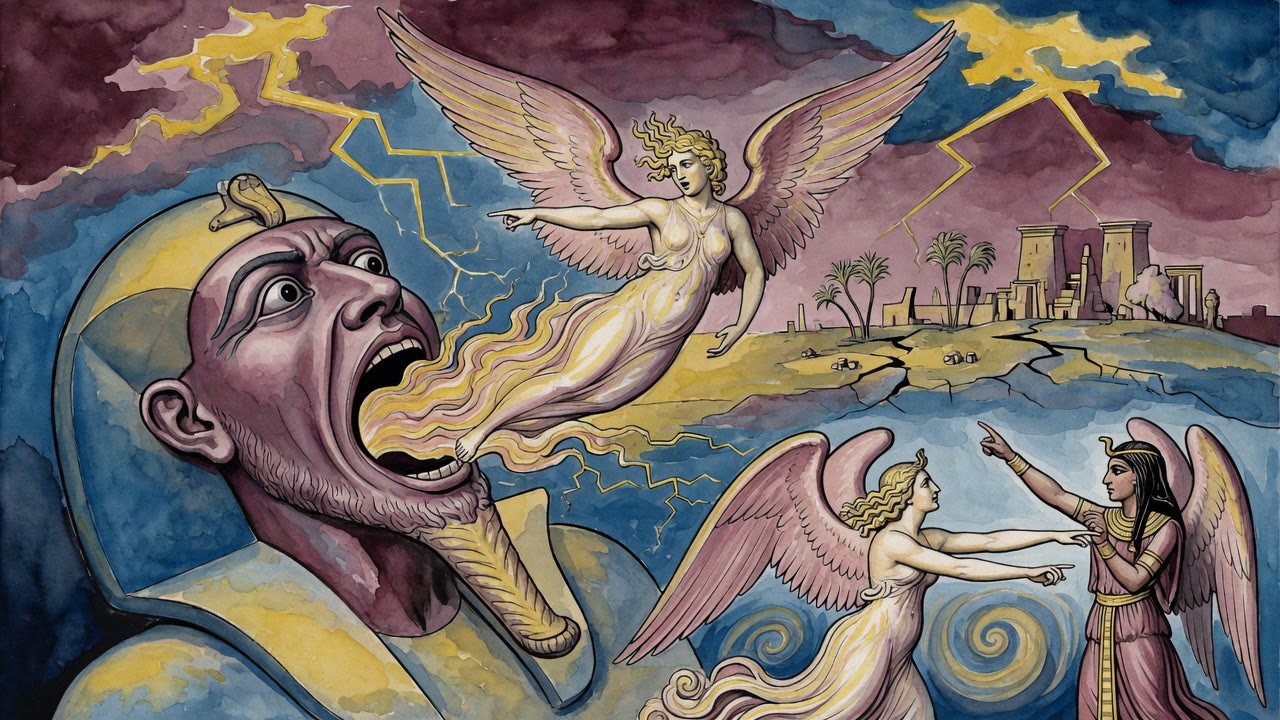
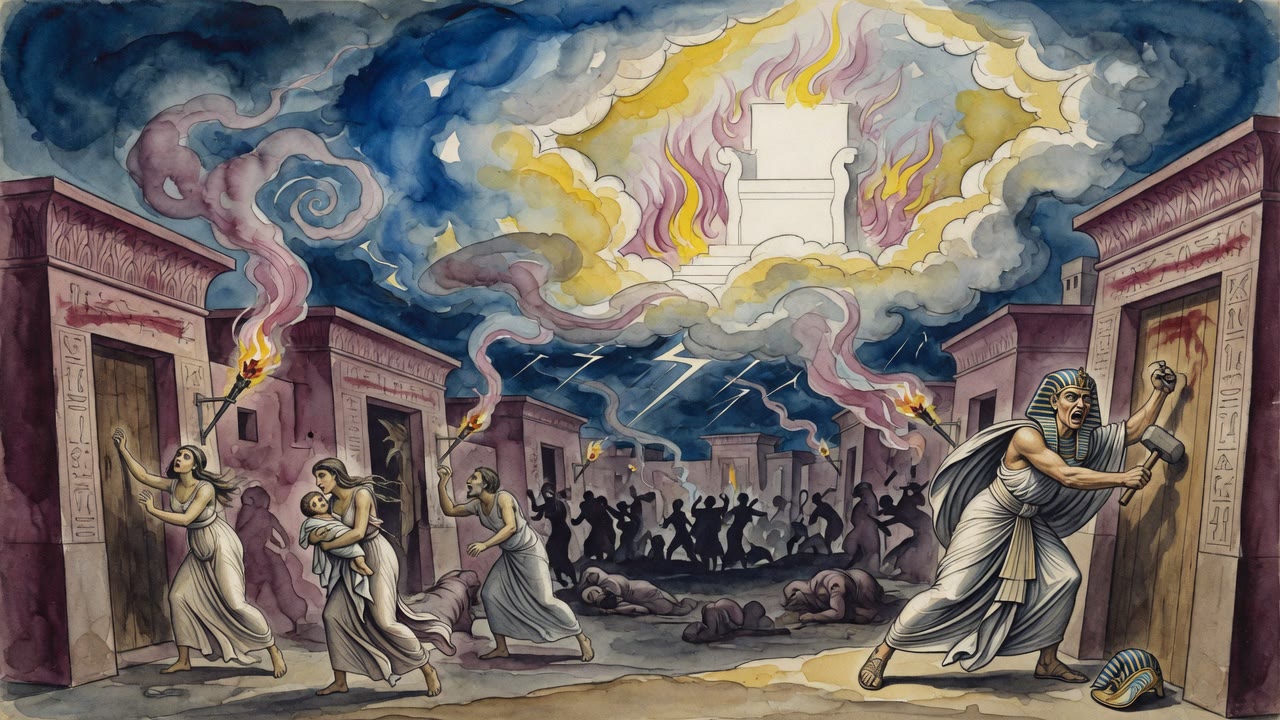
As Pharaoh had been the first of the Egyptians to lay evil plans against the children of Israel, so he was the first upon whom punishment descended. Into his house the mixed horde of beasts came first of all, and then into the houses of the rest of the Egyptians. Goshen, the land the Israelites inhabited, was spared entirely. God put a division between the two peoples.
Israel had committed sins enough to deserve punishment. The Holy One permitted the Egyptians to act as a ransom for Israel. The first man to plot was the first man to watch animals walk through his own rooms. Pharaoh's judgment arrived in stages instead of one strike. The staging was not delay. It was order.
The Piebald Mare and the Wind
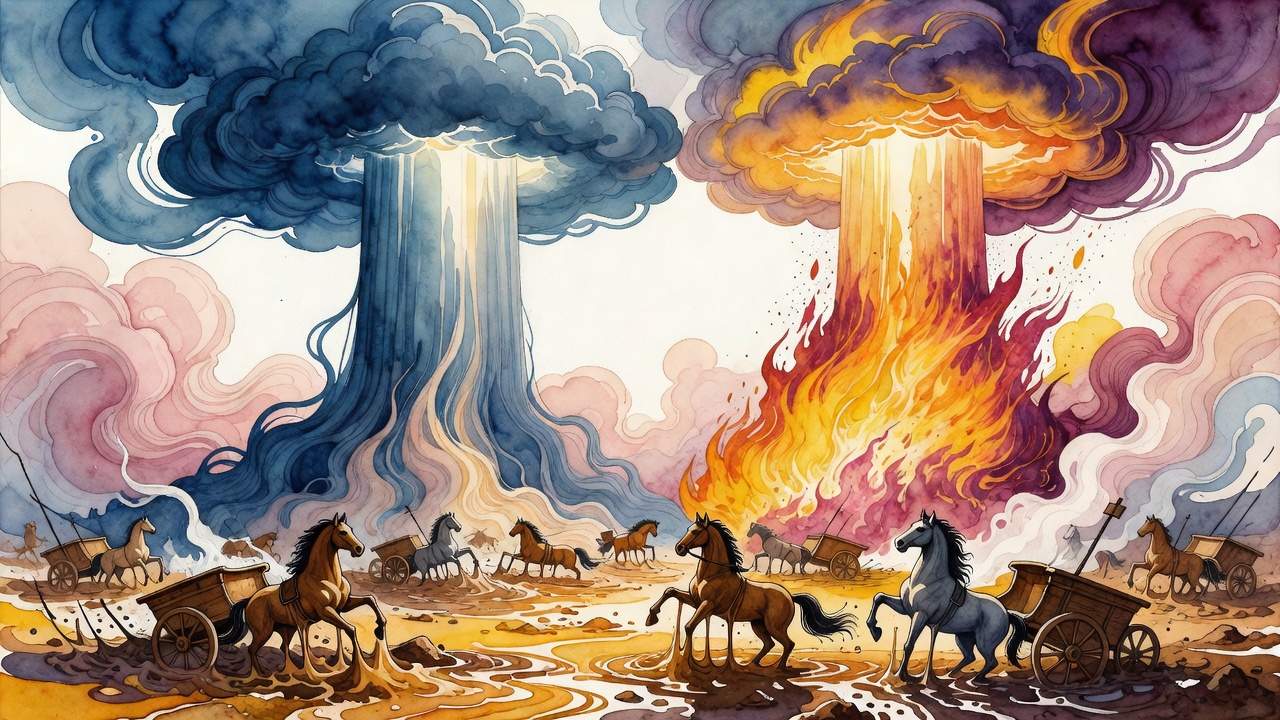
When Pharaoh prepared to chase the Israelites, he asked his army which of the saddle beasts was the swiftest runner, that one he would use. They said, "There is none swifter than thy piebald mare, whose like is to be found nowhere in the world." Pharaoh mounted the mare and pursued after Israel seaward.
While he was asking his army for the swiftest animal, God was asking the angels for the swiftest creature to use against him. The angels answered, "O Lord of the world, all things are Thine. Thou knowest well that among all Thy creatures there is none so quick as the wind that comes from under the throne of Thy glory." The Lord flew swiftly upon the wings of the wind.
A piebald mare against the wind from under the Throne. Pharaoh chose speed he could saddle. God chose speed that cannot be saddled.
The Last Foot and the First Foot
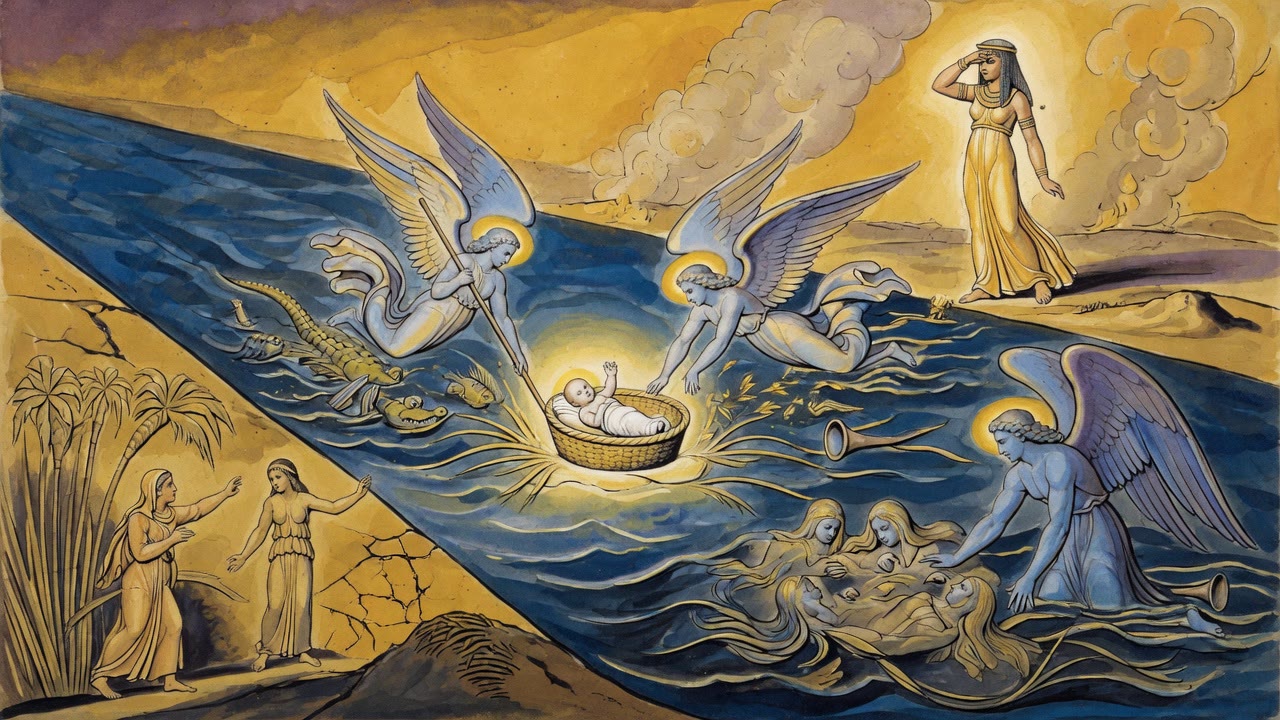
At the sea the Israelites looked back and saw the chariots coming. They were on foot, between the water and the army. They said to Moses, was there not enough room to bury us in Egypt, that you have brought us here to die?
Moses told them to stand still and watch. He lifted his staff over the sea and the waters began to divide. Israel walked across on dry ground, walls of water on each side, and the Egyptian army followed them in.
At the moment when the last of the Israelites stepped out of the bed of the sea, the first of the Egyptians set foot into it. In the same instant the waters surged back into their place, and all the Egyptians perished.
No one made it across who was not supposed to make it across. No one who followed drowned before the last of the people were safe on the other side. The mare was fast. The wind was faster. The last Israelite's heel and the first Egyptian's toe shared one second, and then the sea was a sea again.
← All myths