Pharaoh's Mouth Changed Before the Mountains Shook
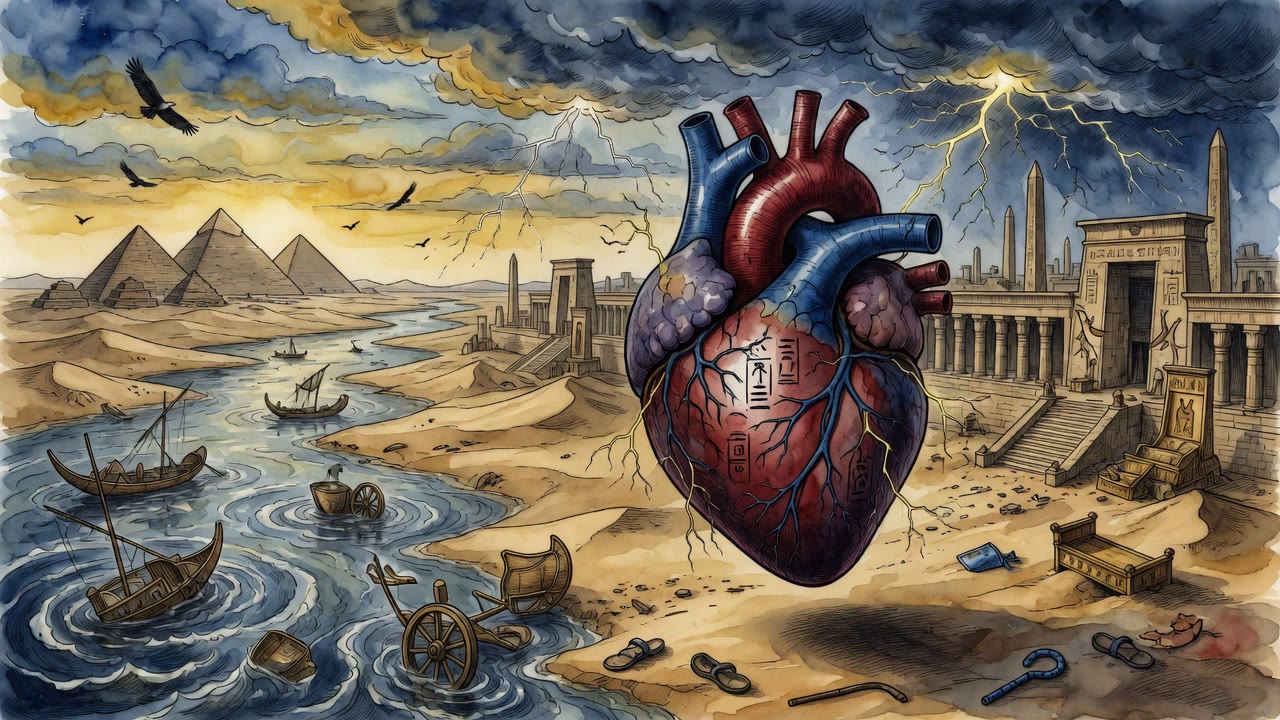
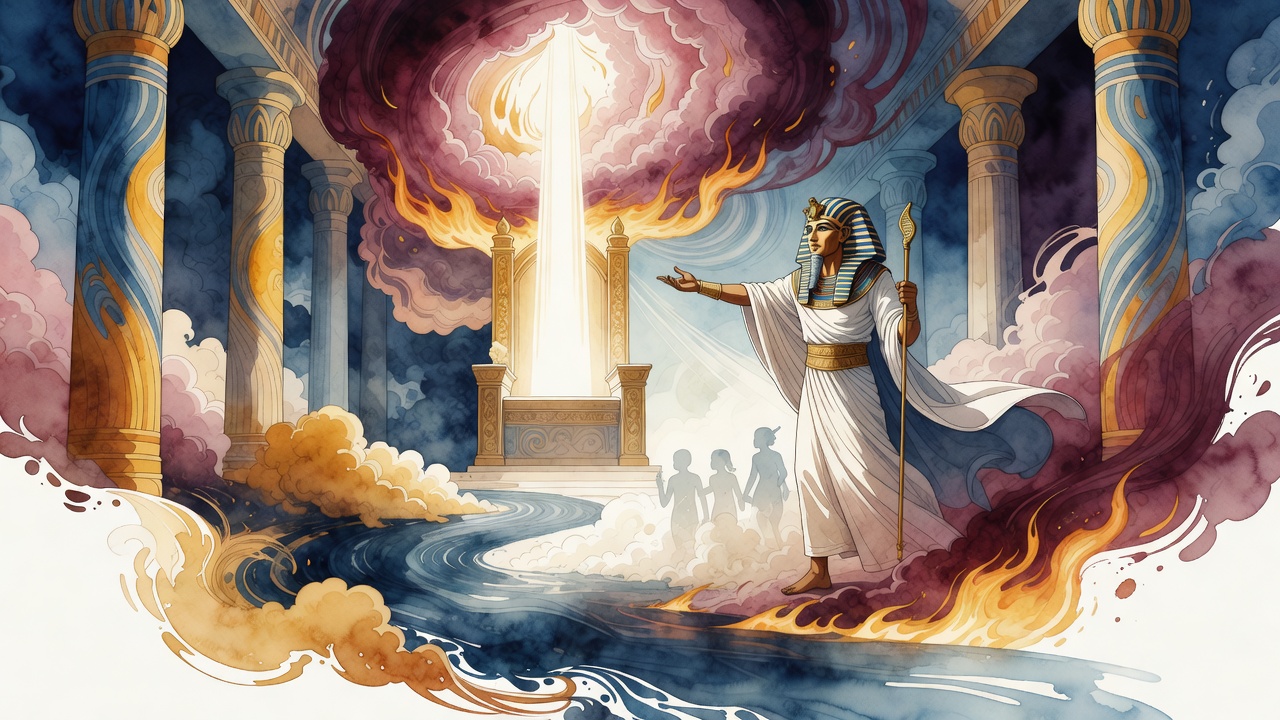
Pharaoh had said he did not know the Lord. At the sea his own men were shouting that the Lord was fighting for Israel, and fleeing as the water came back.
Table of Contents
 Click for full size
A Word That Meant Accompaniment
When Pharaoh finally sends Israel out of Egypt, Exodus uses the word shalach: sent. The Mekhilta reads that word and hears something more than dismissal. Sending can mean accompaniment. A king who sends a guest does not merely point to the door. He walks the guest out. The Mekhilta finds in the grammar of shalach a hint that even in the act of releasing Israel, Pharaoh's posture had shifted from contempt to something closer to deference.
This is a generous reading of a tyrant. The Mekhilta is not rehabilitating Pharaoh. It is tracking a specific, narrow change in his speech and asking what that change is worth. Not much in terms of final reckoning. But not nothing either.
The Mouth That Refused Learned to Release
The first change the Mekhilta records is in Pharaoh's speech. The same mouth that once said "I will not send Israel" later said "I will send you and your children." The tyrant did not become good. He did not repent. But his speech moved from absolute refusal to conditional permission to full release. That arc, traced through the plagues, arrives at a mouth that has learned a word it once could not say.
The Mekhilta connects this to the Torah's later command not to abominate an Egyptian. Pharaoh's mouth had refused. Then it made room. Egypt is not erased from the record of its cruelty, but the principle of measure for measure applies even to partial changes in speech. A mouth that once blocked a word and later spoke it receives something for the speaking, even if the speaking came too late for the army.
The Mouth That Denied Learned to Name
The second change is more dramatic. Pharaoh had said, "I do not know the Lord." That was not ignorance. It was a statement of governance: whatever this deity is, it has no authority over Egypt. Later, at the sea, as the water begins to return, the Egyptians say, "I will flee from before Israel, for the Lord wars for them against Egypt." The denial becomes recognition. The same mouths that once refused to know the name now speak it correctly and in fear.
Again the Mekhilta asks what that speech is worth. Isaiah imagines an altar to God in the heart of Egypt, and Egyptians who will cry to God and be answered. That future is not earned by the sea. But the speech at the sea, the recognition that came even in ruin, is remembered. Egypt's survivors, in some future time, will find that what their ancestors said in the final moment of the pursuit became the foundation of a real relationship.
Mountains Shook When the Voice Came
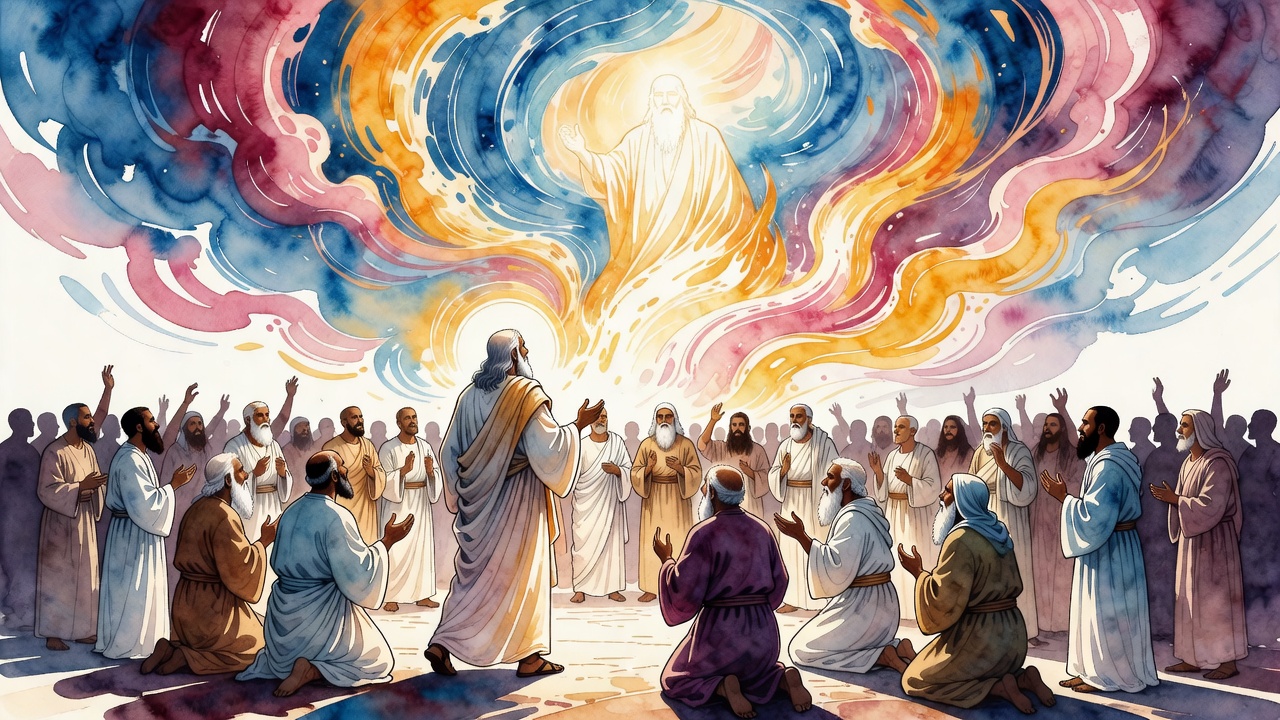
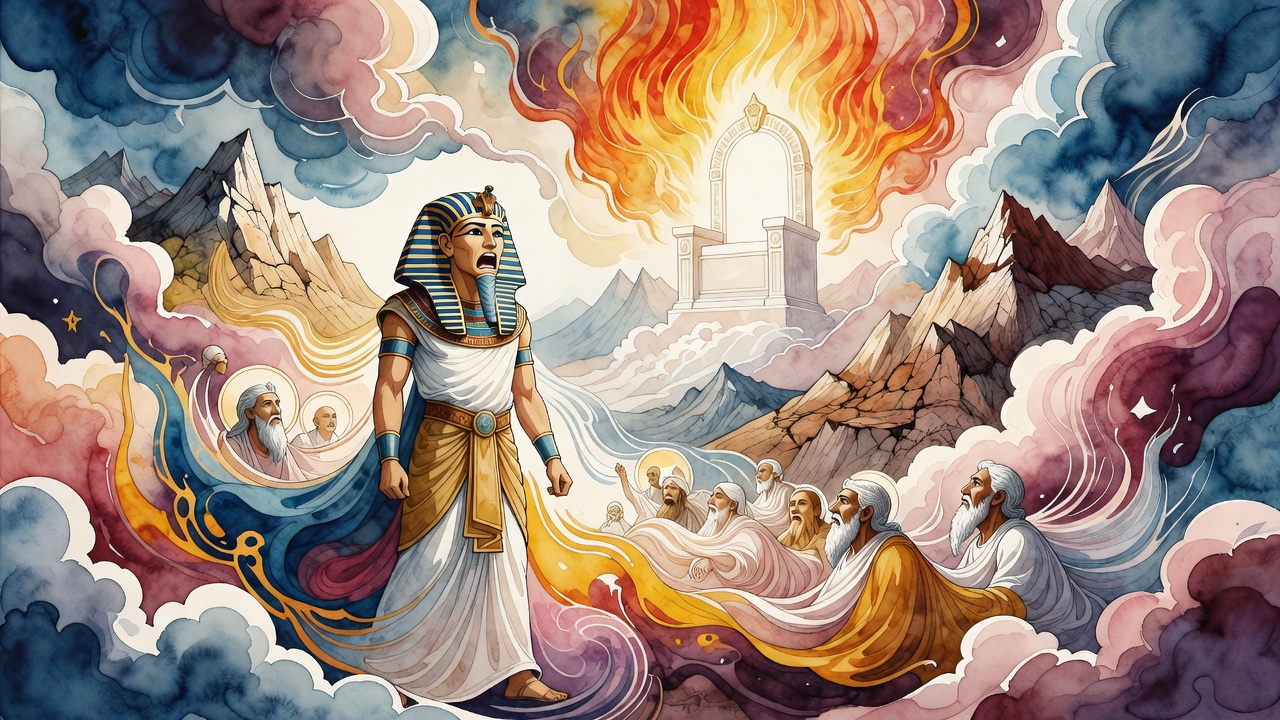
The second Mekhilta passage moves from Pharaoh's mouth to Sinai, where the earth shook at the divine voice. The mountains trembled. Every nation heard the sound. What Pharaoh had denied in the palace, that this God's voice had authority, the whole created world confirmed at the mountain. The sound that Pharaoh said he did not know filled the earth so completely that mountains could not stand still under it.
The two passages belong together because they trace the same claim through two different registers: first through the small, grudging changes in a tyrant's speech, then through the uncontainable event at the mountain. Pharaoh's mouth moved by inches. The mountain moved by the whole range. Both movements register the same force working itself into the world against resistance.
← All myths