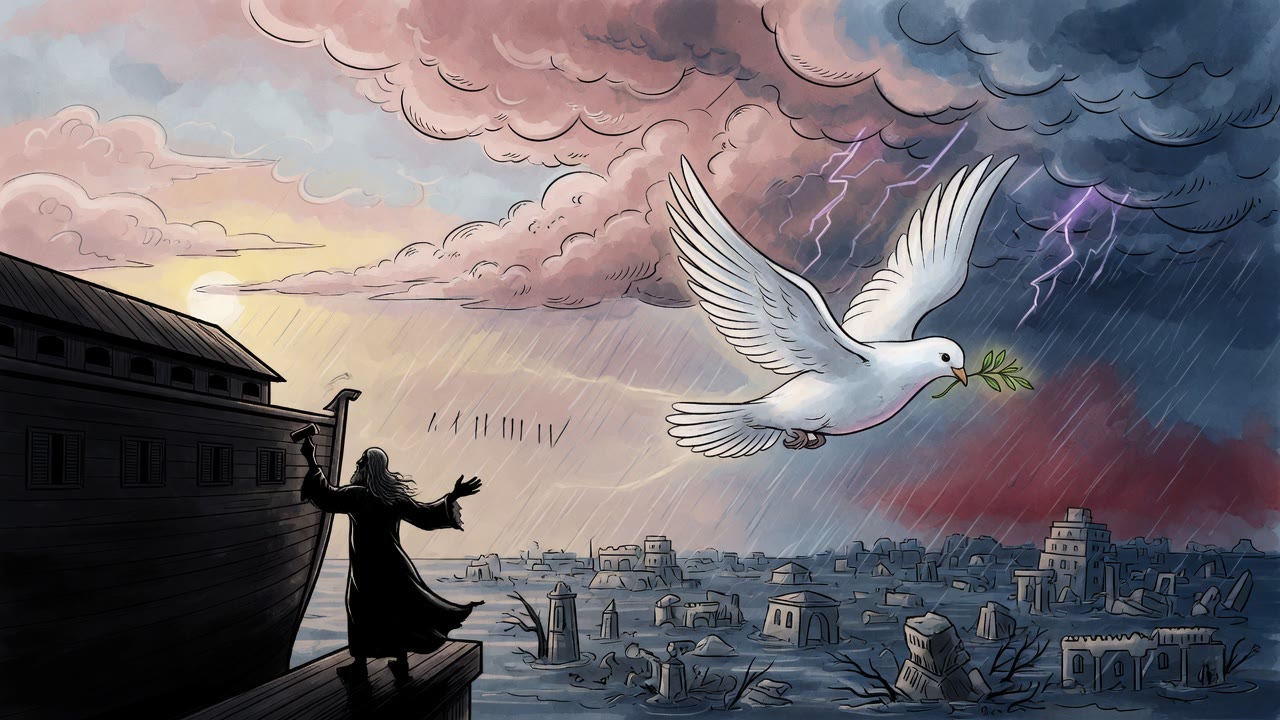
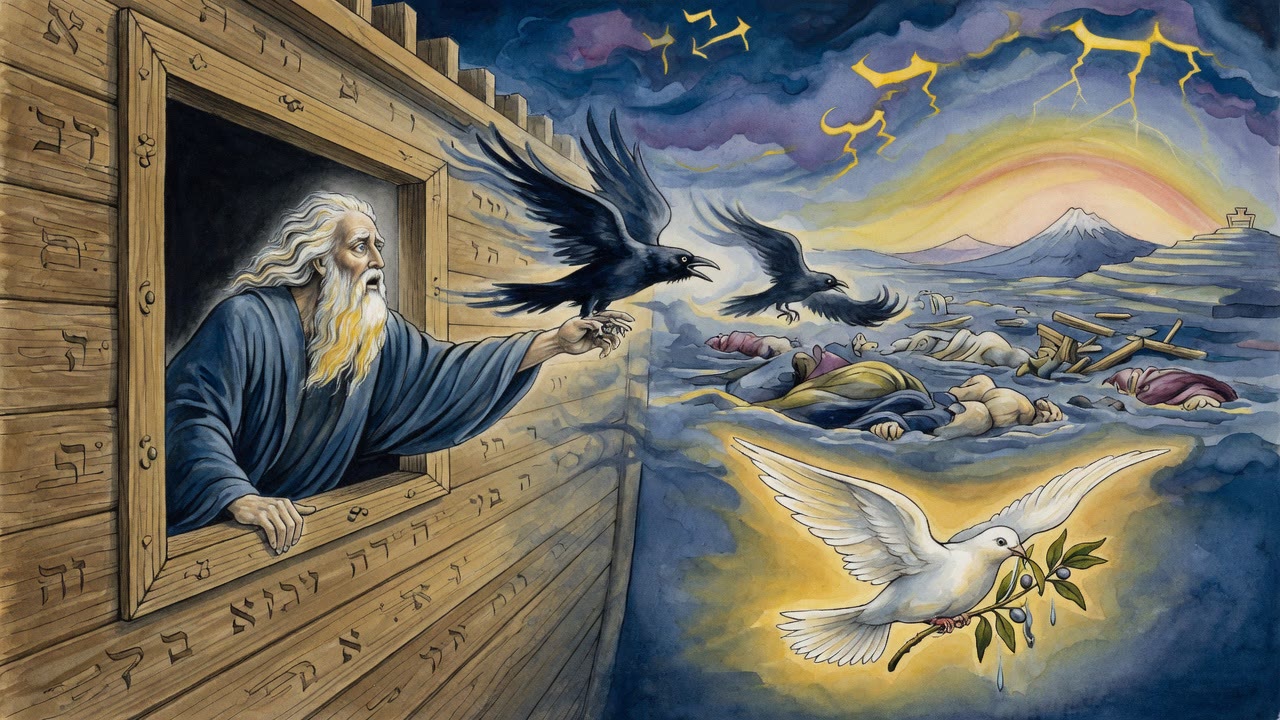
Philo Read the Flood as a Clock, Not a Catastrophe
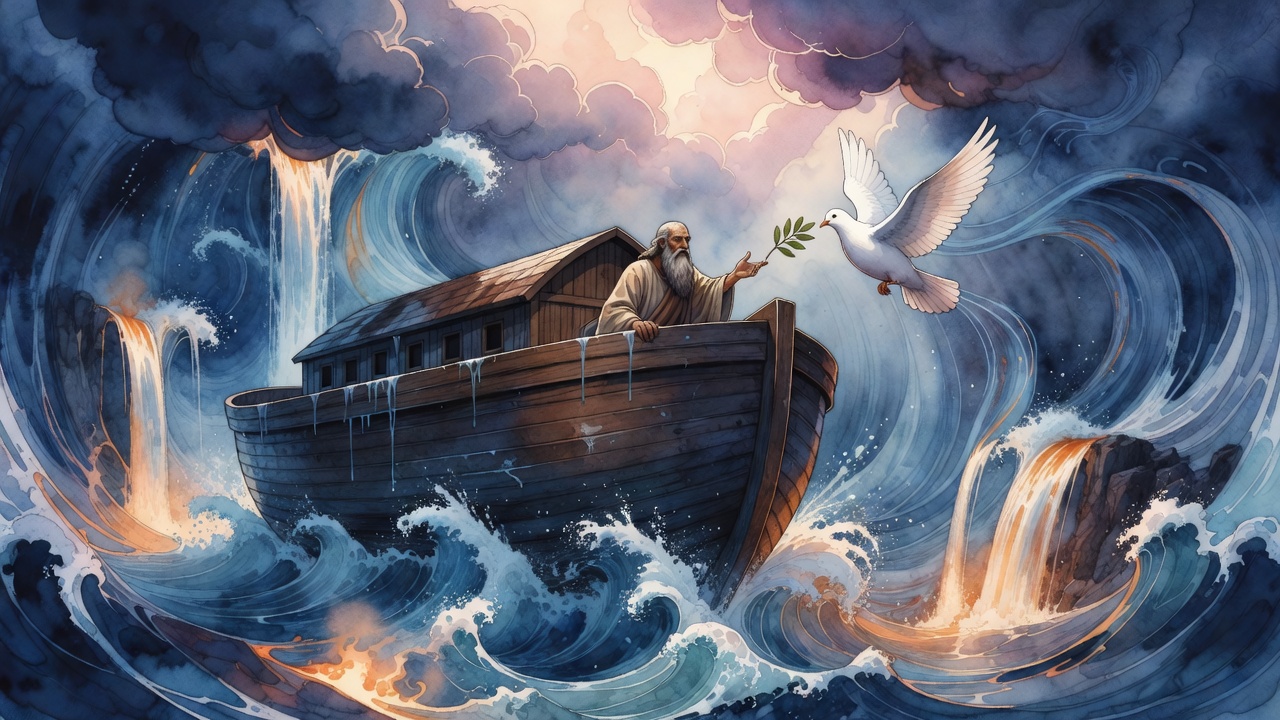
The earth was dry. The ark door stood ready. Noah would not step out until God named the going as God had named the rain.
Table of Contents
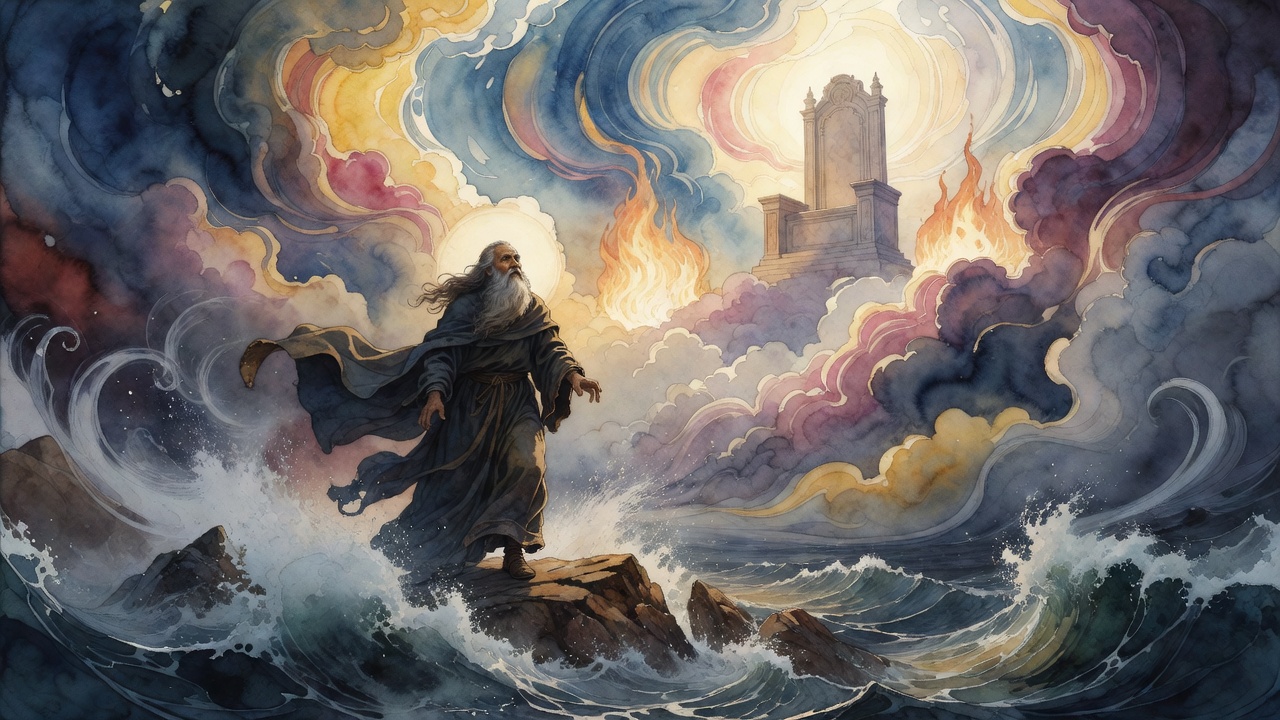 Click for full size
Rain Began on the Twenty-Seventh Day
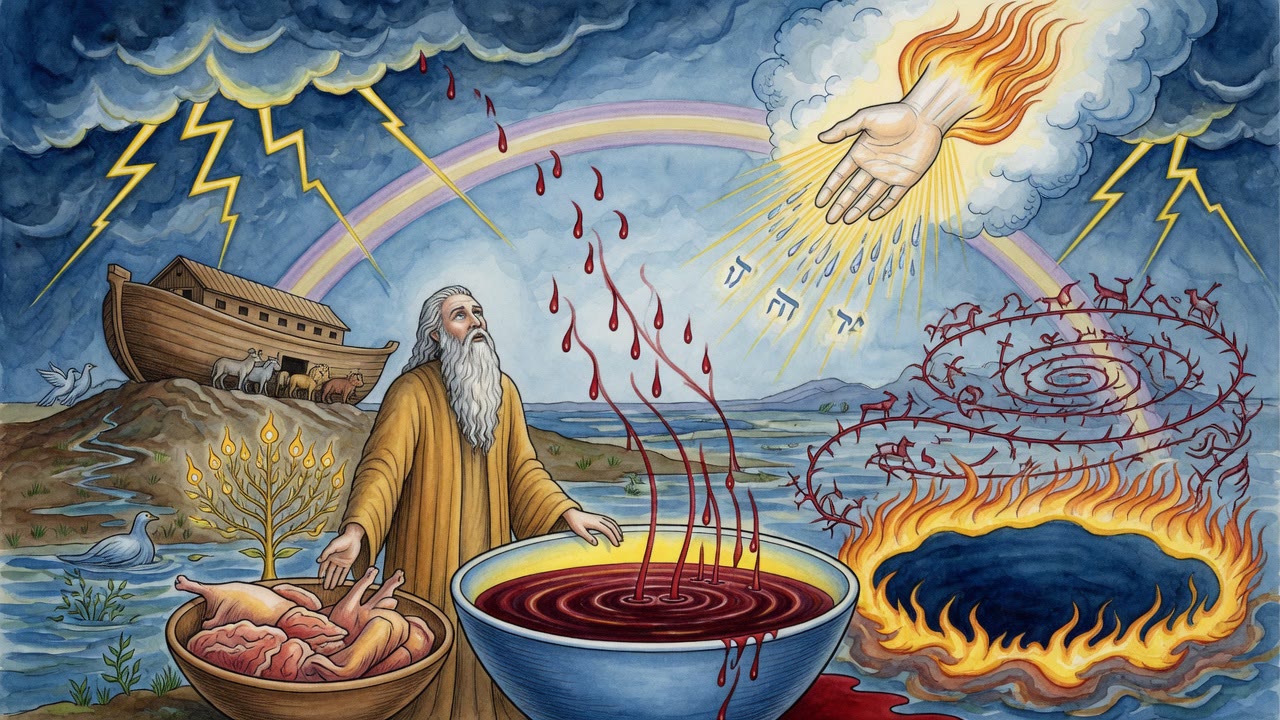
Noah heard the first water hit the pitch in the six hundredth year of his life, in the seventh month, on the twenty-seventh day. The date was not weather. The springs of the deep broke and the windows of heaven opened on a day that already had a name in his years.
He was six hundred. The seventh month stood near the spring equinox, near the birthday of the just man. Creation, in this counting, had begun in that season of abundance. The flood opened in the month that was seventh by number and first by nature.
The animals were already inside. His wife was already inside. The rain did not arrive as a random morning. It arrived on a counted day.
The Ark Rested on the Same Date in Another Season
The water rose. The hull lifted. Months passed in the dark of the hold. Then the ark rested on the tops of the mountains in the seventh month, on the twenty-seventh day.
The same slot in the calendar. A different season. The opening had stood near the vernal equinox. The resting stood near the autumnal equinox. Seven months apart, with five months between them. The flood closed the way it had opened, on a twenty-seventh, as if the year of water had been cut to a measure.
Noah had marked the first day. He marked this one. The deep had a schedule.
Marriage Rode Through the Year of Water
His wife was with him. His sons' wives were with his sons. The marriages had been made before the rain. The world outside the pitch had come apart. The pairs inside it had not.
When the going-out was finally spoken, God would name them in those pairs. "Go forth, thou, and thy wife, and thy sons, and thy sons' wives, together with all the rest of the living creatures." The household that entered as a household would leave as a household. The flood destroyed cities. It did not dissolve the covenant between a man and a woman that had walked up the ramp before the first drop.
Noah kept that order. He did not rearrange what God had not yet rearranged.
The Earth Dried and Noah Still Waited
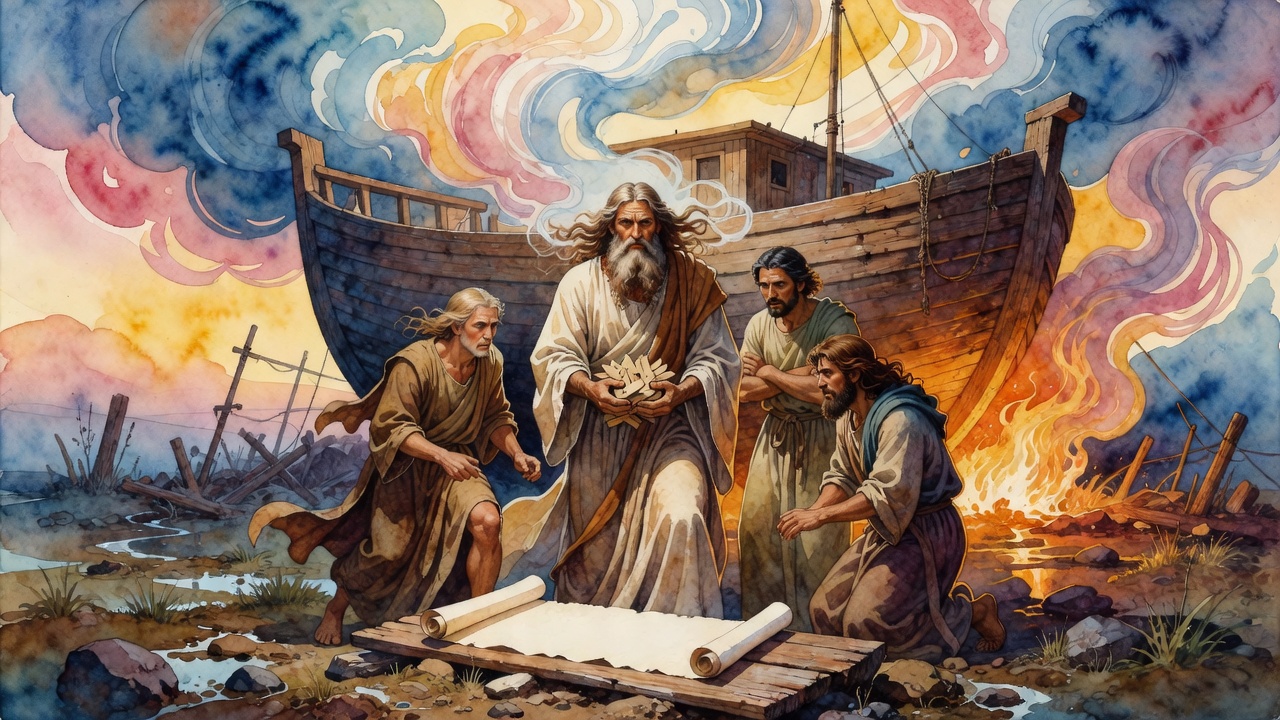
The earth dried. The door of the ark was ready. A man who had smelled rain for a year could smell dry ground. The animals shifted. The hold that had been a world wanted to be a memory.
Noah did not step out.
He had entered by command. He would not leave by assumption. The dried earth was a fact. It was not yet permission. He waited for a fresh command from God, the way he had waited for the first one, the way he had waited out the twenty-sevenths that opened and closed the water.
God Spoke the Going as He Had Spoken the Rain
God said to Noah, "Go forth, thou, and thy wife, and thy sons, and thy sons' wives, together with all the rest of the living creatures" (Genesis 8:16).
Only then did the carpenter put his foot on dry earth. The clock of the flood had run from equinox to equinox, from a twenty-seventh to a twenty-seventh. The catastrophe outside had been measured. The man inside would not treat the end as a guess.
He left with his wife beside him, because that was how the sentence was built. The world he walked into was empty of neighbors and full of mud. The command was the floor under the mud.
← All myths