Phinehas's Spear Earned the Priests Three Portions
At Peor a plague tore the camp until Phinehas rose with a spear. Foreleg, jaws, and maw still feed priests in memory of arm, prayer, and strike.
Table of Contents
 Click for full size
Plague at Peor
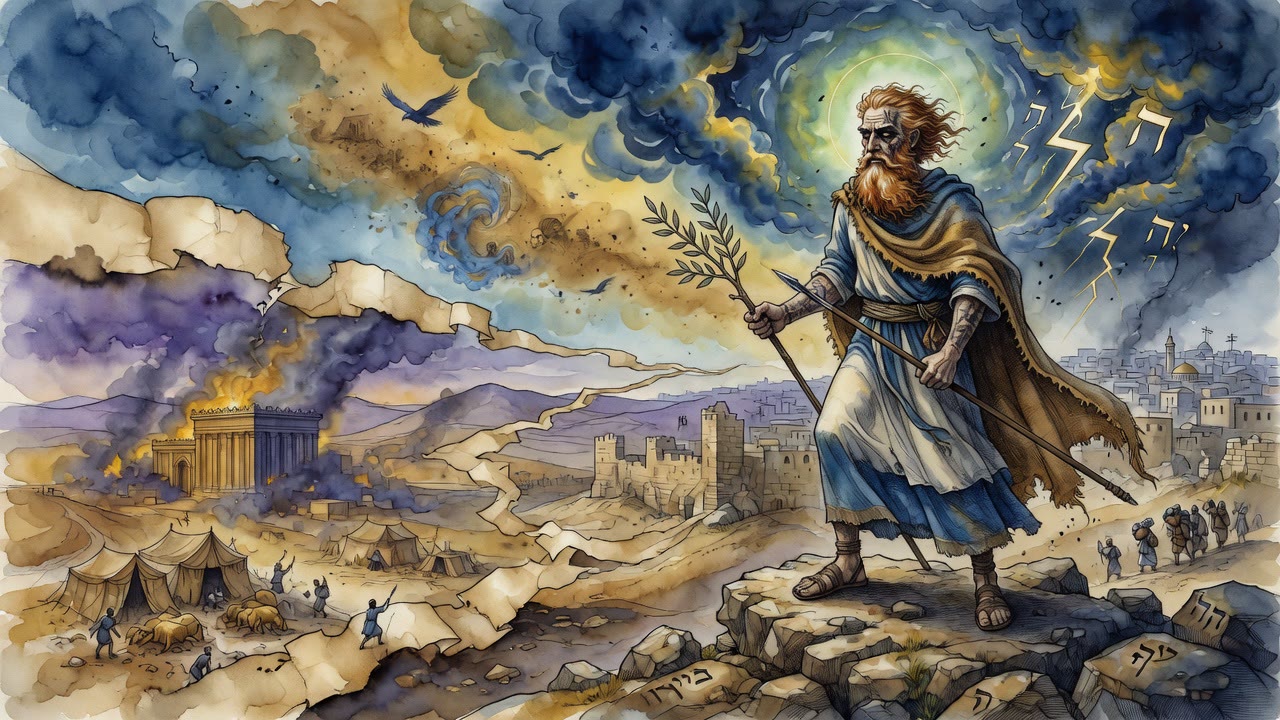
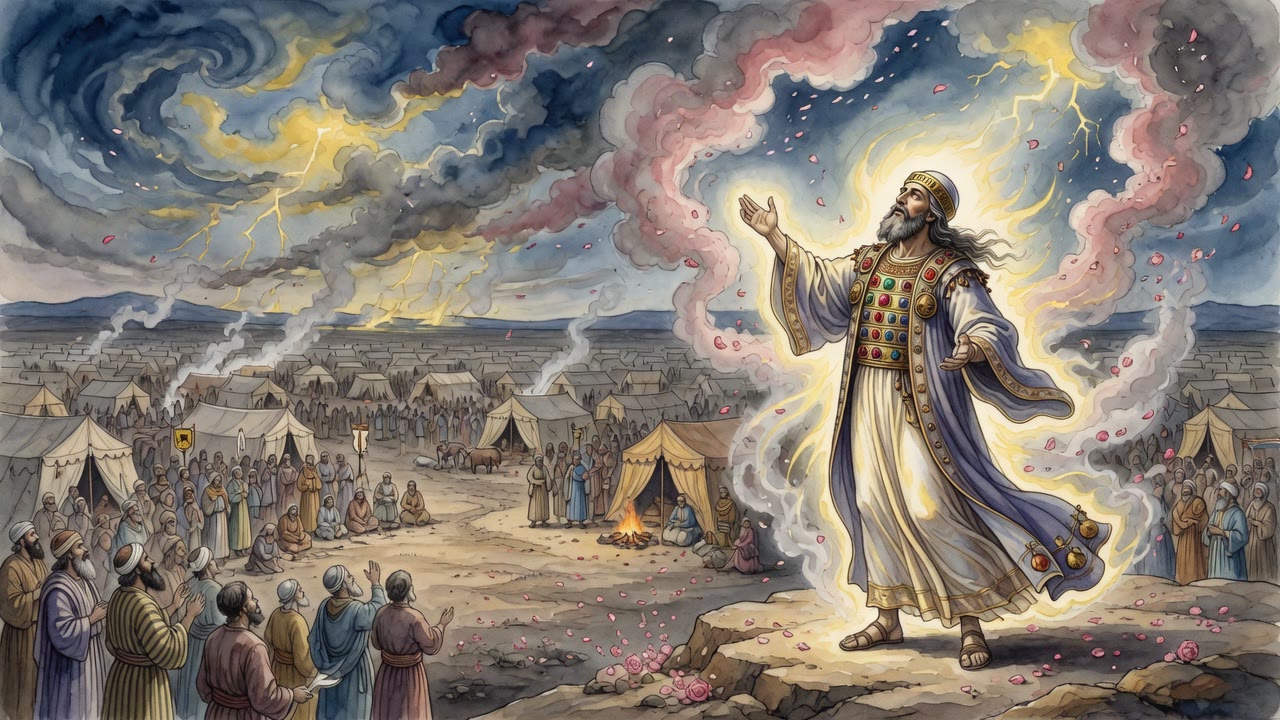
Israel sinned at Peor, and a plague raged through the camp. Bodies fell while the living still chased a foreign worship. The air stank of dying and of the altar smoke of another god. Men who had crossed the sea for freedom now bowed toward a threshold that promised a different kind of belonging, cheaper and dirtier.
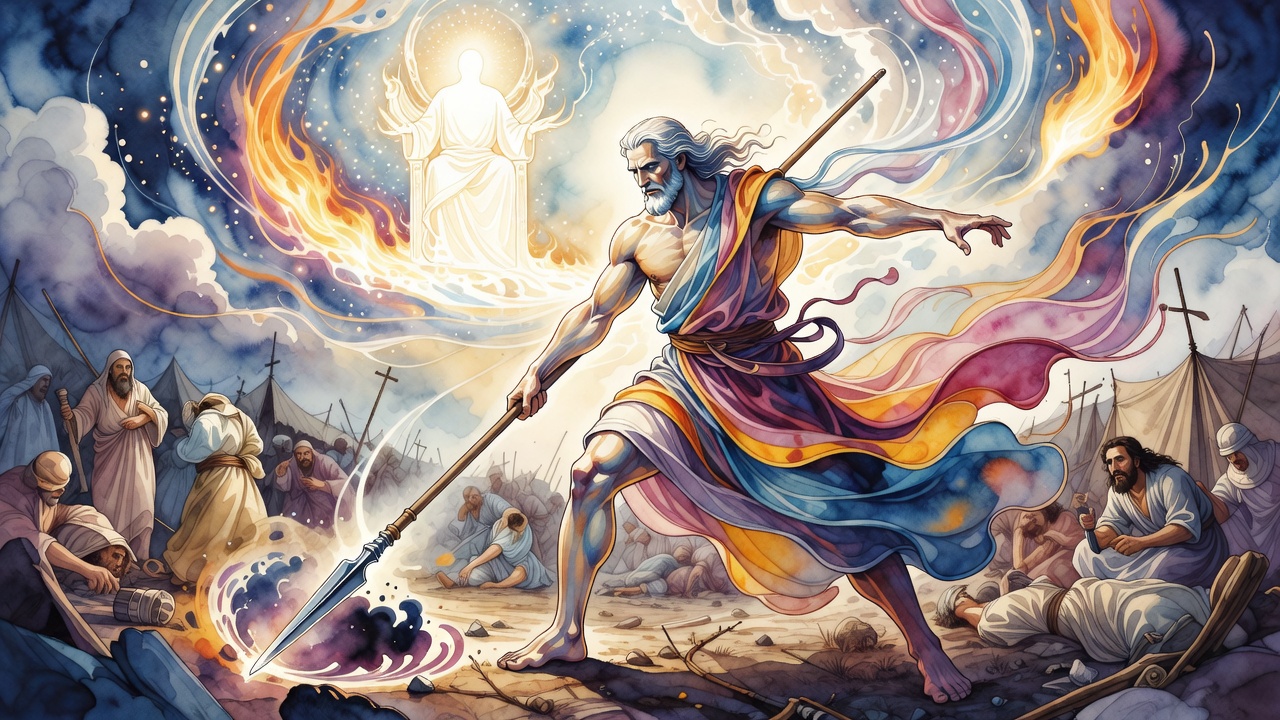
Phinehas, grandson of Aaron, rose. He did not wait for a committee. He took a spear in his hand. He prayed. He struck. The woman through her belly, the man with her, the Hebrew word for the maw of the animal and the belly of the woman sharing a root that the midrash will not let go.
Heaven stopped the dying. The plague stayed. One man's courage, prayer, and hand bought atonement for a camp that had been emptying itself into the dust. The spear came down. The count of the dead stopped climbing. Silence after plague is never gentle, but it is mercy compared to the alternative.
Three Portions, Three Limbs of the Deed
Why does the Torah hand the priest three portions of every animal slaughtered: the foreleg, the jaws, and the maw? The sages answer with that single name: Phinehas. Later kitchens would feed on a memorial most diners never name.
The foreleg answers to his arm: "and he took a spear in his hand." With that hand he seized the weapon and turned back the wrath. Muscle and decision shared one motion.
The jaws answer to his mouth: "and he prayed, and the plague was stayed." Before he struck, or as he struck, he pleaded, and Heaven stopped the dying. Zeal without prayer would have been only violence. Prayer without the arm would have been only words. He gave both.
The maw answers to the deed itself: "and the woman through her belly." The Hebrew word for the maw, ha-keivah, echoes the word for her belly, kovatah, the very place his spear pierced. Language itself remembers the strike every time a priest receives that portion.
So the priests do not eat these portions by chance. Every foreleg, every jaw, every maw set aside for the kohen is a standing memorial to arm, prayer, and strike.
Blessing and Curse on One Path
"See, I set before you this day a blessing and a curse," so opens the portion, and the sage reads it as a key that unlocks an earlier door. The blessing of Moses here is the promise spoken in order at Sinai: "If you walk in My statutes." To walk in the statutes is to hearken to the commandments of the Lord your God. The two are one path, named twice so that no one mistake the way.
And the curse? The sage will not let it fall loosely upon every stumbler. The dread words of the covenant were not flung at the careless or the weak. They were spoken for one kind of soul only: the one who goes after other gods. "If you do not hearken to the commandments of the Lord your God, and you turn aside after other gods," there, and only there, do the curses take hold.
Ordinary frailty is not the target. Idolatry is. Peor sits exactly on that border. The plague was not a random fever. It was the camp's brush with the curse reserved for those who turn aside.
The Memorial That Still Feeds
Peor was that threshold. Idolatry opened the door the curse waits behind. Phinehas slammed it with a spear and a prayer. The generation that bows to idols stands under the hard words; the blessing waits for the one who walks the statutes.
In every later kitchen where a priestly portion is set aside, the camp at Peor flickers for a moment: arm, mouth, belly, plague stopped, curse held at the border of strange worship. The meat on the kohen's table is not only food. It is memory that zeal and plea once shared one hand.
Children of priests would grow up tasting a history they could not see. The foreleg is heavy. The jaws are small. The maw is strange to the uninstructed. Together they retell a day when one man refused to let the camp finish dying for a foreign god. Blessing and curse remained a choice on the path. The portions remained a receipt for the choice Phinehas made when the path was on fire.
Before the spear, the camp's leaders had hesitated. Numbers died while authority froze. Phinehas moved through that freeze like a man who had already decided that covenant is not a spectator sport. His prayer did not cancel the strike. The strike did not cancel the prayer. Together they made a shape the later gifts would freeze into meat and memory.
When a kohen later lifts the foreleg, the midrash wants him to feel an arm that chose. When he takes the jaws, a mouth that pleaded. When he receives the maw, a deed that matched a word in the Torah's own sound. Peor's shame becomes priestly provision, not because violence is celebrated for its own sake, but because the border of idolatry was held when holding it cost immediate courage.
← All myths