The Prince and Princess Kept a Forgotten Pact
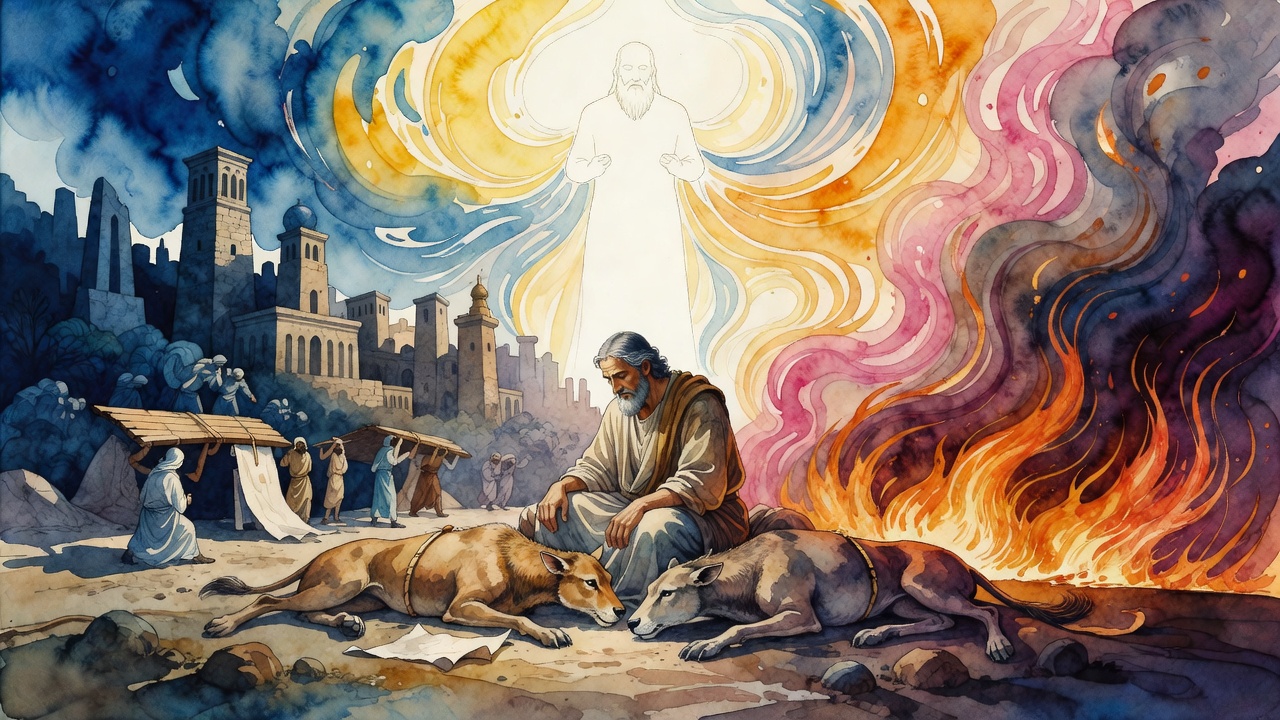
They swore over wine that unborn children would marry, then forgot the inn. She kept the ring. He walked toward a test that killed the unwise.
Table of Contents
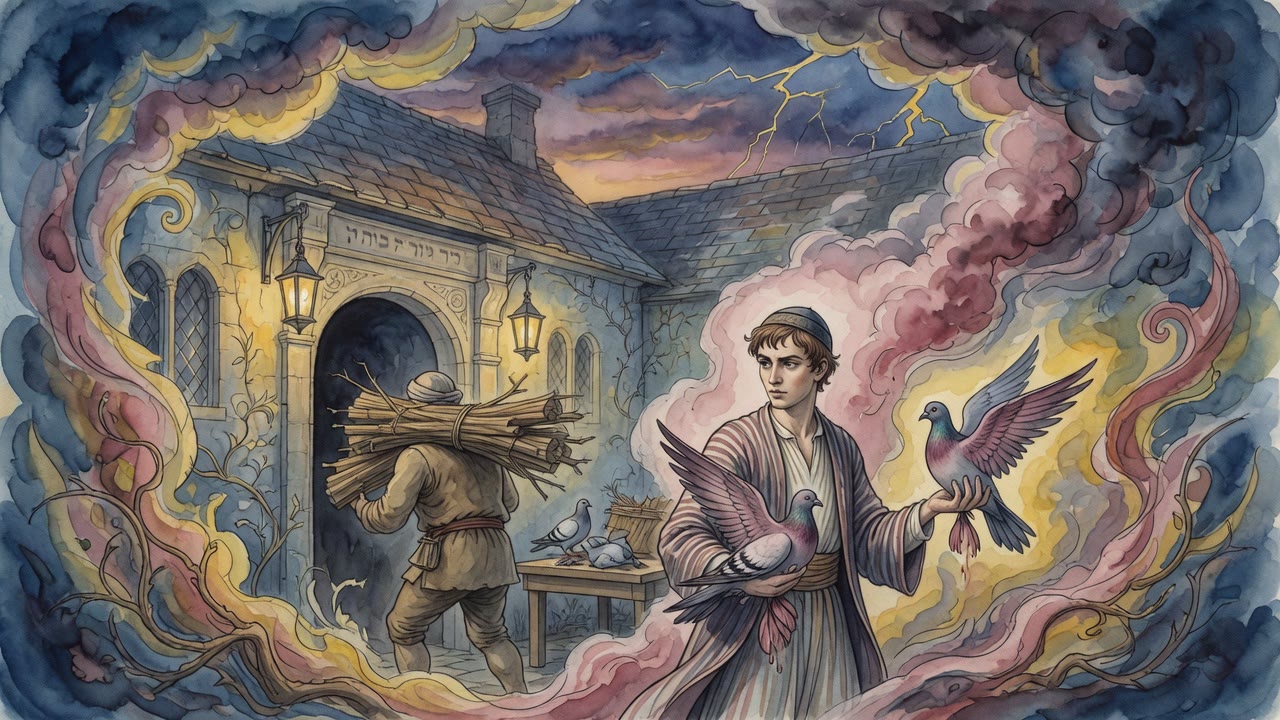
An emperor and a king, both without heirs, met by chance at an inn that smelled of wet wool and wine. Neither knew the other at first. Royal habits betrayed them: the way a cup was held, the way a servant was dismissed without looking. They confessed their names and their shared grief. Empty nurseries. Empty thrones waiting for a future that would not arrive.
 Click for full size
They made a pact over the table. If one had a son and the other a daughter, the children would marry. The innkeeper did not know he was hosting a treaty. They went home and forgot, because courts have short memories for vows made on the road.
The Ring They Hid
The emperor had a daughter. The king had a son. Both children were sent to the same teacher, far from the politics that had fathered the promise. There they fell in love the way students do, in the margins of lessons, until the old forgotten pact began to keep itself without anyone's permission.
The prince set a ring on the princess's finger. Secret betrothal. No parents in the room. No heralds. Only the weight of gold and a future they thought they could keep.
Then the emperor summoned his daughter home and began arranging matches with men whose lands made sense on a map. She refused every name, because she was already pledged. The prince, cut off from her, fell ill with a love no physician could name. Pulse wrong. Sleep gone. Food untouched. Only his servant, who had been at school with them, knew the truth and finally spoke it into the king's ear.
Death as the Bride-Price
The king remembered the old pact and wrote. By then the emperor's pride had grown with his daughter's value on the marriage market, so he no longer wanted the match. He could not refuse outright. He had sworn. Therefore he set an impossible condition, the favorite tool of powerful men who wish to keep their word and break it at once.
Send the prince. I will test whether he is wise enough to govern my country. If he fails, he dies.
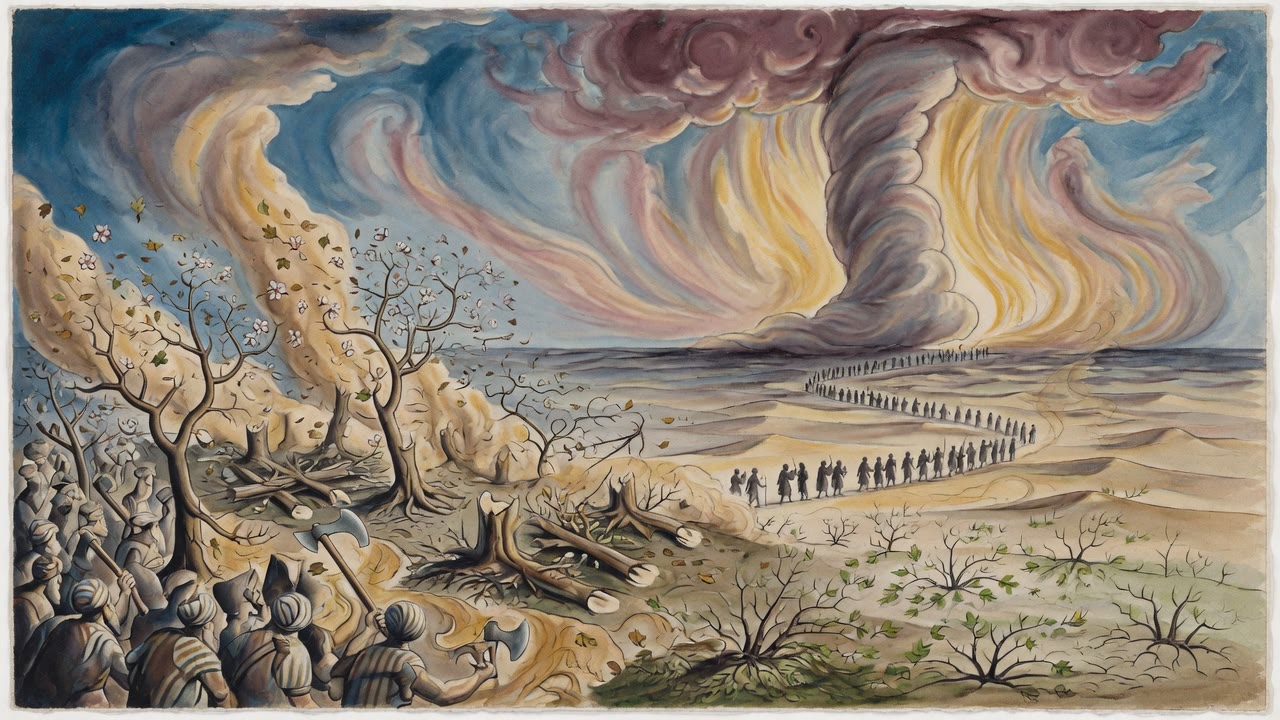
The letter arrived like a blade wrapped in law. The prince traveled toward the trial with death as the price of a wrong answer. Staying home would have been another kind of dying, a ring left on a finger that would be forced onto someone else.
The Companion Who Knew the Answers
Along the way he met a wise man who became his companion without asking for a fee the court would understand. At the palace the emperor laid riddles designed to be unsolvable, tests that would let him kill the boy and still sleep as a man of his word.
The companion whispered answers. Doors opened that were meant to stay shut. The prince's mouth found words he had not packed for the road, so the emperor's trap kept failing in public, and pride had to watch wisdom arrive from a sleeve it had not searched.
A portrait of the princess hung in a room that was supposed to be empty. The prince looked, and his soul went into the paint, because longing will take a face when it cannot take a person. He had to be pulled back into his own body before the next riddle, or the trial would have judged a shell.
There was a garden that held more years than a palace should hold. He walked it because the companion told him to walk it. Human history sat in the beds and the paths as if time itself had been planted. He did not understand the garden. He only understood that the ring on a girl's finger was still the one true map he had.
A Door at Midnight
Another man kept a different pact on a different night. Abraham ibn Ezra, brilliant and poor, arrived at Yehuda Halevi's door at midnight, hungry, clothes thin against the air. Halevi fed him, clothed him, and kept him without counting the cost against a ledger of status, because a door can remember what a court forgets.
Ibn Ezra repaid with poetry so sharp Halevi said it outran his own. They debated Torah, exile, and the destiny of Israel for weeks while lesser men measured wealth. When Halevi left for the Land of Israel, a road from which he would not return, ibn Ezra wept as if the road had taken a brother.
The prince's companion and Halevi's open door were the same kind of rescue. A person who knows what the proud court will not teach, and what an empty stomach already understands.
Words Treasured Against Calamity
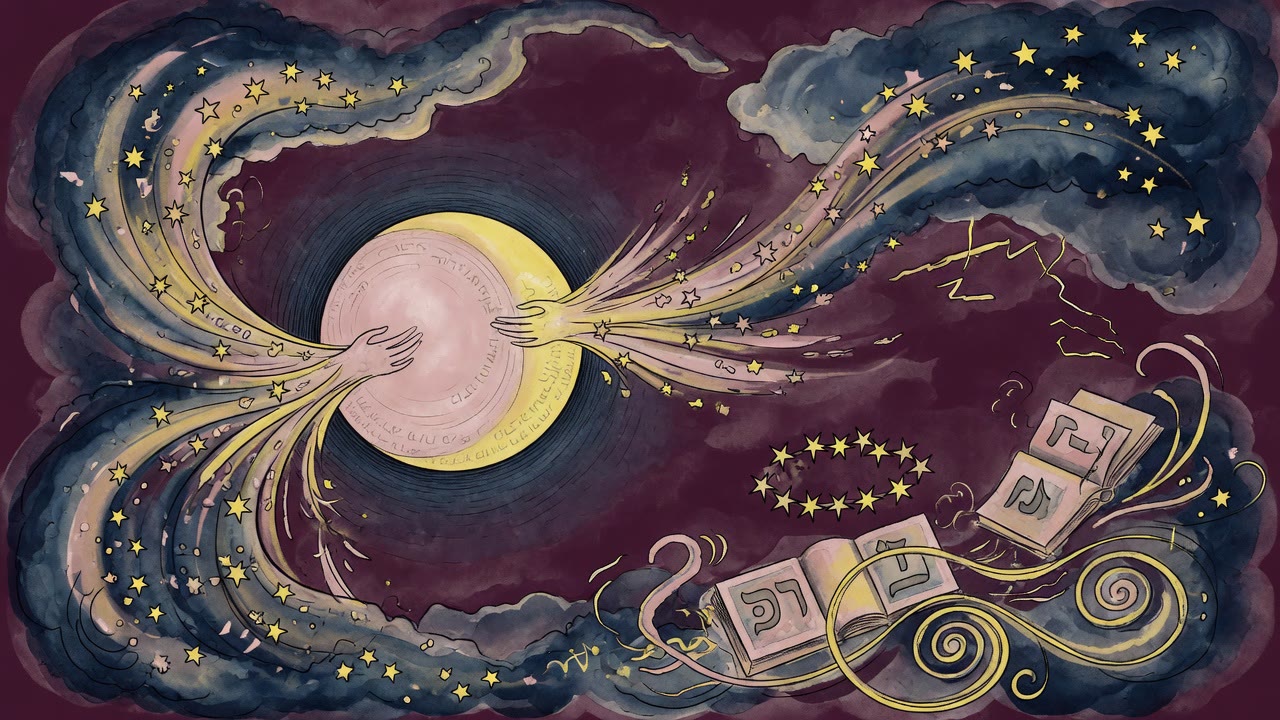
At Sinai the Holy One spoke a promise into Israel's ear. "Treasure up My words and be saved from three calamities: the war of Gog and Magog, the birth-pangs that announce the Messiah, and the verdict of Gehinnom." Hide the commandments like buried wealth, and a greater good is already hidden in return.
The emperor tried to keep the letter of a vow while murdering its spirit with riddles. Heaven's own words are not meant to be handled that way. A pact remembered only when convenient is already half broken. The ones bound by it have to keep it in their bodies until the proud remember, or until they die of the keeping.
The princess held the ring. The prince held the riddles. Israel held speech that outlasts inns where kings forget what they swore over wine. The companion still walks the road. The door at midnight still opens. The ring still waits on a finger that refused every other name.
← All myths