5 min read

Rabbi Meir Held the Water with One Finger

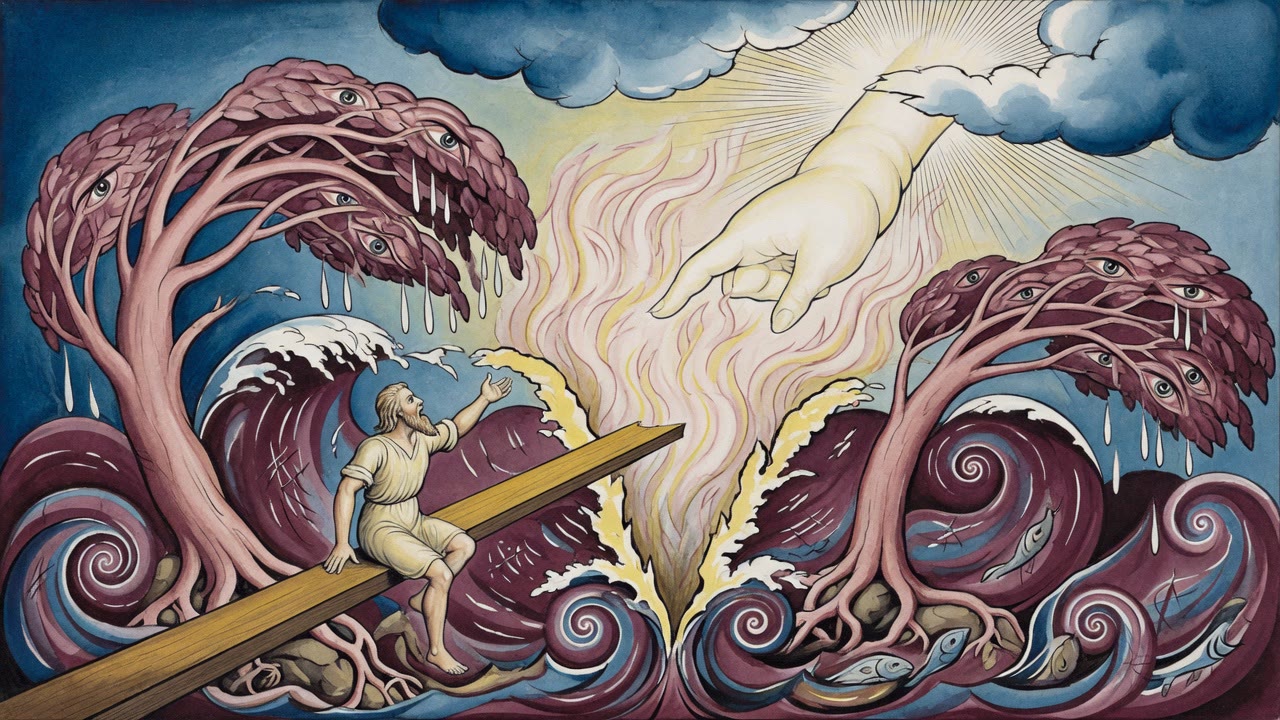
A Samaritan mocked upper waters hung by a word. Rabbi Meir sealed a tube with his finger and asked how much more the finger of God could hold.

Curated by Arthur · Told by Maggid ·
Table of Contents
  1. A Tube and a Finger
  2. Mirrors and a Narrow Glory
  3. Rain That Never Empties
  4. Three Partners in a Child
Rabbi Meir Held the Water with One Finger Click for full size

A Tube and a Finger

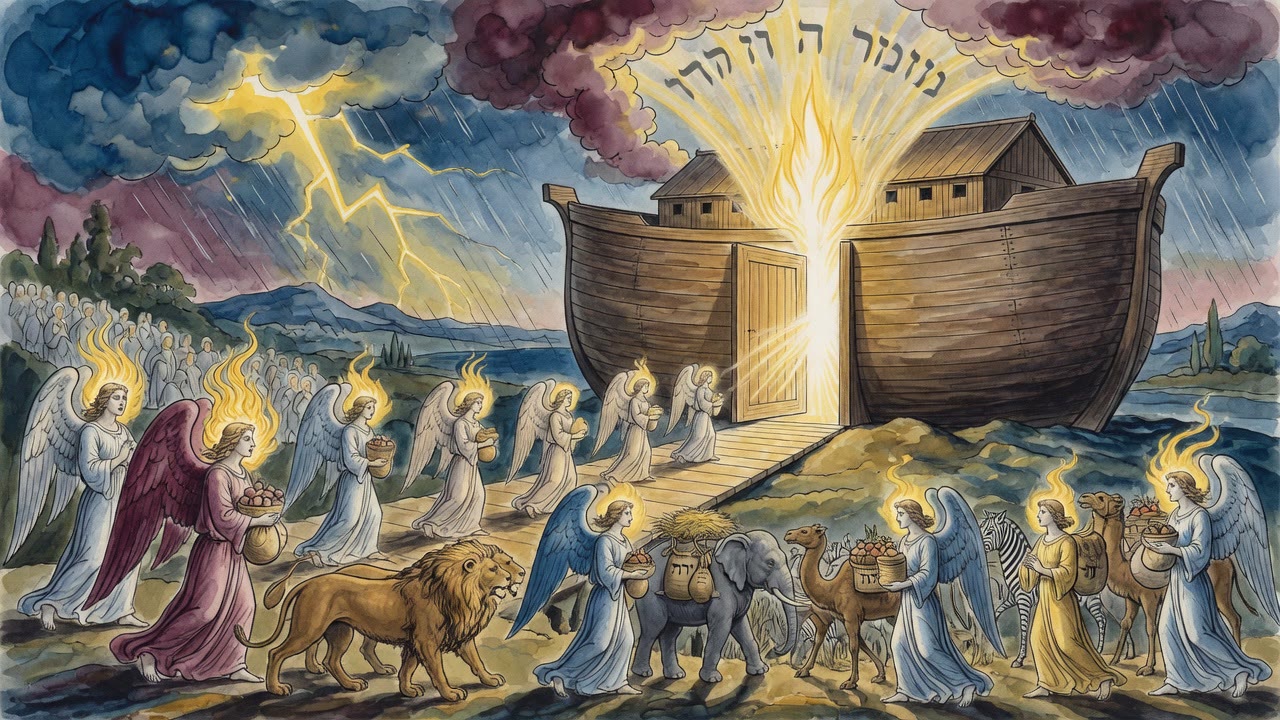
A Samaritan pressed Rabbi Meir on the first days with the confidence of a man who thinks a question can end a world. Are the upper waters truly suspended by the word of God? He wanted physics to embarrass faith, the firmament to look like a child's story. Meir did not answer with a longer verse alone. He asked for a tube of water. A gold or silver plate set on top let the water spill. Meir set his finger there and the water stayed, a small sea held by a joint of flesh.

"You are placing your finger!" the challenger said, as if catching a cheat. Meir answered, "If I am flesh and blood and my finger can suspend the water, the finger of the Holy One, blessed be He, all the more so." The argument was lesser to greater, staged with a prop any marketplace could understand. The firmament did not need a speech long enough to tire the room. It needed a sealed tube and a hand that did not shake while a skeptic watched.

Mirrors and a Narrow Glory

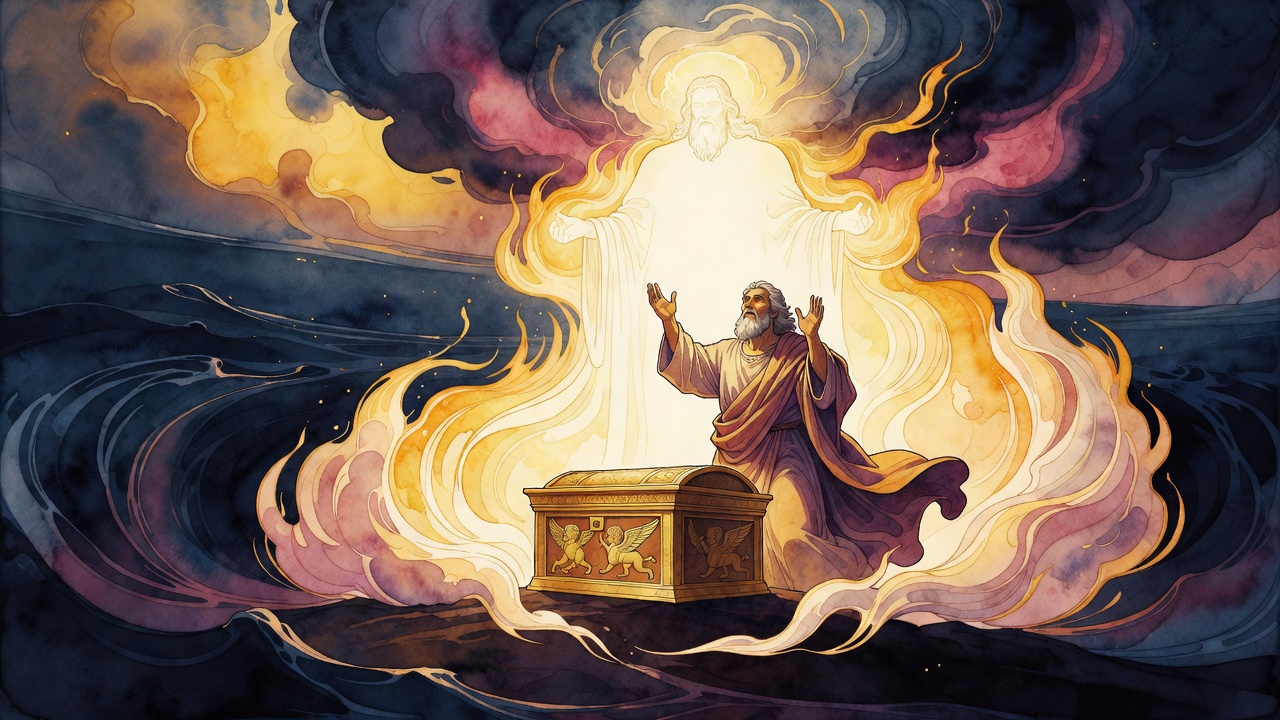
The Samaritan tried again, shifting from sky to sanctuary. How can the One who fills heaven and earth speak to Moses from between the staves of the Ark? Infinity in a box is a joke unless the box is more than wood. Meir brought mirrors, large and small. The same face changed size with the frame. "If you, flesh and blood, can change yourself into anything you wish, the One who spoke and made the world come into being, all the more so."

Rabbi Hanina bar Isi adds that sometimes the world and its contents cannot contain the glory of Godliness, and at other times God speaks with a person from between the hairs of the head, reading Job's tempest (hase'ara) against the similar word for hairs (saarot). Infinity can thin itself to a conversation without ceasing to be vast. The Ark is not a prison for God. It is a focus for a Presence that can also fill the sky the Samaritan thought he understood.

Rain That Never Empties

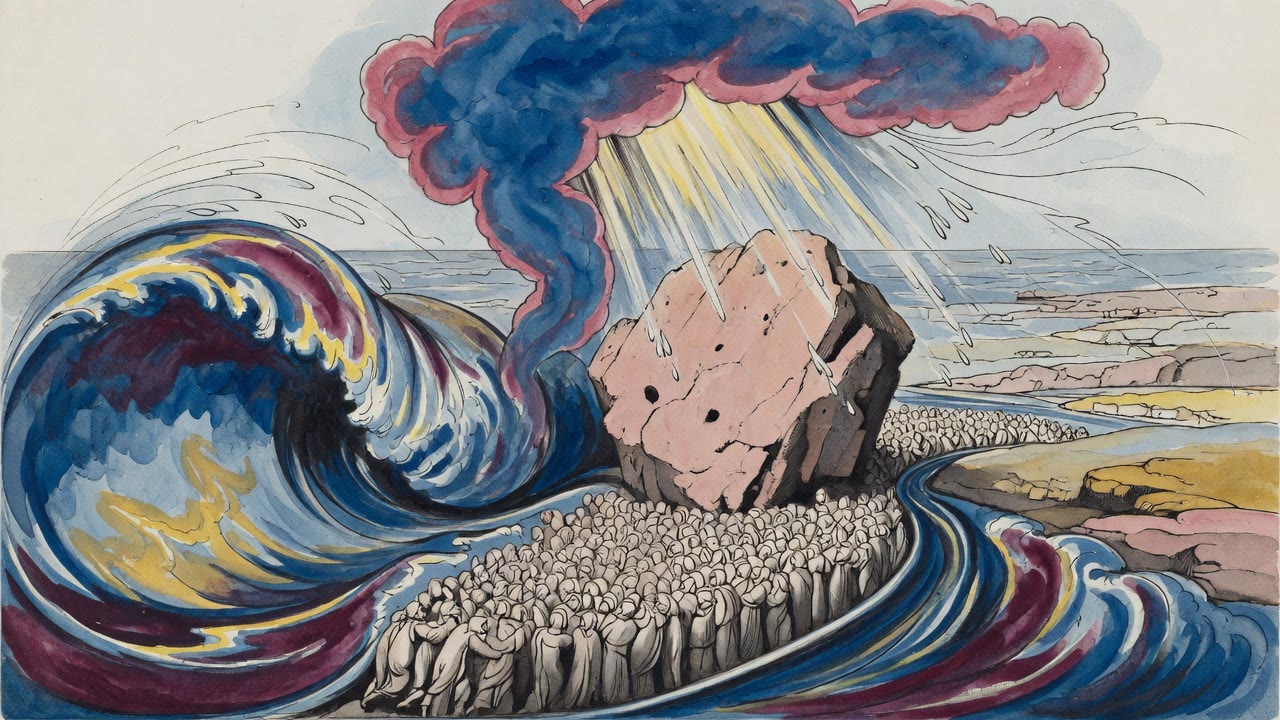
Still the challenger pushed, now with hydrology as a weapon. The stream of God is full of water, yet rain has fallen since the six days of Creation and nothing is missing. Where does it go? Why is the cistern of heaven not dry? Meir sent him to weigh himself before and after a bath. The scale held steady. As the body returns what sweat takes, so God replenishes the stream. Rabbi Yohanan splits the primordial waters half above and half below, reading peleg as palga, half. The debate ends not in sneer but in models that keep both the sky and the cistern honest without surrendering either to mockery.

Three questions. Three demonstrations. A tube, a mirror, a scale. Creation defended with tools a student could borrow.

Three Partners in a Child

Another teaching measures how a human arrives at all. Father and mother give white and red, the body's portions, the clay and the blood. The Holy One adds spirit and soul, countenance, eyesight, hearing, speech, the power to move the limbs, wisdom, understanding, counsel, knowledge, and strength. Ten gifts and more, the spark that makes the clay a someone. When death comes, God takes back His portion. The parents weep over what remains. God asks why they cry, since He took only what was His. They answer: while Your portion was mixed with ours, ours was guarded from maggots and worms. Without it, the rest is cast aside and subject to decay.

A king harvests his share of a vineyard left with a sharecropper and the sharecropper weeps for the same reason. The king's grapes were the life in the rows. Divine breath is not a guest who leaves the house unchanged. It is the preservative in the clay, the reason a face was a face and not only meat.

Meir's finger and the child's borrowed spirit are one claim told in two rooms. The world holds because God holds it. A person stands because God stands inside the standing. Challenge the upper waters and you meet a tube. Challenge a corpse and you meet the hole where the Name's portion used to keep rot at bay. The Samaritan came for a fight about physics. He left with a finger in a tube and a theology that fits in a palm and fills a sky.

The tube is put away. The Samaritan leaves with wet fingers and fewer jokes. Somewhere a child is born with white and red from parents and breath from elsewhere, already a three-way partnership no scale can fully weigh.


← All myths
From the tradition

Sources

2 sources

The texts behind this telling. Some cards carry a translation of the source; others are our own retelling of it, and each card says which. Every card links out to the original.

Bereshit Rabbah 4:4Bereshit Rabbah

Retold in our words. Read the original at the link below.The Sefaria Midrash Rabbah, 2022 · CC-BY

The ancient rabbis certainly did. They grappled with questions of creation, divine presence, and the seeming paradoxes of faith. And sometimes, they used the most unexpected methods to find answers.

One fascinating example comes from Bereshit Rabbah, a collection of rabbinic interpretations of the Book of Genesis. In this particular passage, a Samaritan, often portrayed as a theological sparring partner in rabbinic literature, poses a series of challenging questions to Rabbi Meir.

First, the Samaritan asks: "Is it possible that the upper waters are suspended by the word of God?" He's talking about the waters mentioned in (Genesis 1:6-7), separated by the firmament. It's a question of physics, almost! Can something so vast really be held in place by divine decree?

Rabbi Meir, ever the resourceful sage, doesn't just offer a theological explanation. Instead, he conducts an experiment! He asks the Samaritan to bring a tube of water. When a gold or silver plate is placed on top, the water spills. But when Rabbi Meir puts his finger there, the water stays put.

The Samaritan objects, “You are placing your finger there!” Rabbi Meir's response is pure brilliance: "If I am flesh and blood and my finger can suspend the water, the finger of the Holy One, blessed be He, all the more so." It's an a fortiori argument, if a lesser power can achieve something, surely a greater power can as well. Thus, the upper waters are suspended by the word of God.

Next, the Samaritan shifts to a question of God's presence. "Is it possible," he asks, "that the One in whose regard it is written: 'Do I not fill the heavens and the earth' (Jeremiah 23:24), would speak to Moses from between the two staves of the Ark [in the Tabernacle]?" How can an infinite God be contained in such a small space?

Again, Rabbi Meir turns to a practical demonstration. He uses mirrors – large ones, then small ones. The Samaritan sees his reflection change size, mirroring the container. Rabbi Meir then says, "If you, who are flesh and blood, are able to change yourself into anything you wish, the One who spoke and made the world come into being, blessed be He, all the more so." God’s presence can be both vast and intimately focused.

Rabbi Ḥanina bar Isi adds another layer to this idea. He says that sometimes, "the world and its contents cannot contain the glory of his Godliness; at other times He speaks with a person from between the hairs of his head." Sometimes God’s presence is concentrated into such a small area that it is comparable to the space between hairs. Rabbi Hanina even connects it to (Job 38:1): "The Lord answered Job from the tempest [hase’ara]" – playing on the similar-sounding word for "hairs" [saarot].

The Samaritan persists, this time with a question about the waters of the world: "The stream of God is full of water" (Psalms 65:10) – it has rained since the six days of Creation and yet nothing is missing?" Where does all the water go?

Rabbi Meir suggests another experiment. The Samaritan is asked to weigh himself before and after taking a bath. He finds no change in weight. Rabbi Meir explains that just as the Samaritan's body replenishes the water lost through perspiration, so too does God replenish the "stream of God."

Rabbi Yoḥanan offers a different perspective. He says that God took all the primordial waters and situated them half in the firmament and half in the ocean. "The stream [peleg] of God is full of water" – half [palga].

What do we take away from this? The rabbis weren't afraid to wrestle with big questions. They used logic, analogy, and even simple experiments to try and understand the divine. They saw God not as a distant, abstract concept, but as a force intimately involved in the workings of the world. The Midrash, the method of interpretation, reveals that God can be found in the grandest of cosmic events and the smallest of human experiences.

And perhaps that’s the most profound message of all. God is both everywhere and here with us, all at once.

Full source
Kohelet Rabbah 10:2Kohelet Rabbah

Retold in our words. Read the original at the link below.The Sefaria Midrash Rabbah, 2022 · CC-BY

It offers a powerful, poetic view on the very creation of life.

In this teaching, when a fetus is formed, it's a partnership – a three-way collaboration, if you will. There's the Holy One, blessed be He, the father, and the mother. The father contributes the "white substance," the source of things like bones, tendons, the brain, the whites of the eyes, even the fingernails. The mother provides the "red substance," which gives rise to blood, skin, flesh, hair, and the dark parts of our eyes. So far, so biological. But

The Holy One, blessed be He, adds ten crucial elements: Ruach (spirit), Nefesh (soul), countenance, eyesight, hearing, speech, the ability to move our limbs, wisdom, understanding, counsel, knowledge, and strength. These are the things that truly make us human, that give us our spark.

As with all things, there's an ending. When death arrives, the Holy One takes back His portion, leaving behind the contributions of the parents. And what happens then? Grief. The parents weep.

God asks them, "Why are you crying? Did I take anything of yours? I only took what was Mine."

Their response is heartbreaking. They say, "Master of the Universe, as long as Your portion was intermingled with our portions, our portions were protected from maggots and worms. Now that You have taken Your portion from the midst of our portions, our portions are cast aside and subject to maggots and worms."

Rabbi Yehuda HaNasi, uses a powerful analogy to explain this. The king tells his servants to harvest his portion, leaving the sharecropper's share behind. The sharecropper, naturally, begins to weep. The king, like before, protests that he only took what belonged to him. But the sharecropper's lament is the same: as long as the king's portion was mixed with his, it was safe from plunder. Now it's vulnerable.

The king, of course, represents the King of Kings, the Holy One, blessed be He. The sharecropper represents the parents. As long as the soul – God's portion – is within us, we are protected. But when we die, we're vulnerable, subject to the natural processes of decay.

Shimon ben Elazar adds another layer. Even a newborn infant is naturally protected. Animals instinctively fear it. But in death, even the mighty Og, King of Bashan, needs protection from the smallest of creatures. This echoes (Genesis 9:2), "And your fear and your dread shall be upon every beast of the earth…" That fear vanishes at death, and protection is needed.

There's a real-world implication here too. We are taught that you can desecrate Shabbat (the Sabbath) to save the life of a one-day-old infant. But even for David, King of Israel, you wouldn't desecrate Shabbat after his death. As Solomon wisely said, "For a living dog is better than a dead lion" (Ecclesiastes 9:4).

The text then veers into a fascinating anecdote about King David's death. David asks God to inform him of his end. God refuses to reveal the exact time but tells David he will die on Shabbat. David, ever the devoted student of Torah, spends every Shabbat immersed in study, hoping to postpone his death. On the fateful day, the Angel of Death tries to trick him. A stair breaks, David falls, and his time comes.

The story doesn't end there. Solomon, faced with the dilemma of honoring Shabbat while also caring for his father's body and the hungry dogs, seeks guidance. The solution? Place a loaf of bread or an infant on top of the corpse, allowing it to be moved without directly violating Shabbat. Practicality and respect, intertwined.

The passage concludes, returning to Solomon's earlier words: "For a living dog is better than a dead lion."

What does it all mean? This Kohelet Rabbah passage offers a profound meditation on life, death, and the partnership between humanity and the Divine. It highlights the preciousness of the divine spark within us, and the vulnerability we face when that spark returns to its source. It is a reminder to cherish life, to embrace our humanity, and to appreciate the protection and purpose that the Divine presence offers us, while we still have it.

Full source