God Crowded the Seas Into One Narrow Place
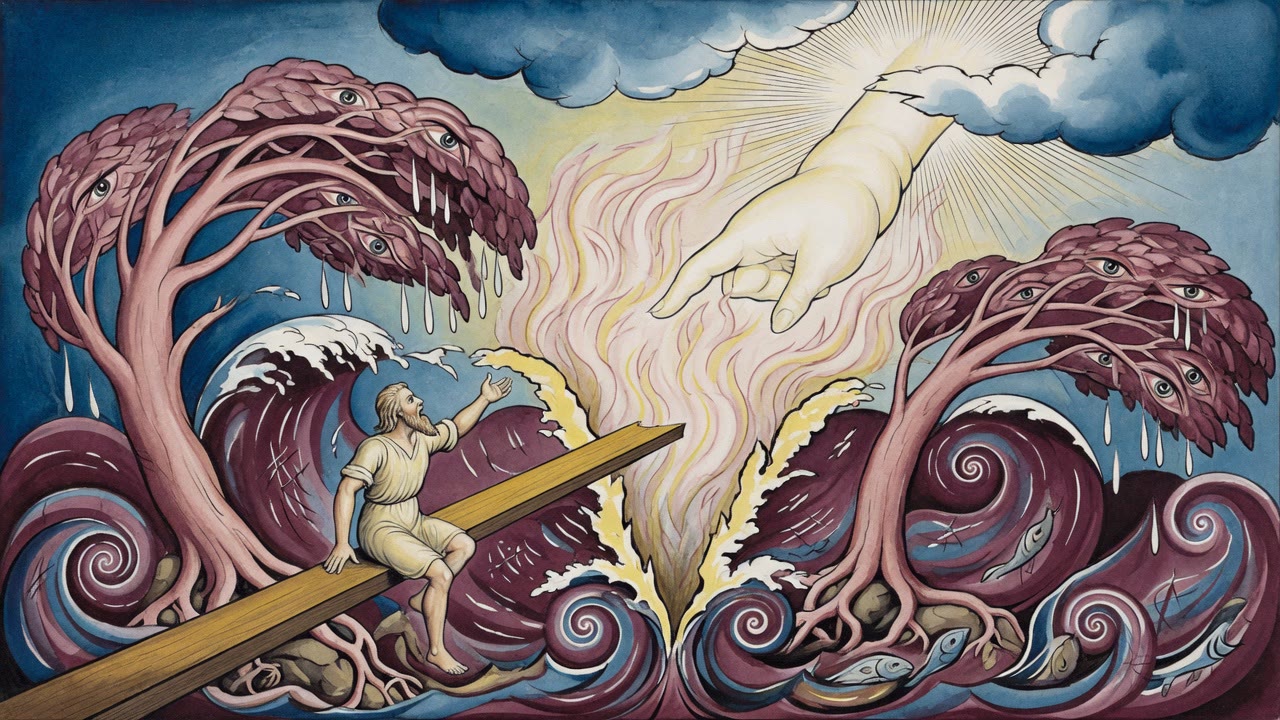
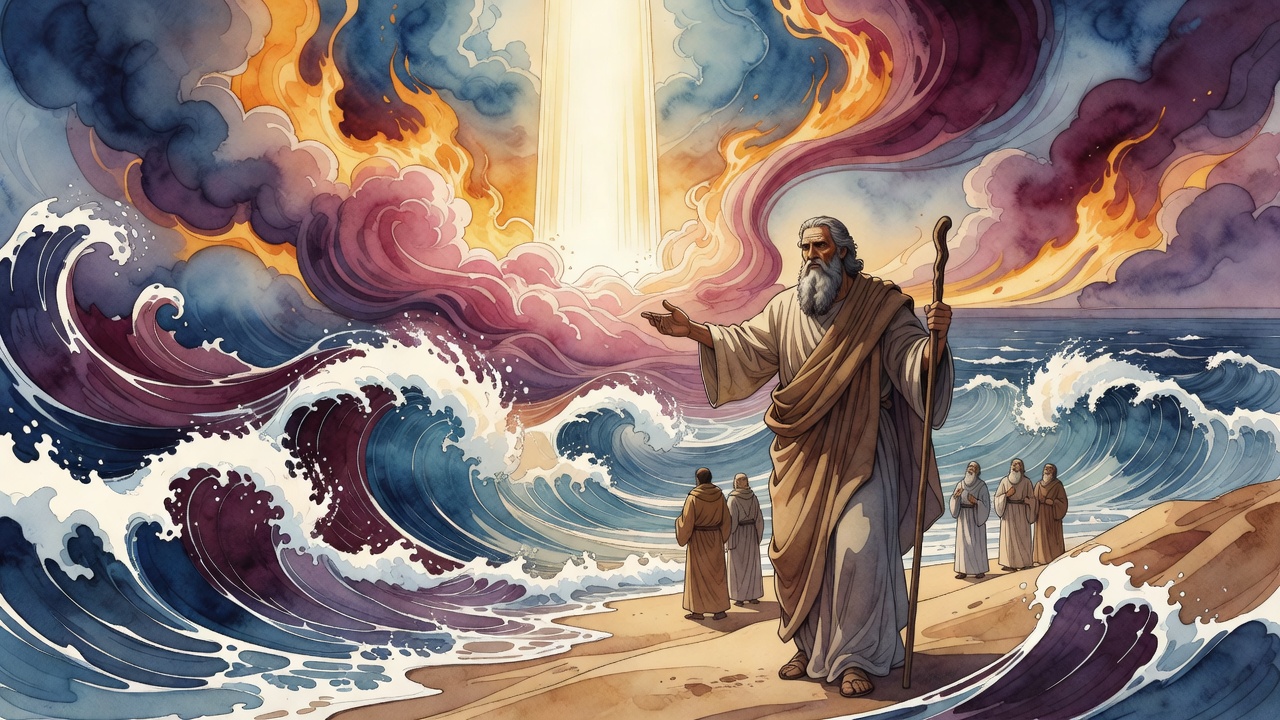
The deep already filled the world when God told the waters to gather. They crowded into a smaller bed, and dry land pushed up its face.
Table of Contents
The world was already full of water when the command came.
 Click for full size
God said, "Let the waters under the heaven be gathered to one place, and let dry land appear" (Genesis 1:9). A person empties a full vessel into an empty vessel. No one pours a full vessel into a full vessel and expects room. The deep already pressed against every edge of the new world. There was no empty basin waiting for the seas.
The waters moved anyway. They crowded. They stacked. They took a smaller claim on the globe than their mass should have allowed, and earth showed its face like a forehead pushed up through a crowd.
The Crush on the Third Day
Before that order, the lower waters had no settled address. Creation had already split upper from lower with the rakia (רקיע), the expanse (Genesis 1:6-7). Light had a name. Darkness had a name. The wet world under the expanse still sprawled without a coastline, a single heavy element refusing to make room for dust and root.
When the gathering began, water did not enjoy compression. It seeks level, spread, more. Heaven's word gave it a smaller bed and told it to be content. Dry land, named Earth, rose. The gathered waters received the name Seas. God saw that this was good. Goodness included too much liquid agreeing to sit in too little space.
Waves that had known no edge met a first shore and failed to climb it. The failure was obedience. Every later tide still tests that old limit and falls back under the same appointment.
A Nation Before a Sieve of Rock
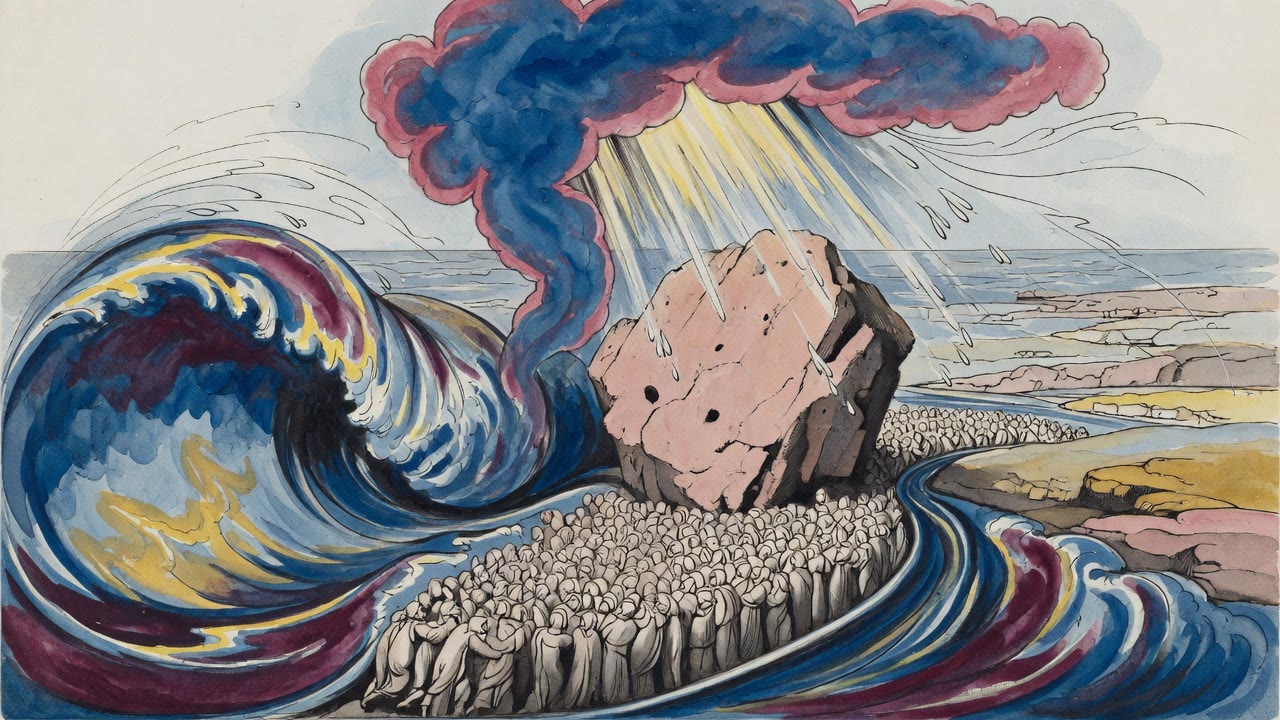
The same crush returns when Moses and Aaron gather Israel before the rock (Numbers 20:10). The space in front of the stone was the size of a small sieve. The entire people stood there. Bodies that should have overflowed the clearing somehow fit, the way seas had once fit a single appointed place.
Moses looked at faces pressed near faces, at children between knees, at the rock that seemed too small to face a nation. The miracle was not only water later. The miracle was already the standing room, a full vessel of people poured into a full and tiny court of stone and sand.
Aaron felt the heat of the press at his shoulder. Leadership in that moment was not speech first. It was enduring the crush without ordering the people back when heaven wanted them near. A baby cried and the cry had nowhere to go except up, trapped under the same sky that had once ordered oceans into a corner.
Ash That Fit One Palm
Another desert day taught the same physics. God told Moses and Aaron to take handfuls of soot from the furnace for the plague of boils (Exodus 9:8). Plural handfuls. Rav Huna counted the absurdity. Cupped hands. Clenched fists. Eight measures of ash if you do the arithmetic of two men and the doubling of open palms. Moses threw it all heavenward with one hand. The small container held the large portion. Egypt broke out in boils.
He opened his fingers after the throw and found them clean of the weight that should have overflowed them. Pharaoh's court learned the boil before it learned the math. Heaven keeps asking matter to accept a tighter home than matter prefers. Moses' palm became another coast. Ash became another sea under orders.
A Finger on a Tube
Later, in a study house, a challenger pressed Rabbi Meir on the upper waters. "Is it possible that the upper waters are suspended by the word of God?" Meir said yes. He asked for a tube of water. A gold plate set on top let the water spill. A silver plate did the same. His own finger sealed it. The challenger cried foul. Meir was placing his finger there.
"If I am flesh and blood and my finger can hold a tube," Meir said, "the finger of the Holy One holds the heights all the more."
Meir lifted his finger at last and the tube spilled like any ordinary craft. Suspension and compression are cousins. One keeps water up. One keeps water in. Both refuse the claim that too much cannot fit the place.
Land That Remembers the Crowd
The seas stay in a crowded appointment so wheat can root and cities can stand and a people can later camp before a rock too small for their number.
Moses, in the sieve-space before the stone, stood on ground that only existed because water had once agreed to lose the argument. Aaron's voice rose in that press. The nation breathed as one thick body. Somewhere under every shore, the third day still holds its shape: full poured into full, and dry land still showing its stubborn face.
The waters did not get a vote. They got a place. They keep it. Night after the third day found new beaches cooling. The seas muttered in their smaller bed. Earth dried enough for a seed that did not yet exist. The crush held.
← All myths