5 min read

Parents Wept When God Took Back His Portion

At a deathbed God took spirit and soul and left bone and blood. The parents wept, not for theft, but because their share now fed the worms.

Curated by Arthur · Told by Maggid ·
Table of Contents
  1. They Cried Over What Was Never Theirs
  2. The King and the Sharecropper
  3. While the Breath Still Mixed
  4. What the Grave Received

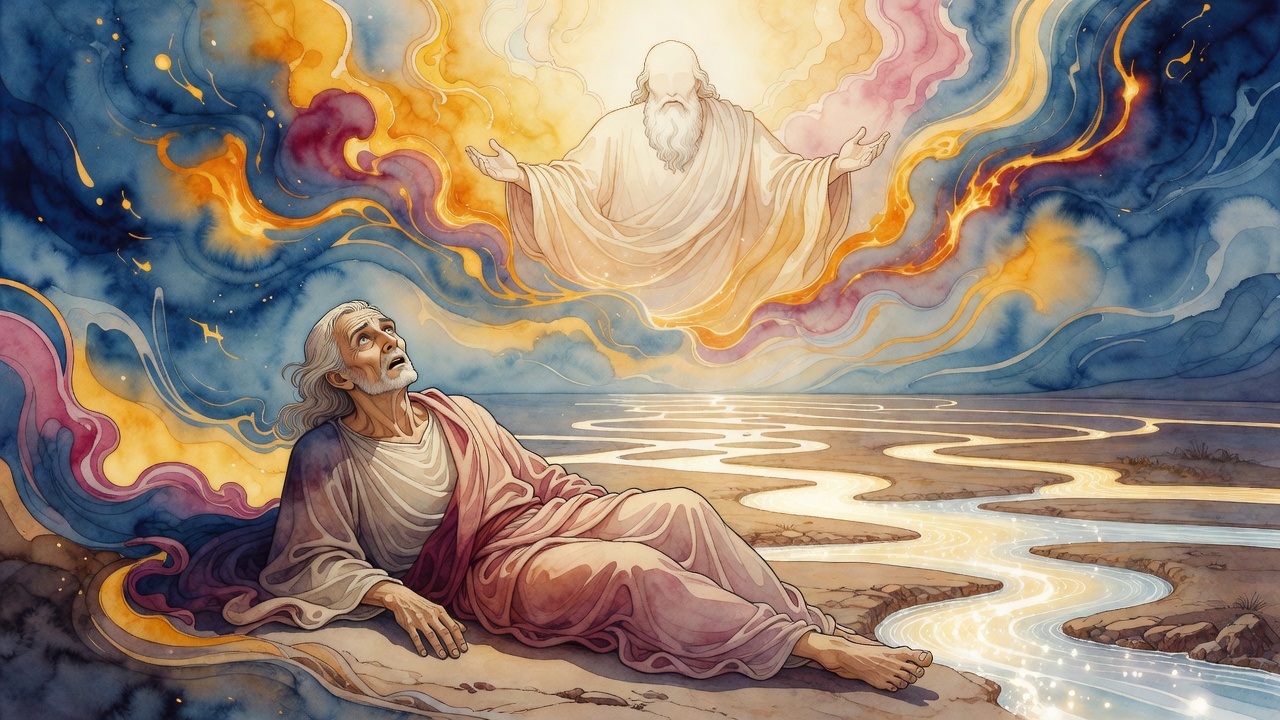
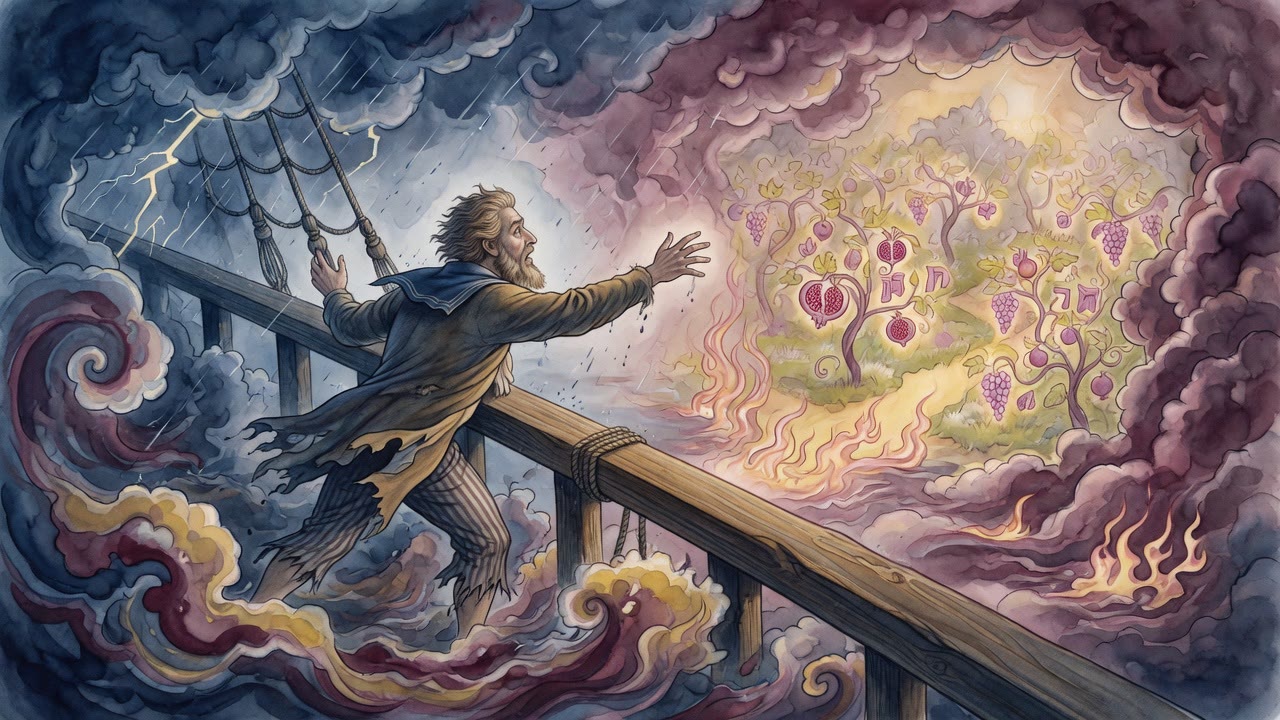
The breath left the body in a single thin thread. The father held a wrist that no longer answered. The mother pressed her ear to a chest that had gone still under linen already damp with the night's work. Then the room changed weight. Something that had held the flesh from inside was gone, and what remained was only what parents can make.
Parents Wept When God Took Back His Portion Click for full size

God took back His portion. Ruach and nefesh, spirit and soul, the countenance that had been this child's face, the sight, the hearing, the speech, the power in the limbs, wisdom, understanding, counsel, knowledge, strength. Ten gifts that never came from a human bed. The white the father had given stayed: bone, tendon, brain, the pale of the eye, the nail. The red the mother had given stayed: blood, skin, flesh, hair, the dark of the eye. Partnership ended in a clean cut. Heaven reclaimed what Heaven had placed.

They Cried Over What Was Never Theirs

God spoke into the weeping without softening the ledger.

"Why are you crying? Did I take anything of yours? I only took what was Mine."

The father did not argue ownership of the soul. He knew the three-way work that builds a child: father, mother, and the Holy One. He knew which gifts had never been his to invent. The mother still shook. Tears hit the sheet and spread.

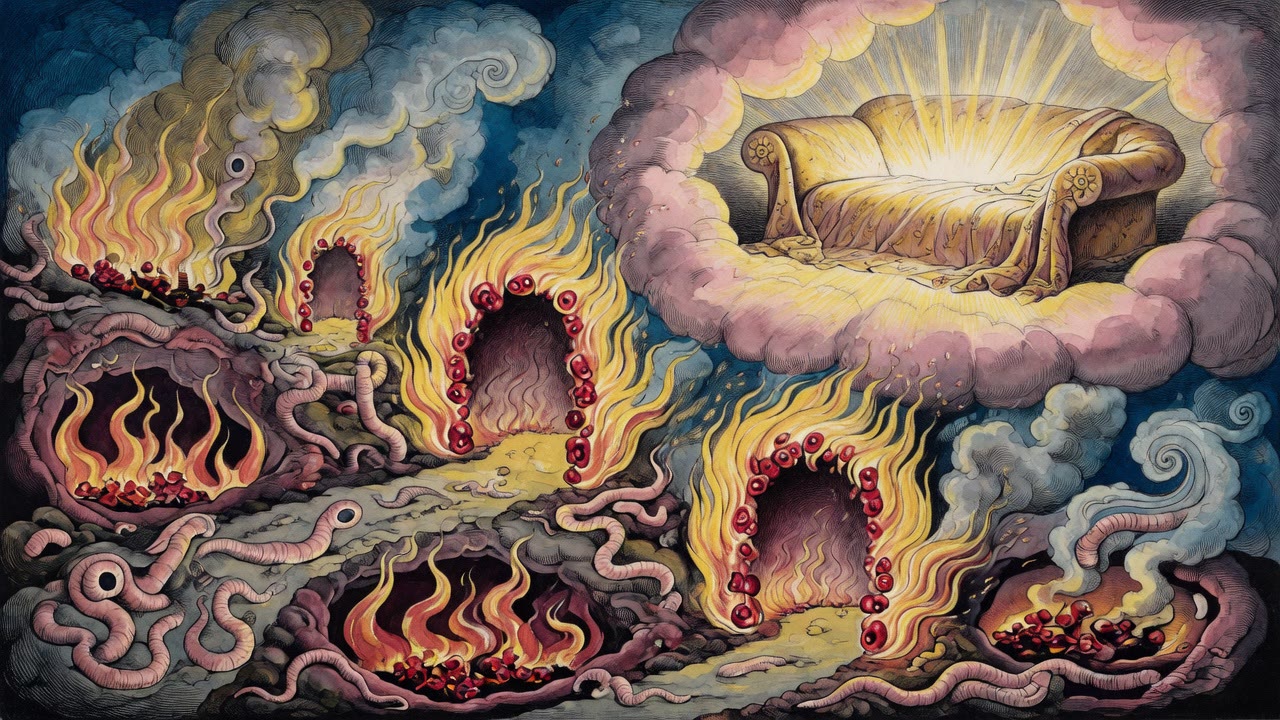
"Master of the Universe," they said together when they could form words, "as long as Your portion was intermingled with our portions, our portions were protected from maggots and worms. Now that You have taken Your portion from the midst of our portions, our portions are cast aside and subject to maggots and worms."

The sentence sat in the room like a second death. Without the divine share mixed through bone and blood, the human share became food for what waits under every grave. They had not been robbed of property. They had been left with property that could no longer stand alone.

The King and the Sharecropper

Rabbi Yehuda HaNasi set the same grief in a vineyard. A king owns the rows. He entrusts them to a sharecropper. When harvest comes he sends servants for his portion and leaves the tenant's share on the vine. The sharecropper weeps in the dust between the stakes. The king protests that he took only what was his. The tenant answers with the same logic the parents used: while the king's grapes hung mixed with his, thieves and spoilage stayed off the whole. Alone, the human share is exposed.

So the parents stood over a body that had been a vineyard of mixed ownership. God's servants had harvested the living share. What remained would rot without that mixture. The king was not cruel in the taking. The taking still broke the protection that mixture had given.

Outside, neighbors brought food no one could taste. Inside, the parents counted what was left: white and red without the ten that make a person more than meat.

While the Breath Still Mixed

On other days the same partnership sounded like joy. Children left the schoolhouse with Torah still warm on their tongues, and a Divine Voice walked with them: "Go, eat your bread joyfully." Their breath of learning had risen as a pleasing aroma. Adults left the study hall or the synagogue with the same word waiting in the street. Prayer accepted. Bread permitted. Wine permitted. God had already accepted the actions while the divine portion still sat inside the living frame (Ecclesiastes 9:7).

That acceptance is the other face of the deathbed. While the three shares hold together, small offerings count. A child's verse. An adult's amen. The voice that sends them to their meal is not mockery. It is the ledger while the mixture lasts. The parents who now wept had once heard that permission over living mouths. The cut made the prior joy sharp enough to cut again.

On the road to Moriah long before, Abraham and Isaac had seen a cloud on the mountain while the servants saw only rock. Perception itself was a gift of the portion God places. Some eyes hold it. Some walk beside the donkey and see nothing. The parents in the room had held a child who once saw, heard, spoke. Now the portion that made that possible had gone home.

What the Grave Received

They washed what was left. They wrapped it. They carried it to ground that did not care which king had owned the better half. Maggots would come for the share the parents had given. That was the fact they had named to God's face. Nothing softens the worms.

God did not return the ten gifts into the shroud. The partnership that forms a fetus runs one direction in birth and the other in death. White and red without spirit are not a second chance. They are a body. The parents stood until the dirt closed and then longer, because grief does not end when the argument ends.

Somewhere a school let out and children ran toward bread with a voice of acceptance still in the air. Somewhere a sharecropper watched a royal cart leave with the king's grapes. In one house the mixture had held. In this one it had not. The parents who had built half a child stood over ground that now held only white and red, and learned how little half can keep from worms.


← All myths
From the tradition

Sources

2 sources

The texts behind this telling. Some cards carry a translation of the source; others are our own retelling of it, and each card says which. Every card links out to the original.

Kohelet Rabbah 10:2Kohelet Rabbah

Retold in our words. Read the original at the link below.The Sefaria Midrash Rabbah, 2022 · CC-BY

It offers a powerful, poetic view on the very creation of life.

In this teaching, when a fetus is formed, it's a partnership – a three-way collaboration, if you will. There's the Holy One, blessed be He, the father, and the mother. The father contributes the "white substance," the source of things like bones, tendons, the brain, the whites of the eyes, even the fingernails. The mother provides the "red substance," which gives rise to blood, skin, flesh, hair, and the dark parts of our eyes. So far, so biological. But

The Holy One, blessed be He, adds ten crucial elements: Ruach (spirit), Nefesh (soul), countenance, eyesight, hearing, speech, the ability to move our limbs, wisdom, understanding, counsel, knowledge, and strength. These are the things that truly make us human, that give us our spark.

As with all things, there's an ending. When death arrives, the Holy One takes back His portion, leaving behind the contributions of the parents. And what happens then? Grief. The parents weep.

God asks them, "Why are you crying? Did I take anything of yours? I only took what was Mine."

Their response is heartbreaking. They say, "Master of the Universe, as long as Your portion was intermingled with our portions, our portions were protected from maggots and worms. Now that You have taken Your portion from the midst of our portions, our portions are cast aside and subject to maggots and worms."

Rabbi Yehuda HaNasi, uses a powerful analogy to explain this. The king tells his servants to harvest his portion, leaving the sharecropper's share behind. The sharecropper, naturally, begins to weep. The king, like before, protests that he only took what belonged to him. But the sharecropper's lament is the same: as long as the king's portion was mixed with his, it was safe from plunder. Now it's vulnerable.

The king, of course, represents the King of Kings, the Holy One, blessed be He. The sharecropper represents the parents. As long as the soul – God's portion – is within us, we are protected. But when we die, we're vulnerable, subject to the natural processes of decay.

Shimon ben Elazar adds another layer. Even a newborn infant is naturally protected. Animals instinctively fear it. But in death, even the mighty Og, King of Bashan, needs protection from the smallest of creatures. This echoes (Genesis 9:2), "And your fear and your dread shall be upon every beast of the earth…" That fear vanishes at death, and protection is needed.

There's a real-world implication here too. We are taught that you can desecrate Shabbat (the Sabbath) to save the life of a one-day-old infant. But even for David, King of Israel, you wouldn't desecrate Shabbat after his death. As Solomon wisely said, "For a living dog is better than a dead lion" (Ecclesiastes 9:4).

The text then veers into a fascinating anecdote about King David's death. David asks God to inform him of his end. God refuses to reveal the exact time but tells David he will die on Shabbat. David, ever the devoted student of Torah, spends every Shabbat immersed in study, hoping to postpone his death. On the fateful day, the Angel of Death tries to trick him. A stair breaks, David falls, and his time comes.

The story doesn't end there. Solomon, faced with the dilemma of honoring Shabbat while also caring for his father's body and the hungry dogs, seeks guidance. The solution? Place a loaf of bread or an infant on top of the corpse, allowing it to be moved without directly violating Shabbat. Practicality and respect, intertwined.

The passage concludes, returning to Solomon's earlier words: "For a living dog is better than a dead lion."

What does it all mean? This Kohelet Rabbah passage offers a profound meditation on life, death, and the partnership between humanity and the Divine. It highlights the preciousness of the divine spark within us, and the vulnerability we face when that spark returns to its source. It is a reminder to cherish life, to embrace our humanity, and to appreciate the protection and purpose that the Divine presence offers us, while we still have it.

Full source
Kohelet Rabbah 7:1Kohelet Rabbah

Retold in our words. Read the original at the link below.The Sefaria Midrash Rabbah, 2022 · CC-BY

It tells us: “Go, eat your bread joyfully, and drink your wine goodheartedly, as God has already accepted your actions” (Ecclesiastes 9:7). But what does that mean?

Kohelet Rabbah, a rabbinic commentary on Ecclesiastes, dives deep into this verse, offering multiple interpretations that resonate even today. It's like a chorus of voices, each adding a layer of meaning.

One interpretation, attributed to Rabbi Huna son of Rabbi Aḥa, speaks to the simple act of children leaving school. Imagine the scene: kids, buzzing with energy, heading home for lunch. According to this teaching, a Divine Voice accompanies them, saying, "Go, eat your bread joyfully!" Why? Because their "breath" – their very words of Torah learned that day – has been accepted as a pleasing aroma before God. It's a powerful image: even the seemingly small act of learning is a sacred offering.

Similarly, when adults leave synagogues or study halls, the commentary says the same Divine Voice rings out: "Go, eat your bread joyfully!" Their prayers, too, have been received. It's a reminder that our spiritual efforts, whether grand or modest, are seen and valued.

But the interpretations don't stop there. Another perspective connects the verse to specific Torah portions: the ḥalla (offering of dough) and libations. And then, Rabbi Azarya, citing Rabbi Yehuda bar Simon, brings in the story of Abraham and the binding of Isaac.

Remember that harrowing tale? God commands Abraham to sacrifice his beloved son. Abraham obeys, leading Isaac up Mount Moriah. But something fascinating happens on the way. Abraham sees a cloud affixed to the mountain, recognizing it as the place God intended. Isaac sees it too. But Abraham's servants? Nothing.

"Stay here with the donkey," Abraham tells them, using a phrase, im haḥamor, that the Rabbis link to those who are "comparable to a donkey," meaning those who lack spiritual perception. Abraham continues, building an altar, binding Isaac, and raising the knife. We all know the angel intervenes at the last moment, preventing the sacrifice.

But here's the crucial part, according to Rabbi Yehuda ben Rabbi Simon: Abraham wonders if there was something wrong with Isaac, something that made him unfit as an offering. And then, a Divine Voice reassures him: "Go, eat your bread joyfully…as God has already accepted your actions." Your offering has been accepted!

The story doesn't end there. Rabbi Mona of Shaab and Rabbi Yehoshua of Sikhnin, in the name of Rabbi Levi, connect the verse to Rosh HaShana and Yom Kippur, the High Holy Days. It's likened to a king forgiving taxes owed by a province. First, the leaders are forgiven a third, then the middle class, and finally, when everyone emerges – men, women, and children – all debts are forgiven. God says, "What is past is past, from here onward is a new account." And once again, the Divine Voice proclaims: "Go, eat your bread joyfully" – your prayer has already been heard.

We even get a story about Abba Taḥana, a pious man, who, on the eve of Shabbat (the Sabbath), chooses to help a man afflicted with boils instead of rushing home with his livelihood. He worries he's desecrated Shabbat. But the sun shines miraculously, and the Divine Voice assures him, "Go, eat your bread joyfully…as God has already accepted your actions.”

Finally, the commentary turns to Daniel, the "beloved man," whose prayers are answered so swiftly that the angel Gabriel arrives almost before he's finished. Rabbi Shmuel bar Onya, quoting Rabbi Aḥa, notes that Daniel is described as "beloved" three times! The angel says, "You are very beloved. You are beloved to your Creator, you are beloved to His entourage, and you are beloved to His Torah." And again, the Divine Voice: "Go, eat your bread joyfully" – your prayer has already been heard.

What connects these stories? It’s the idea that God sees our efforts, our intentions, even when we ourselves doubt their worth. Whether it's a child learning Torah, a community atoning for its sins, or a man performing an act of selfless kindness, God acknowledges and accepts our actions.

So, the next time you question whether what you're doing is enough, remember this verse from Ecclesiastes, and the rich interpretations in Kohelet Rabbah. Maybe, just maybe, a Divine Voice is whispering to you right now: "Go, eat your bread joyfully…as God has already accepted your actions."

Full source