5 min read

Rabbi Shimon Turns Scholar Curses Into Blessings

Scholars bless Rabbi Shimon bar Yochai's son in words that sound like ruin, and the father turns every curse inside out until the boy can breathe.

Curated by Arthur · Told by Maggid ·
Table of Contents
  1. Every Sentence Turned Inside Out
  2. Abraham's Thread and Abraham's Shoelace
  3. Letters That Wait and Words That Meet Captives
  4. The Boy Learns How to Hear

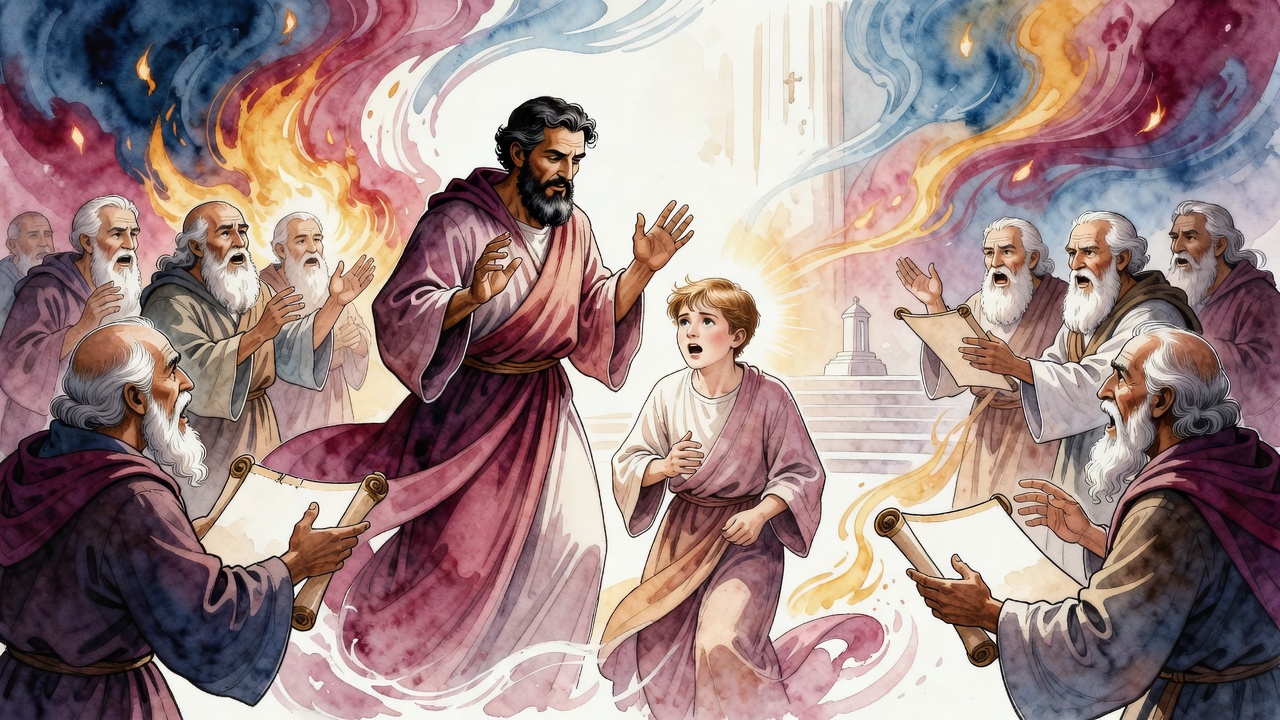
The boy came home shaking. Rabbi Shimon bar Yochai had sent him to the study house for a blessing, and what he received sounded like a stack of funerals.
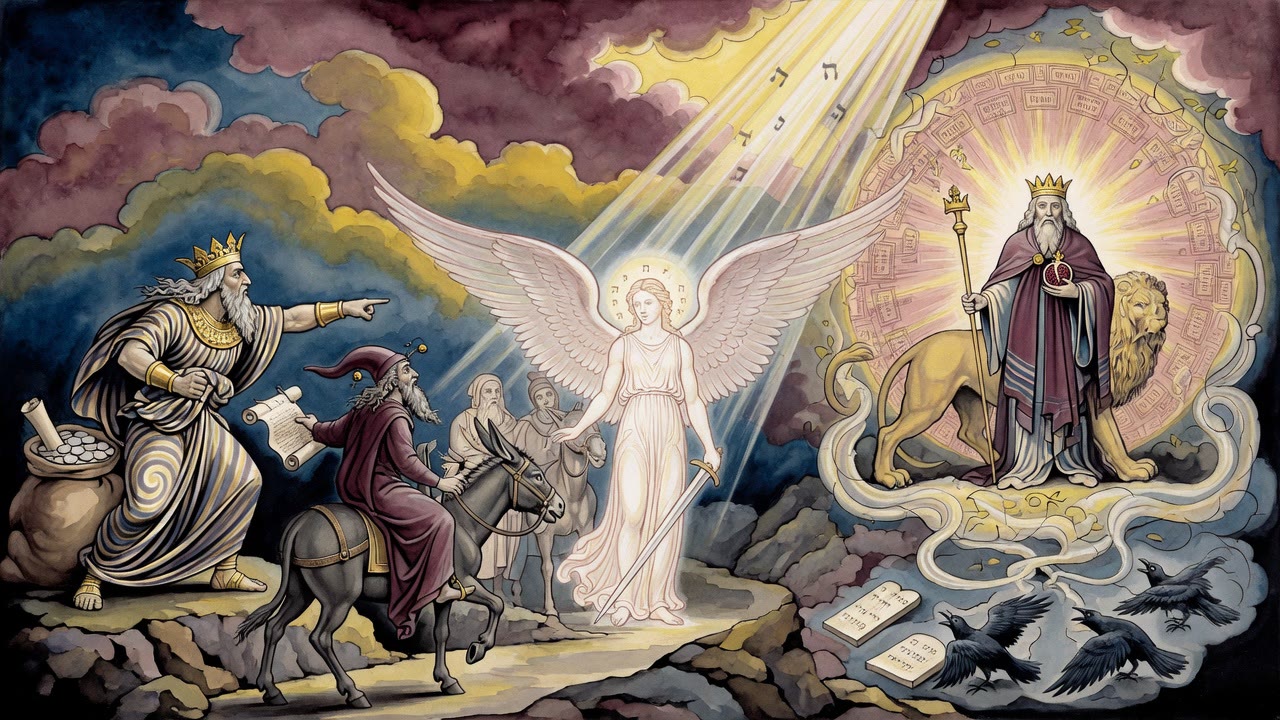
Rabbi Shimon Turns Scholar Curses Into Blessings Click for full size

"What you sow, you shall not reap. You shall bring in, and you shall not carry out. You shall carry out, and not bring in. Your house shall be destroyed, but your resting place shall be established. Your table shall be troubled, and you shall not see the new year."

He thought the scholars had cursed him. He ran to his father.

Rabbi Shimon smiled.

Every Sentence Turned Inside Out

"They blessed you in the deepest way," he said. "Listen."

"What you sow, you shall not reap" means you will have children, and they will not die before you. "You shall bring in and not carry out" means you will bring in daughters-in-law for your sons, and you will not carry those sons out to burial. "You shall carry out and not bring in" means you will marry your daughters out, and their husbands will not die so that the brides return in mourning. "Your table shall be troubled" means children will crowd it, noisy and alive. "You shall not see the new year" means your wife will not die in the year and force you to remarry. "Your house shall be destroyed" means this world passes; "your resting place shall be established" means the world to come holds firm.

The same syllables. Opposite weather. The boy had heard death. His father heard long life spoken in riddles only a trained ear could unlock.

Abraham's Thread and Abraham's Shoelace

God once took two small words from Abraham's oath and turned each into a promise. Because Abraham said "a thread," God would praise Israel with a thread of scarlet lips in the Song of Songs, a bright line of faithful speech. Because Abraham said "a shoelace," God would cast His shoe on Edom, treading the oppressor and claiming the field. One vow of renunciation became tenderness for the people and judgment for their enemies.

Words do double work in this household of reading. A refusal becomes inheritance. A blessing wears a curse's coat so that shallow listeners flinch and deep listeners lean in. Rabbi Shimon was doing for his son what the tradition does for Abraham's vocabulary: refuse to let the surface of a sentence be the last court of appeal.

Letters That Wait and Words That Meet Captives

Why open the first commandment with Anokhi rather than a plainer "I"? Masters read the letters as an acronym of God's own pledge: I Myself wrote it and gave it. Others heard gift, writing, pleasantness, speech. Rabbi Berekhiah heard light, crown, glory, conditioned on accepting the Ten Words.

Then the letter alef complained for twenty-six generations. First of letters, yet creation began with bet, with Bereshit. God answered with a promise. When Torah would be given, it would open with no letter but alef. So revelation begins: Anokhi, the LORD your God. Rabbi Nehemiah added that Anokhi is an Egyptian word. A king whose son was raised among captors speaks the captors' tongue so the boy will understand. Israel had learned Egypt's speech. God met them in a word their ears already knew.

Surface and depth again. A strange word is not a mistake. It is a bridge. A harsh blessing is not cruelty. It is a code for a father who knows how scholars talk when they love a student enough to hide life inside threat-shaped lines.

The Boy Learns How to Hear

After the translation, the study house looked different. The same men sat there. The same phrases hung in the air. What changed was the son's willingness to bring home a sentence he did not yet understand instead of swallowing it as doom. Sorrow and blessing often share grammar. The difference is whether someone at the table can turn the coat right-side out.

Rabbi Shimon did not scold the scholars for speaking darkly. He did not scold the boy for fear. He performed the labor of reading until fear had nowhere left to stand. That labor is the inheritance. Not every child has a father who can do it. The ones who do carry a second ear for the rest of their lives.

Later the boy practiced on lesser sentences. A sharp word from a teacher. A dark joke from a peer. He brought them home less often, not because fear died, but because he had watched a master reader work. Rabbi Shimon did not pretend the scholars had spoken gently. He pretended nothing. He translated. In a tradition that lives by translation of heaven's speech into human life, that skill is as practical as bread.


← All myths

From the tradition

Sources

3 sources

The texts behind this telling. Some cards carry a translation of the source; others are our own retelling of it, and each card says which. Every card links out to the original.

Gaster, Exempla of the Rabbis No. 143; Moed Katan 9a-bThe Exempla of the Rabbis (1924)

Retold in our words. Read the original at the link below.The Exempla of the Rabbis, Moses Gaster (1924) · PD-US-pre-1929

Rabbi Shimon bar Yochai, the second-century sage to whom tradition attributes the core of the Zohar, once sent his son to the study house so that the scholars might bless him. What the son received sounded more like a curse.

"What you sow, you shall not reap. You shall bring in, and you shall not carry out. You shall carry out, and not bring in. Your house shall be destroyed, but your resting place shall be established. Your table shall be troubled, and you shall not see the new year."

The boy came home shaken. He thought the scholars had cursed him. He ran to his father for an explanation, and his father smiled.

"They blessed you in the deepest way, my son. Listen.

"'What you sow, you shall not reap', you shall have children, and they shall not die before you. 'You shall bring in and not carry out', you shall bring in daughters-in-law as brides for your sons, and your sons shall live to greet them; you shall not have to bury them. 'You shall carry out and not bring in', you shall marry your daughters out, and their husbands shall not die. 'Your table shall be troubled', by the children crowding around it. 'You shall not see the new year', meaning, your wife shall not die in the year, forcing you to marry another. 'Your house shall be destroyed', this house, this world, passes; but 'your resting place shall be established', in the world to come."

Every curse, in his father's mouth, turned inside out into a blessing. The story, preserved as Gaster's exemplum No. 143, is really about how rabbinic Jews read the whole of human life. Sorrow and blessing often use the same sentence. The difference is whether you have a father who can translate.

Full source
Yalkut Shimoni on Torah 76:4Yalkut Shimoni on Torah

Translation of the source text.Torat Emet (Yalkut Shimoni) · CC-BY-NC

You said "from a thread" (Genesis 14:23), with it I praise your children: "your lips are like a thread of scarlet" (Song of Songs 4:3). You said "to a shoelace", in the merit of this I exact punishment from their enemies: "upon Edom I will cast my shoe" (Psalms 60:10).

Full source
Yalkut Shimoni on Torah 286:5Yalkut Shimoni on Torah

Translation of the source text.Torat Emet (Yalkut Shimoni) · CC-BY-NC

Rabbi Yohanan said, "your God am I" - I am Judge, I am your Patron. And Reish Lakish said, what use is a patron beside the Judge? "God, your God, am I." Rabbi Yehudah bar Shalom said, He speaks of Israel: not because I called you "gods" - "I said, you are gods" (Psalms 82:6) - do not make light of the Torah I gave you. "Anokhi" is read as a notarikon [acronym]: "Ana Nafshi Ketavit Yehavit" [I Myself wrote and gave it]. The Rabbis say: "Yehivah Ketivah Ne'imah Amirah" [Given, Written, Pleasant, Spoken]. Rabbi Berekhiah said: "Ana Nehorakh Kelilakh Ye'utakh" [I am your light, your crown, your distinction]. When? When you accept the Ten Words.

"Anokhi": Rabbi Asa said, twenty-six generations the letter alef cried out in protest before the Holy One, blessed be He, saying, I am the first of the letters, yet You did not create Your world with me, but with bet: "In the beginning [Bereshit] God created." The Holy One, blessed be He, said to it, By your life, I shall repay you. The Torah was created before Me, before the world was created, two thousand years, and when I come to give the Torah to Israel I will open only with you, as it says "Anokhi [I am] the LORD your God."

Rabbi Nehemiah said, what is "Anokhi"? It is an Egyptian word. A parable of a king of flesh and blood whose son was taken captive and spent many days among his captors. His father donned vengeance and went to him and brought him back, and came to converse with him in the language of the captors. So too the Holy One, blessed be He: Israel spent all those years in Egypt and learned the speech of Egypt, and when the Holy One, blessed be He, redeemed them and came to give them the Torah, the Holy One, blessed be He, said, Behold, I shall speak with them in the Egyptian tongue, "Anokhi" - anokh.

Full source