Parshat Balak5 min read

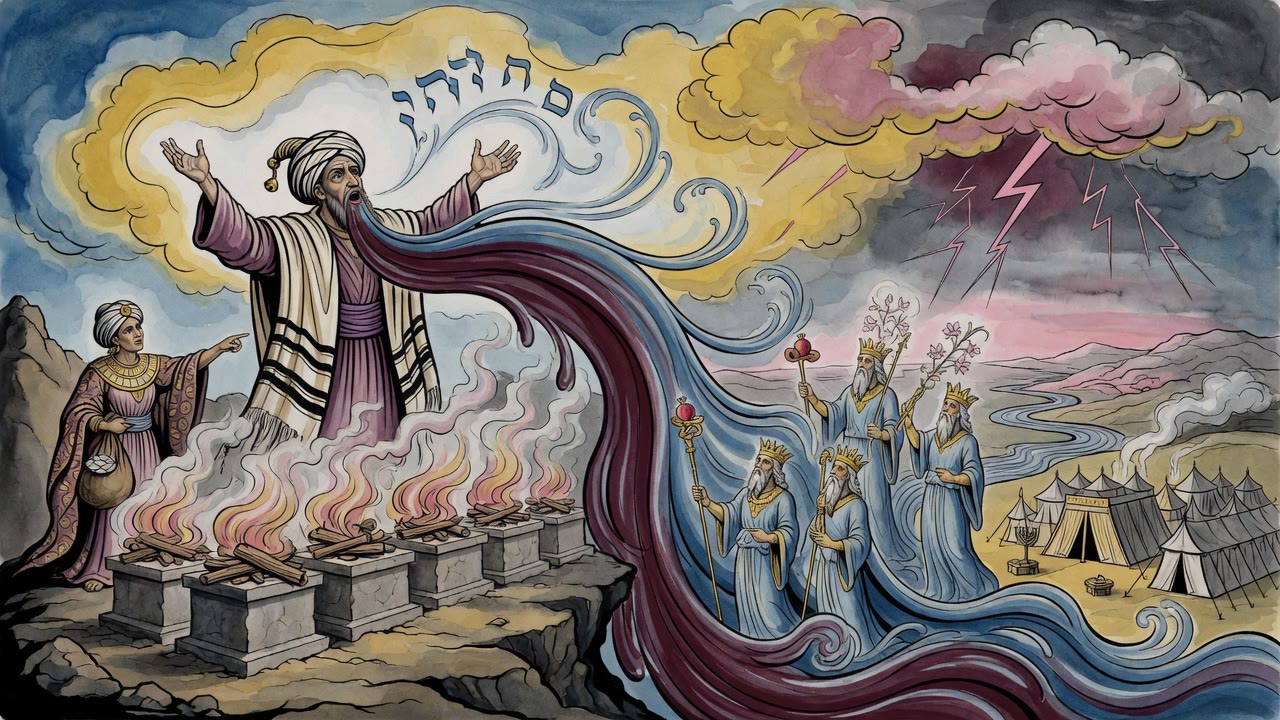
Balaam Bids Seven Altars Against Israel's Camp

Abraham offered one ram, Balaam told Heaven, and I will offer thousands. The rabbis called him a butcher whose shop is already crammed with meat.

Curated by Arthur · Told by Maggid ·
Table of Contents
  1. Seven Altars at Auction
  2. The Curse That Could Not Hold
  3. Isaac's Fence Around the Camp
  4. Mouth Against Mouth

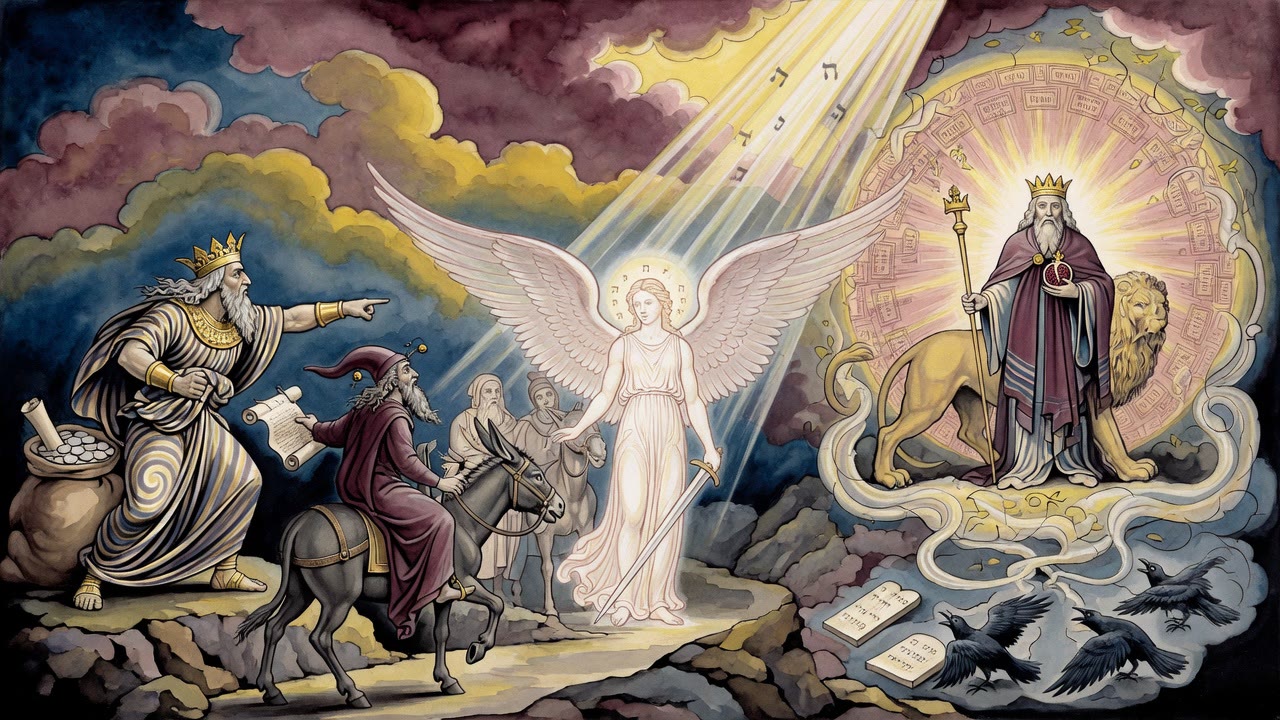
The nations took counsel and reasoned like merchants of war. Moses' strength lay in his mouth, in the word that opened seas and called down plagues. So they said: answer mouth with mouth. Send for Balaam.
Balaam Bids Seven Altars Against Israel's Camp Click for full size

His name turned in their hands like a coin. Balaam, who would swallow a people whole, wear them down, leave them without a people. Beor, his father's name, carried shame, for he came upon a beast. Pethor named his trade twice over: dream-interpreter and money-changer weighing nations as he weighed silver. From that trade Balak also came, afraid because Israel had covered the face of the land after Sihon fell (Numbers 22:5).

Messengers went with fees of divination in their hands. The errand was simple: find the tongue that can undo the tongue of Moses.

Seven Altars at Auction

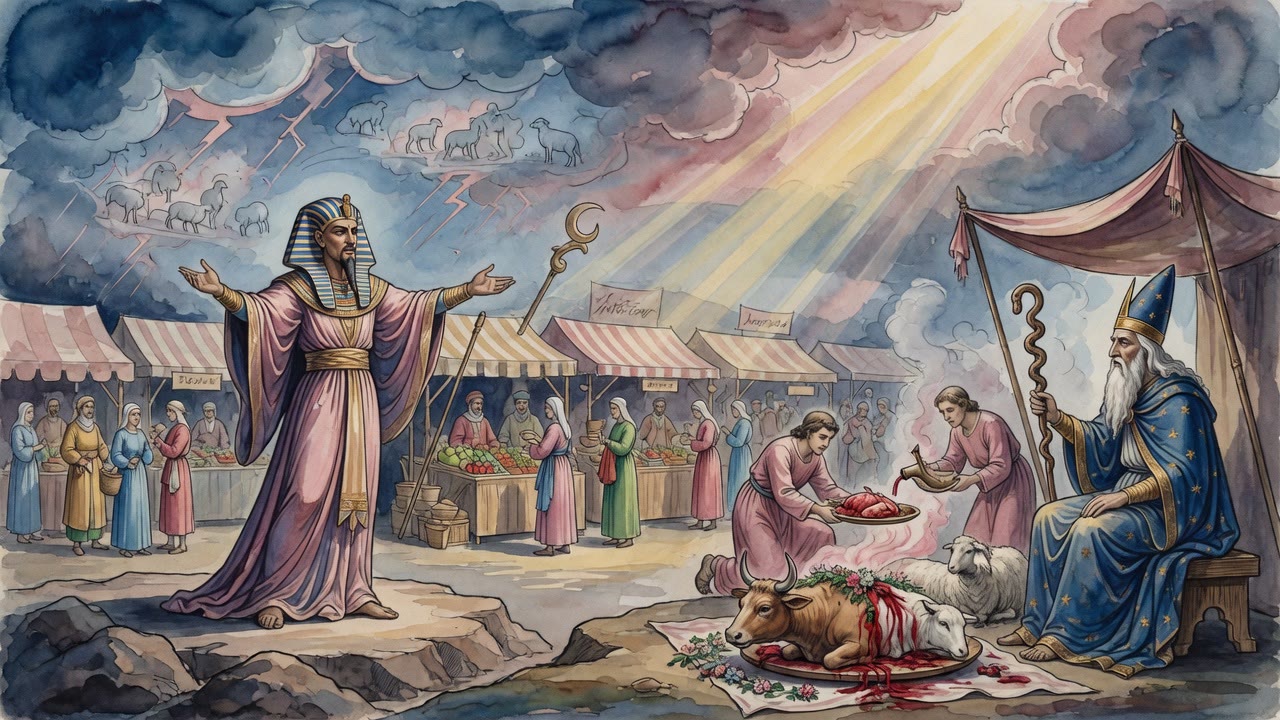
Balaam fashioned himself defender of the nations and pitched Heaven like a man at an auction. Israel brings one log of oil? We will bring rivers. Abraham offered one ram? We will offer thousands. Abraham was ready to give a son? I will give son and daughter both. "I have arranged the seven altars," he declared, as if devotion were outbidding every altar since Adam.

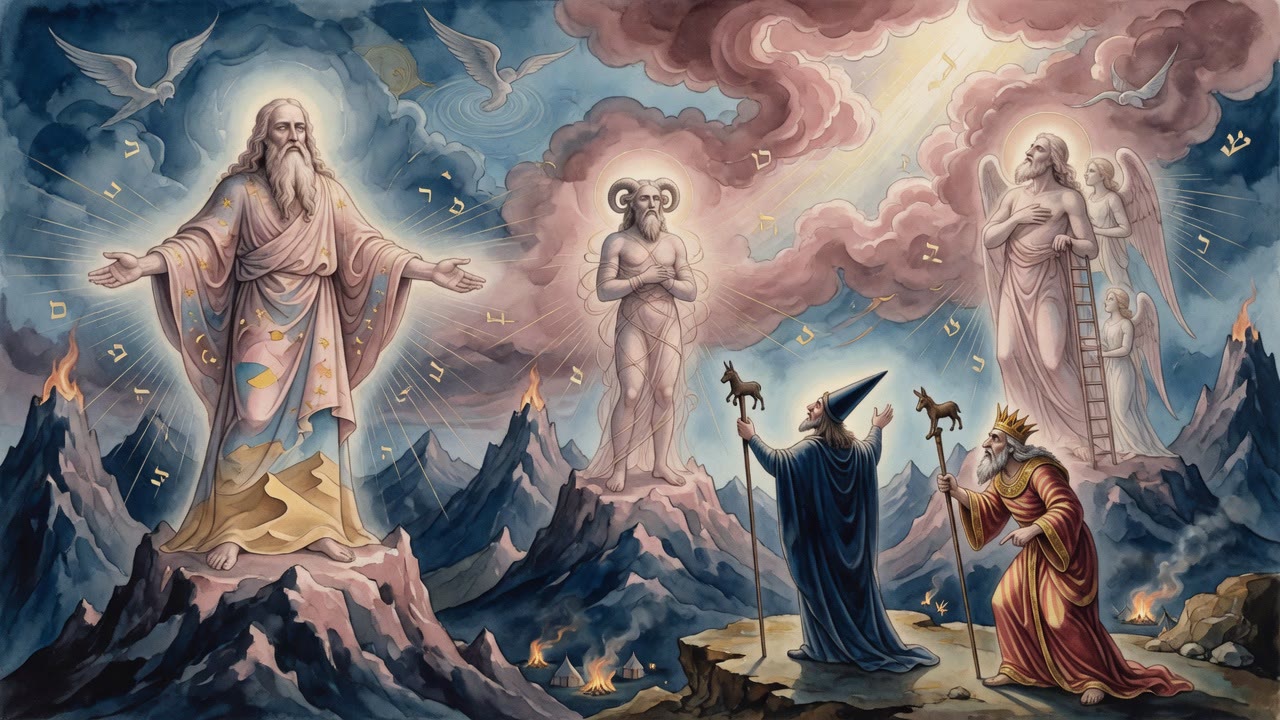
The rabbis compare him to a butcher whose shop is already crammed with meat, flattering a king's steward by insisting he has sent provisions the palace never needed. The Holy One answered flatly. If sheer quantity were the prize, Michael and Gabriel and the hosts of heaven would suffice. What is treasured is not the size of the gift but the giver. Offerings are received from Israel, children of Abraham and Isaac, and the command runs to Aaron and his sons, not to a hired tongue on a high place.

Who in the sky can be compared to the LORD? Balaam tried the comparison and lost before the first ram's blood cooled.

The Curse That Could Not Hold

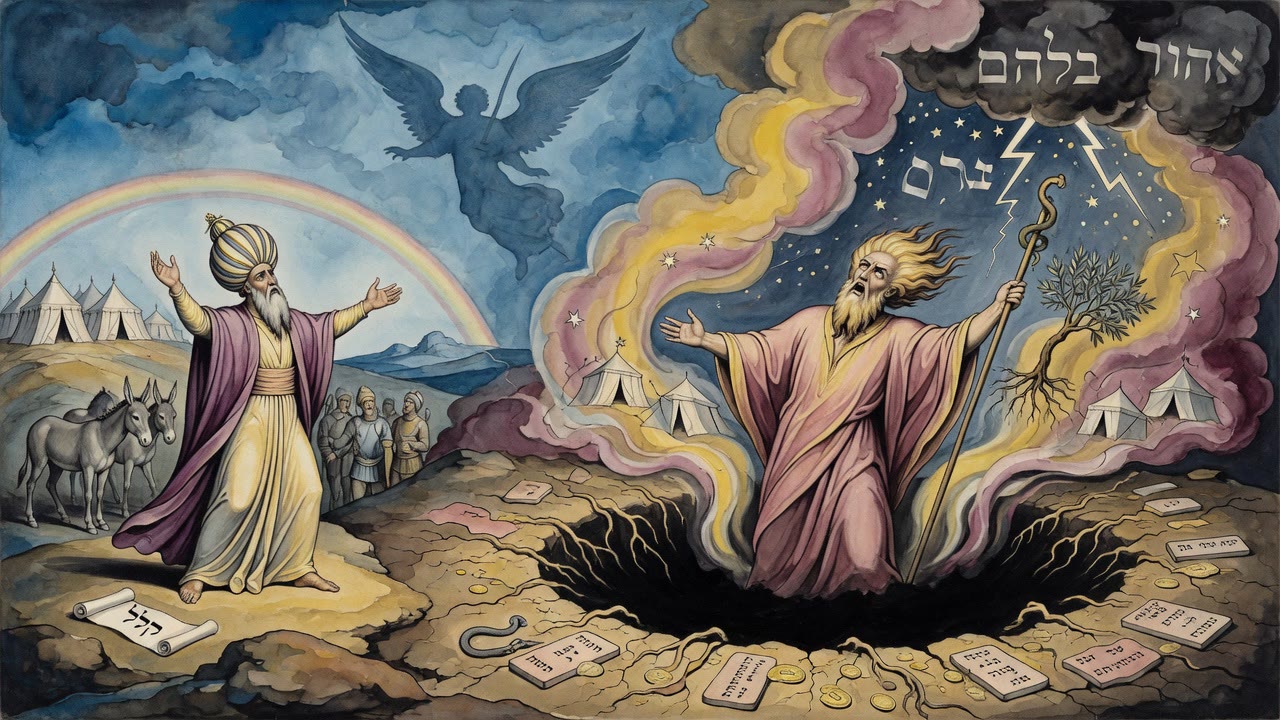
When Balaam opened his mouth to ruin Israel, the words betrayed him. He meant study-houses like seasonal streams, flowing once then dry. The Spirit corrected him: stretched out, ever-flowing. He meant gardens that wither; out came gardens by a river. He meant tents of spice that lose scent when dry; the answer was planting by the LORD, fresh as the first day. He meant rootless cedars the wind tears up; the answer was cedars by water, roots deep.

He meant no king from a king. Against his will his tongue confessed water flowing from buckets, dynasty upon dynasty. He meant they would crouch and fall to Amalek; instead a king higher than Agag, pointing ahead to Saul who struck Amalek and bound Agag under the ban (Numbers 24:6-7). So the curse curdled into a kingdom exalted, enduring like the heavens stretched out, like the cedar planted by living water.

Isaac's Fence Around the Camp

"He couches, he lies down like a lion." Once Israel has taken the Land and lain down in it, who dares rouse a lioness at rest? Then came the line that undid the errand: "Blessed are those who bless you." Isaac had already wrapped Jacob in that circle long before: cursed be those who curse you. To curse Jacob was to walk into the curse oneself.

Balak had begged him neither to bless nor to curse, only to stay silent if he could not harm. Balaam answered that he could not hold himself back from blessing. Balak heard the words "cursed be those who curse you" and understood at last. The prophet could not strike Israel without striking himself. Anger flared in a king whose hired tongue had failed, with no strength left to curse, only the fire of a bargain lost.

Mouth Against Mouth

They hired a mouth to match Moses. The mouth climbed high places, counted seven altars, and still could not buy the King of the universe with bulk of rams. Every aimed ruin came out as garden, river, cedar, and throne. Balaam left the heights with blessings stuck in his teeth, proof that love of Israel keeps even an unclean conversation open only long enough to turn a curse inside out.

Balak struck his hands together. The fees of divination bought him poetry he did not want. The camp below lay like a lion at rest, and the man paid to wake it could only sing it stronger.

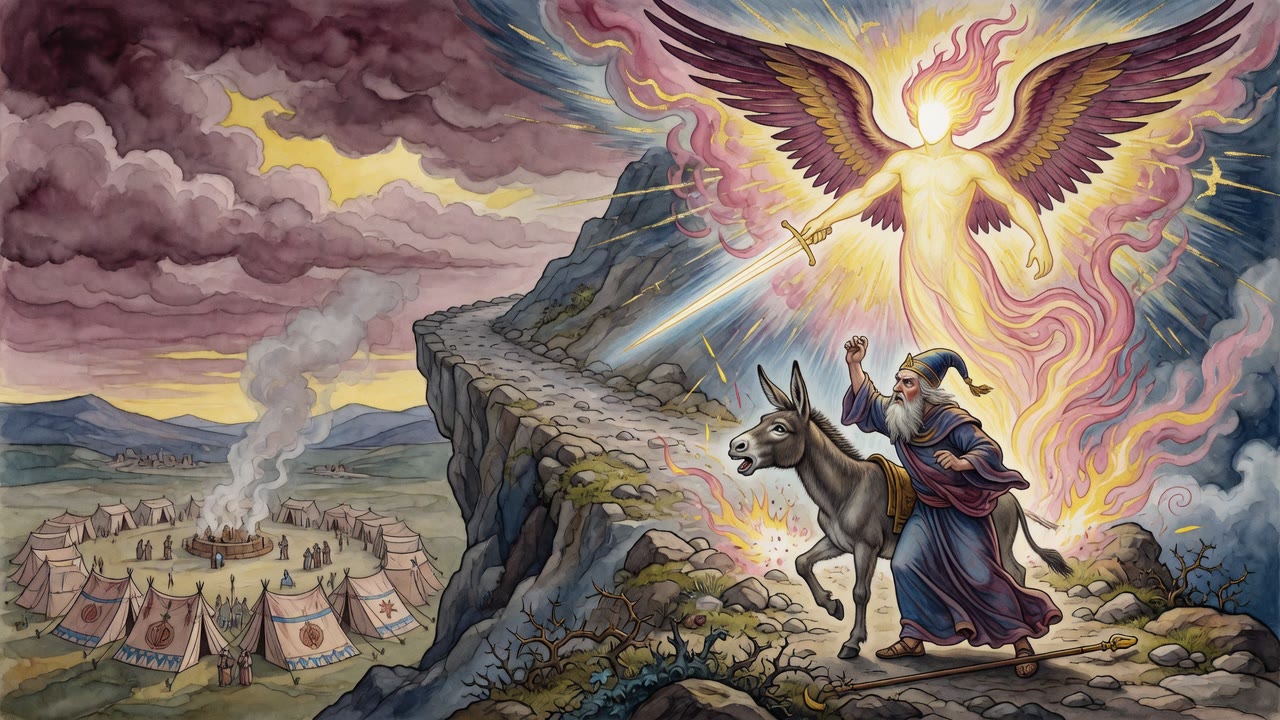
On each high place Balak built seven altars and offered a bull and a ram on every one. Smoke rose. Balaam walked aside to meet whatever word would come. Three times the pattern held. Three times the mouth hired for ruin produced poetry for the camp below. The donkey had seen the angel before the rider did. The rider still climbed as if altitude could force a curse through a fence Isaac built generations earlier with a single blessing on Jacob's head.


← All myths
From the tradition

Sources

4 sources

The texts behind this telling. Some cards carry a translation of the source; others are our own retelling of it, and each card says which. Every card links out to the original.

Midrash Aggadah, Numbers 22:5Midrash Aggadah

Translation of the source text.Midrash Aggadah (Buber), Public Domain, on Sefaria · CC-BY-SA

"And he sent messengers to Balaam." Since they had heard that the power of Moses was nothing but in his mouth, they said: Let us send to Balaam, for his power too is in his mouth, and he will stand against him. Therefore they sent to Balaam.

And why was his name called Balaam (Bilam)? Because he sought to swallow up (livloa) Israel. Another interpretation: Balaam, "one who wears down a people" (bolah am). Another interpretation: "without a people" (bela am).

"Son of Beor", because he came upon a beast (be'irah). "Pethor", he was an interpreter of dreams (poter chalomot). Another interpretation: "Pethor", he was a money-changer (shulchani). "The land of the children of his people", for Balak was from there.

"Behold, it covers the face of the earth", because they had slain Sihon, and moreover because they were the eyes of the land. "And it sits over against me" (mimuli), that is to say, that they are filled (memulin).

Full source
Yalkut Shimoni on Torah 479:16Yalkut Shimoni on Torah

Translation of the source text.Torat Emet (Yalkut Shimoni) · CC-BY-NC

The Lord spoke, and so forth, "Command Aaron," and so forth (Leviticus 6:1-2). This is what Scripture says: "For who in the sky can be compared to the LORD, who among the divine beings is like the LORD" (Psalms 89:7). Balaam the wicked was the defending advocate of the nations of the world, and he said, "Will the LORD be pleased with thousands of rams, with ten thousand rivers of oil?" (Micah 6:7). He desires what you offer Him, a single log of oil, how much more what we offer Him, ten thousand rivers of oil! What did Abraham offer before Him? One ram, as it is said, "He looked, and behold, a ram," and so forth (Genesis 22:13). If He desires it, we will offer Him thousands of rams. And what did Abraham offer Him? His son. I will offer Him my son and my daughter, as it is said (Micah 6:7), "Shall I give my firstborn for my transgression", this is his firstborn son; "the fruit of my body for the sin of my soul", this is his daughter.

See how cunning Balaam the wicked was. He began saying, "I have arranged the seven altars" (Numbers 23:4). He did not say "altars" but "the altars." He said: from the time Adam was created until now, seven altars have been built, and I offer seven to match them all. To what was that wicked man like? To a butcher who sold meat, and his shop was full of meat, and he saw the chief steward staring at the meat. He said to him, "My lord, I have already sent provisions to your house." So too Balaam. The Holy One, blessed be He, said to him, "Wicked one, what are you doing?" He said to Him, "I have arranged the seven altars and offered up a bull and a ram on the altar." The Holy One, blessed be He, said to him, "Wicked one, if I sought an offering from you, I would say so to Michael and Gabriel and they would offer before Me, as it is said, 'For who in the sky can be compared to the LORD, who among the divine beings is like the LORD' (Psalms 89:7), among the sons of Abraham and Isaac, who are the mighty ones of the world. I accept offerings only from Israel, as it is said, 'Command Aaron and his sons, saying,' and so forth."

Full source
Midrash Aggadah, Numbers 24:6Midrash Aggadah

Translation of the source text.Midrash Aggadah (Buber), Public Domain, on Sefaria · CC-BY-SA

"Like streams stretched out (kinḼalim nittayu)." From his blessings you can know what was in his heart to curse. Concerning this the verse says, "But the LORD your God turned the curse into a blessing for you" (Deuteronomy 23:6). He wished to say that they should [not] have houses of study to establish things permanently, but [should be] like streams: just as streams sometimes flow and sometimes do not flow but are dry, the Holy Spirit answered, "stretched out", that they flow at all times. He wished to say "like gardens," which are sometimes moist and sometimes dry, but the Holy One, blessed be He, put in his mouth "by a river," that they are moist at all times. He wished to say "like tents of spices," for these are sometimes moist and sometimes dry, for when they are moist their fragrance spreads, and when they are dry their fragrance is lost; therefore the Holy Spirit said "the LORD planted," that they are as on the day the LORD planted them, when they are moist. He wished to say "like cedars," which have no roots, and when they are dry the wind comes and uproots them; but the Holy One, blessed be He, put in his mouth and said "by the water," whose roots are deep. He wished to say that they should not have a king son of a king; [but] against his will he said, "Water shall flow from his buckets" (Numbers 24:7), that they should have a king son of a king. He wished to say that they should not rule over another kingdom, and the Holy One, blessed be He, put in his mouth and said, "and his seed shall be in many waters." He wished to say that they should be a lowly nation and fall by the hand of Amalek; the Holy One, blessed be He, [arranged it] so that he should say, "and his king shall be higher than Agag", and this was Saul, who slew every city of Amalek and placed under the ban Agag king of Amalek. "And his kingdom shall be exalted", forever, that his kingdom should be prolonged. Another interpretation: "streams stretched out", these are the heavens, as it is said, "and stretched them out like a tent to dwell in" (Isaiah 40:22), to say that Israel shall endure as the heavens endure, as it is written, "to plant the heavens and to lay the foundations of the earth, and to say to Zion, You are My people" (Isaiah 51:16). "Like cedars by the water", as you say, "like a cedar in Lebanon he shall grow" (Psalms 92:13). Another interpretation: "I will set in the wilderness a cedar" (Isaiah 41:19), this is Jerusalem, which was made like a wilderness.

Full source
Midrash Aggadah, Numbers 24:9Midrash Aggadah

Translation of the source text.Midrash Aggadah (Buber), Public Domain, on Sefaria · CC-BY-SA

"He couches, he lies down like a lion" (Numbers 24:9). For he shall fall upon all the nations like a lion. After they conquer the Land, no other nations shall come to drive them out of their land. This is the meaning of "like a lioness, who shall rouse him?"

"Blessed are those who bless you." Balaam said to him: As for what you say, "neither curse them at all nor bless them at all" (Numbers 23:25), I will not restrain myself from blessing them. For Isaac already blessed Jacob, as it is said, "and blessed be those who bless you" (Genesis 27:29), so that everyone who blesses Israel is himself blessed. And as for what you say to me, "Come, curse Jacob for me," his father Isaac already blessed him, and said, "cursed be those who curse you" (Genesis 27:29), so that everyone who curses Israel shall be cursed. And if I should curse them, I would be among the cursed. Therefore, when Balak heard Balaam say "cursed be those who curse you," at that moment Balak recognized concerning Balaam that if he should curse them, he himself would be among the cursed; and he was afraid to curse them further. Therefore his anger burned, as it is said, "and Balak's anger burned" (Numbers 24:10), for he no longer had the strength to curse them.

Full source