5 min read

Balak's Diviners Misread the Road to Balaam

Moab's elders cast lots and swear Balaam will come. God flips every reading, seals the seer's eye, and forces blessing from a mouth hired to curse Jacob.

Curated by Arthur · Told by Maggid ·
Table of Contents
  1. Lots in Closed Fists
  2. A Prophet Who Misread the Flip
  3. No Divination in Jacob
  4. An Eye Sealed Shut
  5. A Mouth That Cannot Stay Hired
Balak's Diviners Misread the Road to Balaam Click for full size

Lots in Closed Fists

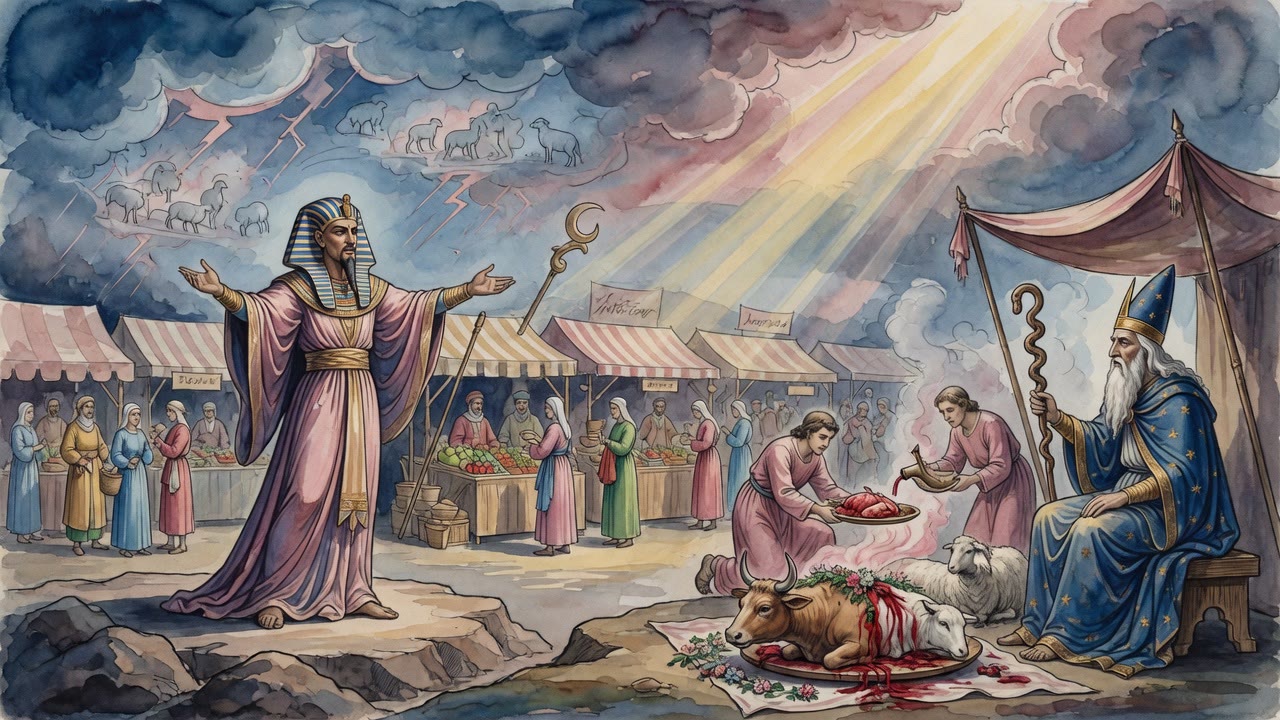
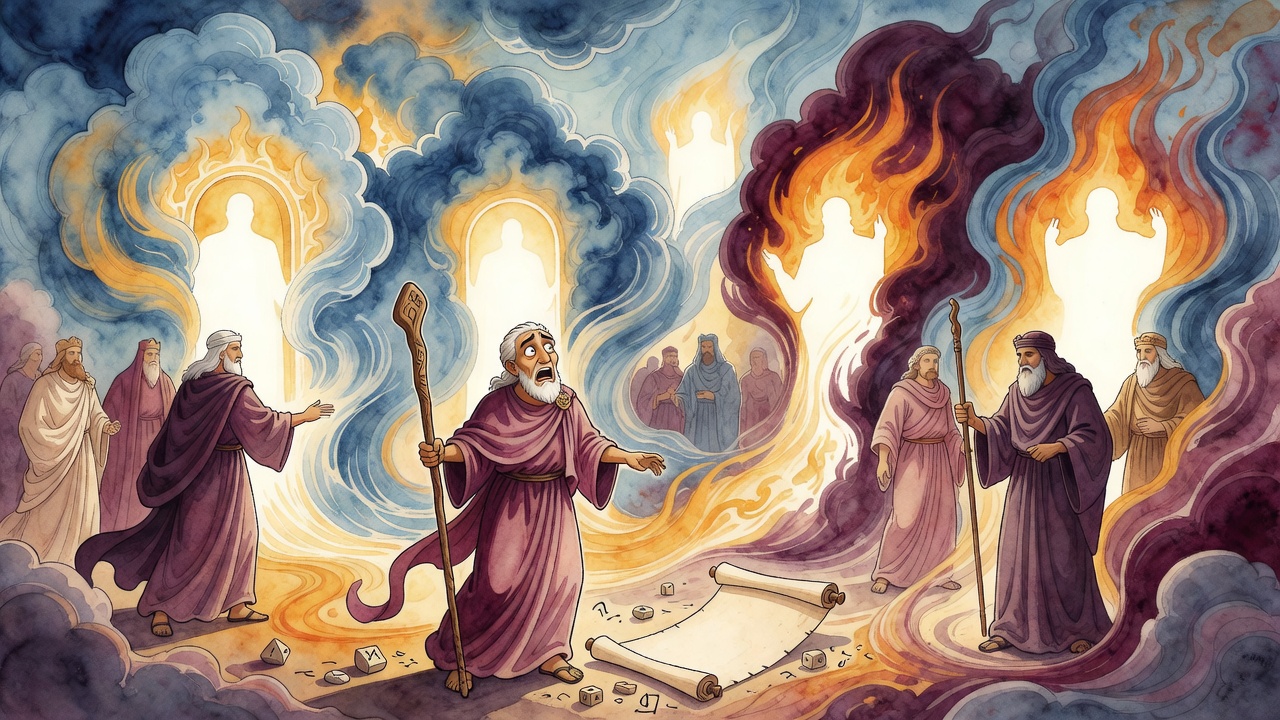
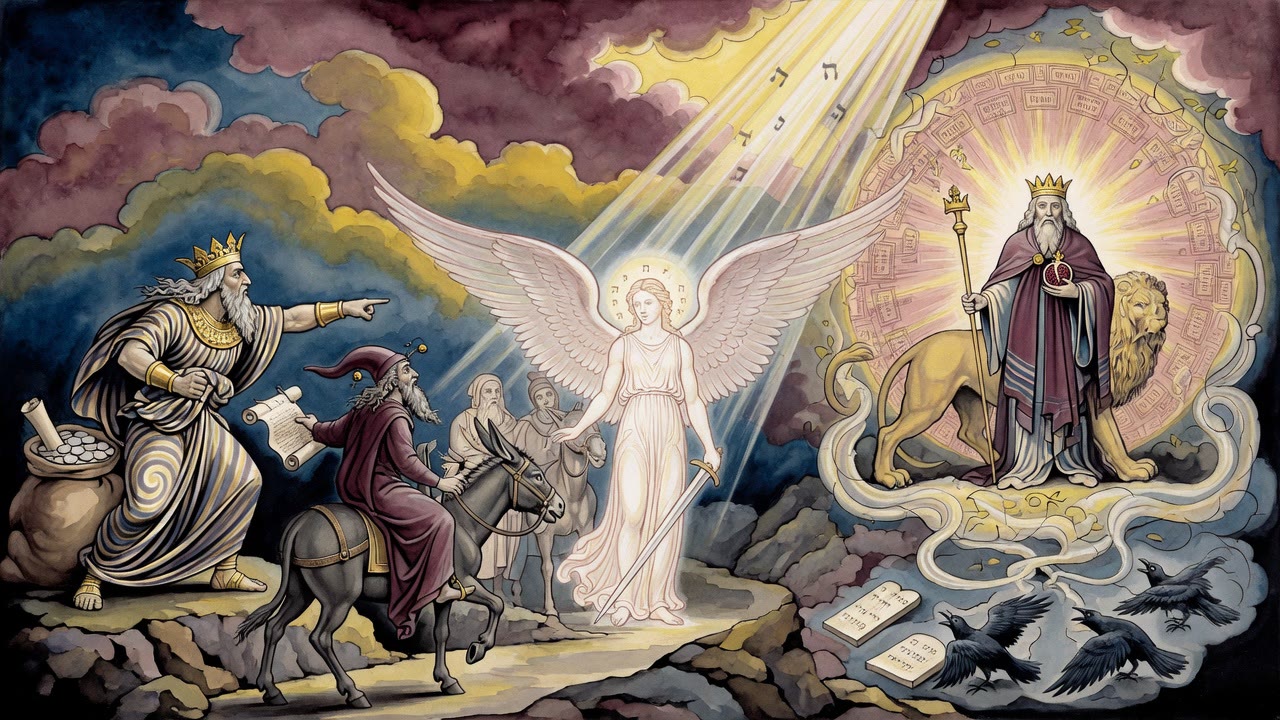
The elders of Moab set out with divining tools tucked in their fists. That is how their nations sought the future. Sand, bones, whispered lots under a dry sky. Balak asked whether Balaam would come. They cast and answered, "He will come." The Holy One overturned their reading and told Balaam, "Do not go."

They swore next, "He will not come." God said, "Arise, go." He frustrates the signs of liars and makes diviners mad. Every sure reading cracked in the palm. Every confident cast turned to ash. The road to Moab became a riddle the hirelings could not solve, because the future was never theirs to own. They walked back to the king with answers that kept changing under their feet, and Balak learned that tools do not command the God of Israel.

A Prophet Who Misread the Flip

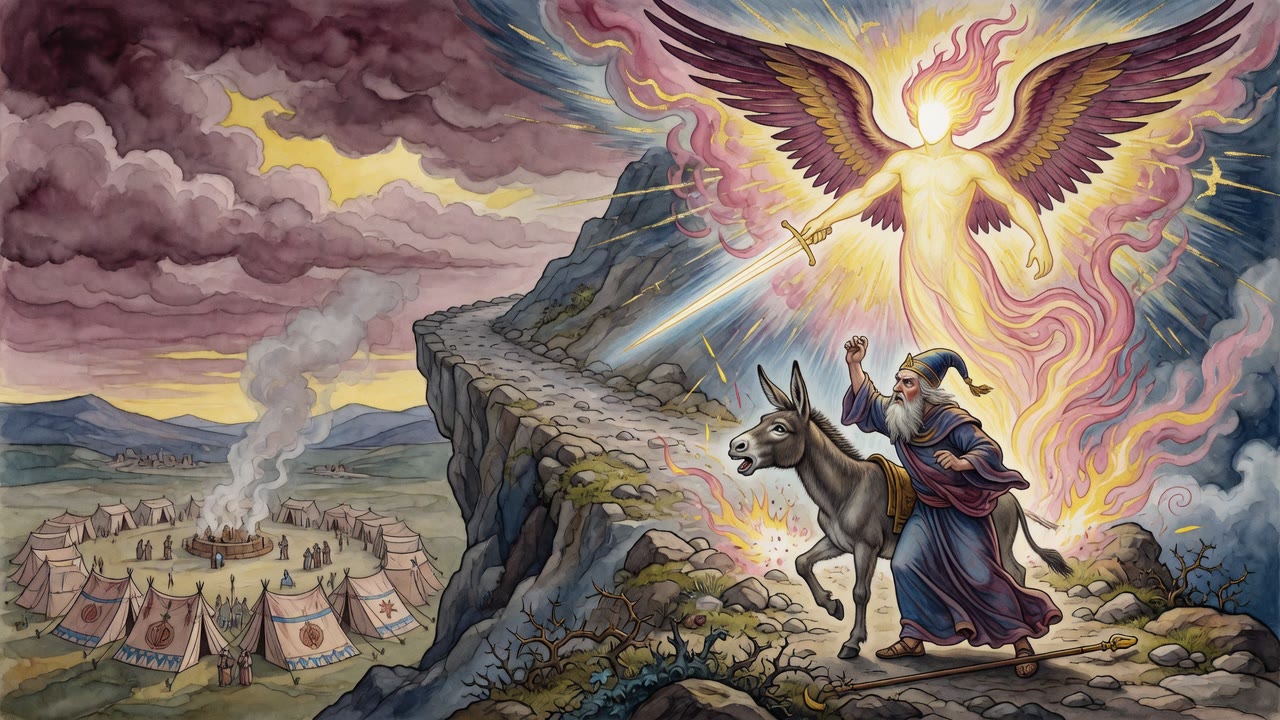
Balaam thought himself clever. As the answer flipped from no to yes, he reasoned the order "do not curse" would soften into "curse." His diviners reasoned no less crudely. A delay meant defeat. When God told Balaam, "Lodge here tonight," they sneered, is there a father who hates his own son?

That sneer was the whole point. God is a Father to Israel and loves them. He would not despise them for any hireling's fee. Then God asked, "Who are these men with you?", feigning ignorance to test the prophet. A righteous soul would have answered, "Master of the worlds, You know all; no scheme is hidden from You." Balaam instead reported names and titles like a clerk of guests. He revealed himself as a vessel of filth. Balak only wished to drive Israel from his land. Balaam, hating deeper, meant to drive them from the world. The test found the bottom of the man.

No Divination in Jacob

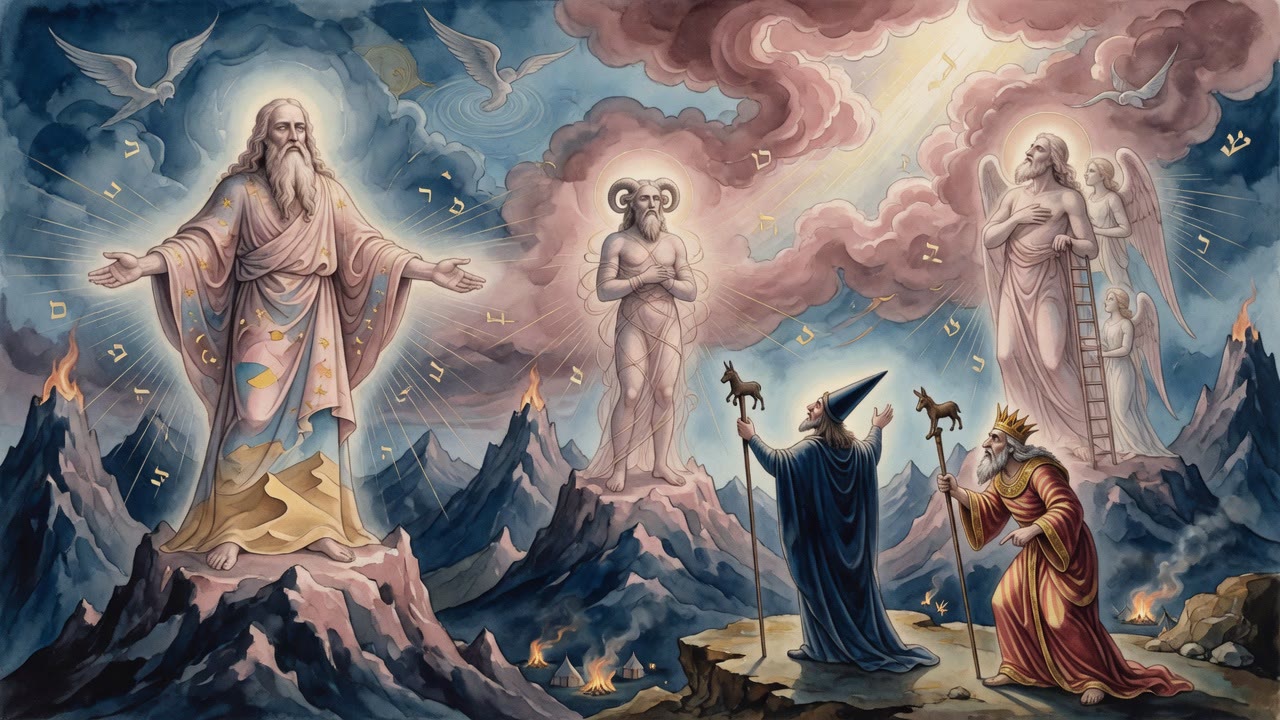
On the heights the hired mouth opened and could not deliver the product. "For there is no divination in Jacob." The nations cock their ears toward soothsayers and entrails and the flight of birds, and for those abominations they are driven from the land. Israel is not made so. When Israel longs to know what the Holy One is about to do, it needs no spell. It has prophets raised from among its own brethren, who tell the will of Heaven plainly in daylight speech.

Because Israel chased no soothsayers, Balaam could only marvel. A people that walks by the word of God alone rises like a lioness and lifts itself like a lion. When Balak saw the third speech turn into blessing, he cried out in fury. "I called you to curse, not to bless!" If you cannot curse, hold your tongue entirely. "Neither curse them at all, nor bless them at all." The king who bought a curse discovered he could not even buy silence cleanly. The product kept arriving as praise.

An Eye Sealed Shut

The oracle of Balaam son of Beor names the father for a reason. Neither man stood at his own height. Balak, called son of Zippor, had a son fit to be king though he himself was not, a full coin born of a half-coin. Balaam outstripped even his prophet-father, who stood to him as a son stands before a father.

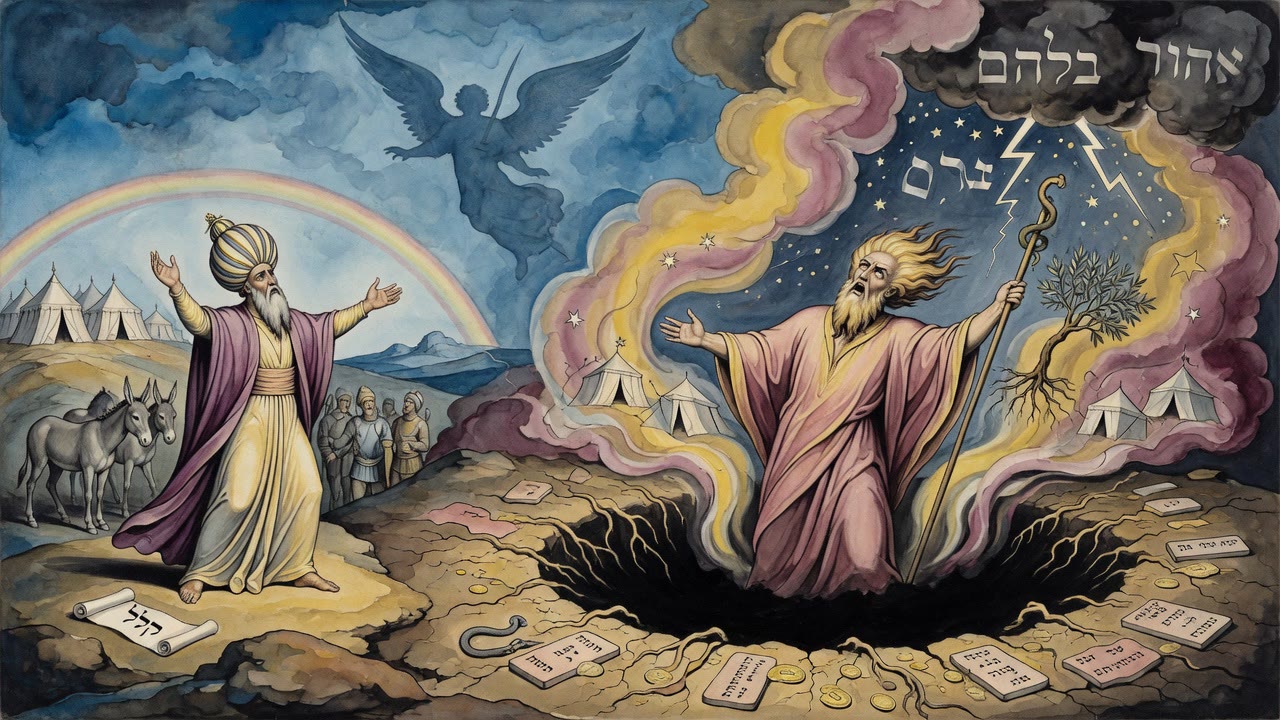
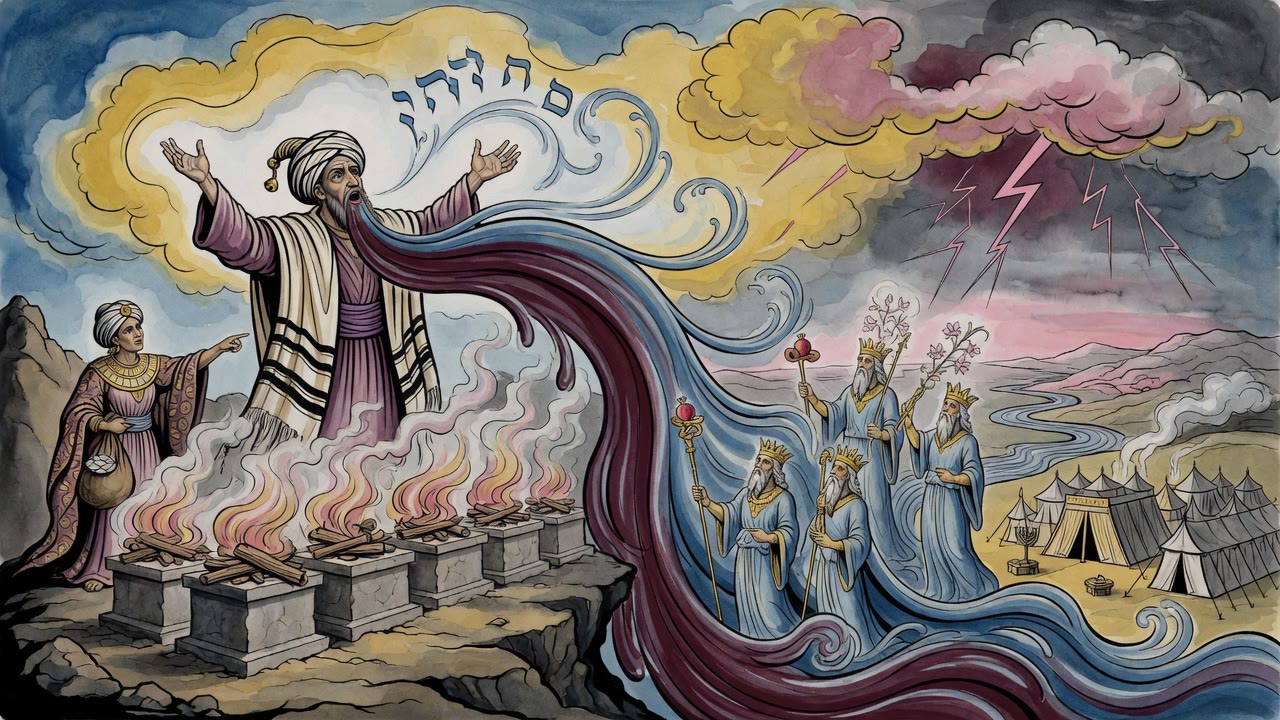
Then the strange phrase: "the man whose eye is open." Read it closed. Balaam was blind in one eye, and God Himself had sealed it. Why? Because Balaam sneered that God "counts the issue of Israel," as if the Holy One, with ministers so pure, should not watch for the hour a holy soul comes forth. Seeing the malice in that eye, God stored away its light and struck it dark. Another hearing still stands beside the first. Open of eye, for Balaam saw what no prophet of Israel ever saw, the eye flung wide as a vessel opened and stopped and sealed. Vision and blindness shared one face.

A Mouth That Cannot Stay Hired

So the road ends with tools that lie, a king who misread love for weakness, and a seer half-blind by decree. Divination fails against a people that does not need it. A curse fails against a Father who will not sell His children. Balaam's remaining eye still saw enough to terrify him with what he could not unsay. Blessing left his mouth like a forced guest and would not go back in.

Moab's lots lay useless in the dust. The elders closed their fists on nothing. Balak watched the investment turn into a song for Jacob, and the man he hired learned that Heaven can flip a reading faster than any diviner can cast, and can seal an eye that looks at Israel's birth with contempt. The road home was longer than the road out.


← All myths
From the tradition

Sources

3 sources

The texts behind this telling. Some cards carry a translation of the source; others are our own retelling of it, and each card says which. Every card links out to the original.

Midrash Aggadah, Numbers 22:7Midrash Aggadah

Translation of the source text.Midrash Aggadah (Buber), Public Domain, on Sefaria · CC-BY-SA

"And the elders of Moab went" (Numbers 22:7), the elders of Moab too took divinations in their hand.

Another interpretation: Why did He say to him at first "Do not go," and at the end say to him "Arise, go"? Rather, at first Balak inquired of the diviners. He said to them, "What do you say, will Balaam come, or not?" They divined divinations and said, "He will come." Therefore the Holy One, blessed be He, annulled their divinations and said to him, "Do not go with them." And the second time they divined and said, "He will not come." The Holy One, blessed be He, said to him, "Arise, go", "He frustrates the signs of the liars, and makes diviners mad" (Isaiah 44:25).

And so too the wicked Balaam thought in his heart and said: Just as He said to me the first time "Do not go," and the second time said to me "Go," so He has said to me "Do not curse," but in the end He will say to me "Curse." Concerning this: "And God's anger was kindled because he was going" (Numbers 22:22).

And what were the diviners saying? If we tell Balaam, "Come with us," we succeed; but if He puts a delay upon him, there is nothing in his words. And when they heard that he said to them, "Lodge here this night" (Numbers 22:8), they said: Is there a father who hates his son? So the Holy One, blessed be He, is a father to Israel and loves them, would He, for the sake of Balaam's curse, hate them? Immediately the Holy One, blessed be He, said to Balaam, "Who are these men with you?" (Numbers 22:9). He made Himself as though He knew nothing, this is what is written, "He enlarges the nations and destroys them" (Job 12:23). And when Balaam heard this, he said: Now I am able to go and to understand, for at times He knows and at times He does not know, and therefore I will be able to do all that I desire. And he was one of three whom the Holy One, blessed be He, tested and found to be a chamber-pot of urine; for he ought to have said, "Master of the worlds, You know, and You are the One who knows all, and no scheme is withheld from You, yet do You ask me, 'Who are these men?'" But he did not do so; rather he said, "Balak son of Zippor, king of Moab, has sent to me" (Numbers 22:10).

It was taught: Between Midian and Moab there was no peace, but because they were afraid they made peace between themselves so that each would help the other. Once a wolf came against one of them; the dog went to the dog and said to him, "Come and help me against the wolf, lest he devour both of us." They were reconciled, and the two of them came against the wolf.

Another interpretation: "Balak son of Zippor." Balaam said to him: Even though you do not honor me, the kings honor me, for they send to me.

"And now, come, curse for me" (Numbers 22:11). The hatred with which Balaam hated Israel was greater than the hatred with which Balak hated. Balak said, "Come, curse (arah) for me," but Balaam said, "Curse (qabah) for me." Balak said, "Perhaps I shall be able to fight against him and drive him out from the land of his kingdom", and so he says, "and I shall drive him out", but Balaam meant: from the world.

Full source
Midrash Aggadah, Numbers 23:23Midrash Aggadah

Translation of the source text.Midrash Aggadah (Buber), Public Domain, on Sefaria · CC-BY-SA

"For there is no divination in Jacob" (Numbers 23:23). Israel is not like the rest of the nations of the world, for the nations go after diviners and soothsayers, as it is written: "For these nations that you are dispossessing hearken to soothsayers and to diviners" (Deuteronomy 18:14), "and because of these abominations the LORD your God is driving them out before you" (Deuteronomy 18:12). But Israel, when they seek to know a matter, they have prophets who tell them what the Holy One, blessed be He, is destined to do. Therefore it is said: "in due time it shall be said to Jacob and to Israel what God has wrought" (Numbers 23:23). And as you say: "But as for you, the LORD your God has not given you so; a prophet from your midst, from your brethren, like me, the LORD your God will raise up for you" (Deuteronomy 18:14-15). Because Israel did not go after diviners and soothsayers, they merited a new world, where they all sit before the Divine Presence, they and the angels outside of them, and the angels ask them: "what has God wrought?" And because there is in him neither divination nor sorcery, but rather they go according to the word of the Holy One, blessed be He, therefore they are a people that "rises up like a lioness" at the first and "lifts itself up like a lion," and in the end "it shall not lie down" and shall not enter the land until it enters and slays the nations who are there, and devours their prey, which is of their kind, as you say: "and you shall devour all the peoples" (Deuteronomy 7:16). "And drinks the blood of the slain" (Numbers 23:24) - that they will leave them slain upon the face of the field, and not one of them shall remain. When Balak saw that Bilam had added a second time to speak of their greatness, and a third time he began to bless them - that is to say, he spoke the words to them in the language of blessing - Balak said to Bilam: I called you to curse them, not to bless them; and since I see that you cannot curse them, leave yourself be, that you neither curse them nor bless them. Therefore it is said: "And Balak said to Bilam: neither curse them at all, nor bless them at all" (Numbers 23:25).

Full source
Midrash Aggadah, Numbers 24:3Midrash Aggadah

Translation of the source text.Midrash Aggadah (Buber), Public Domain, on Sefaria · CC-BY-SA

"The oracle of Balaam son of Beor" (Numbers 24:3). Balaam and Balak were not worthy men; rather, both of them were "a maneh that is the son of a peras." Concerning Balak it says "son of Zippor" (Numbers 23:18), for his son was fit for kingship, but Balak himself was not so a king; therefore he was "a maneh that is the son of a peras." And likewise concerning Balaam it says "son of Beor," teaching that Beor, Balaam's father, was not esteemed in prophecy as much as he, but was rather like a son in relation to his father.

"And the oracle of the man whose eye is open (shetum)." From here we learn that Balaam was blind in one of his eyes. Do not read it "shetum" (open) but "satum" (closed). And why did God close it? Because he said "and counts the issue (rova) of Israel" (Numbers 23:10), teaching that the Holy One, blessed be He, counts the seed of Israel and says: When will the hour come that there will come forth from it [a soul]? That wicked man, whose eye was evil, said: He who is holy and whose ministers are holy, should He gaze upon such a thing? And once the Holy One, blessed be He, saw that his eye was evil, He stored it up and blinded his eye.

Another interpretation: "whose eye is open (shetum)", open of eye, for he saw what all the prophets did not see; and "shetum" means nothing other than the language of "open," as the Mishnah says: "so that one may open (yishtom) and stop up and seal."

Full source