Rachel Envied Leah's Deeds Until God Remembered
Jacob had given her signs for the dark. She pressed them into Leah's hand so her sister would not be caught. Years later the womb was still closed.
Table of Contents
 Click for full size
She Passed the Signs in the Dark
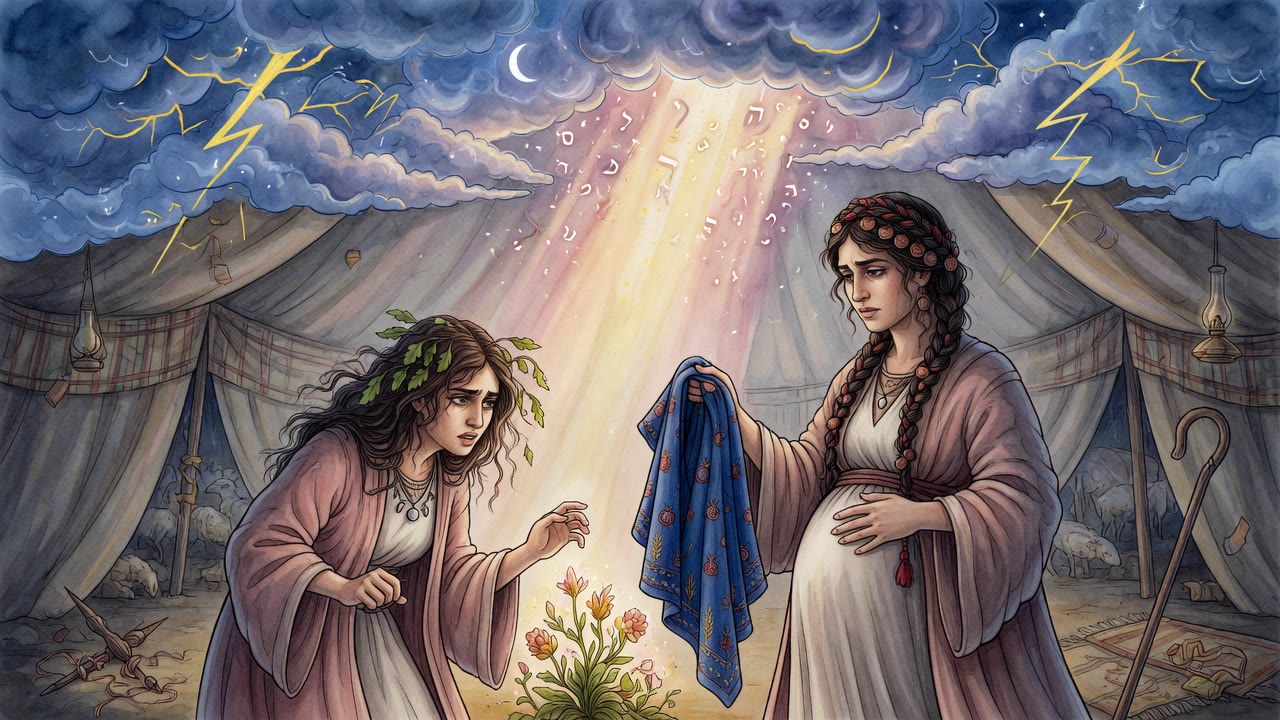
Rachel stood in the dark with the signs in her fist.
Jacob had given them to her so Laban could not switch the sisters under the veil. A touch. A word. A way for his hand to know her in a room with no lamp. She had kept them the way a person keeps a key.
Then she saw Leah coming toward the humiliation Rachel herself had feared. The wrong bride. The wrong night. The whole house waiting to laugh if the trick showed.
Rachel opened her hand. She pressed the signs into Leah's palm, closed the fingers over them, and stepped back. The key left her. Leah went in.
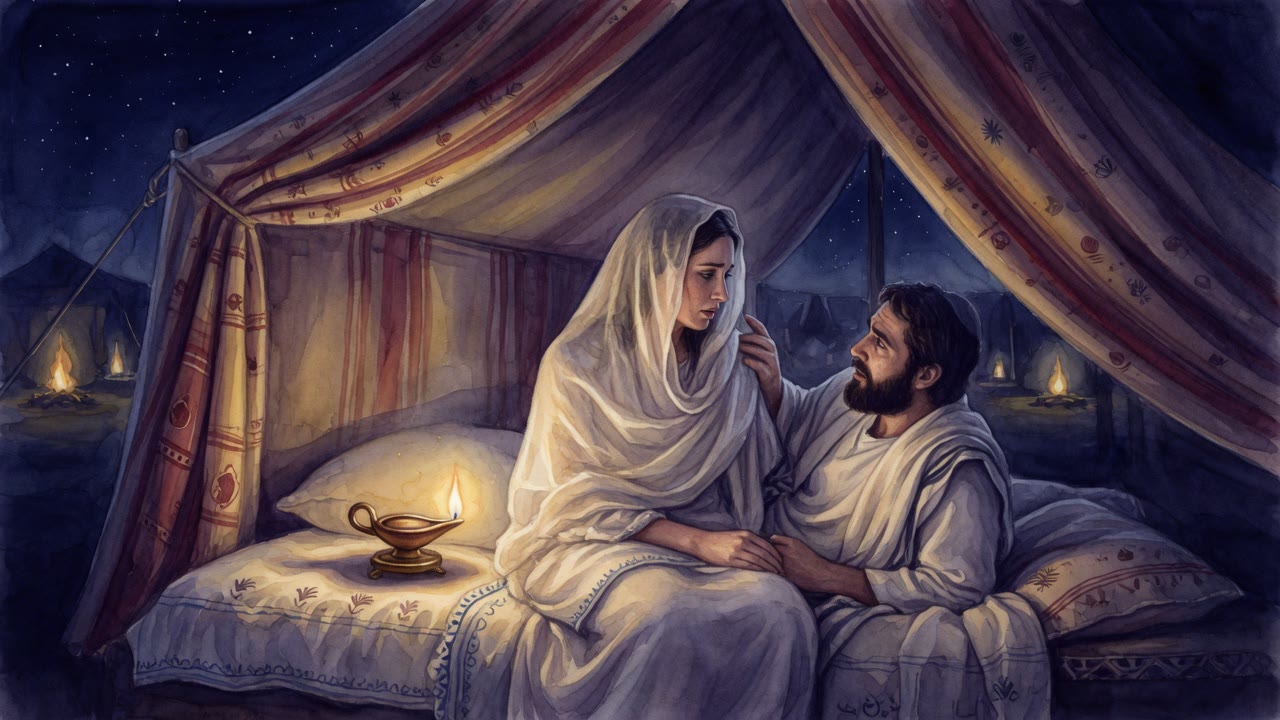
Leah Went Under the Canopy
Rachel watched her sister take the place prepared for her and did not break the scene open. She did not cry out. She did not pull the veil. She let the wedding run.
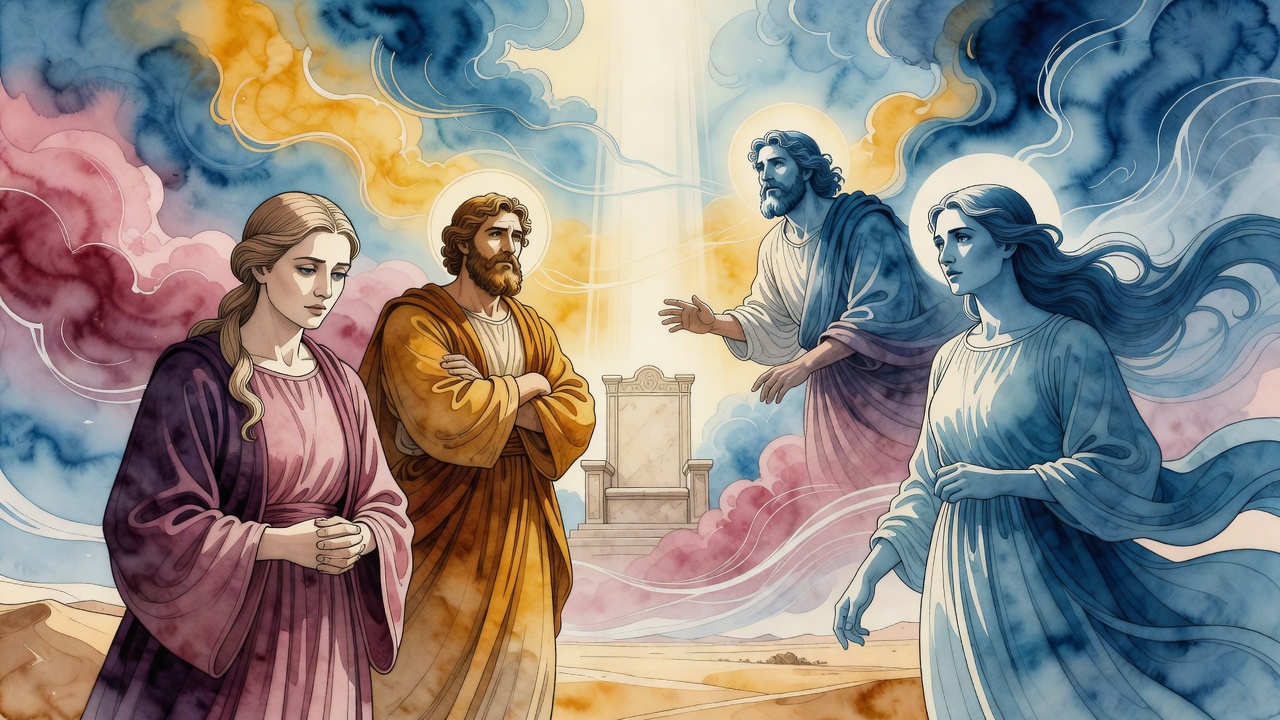
In the morning Jacob knew. The seven years of labor had bought him Leah. He worked seven more for Rachel. The two sisters lived in one tent-yard, and the first night's silence sat between them like a third person who never left.
Rachel had saved Leah from shame. She had also given away the night that was supposed to start her own house.
The Children Came Without Her
Leah bore Reuben. Then Simeon. Then Levi. Then Judah. Four sons named in the yard, four times a cry from the other bed, four times Rachel sat with her hands empty.
She gave Jacob her maid. Sons came that way too, and they were not enough. Leah kept bearing. Rachel's womb stayed closed.
Only then did she envy her sister (Genesis 30:1). She had not envied the canopy. She envied when the children kept arriving at the other door.
She went to Jacob. "Give me children," she said, "or else I am as good as dead."
He got angry. He was not God. He could not open what God had shut.
She Envied Leah's Deeds
Rachel did not want Leah's face. She did not want Jacob pulled from her tent. She looked at the four boys in the dust and asked what Leah had done that she had not.
If I were righteous like her, she said inside herself, the Holy One would give me children too.
The envy turned inward. It did not go looking for a way to hurt Leah. It went looking for a missing deed. Rachel had already given away the signs. She had already swallowed the wedding. The cost of that mercy was now walking around on two feet, calling another woman mother, and still she did not take the mercy back.
She kept the silence she had chosen in the dark. She also kept the ache. Both of them lived in her at once.
God Remembered That Night
Then God remembered Rachel (Genesis 30:22).
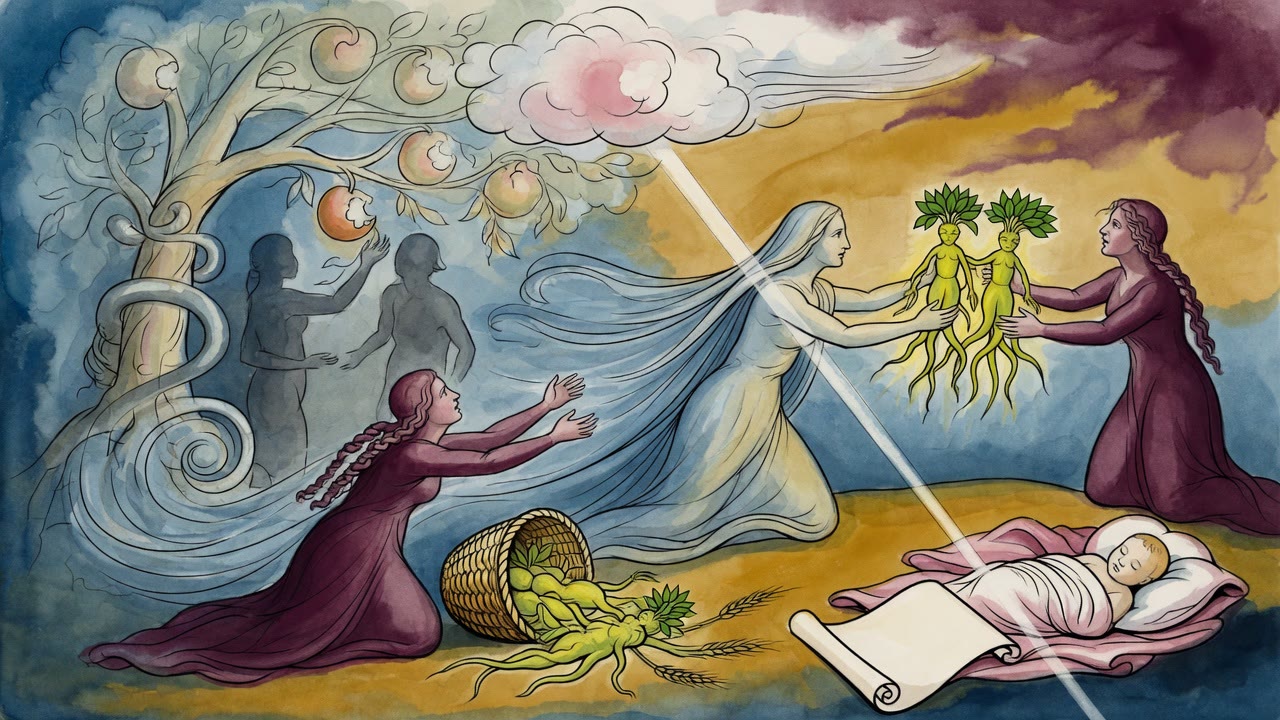
He had not misplaced her. Remembering, in that house, meant a hidden thing had reached its hour. What rose in heaven was not a forgotten prayer. It was a night: the signs leaving one sister's hand for the other, the veil staying down, the laugh that never came because Rachel would not let it.
Her womb opened. Joseph was born. She named him, and the name was a request for another, but the first son already carried the memory of a mercy performed when no one was watching.
Years later another barren woman would stand at Shiloh and vow that if God gave her a son she would give the boy back. Hannah made that vow with her lips moving and no sound. Rachel had made hers with a closed mouth on a wedding night. Both women paid in advance. Both were answered after the payment had already hurt.
Joseph grew up in a house that still knew which sister had been silent in the dark. The remembered kindness did not cancel the years of waiting. It became a child, and the wound went with him.
← All myths