The Rafter Snapped and the Students Buried a Man
A woman dreamed her house beam cracked. Students told her she would bury her husband. Their words nearly made it so.
Table of Contents
 Click for full size
The Beam That Broke in Her Sleep
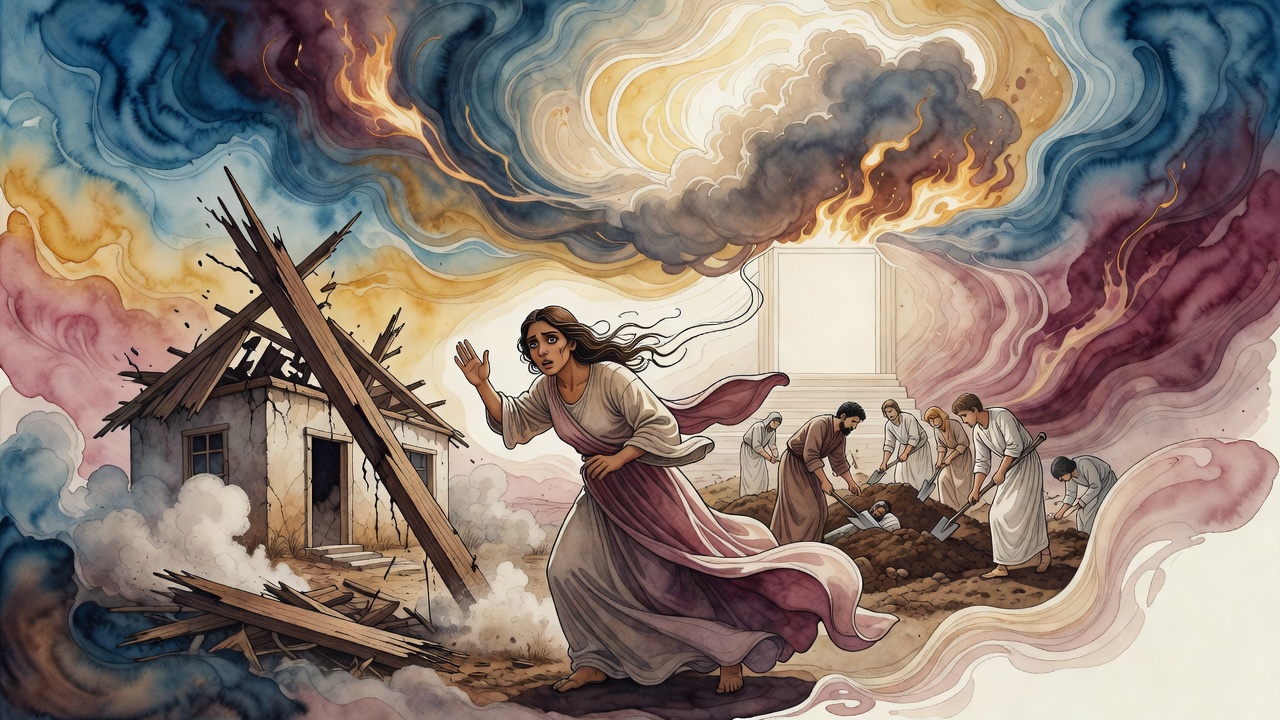
The woman stood in the doorway of the study house with dust on her sandals and a dream still heavy in her mouth. She had watched a rafter in her house snap, not with her eyes open, but with the strange clarity that comes only at night. The wood cracked. The ceiling sagged. She woke with the sound still in her ears.
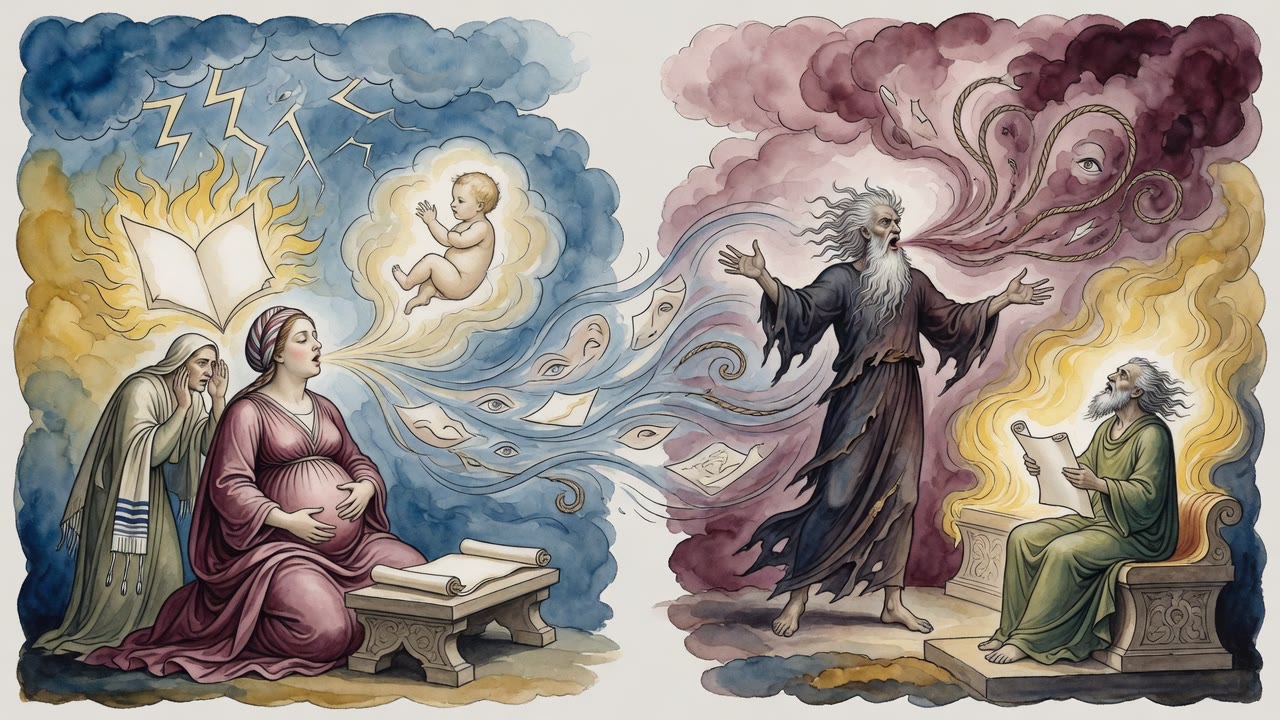
She found Rabbi Elazar and told him what she had seen. He did not hedge. "This woman will bear a male child," he said. She went home. In time a son was born, and the dream that had frightened her became a cradle instead of a ruin.
She came again. The rafter snapped a second time in the dark of sleep. Rabbi Elazar answered the same way. A second son followed. Twice the house had seemed to break. Twice the master of the house of study had turned fracture into birth.
The third time, the room was full of students and empty of their teacher.
What the Students Said Without Him
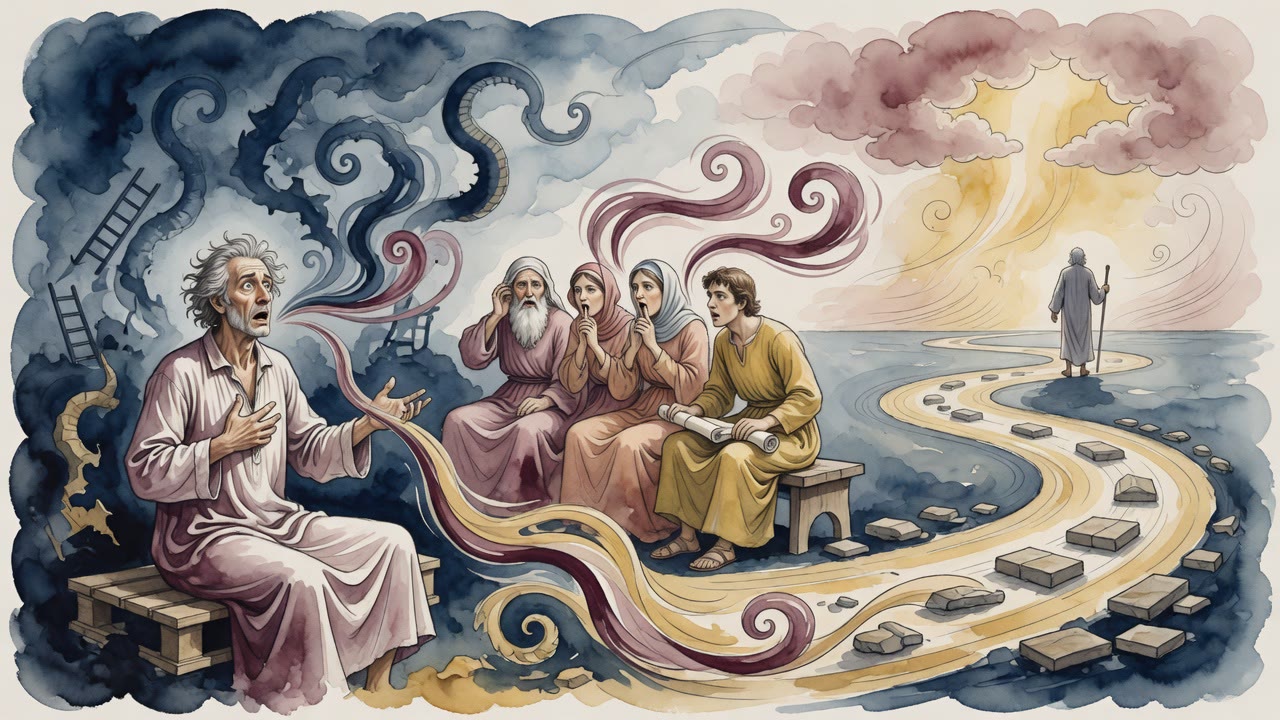
She asked where he was. They asked what she wanted. She asked if they were wise enough to read a dream the way he did. They told her to speak. She spoke of the rafter that snapped in the house of this woman, meaning herself, the way a dreamer names herself from the outside.
"That woman will bury her husband," they said.
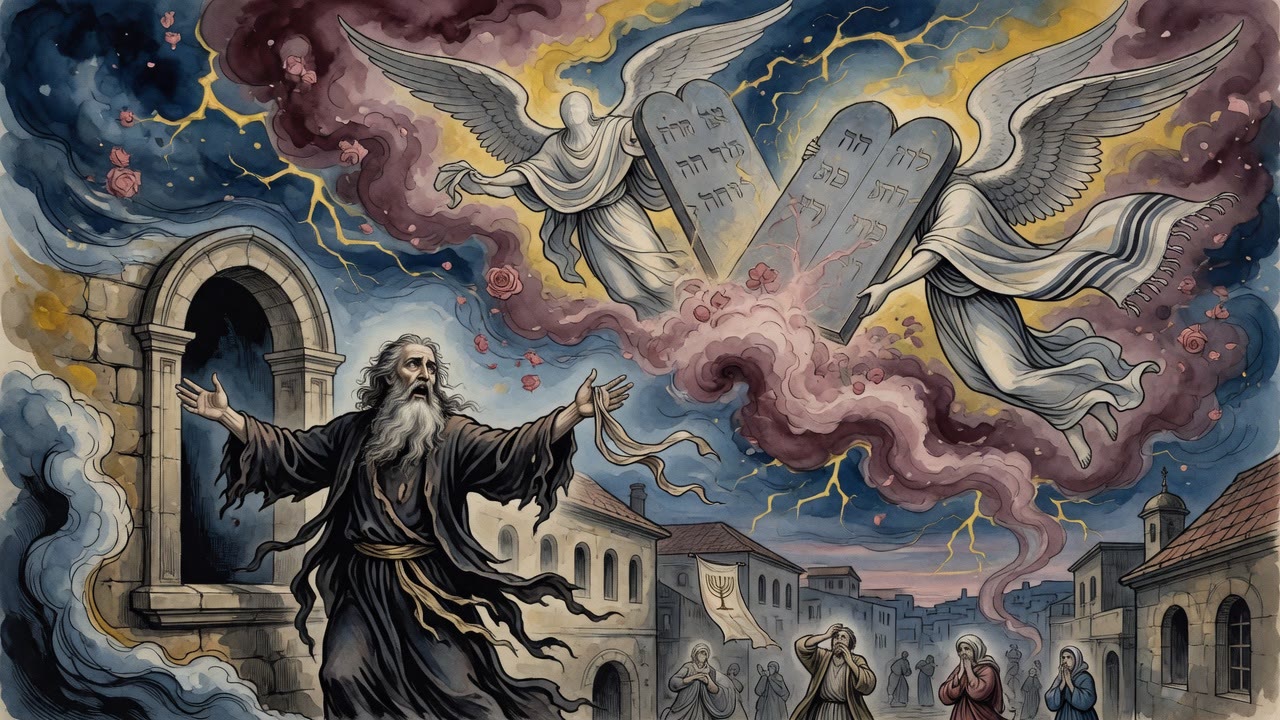
She went out wailing. The cry carried back into the study house like a torn cloth. Rabbi Elazar returned and heard it. He asked why the woman was crying. They told him she had come for him and found them instead. He asked what they had given her. They repeated their sentence, proud of its sharpness.
"You eliminated a man," he said.
The Dream Follows Its Reading
He did not scold them for cruelty alone. He scolded them for craft. "Is it not written, 'It was as he interpreted to us, so it was'?" (Genesis 41:13). A dream, in their world, was not a sealed letter. It was soft clay. The mouth that named it set the shape.
He reminded them of Rabbi Yohanan: the dream follows its interpretation, with rare exceptions. Wine might mean one thing for a scholar and another for a fool. Most nights, the words spoken over a dream were half the dream's body. By telling the woman her husband would die, they had pressed death into the beam.
Rabbi Abbahu would later say the content of dreams makes no difference at all. That opinion sat in the room like a second door. But the students had already chosen the first door and shoved a living man through it.
The Shore Where Doubt Met Angels
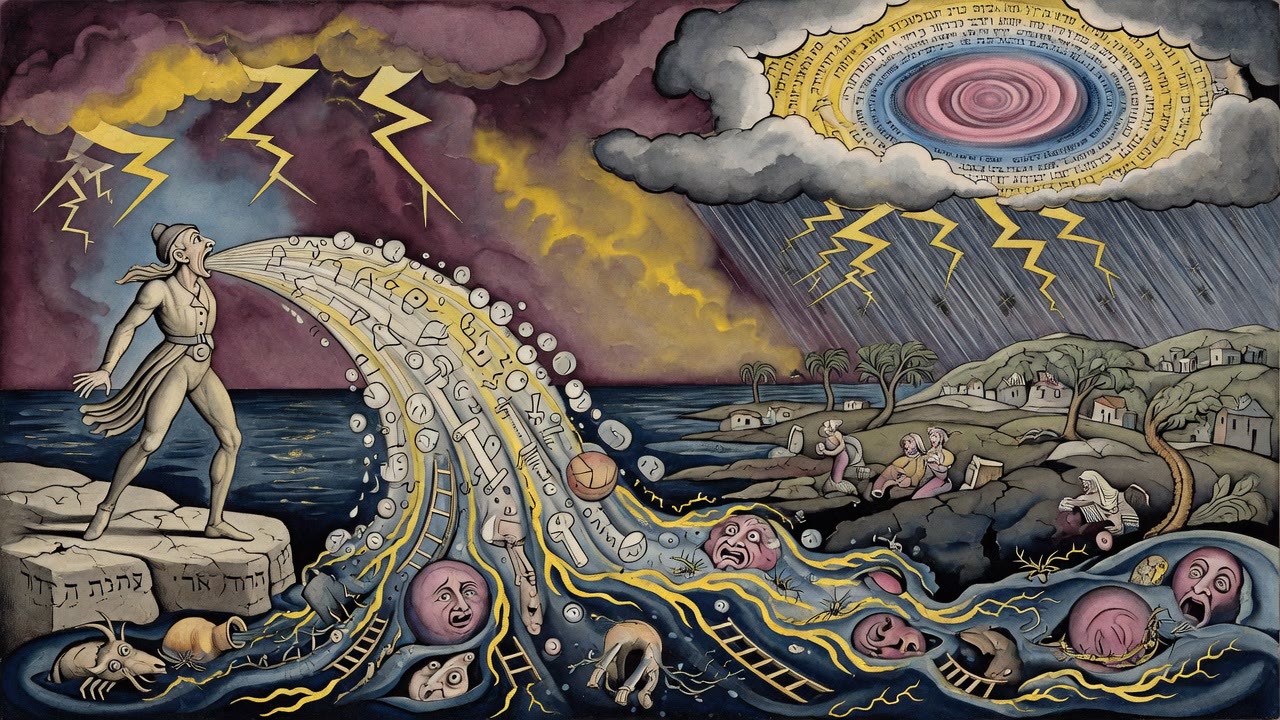
Far from that study house, on the sea-shore near Haifa, another body learned what happens when the mouth undercuts holy speech. A pious man walked the wet sand and turned over a teaching he could not swallow: the gates of the future Jerusalem would be cut from single pearls, each thirty cubits high and thirty cubits wide.
He muttered that a pearl the size of a dove's egg was already a wonder. A pearl large enough for a gate must be metaphor. The sages could not mean wood and hinge and water-born stone in the plain sense.
A bat kol, a voice from heaven, struck him to his knees. "You dare to doubt the words of the sages?" He repented at once, not slowly, not with bargaining. Because he turned so fast, the sea opened a little and showed him angels at work below the waves, sawing and polishing pearls to the measure he had mocked. Thirty by thirty. Real gates. Already under construction.
Two Mouths, One Law of Speech
The woman left the schoolhouse under a sentence of widowhood. The man on the shore left with sand in his palms and a vision he could not unsee. Between them ran one rule of the rabbinic world: speech is not commentary floating above events. Speech is force.
Students who invent a cruel reading can bury a husband who still breathes. A walker who mocks a strange teaching can be forced to watch angels prove the strangeness true. Rabbi Elazar's fury was not only for the woman's tears. It was for the husband still walking somewhere outside, already half-erased by boys who wanted to sound wise.
Joseph's cupbearer and baker learned the same rule in an Egyptian prison: as he interpreted, so it was. The students had treated a living marriage like a riddle for display. The pious man at Haifa had treated a teaching of the sages like a metaphor he could shrink. Both mouths were corrected, one by a master's rebuke, one by a split sea and a workshop of angels.
She had come three times with the same cracked beam. Twice the master turned it toward life. Once the apprentices turned it toward a grave. The wood in the dream did not change. The mouths did.
← All myths