Rain Fell When the Merchant Swore by His Scales
Drought ignored the scholar in sackcloth. A bat kol, a heavenly voice, sent him to a market stall, and brass scales pulled open the sky.
Table of Contents
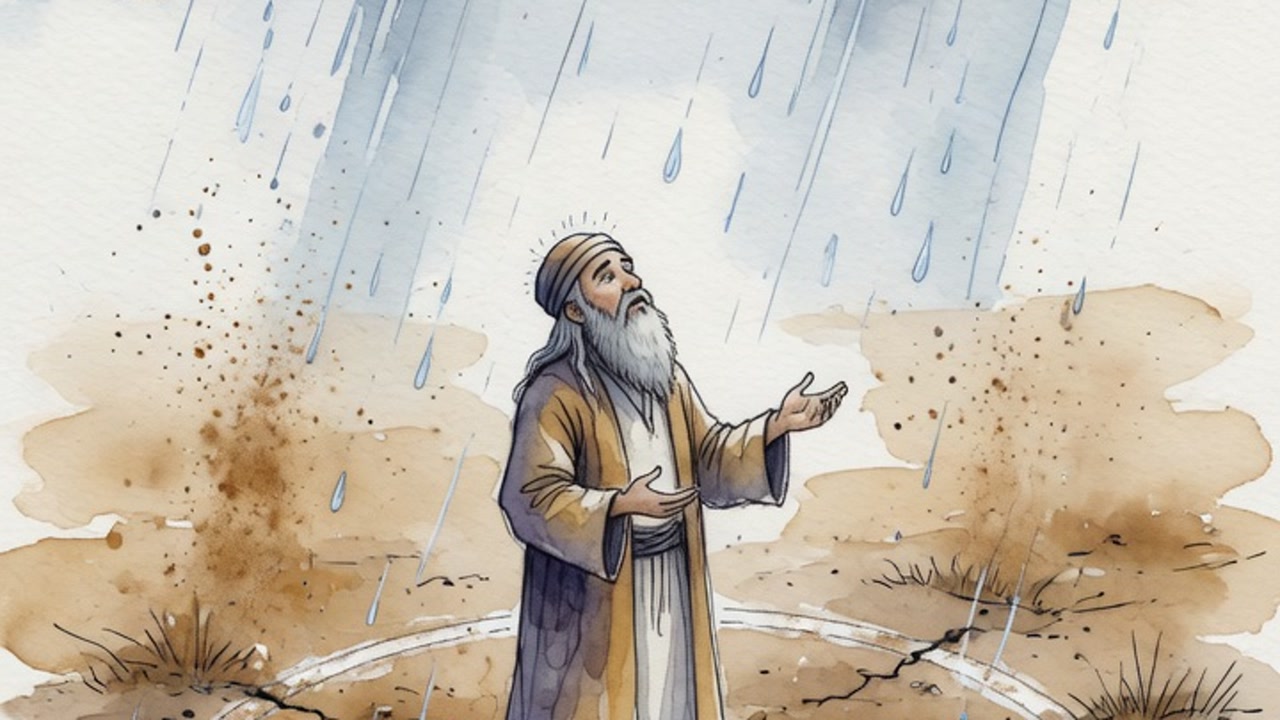
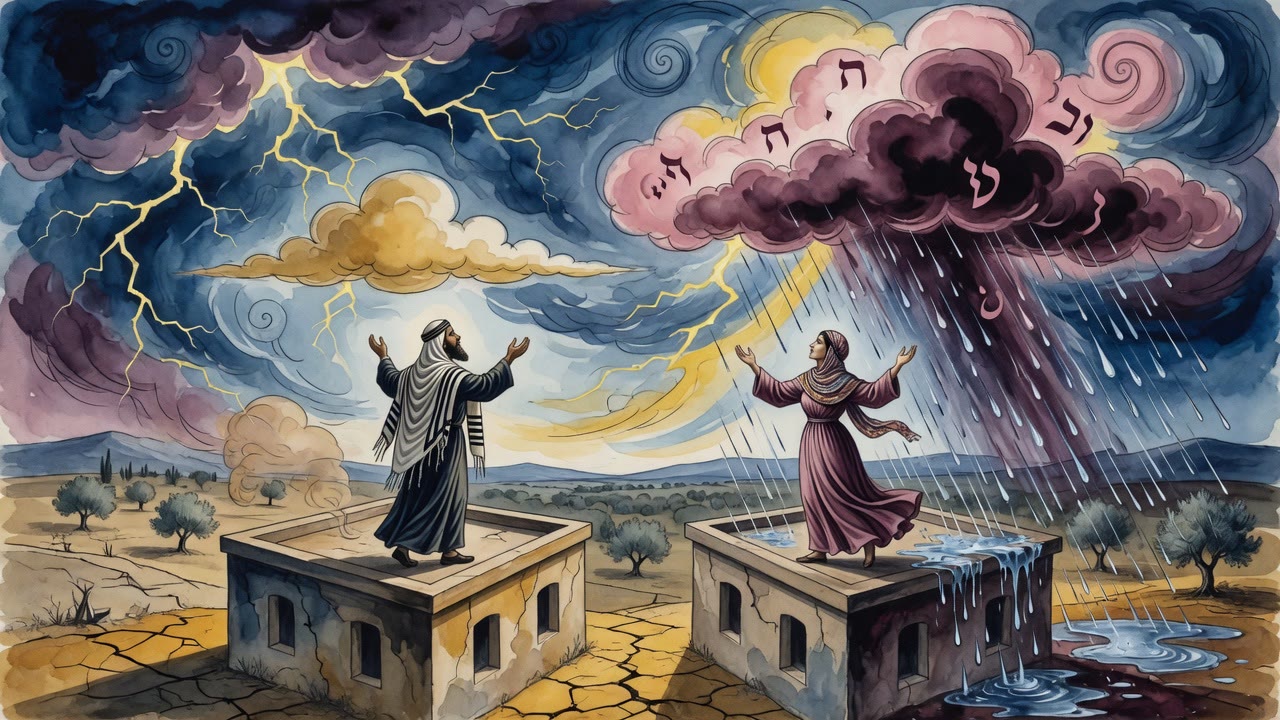
The wells sank week by week. Dust sat in the throats of children and cattle alike. The Rabbi put on sackcloth and prayed until his knees knew the floor better than his cushion, and still the sky held its water like a miser counting coins he would never spend.
 Click for full size
Then a bat kol, a heavenly voice, cut through the dry air with an order that embarrassed him before he took a single step. Go to a certain merchant in the market. Ask him to intercede. His prayer will bring rain.
The Stall No Scholar Would Choose
The merchant could barely follow a page of Gemara. He was not a judge, not a teacher, not a man the community put on a platform when guests arrived. Walking to his stall meant walking past every eye that measured rank by learning. The Rabbi went anyway, because thirst does not respect hierarchy, and a bat kol (a heavenly voice) does not negotiate with dignity.
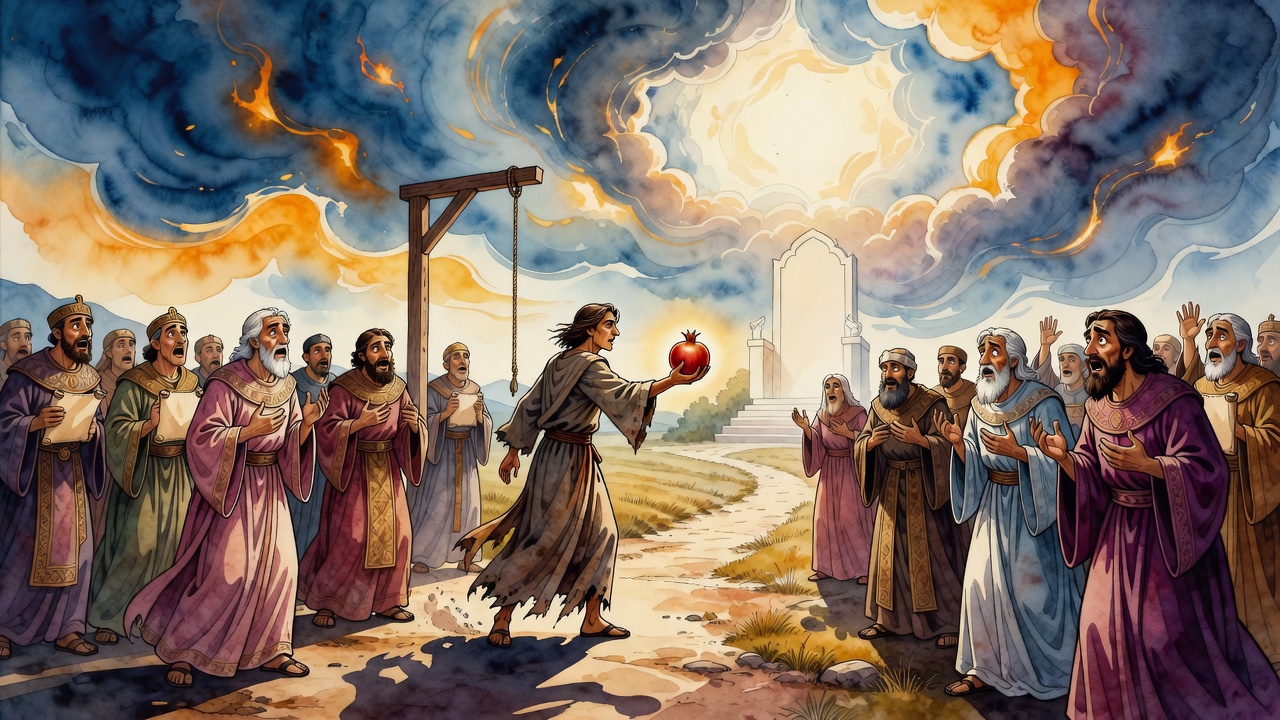
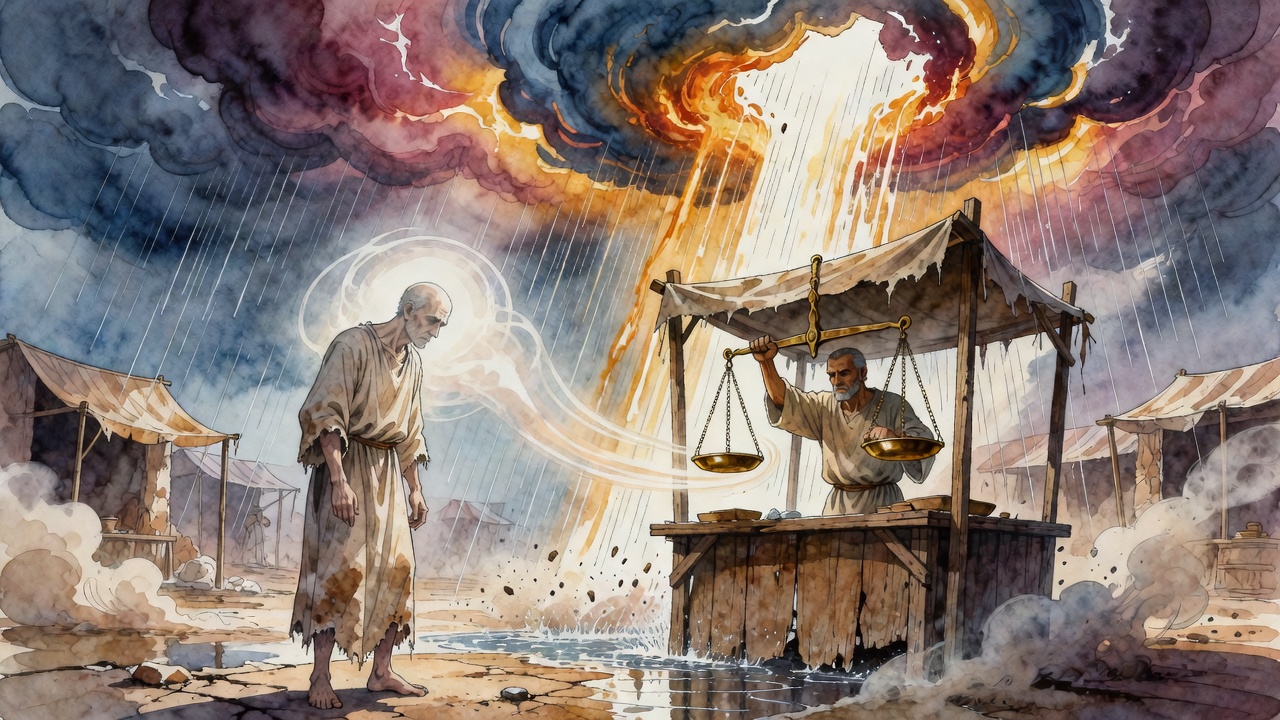
At first the merchant thought he was being mocked. A scholar asking an illiterate trader to pray for the whole town? He nearly sent the Rabbi away with a hard laugh. When he saw the request was serious, his face changed. He wiped his hands, reached under the counter, and set a small pair of brass scales on the wood between them.
"These scales are my witness," he said. "On them is the Ineffable Name. Every day I weigh for Jew and gentile alike. If I have ever tilted them to cheat, let fire take me now. If I have kept them true every single day of my life, let rain fall."
The words had barely left his mouth when the clouds opened. Streets ran with sudden rivers. Wells rose within hours. The Rabbi stood in the doorway, drenched to the skin, learning what a closed ledger cannot hide: mishkelot emet, honest scales (Leviticus 19:36), can open heaven when learned lips stay dry. The market filled with the sound of people catching water in anything that would hold it. No one asked the merchant for a derash (homiletic reading). They watched the sky answer his brass.
The Men Who Hasten After Wealth
Across the same market another kind of merchant works a different arithmetic. In the Sabbatical year the fields are meant to rest and release. The Torah says the land shall keep a Sabbath to the Lord, and only afterward speaks of sale. Some push carts anyway, whispering how well they prosper on what should have been free for the poor and for the beasts of the field.
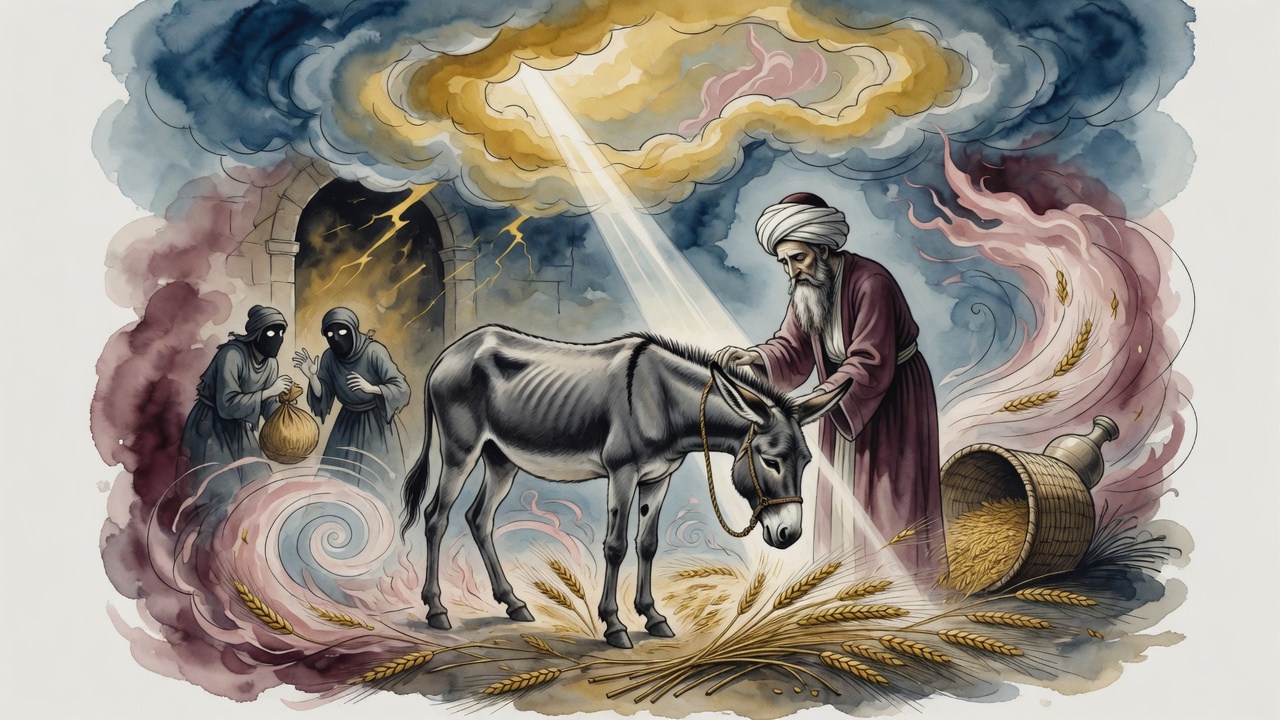
God answers them in the voice Proverbs already knew: he who hastens after wealth has an evil eye. You rushed to grow rich from the year I sanctified? By your life, the matter holds a loss for you, not a gain. The curse enters money the way a worm enters stored grain. Bit by bit it eats, until the profiteer stands selling off everything he owns, including the cart that once looked like cleverness.
The order of the verses is the order of the disaster. First the land's rest. Then sale. Profane the Sabbath of the soil, and the selling that follows is ruin wearing the mask of business. The honest merchant's scales pulled rain. The Sabbatical schemer's haste pulled emptiness into his purse until the purse itself had to be sold.
Grapes a Day Too Early
Rabbi Ishmael ben Yossi had a tenant who tended his vineyard and brought him a basket of grapes every Friday, the owner's rightful portion under ordinary law. The routine of years made the gift invisible. One Thursday the man arrived a day early, basket in hand, smiling with practicality.
"I have a lawsuit before your court tomorrow," he said. "I thought I would save myself the second journey."
Ishmael pushed the basket back across the threshold. He would not take even his own produce once the gift smelled like influence, and he refused to preside. He appointed other judges and stepped aside. While they heard the case he paced in the next room and caught himself inventing arguments that would help the tenant. A phrase rose unbidden. A soft point of defense. He almost stepped forward to speak.
Horror stopped him mid-step. "May the receivers of bribes look to their souls," he said to himself. "I did not even take the bribe, since the grapes were already mine, and still my judgment pulls sideways. How much more the heart of a judge who accepts payment and calls it courtesy?"
The grapes stayed outside the door. The case stayed outside his mouth. He learned that a gift does not need to be stolen to bend a mind. It only needs to arrive at the wrong hour with the wrong hope attached.
Three Markets, One Pressure
The honest merchant's scales called rain because nothing crooked lived between his hand and the weight. The Sabbatical profiteer watched wealth rot because he treated holiness as inventory. The judge who refused his own grapes learned that integrity is not only what you take, but when you allow anything to approach your hand.
Drought is not only empty cisterns. It is a town that cannot tell which prayers heaven answers. The bat kol did not send the Rabbi to the finest scholar in the district. It sent him to the man whose brass never lied, while other stalls sold haste and influence under cleaner names.
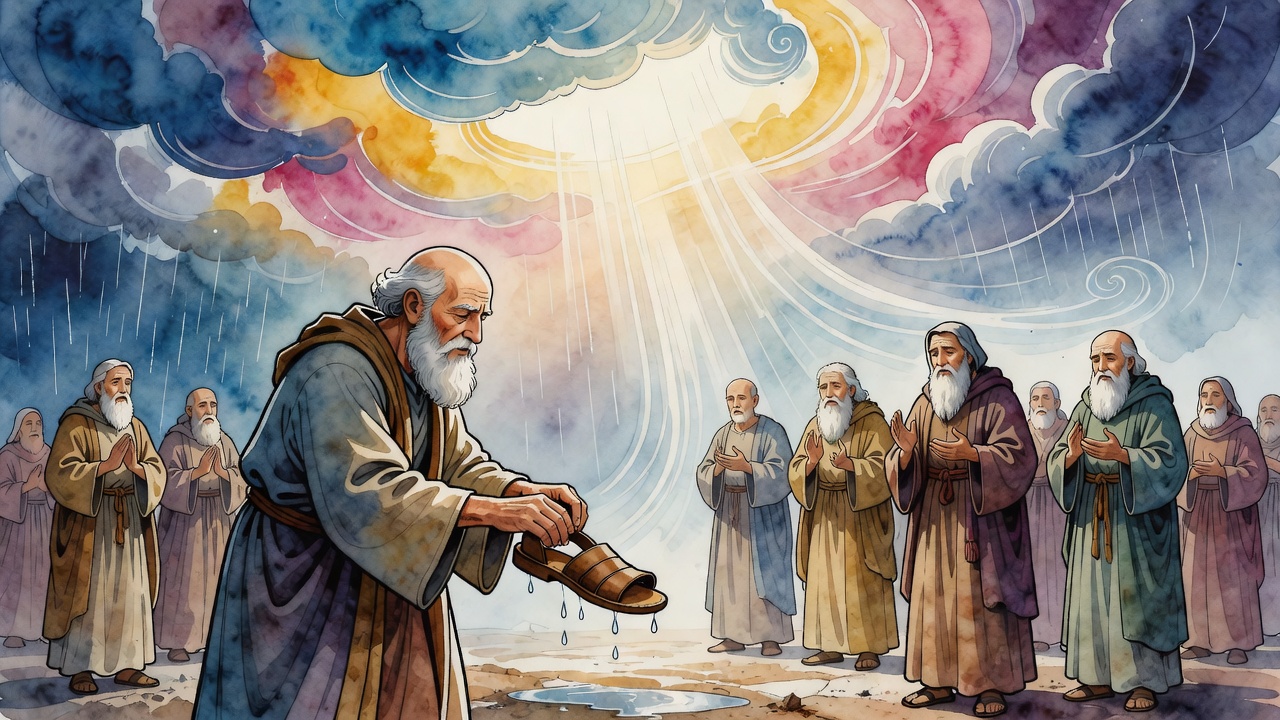
When the rain finally hammered the roofs, the sackcloth on the Rabbi's shoulders clung heavy and cold. He did not resent the merchant. He understood at last that the market had been holding a righteous man the academy had never promoted.
← All myths