5 min read

The Bird That Hanged a Thief at the King's Table

A dying merchant named a bird as his only witness. Years later the same bird arrived on a king's plate and the thief laughed himself into a noose.

Curated by Arthur · Told by Maggid ·
Table of Contents
  1. The Mile Behind the Caravan
  2. A Fortune Built on a Roadside Silence
  3. The Covered Dish
  4. Distance and Authority
  5. What the Bill Looked Like
The Bird That Hanged a Thief at the King's Table Click for full size

The Mile Behind the Caravan

The merchant finished counting the coins by firelight and tied the bags twice. Distant markets had paid him well. Salt still clung to the seams of his cloak from the weeks of road. The way home still held nights enough to empty a man if he grew careless. When a stranger asked to lag behind the company for a short rest, the merchant measured the request against his fatigue and agreed. A mile was nothing. A mile was how a life ends.
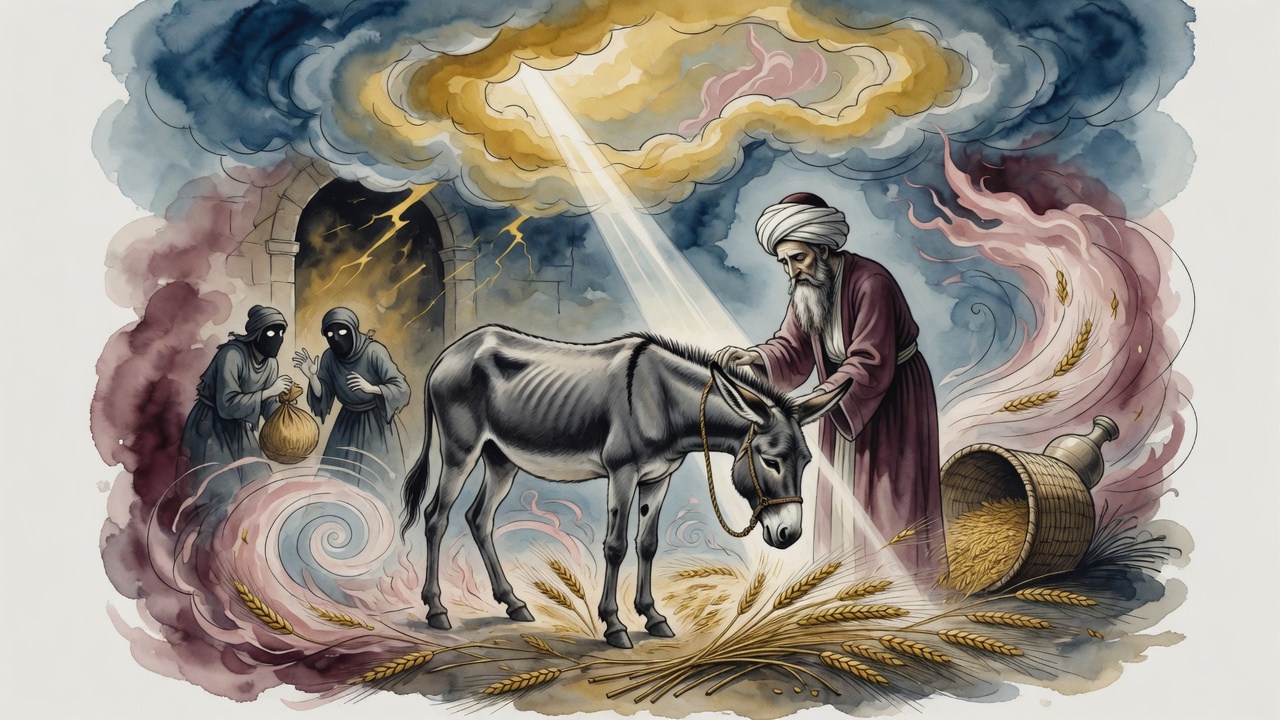
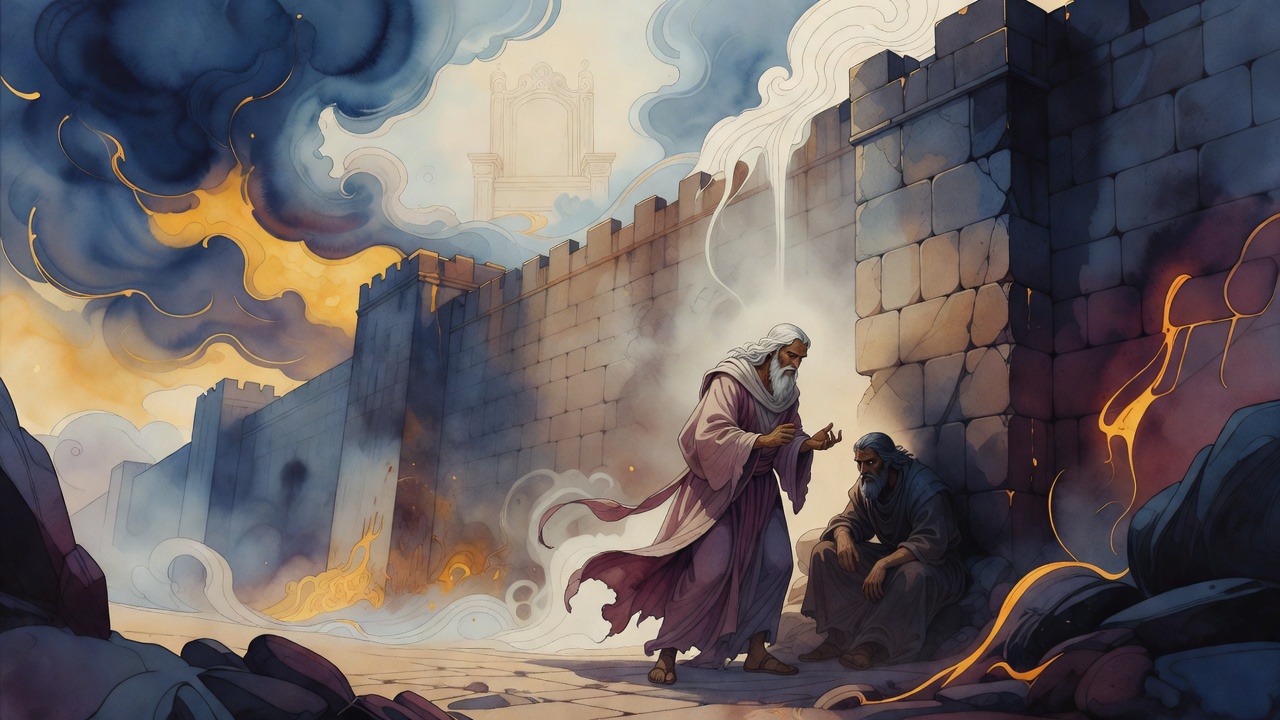
The knife came out when the dust of the caravan had thinned to a smear on the horizon. The stranger took the gold and the goods and shook his head at the plea for mercy. "If I leave you breathing," he said, "you will speak to the authorities." The merchant's eyes found a bird on a branch above the road. With the last of his breath he whispered that the bird would bear witness. The stranger laughed the way men laugh when the world still seems arranged for them. He left the body in the weeds and walked after the caravan with bags that did not belong to him.

No angel stopped him on the path. No thunder rolled. The road accepted both the murder and the joke.

A Fortune Built on a Roadside Silence

Years polished the thief into a courtier. He invested the stolen fortune, bought favors, learned which jokes to tell at which tables, and practiced the smile that makes kings feel clever. In the city no one asked where the first capital had come from. Ledgers record sums. They do not record the mile behind a caravan.

Heaven keeps accounts that do not appear in ledgers. The man who hunted evil found the hunt bending back toward his own throat, the way the sages said harm returns to the one who searches for it. Kindness all day long is hard work, the psalm traditions insist, because it forces a person to choose mercy in every room he enters. The thief chose none of that. He chose cleverness. He chose the road that ends at a table he cannot leave without explaining the laugh stuck in his mouth.

People praised his luck. Luck is a word the guilty prefer when providence is already walking toward the kitchen.

The Covered Dish

A royal hunter brought a rare bird to the palace kitchen. Servants dressed it, covered it, and carried the dish into the banquet hall with the small pride cooks wear when the meat is unusual. When the lid lifted, the thief looked down and recognized the impossible. The bird from the tree above the road sat on the plate as if it had kept an appointment for years. The absurdity of the coincidence broke him open. He laughed and could not stop. The laugh was not joy. It was a dam failing.

The king demanded a reason. Confession poured out between gasps, the whole mile retold in a voice that had grown soft from rich food. The order was hanging. The property went back to the murdered merchant's family. Jewish law asks for two witnesses to convict, and the Torah never limits the kinds of mouths that may open when the moment arrives. A dying man can call a bird. A bird can keep faith longer than a thief keeps nerve.

Guests who had come for wine went home with a story that would outlive the wine.

Distance and Authority

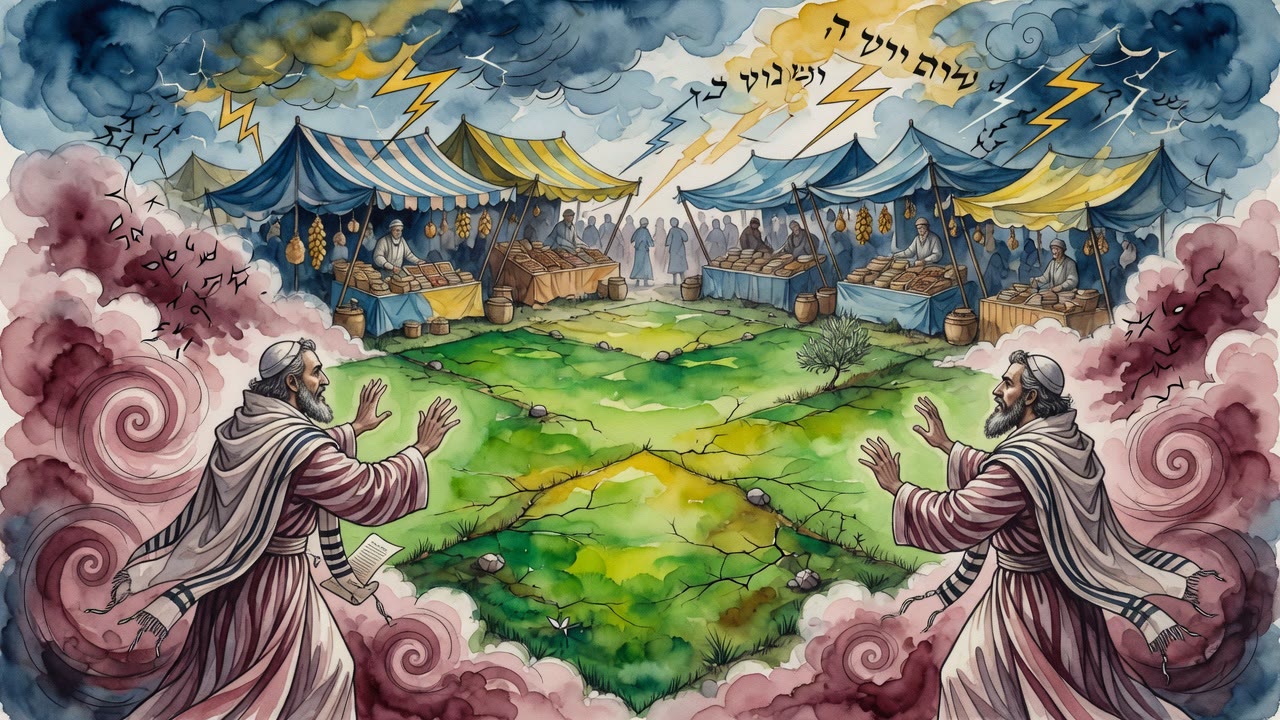
In another court, of learning rather than gold, Rabbi Tanchum once issued rulings while his teacher Rabbi Manei still sat only a short distance away in Tzippori. The townspeople reminded him of the buffer a disciple must keep, twelve mil, measured from the old encampment along the Jordan from Beit Yeshimot to Avel Shittim. He swore he had not known his teacher was so near. Authority without distance turns soft. Judgment without distance turns cruel. Heaven, the stories agree, times its own interventions with a sharper measure than human courts.

The thief had lived for years inside a false authority, a wealth that looked like permission. The bird closed the distance in a single lift of a lid. No twelve mil of safety remained between the crime and the sentence.

What the Bill Looked Like

No scroll of indictment was read on the road. The payment arrived as a laugh that would not end and a king who would not look away. Guilt came through the guilty. Merit, elsewhere, comes through the worthy. The merchant's family received bags they had never expected to see again. The stranger who trusted a silent mile learned that silence is not the same as forgetting.

Somewhere along the road the dust still holds the shape of a man who pointed at a branch. Somewhere in a palace the memory of a rare bird still makes guests lean closer when the dishes arrive. The sages who praise kindness all day long are not offering a soft saying. They are describing the only practice that would have kept the stranger from needing a gallows later. He chose the other curriculum. The bird graded the exam.


← All myths

From the tradition

Sources

3 sources

The texts behind this telling. Some cards carry a translation of the source; others are our own retelling of it, and each card says which. Every card links out to the original.

Gaster, Exempla No. 431The Exempla of the Rabbis (1924)

Retold in our words. Read the original at the link below.The Exempla of the Rabbis, Moses Gaster (1924) · PD-US-pre-1929

A Jewish merchant had sold his wares in a distant land at great profit. As he prepared to travel home with the caravan, a stranger attached himself to the group. The stranger watched the merchant count his coins. He watched him guard his bags. When the caravan stopped to rest at the end of a long day, the stranger persuaded the merchant to linger behind a little, just a mile or two, while the rest of the company pressed ahead.

When they were alone, the stranger drew a knife, took everything the merchant had, and prepared to kill him. The merchant begged for his life. The stranger shook his head. "If I let you live, you will go to the authorities."

As the merchant was dying, his eyes fell on a bird perched in a tree above the road. With his last breath he whispered, "This bird will bear witness against you." The stranger laughed and left him for dead.

Years passed. The thief moved to a great city, invested his stolen fortune wisely, and became wealthy enough to be invited into the court of the king. One day a royal hunter killed a rare bird and had it brought to the king's table. When the covered dish was opened, the thief looked down and recognized, absurdly, impossibly, the very bird from the tree above the road. The absurdity of the coincidence broke him. He began to laugh. He could not stop.

The king demanded an explanation. The thief, unable to compose himself, confessed everything. The king ordered him hanged and returned all his property to the murdered merchant's family.

Gaster's Exempla (1924), No. 431, ends there. Jewish law says that two witnesses are needed to convict. The Torah does not specify what kind. A dying man can call a bird. A bird can keep an appointment for years. And Heaven, which keeps accounts we do not track, will present the bill.

Full source
Midrash Tehillim 52:5Midrash Tehillim

Retold in our words. Read the original at the link below.Rabbi Mike Feuer, Jerusalem Anthology · CC-BY

Midrash Tehillim, that beautiful collection of interpretations on the Book of Psalms, offers a surprising answer: kindness, all day long.

But (Proverbs 31:26) tells us of a wise woman, "She opens her mouth with wisdom, and the Torah of kindness is on her tongue." Here, Torah isn't just about dry legalisms; it's intertwined with chesed (Lovingkindness), kindness. They’re inseparable. When we speak with kindness, we’re literally embodying Torah.

The Midrash (rabbinic interpretive commentary) then takes it a step further, suggesting that even engaging in Torah study itself is an act of kindness! It’s like you are doing kindness all day. But here’s the kicker: it’s not just about what we do, but what we don’t do.

The children of Israel, we are told, are commanded to show kindness to everyone they encounter. It’s an active, outward-facing commitment. But then David, in a powerful moment, challenges Doeg, essentially saying, "A person who engages in kindness all day is doing something difficult." Why difficult? Because it requires constant vigilance, a conscious choice to act with compassion in every moment.

But what about the flip side? What about the harm we can inflict, often without even realizing it? That’s where lashon hara (evil speech) comes in.

Rabbi Yosi ben Zimra paints a vivid picture of the power, and the danger, of our tongues. Imagine, he says, how difficult lashon hara is. We have so many parts of our body, some strong, some weak, some exposed, some hidden. But the tongue? It's trapped in the mouth, surrounded by cheeks, held by countless muscles. And yet, it can unleash such devastating force. A word, carelessly spoken, can shatter a reputation, destroy a relationship, or inflict deep emotional wounds. Rabbi Yosi ben Zimra suggests that if we could truly see the power of the tongue, the potential for destruction it holds, we would be much more careful with what we say. If its difficulty were visible, how much more so would this be the case!

So, what does this all mean for us, today? Maybe it's a call to re-evaluate our priorities. To consciously choose kindness, not just in grand gestures, but in the small, everyday interactions. To be mindful of our words, and the impact they can have. To remember that even the act of studying Torah, of seeking wisdom and understanding, can be an act of chesed, of loving-kindness.

Perhaps the most profound takeaway from Midrash Tehillim is this: living a life of meaning isn't about achieving some distant, unattainable ideal. It's about making a conscious choice, every single day, to embody kindness in all that we do, and all that we say. It's a difficult path, yes, but one that leads to a life rich with purpose and connection.

Full source
Vayikra Rabbah 20:7Vayikra Rabbah

Retold in our words. Read the original at the link below.The Sefaria Midrash Rabbah, 2022 · CC-BY

Rabbi Eliezer lays down a pretty firm rule: A disciple shouldn't issue halakhic rulings in the presence of their teacher, or at least, not until they're a good distance away. How far, you ask? Twelve mil. Now, a mil is an ancient measurement, roughly equivalent to a Roman mile. So

Where does this number come from? Well, Rabbi Eliezer cleverly connects it to the Israelites' encampment along the Jordan River, “from Beit Yeshimot until Avel Shittim” (Numbers 33:49). According to Rabbi Eliezer, that distance was twelve mil. And that's the buffer zone a student needs before venturing out on their own legal pronouncements.

Comes the juicy bit. We meet Rabbi Tanchum ben Rabbi Yirmeya. He’s in Ḥefer, a small town. And he’s answering questions, issuing halakhic rulings. Sounds like he's found his stride. But The locals, ever the observant bunch, pipe up. “Didn’t you teach us yourself,” they ask, "that a student needs to be twelve mil away from their teacher before issuing rulings? Isn’t your teacher, Rabbi Manei, in Tzippori?”

Ouch.

Rabbi Tanchum is taken aback. He swears – he actually swears – that he didn't realize his teacher was within that twelve mil radius! "May [punishment] come upon me if I knew," he reportedly said. And from that moment on, he stopped issuing halakhic rulings.

It speaks volumes about the respect due to a teacher, the weight of responsibility in interpreting Jewish law, and perhaps even the internal struggle of a student eager to step into their own authority.

But what are we to make of this story? Is it just a quaint anecdote about rabbinic etiquette? Or is there something deeper at play?

Perhaps it’s about the danger of intellectual arrogance. The twelve mil serve as a constant reminder: You are not alone. You are part of a chain of tradition, and you must always be mindful of those who came before you.

Or maybe it's about the importance of humility. Even when you have knowledge, even when people seek your counsel, there's always more to learn. And sometimes, the most valuable lesson is knowing when to listen, when to defer, and when to simply say, "I don't know."

Whatever the interpretation, this little story from Vayikra Rabbah

Full source